Canadian Red Cross & Heart & Stroke Training Partner
Basic Life Support Training
Basic Life Support (BLS-HCP) is the bls certification for healthcare professionals. We provide intensive training in responding to cardiovascular emergencies as part of a high-performance team.
 4.9
4.9
Course Types
Our Basic Life Support Courses
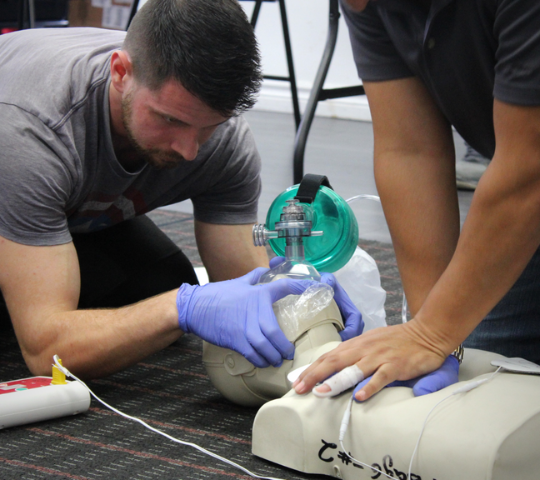
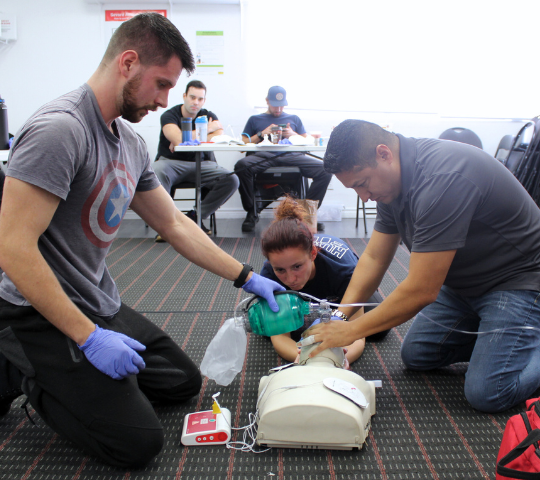
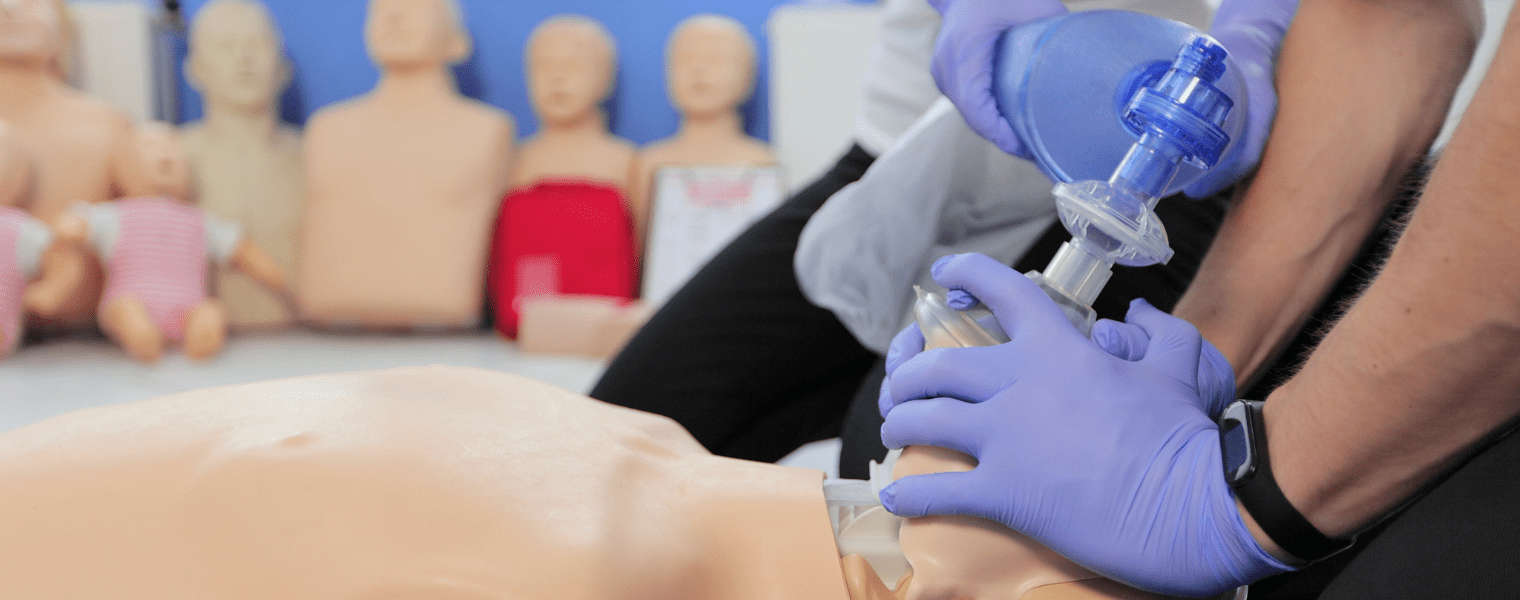
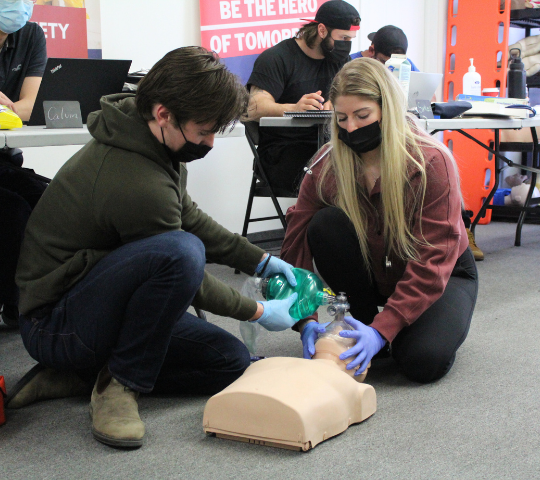
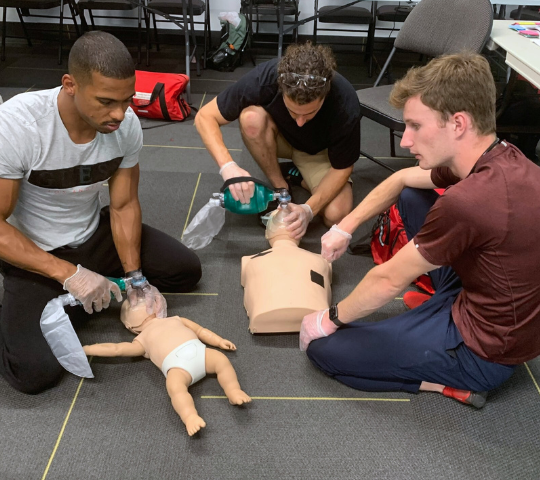
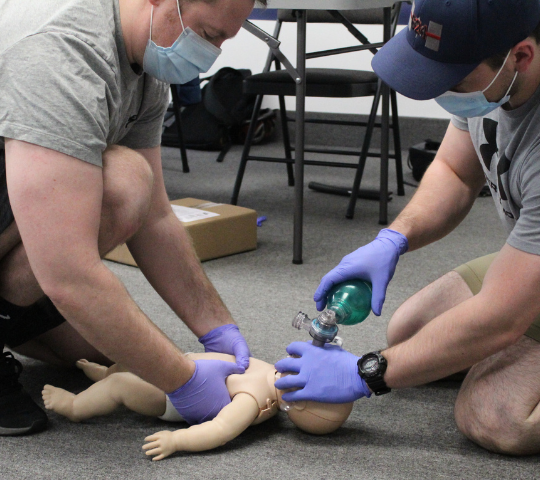
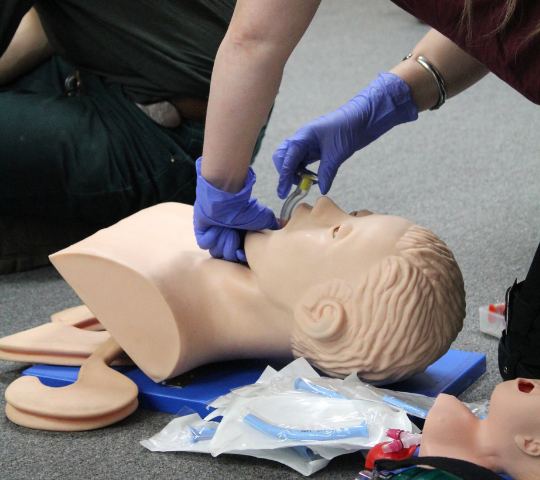
These are hands-on courses, not lectures. You will learn and practise high-performance CPR on adult, child and infant manikins, run an AED, ventilate with a bag-valve-mask and work the team scenarios that decide patient outcomes.
- Training level
- Basic Life Support (HCP)
- Prerequisites
-
None
A current, non-expired Canadian Red Cross BLS certificate
- Duration
-
Full course
4 hours teaching time
Morning and evening classes
Renewal
2 hours teaching time
An expired certificate means retaking the full 4-hour course.
- Who it is for
-
Healthcare professionals, and students entering those fields
Nurses, dental professionals, firefighters, security and rescue team members and sports medicine staff. Book this one if your employer or college names the Canadian Red Cross.
Learn more
- Course content
-
View all 17 course topics
- Introduction to Basic Life Support
- Trauma
- Basic Life Support Skills
- Glove Removal
- Primary Assessment
- Opioid Overdose
- Special Considerations
- Anaphylaxis
- Airway Obstruction
- Assisted Ventilation
- Hypothermia
- Six Rights of Medication
- High-Performance CPR for Adults, Children and Infants
- Post-Cardiac Arrest Care
- Choking for Adults, Children and Infants
- High-Performance Team Communication
- Post-Event Debrief
- Requirements
-
100% attendance
Skills demonstration
75% on the knowledge test
- Certification
- Valid 1 year
The Basic Life Support (BLS-HCP) course. Choose the location, date and time that fit your shift.
- Prerequisites
-
None
A current Heart & Stroke BLS Provider certification or Challenge Certificate
- Duration
-
In-Class
3.5 hours teaching time
Renewal
2 hours teaching time
- Who it is for
-
The same healthcare audience, where the employer names Heart & Stroke
Same clinical standard as the Red Cross program, a different issuing body. Check which one your employer, college or licensing body asks for before you book.
Learn more
- Course content
-
View all 14 course topics
- High-quality chest compressions
- 1-rescuer and 2-rescuer CPR
- Multi-rescuer team CPR
- CPR for Adults, Children and Infants
- Choking relief for all ages
- AED for all ages
- Chain of survival
- Bag-valve-mask ventilation
- Opioid emergencies
- Anaphylaxis
- Heart attack and stroke
- Maternal cardiac arrest
- Drowning
- The role of the CPR coach
- Requirements
-
100% attendance
Skills demonstration
Written exam
- Certification
- Valid 1 year
The Heart & Stroke Basic Life Support (BLS) course is designed for healthcare professionals — the same clinical standard as the Red Cross program, a different issuing body.
Bundle discount
First Aid + BLS Bundle
- What to book
-
1 · First aid
Basic/Emergency First Aid & CPR/AED Level C or Intermediate/Standard First Aid & CPR/AED Level C
2 · Basic Life Support
Basic Life Support (BLS-HCP)
- The discount
-
Your BLS registration is discounted when you book both courses.
They must go through as two separate registrations. The discount comes off the BLS one, not the first aid one.
- Who it suits
- Students whose school program or workplace asks for first aid and BLS training together — nursing, paramedic and dental programs most often.
- Certification
- First aid 3 years, BLS 1 year
Awards & Recognition
Recognised as a Top 3 Canadian Red Cross Training Partner for 2023, 2024, 2025 consecutively.
2025 · National First Aid & CPR Provider
2025 · National Professional Responder Provider
2025 · Top 3 National Training Provider
2025 · Top 3 Provincial Training Provider
2024 · National First Aid & CPR Provider
2024 · National Professional Responder Provider
2024 · Top 3 National Training Provider
2024 · Top 3 Provincial Training Provider
2023 · National First Aid & CPR Provider
2023 · National Professional Responder Provider
2023 · Top 3 National Training Provider
2023 · Top 3 Provincial Training Provider
Why Coast2Coast
Why Workers Choose Coast2Coast First Aid & Aquatics for Basic Life Support
Testimonials
Hear From Our Students
What Students Say About Our Courses
4.9
Google Reviews
-
Sornima Rai Coast2Coast Student

★★★★★
I did my BLS class with Ali and he’s amazing.
-
Jaqueline Colton Coast2Coast Student
★★★★★
Kianoosh (Kia) was the best instructor I could ask for. He was very detailed and insisted that we, as first aiders, know the WHY of what we’re doing so we fully grasp and understand the tasks at hand.
-
Kristin Dodd Coast2Coast Student
★★★★★
I completed the Standard First Aid CPRC/AED in Toronto. Scott was a fantastic instructor — knowledgeable, engaging, and he made a boring subject interesting and enjoyable.
-
Merly Arambulo Coast2Coast Student
★★★★★
I have attended the course with Victoria. She’s amazing coach! Learned a lot of valuable saving-life skills. She encouraged each one of us to ask questions & shared hypothetical situations.
-
Margaret L Murre Coast2Coast Student
★★★★★
Elhamy was a very good CPR instructor — friendly and fast paced environment. I recommend this class.
Verified Reviews from Our Students
Real feedback from participants, in their own words.
Two Ways to Train
BLS Course Formats
Both BLS programs are taught entirely in class, with morning and evening classes to fit shift work.
Compare Dates & FormatsOne hands on skills session with a certified instructor, no pre-work — the only format either BLS program runs in.
- Learn high-performance CPR and bag-valve-mask work on professional manikins
- Team-based scenarios — the part a screen cannot teach
Certificates last one year, so most students return annually. The renewal is two hours, with the same skills demonstration and knowledge test.
Note: renewal needs a current, non-expired certificate — Canadian Red Cross BLS, or a Heart & Stroke BLS Provider certification or Challenge Certificate.
Renewals
Need a BLS Recertification?
Your basic life support bls certification is valid for one year, so renewals come round fast. The bls recertification is two hours rather than four — same skills demonstration and knowledge test.
Check your expiry date — an expired certificate means retaking the full course.
Add-On Training
Airway Management & Oxygen Therapy
Held in the afternoon at select facilities, so most students learn both in a day.
- Training level
- Airway Management + Oxygen Therapy
- All in-class training
-
One afternoon
2 hours teaching time
- Who it is for
-
Responders who manage an airway and deliver oxygen on the job
A separate course — it is not part of BLS or first aid.
Learn more
- Course content
-
View all 14 course topics
Airway Management
- Opening the Mouth
- Cross Finger Technique
- Tongue-Jaw Lift
- Airway Adjuncts — Insertion and Removal
- Oropharyngeal (OPA) Airways
- Nasopharyngeal (NPA) Airways
- Supraglottic Airways (awareness only)
- Suction
Oxygen Therapy
- Pulse Oximetry
- Supplemental Oxygen
- Administering Oxygen
- Oxygen Cylinders
- Oxygen Regulators
- Oxygen Delivery Devices
- Requirements
-
100% attendance
75% on the knowledge test
- Certification
- Valid 3 years — three times a BLS certificate
Inside the Classroom
Hands-On Skills You Will Practise
Why Coast2Coast
Why Take Your BLS With Coast2Coast?
We run both the Canadian Red Cross and Heart & Stroke BLS programs. Over 200,000 people have trained with us since 2014.
- 200K+People trained
- 35+Locations
- 4.9★Google rating
- 2014Training since
-
Both BLS programs, one provider
Red Cross BLS-HCP and Heart & Stroke BLS Provider run side by side, so you can take the credential your employer names.
-
Certificate in 48 hours
Fast enough for a placement deadline.
-
Instructors who work the field
Paramedics, nurses and physicians teach every class — people who run these skills for real.
-
Morning and evening classes
A four-hour course scheduled around shift work, with an afternoon Airway & Oxygen add-on.
Common Questions
Frequently Asked Questions
Who needs Basic Life Support (BLS) certification?
Nurses, dental professionals, firefighters, members of a security or rescue team and sports medicine staff all need a BLS class, as do students entering those fields. There is no prerequisite. Many people book it alongside first aid courses.
Should I choose Canadian Red Cross or Heart & Stroke BLS Provider?
Take whichever your employers, college or licensing body names. Both are valid one year and carry the same clinical standard, so most medical training programs accept either, and health care professionals should check with their employer before booking. Both run fully in class. The difference is the testing — the Red Cross asks 75% on a multiple-choice knowledge test, Heart & Stroke sets a written exam.
Does a BLS certificate count as first aid certification?
No. First aid and CPR courses have been separate from BLS since April 2019. First aid teaches check, call, care plus severe bleeding, burns and choking; in BLS you learn high-quality CPR, bag-valve-mask ventilation and teamwork. Book both together for the bundle discount.
How often do I need to renew my BLS?
Every year. First aid certificates last three years; a BLS certificate lasts one. The renewal runs two hours against four for the full Red Cross bls course and 3.5 for Heart & Stroke, and it only works while your basic life support bls certification is still current. Let it lapse and you retake the full course, so book early.
What is Airway Management & Oxygen Therapy, and do I need it?
A separate two-hour, in-class course for responders who learn to manage an airway and deliver oxygen — OPA and NPA adjuncts, suction, pulse oximetry and oxygen delivery. It is not part of BLS or first aid. It runs afternoons at select locations and the certificate lasts three years.
What do I need to pass, and when will I get my certificate?
You need 100% attendance, a passed skills check and a passed written test. An instructor watches you run high quality chest compressions, ventilate with a bag-valve-mask and work a team scenario — you pass by doing each item, not describing it. Your certificate follows within 48 hours.
What other courses do you offer?
- Basic/Emergency First Aid: a one-day course covering life-threatening and environmental emergencies
- CPR: certified at Level A, Level B and Level C
- Youth courses: including babysitting safety for kids and teens
What will I practise in class?
Scene safety comes first, then the primary assessment, then compressions. You learn to check for hazards and trigger the emergency response by calling emergency services, then check responsiveness, breathing and pulse. You learn to run an AED Trainer yourself — placing the pads, standing clear while it analyses the heart rhythm, delivering the shock. The same hands on practice covers bag-valve-mask ventilation and choking relief, including abdominal thrusts, often called the Heimlich manoeuvre.
What happens when someone’s heart stops?
Brain damage can begin within four to six minutes once blood flow stops. That window is what bls training is built around. Immediate CPR can double or triple a person’s chance of survival after cardiac arrest, so we drill compressions until they are muscle memory.
Do BLS guidelines change?
Yes — BLS protocols are updated periodically to reflect current resuscitation guidelines. Compression depth, rate and team sequencing all get revised as the evidence moves. That is one reason a basic life support bls certification runs a single year rather than three. Learning CPR once is not the same as staying current.
Book your Basic Life Support course today
Pick a city, choose a morning or evening class, and register in under two minutes.