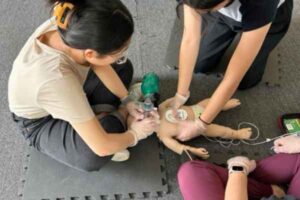

- Alberta OHS Code Part 11 sets the rules. Required first aid scales with worksite hazard, worker count, and distance to medical care.
- Intermediate First Aid with CPR-C is the common ticket. High-hazard and remote sites may need Advanced First Aid or an Emergency Medical Responder.
- Site work usually pairs first aid with H2S Alive. Oil, gas, and construction employers expect both, plus role-specific safety tickets.
- Certificates last three years (BLS one year), and online-only training does not meet OHS-approved requirements; blended courses do.
- The old names still count on your certificate, and the 50 answers below cover Calgary, Edmonton, costs, renewals, and childcare.
Alberta sets its own workplace first aid rules through Part 11 of the OHS Code, and the Canadian Red Cross renamed the courses (Standard is now Intermediate, Emergency is now Basic). This guide answers the questions Albertans actually ask, from Calgary and Edmonton to oilfield H2S requirements, costs, and childcare. Use the table of contents to jump to a topic.
Reviewed by a Canadian Red Cross Instructor Trainer.
Alberta Course Levels & Naming
Which Canadian Red Cross course you need in Alberta, and how the new names map to the old.
Q1: What first aid courses can I take in Alberta?
A: Alberta offers the Canadian Red Cross ladder: Basic First Aid (formerly Emergency First Aid), one day; Intermediate First Aid (formerly Standard First Aid), two days; and Basic Life Support (BLS) for healthcare providers. Each includes CPR/AED at the level you choose. Find an Alberta course.
Q2: What is an intermediate first aider in Alberta?
A: Under the Alberta OHS Code, Part 11, first aid levels scale with workplace hazard and size. Intermediate First Aid (formerly Standard) is the mid-tier certificate covering CPR/AED, choking, bleeding, fractures, and sudden medical conditions over two days. It satisfies most Alberta worksites that are not high-hazard or remote.
Adapted from real questions asked on: Google PAA
Q3: What is the difference between Basic and Intermediate First Aid in Alberta?
A: Basic First Aid (Emergency) is a one-day course for life-threatening basics: CPR/AED, choking, severe bleeding. Intermediate First Aid (Standard) is two days and adds injuries, sudden medical conditions, and environmental emergencies such as hypothermia. Employers still use the old names, and certificates are accepted under either.
Q4: What is the difference between Intermediate and Advanced first aid in Alberta?
A: Intermediate First Aid is the two-day general workplace certificate. Advanced First Aid is a longer program (often several days) for high-hazard or remote worksites where medical help is far away, adding oxygen therapy, advanced airway, and extended patient care. Oilfield and remote camps frequently require Advanced or an Emergency Medical Responder.
Adapted from real questions asked on: Google PAA
Q5: What is CPR/AED Level C, and is it what Alberta employers want?
A: CPR/AED Level C covers adult, child, and infant CPR plus AED use, and it is the level most Alberta employers and colleges mean by “CPR certification.” Both Basic and Intermediate First Aid at Coast2Coast include CPR/AED Level C.
Adapted from real questions asked on: r/NewToEMS
Q6: Is CPR Level C the same as BLS in Alberta?
A: No. CPR/AED Level C is the lay-rescuer level for the public, security, trades, and childcare. Basic Life Support (BLS) is the healthcare-provider standard for nurses, HCAs, dental staff, and paramedic students. If an Alberta program or employer specifies BLS, CPR/AED Level C will not substitute.
Adapted from real questions asked on: r/vancouver
Q7: What should I expect in an Alberta first aid course?
A: Expect a hands-on class, not a lecture. Instructors demonstrate CPR, choking response, bandaging, and AED use, then you practice on manikins until assessed. There is no fitness requirement, and techniques adapt for mobility limits. You pass a short knowledge check and a skills assessment, then receive a Canadian Red Cross certificate the same day.
Adapted from real questions asked on: r/alberta
Q8: Does an Alberta first aid certificate work in another province?
A: Canadian Red Cross certificates are generally recognized across Canada, but workplace first aid requirements and approved training standards are set by each province or territory. Your certificate may remain valid after you move, but confirm the new employer’s provincial requirements before relying on it for workplace compliance.
Alberta OHS & Workplace Compliance
Part 11 of the OHS Code, approved training, and employer obligations.
Q9: What does Alberta OHS require for workplace first aid?
A: The Alberta OHS Code, Part 11 sets first aid requirements by the number of workers, the hazard level of the work, and the distance to medical care. Higher-hazard sites need more first aiders at higher training levels. An approved program certificate is required, and Coast2Coast’s Alberta courses qualify.
Q10: What is the OHS regulation behind Alberta first aid rules?
A: Alberta’s Occupational Health and Safety Code, Part 11, governs workplace first aid: required first aiders, kit contents, and equipment scale with hazard class (low, medium, high), worker count, and travel time to a hospital. Employers use it to decide whether a site needs Basic, Intermediate, or Advanced First Aid coverage.
Q11: Does my Alberta employer have to pay for mandatory first aid training?
A: When first aid training is required for your role and you are a designated worksite first aider, the cost and paid time are generally the employer’s responsibility. If you are certifying to qualify for a job you do not hold yet, the cost is usually yours. Group bookings lower the per-person price for employers.
Adapted from real questions asked on: r/alberta
Q12: Do oil and gas jobs in Alberta require first aid and H2S Alive?
A: Most Alberta oilfield and site roles require both a current first aid certificate and H2S Alive, and often more depending on hazard and remoteness. Higher-hazard or remote camps frequently need Advanced First Aid or an Emergency Medical Responder. Confirm the employer’s exact list, then book first aid alongside your safety tickets.
Adapted from real questions asked on: r/alberta
Q13: What first aid do construction and trades jobs in Alberta require?
A: Alberta construction and trades sites follow OHS Code Part 11, which raises required coverage as hazard and remoteness increase. Intermediate First Aid with CPR-C is the safe default ticket for most site work; higher-hazard or remote sites may need Advanced. Employers often pair it with H2S Alive and other safety tickets.
Adapted from real questions asked on: r/CalgaryJobs
Q14: What certifications help a firefighter or EMS application in Alberta?
A: Beyond base requirements, applicants stack Intermediate First Aid, then BLS, then Emergency Medical Responder, the recognized prehospital entry credential. Alberta fire services weigh medical certifications heavily because medical calls dominate volume. Build the ladder in that order and keep everything current at application time.
Adapted from real questions asked on: r/alberta
Q15: Does the Emergency Medical Aid Act protect me if I help someone in Alberta?
A: Yes. Alberta’s Emergency Medical Aid Act protects people who voluntarily give first aid or emergency care from liability for unintentional harm, as long as they act without gross negligence and are not paid for that specific act. You do not need to be certified for the protection to apply; training makes your help more effective.
Cost, Duration & Booking in Alberta
What Alberta courses cost, how long they take, and how to book.
Q16: How much does a first aid course cost in Alberta?
A: Expect roughly $50 to $120 for Basic First Aid (formerly Emergency First Aid) and $90 to $170 for Intermediate First Aid (formerly Standard First Aid), depending on city and format. Coast2Coast pricing includes the Canadian Red Cross certificate with no hidden materials fee. Compare Alberta locations and dates.
Adapted from real questions asked on: Google PAA
Q17: Why are CPR courses in Alberta so expensive when jobs require them?
A: A real course pays for a certified instructor, manikins and AED trainers, insurance, a facility, and certification fees. Ultra-cheap online-only listings skip the assessed skills, which is why Alberta employers reject them. Compare on what is included, ask your employer about covering it, and use group rates to lower the per-person cost.
Adapted from real questions asked on: r/Calgary
Q18: How long does an Intermediate First Aid (formerly Standard First Aid) course take in Alberta?
A: Intermediate First Aid runs about 13 to 14 hours: two full days in-class, or one in-class day with the blended format after you finish the theory online. Basic First Aid takes one day. Recertification is shorter. You are certified the day you complete the skills assessment.
Q19: Can I take a weekend or one-day first aid course in Alberta?
A: Yes. Weekend dates run in Calgary, Edmonton, and other Alberta locations, and two formats finish in a single day: Basic First Aid (formerly Emergency First Aid), and blended Intermediate First Aid where the theory is done online first. People regularly certify over a weekend to start a job or safety ticket package on Monday.
Adapted from real questions asked on: r/Edmonton
Q20: How do I book a private group first aid course in Alberta?
A: Coast2Coast runs private group courses at your Alberta worksite or our facilities, for crews from daycare staff to oilfield teams. You pick the date, we bring instructors and equipment, and everyone leaves with a Canadian Red Cross certificate. One booking keeps the whole team’s expiry dates aligned.
Q21: Can I get free first aid or CPR training in Alberta?
A: Sometimes. Employers often cover it, some agencies and job-placement programs sponsor training, and community groups occasionally run free CPR awareness sessions. Be cautious with “free” online certificates, since Alberta OHS-approved workplace training requires an in-person skills day. A recognized certificate almost always involves a paid, instructor-led course.
Adapted from real questions asked on: r/Edmonton
Calgary
Where and how to certify in Calgary, and how to avoid cut-rate providers.
Q22: Where can I take a first aid course in Calgary?
A: Coast2Coast runs weekly Basic and Intermediate First Aid, CPR/AED, and BLS at its Calgary facility, with weekend dates and blended options that cut in-class time to one day. Every course issues a Canadian Red Cross certificate and meets Alberta OHS-approved requirements.
Adapted from real questions asked on: r/Calgary
Q23: What is the most affordable Intermediate/Standard First Aid and CPR-C provider in Calgary?
A: Calgarians on Reddit warn about cut-rate providers that turn out not to be Alberta OHS approved. The safe comparison: a Canadian Red Cross certificate, OHS-approved status, and a real in-person skills day. Coast2Coast’s Calgary courses meet all three, with blended options to save a day.
Adapted from real questions asked on: r/Calgary
Q24: Which Calgary first aid provider is least likely to scam me?
A: Verify three things before paying: the certificate is Canadian Red Cross, the provider is Alberta OHS approved, and the course includes an in-person skills assessment. Anything promising a certificate with no hands-on day should be avoided. Coast2Coast’s Calgary facility meets all three and issues same-day certificates.
Adapted from real questions asked on: r/Calgary
Q25: Where can I get first aid recertification in Calgary?
A: If your Intermediate First Aid (formerly Standard First Aid) certificate is still valid, book the shorter one-day recertification in Calgary before it expires. If it has lapsed, you retake the full course. Coast2Coast runs Calgary recertification regularly. Check Calgary recert dates.
Adapted from real questions asked on: r/Calgary
Q26: Where can I get BLS or ACLS certification in Calgary?
A: BLS runs regularly in Calgary for healthcare providers, valid one year. ACLS is the advanced hospital-based add-on that builds on current BLS. Book BLS first, then ACLS if your role requires it. Confirm which your program or employer names.
Adapted from real questions asked on: r/Calgary
Q27: Is a two-day in-person or a blended Calgary course better?
A: Both produce the same Canadian Red Cross certificate. Choose all-in-class if you prefer learning theory in a group; choose blended if you want to finish the theory online and spend just one day in-class on skills. For most working Calgarians, blended saves a day without changing the credential.
Adapted from real questions asked on: r/Calgary
Edmonton
Where and how to certify in Edmonton, including cheap and fast options.
Q28: Where can I get first aid certified in Edmonton?
A: Coast2Coast and other Canadian Red Cross partners run weekly Basic and Intermediate First Aid plus CPR/AED across Edmonton, issuing certificates the same day. Choose an Alberta OHS-approved provider if the certificate is for work. Find an Edmonton course.
Adapted from real questions asked on: r/Edmonton
Q29: Where can I get an Intermediate/Standard First Aid certificate cheap and quick in Edmonton?
A: For a fast, valid certificate, book a blended Intermediate First Aid (formerly Standard First Aid) course: theory online, one in-class skills day, same-day certificate. Compare on OHS-approved status and certificate type rather than price alone. Check Edmonton dates.
Adapted from real questions asked on: r/Edmonton
Q30: Is Edmonton first aid training legit, and how do I tell?
A: A legitimate Edmonton course issues a Canadian Red Cross certificate, is Alberta OHS approved, and includes an in-person skills assessment. If a listing promises certification with no hands-on day, it will likely be rejected by employers. Verify those three points before booking.
Adapted from real questions asked on: r/Edmonton
Q31: Where can I take a baby or infant CPR course in Edmonton?
A: Infant and child CPR is built into CPR/AED Level C and Intermediate First Aid, both of which run regularly in Edmonton, and many locations offer parent-focused sessions. Choking rescue on a baby is fast to learn and hard to improvise, so new parents benefit most. Find an Edmonton class.
Adapted from real questions asked on: r/Edmonton
Q32: Where can I get first aid recertification in Edmonton?
A: Book the shorter recertification while your Intermediate First Aid (formerly Standard First Aid) certificate is still valid; once expired you retake the full course. Edmonton recert dates run regularly through Canadian Red Cross partners. See Edmonton recert options.
Adapted from real questions asked on: r/Edmonton
Q33: I got my security licence but no first aid in Edmonton. What do I need?
A: Alberta security and many entry jobs expect a current first aid and CPR certificate alongside your licence. A weekend Basic or Intermediate First Aid course with CPR-C fills the gap quickly and issues a same-day certificate. Book an Edmonton course.
Adapted from real questions asked on: r/EdmontonJobs
Online, Blended & In-Person in Alberta
What counts for Alberta OHS, and how blended courses work.
Q34: Are online-only CPR certificates valid in Alberta?
A: No. Alberta OHS-approved workplace first aid requires an in-person, instructor-assessed skills session, so a fully online certificate does not qualify a worksite first aider. Blended courses do qualify because the skills happen in-class. If your employer needs OHS-approved training, avoid anything 100% online.
Q35: What is a blended first aid course in Alberta?
A: A blended course splits training in two: an online module at your own pace, then one in-class day of hands-on skills and assessment. You earn the same Canadian Red Cross certificate as the all-in-class course with half the classroom time, and it meets Alberta OHS requirements because skills are assessed in person.
Q36: Is my CPR certification legit in Canada if I took it online?
A: If it was fully online with no in-person skills day, Alberta employers and OHS-approved worksites will not accept it. A blended course, where theory is online and skills are assessed in-class, produces a legitimate Canadian Red Cross certificate. Check that your course included an in-person assessment.
Adapted from real questions asked on: Google PAA
Q37: Do online CPR courses teach the same skills as in-person Alberta courses?
A: The knowledge transfers online; the physical skills do not. Compression depth, rate, and AED use need practice on a manikin with instructor feedback, which is why recognized Alberta certificates require an in-person skills day. Blended courses give you the online theory plus that assessed session.
Q38: Can I renew BLS online in Alberta?
A: Not fully. BLS renewal requires an in-person skills check for compressions, ventilations, and team CPR. Blended BLS renewals exist, with online theory plus a short in-class assessment. Book a BLS renewal that includes an in-person component so your hospital or program accepts it.
Recertification, Renewal & Expiry
Validity, grace periods, and lost-certificate help in Alberta.
Q39: How long is a first aid certificate valid in Alberta?
A: Canadian Red Cross first aid certificates, Basic First Aid (formerly Emergency First Aid) and Intermediate First Aid (formerly Standard First Aid), are valid for three years from the course date, per the Canadian Red Cross. The Canadian Red Cross recommends refreshing CPR skills annually even while certified. BLS certificates for healthcare providers are valid for one year.
Q40: What happens if my Alberta first aid certificate expires?
A: Once expired you are no longer certified, which matters if your job or safety ticket package requires current status, and you generally lose the shorter recertification option and must retake the full course. Book your renewal a month or two before the printed expiry date.
Adapted from real questions asked on: Quora
Q41: Can I recertify if my Alberta certificate already expired?
A: Recertification requires a valid, unexpired Intermediate First Aid (formerly Standard First Aid) certificate. Once it lapses, you retake the full course. Some providers allow a short grace window, but do not count on it. Within a few weeks of expiry, book the recert now; if past it, book the full course.
Adapted from real questions asked on: r/ems
Q42: Is there a grace period after an Alberta first aid certificate expires?
A: Officially, no. An expired certificate is expired, and employers and OHS-approved worksites audit dates. Treat the printed expiry as a hard deadline and renew before it, not after, to avoid retaking the full course and to stay compliant on site.
Adapted from real questions asked on: r/askTO
Q43: How do I renew my CPR or first aid certification in Alberta?
A: Find your certificate’s expiry date, then book a CPR course (if CPR-only) or an Intermediate First Aid (formerly Standard First Aid) recertification (if you hold Standard) before it. Blended renewals cut the classroom time. Bring your current certificate, and you leave with a fresh three-year Canadian Red Cross certificate.
Q44: How do I get a replacement if I lost my Alberta certificate?
A: Your certification is recorded in the certifying body’s database, not only on the card. Coast2Coast students can request a replacement through our certificate request page with the name and approximate course date. Do this before a job or safety-ticket deadline, not during one.
Adapted from real questions asked on: r/nursing
Childcare, Babysitting & Youth in Alberta
Certification for sitters, daycare and education students, and parents.
Q45: Do education and childcare students in Alberta need Child Care First Aid?
A: Yes. Alberta childcare and many education practicum placements require Child Care First Aid or an equivalent Intermediate First Aid with infant and child CPR from a recognized provider. Confirm the exact requirement with your program, then book an in-person or blended course. Find a class.
Adapted from real questions asked on: r/uAlberta
Q46: I want a part-time childcare job in Alberta but have no CPR certification. What do I need?
A: Most Alberta childcare and nanny roles expect current first aid and CPR with infant and child skills. A one-day Basic First Aid with CPR-C, or Child Care First Aid, meets the common bar and issues a same-day certificate. Book a course.
Adapted from real questions asked on: r/alberta
Q47: Do you need a certificate to babysit in Alberta?
A: No law requires a licence to babysit in Alberta. What matters is trust: a Canadian Red Cross Babysitting certificate or first aid and CPR certification shows parents you can handle an emergency, and it often tips a hiring decision. The Babysitting course is designed for ages 11 to 15.
Q48: Are infant CPR and first aid classes worth it for Alberta parents?
A: Yes. Choking and cardiac emergencies in young children happen fast and are hard to improvise. A first aid course covering infant and child CPR, or a parent-focused session, is one of the highest-value afternoons a new parent can spend. Calgary and Edmonton both run these regularly.
Adapted from real questions asked on: r/daddit
Q49: Should I add first aid or CPR to help me get hired in Alberta?
A: Often yes. For security, childcare, trades, fitness, and camp roles, a current first aid and CPR certificate removes a hiring barrier and signals reliability. Pair it with role-specific tickets like H2S Alive for site work. List the exact certificate name and expiry on your resume.
Adapted from real questions asked on: r/alberta
Q50: Why is first aid and CPR not taught in Alberta schools by default?
A: Coverage varies by board and grade, and many Albertans learn through work, sport, or community courses instead. Advocacy to add CPR to the curriculum is ongoing. In the meantime, a one-day community course certifies teens and adults quickly, and the Stay Safe! program prepares younger kids for staying home alone.
Adapted from real questions asked on: r/alberta
Questions were selected from Alberta search demand and public forum discussions in communities such as r/alberta, r/Calgary, r/Edmonton and r/CalgaryJobs. Answers were edited for clarity, checked against the Alberta OHS Code Part 11 and current Canadian Red Cross program information, and reviewed by a Canadian Red Cross Instructor Trainer.
In Alberta, OHS Code Part 11 decides how much first aid coverage a worksite needs; Intermediate First Aid with CPR-C is the common ticket, with Advanced or EMR for high-hazard and remote sites. Site jobs usually pair it with H2S Alive. Certificates last three years, online-only training does not qualify, and Calgary and Edmonton both have weekly courses.
This guide is provided for general informational purposes and does not replace certified training or personalized medical advice. In an emergency, call 911. Course requirements are set by employers, regulators and licensing bodies, so always confirm the exact certificate your organization requires.
Written by Godwin Orilua and reviewed by Ashkon Pourheidary, B.Sc. Hons Neuroscience, Co-Founder and Canadian Red Cross Instructor Trainer at Coast2Coast First Aid Inc. Source questions referenced from public Reddit and Quora discussions and Google search data; answers follow current program standards.
Coast2Coast First Aid Inc. is a Canadian Red Cross Training Partner delivering Alberta OHS-approved first aid, CPR and Basic Life Support programs across Alberta, including Calgary and Edmonton, for individuals, workplaces and organizations. For more information, visit c2cfirstaidaquatics.com.