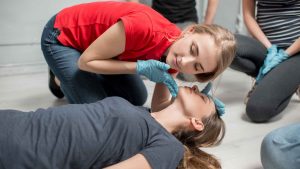

- No law requires a certificate to babysit, but it gets teens hired faster and paid more. The Canadian Red Cross Babysitting course suits ages 11 to 15.
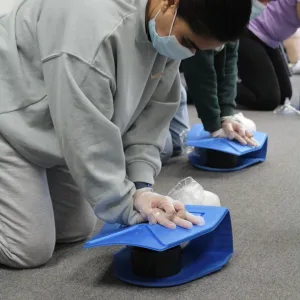
- Infant CPR is different from adult CPR: two fingers, shallower compressions, and back blows plus chest thrusts for choking. Practise it in person, not online only.
- Licensed daycare and ECE staff need first aid with infant and child CPR. In Ontario that is Intermediate/Standard First Aid; other provinces set their own rules.
- Nannies are usually expected to hold current first aid and CPR. Who pays for renewal is negotiable, so put it in the work agreement.
- Youth certificates (Babysitting, Stay Safe!) do not expire. The answers below cover parents, daycare rules, and where to certify.
First aid for childcare covers a wide range of people: teens starting to babysit, nannies and early childhood educators who need it for work, and parents who want to be ready for a choking baby. This guide answers the questions Canadians ask most about babysitting courses, infant and child CPR, daycare and ECE requirements, and the Canadian Red Cross youth programs. Use the search box or the table of contents to jump to a topic.
Reviewed by a Canadian Red Cross Instructor Trainer.
Babysitters & Teens
Getting certified, what age to start, and what parents look for.
Q1: Do I need CPR certification to babysit?
A: No law requires it, but in practice it helps a lot: certified sitters get hired faster and can charge more. The Canadian Red Cross Babysitting course covers infant and child emergencies for ages 11 to 15, while Intermediate/Standard First Aid with CPR-C is the stronger credential for older teens and adults.
Adapted from real questions asked on: r/Babysitting
Q2: What age can my child take a babysitting course?
A: The Canadian Red Cross Babysitting course is designed for ages 11 to 15. It teaches supervision by age group, basic first aid, choking response, and how to handle emergencies and phone calls. Most families time it just before a teen starts sitting for neighbours, usually around 12 or 13.
Adapted from real questions asked on: r/Babysitting
Q3: What qualifications do I need to babysit?
A: There is no formal qualification required to babysit informally, but a Babysitting certificate, or first aid and CPR for older sitters, is what most parents look for. It shows you can manage feeding, bedtime, and an emergency. Pair it with references and a little experience and you will stand out.
Q4: Where do babysitters get certified?
A: Through the Canadian Red Cross Babysitting course, offered in person by training partners such as Coast2Coast. Look for an in-class session, since hands-on practice with choking and first aid is the point. Browse dates on our course locations page and pick a facility near you.
Adapted from real questions asked on: r/Babysitting
Q5: Do you need a licence or certificate to babysit in Ontario?
A: No. Ontario does not require a licence for informal babysitting in a family’s home; different rules apply to licensed childcare businesses. What matters is trust, and a Babysitting certificate or first aid and CPR card is the recognized way to show parents you can handle an emergency. It often tips a hiring decision.
Adapted from real questions asked on: r/legaladvicecanada
Q6: Should babysitters know CPR?
A: Yes. Children choke, fall, and have allergic reactions, and a sitter is often alone when it happens. Infant and child CPR and choking response are quick to learn and hard to improvise under pressure. Even the youth Babysitting course covers the basics, and older sitters benefit from a full CPR/AED Level C card.
Nannies
Certification expectations, who pays, and standing out to families.
Q7: Should nannies be CPR certified, and who pays?
A: Yes. Most agencies and many families treat current first aid and CPR as a hiring requirement for nannies. Who pays is negotiable: families often cover or split renewal costs for a nanny they employ, since the training protects their children. Put it in the work agreement so expectations are clear on both sides.
Adapted from real questions asked on: r/Nanny
Q8: Is in-person child and baby CPR worth it for a nanny?
A: Yes. Online theory helps, but choking and infant CPR are physical skills you need to practise on a manikin before you rely on them. An in-person or blended course gives you that hands-on repetition and a certificate parents recognize. For a role caring for infants, it is a small investment for real readiness.
Adapted from real questions asked on: r/Nanny
Q9: What first aid certificate should a nanny hold?
A: For most nanny roles, Intermediate/Standard First Aid with CPR/AED Level C is the right level, because CPR/AED Level C covers adult, child, and infant CPR. Families with babies specifically want the infant component. Confirm what the family or agency asks for, then book the matching course.
Q10: How do I reassure parents I can handle an emergency?
A: Show a current first aid and CPR certificate, name the provider and expiry, and be ready to describe what you would do if a child choked or fell. Parents hire on trust, and a recognized Canadian Red Cross credential plus a calm, specific answer does more than a resume line alone.
Daycare, ECE & Preschool Requirements
Licensing rules for childcare staff and early childhood educators.
Q11: Do daycare and ECE workers need first aid certification in Canada?
A: Yes. Licensed childcare staff need first aid that includes infant and child CPR, and requirements vary by province. In Ontario that means Intermediate/Standard First Aid; other provinces set their own standard. Centres often book group courses so the whole team certifies and renews together.
Adapted from real questions asked on: r/ECEProfessionals
Q12: What do I need to work at a daycare in Canada?
A: Typically a valid first aid and CPR certificate covering infants and children, a clear police or vulnerable-sector check, and any provincial childcare or ECE requirements. The first aid piece is the one you can complete quickly on your own. See our workplace requirements guide for how employer rules work.
Q13: Do childcare and education students in Alberta need Child Care First Aid?
A: Many Alberta education and childcare programs require a first aid certificate that includes infant and child CPR before a practicum placement. Confirm the exact course your program names, and time it so the one-to-three-year validity covers your placement. Our Alberta guide covers provincial specifics.
Adapted from real questions asked on: r/uAlberta
Q14: Is an online-only CPR course valid for ECEs?
A: No. Childcare licensing requires an in-person skills assessment, so a fully online certificate does not qualify on its own. A blended course, with the theory online and a hands-on class day, does meet the requirement. Always confirm the format your licensing body or employer accepts before you register.
Adapted from real questions asked on: Quora
Q15: What is the minimum first aid requirement for early years settings?
A: It varies by province, but licensed early years settings generally require staff to hold current first aid with infant and child CPR from a recognized provider. Some jurisdictions specify a first-aider ratio or that every room have a certified staff member. Check your provincial childcare regulation for the exact standard.
Q16: What first aid do daycare providers need beyond a regular CPR course?
A: Childcare roles need the child and infant components specifically: choking response for small airways, infant CPR technique, and common paediatric emergencies like febrile seizures and allergic reactions. A general adult CPR card is not enough. Choose an Intermediate/Standard First Aid course that covers all age groups.
Parents & Infant CPR
Whether classes are worth it, infant technique, and choking response.
Q17: Are infant CPR and first aid classes worth it for new parents?
A: Yes. Choking rescues on their own children are among the most common stories parents share afterward. Babies put everything in their mouths, and choking response is fast to learn and hard to improvise. A course covering infant and child CPR, aligned with Heart & Stroke guidance, is one of the highest-value afternoons a new parent can spend.
Adapted from real questions asked on: r/daddit
Q18: How is infant CPR different from adult CPR?
A: Scale and technique. For a baby under one year you use two fingers or two thumbs on the breastbone instead of two hands, compress about four centimetres deep, give gentler breaths covering the mouth and nose, and use back blows plus chest thrusts for choking rather than abdominal thrusts. CPR/AED Level C teaches all three age groups.
Adapted from real questions asked on: Quora
Q19: What do I do if a baby or toddler is choking?
A: If they cannot cough, cry, or breathe: for a baby, give five firm back blows between the shoulder blades, then five chest thrusts with two fingers, repeating until the object clears. For a toddler, use back blows then abdominal thrusts adapted to their size. Call 911 if it does not clear. This is exactly what a class lets you practise.
Adapted from real questions asked on: Quora
Q20: How do I learn infant CPR?
A: Take an in-person or blended course that includes infant CPR, such as a CPR/AED Level C or Intermediate/Standard First Aid class. Practising on an infant manikin is what makes it stick. Find a session near you on our course locations page and bring your partner or caregiver too.
Q21: What should be in a first aid kit for a home with young children?
A: Gloves, adhesive bandages in several sizes, sterile gauze and tape, antiseptic wipes, tweezers, a digital thermometer, a triangular bandage, and any prescribed items such as an epinephrine auto-injector. Keep infant and child medication dosing information handy. A kit only helps if you know how to use it, which a first aid course teaches.
Q22: At what age can my child start learning first aid?
A: Young children can learn how to call 911 and get help, and structured programs begin around age nine. The Canadian Red Cross Stay Safe! course suits ages 9 to 13, and the Babysitting course builds on it for ages 11 to 15. Early skills build lifelong confidence around emergencies.
Youth Programs: Babysitting & Stay Safe!
The Canadian Red Cross youth courses, who they suit, and how they compare.
Q23: What is the Canadian Red Cross Babysitting course and who is it for?
A: It is a one-day Canadian Red Cross program for ages 11 to 15 that turns teens into capable, confident sitters: age-appropriate care, feeding and sleep routines, injury prevention, choking and basic first aid, and the business side like rates and expectations. Participants earn a certificate parents recognize.
Adapted from real questions asked on: r/Babysitting
Q24: What is the Stay Safe! course and who is it for?
A: Stay Safe! is the Canadian Red Cross program for children aged 9 to 13 who are starting to spend short periods home alone. It covers answering the door and phone safely, what to do in a fire or power outage, basic first aid, and when to call 911. It pairs naturally with the Babysitting course a couple of years later.
Q25: What is the difference between the Babysitting and Stay Safe! courses?
A: Stay Safe! prepares younger children, roughly 9 to 13, to be safe on their own for short periods. The Babysitting course prepares older youth, 11 to 15, to care for other people’s children responsibly. Many families do Stay Safe! first, then the Babysitting course once their teen is ready to start sitting.
Q26: Do youth program certificates expire?
A: No. Canadian Red Cross youth program certificates, including Babysitting and Stay Safe!, do not expire, unlike first aid and CPR certificates that last three years. That said, a refresher is worth it as a teen grows into more responsibility, and older sitters often move up to a full first aid and CPR course.
Q27: Can a babysitting certificate help my teen get hired?
A: Yes. A recognized Babysitting certificate signals to parents that your teen has learned safety, first aid, and how to handle an emergency, which sets them apart from sitters with no training. It often justifies a higher rate too. Many teens list it alongside references when they start reaching out to families.
Adapted from real questions asked on: r/Babysitting
Q28: Is a babysitting certificate legally required in Ontario?
A: No. Ontario does not legally require a certificate to babysit informally. It is a trust and readiness credential, not a licence. Parents value it because it shows the sitter can respond to choking, injuries, and emergencies, which is why certified teens are chosen and paid more even though it is optional.
Adapted from real questions asked on: r/ontario
Questions were selected from Canadian search demand and public forum discussions in communities such as r/Babysitting, r/Nanny, r/ECEProfessionals, and r/daddit. Answers were edited for clarity, aligned with Canadian Red Cross program information and Heart & Stroke CPR guidance, and reviewed by a certified instructor. Childcare licensing rules vary by province, so readers should confirm the exact requirement with their employer or provincial regulator.
Whether you are a teen starting to babysit, a nanny or educator who needs it for work, or a parent preparing for emergencies, choose a course with the infant and child components and an in-person skills day. Youth programs give younger kids a safe foundation; first aid with CPR/AED Level C covers the rest.
This guide is provided for general informational purposes and does not replace certified training or personalized medical advice. In an emergency, call 911. Course requirements are set by employers, regulators and licensing bodies, so always confirm the exact certificate your organization requires.
Written by Godwin Orilua and reviewed by Ashkon Pourheidary, B.Sc. Hons Neuroscience, Co-Founder and Canadian Red Cross Instructor Trainer at Coast2Coast First Aid Inc. Source questions referenced from public Reddit and Quora discussions and Google search data; answers follow current program standards.
Coast2Coast First Aid & Aquatics delivers Canadian Red Cross first aid, CPR, Babysitting, and Stay Safe! training for families, sitters, nannies, and childcare centres across Ontario and Alberta. To book a course or certify a group, visit our course locations page.