We offer courses in Canada and the US. If you are experiencing issues with our website and need help to register, or if you have questions, please call us at 866-291-9121.
If you are facing any issues with your online course, registration, or training, please click here to submit a help request.
Being a lifeguard is about more than just a whistle and a high chair—it’s about being the most prepared person on the pool deck. From mastering lifeguard CPR certification to handling specialized pediatric emergencies, discover why American Red Cross training is the ultimate professional standard.
First aid education gives students the confidence and skills to respond in emergencies. Discover why US schools should integrate first aid into their curriculum and how it benefits students, staff, and entire communities.
Every parent wants to keep their child safe, but accidents can happen in seconds. Learning pediatric first aid and infant CPR gives you the skills and confidence to respond in an emergency. From choking to breathing issues, discover why every parent should be prepared with life-saving knowledge.
Halloween is a time for costumes, candy, and family fun, but safety comes first! Learn the top tips for keeping kids safe while trick-or-treating, choosing costumes, and enjoying the spooky festivities across the U.S.
Teachers are an essential part of our communities and act as first responders for our children in schools when it comes to emergencies. Learn what requirements teachers must meet in the state of California!
The Red Cross Virtual Babysitting Program is available to pre-teens and teens, ages 11 to 15 years old. There is also a course for children ages 9 to 13 called Stay Safe. Both the Babysitting and Stay Safe training courses are available online in a virtual format. These youth courses are designed to allow participants to complete their training at home. There are multiple benefits of the Virtual Babysitting program which will teach you (or your child) important life skills.
Babysitting training prepares participants to become responsible caretakers of children. Once the virtual Babysitting program is completed, applicants will have a full understanding of how to care for a young child and treat common emergencies. They also know all about complete child safety and how important routine is in children.
Those who complete the full virtual babysitting program earn a Canadian Red Cross certificate proving their skills. Let’s talk about 5 Benefits of the Virtual Babysitting program!
5 Benefits of the Virtual Babysitting Program For Your Business
The Virtual Babysitting Program is between 7 and 8 hours long and is held over four days. Each day will consist of a 90 minute online session, followed by 30 minutes of at-home work.
These are the five huge benefits of completing the Red Cross Virtual Babysitting Program if you are looking into building a babysitting business:
1. Succeeding in the Interview Process
Getting a good babysitting job doesn’t only depend on your skills but also on how you conduct yourself in an interview. One of the benefits of completing a virtual babysitting course is that you learn about how important it is to conduct yourself in the interview while also asking all the right questions. Participants are taught how to create a resumé and create business cards so that they can successfully manage their babysitting business. Don’t forget that you will receive a babysitting certificate from the Canadian Red Cross which already is a huge plus for you.
2.Meeting Customer Expectations
Learning to meet customer expectations is another vital benefit of the course. Besides being dressed correctly when arriving for the job, other customer expectations include being on time and having clear communication with the parents about their children’s needs. You are taught to ask the right questions about what to expect, find out if there are any special circumstances (allergies, medications, etc.). Participants of the course also learn how to survey the home at first, helping them to understand where dangers may lie.
Become a Certified Babysitter!
Join our Babysitting Course and learn essential skills for caring for children safely and responsibly. From basic first aid to engaging activities, our training prepares you to be the best babysitter you can be!
You always need to have a genuine interest in the children you are going to look after, and the course teaches you how. Each age group you are likely to care for has different needs and challenges, and the virtual program is geared to teach you how to communicate with them and to organize the appropriate and fun activities. Once the course is completed, young babysitters know how to deal with crying and tantrums and how to care for children from babies to school-age children.
4.Confidently Meeting the Challenges of the Job
For younger babysitters, the lessons of the program teach them how to give others direction and to deal with situations confidently. Babysitters face several challenging issues, and these include mealtime, structured playtime, and bedtime. The program teaches them to support younger children emotionally to ensure these challenging issues are dealt with successfully. Every participant learns how to react confidently to any emergency, including bleeding, burns, choking, and poisoning.
5.Understanding the Value of Money Earned
Teens and younger children becoming babysitters can earn a substantial allowance. Learning the value of money, how to spend it, and how to budget is essential as they become part of the economy.
Conclusion
Providing a safe environment for younger children is essential to every parent, and ensuring they have the correct care is often a challenge. By encouraging younger children to follow a babysitting program, children can provide a safer environment for younger children in their care. Babysitting is a profitable and rewarding job, and the correct training makes it enjoyable.
Register for First Aid Training
Register today for a First Aid Training course and learn how to deal with emergencies and keep your loved ones safe! Check out our facilities and book your spot now.
As Canadians, most of us like to visit beaches, lakes, and swimming pools especially in summer time. Afterall, we don’t get too much of the warm weather so we would like to take full advantage of it.
Here at Coast2Coast swim, we are extremely passionate about swimming and all water activities; and we encourage everyone to also get involved with these activities. Swimming has always been one of the best ways to stay in shape for people of all ages, to stay active, and finally a fun activity to enjoy no matter if you are by yourself or with friends and family. That is why we take pride in teaching our community how to swim and stay safe in and around water.
Coast2coast Swim offers a variety of options from public swimming classes, to private at home (mobile) swimming lessons. This allows our customers to find the most convenient and cost efficient.
However, the question we get from time to time is “can you teach yourself how to swim?”
In short, yes. But you should know that we strongly suggest for you to sign for a training or class either at Coast2Coast swim or another reputable swimming school. This is to make sure you learn the fundamentals of swimming in the right way and that you can enjoy the water in a safe manner at all times.
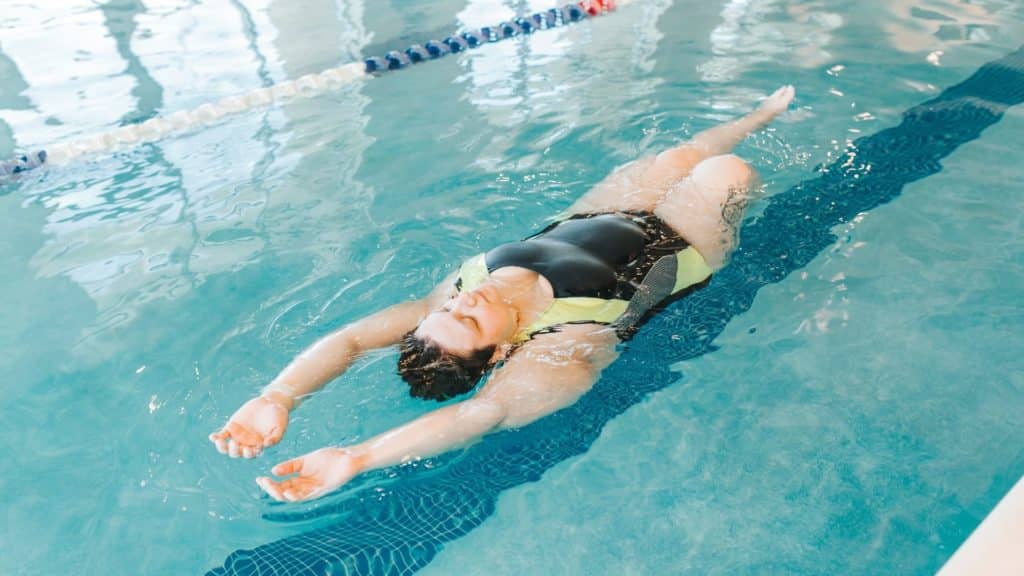
Teaching Yourself to Swim
Here is our suggestion on how you can try to teach swimming to yourself. Please be aware these are only suggestions and we can not guarantee your safety or skills. Swimming can be challenging. Here we go:
Start practicing your swimming in a safe environment like the shallow end of a supervised swimming pool. Never go to the deep end of the pool or swim in moving water without supervision. If you are tired, don’t practice.
The easiest stroke to learn is the front crawl. Once mastered, you can learn the three other strokes – backstroke, butterfly, and breaststroke.
1.The First Step
Standing with your back against the pool, take a deep breath, lean your waist until your face is completely in the water and your ears are at the waterline. You must hold this position for 2 seconds before turning your head to one side, exhaling into the water. Now you can return to the starting position. Practice doing this a few times.
2.Learning to Inhale and Exhale
Start by holding your arms out to your side, fingers together and palms down. Now, take a deep breath, lean forward, and placing your face in the water, bring your right arm up and out of the water to your front.
As your hand contacts the water, pull your arm straight down, making a circular motion underwater and taking your hand behind you and to your right side. At this point, your palm should be facing up. Without lifting your head, turn it to the right and draw a new breath through your mouth. Now turn your head back and exhale through your mouth or nose with your face in the water.
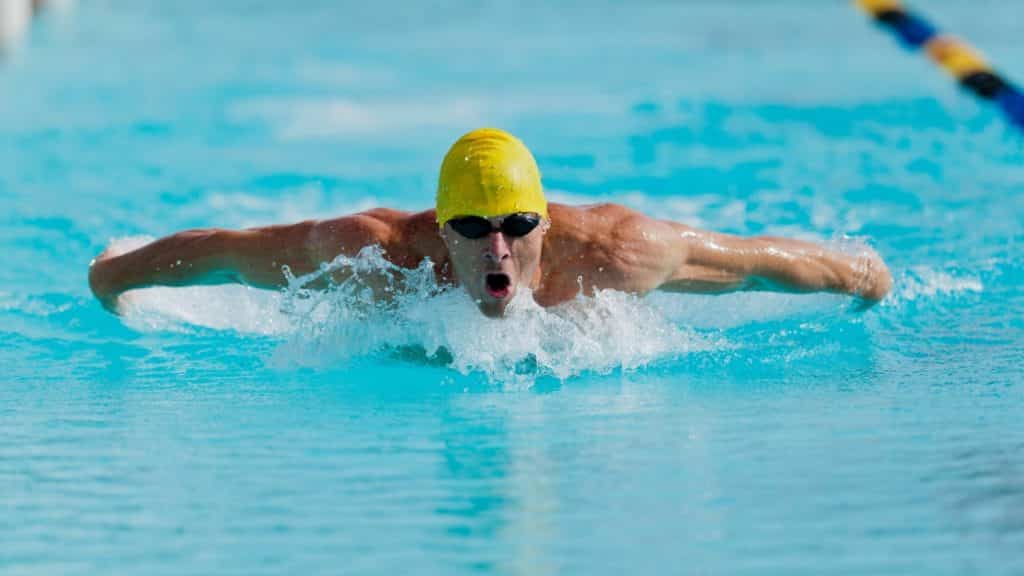
3.Practicing the Strokes and Breathing
Aim to practice the stroke and breathing exercise until you can complete one stroke with each arm and one complete breath without needing to lift your head out of the water. The idea is stroke – stroke – breath. When swimming, your arm movements propel your body, while kicking your legs prevent you from sinking.
Keep your strokes regular, and avoid looping underwater because once you are swimming, you will have to work harder to cover the same distance. The closer your body is to the surface, and the flatter it is, the less work you must do. Additionally, when you bring your arms out of the water, a flat circular motion helps save more energy than bringing them overhead.
4.Learning to Kick
Facing the side of the pool, place both your hands on the edge and extend your arms. Lift both your legs together until your arms, body, and legs are facing away from the edge in a straight line. Turning your head to one side, draw a breath through your mouth without lifting your head straight up.
With your knees held straight, kick your legs quite fast from the hip, making the smallest possible splashes. At no point should your feet come out of the water. While you are doing this, exhale underwater, as you learned earlier. Continue practicing kicking and breathing until you are comfortable doing both simultaneously.
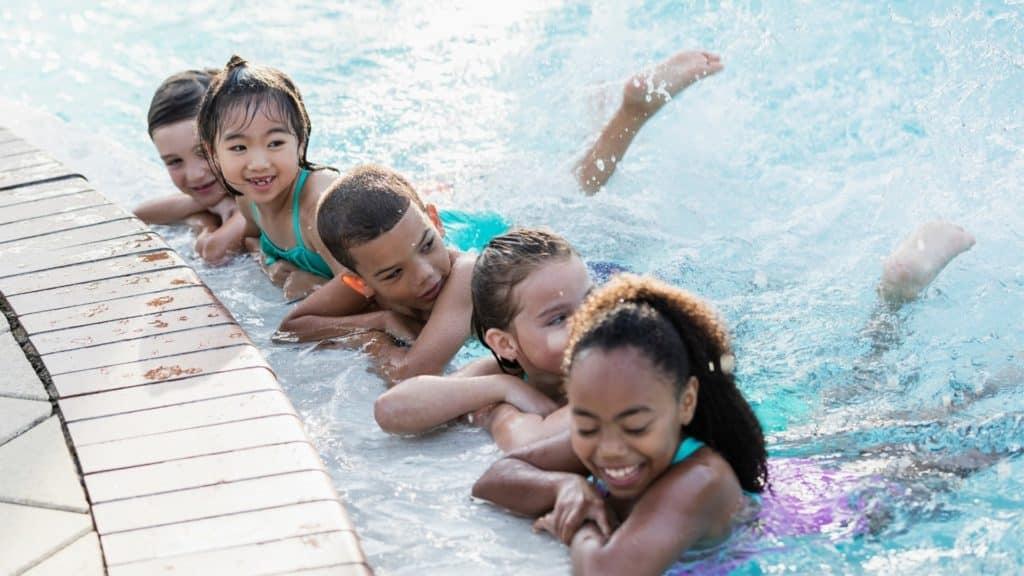
5.Going to the Opposite End
You are now ready to go across the shallow side of the pool. Facing across the shallow end, stand with your back to the side of the pool. With bent knees, extend your left arm to the front, and taking a deep breath, let your legs help push you from the side. At the same time, put your head in the water, taking a forward stroke with your right arm as your legs start kicking.
6.Achieving Width Lengths
Now you can continue kicking, while also concentrating on your strokes and breathing. Make sure you are bringing each hand back to your side as you reach out to make a stroke with your other hand. As mentioned earlier, your swimming pattern should be a stroke with each arm and then a breath. Practice this until you can swim the whole width of the pool without needing to stop.
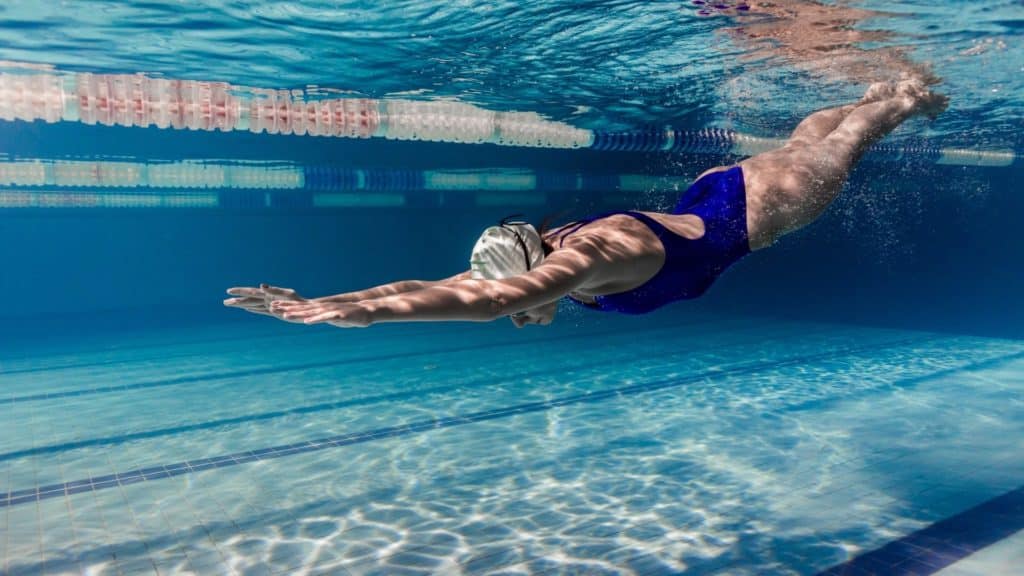
We hope this was helpful to you. If you are looking to learn these skills faster and better, contact Coast2Coast Swim to find out more about all our options. Our dedicated instructors have been teaching for close to 20 years and have taught thousands of students throughout the years. Once again, be aware that the practices mentioned in this blog are only suggestions and we can not guarantee your safety or skills.
Enjoy your Swim.
Dive into fun with Coast2Coast's Mobile Swimming Course!
Whether you’re a beginner or looking to improve your strokes, we bring the pool to you! Sign up today and make a splash this summer!
As Canadians, most of us like to visit beaches, lakes, and swimming pools especially in summer time. Afterall, we don’t get too much of the warm weather so we would like to take full advantage of it.