
Quick Answer
California teachers are required to complete CPR certification that covers adult, child, and infant CPR, AED use, and basic first aid as a condition of obtaining a preliminary or clear teaching credential from the California Commission on Teacher Credentialing (CTC). The certification must come from a commission-approved program, be valid at the time of the credential application, and include a hands-on skills assessment — a fully theoretical or online-only course is not sufficient. Most school districts also require teachers to renew their CPR certification every two years to remain eligible for classroom employment.
2 Years
Valid Certification Period for AHA & Red Cross CPR Cards
3 Groups
CPR Coverage Required: Infant, Child & Adult
< 2 Min
Response Window to Prevent Severe Brain Damage in Cardiac Arrest
What You Will Learn
- Why the California Commission on Teacher Credentialing mandates CPR and first aid training for all credential applicants
- Exactly what the CTC CPR certification requirement covers: infant, child, and adult CPR, AED use, and basic first aid
- The difference between a Basic (Emergency) and Intermediate (Standard) First Aid and CPR course, and which one applies to your role
- How blended learning works — completing the theoretical portion online followed by an in-person skills session
- How school district policies on renewal differ from the state credentialing requirement
- How to obtain or renew your CPR certification and what to submit with your credential application
If you are pursuing a teaching credential in California, one question comes up early in the process: do California teachers need CPR certification? The answer is yes. CPR certification for teachers in California is a firm requirement of the California Commission on Teacher Credentialing, and it applies to both preliminary and clear credential applicants. To earn your teaching credential, you must complete CPR training that covers adult, child, and infant cardiopulmonary resuscitation, AED use, and basic first aid — and the certification must come from a commission-approved program.
This article explains exactly what the California CPR certification requirement covers, which course level is right for your role, how blended learning formats work, and how school district renewal policies interact with the state credentialing requirement.
Why Is CPR Certification Important for California Teachers?
California schools are active environments where medical emergencies can occur without warning. Teachers working in K-12 classrooms are routinely the first adults on the scene when a student experiences choking, a seizure, an asthma attack, or cardiac arrest. Because cardiac emergencies begin causing irreversible brain damage within two minutes, the ability to respond effectively is not theoretical. Proper training before a crisis happens is what makes the difference between a good outcome and a fatal one.
Having CPR and first aid training also promotes student safety in a broader sense. It gives parents and school administrators confidence that the adults responsible for their children’s wellbeing are prepared to act. School staff who complete required training reinforce the school’s role as a safe and structured environment. The California state requirement reflects this reality: preparedness is not optional in a school setting.
Physical education teachers, coaches, and instructors in higher-risk settings like shop class face elevated exposure to injury and cardiac emergencies. For those roles, a higher level of first aid training is not just recommended — most school districts mandate it for continued classroom employment.
What CPR Training Is Required for California Teachers?
Under California Education Code, CPR training for teacher credentialing must adhere to standards established by the American Heart Association (AHA) or the American Red Cross. The California Commission on Teacher Credentialing mandates that the training cover all three age groups — infant, child, and adult — along with AED (automated external defibrillator) training and basic first aid. A course that addresses only adult CPR skills, or that omits first aid entirely, will not satisfy the requirement.
The state mandates strict criteria regarding what the CPR certification covers and which organizations can provide it. Courses must be completed through a commission-approved program. Initial CPR certification must be valid at the time of submitting a preliminary or clear credential application packet to the CTC. If your certification has expired when you submit your application, your credential will be delayed.
Which Course Level Is Right for Your Role?
Not all California teachers need the same level of certification. The table below outlines the three main course levels, the roles each is designed for, and their validity period:
| Course Level | Target Audience | Duration | Validity |
|---|---|---|---|
| Basic (Emergency) First Aid & CPR | Standard classroom teachers, substitute teachers | 1 Day | 2 Years |
| Intermediate (Standard) First Aid & CPR | PE teachers, coaches, shop class instructors | 2 Days | 2 Years |
| Basic Life Support (BLS) | School nurses, specialized health staff, healthcare professionals | 4–5 Hours | 1 Year |
Standard classroom teachers and substitute teachers typically satisfy the CTC requirement through the Basic (Emergency) First Aid and CPR/AED course. Physical education teachers and coaches are strongly encouraged — and frequently required by their local school district — to hold Intermediate (Standard) First Aid certification due to the higher injury risks in their settings. BLS certification is designed for school nurses and healthcare professionals who need a clinical-level lay rescuer CPR standard; it is not the typical requirement for general educators.
Do California Teachers Need to Be CPR Certified to Get Their Credential?
Yes. To obtain a teaching credential in California, teachers must hold a valid CPR certificate that includes training in infant, child, and adult CPR, AED use, and first aid. This requirement applies to individuals seeking both a preliminary credential and those completing a teacher induction program for a clear credential. Without valid certification, the credential application will be incomplete, and the CTC will not issue the credential until the requirement is met.
The CPR certification must be completed before submitting the credential application. It is the applicant’s responsibility to ensure that the training meets all state guidelines and comes from a commission-approved program. Some teacher preparation programs offer guidance on where to obtain the required training, but that guidance is advisory — the credentialing requirement itself is the applicant’s to fulfill.
Compliance Note
While the California Commission on Teacher Credentialing does not require renewal of CPR certification for ongoing teaching licensing, many school districts mandate that teachers renew their CPR certification every two years for continued classroom employment and student safety. Confirm your district’s renewal policy when you are hired — the state credentialing requirement and the employer requirement are separate obligations.
Once hired, a teacher’s school district may set its own policies regarding renewal frequency. Most districts follow a two-year renewal schedule for CPR certification, which aligns with the standard expiration of CPR cards issued by major certifying bodies like the AHA and the American Red Cross. While California law does not require re-verification of the CPR card when renewing a teaching credential, individual school districts usually require recertification every two years for continued classroom employment.

How Can Teachers Get or Renew Their CPR Certification?
Teachers in California have several options for obtaining CPR certification. The most important consideration is choosing a course that meets the requirements set by both the California state requirement and the local school district. Online CPR courses are increasingly accepted, but most school districts and the CTC require an in-person, hands-on skills assessment before a valid certification can be issued.
Understanding Blended Learning for CPR Certification
Blended learning courses are the most practical format for busy educators and aspiring teachers balancing coursework and field placements. CPR training can be completed through blended learning formats that combine online coursework with an in-person skills session, allowing flexibility to meet different scheduling needs.
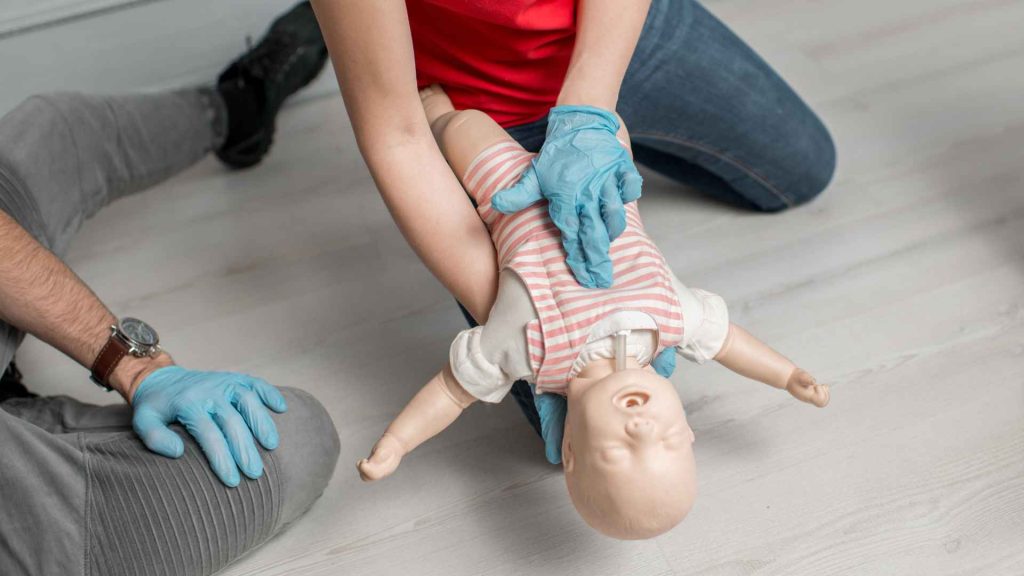
In a blended format, participants complete the theoretical portion online at their own pace, typically 2 to 3 hours of self-directed learning covering topics like recognizing cardiac arrest, the CPR cycle, and AED operation. They then attend a focused in-person skills session, also around 2 to 3 hours, where a certified instructor evaluates hands-on skills including chest compressions, rescue breaths, infant pediatric CPR techniques, and AED use. Successful completion of both the online coursework and the in-person skills assessment results in a valid certification.
Fully online CPR courses — where no in-person component exists — are sometimes accepted, but it is strongly recommended to confirm with your employer before enrolling. Most school districts require an in-person, hands-on skills assessment to accept a CPR certificate for employment. A blended or in-class format reduces the risk of your certification being rejected by the district’s human resources department.
Explore first aid and CPR courses that include both adult CPR skills and infant pediatric CPR to ensure your certification meets the full scope of the CTC requirement.
Renewal Courses: What to Expect
To maintain CPR certification, individuals should enroll in a renewal course before their current certification expires. Renewal classes are often shorter than the initial certification but still include both theory and practical skills assessments to confirm that skills remain current and effective. The renewal course covers the same core content — adult, child, and infant CPR, AED deployment, and first aid — but moves more quickly for participants who have recent experience.
CPR certifications typically last for two years. After that period, the card is no longer considered a current certification by either the CTC (for initial applications) or most school districts (for continued employment). Teachers should keep a digital and printed copy of their certification and track its expiry date to avoid lapses.
Teachers seeking Basic Life Support (BLS) certification — typically school nurses or health staff — should note that BLS cards are typically valid for one year, not two, and require renewal on a shorter cycle.
What Happens if a Teacher’s CPR Certification Expires?
An expired CPR certification creates two separate problems for California teachers: one at the district level and one at the state level. At the school district level, many districts require that teachers maintain current CPR certification throughout employment. If a certification lapses, the district may remove the teacher from classroom duties or student supervision until a renewal course is successfully completed.
At the state level, while an expired card does not automatically revoke a teaching credential, it does become relevant if the teacher applies for a new or renewed credential. The initial credentialing requirement applies at the time of the credential application — not on an ongoing basis for credential renewal — but district-level requirements are independent of this and may be stricter.
The safest approach is to track your CPR card’s expiry date and enroll in a renewal course a few weeks before it lapses. Many safety training seminars and course providers offer online booking so teachers can secure their seat in a renewal class well in advance. Do not wait until the card has already expired — some providers will require you to retake the full initial certification rather than the shorter renewal format if too much time has passed.
The Importance of Staying Certified as a California Teacher
CPR training is more than a box to check on a credential application. It is a set of life-saving skills that directly affects whether a teacher can respond effectively when a student’s life is at risk. Cardiac arrest is survivable when bystanders intervene quickly — the probability of survival drops significantly for every minute that passes without CPR. Teachers working in California’s K-12 schools are in a position to be that first responder, and their training is what determines whether they can act with confidence.
Schools and districts that prioritize complete CPR training for all staff — not just those in high-risk roles like physical education — create an environment where a trained adult is always nearby. This matters in large schools where the nearest AED or school nurse may be on the other side of the building. A classroom teacher who knows how to recognize cardiac emergencies, initiate lay rescuer CPR, and operate an automated external defibrillator can bridge the gap until emergency medical services arrive.
Continuing education in first aid and CPR also builds confidence. Teachers who complete initial certification and keep it current through renewal classes are better prepared to respond — not just because their skills are current, but because repeated exposure to the material through interactive scenarios and skills practice cements the knowledge in ways that a single course years ago cannot. Student safety depends on that readiness.

Key Takeaway
CPR certification for teachers in California requires completing a commission-approved program that covers infant, child, and adult CPR, AED use, and basic first aid. The certification must be valid when submitting your credential application to the CTC. Most courses use a blended format: theoretical portion online followed by an in-person skills session. CPR cards are valid for two years, and many school districts require renewal every two years as a separate employment condition — regardless of the state credentialing timeline.
Get Your CPR Certification for Teaching
Coast2Coast offers American Red Cross and AHA-approved courses with blended learning options — complete the theory online, then demonstrate your hands-on skills in person. Valid certification for your CTC credential application.
Frequently Asked Questions: 2025 CPR Certification for California Teachers
Sources & Regulatory References
- California Commission on Teacher Credentialing (CTC) — Subject Matter Requirements and CPR Certification Standards for Teaching Credentials: ctc.ca.gov
- California Education Code — Sections governing school safety, emergency preparedness, and teacher credentialing requirements
- American Heart Association (AHA) — CPR and ECC Guidelines; Lay Rescuer CPR Standards: cpr.heart.org
- American Red Cross — First Aid, CPR, and AED Program Standards; Commission-Approved Training Programs
- California Occupational Safety and Health Administration (Cal/OSHA) — First Aid and Emergency Response Requirements in the Workplace: dir.ca.gov/dosh
This article was reviewed by a certified First Aid and CPR Instructor Trainer. Content reflects California credentialing requirements as of the publish date. Requirements are subject to change; verify current standards with the CTC and your local school district.