
Quick Answer
Every parent should learn pediatric first aid because childhood emergencies, from choking and cardiac arrest to severe burns and allergic reactions, can occur without warning and require immediate care in the first critical moments before emergency services arrive. Pediatric first aid training equips caregivers with the practical knowledge and life-saving skills to respond quickly, prevent further harm, and give a child the best chance at a full recovery.
120s
Response window to prevent irreversible brain damage in children
8%
Of children in the US are affected by food allergies that can trigger anaphylaxis
2 yrs
Validity of Basic and Intermediate pediatric first aid and CPR certifications
What You Will Learn
- Why first aid and CPR training is one of the most essential first aid skills every parent can acquire
- The most common childhood injuries and medical emergencies caregivers need to prepare for
- Exactly what parents learn in a pediatric first aid training course, from infant CPR to anaphylaxis response
- How to build a safe and nurturing environment at home that reduces the risk of accidents
- Which first aid certification level is right for parents, babysitters, and childcare professionals
Becoming a parent is one of life’s greatest joys, but it also comes with new responsibilities. Among them, nothing is more important than ensuring your child’s safety. From minor scrapes to life threatening emergencies, being prepared can make all the difference. That’s why learning pediatric first aid for parents is an essential step in protecting your little ones, and one of the most incredibly valuable investments any caregiver can make.
Safety Tip: Choking is the leading cause of injury and death among children under age 4. Learning infant and child CPR along with choking rescue techniques can help you respond in seconds when every second counts.
This guide explains why first aid training is one of the most practical skills a parent can develop. It covers the most common emergencies infants and young kids face, including choking, breathing difficulties, allergic reactions, severe burns, and head injuries, and shows how proper training helps parents stay calm, respond effectively, and potentially save a child’s life. From the life saving skills covered in a pediatric first aid course to how to structure a safe and nurturing environment at home, this article gives you the knowledge to make every stage of your parenting journey safer.
Why Every Parent Should Learn First Aid and CPR
Accidents happen quickly. Babies and young children are naturally curious, and their exploration of the world often leads to bumps, falls, or sudden choking hazards. The core reason why every parent should learn first aid comes down to one critical reality: emergencies don’t wait for professional help to arrive. In the first critical moments after a medical emergency, the actions of a trained caregiver can determine whether a child makes a full recovery or suffers lasting harm.
When you have first aid knowledge, you can respond calmly, perform CPR if needed, manage severe bleeding, or administer basic care for burns and injuries, all while waiting for emergency services. Pediatric first aid courses teach parents how to recognize and respond to common childhood emergencies including breathing difficulties, allergic reactions, cardiac arrest, and trauma. This practical knowledge reduces panic and transforms a terrifying moment into a situation you can actually manage.
Many parents assume they will instinctively know what to do in an emergency. Research consistently shows the opposite: without aid training, the stress of a medical emergency causes most people to freeze. A first aid training course changes that, replacing uncertainty with muscle memory and confidence.
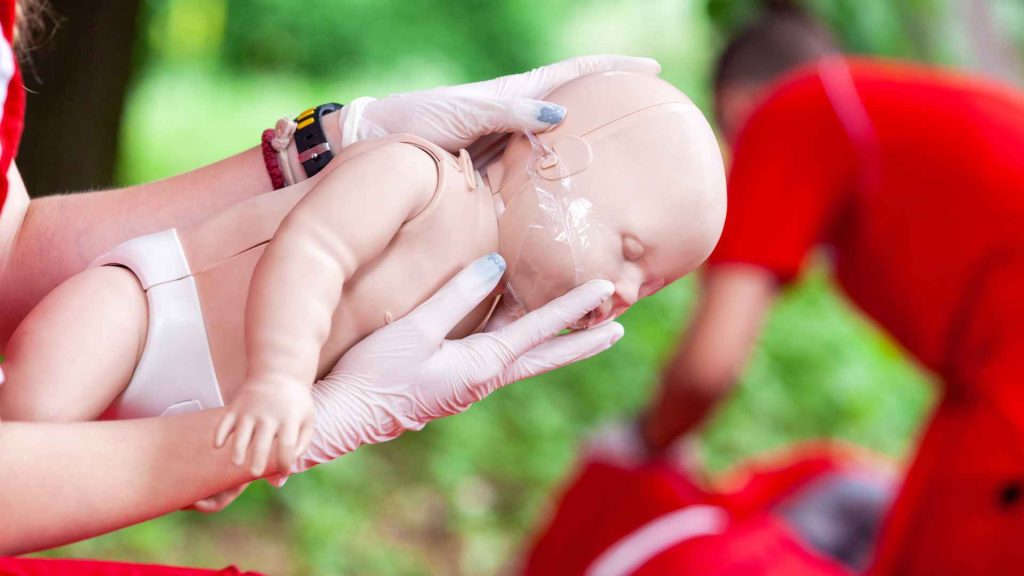
What Are the Most Common Pediatric Emergencies Parents Need to Prepare For?
Children grow and explore at an astonishing pace, and with that comes exposure to many potential hazards. Understanding the most common injuries and emergencies that affect infants and children helps parents prepare mentally and practically. Being prepared with proper first aid training gives you the confidence to handle any situation, including the ones that seem impossible to anticipate.
Choking Emergencies in Infants and Toddlers
Choking is one of the most terrifying experiences for any parent, and it is also among the most common childhood emergencies. Small objects, food items like grapes and hot dogs, and even household items pose serious choking hazards for young children. Pediatric first aid training teaches you the difference between infant back blows and abdominal thrusts for older children, when to take immediate action, and when calling emergency services is the only appropriate next step. This critical knowledge is not something parents can afford to learn on the spot.
Cardiac Arrest and the Need to Perform CPR
Pediatric cardiac arrest, while less common than in adults, can result from drowning, severe asthma attacks, major trauma, or sudden cardiac conditions. The 120-second response rule underscores a hard medical fact: when a child’s heart stops, the window to prevent irreversible brain damage is extremely short. Parents who know how to perform CPR correctly on infants and children, using the right compression depth and rescue breaths for their smaller bodies, can sustain circulation until emergency services arrive. Infant CPR training is not optional for any caregiver who wants to be truly prepared.
Severe Burns and Scalds
Children have thinner skin than adults, making them far more vulnerable to serious burns. Kitchen accidents, hot water scalds, and contact with heated surfaces are among the most common causes of pediatric thermal injuries. Parents with basic first aid knowledge know to cool the affected area under gently running cool water for at least 20 minutes, to never apply ice or butter, and to recognize when a burn requires immediate medical intervention versus home care. Acting correctly in the first critical moments prevents further harm and significantly improves outcomes.
Allergic Reactions and Anaphylaxis
Food allergies affect approximately 8% of children in the United States, and serious allergic reactions can escalate into life threatening emergencies within minutes. Parents trained in pediatric first aid learn to identify the early signs of anaphylaxis, including hives, facial swelling, wheezing, difficulty breathing, and sudden pallor. Understanding how to administer an epinephrine auto-injector and when to call emergency services can be the difference between a manageable reaction and a child’s life at risk. This is one of the essential first aid skills that parents of children with known or unknown allergies must have.
Drowning and Water Safety Emergencies
Drowning is the leading cause of accidental death for children ages one through four. It happens silently and in seconds, and it can occur in as little water as a bathtub or a backyard pool. Learning CPR and rescue breathing techniques specific to infants and children can save precious minutes before paramedics arrive. Parents should also learn to recognize the signs of secondary drowning, which can appear hours after a water incident and includes persistent coughing, lethargy, difficulty breathing, and vomiting.
Head Injuries and Concussion Awareness
Children are prone to head injuries from falls, sports, and playground accidents. Recognizing the signs of a concussion in children can be challenging because younger children may not be able to articulate their symptoms clearly. Parents with first aid skills learn to monitor for vomiting, unusual drowsiness, unequal pupils, balance problems, and behavioral changes following a head impact. Knowing when to seek immediate emergency care versus when monitoring at home is appropriate is a skill that every parent should develop through formal training.
What Do Parents Learn in a Pediatric First Aid Training Course?
An infant CPR and first aid course focuses on life-saving techniques specifically designed for babies under one year old, as well as older children. The anatomy and physiology of infants differ significantly from those of adults, and the techniques used in an emergency must reflect those differences.
In a pediatric first aid training course, parents learn how to respond to the following situations:
- Choking in infants and children (back blows and abdominal thrusts)
- Infant CPR and child CPR, including rescue breaths and chest compressions
- AED use for adults, children, and infants
- Anaphylaxis and severe allergic reactions
- Asthma attacks and breathing emergencies
- Severe burns, scalds, and thermal injuries
- External bleeding and wound care
- Head, neck, and spinal injuries
- Seizures and diabetic emergencies
- Poisoning and environmental emergencies
- Fever management and when to seek emergency care
- Stroke recognition in children and adults
Taking infant CPR classes for parents provides both confidence and peace of mind. Knowing what to do during a medical emergency helps reduce panic and ensures you can provide immediate care while waiting for emergency responders. These are not just aid skills for crisis scenarios. They shape how parents approach daily routines like feeding, bathing, and playtime, making every stage of parenting safer.
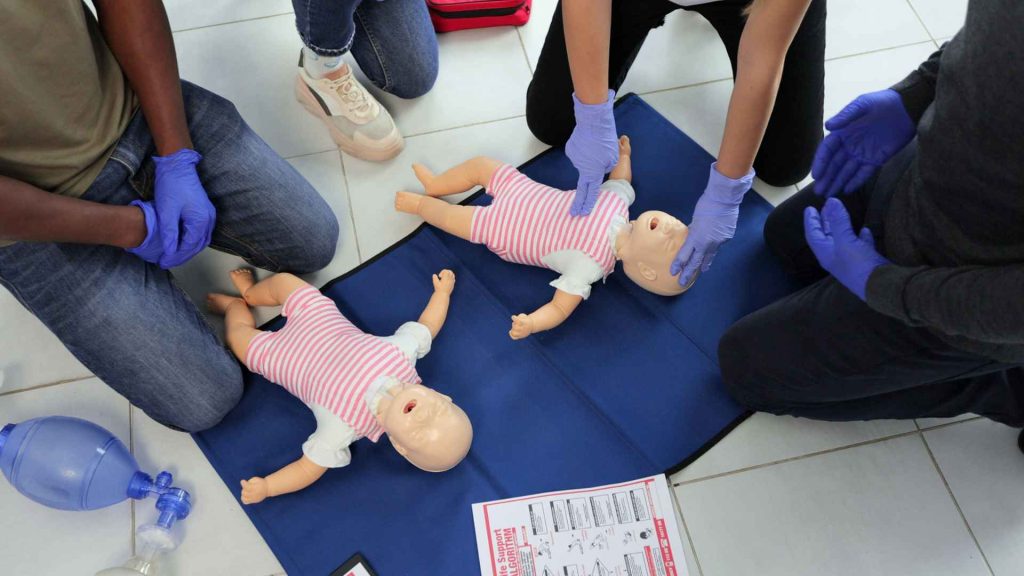
First Aid for Choking Infants: A Critical Skill Every Parent Must Know
Choking is one of the most common emergencies among infants and toddlers, and it is one that demands immediate action. Small objects, food, or even toys can easily become lodged in a child’s airway. Learning first aid for choking infants teaches you how to identify the emergency quickly and apply the correct technique, including back blows and chest thrusts for babies under one year, to safely clear the airway.
These simple actions, practiced properly in a hands-on first aid course, can be the difference between a frightening moment and a tragic outcome. Many parents report that physically practicing these techniques in a classroom setting is what makes them feel genuinely prepared to respond calmly in a real emergency. This is why practical knowledge gained in a training environment is so much more effective than watching a video alone.
How to Build a Safe and Nurturing Environment at Home
Prevention is always the best first aid. Creating a safe and nurturing environment for children involves childproofing your home, removing common injury hazards, and developing household routines that reduce risk. Securing furniture to walls, installing safety gates near stairs, keeping small objects and cleaning products out of reach, and maintaining barriers around water features all reduce the frequency of common childhood injuries.
However, even the most carefully prepared home cannot prevent every accident. Children grow quickly, discover new abilities, and encounter unexpected situations every day. That is why first aid knowledge must accompany every childproofing effort. A well-stocked first aid kit at home, combined with up-to-date aid certification, ensures that when accidents happen, you are ready to provide immediate care without delay.
Consider enrolling anyone who cares for your child in a babysitting and child care training program. Grandparents, older siblings, and professional nannies all benefit from knowing basic first aid. The well being of a child depends on every adult in their environment being prepared to respond in serious situations.
What Should a Home Pediatric First Aid Kit Contain?
A well-stocked home first aid kit tailored for a household with young children should include: sterile gauze pads and adhesive bandages in multiple sizes, antiseptic wipes, an instant cold pack, a digital thermometer, age-appropriate pain relief medication, a CPR pocket mask, disposable gloves, and a list of emergency contacts including poison control. Reviewing and restocking your aid kit regularly ensures it is ready when you need it most.
Fever, Seizures, and Other Medical Emergencies: When to Act Immediately
High fevers in infants and young children can be alarming. While most fevers are the body’s natural response to infection and do not require emergency care, knowing the danger signs is essential basic first aid knowledge. A fever above 100.4 degrees Fahrenheit in an infant under three months old always warrants immediate medical evaluation. For older children, watch for lethargy, difficulty breathing, persistent vomiting, or a rash that does not fade when pressed. These symptoms signal a need for professional help without delay.
Seizures can also occur in young children, particularly febrile seizures triggered by a rapid rise in body temperature. Parents who have completed first aid training know to protect the child from injury during a seizure, position them safely on their side, and time the episode. Knowing when a seizure requires emergency medical attention versus when it resolves on its own is a critical distinction that basic first aid knowledge provides.
Which First Aid Certification Level Is Right for Parents?
First aid certification is not one-size-fits-all. The right level depends on your role, how often you are responsible for children, and the environment in which you care for them. A Basic Life Support course that covers both adult and pediatric protocols is recommended for healthcare workers and those in high-responsibility childcare roles. For most parents, a Basic or Intermediate First Aid and CPR certification provides the essential first aid skills needed for everyday emergencies.
| Course Level | Best For | Duration | Valid For |
|---|---|---|---|
| Basic (Emergency) First Aid & CPR | Parents, grandparents, occasional babysitters | 1 Day | 2 Years |
| Intermediate (Standard) First Aid & CPR | Daycare workers, teachers, professional nannies | 2 Days | 2 Years |
| Basic Life Support (BLS) | Pediatric nurses, EMS, healthcare providers | 4–5 Hours | 1 Year |
All certification levels taught through Coast2Coast First Aid and Aquatics are approved by the American Red Cross and the American Heart Association. Certifications at the Basic and Intermediate levels remain valid for two years, giving parents long-term peace of mind. Renewal courses are available to keep your aid knowledge and skills current as guidelines evolve.
Why Pediatric First Aid Training Matters Beyond the Course
Pediatric emergencies can be unpredictable, but preparation makes all the difference. Learning pediatric first aid for parents goes beyond learning to perform CPR. It is about understanding how to create a safe environment, respond to common injuries quickly, prevent accidents before they happen, and teach children, as they grow, the basics of personal safety and recognizing danger.
Parents who complete a pediatric first aid training course consistently report feeling more secure in daily routines, such as feeding, bathing, and playtime. They respond calmly to minor incidents because their training has normalized the process of assessing a situation, providing immediate care, and deciding whether professional help is needed. That calm response is itself a form of protection for the child, as children often take emotional cues from the adults around them during unexpected situations.
Beyond individual preparedness, parents who hold first aid certification model a culture of safety for their families. Teaching children what a first aid kit is for, practicing calling for help, and explaining basic safety rules all contribute to a home environment where well being is a shared priority. These habits, built while children are young, stay with them throughout their lives.
Key Takeaway
Every parent can learn to save a child’s life. Pediatric first aid training transforms parenting from hopeful preparation into genuine readiness. From performing infant CPR during cardiac arrest to managing a choking emergency or a severe allergic reaction, the life saving skills gained in a first aid and CPR course equip caregivers to act with confidence in the first critical moments when every second counts. Aid certification is not just a credential: it is a commitment to your child’s safety.
Ready to Learn Life-Saving First Aid Skills?
Coast2Coast First Aid and Aquatics offers American Red Cross-approved pediatric first aid and CPR courses for parents, caregivers, and childcare professionals. Hands-on, instructor-led training designed to prepare you for real emergencies.
Frequently Asked Questions: 2026 Pediatric First Aid for Parents
Sources & References
- American Red Cross — Pediatric First Aid, CPR and AED Ready Reference Guidelines (2025)
- American Heart Association — Pediatric Advanced Life Support (PALS) and Basic Life Support Provider Manual (2020 & 2025 updates)
- Centers for Disease Control and Prevention (CDC) — Childhood Injury Report: Leading Causes of Nonfatal Injury, Children Ages 0–4
- Food Allergy Research & Education (FARE) — Facts and Statistics on Childhood Food Allergies in the United States
- Canadian Red Cross — First Aid and CPR Certification Standards and Course Guidelines
- CSA Group — CSA Z1210:24 First Aid Training Standard for Workplaces and Care Environments
This article is reviewed for medical accuracy and updated annually. It is intended for informational purposes only and does not replace in-person first aid training or professional medical advice. Always call emergency services in a life-threatening situation.