

What is a power outage emergency, and how long should you prepare for?
Most outages last a few hours. Some do not. Ice storms, high winds, wildfires, heavy snow and equipment failures can leave neighbourhoods without power for days, and when a large area is affected, crews restore power in stages, with hospitals and critical services first. That is why Canadian preparedness guidance uses 72 hours as a minimum planning window.
Seventy-two hours is a baseline, not a prediction. You will sometimes see the advice shared online as if it were new or a warning that something is about to happen. It is not. The 72-hour guideline has been part of Government of Canada preparedness advice for years, and it is a recommendation, not a requirement. The Canadian Red Cross has noted that people in rural, remote and northern communities may want to plan for a week or more, because roads, repairs and deliveries can take longer to reach them.
A blackout is also a first aid problem, not just an inconvenience. Without power, people reach for generators, candles, camp stoves and space heaters, and the injuries that follow are predictable. Planning ahead covers both: the supplies that keep you comfortable and the skills that keep you safe.
What supplies do you need for a 72-hour power outage?
Build your kit around the basics, and keep it somewhere everyone in the home can find in the dark.
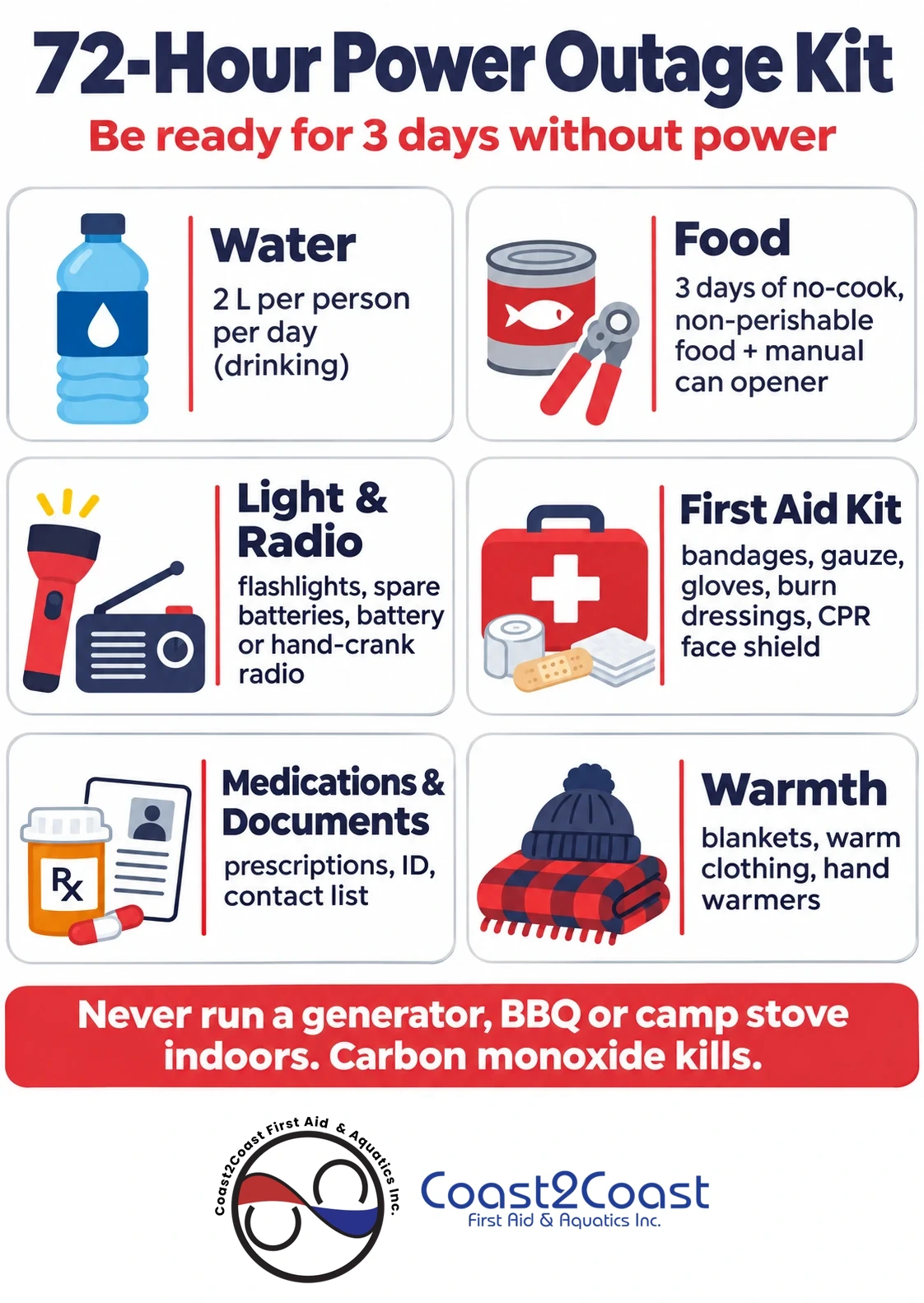
Water. The Government of Canada kit list recommends at least 2 litres of drinking water per person per day. The Canadian Red Cross notes that up to 4 litres per person per day covers drinking, cooking and basic hygiene, which is a more realistic number if you want to wash hands and prepare food. For one person over three days, that is 6 to 12 litres. Store extra if you have children, pets or people who are pregnant or unwell.
Food. Pack at least three days of non-perishable food that needs little or no cooking, such as canned goods, granola bars, dried fruit, nut butters and crackers. Include a manual can opener. Remember infant formula, baby food and pet food if they apply.
Light and power. Keep flashlights or headlamps with spare batteries. LED lanterns are safer than candles. A power bank for your phone, charged ahead of a forecast storm, helps you stay in contact.
Information. A battery-powered or hand-crank radio lets you hear updates when cell service and internet are unreliable. Write down key phone numbers on paper.
Warmth and basics. Pack extra blankets, warm clothing, toiletries, garbage bags, wipes and a whistle to signal for help. Keep some cash in small bills, because card machines and ATMs may not work.
Medications and documents. Keep at least a few days of prescription medication in your kit, and ask your pharmacist how to rotate it safely. Keep copies of ID, insurance and a list of medical conditions and allergies in a waterproof bag.
What should be in a first aid kit for a blackout?
A standard home first aid kit covers most outage injuries, but a few additions matter when the power is out and help may be delayed. Check that your kit has the following, and replace anything expired.
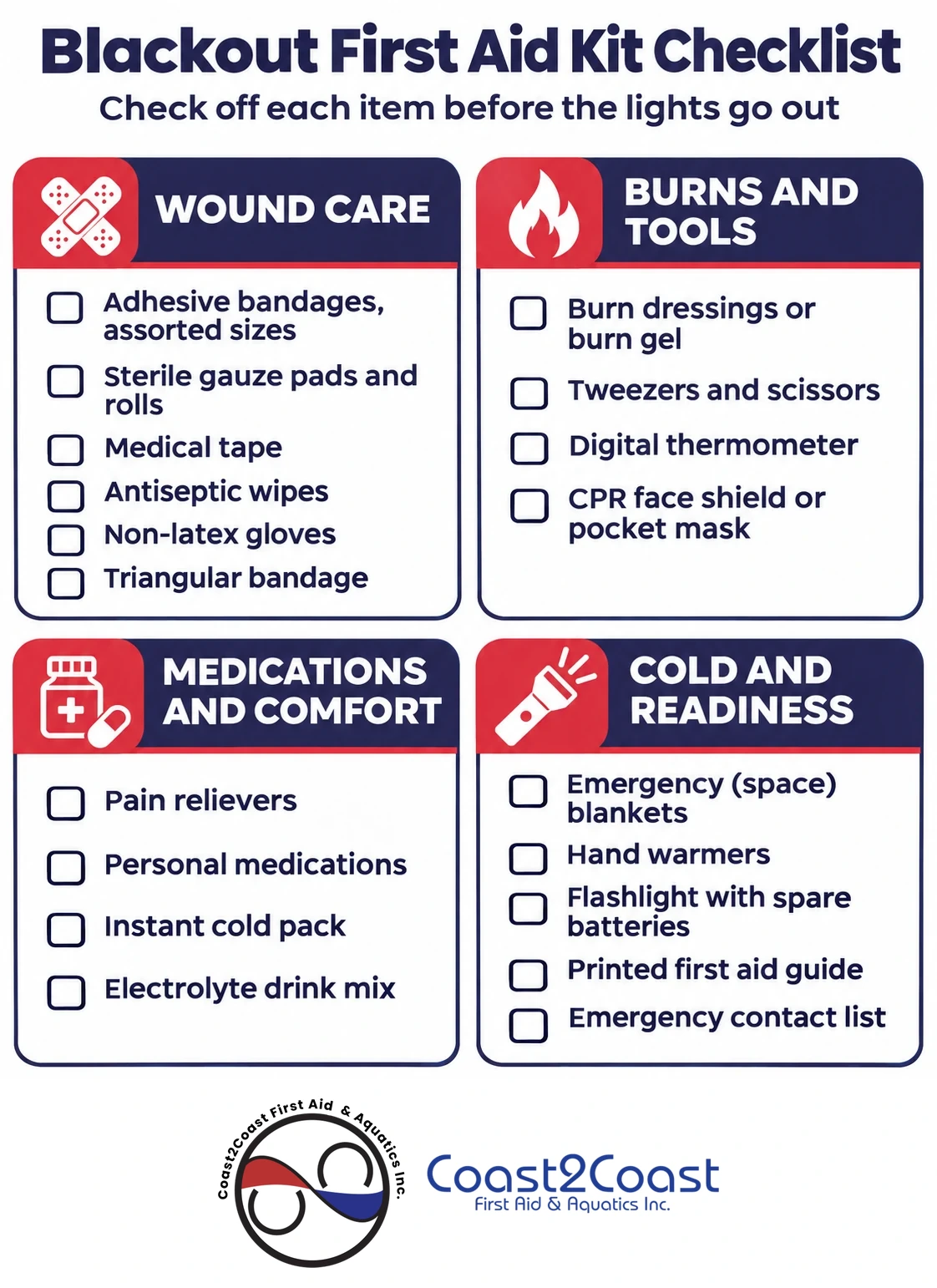
Wound care: adhesive bandages in several sizes, sterile gauze pads and rolls, medical tape, antiseptic wipes, a triangular bandage and a pair of non-latex gloves. Burn care: sterile non-stick dressings and a burn gel dressing. Tools: tweezers, scissors, safety pins, a digital thermometer and a CPR face shield or pocket mask. Comfort and symptom care: pain relievers, any personal medications, and an instant cold pack. Cold and heat: emergency (space) blankets, hand warmers and electrolyte drink mix. Information: a printed first aid guide and a list of emergency contacts.
Store the kit with your flashlight, so you can find both at once, and check it every six months when you change your smoke alarm batteries.
Blackout First Aid Kit Checklist
- ☐ Adhesive bandages, assorted sizes
- ☐ Sterile gauze pads and rolls
- ☐ Medical tape
- ☐ Antiseptic wipes
- ☐ Non-latex gloves
- ☐ Triangular bandage
- ☐ Burn dressings or burn gel
- ☐ Tweezers and scissors
- ☐ Digital thermometer
- ☐ CPR face shield or pocket mask
- ☐ Pain relievers
- ☐ Personal medications
- ☐ Instant cold pack
- ☐ Emergency (space) blankets
- ☐ Hand warmers
- ☐ Electrolyte drink mix
- ☐ Flashlight with spare batteries
- ☐ Printed first aid guide
- ☐ Emergency contact list
How do you avoid carbon monoxide poisoning during a power outage?
Carbon monoxide (CO) is a colourless, odourless gas that is produced when fuel burns. It is one of the most serious outage dangers because people often make the mistake of bringing outdoor equipment inside to stay warm or cook.
Never run a generator, barbecue, camp stove, charcoal grill or propane heater inside your home, garage, shed or any enclosed space, even with the door open. Keep generators outdoors and well away from windows, doors and vents, so exhaust cannot be drawn inside. Do not use a gas oven or stovetop to heat your home. Make sure your CO alarm works, and use battery-powered or battery-backup alarms so they keep working when the power is out.
Symptoms often feel like the flu: headache, dizziness, nausea, weakness, shortness of breath and confusion. If several people in the same space feel unwell at once, suspect CO. Move everyone outside to fresh air right away, call 911, and do not go back inside. If someone is unresponsive and not breathing normally, call 911 and begin CPR.
How do you treat burns and avoid fires from candles and heaters?
Candles, camp stoves and fireplaces cause fires and burns during outages. Use LED lights where you can. If you do use candles, keep them in sturdy holders on a flat surface, away from curtains and children, and never leave them burning when you sleep or leave the room. Keep a working fire extinguisher and smoke alarms with battery backup.
If someone is burned, remove them from the source and take off jewellery and tight clothing near the burn before swelling starts, unless it is stuck to the skin. Cool the burn under cool running water for at least 10 minutes. Do not use ice, butter, oils or creams. Cover the area loosely with a clean, non-stick dressing. Call 911 or seek urgent care for burns that are large, deep, on the face, hands, feet or genitals, caused by chemicals or electricity, or that affect an infant or older adult.
How do you spot and treat hypothermia and cold injuries without heat?
In a winter outage, indoor temperatures can fall quickly. Cold injuries are a real risk, especially for infants, older adults and anyone who is ill.
Early signs of hypothermia include shivering, cold pale skin, fatigue and clumsiness. As it worsens, shivering may stop, speech becomes slurred, and the person becomes confused or drowsy. Move the person to the warmest area you have, remove wet clothing, and wrap them in dry blankets, including the head and neck. Warm drinks without alcohol or caffeine can help if they are alert and can swallow. Handle gently and do not rub the skin. Call 911 if the person is confused, very drowsy or unresponsive.
To stay warm safely, gather everyone into one room, close off unused spaces, hang blankets over windows, and dress in layers. Never use an oven or outdoor heater indoors. For frostbite, which can appear on fingers, toes, ears and nose, warm the area gently with body heat or warm (not hot) water and seek medical care. Do not rub the area.
What about heat, spoiled food and medications?
Outages are not only a winter problem. In summer heat waves, losing fans and air conditioning raises the risk of heat exhaustion and heat stroke. Move to the coolest part of the home, drink water, take cool showers, and wear loose clothing. Heat stroke, which causes confusion, hot dry skin or a very high body temperature, is an emergency: call 911 and cool the person with water and fans until help arrives.
Food safety matters in every season. Health Canada advises that refrigerated food stays safe for about four hours if the door stays closed. A full freezer can keep food frozen for about 48 hours, and a half-full one about 24 hours, if the door stays closed. When in doubt, throw it out, because food that looks and smells fine can still make you sick. Use a thermometer if you have one, and discard perishable food that has been above 4 degrees Celsius for more than two hours.
Medications such as insulin and some liquid antibiotics need cool storage. Ask your pharmacist how long they stay safe at room temperature and what to do if they are exposed to heat.
How do you protect older adults, children and people who rely on medical equipment?
Some people face higher risks. Check on older neighbours and relatives early, since cold, heat and isolation can affect them quickly. Make sure people who depend on powered equipment such as oxygen concentrators, CPAP machines, nebulizers or home dialysis have a backup plan. Contact your power utility ahead of time to find out whether you can register as a customer who relies on electricity for medical reasons, and talk with your health care provider about a backup power or evacuation plan.
For infants and children, keep formula, diapers and comfort items in the kit, dress children in layers, and watch for signs of cold or dehydration such as fewer wet diapers, unusual sleepiness or irritability. Keep pets in mind too, with extra food, water and any medications.
Why do CPR and first aid skills matter when help is delayed?
During widespread outages, traffic signals fail, roads can be icy or blocked, and emergency responders may take longer to reach you. The first few minutes before help arrives are the ones you control. Skills such as CPR, choking relief, bleeding control and recognizing CO poisoning or hypothermia let you help family, neighbours and coworkers until professionals take over.
Preparedness also belongs in the workplace, where private group First Aid training keeps whole teams ready. Offices, warehouses, care homes and schools can lose power too, and having trained staff and a stocked first aid kit makes a difference. You do not need to be an expert to help, but practising hands-on skills builds confidence for the moment you need it.
How do you build an outage plan the whole household can follow?
Write down a short plan. Pick a meeting place, list emergency contacts on paper, and decide who is responsible for which supplies. Know how to open your garage door by hand, and where your water shut-off and fuse box or breaker panel are. Keep your car’s fuel tank at least half full when a storm is forecast. Charge devices, fill containers with water, and move perishables together in the fridge before the outage starts.
Review the plan twice a year, when you change your clocks. Walk through it with everyone, including children, so each person knows what to do when the lights go out.
Key Takeaway
Be ready to look after yourself for at least 72 hours. Stock water, food, light, a radio, medications and a first aid kit, never burn fuel indoors, and learn the first aid skills that treat the injuries outages cause most. A little preparation now makes the next outage a minor inconvenience instead of an emergency.
Join 200,000+ Canadians Who Are Certified
Find a Coast2Coast First Aid, CPR and AED course near you.
Frequently Asked Questions: Power Outage Preparedness in Canada 2026
Q1: How long should I be prepared for a power outage in Canada?
A: The Government of Canada recommends being ready to care for yourself for at least 72 hours, or three days. Most outages end much sooner, but ice storms, wildfires, high winds and equipment failures can leave areas without power for days. People in rural, remote and northern communities may want to plan for a week or more, since repairs and deliveries can take longer to reach them.
Q2: Is the 72-hour emergency kit advice new?
A: No. The 72-hour guideline has been part of Government of Canada preparedness advice for years. It is a recommendation to help households cope during emergencies, not a requirement and not a warning that a specific event is coming. News and social media sometimes recirculate it, which can make it seem new, but the basic advice has stayed the same: have water, food, light, a radio, medications and a first aid kit ready.
Q3: How much water do I need per person for a blackout?
A: The Government of Canada kit list recommends at least 2 litres of drinking water per person per day. The Canadian Red Cross notes that up to 4 litres per person per day also covers cooking and basic hygiene. For three days, that is roughly 6 to 12 litres per person. Store more for children, pets, pregnant people or anyone who is ill, and rotate stored water regularly.
Q4: What should be in a first aid kit for a power outage?
A: Include adhesive bandages, sterile gauze, medical tape, antiseptic wipes, non-latex gloves, a triangular bandage, burn dressings, tweezers, scissors, a thermometer, a CPR face shield, pain relievers and any personal medications. Add emergency blankets, hand warmers and electrolyte mix for cold or heat. Store the kit near your flashlight, check expiry dates every six months, and keep a printed first aid guide inside.
Q5: Can I use a generator or barbecue indoors during a blackout?
A: No. Never run a generator, barbecue, charcoal grill, camp stove or propane heater inside your home, garage or any enclosed space, even with doors or windows open. These produce carbon monoxide, a colourless, odourless gas that can kill quickly. Keep generators outdoors and well away from windows, doors and vents. Use battery-powered or battery-backup carbon monoxide alarms so they keep working during an outage.
Q6: What are the symptoms of carbon monoxide poisoning?
A: Symptoms include headache, dizziness, nausea, weakness, shortness of breath and confusion, and they often feel like the flu. If several people in the same space feel unwell at the same time, suspect carbon monoxide. Move everyone outside to fresh air immediately, call 911, and do not go back in. If someone is unresponsive and not breathing normally, call 911 and start CPR.
Q7: How do I treat a burn from a candle or camp stove?
A: Cool the burn under cool running water for at least 10 minutes. Remove jewellery and tight clothing near the burn before swelling begins, unless it is stuck to the skin. Do not use ice, butter or oils. Cover loosely with a clean, non-stick dressing. Call 911 or seek urgent care for burns that are large, deep, on the face, hands, feet or genitals, caused by chemicals or electricity, or that affect an infant or older adult.
More FAQs: Cold, Heat, Food Safety and Vulnerable People
Q8: What are the signs of hypothermia during a winter outage?
A: Early signs are shivering, cold pale skin, fatigue and clumsiness. As hypothermia worsens, shivering may stop, speech becomes slurred, and the person becomes confused or drowsy. Move them to the warmest place you have, remove wet clothing, and wrap them in dry blankets, including the head and neck. Offer warm drinks without alcohol or caffeine if they are alert. Call 911 if they are confused, very drowsy or unresponsive.
Q9: How can I stay warm safely without power?
A: Gather everyone in one room, close off unused spaces, hang blankets over windows and dress in layers, including a hat and warm socks. Use extra blankets and sleeping bags at night. Never use an oven, gas stovetop, barbecue or outdoor heater to heat your home. If indoor temperatures drop to unsafe levels, move to a warming centre, a heated public building or the home of a friend or family member.
Q10: How long is food safe in the fridge and freezer during a blackout?
A: Health Canada advises that refrigerated food stays safe for about four hours if the door stays closed. A full freezer can keep food frozen for about 48 hours, and a half-full freezer about 24 hours, if kept closed. Discard perishable foods such as meat, dairy and leftovers that have been above 4 degrees Celsius for more than two hours. When in doubt, throw it out.
Q11: What should I do if I rely on medical equipment that needs electricity?
A: Make a backup plan before an outage. Ask your health care provider about battery backup, a generator or alternate care options. Contact your power utility to ask whether you can register as a customer who relies on electricity for medical reasons. Keep spare batteries charged, know the location of the nearest facility with power, and keep a list of your medications, conditions and emergency contacts ready to share.
Q12: How do I keep infants and older adults safe in an outage?
A: Check on older relatives and neighbours early, since cold, heat and isolation affect them quickly. For infants, keep formula, diapers and comfort items in your kit, dress them in layers, and watch for signs of cold or dehydration such as fewer wet diapers, unusual sleepiness or irritability. Keep everyone in one warm room, offer fluids often, and call 911 if someone becomes confused, very drowsy or unresponsive.
Q13: Do I need first aid training to help during a power outage?
A: No, you can help without training, but training makes you faster and more confident. A hands-on First Aid and CPR course teaches wound care, burns, choking, CPR and recognizing emergencies such as carbon monoxide poisoning and hypothermia. During widespread outages, ambulances can be delayed, so the first minutes are often in the hands of family members, neighbours and coworkers.
Q14: What should I do before a storm that could cause an outage?
A: Charge phones and power banks, fill water containers, and move perishables together in the fridge. Check flashlights, batteries and your radio. Fill your vehicle’s fuel tank at least half full, find your breaker panel, and know how to open your garage door by hand. Review your household plan, confirm that carbon monoxide and smoke alarms have working batteries, and check on neighbours who may need help.
Q15: When should I call 911 during a power outage?
A: Call 911 for any life-threatening emergency: someone who is unresponsive, not breathing normally, choking, having chest pain or trouble breathing, or showing signs of carbon monoxide poisoning, hypothermia with confusion, heat stroke or severe burns. During widespread outages, phone lines may be busy, so give your location clearly and stay on the line. Do not call 911 just to ask when the power will return; use your utility’s outage line instead.
Reviewed & Sourced
Reviewed by a Coast2Coast Certified Lead First Aid & CPR Instructor. Last updated November 16, 2026.
Reference: Government of Canada, Power outages (Public Safety Canada).