

Find a First Aid Course Near You
Learn to recognize anaphylaxis and use an epinephrine auto-injector with a certified instructor, before the holiday rush.
Find a Course LocationIn This Guide
- Why are food allergies a bigger risk at Thanksgiving gatherings?
- What does a mild allergic reaction look like compared with anaphylaxis?
- What should you do if a guest shows signs of anaphylaxis?
- How do you host an allergy-safe Thanksgiving dinner?
- Is it a food allergy or a food intolerance?
- What should guests with food allergies bring and ask?
- How does first aid training help you respond with confidence?
- Frequently Asked Questions
Thanksgiving is one of the few meals of the year where a dozen people share food cooked in several different kitchens. Aunt’s stuffing, a neighbour’s pecan pie, a store-bought gravy mix and a new guest’s first visit can all land on the same table. For the more than 3 million Canadians who self-report a food allergy, and the 1 in 2 Canadian households affected by one, that mix of unfamiliar recipes and shared serving spoons is exactly where accidental exposures happen.
Canadian Thanksgiving falls on the second Monday of October, which is October 12 in 2026. This guide covers what every host and guest should know before then: which allergens hide in classic holiday dishes, how to tell a mild reaction from anaphylaxis, what to do in the first five minutes, and simple hosting habits that make the whole table safer.
Why are food allergies a bigger risk at Thanksgiving gatherings?
Most allergic reactions to food happen by accident, and holiday meals create more chances for accidents than a typical weeknight dinner. Recipes are made once a year from memory, dishes arrive without ingredient lists, guests serve themselves buffet-style, and hosts are busy juggling timing, oven space and conversation. Children are often seated together and share snacks, and older adults may not mention an allergy they have managed quietly for years.
Alcohol, excitement and full plates also make it harder to notice early symptoms. Allergy specialists note that alcohol, physical activity and illness can act as cofactors that make a reaction more severe, so guests with allergies should avoid drinking on an empty stomach. A guest may dismiss an itchy mouth as spice, or a child may not have the words to explain that their throat feels strange.
What are the 11 priority food allergens in Canada?
Health Canada identifies 11 priority food allergens that must be declared on prepackaged food labels: peanuts, tree nuts, sesame, milk, eggs, fish, crustaceans and molluscs (shellfish), soy, wheat and triticale, and mustard. Gluten sources and added sulphites must also be declared. These cause the majority of serious allergic reactions in Canada, so they are the ones to ask guests about first.
Which classic Thanksgiving dishes hide common allergens?
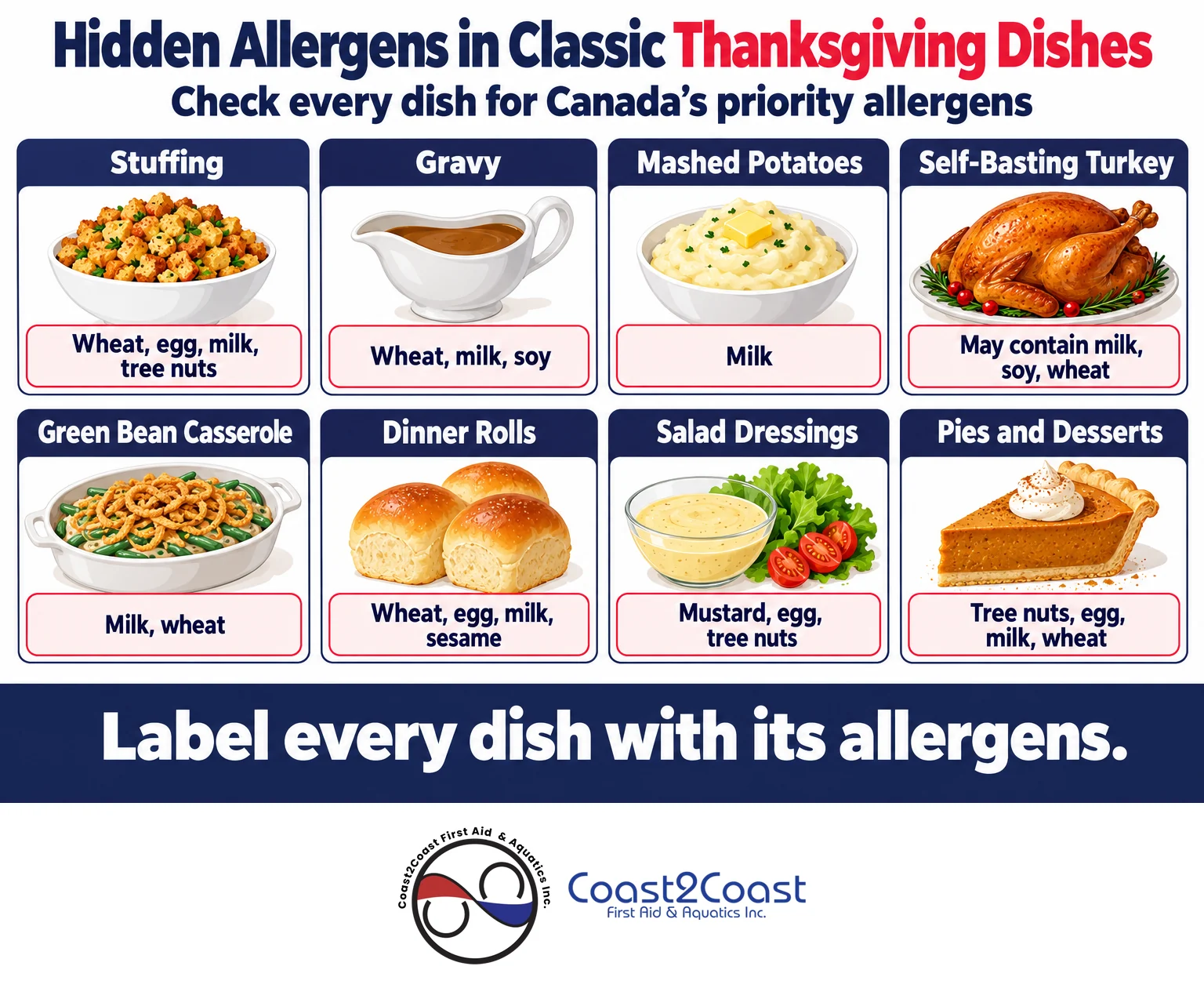
Many holiday staples contain more than one priority allergen, and some contain allergens people would not expect:
- Stuffing and dressing: wheat (bread), egg, milk (butter) and sometimes tree nuts such as chestnuts or pecans.
- Gravy: wheat flour as a thickener, milk or butter, and sometimes soy in store-bought mixes.
- Mashed potatoes: milk, butter and cream.
- Turkey: some self-basting or pre-injected turkeys contain butter, soy or wheat in the basting solution, so check the label.
- Green bean casserole and mac and cheese: milk and wheat in the sauce, cheese and crispy fried onions.
- Broths, marinades and glazes: soy, wheat, milk and mustard, often in store-bought stock or glaze packets.
- Dinner rolls: wheat, egg, milk and sometimes sesame seeds.
- Salads and dressings: tree nuts, seeds, mustard and egg in creamy dressings.
- Pies and desserts: pecan pie (tree nuts, egg), pumpkin pie (milk and egg in the filling, butter and egg wash on a wheat crust) and nut-based crumbles. Check canned pie filling labels too.
- Appetizers: shrimp rings, cheese boards, nut mixes and hummus (sesame).
Practise Anaphylaxis Response Before It Matters
Our Intermediate (Standard) First Aid & CPR/AED course includes hands-on epinephrine auto-injector practice, choking relief and CPR with a certified instructor.
View First Aid CoursesWhat does a mild allergic reaction look like compared with anaphylaxis?
An allergic reaction happens when the immune system overreacts to a food protein. Reactions can range from mild to life-threatening, and a reaction that starts mild can become severe within minutes. That is why anyone showing symptoms after eating should be watched closely and not left alone.
Signs of a mild allergic reaction
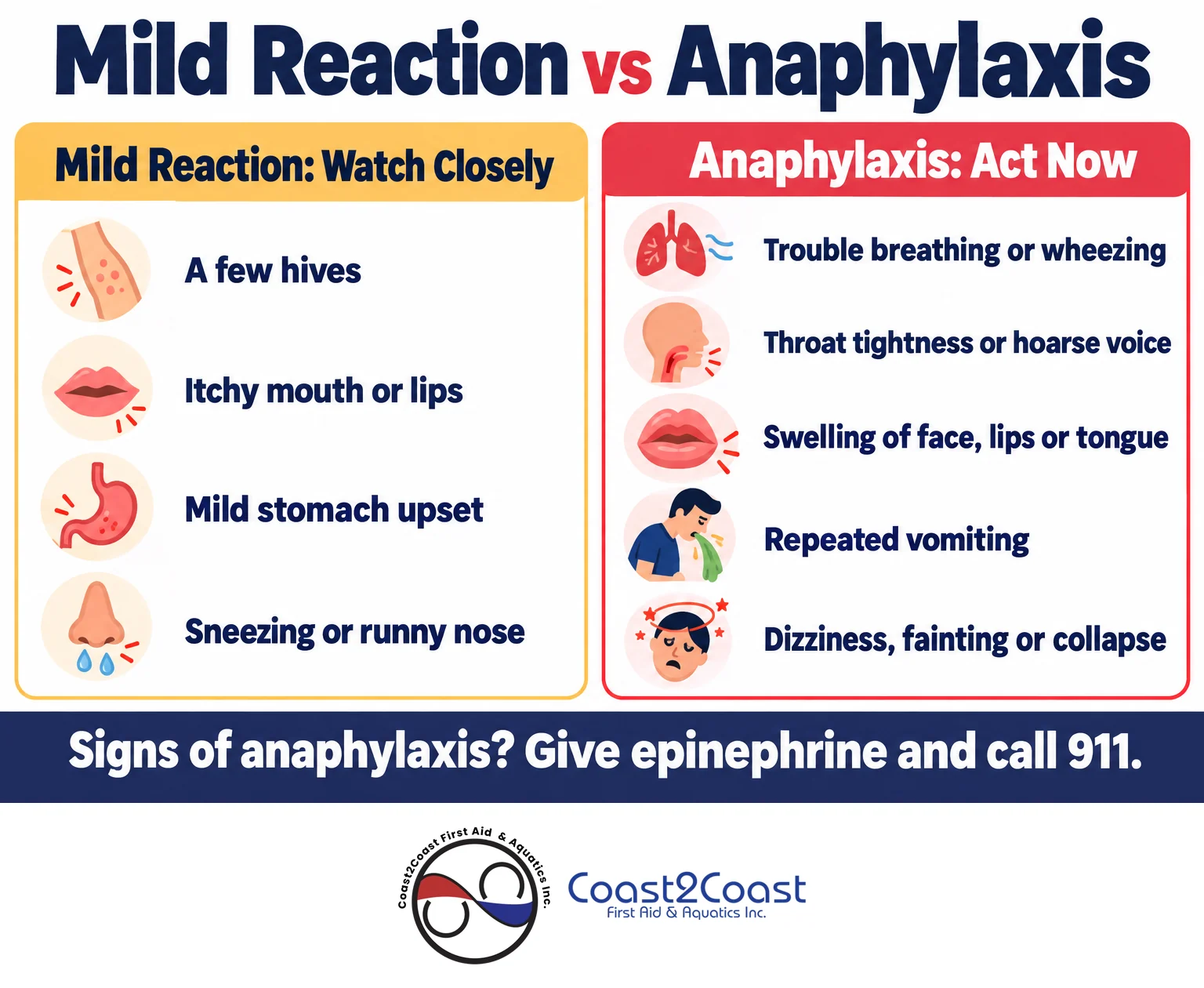
Mild reactions usually affect one area of the body, such as:
- A few hives or a small patch of redness
- Itchy mouth, lips or skin
- Mild nausea or stomach discomfort
- Sneezing or a runny nose
If the person has a known allergy and an anaphylaxis emergency plan from their doctor, follow that plan. Do not assume a reaction will stay mild.
Signs of anaphylaxis by body system
Anaphylaxis is a severe allergic reaction that is rapid in onset and can cause death. It often involves two or more body systems at once:
- Skin: widespread hives, swelling of the face, lips, tongue or eyes, flushing
- Breathing: coughing, wheezing, shortness of breath, chest tightness, throat tightness, hoarse voice, trouble swallowing
- Stomach: repeated vomiting, cramps, diarrhea
- Heart and circulation: pale or blue skin, weak pulse, dizziness, fainting or collapse
- Other: anxiety, a sense that something is very wrong, headache
Breathing difficulty or signs of circulation problems alone can signal anaphylaxis, even without hives. Canadian allergy guidance is clear that epinephrine should be given at the first sign of a known or suspected anaphylactic reaction.
For a deeper look at anaphylaxis symptoms and first aid when no auto-injector is available, see our guide on what to do in anaphylactic shock.
What should you do if a guest shows signs of anaphylaxis?
Speed matters most. Food Allergy Canada notes that a delay in giving epinephrine is associated with an increased risk of fatal outcomes, yet only 21% of children and 7% of adults worldwide use their auto-injector before reaching hospital. The goal in the first minutes is simple: epinephrine first, then help.
Step-by-step response
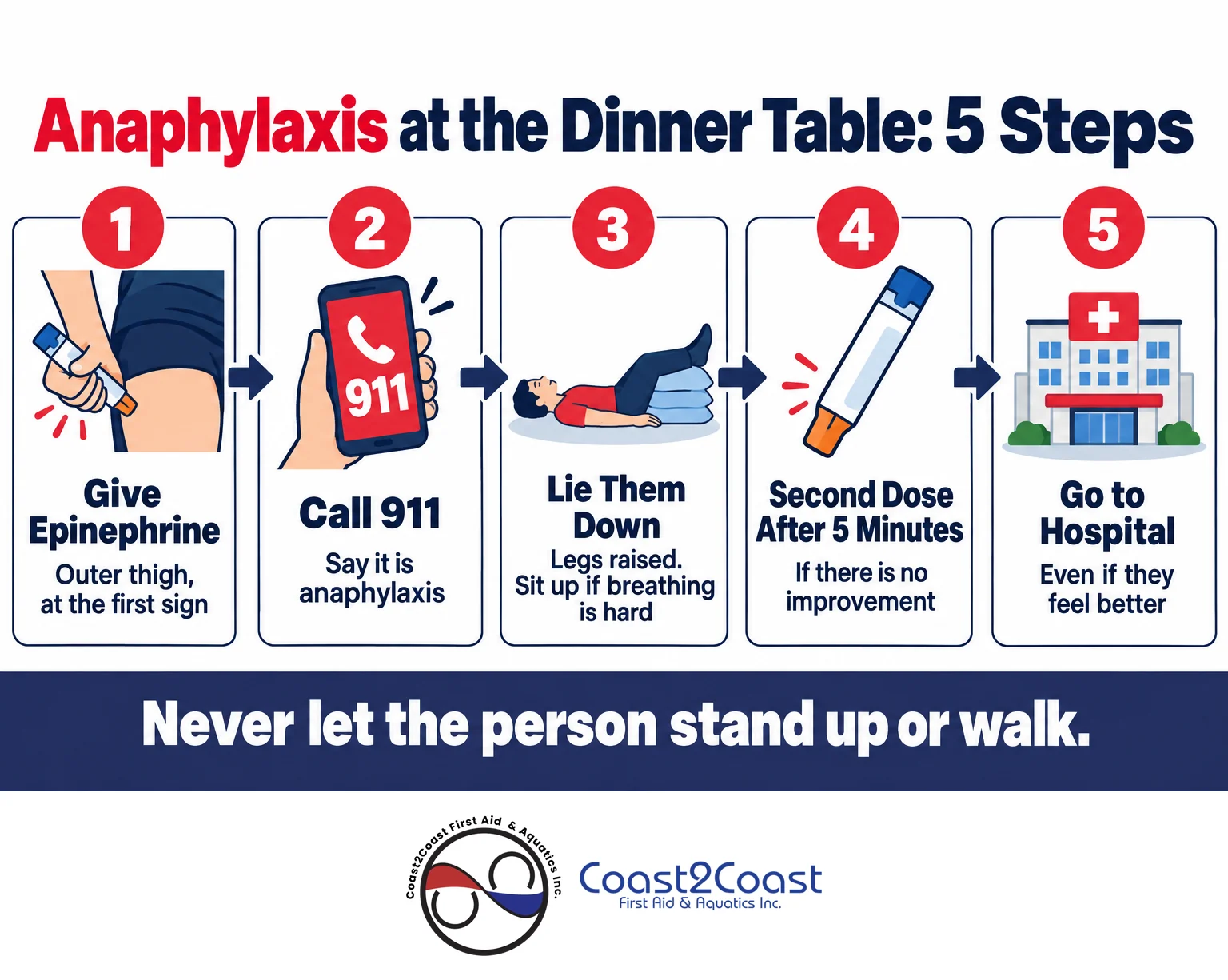
- Give epinephrine right away. Use the person’s epinephrine auto-injector (or needle-free epinephrine nasal spray, which Health Canada approved in 2026) in the outer thigh, following the device instructions. It can be given through clothing.
- Call 911. Say the person is having anaphylaxis and has received epinephrine. Stay with them.
- Position them safely. Have the person lie on their back with legs raised. If breathing is difficult, let them sit up. If they are vomiting, place them on their side.
- Do not let them stand or walk. Sitting up or standing suddenly during anaphylaxis can be dangerous, even after epinephrine. They should not walk to the ambulance.
- Be ready for a second dose. Note the time of the first dose and watch for changes.
- Start CPR if needed. If the person becomes unresponsive and is not breathing normally, begin CPR and use an AED if one is available.
When should you give a second dose of epinephrine?
A second dose can be given as early as 5 minutes after the first if symptoms do not improve or get worse. Many people with severe allergies carry two devices for this reason. Antihistamines and asthma inhalers can be given afterward if the person’s plan includes them, but they do not replace epinephrine and should never delay it.
Why does the person still need to go to hospital?
Epinephrine works quickly but wears off, and symptoms can return. A second wave of symptoms, called a biphasic reaction, can happen hours later without new exposure to the allergen. Everyone who receives epinephrine for anaphylaxis should be transported to hospital by ambulance for monitoring, even if they feel better.
What should happen after an allergic reaction?
After discharge, the person should not be alone for the rest of the day or overnight, in case symptoms return. Replace any epinephrine device that was used, book a follow-up with a family doctor or allergist, and review what caused the exposure so the same mistake is not repeated at the next gathering.
If you have never handled an auto-injector, our step-by-step guide on how to use an EpiPen walks through the process. Hands-on practice with a trainer device in an Intermediate (Standard) First Aid & CPR/AED course builds the muscle memory that makes it easier under pressure.
Train Your Family or Team Together
Book a private group first aid class at your location or ours, so everyone at your holiday event knows what to do.
Book Group TrainingHow do you host an allergy-safe Thanksgiving dinner?
A few small habits make a big difference. None of them require cooking a separate meal for every guest, just clear communication and a little planning.
Ask guests about allergies ahead of time
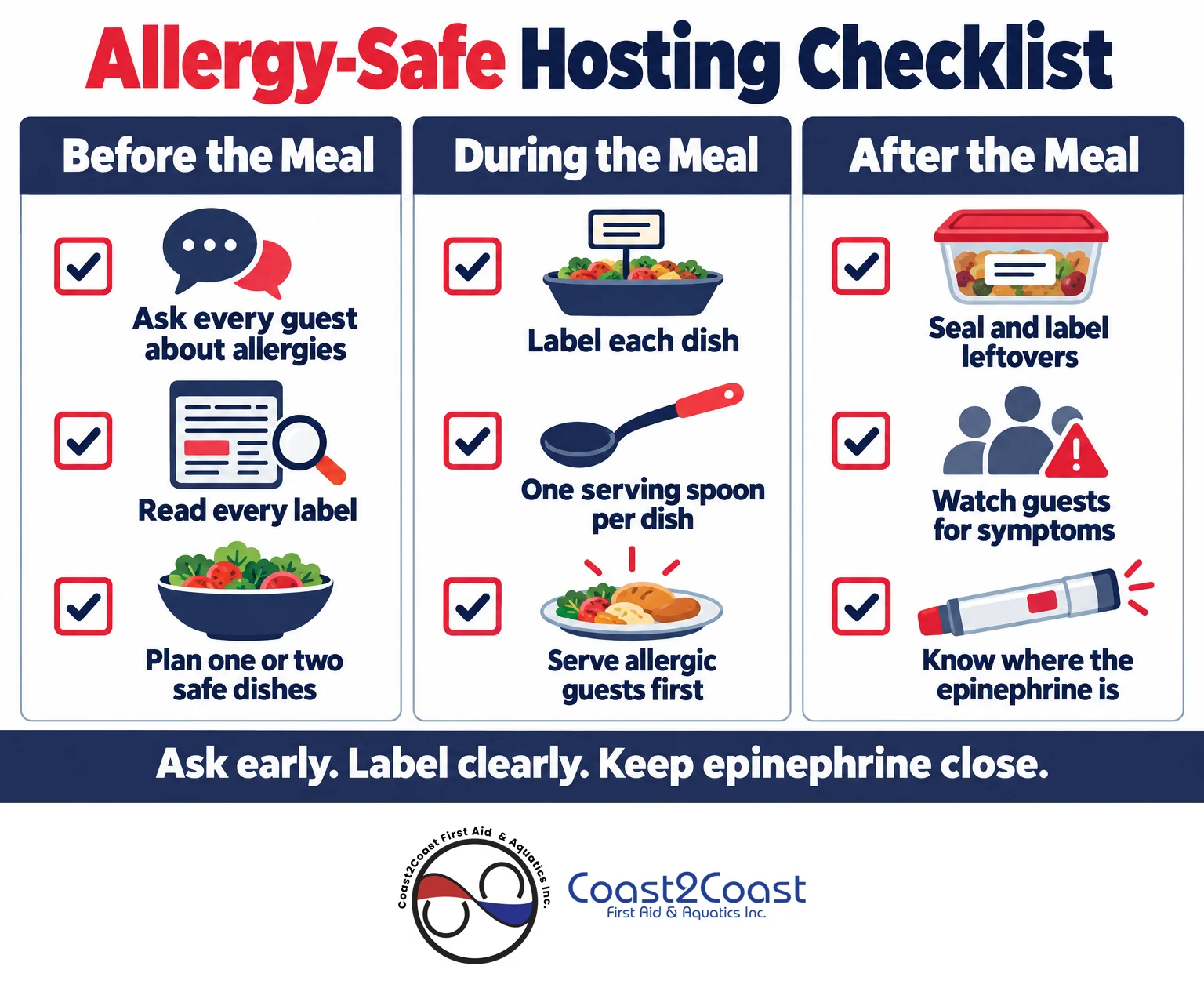
Include a simple question in your invitation or group chat: “Does anyone have food allergies or dietary needs I should know about?” Ask about everyone attending, including children, partners and new guests. If someone has a severe allergy, ask which foods are unsafe, whether they carry epinephrine and whether they would prefer to bring a dish of their own.
Label every dish and keep ingredient lists
Place a small card beside each dish listing the name and the priority allergens it contains, such as “Contains: wheat, milk, egg, pecans.” Ask guests who bring food to share their recipe or ingredient list, and keep the packaging for any store-bought items so labels can be checked. Treat “may contain” statements on packaged foods as “likely contains” for guests with severe allergies.
Prevent cross-contact in the kitchen and at the buffet
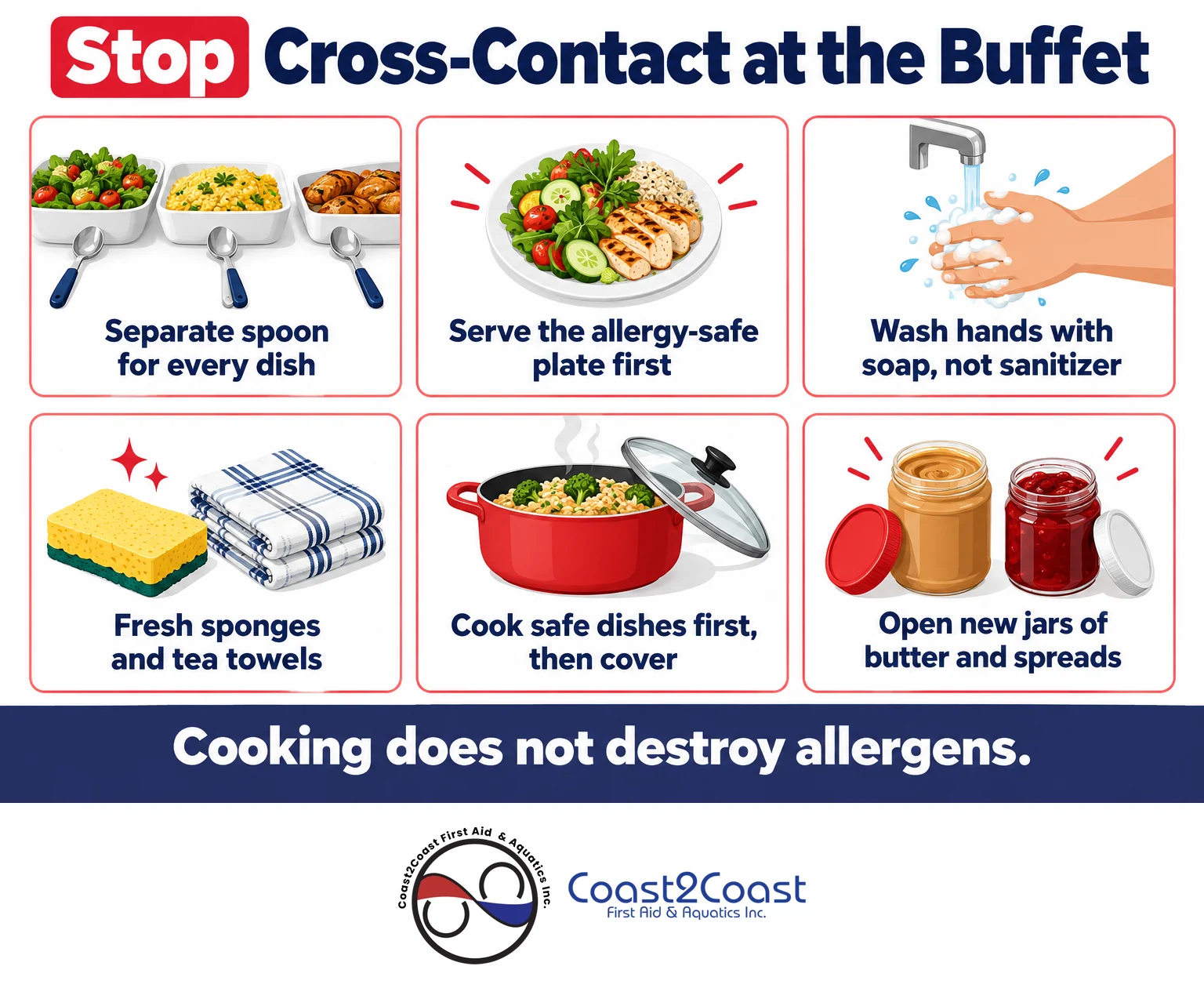
Cross-contact (often called cross-contamination) happens when an allergen transfers from one food to another, often through shared utensils, cutting boards, hands, sponges or cooking oil. Cooking does not destroy allergens, and even a small amount can trigger a severe reaction.
- Prepare and plate allergy-safe dishes first, then cover them before cooking other foods.
- Use clean utensils, pots and cutting boards for allergy-safe dishes.
- Give every dish its own serving spoon and ask guests not to swap them.
- Serve the allergy-safe portion to the guest with the allergy before the buffet opens.
- Wash hands with soap and water after handling nuts, shellfish or other allergens. Hand sanitizer does not remove food proteins.
- Keep nut bowls and shellfish appetizers away from the main table and the children’s table.
- Clean counters with a degreasing household cleaner, and put out fresh tea towels and sponges before cooking.
- Open new packages of butter, jam and spreads for allergy-safe dishes, since knives carry crumbs between jars.
- Pre-plate food for children with allergies before the meal is served.
- Store leftovers in sealed containers labelled with the dish and its allergens.
Easy allergy-friendly swaps for classic Thanksgiving recipes
You do not need to change the whole menu. Small swaps can make several dishes safe for more guests:
- Gravy: thicken with cornstarch instead of wheat flour, and use oil or a dairy-free spread instead of butter.
- Mashed potatoes: use olive oil and warm broth, or an unsweetened plant-based milk that is free of the guest’s allergens.
- Stuffing: bake a separate tray with wheat-free bread and leave out nuts, or skip nuts for everyone and serve them on the side.
- Green beans: roast with garlic and olive oil instead of a creamy casserole with fried onions.
- Dessert: offer a fruit crisp with an oat topping (check the oats are not processed with nuts) alongside the pecan pie.
- Dressings: serve salad dressing on the side so guests can check ingredients and choose for themselves.
Whatever you swap, read every label, including spices, broths and “natural flavours,” which can contain milk, wheat, soy or mustard. When a guest has a severe allergy, it is often simplest and safest to let them bring one or two dishes they trust.
Keep a first aid kit and emergency details ready
Set out a basic first aid kit where adults can find it, and keep your phone charged and nearby. Post your full home address on the fridge or share it in the group chat so anyone can give it to a 911 dispatcher. If you are hosting at a cottage, community hall or rented space, find the civic address and the nearest hospital before the day.
Know where the epinephrine is kept
Before the meal starts, ask guests with severe allergies where their epinephrine device is and tell one or two other adults. It should be within reach, not in a coat pocket in a back bedroom or in a car. Agree on who will call 911 if needed, and make sure your home address is easy to find for guests who are visiting for the first time.
Keep children in mind
Children with food allergies are at higher risk at family gatherings, where well-meaning relatives may offer treats without checking. Seat young children near an adult who knows their allergy, and remind grandparents and older cousins to ask a parent before sharing food. Non-food traditions, such as a family walk, board games or a gratitude jar, help children with allergies feel included without adding risk. Parents and caregivers can learn how to respond to allergic reactions and choking in young children through our Child Care First Aid & CPR course.
Is it a food allergy or a food intolerance?
Guests often use the words interchangeably, but the difference matters for hosts. A food allergy is an immune system reaction to a food protein. Even a tiny amount can cause hives, swelling or anaphylaxis, and reactions can be life-threatening. A food intolerance, such as lactose intolerance, involves the digestive system. It can cause bloating, cramps or diarrhea, but it is not an immune reaction and does not cause anaphylaxis.
Celiac disease is different again: it is an autoimmune reaction to gluten that damages the small intestine. It does not cause anaphylaxis, but even small amounts of gluten from cross-contact can make a person with celiac disease unwell for days.
If you are not sure which one a guest has, ask. Treat any mention of a food allergy as potentially serious, and never test a guest’s allergy by adding “just a little” of an ingredient.
What should guests with food allergies bring and ask?
Guests with allergies can make the host’s job easier and keep themselves safe:
- Bring your epinephrine, ideally two devices, and check the expiry dates before you leave.
- Tell the host early, not at the door, so they can plan the menu.
- Offer to bring a safe dish you know you can eat, and serve yourself first.
- Ask about ingredients in anything homemade, including sauces, dressings and desserts.
- Tell one other adult where your device is kept and how to use it.
- Wear medical identification if you have a severe allergy.
Travelling for Thanksgiving with a food allergy
If you are travelling to a gathering, keep your epinephrine on your person or in your carry-on bag, never in checked luggage or a hot or freezing car, since extreme temperatures can affect the medication. Pack two devices, bring safe snacks for the trip, and find the nearest hospital to where you are staying before you arrive.
When in doubt about a dish, skip it. A missed slice of pie is far easier to recover from than an emergency room visit on a holiday weekend.
How does first aid training help you respond with confidence?
Most people who witness anaphylaxis have never used an auto-injector on someone else. In the moment, it is common to hesitate, second-guess the symptoms or wait to see if things improve. First aid training replaces that hesitation with a clear sequence you have practised on a trainer device.
A Canadian Red Cross first aid course covers recognizing severe allergic reactions, using epinephrine auto-injectors, choking relief for adults, children and infants, and CPR with an AED. If you only need the core skills, our Basic (Emergency) First Aid & CPR/AED course can be completed in a single day, and CPR/AED courses are available for those who want to focus on resuscitation.
Families, faith communities and workplaces hosting large holiday events can also book a private group class so several people learn together.
Key Takeaway
At Thanksgiving, ask every guest about food allergies ahead of time, label each dish with its allergens and give every dish its own serving spoon. If a guest shows signs of anaphylaxis, give epinephrine immediately, call 911, keep them lying down with legs raised, and give a second dose after 5 minutes if there is no improvement. Everyone who receives epinephrine needs to go to hospital.
Join 200,000+ Canadians Who Are Certified
Canadian Red Cross first aid and CPR training with a 99.9% pass rate and digital certificates within 48 hours.
Explore CPR/AED CoursesFrequently Asked Questions: Thanksgiving Food Allergy Safety 2026
Q1: What are the most common food allergens at Thanksgiving dinner?
A: The most common allergens at Thanksgiving are wheat, milk, egg and tree nuts, because they appear in stuffing, gravy, mashed potatoes, dinner rolls and pies. Pecan pie, nut-based stuffing and cheese boards are frequent sources. Shellfish appetizers, sesame in rolls or hummus, and mustard in dressings or glazes can also cause reactions. Health Canada recognizes 11 priority allergens: peanuts, tree nuts, sesame, milk, eggs, fish, shellfish, soy, wheat and triticale, and mustard. Hosts should ask guests about these allergens before planning the menu.
Q2: What are three signs of a possible allergic reaction to food?
A: Three common signs of an allergic reaction to food are hives or itchy skin, swelling of the lips, face or tongue, and stomach symptoms such as vomiting or cramps. Signs that the reaction may be anaphylaxis include trouble breathing, wheezing, throat tightness, a hoarse voice, pale skin, dizziness or collapse. Symptoms usually begin within minutes to two hours of eating. Anyone showing symptoms should be watched closely and not left alone, because a mild reaction can become severe quickly.
Q3: What is the first thing to do if a guest has anaphylaxis?
A: Give epinephrine immediately using the person’s auto-injector or epinephrine nasal spray, following the device instructions. Epinephrine is the first-line treatment for anaphylaxis and should be given at the first sign of a known or suspected severe reaction. Then call 911, stay with the person and keep them lying on their back with legs raised, or sitting up if breathing is difficult. Do not wait to see whether symptoms improve on their own, and do not give antihistamines instead of epinephrine.
Q4: When can a second dose of epinephrine be given?
A: A second dose of epinephrine can be given as early as 5 minutes after the first dose if symptoms do not improve or if they get worse. This guidance comes from Food Allergy Canada and Canadian first aid standards. Many people with severe food allergies carry two devices for this reason. Note the time of the first dose, tell paramedics how many doses were given, and keep the used devices to hand over to emergency responders when they arrive.
Q5: Should someone go to hospital after using an EpiPen if they feel better?
A: Yes. Anyone who receives epinephrine for anaphylaxis should be taken to hospital by ambulance, even if they feel better. Epinephrine wears off within about 10 to 20 minutes, and symptoms can return. A second wave of symptoms, called a biphasic reaction, can occur hours later without any new exposure to the allergen. Hospital staff can monitor the person, give further treatment if needed and make sure the reaction has fully resolved before they go home.
Q6: Can antihistamines like Benadryl treat anaphylaxis?
A: No. Antihistamines cannot treat anaphylaxis and should never be given instead of epinephrine. They may ease itching or hives, but they do not reverse swelling of the airway, low blood pressure or breathing problems, and they act too slowly for a severe reaction. Canadian allergists stress that epinephrine is the first-line treatment. Antihistamines or asthma inhalers can be given afterward if they are part of the person’s anaphylaxis emergency plan, but only after epinephrine has been given and 911 has been called.
Q7: How should a person be positioned during anaphylaxis?
A: Have the person lie on their back with their legs raised, which helps blood flow to vital organs. If they are having trouble breathing, let them sit up in a comfortable position instead. If they are vomiting or feel nauseous, place them on their side to protect their airway. The person should not sit up or stand suddenly, and should not walk to the ambulance, even after receiving epinephrine, because a sudden change in position can cause a dangerous drop in blood pressure.
More FAQs: Hosting and Cross-Contact
Q8: What is cross-contact and how do I prevent it at a holiday dinner?
A: Cross-contact happens when a small amount of an allergen transfers to a food that should be allergen-free, usually through shared utensils, cutting boards, pots, hands or frying oil. To prevent it, prepare allergy-safe dishes first and cover them, use clean equipment, give every dish its own serving spoon and serve the guest with the allergy before the buffet opens. Wash hands with soap and water after touching allergens, since hand sanitizer does not remove food proteins.
Q9: What is the most common food allergy in Canada?
A: Peanut, tree nut, milk, egg and shellfish allergies are among the most common food allergies in Canada. Peanut allergy affects about 2 in 100 Canadian children, according to Food Allergy Canada, and shellfish allergy is one of the most frequently reported allergies in adults. Health Canada recognizes 11 priority food allergens that must be declared on prepackaged food labels: peanuts, tree nuts, sesame, milk, eggs, fish, crustaceans and molluscs, soy, wheat and triticale, and mustard.
Q10: Is it safe to cook a turkey for a guest with food allergies?
A: Turkey meat allergy is rare, but some self-basting or pre-injected turkeys contain butter, soy or wheat in the basting solution, so read the label carefully. Stuffing cooked inside the bird can also transfer wheat, egg, milk or nuts into the meat. For a guest with allergies, cook stuffing in a separate dish, season the turkey with ingredients you have checked, and keep the packaging so the guest can read the ingredient list themselves.
Q11: How do you calm down an allergic reaction from food?
A: For a mild reaction, such as a few hives or an itchy mouth, stop eating the food, follow the person’s anaphylaxis emergency plan and watch them closely, since symptoms can worsen quickly. An antihistamine may ease itching if their plan includes one. For any sign of anaphylaxis, including trouble breathing, throat tightness or dizziness, give epinephrine immediately and call 911. Antihistamines cannot stop anaphylaxis, and waiting to see if symptoms settle is dangerous.
Q12: Can you have a food allergy reaction just from touching or smelling food?
A: Severe reactions from smell alone are rare, because smell does not usually carry enough food protein to cause anaphylaxis. However, touching an allergen and then touching the mouth, eyes or nose can cause a reaction, and steam or airborne particles from cooking certain foods, such as frying shellfish, can affect very sensitive people. Skin contact alone usually causes local redness or hives. Keeping allergens separated and washing hands reduces these risks at holiday gatherings.
Q13: What is the new epinephrine nasal spray approved in Canada?
A: In April 2026, Health Canada approved neffy, the first needle-free epinephrine nasal spray for treating allergic reactions, including anaphylaxis. It delivers epinephrine through the nose instead of an injection into the thigh. It is used for the same emergencies as an auto-injector and should be given at the first sign of anaphylaxis, followed by a call to 911. People should talk to their doctor or allergist about which epinephrine device is right for them.
Q14: How long after eating can an allergic reaction start?
A: Most food allergic reactions begin within a few minutes to two hours after eating the allergen, and many start within the first 20 to 30 minutes. Some reactions develop more slowly, and symptoms can return hours after they seem to have settled, which is called a biphasic reaction. Anyone who has eaten something they may be allergic to should stay with other people and not drive, sleep or leave alone until the risk has passed.
Q15: Does first aid training cover anaphylaxis and EpiPen use?
A: Yes. Canadian Red Cross first aid courses, including Basic (Emergency) and Intermediate (Standard) First Aid & CPR/AED, teach how to recognize severe allergic reactions and use an epinephrine auto-injector with a trainer device. They also cover choking relief for adults, children and infants and CPR with an AED. Coast2Coast First Aid & Aquatics offers these courses at locations across Canada and as private group classes for families, community groups and workplaces.
Reviewed & Sourced
Written by Godwin Orilua. Reviewed by the Coast2Coast First Aid & Aquatics Instructor Team, a Canadian Red Cross Training Partner. Last updated October 2, 2026.
Sources: Health Canada, Food Allergen Labelling; Food Allergy Canada, Dealing with Emergencies, Food Allergy FAQs and Knowing When and How to Treat Anaphylaxis; Food Allergy Canada, neffy Epinephrine Nasal Spray Receives Health Canada Approval (April 2026); Canadian Red Cross, Severe Allergic Reactions: How to Use an Epinephrine Auto-Injector.