Everyone should have first aid training because emergencies happen at home, at work, and in public long before paramedics arrive, and brain damage can begin within 4 to 6 minutes without oxygen. Children can start formal training at age 9 with the Canadian Red Cross Stay Safe! course, teens and adults can earn full first aid and CPR certification, and there is no upper age limit.
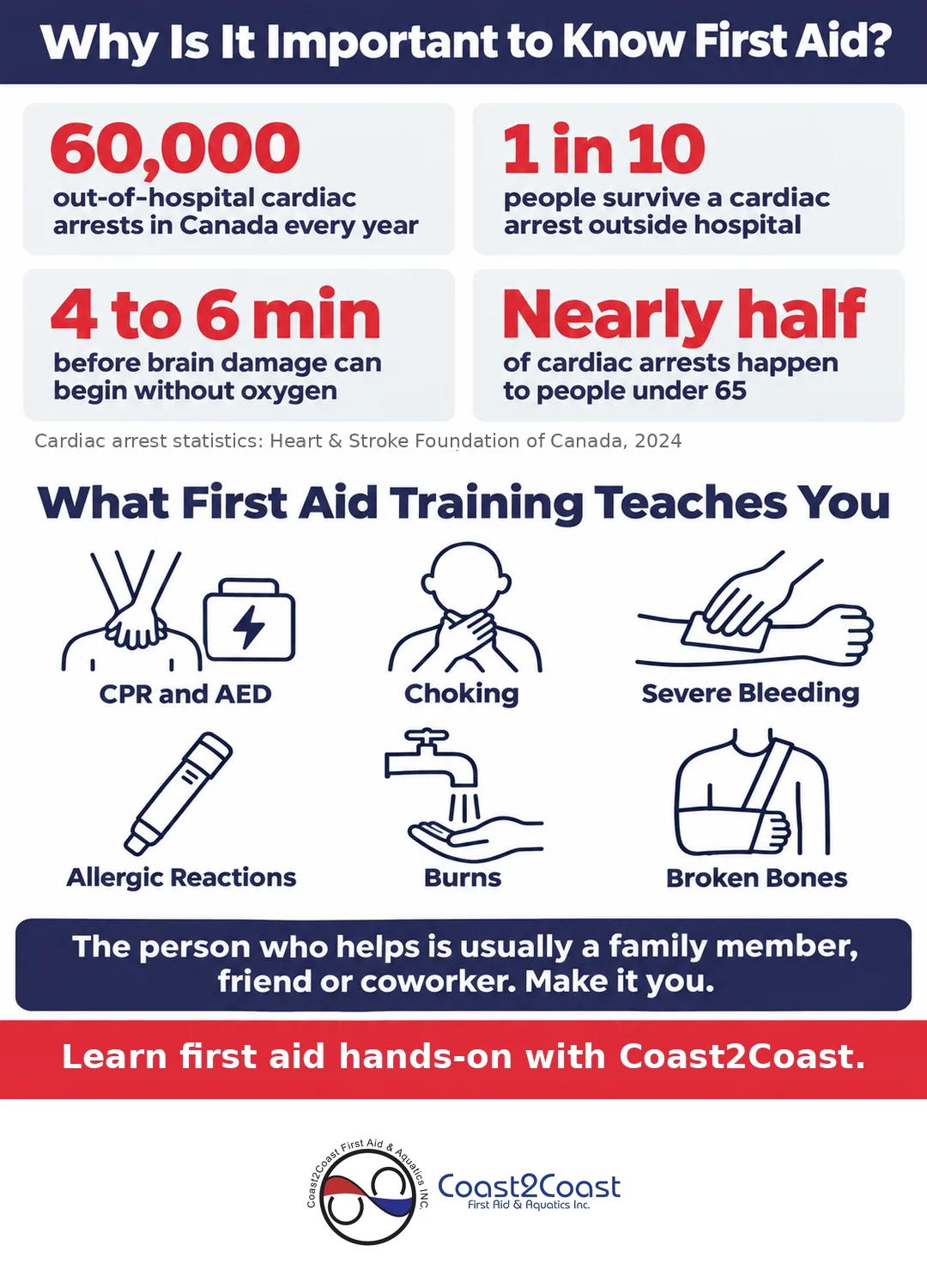
60,000
out-of-hospital cardiac arrests in Canada every year (Heart & Stroke)
4 to 6 min
before brain damage can begin without oxygen
Age 9
minimum age for the Canadian Red Cross Stay Safe! course
Why Is It Important to Know First Aid?
First aid is the immediate care you give someone who is injured or suddenly ill until paramedics take over. Knowing first aid is important because the first few minutes of an emergency often decide the outcome. Brain damage can begin within 4 to 6 minutes when the brain is starved of oxygen, and an ambulance can take longer than that to arrive, especially outside cities.
The numbers show why this matters for everyone, not just healthcare workers. Heart & Stroke reports about 60,000 out-of-hospital cardiac arrests in Canada each year, and only about 1 in 10 people survive. Most happen in private places like homes, and nearly half happen to people under 65. The person most likely to help is a family member, coworker, or friend.
First aid training turns bystanders into responders. It teaches you to stay calm, call 9-1-1 correctly, and act, whether that means starting CPR, stopping severe bleeding, or helping someone who is choking. It also stops small problems, like a burn or an allergic reaction, from becoming serious ones.
Not sure which course you need?
Answer a few quick questions to match your age, job, and goals to the right course.
What Does First Aid Training Teach You?
A Canadian Red Cross first aid course teaches you to recognize emergencies and respond with confidence. Depending on the level, you learn how to:
- Perform CPR and use an AED for adults, children, and infants.
- Help a person who is choking.
- Control severe bleeding and treat wounds and burns.
- Recognize a heart attack, stroke, or severe allergic reaction, and help with an epinephrine auto-injector.
- Care for fractures, head injuries, and suspected spinal injuries until help arrives.
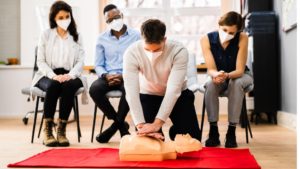
Every skill is practised hands-on with manikins and real equipment, so it becomes automatic. If you only need the life-saving essentials, CPR/AED courses focus on cardiac arrest and choking response.
Hands-On Skills Practice
Learn CPR and AED Skills in a Real Classroom
Practise compressions, rescue breaths, and AED use with instructor feedback on every rep.
At What Age Can You Learn First Aid?
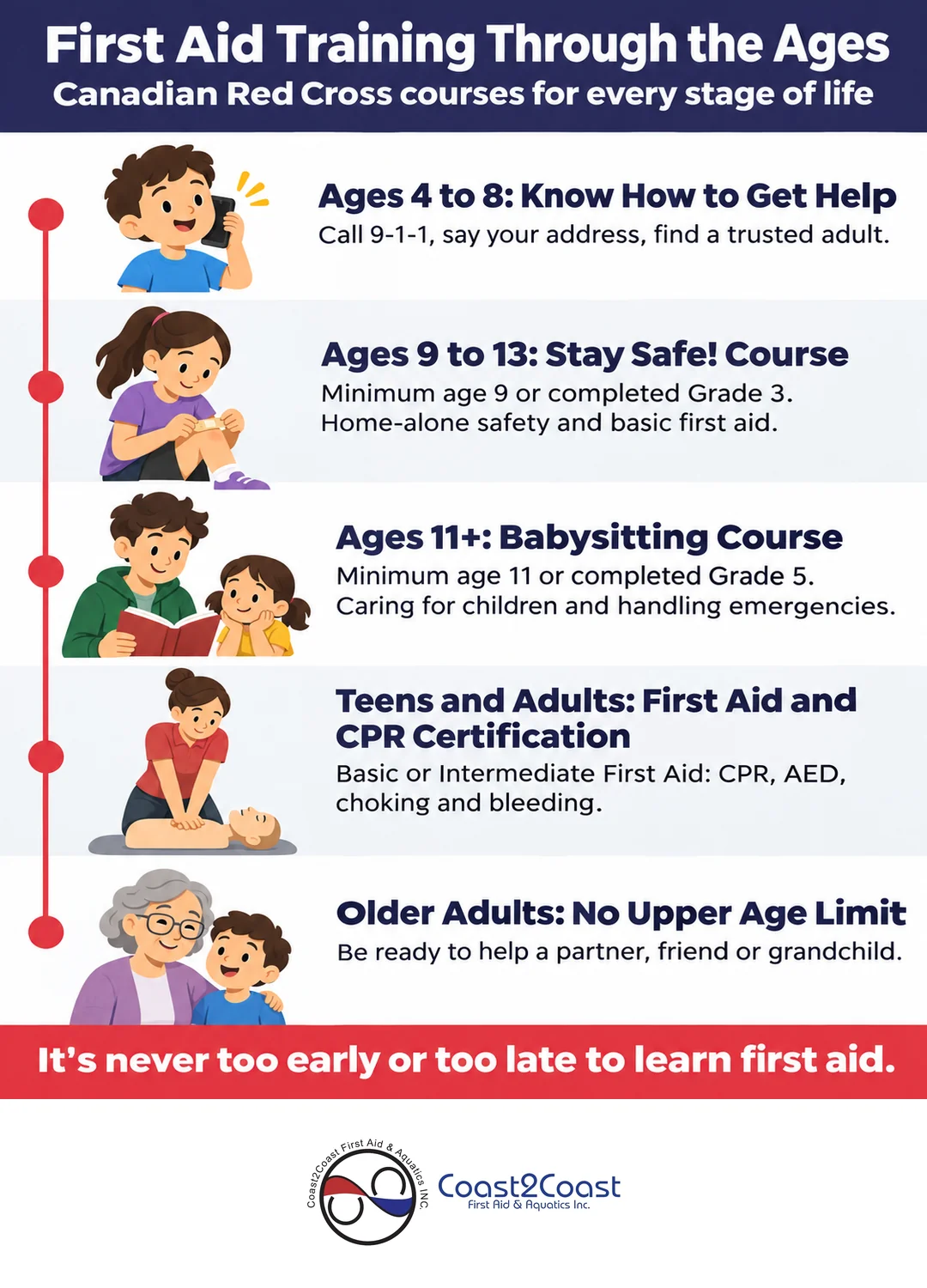
First aid is for all ages. The right starting point depends on what a person can safely do in an emergency.
Ages 4 to 8: Knowing How to Get Help
Young children can learn to call 9-1-1, say their address, and find a trusted adult. Parents can teach these basics at home long before a formal course.
Ages 9 to 13: Canadian Red Cross Stay Safe!
Stay Safe! is designed for youth aged 9 to 13. Children must be at least 9 years old or have completed Grade 3. The 5 to 6 hour course covers staying safe at home alone, preventing injuries, and basic first aid.
Ages 11 and Up: Canadian Red Cross Babysitting
The Babysitting course requires a minimum age of 11 or completion of Grade 5. It teaches caring for younger children, preventing injuries, and handling emergencies such as choking. Both youth courses are listed on our Canadian Red Cross youth courses page.
Teens, Adults, and Older Adults
Teens can earn full first aid and CPR certification, which is often required for jobs like lifeguarding, coaching, and camp counselling. For adults, training matters at every stage, from new parents to grandparents caring for family. There is no upper age limit. If kneeling is a concern, let your instructor know before class.
Enrol your child in a youth course
Stay Safe! and Babysitting build confidence and real safety skills.
Which First Aid Course Should You Take?
Basic First Aid (formerly Emergency First Aid) is a shorter course focused on CPR, AED use, choking, and life-threatening emergencies. It is a good fit for parents and anyone who wants essential skills.
Intermediate First Aid (formerly Standard First Aid) covers the same core skills plus a wider range of injuries and illnesses. It is the level many workplaces require. Healthcare providers usually need Basic Life Support (BLS) instead.
Canadian Red Cross first aid and CPR certificates are typically valid for three years, while BLS is valid for one year.
Short on time?
Blended learning combines online theory with a shorter in-person skills session.
Why Is It Important to Have a First Aid Kit?
Training and equipment work together. A well-stocked first aid kit puts gloves, gauze, bandages, and a CPR barrier device within reach the moment an injury happens, so you don’t lose time searching or improvising.
Keep first aid kits for home, your car, and your workplace. Workplace kits must meet provincial rules, and many follow the CSA Z1220-17 first aid kit standard. Check expiry dates regularly, restock after each use, and make sure everyone knows where the kit is. Training is what turns those first aid kits and supplies into real help, because it teaches you when and how to use each item.
How Does First Aid Training Help Workplaces?
Every province requires employers to have trained first aiders and stocked first aid kits, with the details depending on the province, workforce size, and type of work. Beyond compliance, trained teams respond faster, injuries are handled correctly, and workers feel safer. Private group training lets you certify your whole team together, on site or at one of our training centres.
Workplace Training
Train Your Whole Team
Book a private group Canadian Red Cross course scheduled around your shifts.
Key Takeaway
First aid training matters for everyone because emergencies happen at home, at work, and in public before paramedics arrive. Children can start at age 9 with Stay Safe!, teens and adults can earn full first aid and CPR certification, and there is no upper age limit. Pair your training with a well-stocked first aid kit, and refresh your skills before your certificate expires.
Get Certified
Join 200,000+ Canadians Who Are Certified
Coast2Coast is a Top 3 Canadian Red Cross Training Partner with a 99.9% pass rate.
Frequently Asked Questions: First Aid Training for Everyone 2026
Q1: Why is it important to know first aid?
A: Knowing first aid is important because emergencies happen before paramedics can arrive. Brain damage can begin within 4 to 6 minutes when the brain is starved of oxygen, so what a bystander does in those first minutes often decides the outcome. First aid lets you call for help correctly, start CPR, use an AED, control bleeding, and help someone who is choking until professional care takes over.
Q2: What is first aid?
A: First aid is the immediate care given to a person who is injured or suddenly ill, until paramedics or other medical help takes over. It ranges from cleaning a small cut to giving CPR and using an AED during a cardiac arrest. The goals of first aid are to preserve life, prevent the condition from getting worse, and support recovery.
Q3: At what age can a child learn first aid?
A: Children can start learning first aid basics, such as how to call 9-1-1 and say their address, as early as preschool. Formal training starts with the Canadian Red Cross Stay Safe! course, which requires children to be at least 9 years old or to have completed Grade 3. The Canadian Red Cross Babysitting course requires a minimum age of 11 or completion of Grade 5.
Q4: Is there a maximum age for first aid training?
A: No. There is no maximum age for first aid training. Older adults are often the people most likely to respond to an emergency involving a spouse, friend, or grandchild, which makes first aid and CPR training especially valuable. If kneeling or mobility is a concern, tell your instructor before class so they can help you practise in a way that works for you.
Q5: What is the difference between Basic and Intermediate First Aid?
A: Basic First Aid, formerly called Emergency First Aid, is a shorter course that focuses on CPR, AED use, choking, bleeding, and other life-threatening emergencies. Intermediate First Aid, formerly called Standard First Aid, covers the same core skills plus a wider range of injuries and illnesses, such as fractures, head and spinal injuries, and environmental emergencies. The new names follow the CSA Z1210:24 standard.
More FAQs: Certificates, Kits, and the Law
Q6: How long is a first aid certificate valid in Canada?
A: Canadian Red Cross first aid and CPR certificates are typically valid for three years. Basic Life Support (BLS) certification for healthcare providers is valid for one year. Skills fade faster than certificates expire, so it is worth refreshing your training before it lapses. A recertification course is usually shorter than the full course and keeps your certificate current.
Q7: Why is it important to have a first aid kit?
A: A first aid kit is important because it puts the supplies you need, such as gloves, gauze, bandages, and a CPR barrier device, within reach the moment an injury happens. Without one, you lose valuable time searching for supplies or improvising. Keep a kit at home, in your car, and at work, check expiry dates regularly, and restock it after every use.
Q8: Can you be sued for giving first aid in Canada?
A: It is very unlikely. Good Samaritan laws protect people who give first aid in good faith and without gross negligence. In Ontario, this protection comes from the Good Samaritan Act, 2001, and other provinces have similar laws. Quebec goes further and requires people to help someone whose life is in danger, as long as it is safe to do so. Staying within your training helps protect you.
Q9: Is first aid training required at work in Canada?
A: Yes. Every province requires employers to have trained first aiders and stocked first aid kits, but the exact rules depend on the province, the number of workers, and the type of work. In Ontario, workplace first aid requirements are set by WSIB. In Alberta, they fall under the OHS Code, and Nova Scotia’s requirements fall under its Occupational Health and Safety Act.
Q10: Can you learn first aid online?
A: You can complete part of a first aid course online through blended learning, but certification still requires an in-person skills session. Skills like CPR, choking response, and applying pressure to a wound must be practised hands-on with an instructor who can check your technique. Blended learning shortens the time in class while keeping the practical training that makes your skills reliable in a real emergency.
Reviewed & Sourced
Reviewed by Ashkon Pourheidary, B.Sc. (Hons) Neuroscience, Canadian Red Cross Instructor Trainer since 2011 and Co-Founder of Coast2Coast First Aid and Aquatics.
Sources: Heart and Stroke Foundation of Canada, "Highs and lows: More cardiac arrests are occurring and few survive" (January 2024) and "Cardiac arrest"; Canadian Red Cross, Stay Safe! and Babysitting course requirements and certificate validity; Workplace Safety and Insurance Board (WSIB), First Aid Program; Good Samaritan Act, 2001 (Ontario); Quebec Charter of Human Rights and Freedoms, section 2; Alberta Occupational Health and Safety Code; Nova Scotia Occupational Health and Safety Act. Training and kit standards referenced: CSA Z1210:24 and CSA Z1220-17.