

Nobody signs up to deal with vomit and blood during first aid. But emergencies rarely arrive clean and polished. Whether you’re a high school student on a sports team or a new parent caring for an infant, there’s a real chance you’ll face a situation where bodily fluids are part of the scene. This guide walks you through exactly what to do, how to protect yourself, and how to push past the squeamishness so you can keep someone alive until help arrives.
Key Takeaways
- Vomiting blood is a medical emergency that requires immediate medical attention. Call emergency services right away, position the person on their side to prevent choking, and monitor breathing continuously.
- If the person stops breathing, begin CPR immediately, using chest compressions and rescue breaths with a barrier device if you’re trained and equipped.
- Heavy external bleeding needs direct pressure with a clean cloth and gloved hands. If blood soaks through, add more layers rather than removing the original dressing.
- Shock occurs from a sudden drop in blood flow and can lead to permanent organ damage or death if left untreated. Severe blood loss is a common cause.
- Always use barrier devices, disposable gloves and a CPR face shield, to reduce infection risk and help manage the sight and smell of blood and vomit.
Understanding Why Vomit and Blood Show Up in First Aid
Bodily fluids show up in more emergencies than most people expect. Cardiac arrest, seizures, head injuries, and upper GI bleeding can all produce vomit, blood, or both. Freezing because of them can cost someone their life.
Ordinary vomiting brings up stomach contents and is usually unpleasant but manageable. Vomiting blood, medically called hematemesis, is different. Signs of vomiting blood may include bright red blood and dark brown or black vomit that resembles coffee grounds. Bright red blood typically means active bleeding somewhere in the GI tract, often the esophagus, stomach, or small intestine. The coffee-ground appearance means blood has been sitting in the stomach long enough to be partially digested, suggesting slower but still serious bleeding. Large amounts of bright red blood in vomit require immediate emergency care.
Heavy vomiting or bleeding can block the airway, reduce how much oxygenated blood reaches vital tissues, and trigger shock. Shock occurs from a sudden drop in blood flow, and it can lead to permanent organ damage or death if the body can’t compensate. Severe blood loss is a common cause of shock, and it can develop quickly after a wound that seemed manageable at first. Your job as a first aider isn’t to diagnose the cause of bleeding. It’s to keep the airway clear, control any visible bleeding, watch for signs of shock, and get the person to a healthcare provider fast. For a full explanation of shock, its causes, and how to respond, see our guide What Exactly Is Shock?
Your Safety First: Infection Control and the “Gross” Factor
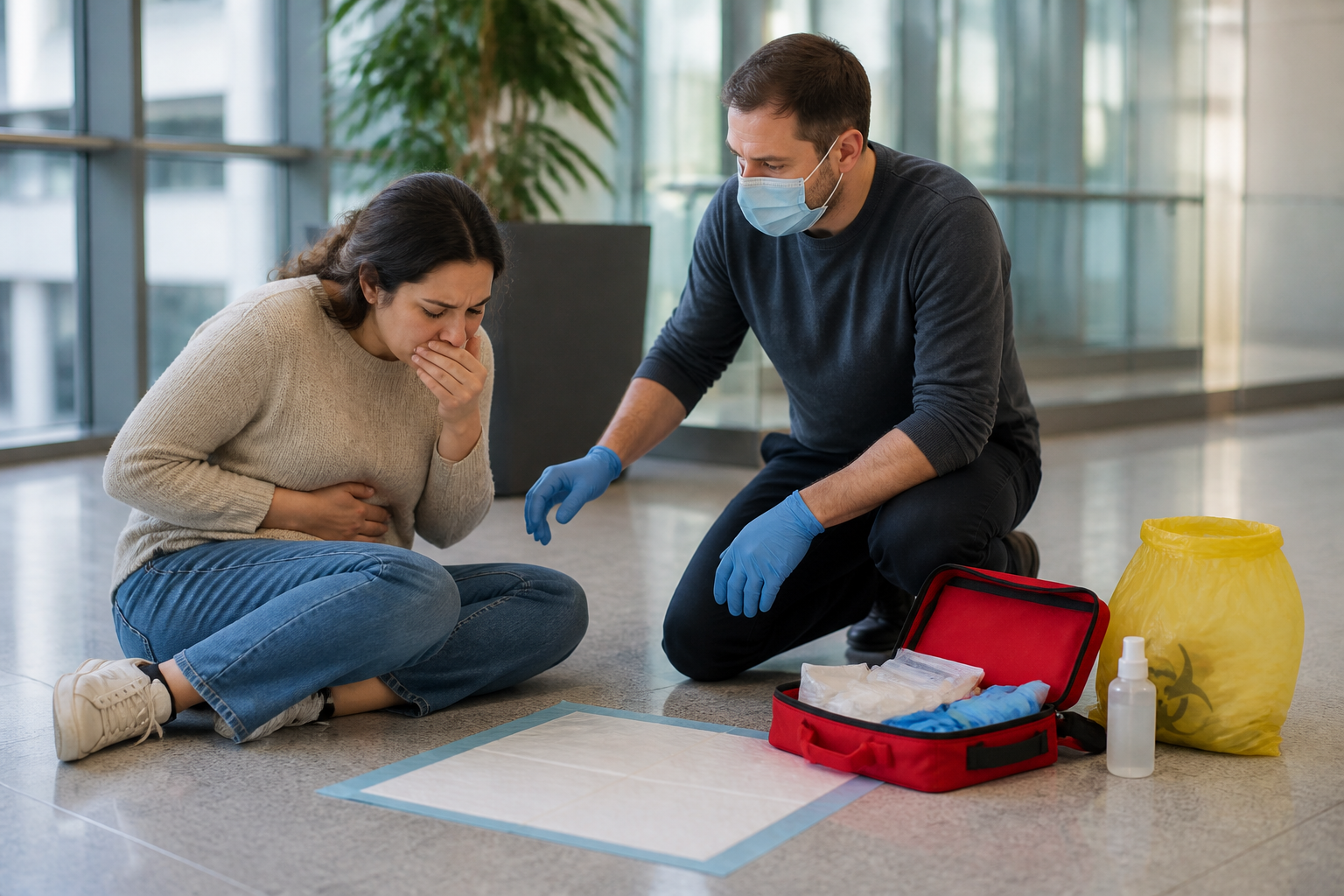
First aid always starts with a safe scene. Before you touch an injured person, scan for danger: traffic, electrical hazards, violence, or slippery surfaces created by vomit and blood.
Blood and vomit can carry bloodborne pathogens. The actual risk during first aid is low, but simple precautions shrink it further. Use disposable gloves to prevent infection during treatment. Nitrile gloves are preferred over latex, since they resist tears and are less likely to trigger an allergic reaction. A typical first aid kit also includes a pocket mask or CPR face shield with a one-way valve, and sometimes eye protection.
Now, the elephant in the room: the “gross” factor. It’s completely normal to feel nauseous, light-headed, or desperate to look away when you see blood or vomit. Three quick coping tips:
- Fix your eyes on the person’s chest or a neutral spot instead of staring at the fluid.
- Breathe slowly through your mouth, this reduces the impact of strong smells.
- Ask another bystander to handle clean-up while you focus on care.
After the emergency, wash your hands and any exposed skin with soap and water as soon as practical. If you had a significant exposure, blood splashing into your eyes or onto an open cut, seek medical attention promptly.
First Steps in Any Emergency With Blood or Vomit
The first 60 seconds set the tone for everything that follows.
- Scene safety. Look for traffic, electrical hazards, violence, or unstable surfaces. Only approach when it’s safe.
- Put on gloves. If you don’t have nitrile gloves, improvise with a plastic bag or thick cloth over your hand.
- Scan for major bleeding and vomit. Look around the injured person’s body, especially limbs and the face, for pooling blood or fluid near the mouth that could block the airway.
- Check responsiveness. Tap the shoulder firmly, speak loudly. If the person doesn’t respond, they’re unresponsive.
- Check breathing. Look for chest rise and listen for breath sounds for up to 10 seconds. Gasping or irregular breaths don’t count as normal, this person needs CPR.
- Call for help. If there’s any suspicion of vomiting blood, internal bleeding, shock, or unresponsiveness, call 9-1-1 and request an ambulance immediately.
Dealing With Vomit in a Conscious Person
Most vomiting episodes aren’t cardiac arrest. The person is awake, miserable, and possibly embarrassed. Your goals are simple: prevent choking and watch for signs the situation is getting worse.
Safe positioning. Sit the person upright or lean them forward with the head forward so vomit falls away from the airway. If they can’t sit, position the person on their side to prevent choking if they vomit blood, with the head slightly lower than the body so fluid drains out instead of back into the throat.
Watch for red flags. Vomiting becomes a medical emergency when it includes blood, follows a head injury, comes with severe abdominal pain, or occurs repeatedly in a baby or young child. Watch too for signs of shock: confusion, rapid heartbeat, and pale skin. Call emergency services if someone shows signs of shock.
Guidance for new parents. Infants dehydrate far faster than adults. After repeated vomiting, look for a sunken fontanelle (the soft spot on the head), a dry mouth, extreme sleepiness, or fewer wet diapers than usual. Any of these warrant urgent contact with your child’s doctor. Don’t let the person eat or drink anything until a healthcare provider gives the go-ahead.
Vomiting or Blood During CPR and Rescue Breathing
Vomiting during CPR is surprisingly common. Rescue breaths can force air into the stomach, and the body’s own reflexes may cause regurgitation. If the person stops breathing, begin CPR immediately, and be ready to manage what comes up.
What to do if the person vomits mid-CPR:
- Pause briefly. Stop compressions just long enough to address the airway, seconds count.
- Log-roll. Roll the person as a single unit onto their side so vomit drains out by gravity.
- Clear the mouth. Use a gloved hand or cloth to wipe away visible material. Don’t spend time removing every trace.
- Resume compressions. Turn them back, re-open the airway, and restart immediately, even if some vomit remains. Minimizing interruptions to compressions is one of the strongest predictors of survival.
If there’s blood in the mouth, compressions still take priority. Use a barrier device when delivering rescue breaths. Compression-only CPR is a widely accepted alternative for untrained or unwilling rescuers, especially when vomit or blood makes rescue breaths difficult. Coast2Coast courses let students practise these messier scenarios with simulated fluids in a controlled setting so the real thing feels less overwhelming.
The Recovery Position: Protecting the Airway From Blood and Vomit
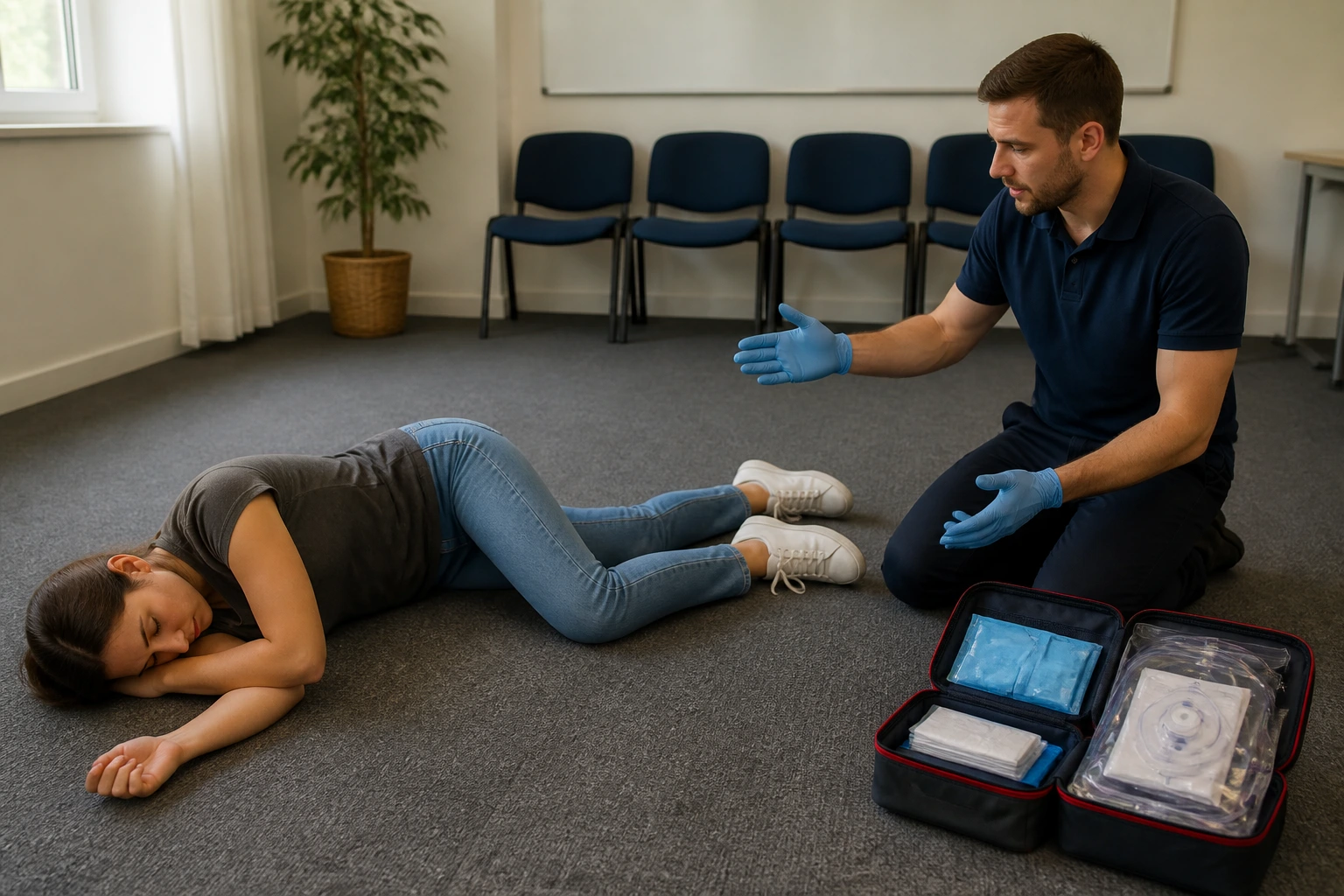
The recovery position is your go-to move when someone is unresponsive but breathing normally. It keeps the airway open and lets vomit, blood, or saliva drain out instead of pooling at the back of the throat.
- Straighten the person’s legs.
- Place the arm nearest you at a right angle to the body, palm facing up.
- Bring the far arm across the chest, resting the back of that hand against the near cheek.
- Bend the far knee up.
- Roll the person toward you, using the bent knee and arm as levers, until they’re on their side.
- Tilt the head back slightly and angle the mouth downward so fluids drain out.
Caution: Avoid moving a person suspected of having a spinal injury unless necessary. But if vomit or blood is actively flooding the airway and threatening breathing, airway protection takes priority over spinal precautions, that’s the accepted trade-off in first aid.
Monitor breathing continuously. If it stops or becomes abnormal, roll the person onto their back and begin CPR right away.
Recognizing Vomiting Blood: When It’s an Emergency
Vomiting blood is never “normal.” Even a single episode should be treated as a medical emergency until a doctor says otherwise. Call emergency services immediately if a person is vomiting blood.
Hematemesis can indicate serious internal bleeding that requires urgent evaluation. It can appear as bright red blood, dark clots, or coffee-ground material mixed with stomach contents. Small streaks from a minor nose bleed or a bitten tongue are less alarming than large volumes, but any significant amount deserves urgent attention. Other warning signs of internal bleeding include sudden severe abdominal pain, dizziness or fainting, pale or sweaty skin, a rapid weak pulse, or confusion, common causes include trauma, ulcers, and certain medication use.
What to do while waiting for emergency services:
- Keep the person calm and still while waiting for emergency services.
- Don’t let them eat or drink, or take pain medication, unless instructed by a healthcare provider.
- Position them lying flat or however feels most comfortable, unless breathing is compromised, then use the side-lying position.
External Bleeding: When to Act Fast
Heavy external bleeding is alarming, but simple first aid keeps enough blood circulating until the ambulance arrives. Apply firm pressure to control bleeding from a wound, using a clean dressing and gloved hands. If bleeding continues and blood soaks through, add more layers on top, don’t remove the original dressing, lifting it breaks any clot forming underneath. Do not remove objects embedded in a wound, pad around it instead. Severed limbs should be wrapped and kept cool, then sent with the person to the hospital.
Seek medical help for all severe bleeding cases. Call emergency services immediately for any severe bleeding emergency, pooling blood, spurting wounds, or blood soaking through clothing quickly all signal a life-threatening situation, and severe blood loss can quickly progress to shock. For the full step-by-step technique, including internal bleeding causes and when a tourniquet is appropriate, see our complete guide on how to stop bleeding in emergencies.
Supporting High-Risk People: Babies, Pregnant People, and Older Adults
Vomiting and bleeding are particularly dangerous for infants, pregnant people, and older adults, their bodies have smaller fluid reserves or existing conditions that make rapid deterioration, including shock, more likely.
Infants and young children. Babies can become dangerously dehydrated from repeated vomiting within hours, and choking on vomit is a real risk if they’re placed on their back. Call emergency services if a child is vomiting blood, unresponsive, or showing signs of shock. A severe allergic reaction can also cause vomiting, if you’re caring for a child with known allergies, our guide on what to do in anaphylactic shock covers EpiPen use in full.
Pregnant people. If a pregnant person is unresponsive and breathing, turn them slightly onto their left side to keep the uterus from compressing major blood vessels. Vomiting blood during pregnancy is always high risk, call for help without delay.
Older adults. Blood thinners are common in this age group, making even minor falls or head injuries potentially dangerous. Fragile skin tears more easily, and internal bleeding after a fall may cause delayed vomiting of blood hours later. Treat any vomiting after a fall or head injury as a medical emergency.
Coast2Coast offers youth and childcare first aid courses, as well as CPR/BLS training designed for parents, teachers, and caregivers who regularly look after these higher-risk groups. Schools and sports teams can also arrange group training so coaches and staff are prepared together.
Managing Your Own Reactions: Staying Effective When It’s “Gross”
Even experienced paramedics sometimes feel nauseous or light-headed around blood and vomit. Feeling that way doesn’t make you unsuited to help. It makes you human.
Practical coping strategies:
- Focus your eyes on a neutral spot, the person’s chest works well, instead of staring at the wound or vomit.
- Breathe slowly through your mouth to reduce the impact of smell.
- If a mask is available, wear it, it buffers both smell and visibility.
- If you start to feel faint, ask another bystander to take over while you step back safely. Doing some help and then handing off is always better than doing nothing.
Keep a pair of nitrile gloves and a cheap CPR face shield in your backpack, diaper bag, or car glove box. Having barriers ready removes one of the biggest mental hurdles when an emergency occurs.
Why Formal Training Matters
Reading about first aid is a solid start, but hands-on practice is what turns knowledge into reflex. When blood is pooling and someone is vomiting, you won’t have time to scroll through an article, your muscles need to remember what your brain learned.
Coast2Coast First Aid & Aquatics is a Canadian Red Cross training partner offering WSIB-approved First Aid and CPR/AED courses across Canada for individuals, workplaces, schools, and community groups, using realistic scenarios with simulated fluids so students build tolerance in a safe, supported setting before facing the real thing.
Learn CPR and Bleeding Control Hands-On
Simulated scenarios build the muscle memory a written guide can’t.
Get Your School or Team Trained Together
Group training keeps coaches, staff, and students prepared as a team.
Vomit and blood are a normal part of real emergencies, not a sign that something has gone wrong with your response. Use gloves and a barrier device, keep the airway clear, apply firm pressure to any bleeding, and call emergency services immediately if blood appears in vomit. Feeling squeamish doesn’t make you unsuited to help, it makes you human.
Join 150,000+ Canadians Who Are Certified
Find a class near you and take the first step today.
Frequently Asked Questions: Vomit and Blood During First Aid
Q1: Is it safe to do mouth-to-mouth if there’s blood in the person’s mouth?
A: Using a pocket mask or face shield with a one-way valve is the safest way to give rescue breaths when blood is present. Most first aid kits include one. If no barrier is available and you’re uncomfortable, compression-only CPR is a strongly supported alternative for adult cardiac arrest. Any exposure of broken skin or mucous membranes to another person’s blood should be discussed promptly with a healthcare provider.
Q2: What if I feel faint or start to vomit while giving first aid?
A: Safely step back, sit or lie down, and ask another bystander to continue care, or stay on the phone with the emergency dispatcher and follow their instructions. Doing some help and then stepping away is always better than doing nothing, and it prevents you from becoming a second casualty.
Q3: How can I tell if vomiting is something simple or a medical emergency?
A: Isolated vomiting with mild symptoms often resolves on its own. Red flags include vomiting blood, severe abdominal pain, a stiff neck, confusion, chest pain, or signs of shock. For infants, repeated vomiting with no wet diapers, extreme sleepiness, or a sunken soft spot are reasons to seek urgent medical care. When in doubt, call your doctor or emergency services rather than waiting.
Q4: Do I need a tetanus shot if I get someone else’s blood on a cut?
A: Tetanus comes from bacteria in soil and dirt entering wounds, not directly from another person’s blood. However, any open wound contaminated with blood or body fluids should be washed thoroughly with soap and water. Consult a healthcare provider about your tetanus status and any bloodborne infection assessment.
Q5: What items should I keep at home or in my car for these situations?
A: A practical kit includes several pairs of nitrile gloves, a CPR face shield, absorbent pads or paper towels, a small sealable bag for waste, clean water for rinsing, and basic dressings. New parents should keep a compact version in the diaper bag, and high school students can carry at least gloves and a face shield in a backpack.
Q6: Why does someone vomit during CPR, and does it mean I’m doing something wrong?
A: No, it’s a normal physiological response, not a sign of error. Rescue breaths can push air into the stomach, and the body’s own reflexes may trigger regurgitation during cardiac arrest. Pause briefly to log-roll the person, clear the mouth, and resume compressions right away, this is an expected part of many real CPR scenarios, not a mistake on your part.
Q7: Is dark, coffee-ground vomit less serious than bright red blood?
A: Not necessarily. Coffee-ground vomit means blood has been in the stomach long enough to be partially digested, which suggests slower bleeding, but it’s still a serious warning sign requiring the same urgency as bright red blood. Treat any vomiting blood, regardless of colour, as a medical emergency and call emergency services.
More FAQs: Practical Concerns
Q8: Should I move someone who’s vomiting if I suspect a spinal injury?
A: Avoid moving a person suspected of having a spinal injury unless necessary. However, if vomit or blood is actively threatening their airway and breathing, protecting the airway takes priority over spinal precautions. Use a careful log-roll technique to turn them on their side rather than an uncontrolled movement.
Q9: Can I use a plastic bag instead of gloves in an emergency?
A: Yes, if disposable gloves aren’t available, a plastic bag or thick cloth over your hand is a reasonable improvised barrier. It’s far better than bare-hand contact with blood or vomit, even though it’s not as protective as proper nitrile gloves.
Q10: What’s the difference between how I’d treat a nose bleed versus vomiting blood?
A: A simple nose bleed is usually managed by leaning forward and pinching the soft part of the nose, and it’s rarely an emergency on its own. Vomiting blood, by contrast, always warrants a call to emergency services, since it can indicate serious internal bleeding in the digestive tract rather than a minor, visible injury.
Q11: How long should I hold direct pressure on a bleeding wound?
A: Apply pressure and maintain it firmly and continuously until bleeding stops or emergency services arrive, don’t lift the dressing to check, since that can disrupt clot formation. If bleeding continues and blood soaks through, add more layers on top rather than removing what’s already there.
Q12: Should young children be taught any of this, or is it just for adults?
A: Basic concepts, like telling an adult immediately and not touching blood or vomit with bare hands, can be taught to children age-appropriately. Hands-on skills like CPR and wound care are typically taught starting in early adolescence through youth first aid programs.
Q13: What if the person vomiting is unconscious but I’m not sure if they’re breathing normally?
A: Check for up to 10 seconds: look for chest rise, listen for breath sounds, and feel for air movement. Gasping or irregular breathing does not count as normal breathing, this person needs CPR, not the recovery position. When in doubt, call emergency services and follow the dispatcher’s instructions.
Q14: Does feeling squeamish mean I’m not cut out to help in emergencies?
A: No. Even experienced paramedics sometimes feel nauseous or light-headed around blood and vomit. It’s a normal human reaction, not a reflection of your capability. Practising with realistic scenarios in a formal course is the most effective way to build tolerance before a real emergency occurs.
Q15: After helping someone with vomit or blood present, what should I do for myself?
A: Wash your hands and any exposed skin with soap and water as soon as practical. If you had a significant exposure, like blood splashing into your eyes or an open cut, seek medical attention promptly. It’s also normal to feel unsettled afterward, talking it through with someone, or a professional if it lingers, is a healthy part of processing the experience.
Reviewed By: Ashkon Pourheidary, B.Sc. Hons Neuroscience, Co-Founder of Coast2Coast First Aid & Aquatics and Canadian Red Cross Instructor Trainer since 2011.
Source: WSIB, First Aid Program (Regulation 1101)