

This comparison walks through how lifeguard pay stacks up against fast food wages, what certification lifeguards need to get hired, and why the job’s long-term earning potential often gets overlooked by first-time job seekers.
How Much Do Lifeguards Actually Make?
Lifeguards’ pay varies by employer, but it consistently outpaces the federal minimum wage that many entry-level fast food positions still start at. Municipal pools, YMCAs, and private clubs typically pay lifeguards above minimum wage from day one, and pay tends to climb quickly with experience and additional certifications. According to the Bureau of Labor Statistics, lifeguards and other recreational protective service workers often see higher median hourly wages than combined food preparation and serving roles nationally.
Some employers also offer full-time positions to year-round staff, which come with added perks such as health benefits, free facility access, or paid training hours, making total compensation even more competitive. Unlike many entry-level food service jobs, a lifeguard salary is also tied to a certification you keep for years, which means the earning potential is not capped at whatever the local minimum wage happens to be. On Indeed, the average lifeguard salary in Los Angeles currently sits around $22 an hour, based on dozens of job postings collected over the past three years, well above what most entry-level fast food jobs pay in the same market.

Los Angeles County Lifeguard Salary: Why the Numbers Stand Out
While teenagers working their first summer won’t start at these rates, Los Angeles County lifeguard salary numbers made national headlines in 2021 and show the ultimate earning ceiling of the profession. A public payroll report from Open the Books found the county’s highest-paid lifeguard captain earned $510,283 in a single year, nearly half of it from overtime pay alone. The county’s lifeguard chief was the second-highest earner that year at $463,517, and more than 90 lifeguards across LA County earned at least $200,000, largely through overtime shifts stacked on top of base pay.
LA County by the Numbers: Captain and Chief Pay
Those figures reflect the top of a very steep ladder, not a typical starting wage. They show how far a lifeguard salary can climb with seniority, certification, and overtime in LA County specifically. Reaching lifeguard captain or lifeguard chief status takes years of experience and strong leadership skills, since these roles involve managing a full team of lifeguards who protect swimmers across dozens of beaches at once. It is a legitimate long-term career path, not just a summer job, for anyone willing to complete the certification requirements and put in the years. Starting as a beach lifeguard and working up through the ranks shows why the earning ceiling in this field is higher than most people expect.
Lifeguarding vs. Fast Food: Comparing the Two Most Common Jobs for Teenagers
Fast food workers and lifeguards are the two jobs teenagers consider most often, and they differ in more than just the uniform.
Pay: Lifeguards typically start above minimum wage and gain raises tied to certification level and experience. Fast food wages are usually flat, with raises tied to tenure rather than a skill credential.
Work environment: Lifeguards work outdoors or poolside, with responsibility for public safety. Fast food work is indoor, fast paced, and customer service heavy.
Resume value: A lifeguard certification signals a real, transferable safety credential that employers recognize. Fast food experience demonstrates reliability but rarely a specific skill set.
Physical demand: Lifeguards need swimming ability and physical readiness for emergencies. Fast food work is physically demanding in different ways, with long periods on your feet indoors.
Neither job is easy, but for the teen who was always the strongest swimmer in the group, or the kid who spent every summer at the pool, lifeguarding is often the stronger entry point into the workforce on pure earning potential. It also builds soft skills like communication and collaboration that carry over into almost any future job.
Best Summer Jobs for Teens and College Students
Lifeguarding regularly ranks among the best summer jobs for teens and college students because it combines decent pay with flexible scheduling around camps, community pools, and California beaches. It is also seasonal by nature, which fits a school schedule far better than year-round retail or food service roles. Other popular options for teens include babysitting, pet sitting, yard work, tutoring, and working as a party helper, with pay ranging from roughly $13 to $80 an hour depending on the role and skill level. Lifeguarding stands out among these because it combines strong pay with a nationally recognized safety certification.
What Does the Job Actually Involve?
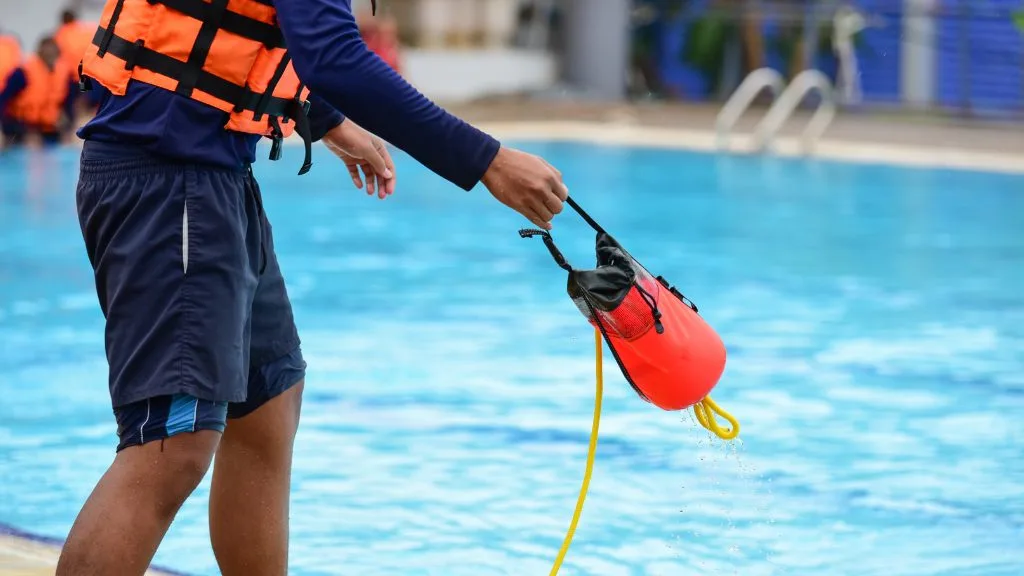
Day to day, lifeguards monitor and protect swimmers, enforce pool or beach rules, perform routine safety checks, and respond to emergencies using CPR, first aid, and rescue skills. Depending on the facility, lifeguards may also assist a swimmer with a disability using facility-specific pool access protocols. It is more responsibility than most entry-level jobs, which is part of why the pay reflects that.
What It Takes to Become a Lifeguard
Most lifeguards need a lifeguarding certification that includes CPR, AED, and first aid training, commonly through the American Red Cross or a similar recognized provider. This instruction usually covers water rescue techniques, spinal injury management, and emergency response protocols. Coast2Coast offers CPR and AED certification courses and broader first aid instruction that align with what most lifeguarding programs require before hiring.
Start Your CPR & AED Certification
Camps and municipal recreation departments hiring multiple lifeguards at once sometimes coordinate group certification sessions to get their whole summer team certified together. Teens can also check local job boards for openings, since programs like Youth@Work and HIRE LA’s Youth Program connect eligible youth ages 14 to 24 with paid work experience.
Certify Your Whole Summer Team Together
Is Lifeguarding a Good Part-Time Job for Students?
For students who can swim confidently and want a part-time job with real earning potential, lifeguarding is a strong option. It pays competitively, builds a resume-worthy credential, and offers a physically active alternative to indoor food service work. If you are exploring your certification options, reach out to a training provider to find a course that fits your schedule before the summer hiring season starts.
Many recreation departments also hire lifeguards as full-time employees during peak summer months, often with added benefits like paid sick time or discounted programs for family members.
Frequently Asked Questions: Lifeguarding Jobs for Teens
Q1: Is lifeguarding a good job for teenagers?
A: Yes. Lifeguards get competitive pay, flexible summer scheduling, and a real safety credential that fast food and retail jobs typically do not provide. It also builds confidence and responsibility at a young age.
Q2: How much more do lifeguards make than fast food workers?
A: Lifeguards’ pay varies by employer and region, but a lifeguard salary commonly starts above minimum wage and increases with certification level. Many fast food positions, by contrast, stay closer to the local minimum wage baseline for longer.
Q3: Why do LA County lifeguards get paid so much?
A: LA County’s lifeguard salary structure includes significant overtime pay for senior roles like lifeguard captain and lifeguard chief. A 2021 public payroll report found some lifeguards earned over $200,000 a year, though that reflects senior staff with years of seniority, not typical entry-level pay.
Q4: Do lifeguards need a work permit in California?
A: Most minors do. California generally requires workers under 18 to hold a valid work permit from their school before starting a job, including lifeguarding positions at pools, camps, or beaches. Employers and recreation departments typically handle scheduling around these requirements, but it helps to apply for the permit early so it does not delay a hiring decision.
Q5: Does lifeguard certification cost money?
A: Costs vary by provider and location, but most CPR, AED, and lifeguarding certification courses run somewhere between $150 and $400. Some employers, camps, or municipal recreation departments cover part or all of the cost for new hires, so it is worth asking before enrolling in a course independently.
About the Author & Reviewer
Written and reviewed by Ashkon Pourheidary, B.Sc. Hons Neuroscience, founder of Coast2Coast First Aid and Safety Inc. and a Canadian Red Cross Instructor Trainer since 2011.
Sources: U.S. Bureau of Labor Statistics; Open the Books public payroll report (2021); Indeed lifeguard salary data, Los Angeles, CA; California Department of Industrial Relations, Division of Labor Standards Enforcement.