
You watched the video. You memorized the steps. You feel ready. But here’s the uncomfortable truth: when you kneel beside a real person in cardiac arrest, your hands won’t know how hard to push, how fast to go, or what full chest recoil actually feels like. That gap between knowing and doing is exactly what a CPR training mannequin is designed to close, and it’s a gap no screen can bridge on its own.
Key Takeaways
- CPR manikins deliver haptic feedback, clicks, lights, physical resistance, that video simply cannot replicate.
- Real-time feedback devices measurably improve compression depth, depth compliance, and chest recoil compared to training without them.
- CPR training manikins come in various sizes to accommodate different teaching needs, from infant torsos to full adult models, and can simulate various body types for training.
- Video is excellent for teaching what to do. Only a manikin teaches you how it feels to do it correctly.
- Coast2Coast’s blended courses pair online theory with a mandatory in-person manikin session, both are required for certification.
The Gap Between Watching and Doing
Effective CPR comes down to three measurable factors: compression depth (5 to 6 cm for adults), rate (100 to 120 compressions per minute), and full chest recoil between pushes. Modern standards require a compression rate of 100 to 120 per minute during CPR, and you cannot accurately gauge any of this by watching a video alone, no matter how many times you replay it.
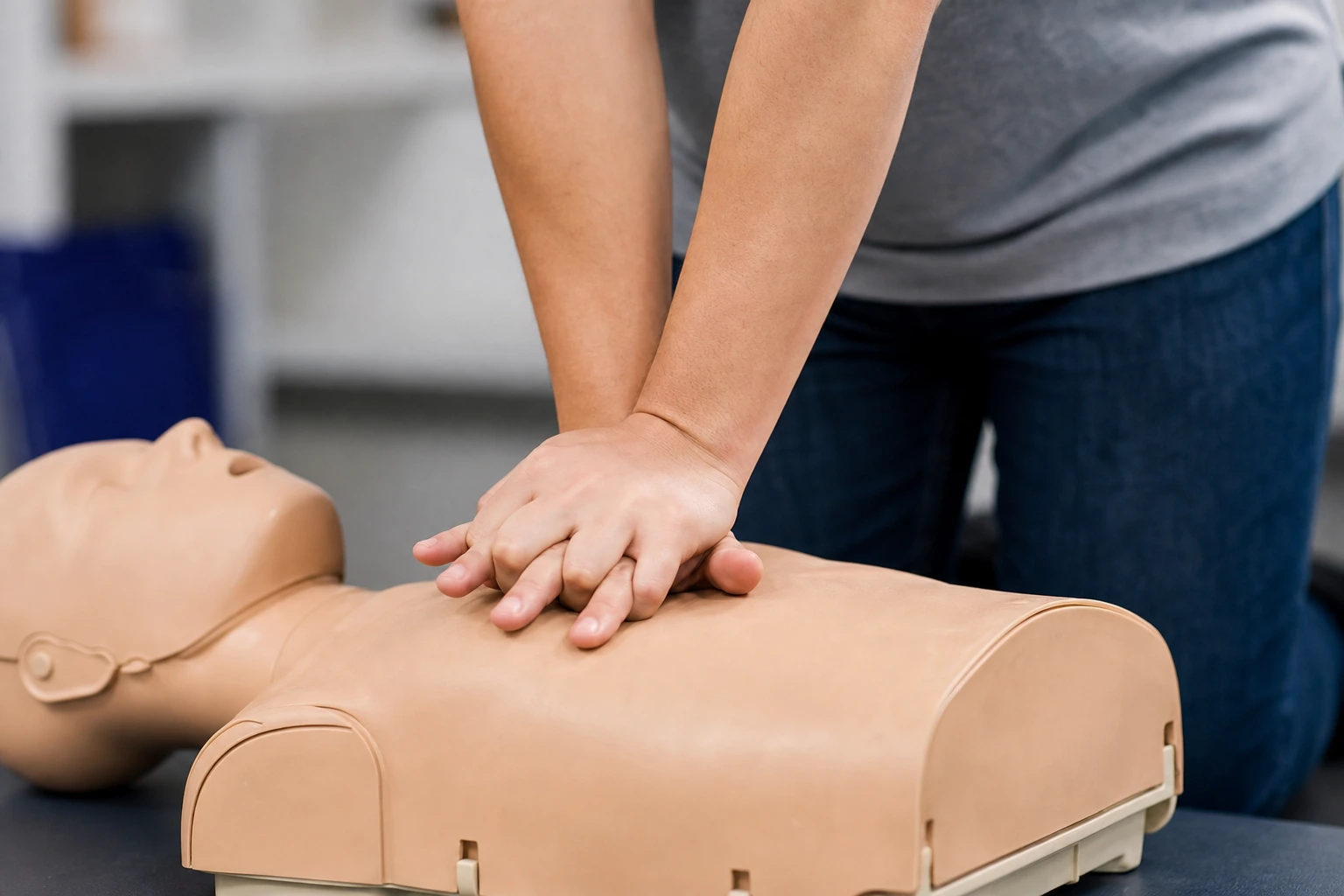
Picture a learner who’s confident after finishing their online theory modules. They kneel over an adult manikin, start pushing, and believe they’re nailing it. Then the manikin’s clicker stays silent. The instructor’s feedback display shows compressions landing 2 to 3 cm too shallow, a margin that, in a real arrest, could mean the difference between circulating blood to the brain and not.
CPR training mannequins are essential for teaching first aid safely and effectively because they let learners make mistakes and correct them immediately, without any real risk. A CPR mannequin simulates chest resistance and ribcage recoil, and modern manikins simulate human chest resistance to improve training quality in a way that mirrors a real person far more closely than any screen can. As one Coast2Coast instructor puts it: “Students walk in thinking they understand CPR from the videos. Within two minutes on the manikin, they realize they’ve never actually felt what effective compressions are. That moment of surprise is when real learning starts.”
What Is Haptic Feedback, and Why Does It Matter?
Haptic feedback is the physical sensation a manikin gives you when you compress its chest: resistance on the way down, a click or rebound at the target depth, and the spring-back of full recoil. It’s the tactile language your muscles need to learn, and no video can transmit it to you. CPR manikins provide instant feedback on compression quality, turning an abstract instruction like “push hard” into something you can feel and correct in real time.
Training manikins typically deliver this feedback one of a few ways:
- An audible CPR prompt, a click or beep, when a compression reaches the correct depth
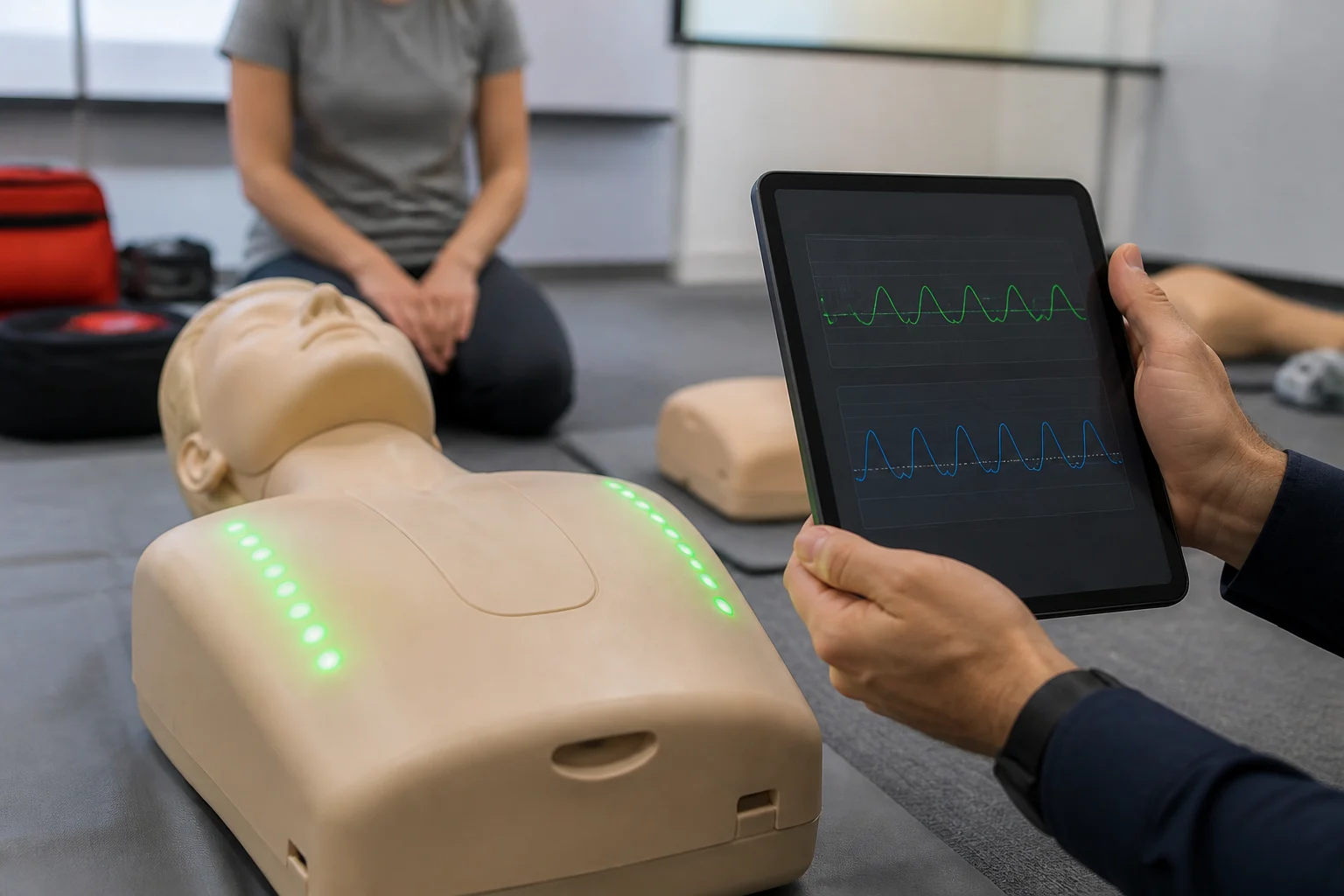
- LED indicators or other lights that shift from red to green at the right depth and rate
- Bluetooth-connected apps that display a live graph of depth, rate, recoil percentage, and ventilation volume for advanced feedback tracking
Feedback manikins visually indicate compression accuracy with lights, and many feedback manikins produce audible sounds for compression confirmation, both outperform an instructor simply watching and guessing. Some manikins use Bluetooth for advanced feedback analytics, giving instructors objective, shareable data rather than a subjective impression. Real-time feedback is critical for CPR training manikins because it removes guesswork entirely, replacing “does that feel about right?” with an objective, accurate answer.
The Research: What Studies Show
This isn’t just intuition, it’s measurable. A Canadian randomized controlled trial published in the Canadian Journal of Emergency Medicine followed 450 laypersons across Basic Life Support and AED training sessions. Participants who received just one minute of real-time visual feedback on a manikin during training raised their rate of complete chest recoil from 71.7 percent to 86.6 percent, and those with extended feedback pushed that even higher.
A broader 2025 systematic review and meta-analysis pooling 20 randomized controlled trials with over 4,500 participants found that feedback devices significantly improved compression depth, depth compliance, and recoil compliance compared with training that lacked such devices. Real-time feedback from manikins improves CPR technique in ways that verbal coaching alone cannot match, and the pattern holds across the research: objective feedback consistently beats instructor observation or video alone for building accurate skills.
CPR feedback technology helps improve both training effectiveness and learner confidence, because it removes guesswork and replaces it with a clear, correctable signal. Manikins enhance learning experiences in CPR training precisely because they turn a passive lesson into an active, corrected one.
What Video Can Teach, and What Only a Manikin Can
Online modules do a genuinely good job teaching:
- Recognition of cardiac arrest and stroke warning signs
- The steps in the chain of survival
- How to call 9-1-1 and use an AED
- Safety and infection control concepts
What absolutely requires touching a manikin:
- Calibrating how hard to push without applying more force than necessary
- Maintaining proper hand position while your arms fatigue
- Sustaining 100 to 120 compressions per minute over two full minutes
- Coordinating compressions with rescue breaths or AED prompts in real time
Effective training scenarios involve the use of rescue breaths and chest rise indications, letting learners see and feel whether a breath actually reached the lungs, something a video can describe but never let you practise. Manikins provide realistic practice for CPR techniques that video simply cannot replicate, manikins simulate real-world emergency scenarios effectively, and that practice is what builds the confidence and muscle memory that carry over into a real emergency. CPR manikins help build confidence in emergency response precisely because learners rehearse the same physical motions they’ll need under pressure.
Types of CPR Manikins: Adult, Child, and Infant
CPR training manikins come in various sizes to accommodate different teaching needs, and CPR manikins can simulate various body types for training, which is why Coast2Coast classes typically use a mix of adult manikins, child torsos, and infant manikins to teach age-specific skills. Understanding how CPR differs for adults, children, and infants is a core part of every course.
Adult manikins feature full or half-torso designs with realistic ribcage and sternum landmarks, and chest resistance appropriate to an adult body. Effective CPR training manikins should allow realistic anatomical training for chest compressions, so students build accurate habits from the first practice rep.
Child manikins present a smaller chest requiring different hand placement, often one-hand CPR, and a shallower target compression depth of roughly 5 cm.
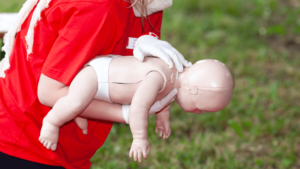
Infant manikins replicate a baby’s soft, flexible torso for two-finger compressions and the encircling-thumb technique, along with head tilt and airway positioning for a small airway. Parents in a babysitting or youth safety course quickly discover how dramatically different infant CPR feels compared to adult compressions.
Jaw thrust manikins are designed for practicing specific CPR techniques, particularly advanced airway management, and appear in Coast2Coast’s Professional Responder courses where learners go beyond basic compressions into more detailed airway control.
A family-pack mix, adult plus child plus infant, is common in First Aid & CPR Level C and BLS classes so every participant experiences all three age groups in one session. Coast2Coast aims for a low student-to-manikin ratio, commonly 2 to 3 learners per manikin, so each person gets real, repeated hands-on time rather than watching from the sidelines.
From Clickers to Bluetooth: How Feedback Technology Has Evolved
Basic training manikins use a simple audible CPR prompt, a click or beep at the correct depth, which is perfectly adequate for general community CPR training and covers a full range of everyday teaching needs. Mini manikins are reusable and convenient for classroom use, and a Basic Buddy-style budget model offers a similarly lightweight, low-cost option for schools and community groups when advanced feedback isn’t the priority.
The wider market includes several well-known models. Prestan offers various manikin types including adult and infant, and Prestan offers the Professional Adult Series 2000 manikin, which combines accurate chest compliance with rate-monitoring feedback. Prestan Ultralite manikins are lightweight and portable, built for easy transport in a carry case between locations. Laerdal manikins include options for adult, child, and infant CPR, and Laerdal manikins improve training quality and learner engagement across all three. Brayden manikins, also sold as BigRed™, provide immediate visual LED feedback, with lights along the torso showing compression quality and blood flow direction in real time.
CPR manikins can be purchased in single or multi-packs to suit different class sizes, and Coast2Coast selects manikins and AED trainers that align with Canadian Red Cross course outcomes, prioritizing reliable feedback over any single brand or price point.
Keeping Manikins and Equipment Ready to Teach
Whichever level of technology is used, high-quality manikins feature replaceable lung bags for hygiene during group training, along with face shields and other replacement parts that keep contamination risk low between learners. Manikins should have features for easy hygiene maintenance built in, not bolted on as an afterthought. Proper cleaning between every session, plus periodic battery checks on electronic feedback units, keeps the equipment accurate and ready for the next class.
Coast2Coast instructors inspect manikins, AED trainers, and other accessories before each session and follow manufacturer user guide recommendations for cleaning and storage, removing any damaged units from service rather than teaching with unreliable feedback.
How Coast2Coast Combines Video and Hands-On Practice
Coast2Coast’s blended learning model pairs online theory, completed at your own pace, with a mandatory in-person skill session where you work directly with manikins and AED trainers under instructor supervision. Neither half replaces the other. The video prepares you to succeed on the manikin; it doesn’t substitute for it.
In these in-person training sessions, an AED trainer, a non-shocking device that mimics a real AED, integrates directly with the manikin. Learners practice turning on the unit, attaching training pads, and following voice prompts while performing compressions during the “analyzing” and “shock” cycles, building the coordinated response that a video simply can’t rehearse. Instructors run small groups through these scenarios repeatedly, building confidence one repetition at a time.
If you’ve previously completed a video-only CPR class, an in-person refresher with manikins and AED trainers is the fastest way to close that gap and bring your skills up to current guideline standards.
Learn CPR Hands-On With Real Feedback
Manikins with clicks, lights, and real feedback build the skill video alone can’t.
Bring Manikin-Based Training to Your Workplace
On-site sessions with real manikins and AED trainers, no equipment investment required.
Video teaches you what to do. Only a manikin teaches you how it feels to do it correctly, and research consistently shows that feedback devices measurably improve compression depth and recoil. Coast2Coast’s blended courses require both the video and the hands-on manikin session, because certification without the physical practice doesn’t build a skill you can rely on.
Join 150,000+ Canadians Who Are Certified
Find a class near you and take the first step today.
Frequently Asked Questions: CPR Manikins and Feedback
Q1: Do I really need to attend in person if I’ve already watched CPR videos online?
A: Watching videos is a genuinely useful first step for learning the sequence and theory behind CPR. However, it can’t teach you how hard to push or how fast to go. Only a manikin gives you the physical feel of correct compressions and immediate feedback on your technique. Canadian Red Cross certifications delivered by Coast2Coast require an in-person skills component to meet WSIB and OHS standards, video-only completion doesn’t result in a valid certification.
Q2: What’s the difference between a basic clicker manikin and an advanced feedback manikin?
A: A basic manikin gives you a click or light at the correct depth, enough to confirm you’re compressing correctly. An advanced feedback manikin, often Bluetooth-connected, tracks and displays detailed metrics like depth, rate, recoil percentage, ventilation, and hands-off time. Both are effective for learning; advanced feedback is more common in healthcare-oriented courses where precision matters most.
Q3: Is it safe and hygienic to put my mouth on a CPR manikin?
A: Coast2Coast uses replaceable lungs and faces, plus single-use face shields, along with disinfectant wipes between learners. If you’re uncomfortable with mouth-to-manikin contact, you can request a barrier device or focus on compression-only practice during training. Proper cleaning protocols are standard at every session to keep contamination risk low.
Q4: How much does feedback during training actually improve my compressions?
A: Research shows a real, measurable difference. One Canadian randomized trial found that just one minute of real-time visual feedback raised complete chest recoil rates from roughly 72 percent to nearly 87 percent among laypersons. A broader review of 20 trials found consistent improvements in compression depth and recoil compliance whenever feedback devices were used during training.
More FAQs: Manikins in Practice
Q5: What is a jaw thrust manikin used for?
A: A jaw thrust manikin is designed for practicing specific, more advanced airway techniques, opening and stabilizing the airway in a person who may have a spinal injury, without tilting the head back. These appear in Coast2Coast’s Professional Responder courses, which go beyond the airway skills taught in standard CPR/AED and First Aid classes.
Q6: Can Coast2Coast bring manikins and AED trainers to our workplace or school?
A: Yes. Coast2Coast offers mobile training across many Canadian regions, bringing manikins, AED trainers, and all necessary supplies directly to offices, schools, and community centres. Contact Coast2Coast to discuss class size, scheduling, and which course level, CPR/AED, BLS, or Professional Responder, best fits your needs.
Q7: Do infant and child manikins really feel that different from adult ones?
A: Yes, noticeably so. Infant manikins have a soft, flexible torso designed for two-finger compressions, while child manikins require different hand placement and a shallower compression depth than adults. Parents and caregivers are often surprised by how different infant CPR feels the first time they practice it hands-on.
Q8: How often should I refresh my CPR training with manikins?
A: Most CPR and First Aid certifications are valid for three years in Canada, but research shows skills can noticeably decline within six to twelve months without practice. Annual or biannual refresher sessions are worth considering, especially for designated workplace first aiders, lifeguards, and healthcare workers.
Reviewed By: Ashkon Pourheidary, B.Sc. Hons Neuroscience, Co-Founder of Coast2Coast First Aid & Aquatics and Canadian Red Cross Instructor Trainer since 2011.
Source: Canadian Journal of Emergency Medicine; Resusc Plus (2025 systematic review, 20 RCTs)