What is Standard First Aid Training?

A person wearing blue gloves practices CPR on a medical mannequin. The mannequin is lying on a dark mat. A red emergency bag is partially visible in the background.

Given that injuries and illnesses can happen at any time, it’s important to be prepared. With some basic first aid knowledge, you can prevent a minor accident from becoming more serious. A medical emergency is a frightening event, but if you are trained as a first aider, you could save someone’s life.

Continue reading

What Can You Use as a Splint?

A man in a red shirt and white sneakers sits on an indoor sports court, holding his knee in pain. A colorful soccer ball is nearby. The blurred background suggests a gym or sports hall setting.

With the onset of summer and the increased number of outdoor activities, the probability of getting injured also increases. If you have injured a bone or joint, then splinting it may help. When dealing with such conditions, provide pain relief to the injured region using splints.

Continue reading

How to Know When Someone Needs CPR

A group of six people sits on chairs, attentively watching an instructor demonstrate CPR on a mannequin. They are wearing gloves, and an automated external defibrillator is placed nearby on the floor.

CPR is one of the most essential life-saving skills that can help someone survive if they have stopped breathing after cardiac arrest or an accident. However, a lack of knowledge is debilitating during an emergency because it can prove harmful.

Continue reading

How to Help Someone With Anxiety

A diverse group of five people sit in a circle, engaged in conversation. They are seated on light blue chairs in a bright room with a gray brick wall and framed photos in the background. A potted plant partially obscures the view.

It is normal and healthy for all of us to have some anxiety, but when it becomes excessive, it can be a problem. In small amounts, stress is beneficial because it keeps us alert to threats and dangers. People with severe anxiety need help and support because they may not be able to control their thoughts and fears, causing them to spin out of control.

Continue reading

Choosing the Right First Aid Course in the GTA

Choosing the Right First Aid Course in the GTA

There are several reasons why everyone in the Greater Toronto Area (GTA) should consider taking a First Aid course. The first one is if it is a requirement for their work or school. However, First Aid is also important for everyone because the knowledge & skills obtained may help save the life of someone in an emergency in the future.

The first aid course has two levels which are Emergency First Aid and Standard First Aid. We recommend our students complete Standard First Aid as it focuses on practicing the skills and polishing the knowledge through hand on practice as compared to Emergency First Aid. This blog will guide you in choosing the right first aid course in the GTA.

Learn more about First Aid Courses in GTA

Enroll in the right first aid course for your career in GTA! Call our toll-free number to begin your registration.

Different Levels of First Aid Training

There are several reasons why someone will decide to take First Aid & CPR training in the GTA. Emergency and Standard First Aid are the two most popular First Aid levels. The main differences between the two courses are the time it takes to complete the training and how extensive the learning experience gets in each of the courses.

Most workplaces and schools state what level of training is required, but someone may want to do the course as they prepare to become a parent, caregiver, or to help someone in an emergency. Read on to find out the essential differences in First Aid training and choose the right course.

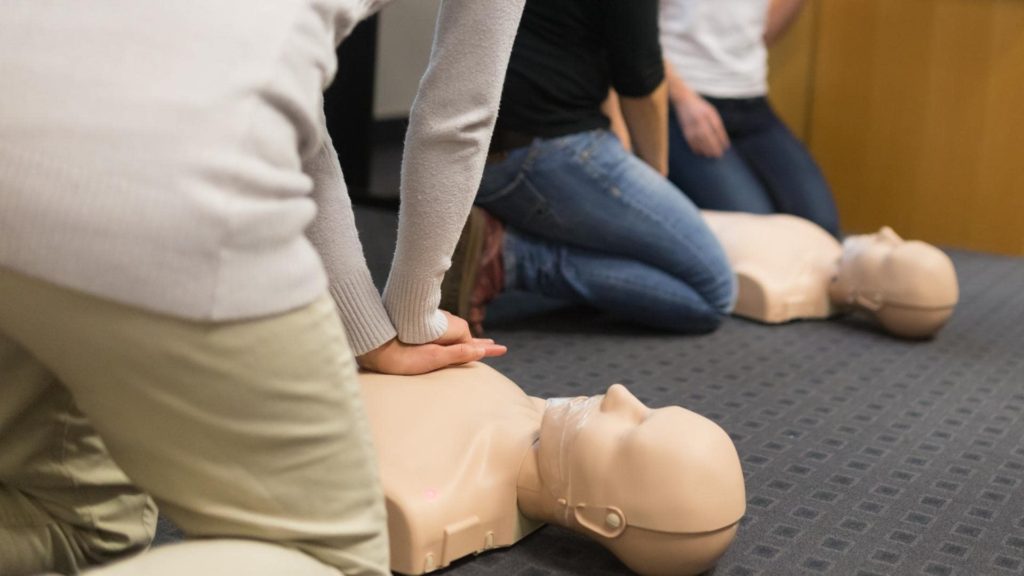
People practicing CPR on mannequins placed on a carpeted floor. The individuals are kneeling and performing chest compressions as part of a training session.


Which First Aid training is Right For You?

People requiring First Aid training should always verify which course is required before registering. Let’s discuss our most popular First Aid & CPR training courses:

Standard First Aid & CPR/AED

Standard First Aid CPR/AED training complies with the provincial workplace regulations of several careers. With this online blended course, there are two sections, and it includes a 7-8 hour online section and 8 hours of in-class training.

In addition to the online blended training format, there is also the traditional course which requires two days of in-class training. Participants learn all the skills to confidently help victims of life-threatening and non-life-threatening emergencies from accidents and illnesses.

At Coast2Coast, we combine Standard First Aid with CPR level C to ensure participants can provide CPR to adults, children, and infants.

Depending on the workplace, WSIB in Ontario may recommend employees complete Standard First Aid & CPR/AED. The requirement includes some employees at provincial and municipal levels with workplaces that have more than five employees per shift or floor. Employers must ensure that enough employees have the Standard First Aid training so that someone with the training is available at all times during work hours.

Some of the occupations requiring Standard First Aid & CPR/AED training include professionals and scholars in the following fields:

  • Daycare employees
  • All police and border control
  • Firefighters
  • Ski-patrol and lifeguards
  • Employees in personal support, babysitting, childcare, youth groups, and special needs persons
  • Construction workers
  • Healthcare workers, nursing students, and pharmacists

Emergency First Aid & CPR/AED

Some jobs just require Emergency First Aid & CPR/AED training. WSIB in Ontario recommends it for some workplaces and individuals that require less intense First Aid training. Once again, it’s necessary for employers to make sure that the requirements laid down by the WSIB Regulation 1101 must be met at all times. This includes having access to a First Aid Kit and employees depending on the size of the organization being first aid certified. It is essential that everyone checks with their school or job before registering.

Training for Emergency First Aid & CPR/AED varies according to the level chosen but is more or less an eight-hour course. Participants can choose an all-in-class course or the online, blended course.

These occupations usually need an Emergency First Aid & CPR/AED certificate:

  • Staff at recreational facilities and community centers
  • Taxi drivers
  • Provincial and municipal drivers
  • Councilors and youth workers
  • Parks and Recreation staff
  • Coaches and instructors
  • Technicians working in medical labs

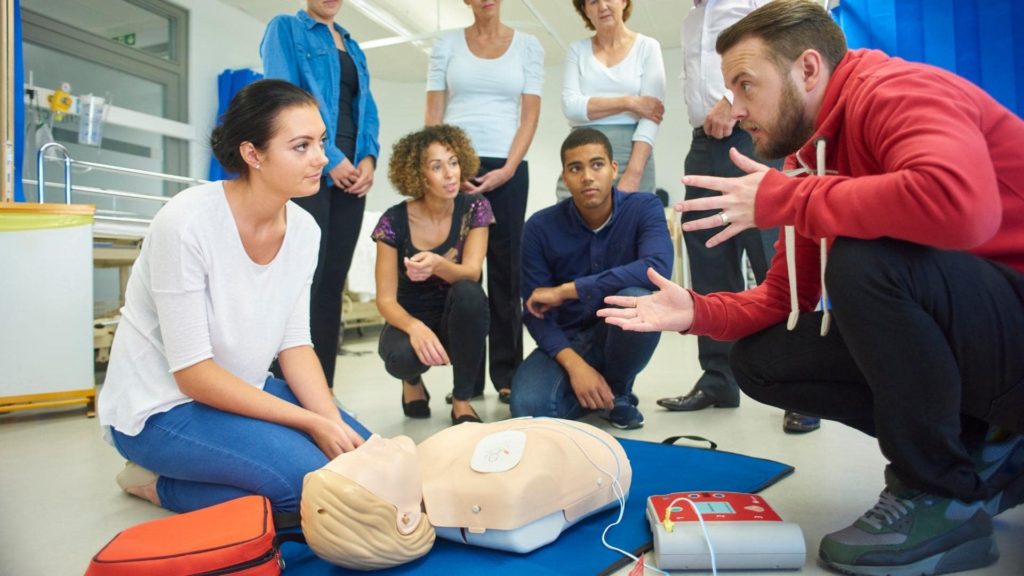
A group of people in a classroom setting are gathered around a CPR manikin. A man in a red hoodie is demonstrating CPR techniques, while a woman kneels beside the manikin. Others watch attentively.

Different Training Providers

The proper training and approval are vital in First Aid training. Coast2Coast is a Canadian Red Cross and Heart & Stroke training partner. The top-notch professional instructors also provide medical students with the following Heart & Stroke training:

WSIB Approved

It is essential that First Aid training for the workplace in Ontario is WSIB approved. The Workplace Safety and Insurance Board ensures all workplaces practice the required health and safety standards, and the board provides liability coverage for employees. Employers cover the fund entirely.

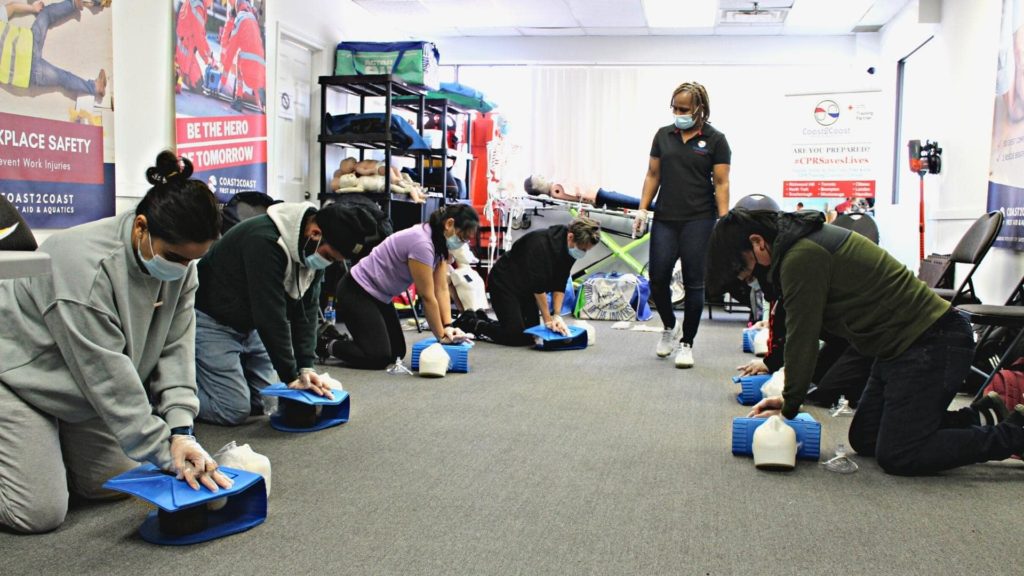
A group of people kneeling on the floor practicing CPR on mannequins in a classroom setting. An instructor stands nearby observing. They are all wearing masks, and safety posters are visible on the walls.


Choose Coast2Coast for Your Training

Choosing the right First Aid course in the GTA is easier than you think. Coast2Coast, a Canadian Red Cross training partner and WSIB approved First Aid training provider, offers several courses, making it easy to find the First Aid training required for any career in the province. Based in the GTA of Ontario, Coast2Coast makes it easy to register and participate in its First Aid courses provided by only experienced instructors.

Always be prepared to save a life, get certified today!


Register for First Aid & CPR Training

Choose from any of our locations across Ontario and gain the knowledge and skills to save a life!

What You Must Know About Opioid Overdoses

A person lies unconscious on the wooden floor, with an outstretched arm and scattered white pills near an overturned brown bottle. They are wearing a white shirt, and a crumpled tissue is nearby.

Over time, reliance on opioid usage has increased in Canada. Figures from responses to a Canadian Community Health Survey in 2018 show that 13% of Canadians reported using opioids the previous year, and 9.6% of them used it in ways that could harm their health.

Continue reading

When Will I Receive My First Aid and CPR Certificate?

A person in a suit holds up a Red Cross certification card. The card includes details such as the name "Jack Harlow," certification number, start and end dates, and a CPR/AED for Professional Rescuers and First Aid credential.

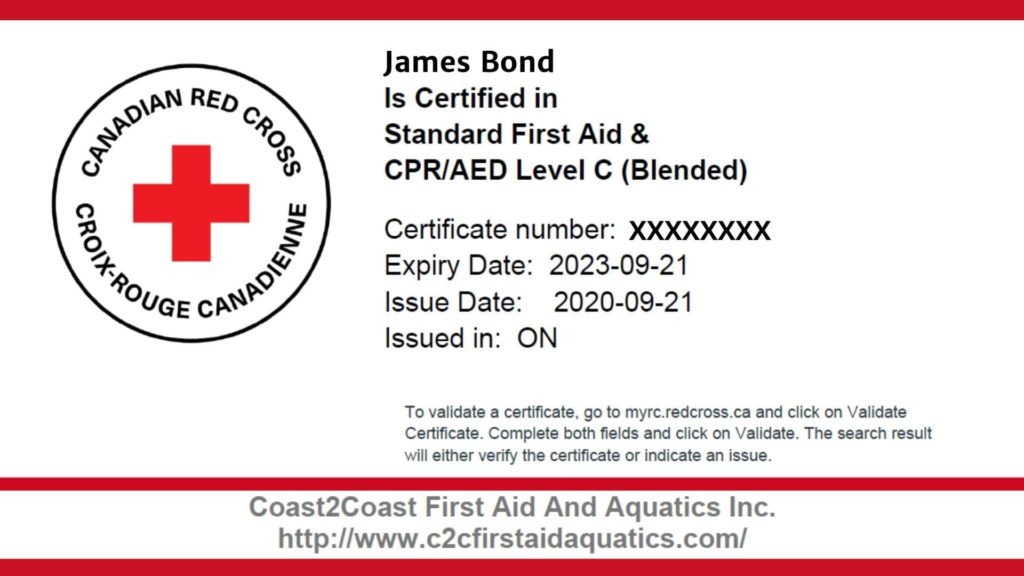
Whichever level of First Aid and CPR training you need, on completing the course, you earn a Canadian Red Cross approved certificate. The skills and life-saving techniques you learn are invaluable, whether part of a work requirement or just to help others. When training at Coast2Coast, your First Aid certification is valid for three years.

Continue reading

What to do when Stung by a Bee

Summer is about to begin in Ontario which means the bees are out! Bees play an important role in our world by pollinating our plants so we can eat. Without bees, we would not have the diversity of food we have today. Bees are a necessary insect in our world which is why it is so important to save them!

Unfortunately, many people are afraid of bees because they can sting. It is important to keep in mind that bees typically only sting if they are trying to protect themselves or their nest. Wasps, on the other hand, are more likely to sting and are often confused with bees.

Most people have no adverse reactions when stung by a bee, except for the initial stinging, pain, and redness. However, anyone allergic to bee stings can suffer severe symptoms from the allergic reaction. Multiple bee stings or an allergic reaction constitute a medical emergency, requiring an immediate medical response. In this blog, we will discuss what to do when stung by a bee.

Learn How to Take Care of a Bee Sting

Learn more about self care in out First Aid & CPR training course! Contact us to get more information.

Why bee stings cause allergic reactions

Bee stingers are barbed, and when they sting, it is usually left behind in the skin. From the moment a person is stung, the sting releases venom into the skin for up to a minute. The pain and swelling people feel are caused by the proteins in the poison. Some people are also allergic to hornets, wasps, yellow jackets, and it’s always good to run tests to determine what allergies a person has, helping to prevent placing them at risk if stung.

In some people, this venom triggers a severe reaction in their immune system, causing it to produce immunoglobulin E (IgE). IgE is an antibody used by the body to fight viruses and parasites, and when released in response to the sting, allergic reactions like swelling, hives, and breathing problems.

Sometimes, reactions to a bee’s sting can differ. Therefore, it’s best to look out for the reaction signs to the sting.


Allergic Reactions

How to treat bee stings

Treatment for bee stings depends on the severity of the reaction. After a bee sting, a person should calmly walk away from the area to avoid another sting. If the bee’s stinger is in the skin, the best way to remove it is to scrape it out, but never use a tweezer because this pushes more venom into the area.

Mild to moderate reaction

If the bee’s stinger is in the skin, the best way to remove it is to scrape it away with a plastic card (such as a credit card). Next, wash the sting area with clean water before applying a cold pack. The cold pack will control swelling. Be careful not to freeze the skin, though. Place a cloth between the affected area and cold pack.

Painkillers can relieve the pain, and an antihistamine reduces itchiness and inflammation. These symptoms should only last a few days. Scratching the area can make the itching and swelling worse and increase the risk of infecting the sting area. Continue monitoring the sting for allergic reactions or anaphylaxis.

Severe reaction

In most cases, reactions of the immune system go unnoticed as the body defends against antigens. However, when there is a severe or anaphylactic shock, the immune system has an explosive reaction. Typically, anaphylaxis will begin within a few minutes of the sting or up to 30 minutes. Rarely will you suffer from anaphylaxis hours later.

In a severe allergic reaction (anaphylaxis), an epinephrine injection (adrenaline) helps reduce the severity. Bee stings can sometimes cause cardiac arrest within minutes in those allergic to them. Emergency responders will often administer oxygen, and once at the hospital, doctors may also administer intravenous fluids.

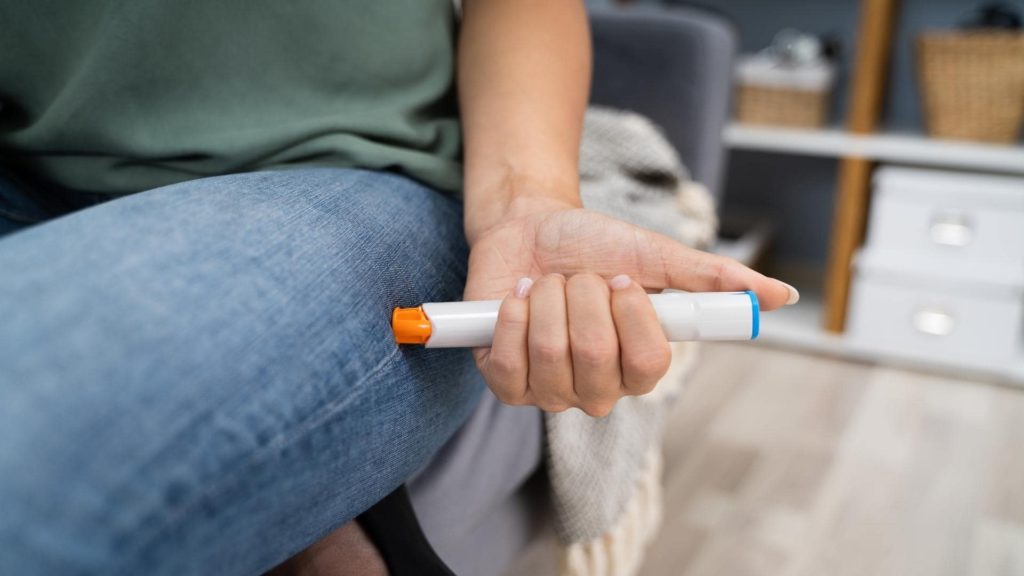
The symptoms of anaphylaxis include skin reactions, constricted airways resulting in breathing difficulties, nausea, dizziness, and wheezing. People with known bee allergies usually carry an EpiPen (an epinephrine injection device) and use it immediately after a sting.

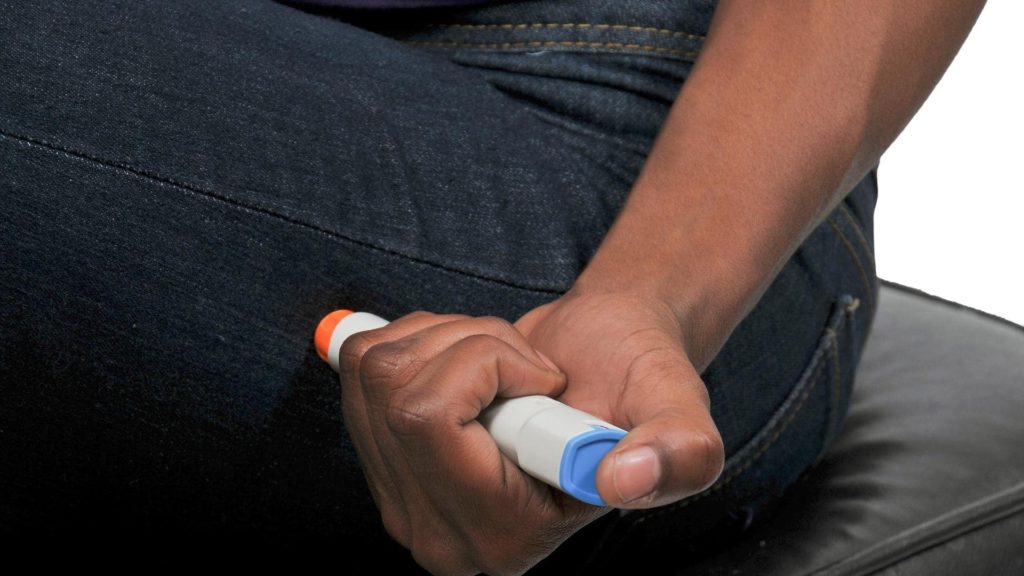
Most people can administer the EpiPen injection themselves on the outer thigh, even through clothing if needed. If they cannot, in the absence of a first responder, anyone with the proper training can help them to administer the adrenaline to help save a life in an emergency involving an allergic reaction.

How To Treat Bee Stings

How to use an EpiPen

  1. Remove the safety cap by pulling straight
  2. Hold the epipen (orange side) against the middle third of the person’s outer thigh
  3. Push the epipen until you hear a click
  4. Remove the epipen and be cautious of an exposed needle
  5. Place the epipen into a container for the victim to bring to the hospital
  6. Ask the victim to rest until EMS arrives
  7. Rub site of injection for 30 sections (this helps with absorption)
  8. If the person is not feeling better within five minutes, you may inject a second dose (if available) into the other leg

People can suffer from an epinephrine overdose, so never administer more than two doses after each other. The signs of an overdose are difficulty breathing and irregular heartbeat.

After anaphylaxis, the person needs medical attention and should be cautious for at least 48 hours. They must also remember to get their new EpiPen since they can never leave home without it.

First Aid Training

First Aid Training

Bee venom and other poisons are a real danger. First Aid training can help protect you and others by knowing what to do when faced with cases like these, whether the symptoms are mild or severe.

Our Standard First Aid training at Coast2Coast encompasses the training required to help in several emergencies, including those involving bee stings. Complete your training in an Online Blended format! Learn theory online prior to attending a one-day in-class training session. Select your area and register today.

Register for First Aid & CPR Training

Choose from any of our locations across Ontario and gain the knowledge and skills to save a life!

Benefits of Private First Aid Training

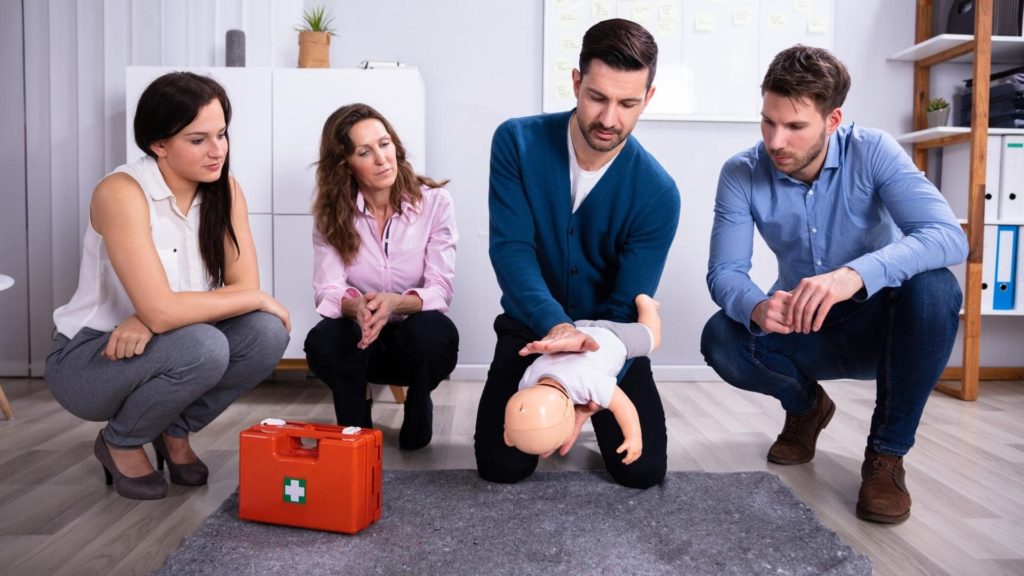
man practicing cpr on a manikin with additional students sitting in the background on chairs

Private first aid training allows groups of eight or more participants to complete a WSIB-approved certification together at a time, date, and location of their choosing. It is used by employers, schools, community organizations, and families who want to certify everyone simultaneously rather than sending individuals to separate public classes. Certificates issued through a Canadian Red Cross training partner are valid for three years for Standard First Aid and CPR/AED, and one year for Basic Life Support.

Group Training

Certify Your Whole Team in One Session

Private group training brings the instructor to you. Choose your date, your location, and your course level.

Request a Group Quote

8+
Minimum participants for a private group session
3 yrs
Validity of Standard First Aid and CPR/AED certificates
1 yr
Validity of Basic Life Support certificates

What Is Private First Aid Training?

Private first aid training is a dedicated group program where a certified instructor comes to your chosen location and trains everyone together in a single session. Rather than registering individuals for separate public classes on different dates, your group books one session, picks the date and venue that works, and completes the same approved curriculum side by side.

The training follows the same standards as public courses. Participants complete hands-on skills practice covering CPR, AED use, bleeding control, and other core first aid competencies. At the end, every participant who meets the required standard receives a WSIB-approved first aid certificate through a Canadian Red Cross training partner.

Private training is available for groups of eight or more. A single organizer manages the registration on behalf of the whole group, which simplifies the process considerably compared to coordinating individual sign-ups across a team.

Who Needs Private Group Training?

Private first aid training is most commonly used by employers who need to certify multiple staff members at once, but the format is open to any group of eight or more people. Common users include:

  • Employers and HR teams who must meet WSIB Regulation 1101 requirements and need to certify a large portion of their workforce efficiently.
  • Schools and educational institutions where teachers, support staff, and administrators need current first aid certification before each school year.
  • Healthcare and medical teams requiring Basic Life Support renewal as a condition of employment or hospital credentialing.
  • Community organizations, sports clubs, and nonprofits that want trained volunteers before a season or event.
  • Families and friend groups who want to learn life-saving skills together in a familiar, comfortable setting.

Any situation where a cohesive group benefits from training together, rather than independently, is a strong fit for the private format.

Compliance Note: Under Ontario’s Workplace Safety and Insurance Act, employers covered by WSIB Regulation 1101 are required to maintain a minimum number of certified first aiders based on workforce size and shift schedule. Private group training is one of the most efficient ways to meet this obligation for multiple employees simultaneously. Always verify your specific requirements with WSIB or a certified training provider.

What Are the Benefits of Private First Aid Training?

The advantages of private group certification go beyond simple scheduling convenience. Here is what makes it a compelling choice for organizations and groups of all kinds:

Everyone is certified at the same time. Sending individuals to public courses means staggered certification dates, expiry dates that fall at different times, and varying levels of refreshed knowledge across your team. Private training synchronizes everyone, so the whole group is certified on the same day with certificates that expire at the same time. With more employees trained, emergencies can be handled faster, which can save lives, reduce recovery time, and cut time lost from injuries. Greater first aid awareness across the workplace also helps create a safer environment with fewer accidents, injuries, fatalities, and permanent disabilities.

You choose the date, time, and location. Public courses run on fixed schedules that may not align with your operational needs. Private training is booked around you. Whether you need to train a night-shift crew, schedule around a busy season, or host training at your own facility, private sessions accommodate that flexibility.

Practice scenarios can reflect your environment. Instructors can orient hands-on scenarios toward the hazards and layout of your actual workplace, which helps participants connect the skills they are learning to the situations they might realistically face, spot hidden risks earlier, and take proactive steps to prevent accidents. Repeated hands-on practice helps people feel prepared, build confidence and muscle memory, and stay calm while following emergency action steps.

One organizer handles the whole group. There is no need for every participant to individually navigate registration, payment, and scheduling. A single point of contact books the session and provides a participant list, keeping the administrative load minimal.

Cost savings at scale. When the session fee is divided across eight or more participants, the per-person cost of private training is often lower than individual public course registration, particularly for larger groups. Having employees trained together can also strengthen safety culture and may contribute to fewer accidents and lower insurance costs.

What Course Levels Are Available for Private Groups?

Private groups can select from comprehensive training programs that match their regulatory requirements or personal goals. Common options include:

  • CPR/AED Level A or Level C for general workplace or community certification
  • Emergency First Aid with CPR/AED for lower-risk workplaces needing WSIB compliance; this basic first aid learning gives participants the knowledge and assurance to respond to choking, administer CPR, and stabilize injuries before professional help arrives
  • Standard First Aid with CPR/AED for higher-risk environments or industries with stricter requirements
  • Basic Life Support (BLS-HCP) for healthcare providers and clinical staff requiring annual renewal
  • Professional Responder programs for occupational first aid roles

Selecting the right level matters because WSIB Regulation 1101 specifies which certification tier is required based on the number of workers on a shift and the hazard level of the workplace. Private sessions can also include a customized example based on group needs, such as infant CPR for parents or harsh burn scenarios for outdoor-focused groups. When in doubt, confirm your requirements with your training provider before booking.

Safety Tip: Track certificate expiry dates for your entire team from the moment you complete private training. Set a calendar reminder at the 30-month mark so you have plenty of lead time to rebook before any certificates lapse and compliance gaps appear on your workplace’s first aid registry.

How Does WSIB Regulation 1101 Apply to Group Training?

Ontario’s WSIB Regulation 1101 under the Workplace Safety and Insurance Act requires most employers to maintain certified first aiders in their workplace at all times. The specific requirements vary by the number of workers present on a shift and whether the workplace is classified as lower or higher hazard.

Private first aid training delivered through a Canadian Red Cross training partner produces WSIB-approved certificates that satisfy Regulation 1101. This means employers can use a private first aid class to bring multiple staff members into compliance in one organized effort, while having more trained employees helps keep people prepared on every shift instead of managing rolling individual registrations throughout the year.

The regulation also specifies renewal timelines. Standard First Aid certificates are valid for three years, which means employers with large teams may find it easiest to schedule a fresh private session roughly every 30 months to account for course lead times and scheduling flexibility before any certificates expire.

How Do You Set Up Private First Aid Training for Your Group?

The booking process for private first aid training is designed to be straightforward. Here is how it typically works:

  1. One organizer contacts the training provider to discuss participant numbers, preferred course level, desired date, and venue. This single point of contact handles the entire group registration.
  2. The provider confirms availability and provides a quote based on group size and course level, including whether the course has an online component before the practical session.
  3. The organizer shares a participant list and any relevant details about the training space or accommodation needs.
  4. The instructor arrives with all equipment including manikins, AED trainers, and course materials. In some aid CPR training formats, online modules give students consistent pre-course learning before the hands-on session, and participants need only bring themselves in comfortable clothing.
  5. Certificates are issued to participants who successfully complete the course, either on the day or shortly after via the training partner’s certification system.

To get started, visit our private group training page to request a quote or reach out through our contact page to discuss your group’s needs.

Need Standard First Aid Certification?

Standard First Aid with CPR/AED is the most common WSIB-compliant certification for higher-risk workplaces. See full course details.

View Standard First Aid

Not Sure Which Course Level You Need?

Compare CPR/AED and Standard First Aid options to find the right fit for your workplace obligations.

See CPR/AED Courses

Key Takeaway

Private first aid training lets groups of eight or more get certified together at a location and time of their choice. It is the most efficient way for employers to meet WSIB Regulation 1101 requirements, synchronize team certification dates, and reduce per-person training costs. Certificates are recognized through the Canadian Red Cross and are valid for three years (Standard First Aid/CPR/AED) or one year (Basic Life Support).

Join 150,000+ Certified Canadians

Ready to Book Private Training for Your Group?

Bring a certified instructor to your team. Groups of 8 or more, any course level, any location.

Contact Us to Get Started

Frequently Asked Questions: Private First Aid Training 2026

Q1: What is private first aid training?

A: Private first aid training is a dedicated group certification program where an instructor comes to a location of your choosing to train your entire group together. It helps people recognize life-threatening conditions quickly so they can intervene early, prevent further injury, and improve survival outcomes. Instead of individuals registering for separate public classes, everyone completes the course at the same time. Groups of eight or more participants can book a private session, choose their preferred date and location, and receive the same WSIB-approved certification as they would through a public course.

Q2: How many people are needed for private first aid training?

A: Private first aid training requires a minimum of eight participants. This minimum ensures the session is cost-effective for your group and allows for the hands-on practice scenarios that make first aid and CPR training effective. Groups larger than eight are welcome, and having more participants can reduce the per-person cost significantly compared to individual public aid class registrations.

Q3: Does private first aid training meet WSIB Regulation 1101 requirements?

A: Yes. Private first aid training delivered through a certified Canadian Red Cross training partner meets WSIB Regulation 1101 requirements. Participants receive WSIB-approved certificates upon successful completion. Employers covered under Ontario’s Workplace Safety and Insurance Act can use private group training to fulfill their legal obligation to maintain a trained first aid workforce on site.

Q4: What course levels are available for private groups?

A: Private groups can choose from several certification levels depending on their workplace requirements and industry. Available options typically include CPR/AED Level A and Level C, Emergency First Aid with CPR/AED, Standard First Aid with CPR/AED, Basic Life Support for healthcare providers, and Professional Responder programs. The right level depends on your regulatory obligations, the nature of your work environment, and the hazards your team may face.

Q5: How long is a private first aid certificate valid?

A: Standard First Aid and CPR/AED certificates issued through a Canadian Red Cross training partner are valid for three years from the date of completion. Basic Life Support certificates for healthcare providers are valid for one year. WSIB Regulation 1101 requires that at least one certified first aider is present at all times in a workplace, so employers should track certificate expiry dates and schedule renewals before they lapse.

Q6: Can private first aid training be held at our workplace?

A: Yes. One of the primary advantages of private first aid training is location flexibility. Your certified instructor can come to your workplace, community hall, school, or any space with enough room for hands-on practice. On-site training also allows instructors to incorporate your specific environment into practice scenarios, which reinforces how participants would actually respond to an emergency at that location.

Q7: Is private first aid training only for businesses?

A: No. While private first aid training is especially popular with employers who need to certify multiple staff members, it is equally available to community groups, sports teams, schools, faith organizations, families, and friend groups. Any group of eight or more people who want to learn life-saving skills together can register for a private session. The format works for anyone who prefers the convenience and cohesion of training with a familiar group.

More FAQs: Group Certification and WSIB Compliance

Q8: How do I book a private first aid training session?

A: Booking a private first aid training session is straightforward. One organizer from your group contacts the training provider to discuss participant numbers, preferred dates, desired course level, and location. The provider handles instructor scheduling, course materials, while experienced professionals oversee the teaching and certification process. Because a single point of contact manages the registration for everyone, there is no need for individual participants to register separately or navigate the booking system on their own.

Q9: What is the difference between private and public first aid training?

A: Public first aid training involves individuals registering for scheduled classes at a fixed venue alongside other participants from different organizations or backgrounds. Private training is booked exclusively for your group, at a time and location you choose. Both formats deliver the same curriculum and result in equivalent WSIB-approved certification. The key differences are convenience, scheduling flexibility, the ability to train your whole team simultaneously, and the option to tailor practice scenarios to your specific environment, and private sessions are often the best training option when a group wants a comprehensive learning experience together.

Q10: Which industries most commonly use private first aid training?

A: Private first aid training is widely used across construction, manufacturing, healthcare, education, retail, hospitality, fitness, and childcare sectors. Any industry where WSIB Regulation 1101 applies, or where employers are required to maintain certified first aiders on each shift, benefits from private group certification. Schools, summer camps, recreation centres, and nonprofit organizations also frequently arrange private sessions to certify staff and volunteers before a new program season begins.

Q11: Does everyone in the group need to pass to receive a certificate?

A: Each participant is individually assessed during the course. Certification is awarded to those who demonstrate the required skills and knowledge to the instructor’s satisfaction. If a participant does not meet the standard on the first attempt, most training providers offer options to reassess or retake specific components. Group registration does not guarantee certification for every individual; each person must meet the competency requirements set by the curriculum.

Q12: Can the course content be customized for our industry?

A: Within the boundaries of the approved curriculum, instructors can emphasize scenarios and hazards that are most relevant to your workplace. A construction company may benefit from practice focused on traumatic injuries and bleeding control, while a childcare centre may want more time on pediatric CPR and choking response. Instructors cannot change the core curriculum or certification requirements, but they can frame examples and practice scenarios around real life emergencies and tailored safety training needs in your team’s specific environment and risks.

Q13: How much does private first aid training cost compared to public courses?

A: Private first aid training is typically more cost-effective per person than individual public course registrations when your group meets or exceeds the minimum of eight participants. The total session fee is divided across all participants, often resulting in meaningful savings. Exact pricing varies by course level, group size, and location. Contact your training provider directly for a group quote, as rates are customized based on your specific training needs.

Q14: What should we prepare before the instructor arrives?

A: Before your instructor arrives, ensure the training space has enough room for all participants to practice CPR compressions on manikins simultaneously. Provide a clean, hard floor surface or tables where applicable. Participants should wear comfortable clothing that allows them to kneel. Confirm the participant list and any special accommodation needs with your training coordinator in advance. Your provider will bring all necessary equipment including manikins, AED trainers, and course materials.

Q15: Can private training help meet CSA Z1210 workplace first aid requirements?

A: Yes. For Ontario workplaces, CSA Z1210 outlines best practices for workplace first aid programs, and WSIB-approved private training aligns with those standards. Employers who engage a certified Canadian Red Cross training partner for private group certification are taking a structured, standards-based approach to workplace first aid preparedness that supports immediate assistance until emergency services or other professional help arrives. Always verify that the specific course level and provider you choose satisfies both WSIB Regulation 1101 and any applicable CSA standards for your industry.

Disclaimer: This article is for general informational purposes only and does not constitute legal, regulatory, or professional advice. WSIB Regulation 1101 requirements vary by workplace classification and workforce size. Always consult WSIB directly or engage a qualified occupational health and safety professional to confirm the specific first aid training obligations that apply to your organization.

Sources & Regulatory References

Reviewed by Ashkon Pourheidary, B.Sc. Hons Neuroscience, Canadian Red Cross certified instructor since 2011, co-founder of Coast2Coast First Aid & Aquatics.

Why Are Defibrillators Important?

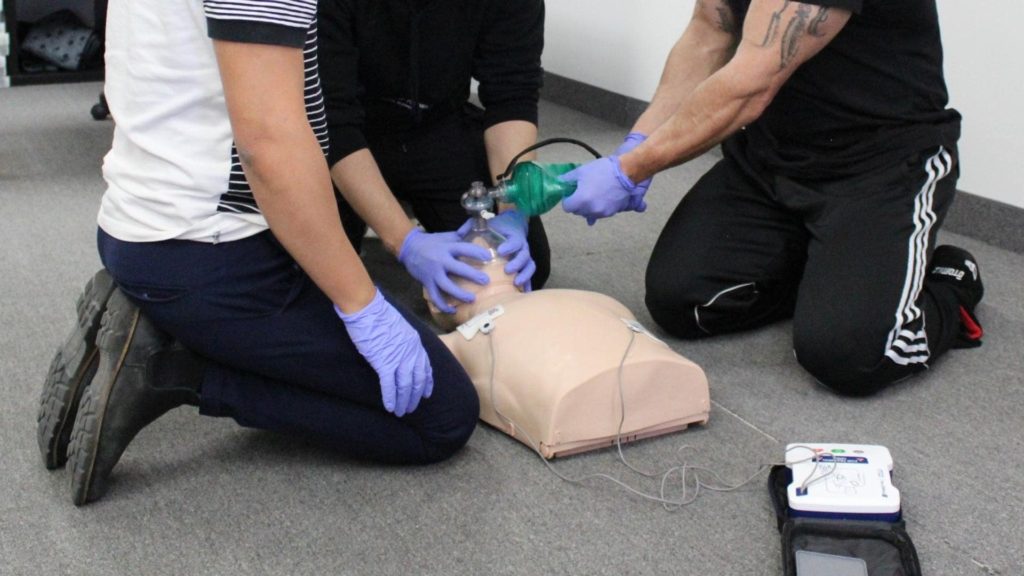
A person is performing CPR on a mannequin outdoors. They are applying chest compressions, wearing gloves. Nearby, a defibrillator machine is visible on the ground. The scene suggests a first aid training session.

Defibrillators or Automated External Defibrillators (AEDs) are devices that deliver a life-saving shock to someone suffering from cardiac arrest. The electric shock from the defibrillator passes through the chest wall to the heart, often giving a person in cardiac arrest a chance to survive.

Continue reading