Canadian Red Cross Training Partner
Emergency Medical Responder (EMR) Program
Emergency Medical Responder is our highest level of first aid and CPR/AED training — eight intensive days of pre-hospital theory and practical scenarios for people who work the call before the ambulance arrives.
 4.9
4.9

Course Types
Our Emergency Medical Responder Courses
Three entry points into the same 24-topic Canadian Red Cross syllabus — the full eight-day program, a four-day upgrade from First Responder, and a four-day recertification.
Prerequisite: the full EMR course needs a current Intermediate/Standard First Aid & CPR/AED Level C certificate. Book that first if you do not hold one.
- Training level
- EMR — full 8-day program
- Prerequisites
-
Must be certified in Intermediate/Standard First Aid & CPR-C
No FR certificate required — this is the full program.
- All in-class training
-
Full program
80 hours teaching time
8-day training, 8:00 AM – 6:00 PM
- Who it is for
-
Responders who need the highest pre-hospital certification below paramedic
Firefighters, police officers, industrial and remote workers, private ambulance crews, and anyone building toward a primary care paramedic diploma.
Learn more
- Course content
-
View all 24 course topics
- The Professional Responder
- Assessment
- Responding to the Call
- Shock
- Infection Prevention and Control
- Anatomy and Physiology
- Poisoning
- Airway Management and Respiratory Emergencies
- Circulatory Emergencies
- Workplace
- Hemorrhage and Soft Tissue Trauma
- Musculoskeletal Injuries
- Pharmacology
- Chest, Abdominal and Pelvic Injuries
- Head and Spinal Injuries
- Acute and Chronic Illnesses
- Environmental Illnesses
- Transportation
- Pregnancy, Labour and Delivery
- Crisis Intervention
- Special Populations
- Reaching, Lifting and Extricating Patients
- Multiple-Casualty Incidents
- Marine Environment
*Note: EMR sits above First Responder and well above Intermediate/Standard First Aid. Training is mapped to the National Occupational Competency Profiles.
- Requirements
-
100% attendance of the course
75% on the multiple choice knowledge test
Successful demonstration of required skills
Minimum two practical scenarios — one medical, one trauma
- Certification
- Valid 3 years
The emergency medical responder course is our highest level of first aid and CPR/AED training: eight days of theory and practical scenarios covering everything from patient assessment and airway management to extrication and multiple-casualty incidents.
- Training level
- First Responder → EMR
- Prerequisites
-
Proof of a valid Canadian Red Cross FR certificate
An expired FR certificate means taking the full 8-day EMR course.
- All in-class training
-
Upgrade
40 hours teaching time
4-day training, 8:00 AM – 6:00 PM
- Who it is for
-
Certified First Responders moving up to EMR
Four days instead of eight, because your First Responder training carries over.
Learn more
- Course content
- The same 24 topics as the full EMR program — the four days assume the FR material.
- Requirements
- Identical to the full program: 100% attendance, 75% on the knowledge test, skills demonstration, two scenarios.
- Certification
- Valid 3 years
Already hold a First Responder certificate? You do not repeat the material. The upgrade takes you from FR to EMR in four days instead of eight, and issues the same certificate.
- Training level
- EMR renewal
- Prerequisites
-
Proof of a valid Canadian Red Cross EMR certificate
Once it expires you retake the full 8-day course — check your date before the third year ends.
- All in-class training
-
Recertification
40 hours teaching time
4-day training, 8:00 AM – 6:00 PM
- Who it is for
-
Working EMRs renewing before the three-year date
Book while the card is still valid. Once it expires the full 8-day course is the only route back.
Learn more
- Course content
- The same 24 topics as the full EMR program, revisited at recert pace.
- Requirements
- Identical to the full program: 100% attendance, 75% on the knowledge test, skills demonstration, two scenarios.
- Certification
- Valid 3 years
An EMR certificate runs three years. The recertification renews it in four days rather than eight — same knowledge test, same skills demonstration, same two scenarios.
Awards & Recognition
Recognised as a Top 3 Canadian Red Cross Training Partner for 2023, 2024, 2025 consecutively.
2025 · National Professional Responder Provider
2025 · National First Aid & CPR Provider
2025 · Top 3 National Training Provider
2025 · Top 3 Provincial Training Provider
2024 · National Professional Responder Provider
2024 · National First Aid & CPR Provider
2024 · Top 3 National Training Provider
2024 · Top 3 Provincial Training Provider
2023 · National Professional Responder Provider
2023 · National First Aid & CPR Provider
2023 · Top 3 National Training Provider
2023 · Top 3 Provincial Training Provider
Why Coast2Coast
Why Workers Choose Coast2Coast First Aid & Aquatics for EMR Training
Our courses check every box workplaces, healthcare teams and organizations need: WSIB approved certification, Canadian Red Cross recognition, 48-hour turnaround, and a free 90-day skills retake.
Testimonials
Hear From Our Students
What Students Say About Our Courses
4.9
Google Reviews
-
Ying Kong Coast2Coast Student

★★★★★
Very good. I learned a lot and teacher is so great.
-
Bassel Harewood Coast2Coast Student
★★★★★
Chuck is a great teacher.
-
Heather J Coast2Coast Student
★★★★★
Scott did a great job with our group course. Answered all our questions and kept the class light and entertaining.
-
Dana White Coast2Coast Student
★★★★★
Scott F was a great teacher.
-
Merly Arambulo Coast2Coast Student
★★★★★
I have attended the course with Victoria. She’s amazing coach! Learned a lot of valuable saving-life skills. She encouraged each one of us to ask questions & shared hypothetical situations.
Verified Reviews from Our Students
Real feedback from participants, in their own words.
Student Feedback
Participants across our Red Cross network share their experiences.
Dozens more real stories. Real people, real results.
Which Route Is Yours
Three Routes Into the EMR Program
Which course you book depends entirely on the certificate you already hold. Get that wrong and you are turned away at the door on day one, so it is worth two minutes.
Compare Dates & LocationsThe route most students take: eight consecutive days with a certified instructor, no pre-work.
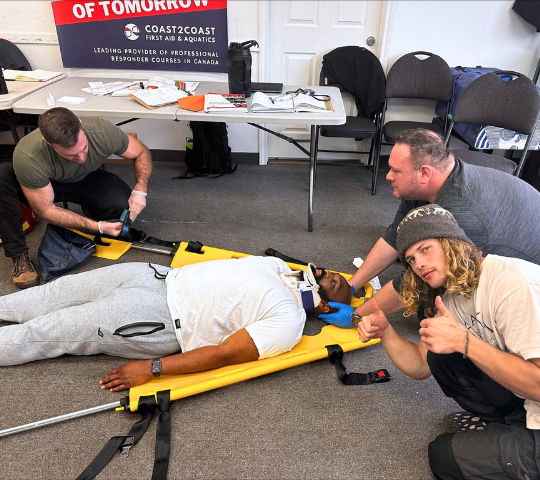
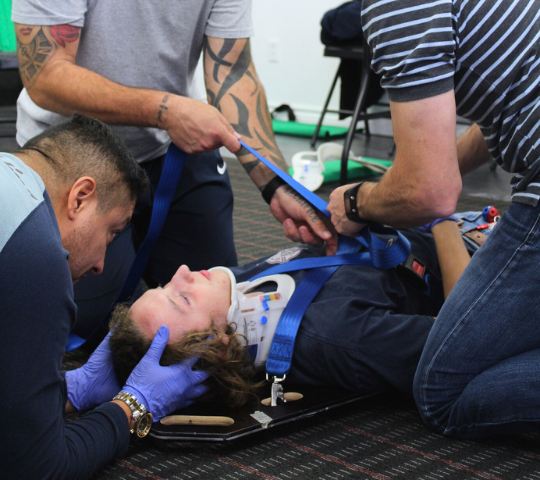
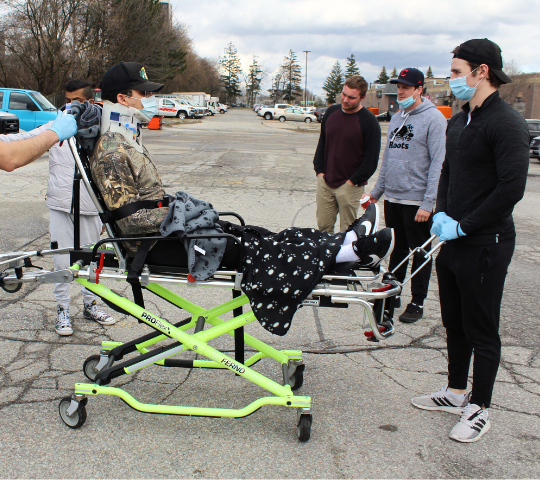
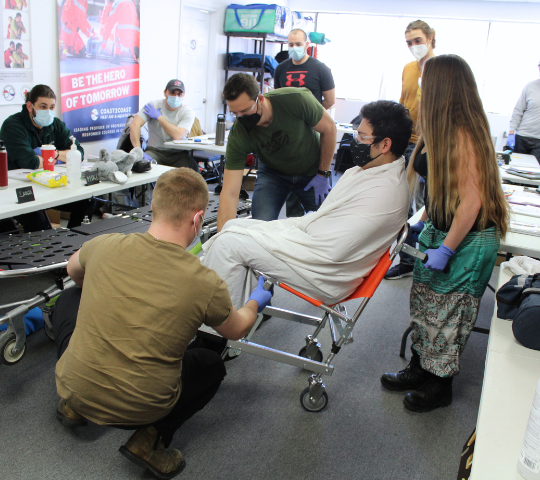
- Full 24-topic syllabus, backboard, stretcher and stair chair practice
- Two assessed scenarios — one medical, one trauma
Half the classroom time, the same certificate. Bring proof of a valid Canadian Red Cross FR certificate and the four days pick up where that course stopped.
- An expired FR certificate puts you back on the 8-day program
- See the First Responder course
EMR certificates last three years, so recertification comes round less often than BLS — which is exactly why people miss the date.
Note: there is no online or blended EMR. Every route is fully in class, because scenarios, lifting and extrication cannot be assessed through a screen.
Renewals
Need an EMR Recertification?
An emergency medical responder certificate is valid for three years. The EMR recertification is four days rather than eight — same knowledge test, same skills demonstration, same two practical scenarios.
Check your expiry date — an expired certificate means retaking the full 8-day course.
Related Training
You May Also Like: First Responder
Not ready for eight days? First Responder is four, and it upgrades to EMR later without repeating a thing.
- Teaching time
-
FR
4-day training
EMR
8-day training, 80 hours
- Who it is for
-
People who may be first on the scene, one level below EMR
Firefighters, security staff, industrial and remote workers, event medical teams, lifeguards and ski patrol.
- What EMR adds
- Pharmacology, extended patient assessment, obstetrics, multiple-casualty incidents and transportation.
- Upgrading later
- A valid FR certificate qualifies you for the 40-hour EMR upgrade. Both routes issue the same certificate.
- Private & group training
- Eight participants or more, at our facility or yours — discounted pricing, centralized billing, WSIB approved.
Learn more
A four-day course teaching initial care for emergent patients — the step below EMR in the Canadian Red Cross pre-hospital training stream, and the entry point for the 40-hour upgrade.
After the Certificate
Applying to a Fire Department
Fire departments list EMR among their required courses, so the certificate gets you screened in. Your resume and the interview panel decide the rest. Coast2Coast partners with a firefighter recruitment expert trusted by over 130 hired candidates across the GTA and Ontario.
These are career services, not a firefighting certification. Nobody is certified, hired or guaranteed an interview by a resume rewrite or a coaching session. Each fire department sets its own hiring standards, so read the posting you are applying to. If it asks for a responder certificate, the EMR routes are above.
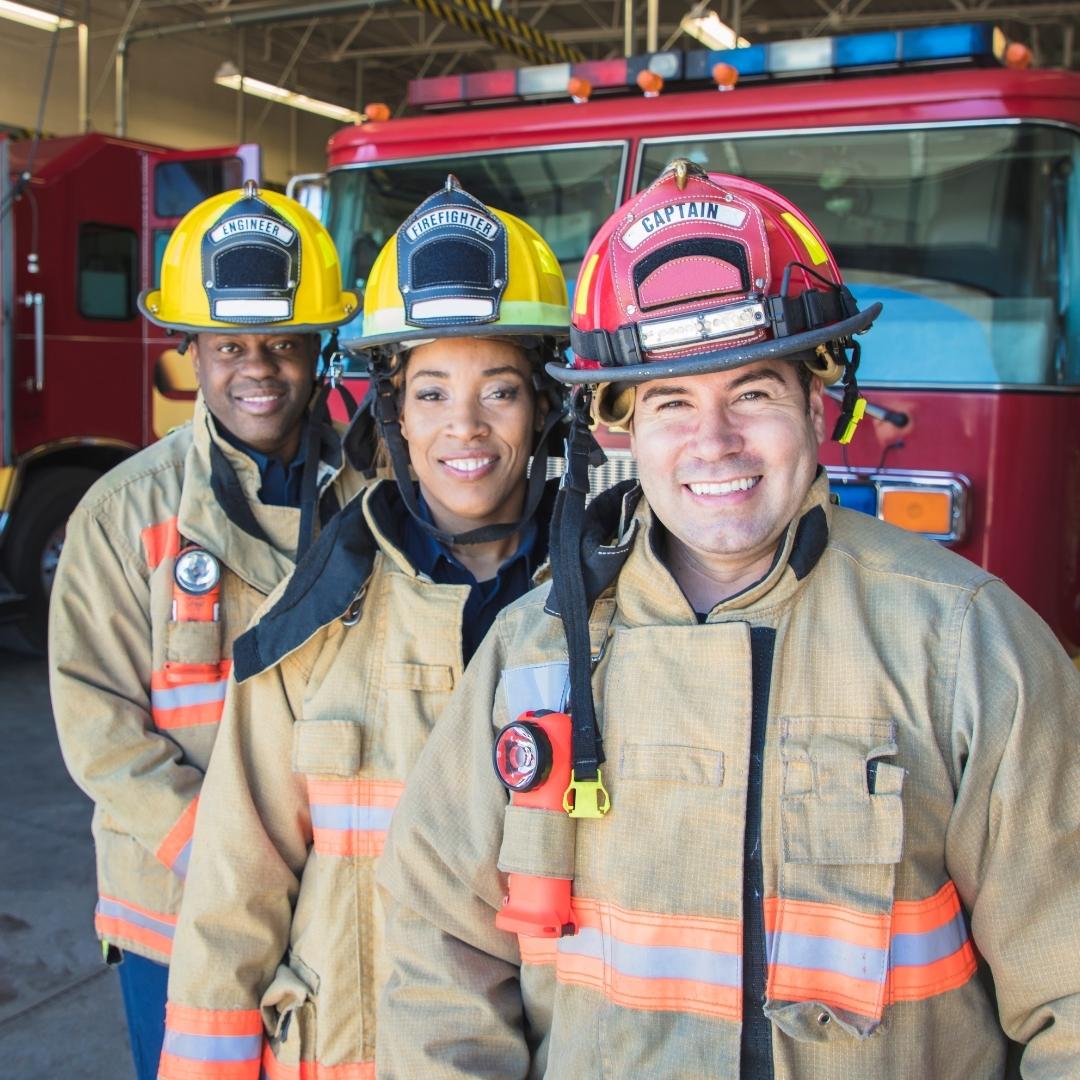
- What you get
-
- A full detailed review of your current resume and cover letters
- Your firefighter resume rewritten by a fire service recruitment expert
- Advice on how recruiters craft a resume that stands out against the competition
- Credit applied to all other services
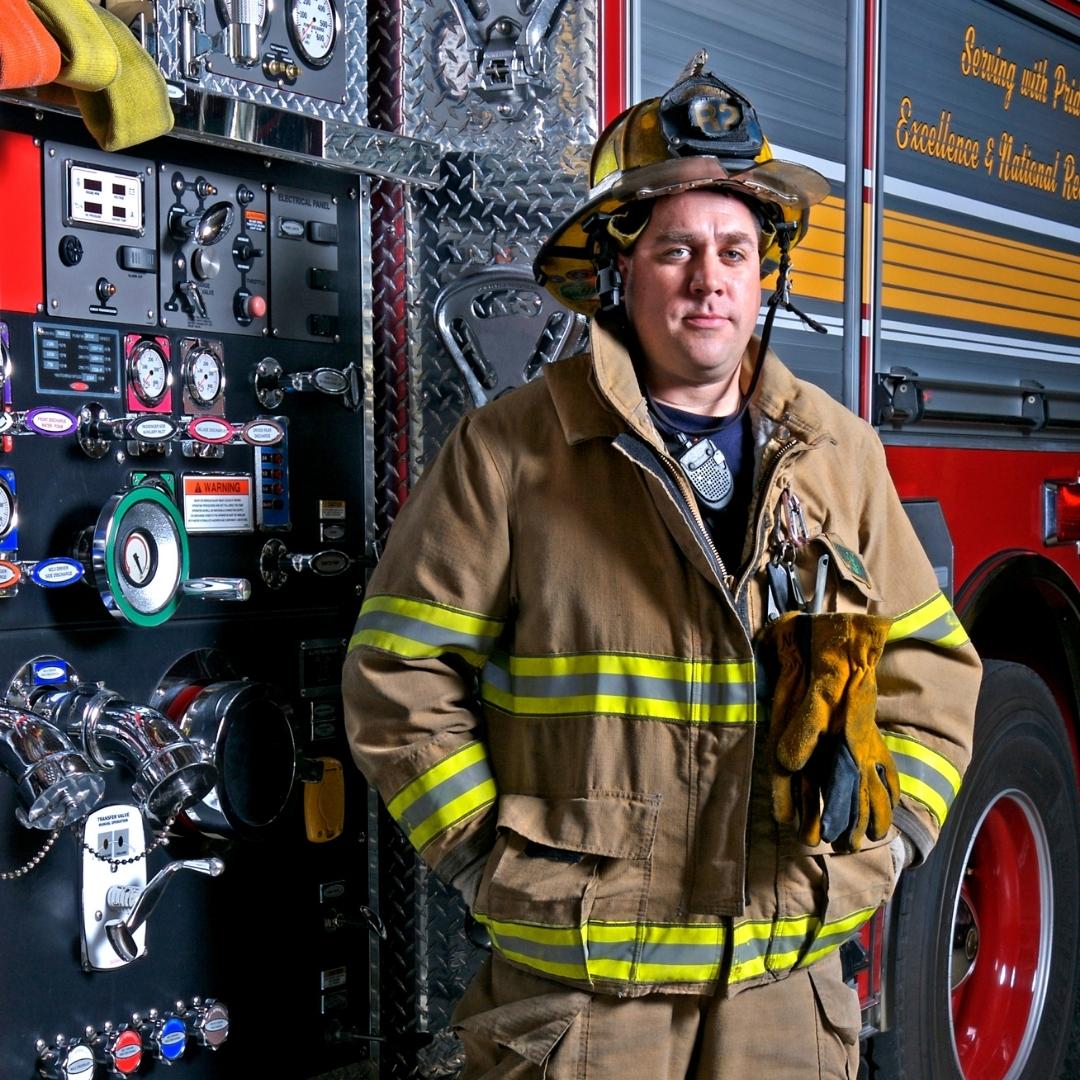
- What you get
-
- A custom booklet of 60+ pages, walked through start to finish
- The framework used to create and craft your answers and cover letters
- The interview questions asked most often, and ways to approach each one
- The psychology and themes to tie into your answers
- Ongoing support for every department you apply to
- A Zoom session critiquing your answers before the interview
- What you get
-
- A full mock interview run the way a fire service hiring panel runs one
- One-on-one with a behavioural specialist, not a general coach
- Your answers critiqued question by question afterwards
- What to fix immediately, before the real panel sees you
Read this before you book: our firefighter recruitment expert delivers these services, so your personal information is shared with them. Once it has been sent, no refund is issued.
Inside the Classroom
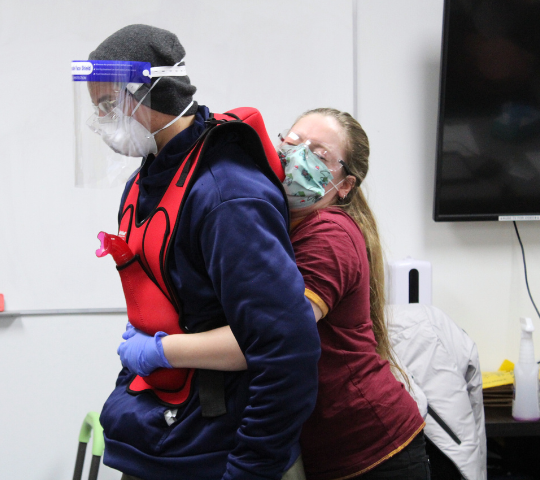
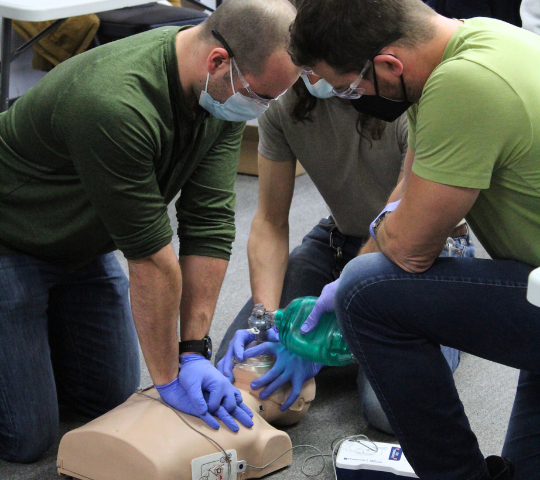
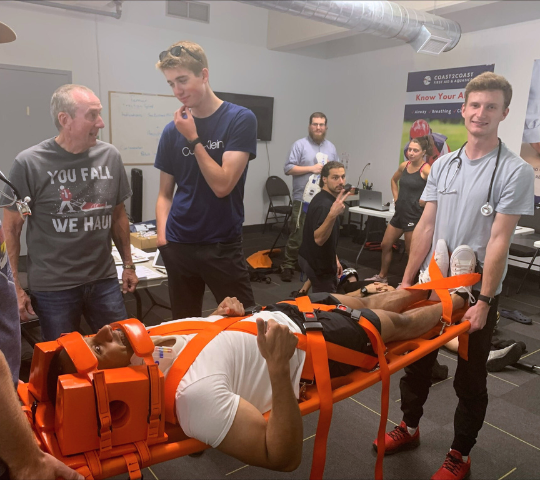
Hands-On Skills You Will Practise
Why Coast2Coast
Why Take Your EMR With Coast2Coast?
We are a Top 3 Canadian Red Cross Training Partner — and eight days is a long time to spend queuing for equipment.
- 200K+People trained
- 35+Locations in Canada
- 4.9★Google rating
- 20 yrsInstructor field experience
-
Instructors who worked the road
Paramedics and field medics with up to 20 years of experience teach every EMR class.
-
High equipment-to-participant ratio
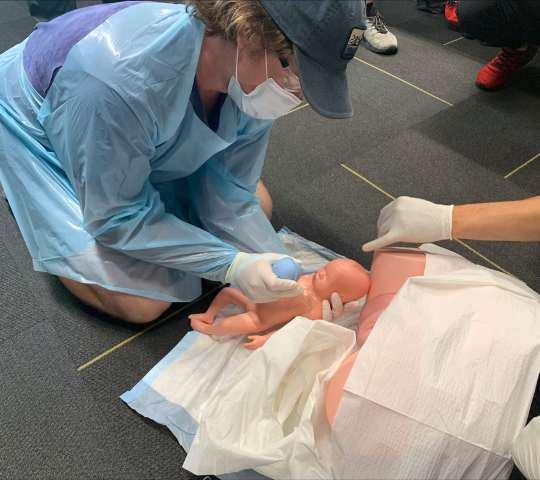
Backboards, stretchers, stair chairs, oxygen and a birthing simulator — enough for everyone.
-
Unlimited Practice-Your-Skills Pass
Graduates attend future EMR courses free. A new certificate still requires paid registration.
-
Priority for event coverage work
Front of the line when we hire for Event Coverage Service positions.
Common Questions
Frequently Asked Questions
What is an emergency medical responder course?
An Emergency Medical Responder course is advanced pre-hospital training, the highest tier of civilian first aid certification. It sits above Intermediate/Standard First Aid and the four-day First Responder course, and teaches you to stabilize life-threatening injuries.
How long is the EMR course, and how is it scheduled?
The full EMR course runs eight days, 80 hours of teaching time, 8:00 AM to 6:00 PM. The upgrade and the recertification each run four days.
What are the prerequisites, and how do I register?
You need a valid Intermediate/Standard First Aid with CPR/AED Level C certificate to start the full EMR course. A current First Responder certificate takes you straight into the 40-hour upgrade instead. Register online — choose your city and date.
What do I need to do to successfully complete the course?
Certification needs 100% attendance, 75% on the knowledge test, a successful skills demonstration and two completed practical scenarios. Miss any one of the four and the certificate is not issued.
How long is the emergency medical responder certificate valid?
An EMR certificate is valid for three years from the date you complete the course. Book the four-day recertification before it expires — that route needs a valid certificate.
What does the EMR program curriculum cover?
The EMR curriculum covers twenty-four topic areas, from anatomy and patient assessment through to trauma and extrication. Airway management, CPR/AED protocols, hemorrhage and shock, chest and pelvic injuries, head and spinal injuries and acute illness are drilled as scenarios.
What equipment and resources will I practise with?
You practise on advanced mannequins with backboards, stretchers, stair chairs, oxygen equipment and a birthing simulator. Lifting patients safely is drilled until it is automatic. Every student gets a free 90-day skills practice retake afterwards.
Who should take an emergency medical responder course?
EMR suits anyone who may arrive before the paramedics — firefighters, police officers, industrial and remote workers, and private ambulance crews. Fire departments list it among their required courses, and it is a common paramedic-diploma prerequisite.
Will an EMR certificate help my career in emergency services?
An EMR certificate is a common employment screen for healthcare, fire services and event coverage work. For a primary care paramedic diploma it is the usual on-ramp — check your provincial association for how it maps to registration.
What standards is the training built on?
EMR training follows the National Occupational Competency Profiles, the Paramedic Association of Canada framework for pre-hospital care. Canadian Red Cross guidance sits on top, so the skills you need on the job are the skills assessed in class.
What is the difference between First Responder and EMR?
First Responder runs four days; EMR runs eight and adds pharmacology, in-depth patient assessment, obstetrics and multiple-casualty incidents. A valid First Responder certificate makes you eligible for the 40-hour EMR upgrade.
How much support and guidance do I get during the course?
Our instructors are working paramedics with up to 20 years in the field, so the guidance comes from real calls. Participation is managed so every person gets repeated practice, and you leave with a team you can call.
Book your Emergency Medical Responder course today
Pick a city, choose your eight-day or four-day route, and register in under two minutes.