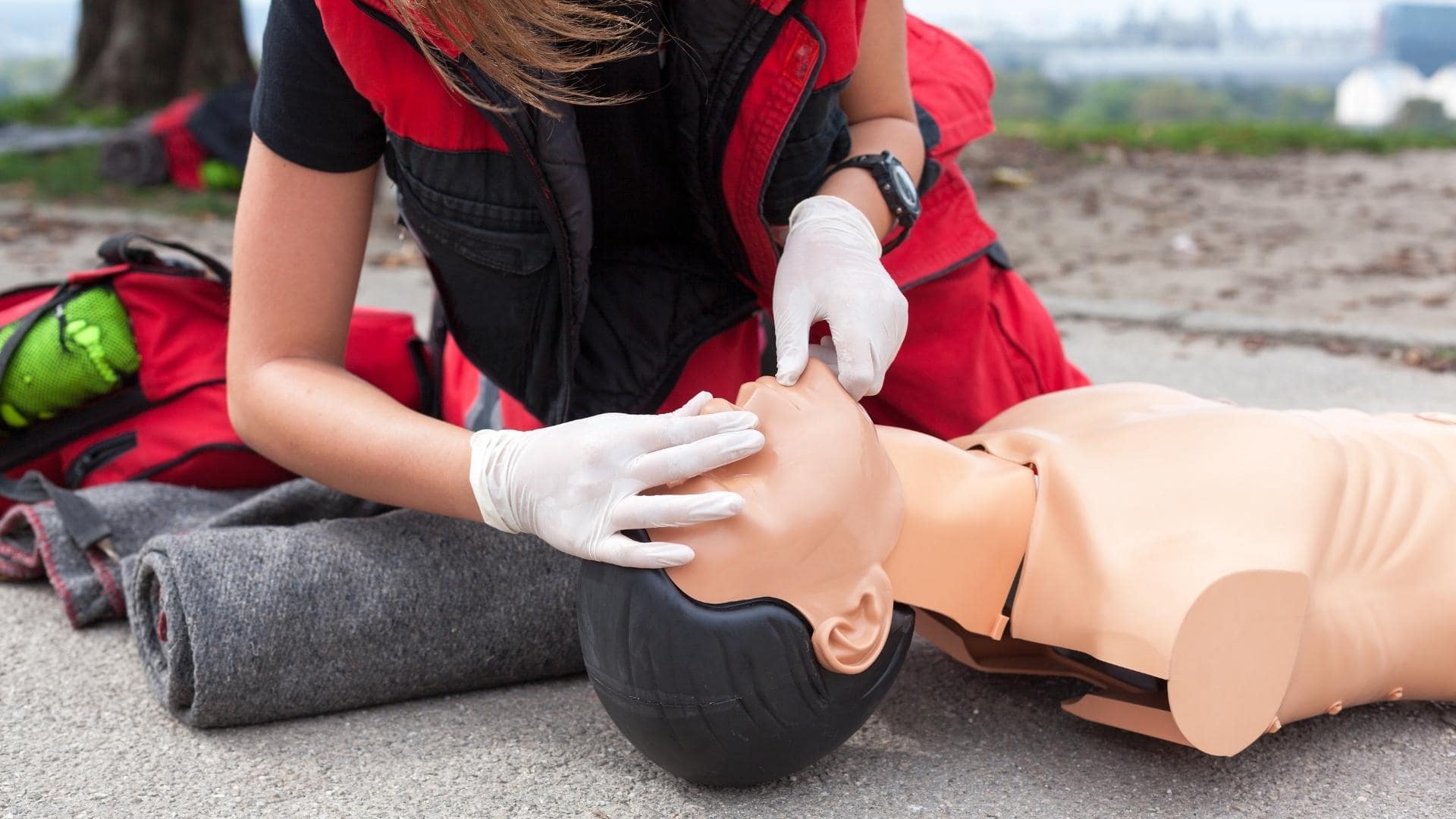
Many providers in Ontario offer government-licensed and valid certification for First Aid and CPR/AED training. However, you may ask: how much is first aid training, who needs it, and how long does the course take?
Continue reading
Many providers in Ontario offer government-licensed and valid certification for First Aid and CPR/AED training. However, you may ask: how much is first aid training, who needs it, and how long does the course take?
Continue reading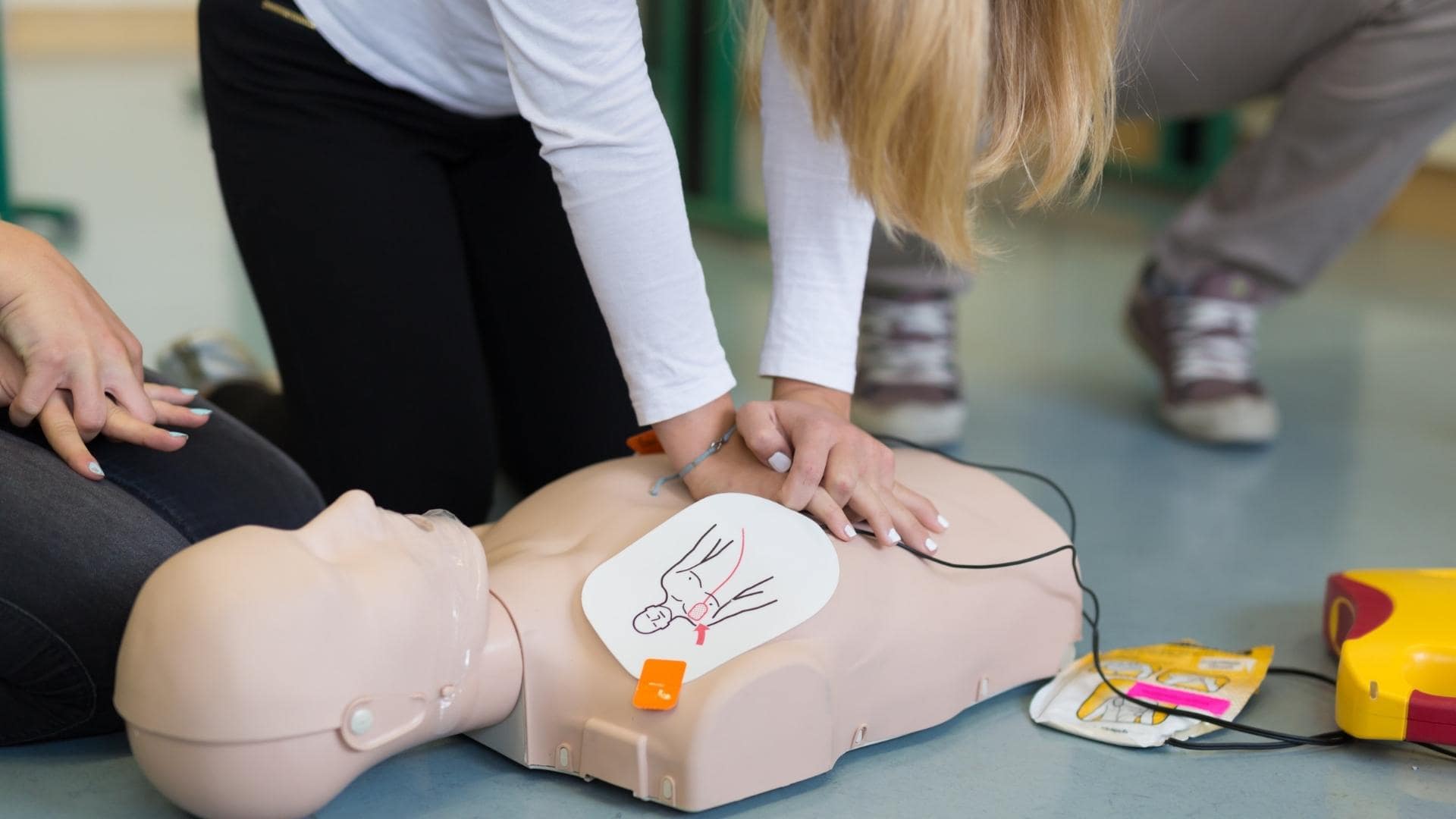

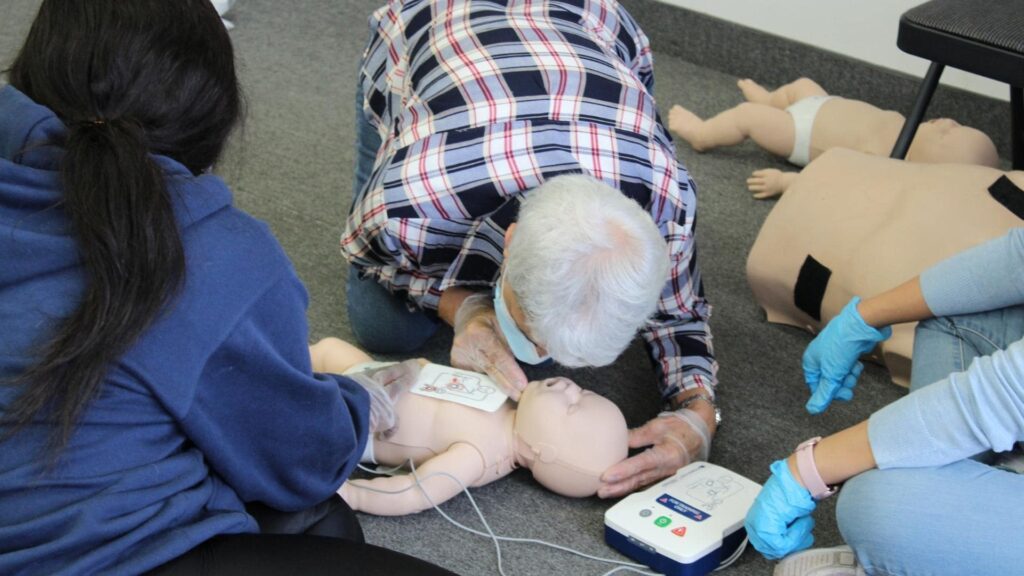
In Ontario, Coast2Coast provides Canadian Red Cross WSIB-approved First Aid & CPR training programs that can meet the needs of anyone. Whether you prefer to start with the online training before following with the all-in-class section or want to do the whole course all-in-class, Coast2Coast provides several slots to make it easier for you.
The training is available at several locations in the Greater Toronto Area, Eastern and Western Ontario. Private clients can also take Child Care First Aid and request group training on-site at their preferred location.
Whether you need the training for your workplace or to become a responsible citizen, register today and get your desired level of training with Coast2Coast’s highly-skilled instructors.
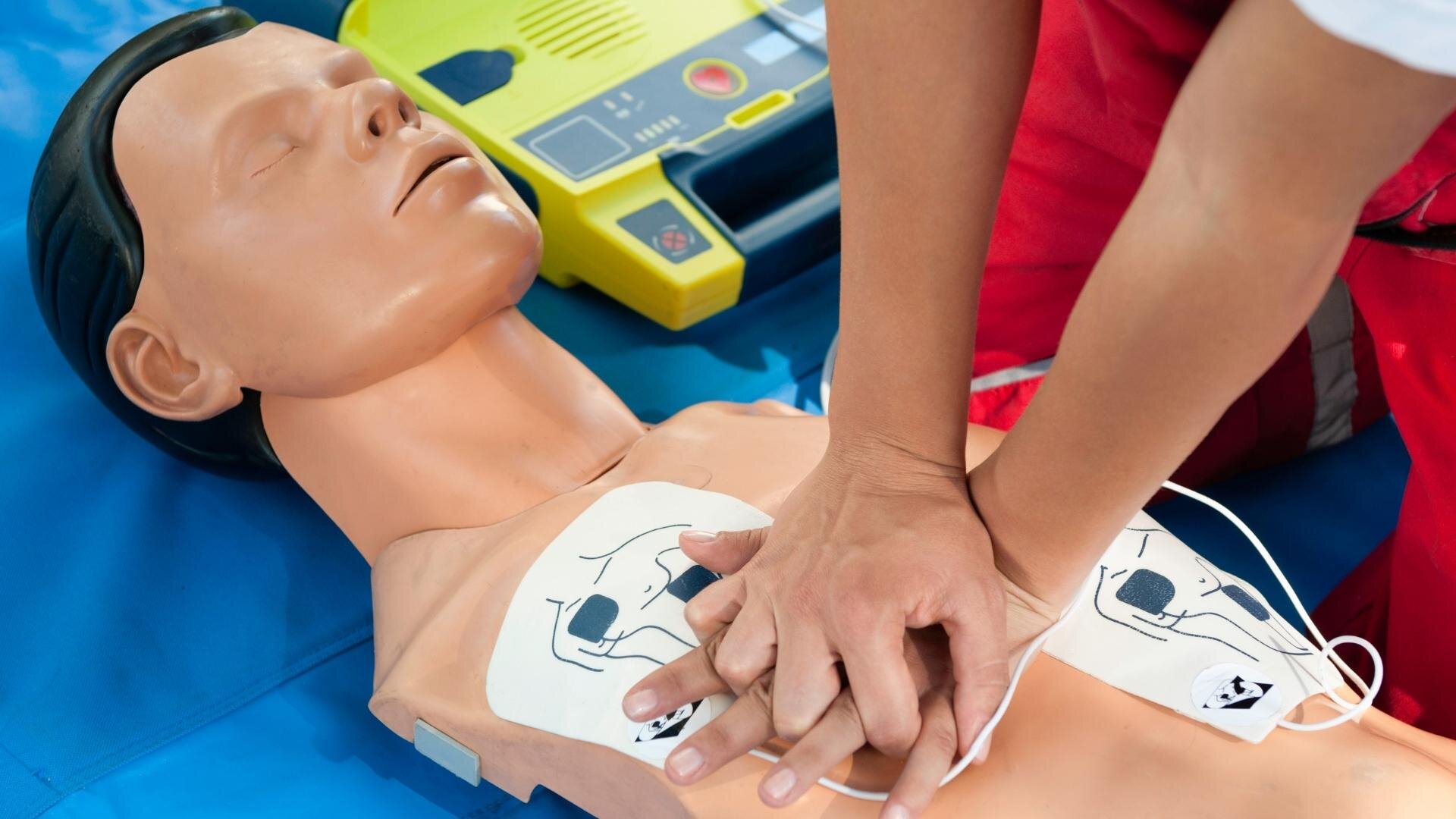
If you live in Ontario, there are several compelling reasons why you should take a CPR training course. The first possibility is whether it is a requirement for their employment or education. However, everyone should know how to perform CPR because the understanding and abilities acquired may help save a life in an emergency in the future. The question that follows is, “How much does CPR training cost?”
Continue reading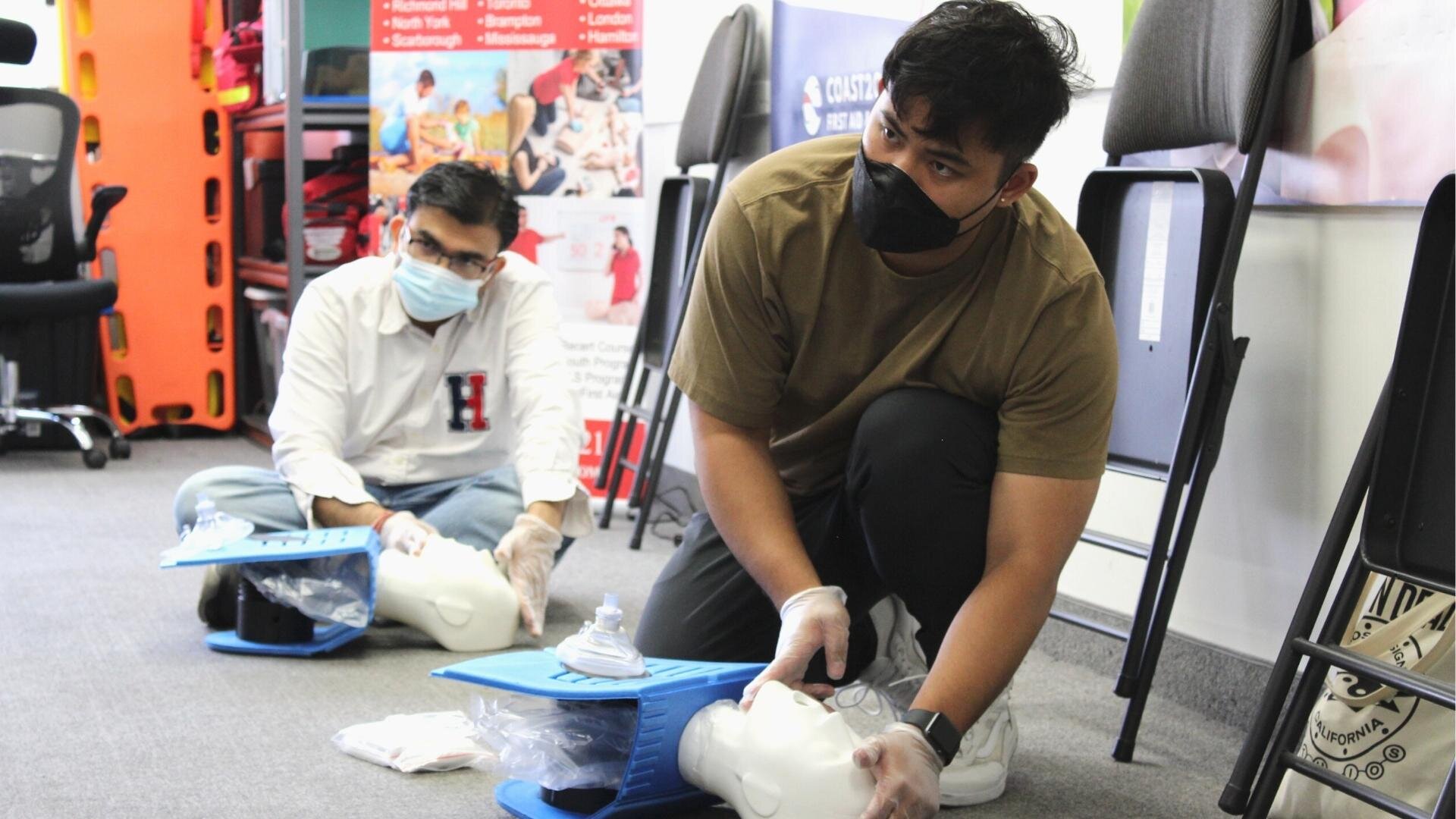
First aid and CPR/AED training saves lives, but only when your skills are current. Many people complete their certification once and assume it lasts indefinitely. In Canada, that is not the case. Understanding how long your certificate is valid, when you are eligible to recertify, and what your employer is legally required to provide will help you stay prepared and stay compliant.
All first aid and CPR/AED certificates issued by the Canadian Red Cross are valid for three years from the date of completion. This applies to Standard First Aid, Emergency First Aid, and CPR/AED courses at every level. After three years the certificate expires and you are no longer considered a certified first aider for workplace or personal purposes.
Three years may seem like a short validity window, but it reflects an important reality: first aid guidelines are updated regularly as research uncovers better techniques, and skills that are not practised regularly fade, with CPR skill retention starting to decline significantly within 3 to 6 months after initial training. Theoretical knowledge may remain intact for up to 2 years, but physical CPR skills can degrade within 30 to 90 days. Retraining ensures you are applying current best practices, not methods that may have been revised since your last course. Brief, spaced practice every 1 to 3 months also helps people respond effectively in real emergencies.
In Canada, first aid training is structured around two primary certification levels. Both cover core life-saving skills, but they differ significantly in scope and duration.
Emergency First Aid is a focused, entry-level course covering the most immediately critical skills: CPR, AED operation, choking response for adults, children, and infants, controlling external bleeding, and managing breathing emergencies. It is the faster pathway to certification and is suitable for individuals, caregivers, and lower-risk workplaces. Emergency First Aid certificates do not have a recertification option in Ontario; when the certificate expires, you must retake the full course.
Standard First Aid is the more comprehensive certification. It covers everything in Emergency First Aid and adds training on spine, bone, and muscle injuries, environmental emergencies such as heat stroke and hypothermia, poisoning, and a wider range of medical conditions in line with national standards. Standard First Aid is required for many workplaces and regulated industries across Canada. It is often used to meet workplace occupational first aid requirements, with the occupational first aid level employers need depending on job risk. It is also the only certification level that offers a recertification course, allowing eligible holders to renew their credentials in a shorter format without repeating the full program. You can learn more about Standard First Aid course details and schedules on the courses page.
For Ontario employers, first aid training is not optional. Under the province’s occupational health and safety regulations, every workplace must have a designated number of certified first aiders present on each shift, and employers are responsible for ensuring first aid services are provided at their workplaces. The required certification level depends on the size of the workforce on that shift.
Workplaces with five or fewer workers on a shift must have at least one person certified in Emergency First Aid and CPR/AED. Employers should also assign a representative to complete a first aid assessment and oversee the first aid program. Workplaces with more than five workers on a shift must have at least one person certified in Standard First Aid and CPR/AED. These requirements apply regardless of industry, and employers are responsible for ensuring their first aiders maintain valid, unexpired certifications at all times.
Employers should track expiry dates for all certified first aiders and schedule refresher training well in advance of expiry. Private group training can be arranged for teams that need to recertify multiple employees at once, which reduces scheduling disruptions and keeps the entire workforce compliant at the same time. The private group training option is a practical solution for workplaces with multiple staff due for renewal.
Not everyone is eligible for a recertification course. Before registering, confirm that you meet all of the following criteria.
You must:
If your certificate has expired, or if you completed Emergency First Aid rather than Standard First Aid, you are not eligible to recertify. You will need to enrol in and complete the full training course.
Standard First Aid can only be recertified once. After completing a recertification course, the resulting certificate cannot itself be recertified when it expires three years later. At that point you must retake the full Standard First Aid training course again. This creates a repeating cycle: full course, then one recertification, then full course again. This rule ensures all first aiders periodically return to the complete curriculum, reinforcing foundational knowledge alongside updated guidelines.
Recertification courses are considerably shorter than full training courses and emphasize hands-on skills practice over introductory theory. Healthcare professionals often renew basic life support annually because these high-stakes skills need to stay sharp. The focus is on reinforcing the techniques most critical in real emergencies: CPR with AED use, the recovery position, wound care and bandaging, and choking response.
The in-class Standard First Aid and CPR Level C recertification course is eight hours long and requires full attendance. A blended course is available for private group training, consisting of four hours of online pre-learning followed by four hours of in-person skills practice. Both formats lead to the same three-year certificate on successful completion. Browse available recertification course schedules to find a session that fits your timeline. This option can also serve as an aid training program for workplaces that need tailored recertification.
CPR/AED Level C can be recertified more than once, unlike Standard First Aid. The in-class recertification course is four hours long. A blended option combines two hours of online learning with two and a half hours of in-person training. CPR Level C is one of the new courses or updated course options commonly used for workplace compliance in Canada. You can view CPR/AED course options for full and recertification schedules.
Immediately upon completing the course, you receive a temporary certificate with 30-day validity. Within five business days, a PDF copy of your official three-year certificate is sent to you by email, and major providers such as the Canadian Red Cross and john ambulance issue credentials with validity periods that depend on the course. This certificate is issued by the Canadian Red Cross and is recognized for workplace compliance across Canada.
Two certification types require a full course retake regardless of whether the certificate is still valid:
If you currently hold Emergency First Aid and expect to need Standard First Aid certification for a new role or WSIB compliance, it is worth registering for the full Standard First Aid course rather than simply renewing at the Emergency level. This gives you access to the recertification pathway going forward.
Find a Standard First Aid or CPR/AED recertification course and keep your credentials current.
Private group training brings the course to your workplace and keeps your whole shift WSIB-compliant at once, provided employers book through an approved training provider. For Ontario workplaces, confirm the provider is WSIB approved and that the onsite session is led by a qualified aid instructor.
First aid and CPR/AED certificates in Canada are valid for three years. Standard First Aid holders with a valid, unexpired certificate from a full course can take a shorter recertification course instead of repeating the full program, but this option is available once only before they must retake the full course. Emergency First Aid and CPR-A certificates have no recertification pathway. Ontario employers must ensure at least one certified first aider is present on every shift, with the required level tied to the number of workers.
Whether you are starting from scratch or renewing an existing certificate, find the course that fits your schedule and certification needs.
A: In Canada, first aid and CPR/AED certificates issued by the Canadian Red Cross are valid for three years. Once your certificate expires, you must retake the full training course to become certified again. If you hold a valid Standard First Aid certificate that has not yet expired, you may be eligible to take a shorter recertification course instead of repeating the full program.
A: No. You cannot recertify an expired first aid certificate. Recertification is only available for certificates that are still valid at the time of the course. If your certificate has already expired, you must enrol in and complete the full first aid training course to earn a new three-year certification.
A: A Standard First Aid and CPR/AED certificate issued by the Canadian Red Cross is valid for three years from the date of completion. After three years, the certificate expires and you must either take a recertification course (if eligible) or retake the full Standard First Aid course to maintain valid certification.
A: To enrol in a Standard First Aid recertification course, you must hold a valid Standard First Aid certificate from a full training course (not from a previous recertification). The certificate must not be expired at the time of the course. You must attend all scheduled hours and score at least 75% on the written assessment to receive your new three-year certificate.
A: No. Emergency First Aid certificates do not have a recertification pathway in Ontario. When your Emergency First Aid certificate expires, you must retake the complete Emergency First Aid training course from the beginning. There is no shortened recertification option available for this certification level.
A: You can only recertify a Standard First Aid certificate once. After completing a recertification course, the resulting certificate cannot itself be recertified. When that second certificate expires after three years, you must retake the full Standard First Aid training course. This creates an alternating cycle: full course, then recertification, then full course again.
A: Under Ontario’s WSIB regulations, the level of first aid training required depends on the number of workers on a shift. Workplaces with up to five workers on a shift must have at least one person with Emergency First Aid and CPR/AED certification. Workplaces with more than five workers on a shift must have at least one person with Standard First Aid and CPR/AED certification. Employers are responsible for ensuring compliance. This also includes maintaining suitable aid equipment and aid kits. The first aid kit contents should match workplace needs and applicable standards.
A: Emergency First Aid is a shorter course covering the most critical life-saving skills, including CPR, AED use, choking response, wound care, and breathing emergencies. Standard First Aid is a more comprehensive program that builds on those skills and also covers spine, bone, and muscle injuries, environmental emergencies, poisoning, and a wider range of medical conditions. Both levels are valid for three years in Canada.
A: The in-class Standard First Aid and CPR Level C recertification course is eight hours long and requires 100% attendance. A blended course option is also available for private group training, which consists of four hours of online learning followed by four hours of in-person skills practice. Both formats result in the same three-year certificate upon successful completion.
A: Yes. CPR/AED Level C certificates can be recertified, and unlike Standard First Aid, you can recertify CPR Level C more than once. The in-class CPR Level C recertification course is four hours long. A blended option combines two hours of online learning with two and a half hours of in-person training. Both formats produce a valid three-year certificate.
A: Upon completing a recertification course, you receive a temporary certificate with 30-day validity immediately after class. Within five business days, you receive a PDF copy of your official three-year certificate by email. This certificate is issued by the Canadian Red Cross and is recognized across Canada for workplace compliance and personal certification purposes.
A: No. CPR-A does not have a recertification pathway. When a CPR-A certificate expires, you must retake the full CPR-A training course to become recertified. If you are looking for a certification level with a recertification option, CPR Level C is the appropriate choice, as it supports recertification and is the level required for most workplace first aid compliance.
A: Yes. Canadian employers have a legal obligation under occupational health and safety legislation to ensure that trained first aiders are present in the workplace. In Ontario, WSIB regulations specify which certification level is required based on the number of workers per shift. Some workplaces may also require an aid attendant with the appropriate occupational first aid level depending on the work setting. Failure to maintain compliant first aid coverage can result in workplace orders and financial penalties during inspections.
A: A Standard First Aid recertification course focuses heavily on hands-on skills practice rather than introductory theory. Topics covered include CPR with AED use, the recovery position, bandaging and wound management, choking response for adults, children, and infants, and recognition of common medical emergencies, helping learners prepare to provide prompt first aid treatment. The course refreshes all core skills from the original certification and incorporates any updates to current first aid guidelines, so an injured person can receive faster, more confident care.
A: The right choice depends on your current certification status. If you hold a valid, unexpired Standard First Aid certificate from a full course (not a prior recertification), you are eligible for a recertification course. If your certificate has expired, if you hold an Emergency First Aid certificate, or if you have never been certified before, you must take the full training course. When in doubt, check your certificate’s expiry date before registering.
Reviewed by Ashkon Pourheidary, B.Sc. Hons Neuroscience, Canadian Red Cross certified instructor since 2011 and co-founder of Coast2Coast First Aid & Aquatics. Coast2Coast is an authorized Canadian Red Cross Training Partner serving workplaces, schools, and individuals across Canada (including guidance used in other provinces and standards aligned with the Canadian Standards Association).
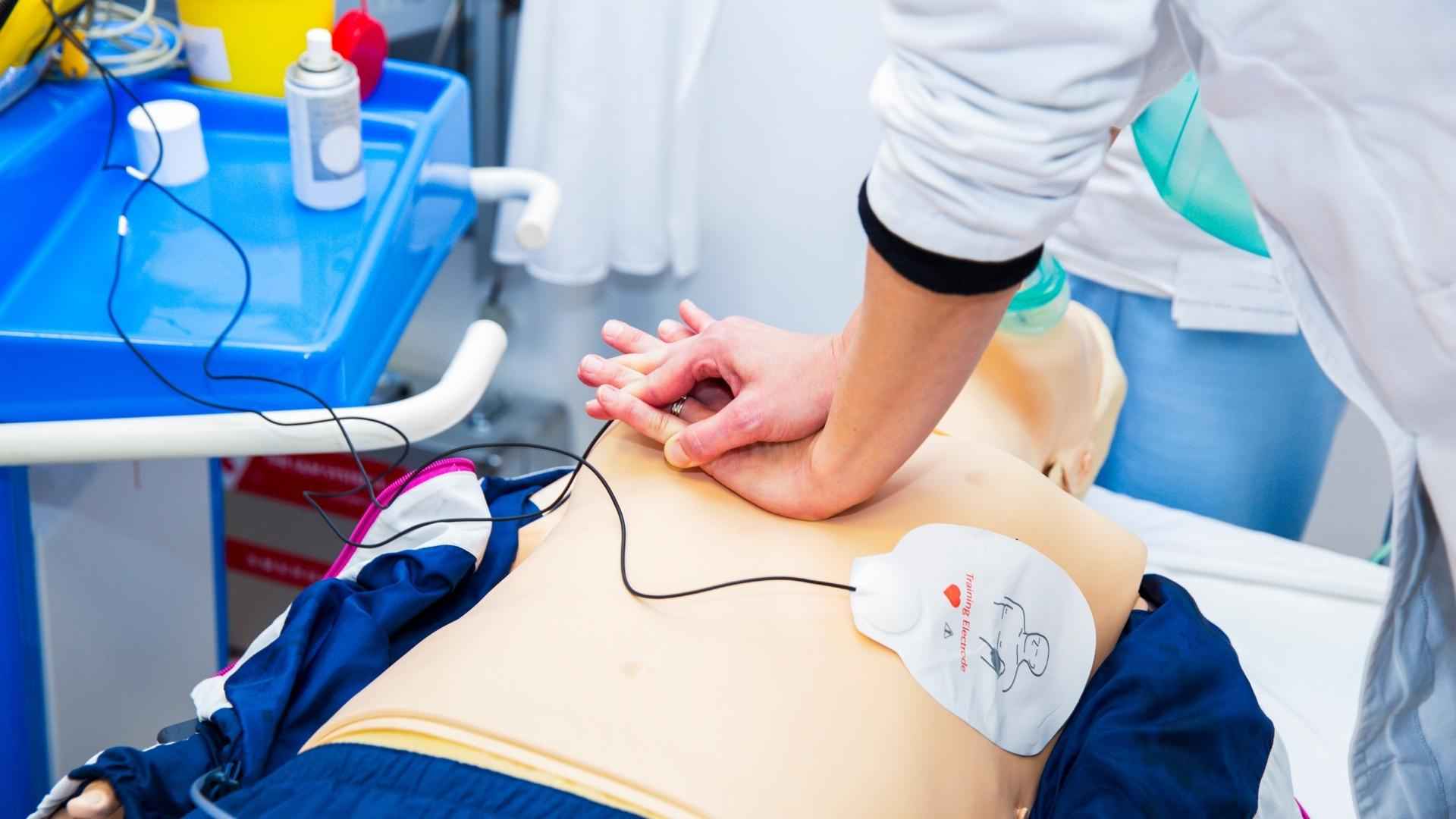
You can only perform CPR on someone who is unresponsive, not breathing, and has no pulse. A person actively having a heart attack who is still awake and breathing does not need CPR, and chest compressions could harm them, so the right response is to call emergency services and stay with them.
Because a heart attack can suddenly progress to cardiac arrest, monitor the person closely. If they collapse and stop breathing, begin CPR right away and continue until trained help arrives.
Cardiopulmonary resuscitation, better known as CPR, is one of the most powerful skills an ordinary person can carry. It is most effective when it begins as soon as possible after cardiac arrest, and in many situations it doubles or even triples the chance of survival when performed promptly. Yet one of the most common questions people ask is whether CPR is the right response to a heart attack. The short answer is that it depends entirely on the person’s condition, and understanding the difference can change the outcome of an emergency.
You only perform CPR on someone who is not breathing and has no pulse. As long as the person having a heart attack is breathing and alert, there is no need for chest compressions. Knowing how a heart attack, cardiac arrest, and other medical emergencies differ helps you make the right decision in the moment. Whatever the emergency, the first step is always to call for medical help and then carry out the procedures the situation actually calls for.
Cardiac arrest and a heart attack are often used interchangeably in everyday conversation, but they are different medical events. When someone is having a heart attack, a blocked artery prevents oxygen rich blood from reaching part of the heart muscle. The person is usually still able to breathe and talk. They may feel chest pain or pressure, pain spreading to the arm, jaw, or back, shortness of breath, nausea, or a cold sweat. In most cases they will not need CPR, but they do need immediate medical treatment at a hospital because the longer the blockage lasts, the more heart muscle is damaged.
Cardiac arrest is different. During cardiac arrest the heart experiences an electrical malfunction that causes an irregular or chaotic rhythm, and the heart stops pumping blood effectively. The person suddenly collapses, becomes unresponsive, and stops breathing normally. If the victim loses consciousness and is not breathing, it is critical to start CPR right away. This is the only situation in which chest compressions are appropriate.
The two events are linked even though they are not the same. Someone experiencing a heart attack has an increased risk of going into sudden cardiac arrest, because the stress on the heart muscle can disrupt its electrical signals. That is why a person who is having a heart attack should never be left alone. A bystander who can recognize the moment a heart attack tips into cardiac arrest, and who knows how to respond, can keep blood and oxygen moving until paramedics arrive. Recognizing that turning point is one of the core skills taught in hands on CPR and AED training.
The guiding rule is simple. CPR is reserved for a person who is unresponsive, not breathing normally, and without a pulse. If the person clutching their chest is awake, talking, or breathing on their own, do not perform chest compressions. Instead, help them sit or lie in a comfortable position, loosen tight clothing, call emergency services, and reassure them while you wait. Pushing on the chest of someone whose heart is still beating can cause real harm.
What you should do is stay alert. Heart attacks can deteriorate quickly, and the safest assumption is that the situation could change at any moment. If the person becomes unresponsive, stops breathing, and has no detectable pulse, that is cardiac arrest, and CPR becomes both appropriate and urgent. Acting in those first moments, before professional responders arrive, is exactly when bystander CPR has the greatest effect on survival.
Understanding how common cardiac emergencies are helps explain why CPR knowledge matters for everyone, not only healthcare workers. According to data from the Canadian Chronic Disease Surveillance System, heart disease is the second leading cause of death in Canada, even though overall rates have been declining. Heart disease affects roughly 2.6 million Canadian adults aged 20 and over, and it is about twice as likely to affect men as women.
Those numbers translate into a simple reality. The person who collapses in cardiac arrest could be a coworker, a parent, a customer, or a stranger on the street, and the people most likely to be nearby are not paramedics but ordinary bystanders. The Government of Canada publishes detailed surveillance on these trends through the Public Health Agency of Canada, which you can review in its national report on heart disease in Canada. The takeaway is that widespread CPR readiness across the general public is one of the most effective ways to improve survival.
CPR is the emergency procedure that can save a person’s life when their heart stops and they are no longer breathing. During cardiac arrest, the heart stops pumping the blood that other organs need to function, which means the body’s organs are no longer receiving oxygen. When organs such as the brain and lungs are deprived of oxygen, it takes only a few minutes before permanent damage and death occur.
Chest compressions and rescue breaths work by mimicking the action of the heart. Each compression squeezes the heart between the breastbone and spine, pushing oxygenated blood out to the brain and other vital organs, and each release allows the heart to refill. CPR does not usually restart the heart on its own. Instead, it buys time, keeping oxygen circulating so that the brain stays viable until an automated external defibrillator or advanced medical care can correct the underlying rhythm. That bridge between collapse and professional help is what makes early CPR so valuable.
Performing CPR keeps blood flowing throughout the body so that vital organs continue to receive oxygen until emergency help arrives. Ideally the procedure is carried out by someone with proper training, because trained responders start faster and push at the correct depth and rate. The basic steps for performing CPR on an adult who has no pulse and is not breathing are as follows:
An automated external defibrillator is designed for use by the public, not only professionals. Once switched on, it analyzes the heart rhythm and tells you, through clear voice prompts, whether a shock is needed. The device will only advise a shock when the rhythm calls for one, so you never have to interpret anything yourself. Apply the pads as illustrated on the device, make sure no one is touching the person during analysis or a shock, and return to compressions the moment the AED tells you to. Combining early compressions with prompt defibrillation gives a person the best possible chance.
CPR on small children and infants differs because of their size and because their emergencies more often begin with a breathing problem. For children you may use one or two hands and compress to about one third the depth of the chest, while for infants you typically use two fingers or two thumbs. Rescue breaths carry more weight for these younger patients, which is why specialized programs such as child care first aid and CPR focus heavily on pediatric technique. The target compression rate of 100 to 120 per minute stays the same across all ages.
Reading about compressions is not the same as practising them. Build muscle memory on a manikin with a certified instructor.
Training does more than teach you how to perform CPR. It also teaches you when to hold back. Never perform CPR on someone having a heart attack who has a steady heartbeat and remains alert, because chest compressions on a beating heart can cause harm. In that situation the right action is to call paramedics and stay with the person until they arrive, watching closely for any sudden deterioration.
There is also a point at which an active rescue should pause. If you are performing CPR on a person who had no breathing or pulse and they begin to show signs of life, such as opening their eyes, moving, or breathing regularly, stop compressions. Keep a close eye on the person, because the heart can stop again, and be ready to restart CPR immediately if it does. You should also continue CPR until trained emergency responders take over or until you are physically unable to keep going.
Basic Life Support training takes CPR a step further for healthcare providers and high responsibility roles.
Survival after cardiac arrest has improved over time, though it remains modest, which is precisely why fast bystander action matters so much. Data from a 2020 analysis of 141 studies indicates that the survival rate of people receiving CPR has increased, yet it remains below 50 percent, and the average one year survival rate for people who received CPR held at about 13.3 percent between 2010 and 2019.
What moves those odds is timing. Emergency cardiac care research consistently shows that when CPR begins within moments of a person going into cardiac arrest, the chance of survival can double or even triple compared with waiting for paramedics to arrive. Every minute that passes without compressions lowers the odds, so the single most important factor is often whether a trained bystander is present and willing to act immediately.
CPR is an invaluable skill that is straightforward to learn and to perform, and it can genuinely help you save a life. Hands on training classes make it far easier to learn the correct technique than reading alone, because you practise compressions, rescue breaths, and AED use on realistic manikins under the eye of an instructor. Across Canada, a comprehensive first aid course covers all the concepts required in many workplaces, while plenty of people take training simply to be ready for an emergency at home or out in public.
Programs are available in both classroom and blended formats, the latter combining online theory with in person skills practice. If you want a recognized credential that also covers a wide range of injuries and emergencies, a standard first aid and CPR course is a strong choice, and you can compare schedules and formats through the full list of course locations. Coast2Coast First Aid & Aquatics is a Canadian Red Cross Training Partner offering WSIB recognized CPR training and certification across Ontario and beyond.
CPR is only for a person who is unresponsive, not breathing, and without a pulse. A conscious heart attack patient needs emergency medical help, not chest compressions. Because a heart attack can progress to cardiac arrest, stay with the person, watch them closely, and be ready to begin CPR the instant they collapse and stop breathing. Started promptly, CPR can double or triple the chance of survival.
Earn a Standard First Aid and CPR certificate and gain the confidence to act in a cardiac emergency.
A: You only perform CPR on a person who is unresponsive, not breathing, and has no pulse. If someone having a heart attack is awake and breathing, CPR is not appropriate and could cause harm. Instead, call emergency services, keep the person calm and still, and stay with them. A heart attack can progress to cardiac arrest, so monitor the person closely. If they collapse, stop breathing, and lose a pulse, begin CPR immediately and continue until help arrives.
A: A heart attack is a circulation problem caused by a blocked artery that cuts off oxygen rich blood to part of the heart muscle. The person usually stays conscious and breathing. Cardiac arrest is an electrical problem in which the heart suddenly stops beating effectively, so the person collapses, stops breathing, and has no pulse. A heart attack can trigger cardiac arrest, but they are not the same emergency, and only cardiac arrest requires CPR.
A: Check for three things: responsiveness, normal breathing, and a pulse. Tap the person firmly and shout to see if they react. Look for normal chest rise rather than occasional gasping. If the person is unresponsive and not breathing normally, they need CPR. Call emergency services or have someone else call, then begin chest compressions right away. When you are unsure whether breathing is normal, it is safer to start CPR than to wait.
A: First, make sure the scene is safe and check whether the person responds. If they are unresponsive and not breathing normally, call emergency services and send for an AED. Place the person on their back on a firm, flat surface. Put both hands in the centre of the chest and push hard and fast. Continue compressions, adding rescue breaths if you are trained, and apply an AED as soon as one is available. Keep going until help takes over.
A: Chest compressions should be delivered at a rate of about 100 to 120 compressions per minute. That is roughly two pushes every second. Pushing too slowly does not move enough blood, while pushing too fast does not let the chest recoil fully between compressions. Allowing the chest to come all the way back up is just as important as the downward push, because it lets the heart refill with blood before the next compression.
A: For an adult, compressions should be at least 5 centimetres deep, which is about 2 inches, but no deeper than 6 centimetres. Push straight down using the heel of your hand with your shoulders directly over your hands and your arms straight. Effective depth is what actually circulates blood to the brain and other organs. Compressions that are too shallow are far less effective, so commit to firm, full compressions even though it can feel forceful.
A: If you are trained and willing, the standard approach combines 30 chest compressions with 2 rescue breaths. If you are untrained, uncertain, or unwilling to give breaths, hands-only CPR with continuous compressions is still very effective for adults and is much better than doing nothing. For children, infants, and drowning cases, rescue breaths are more important because the emergency often begins with a breathing problem rather than a sudden heart issue.
A: An automated external defibrillator analyzes the heart rhythm and, if needed, delivers a controlled electric shock to help the heart re establish a normal beat. AEDs give voice prompts that guide you step by step, so you do not need to interpret the rhythm yourself. The device only advises a shock when the rhythm calls for one. Apply the pads as shown, follow the prompts, and resume compressions immediately after any shock or whenever the AED advises against one.
A: CPR can cause bruising or even cracked ribs because effective compressions are forceful. However, a person in cardiac arrest is clinically dead, so the alternative to CPR is no chance of survival at all. Performing CPR on someone who genuinely needs it is the right choice, and minor injuries can be treated afterward. The real risk is performing chest compressions on someone who still has a pulse and is breathing, which is why you confirm cardiac arrest first.
A: Continue CPR until trained emergency responders take over, the person shows clear signs of life such as breathing or moving, an AED instructs you to pause, or you are physically unable to continue. If the person starts breathing normally, stop compressions and keep monitoring them, since the heart can stop again. If a second trained rescuer is available, switch every couple of minutes to avoid fatigue, because tired rescuers deliver weaker, less effective compressions.
A: Yes. The principles are the same, but technique changes with size. For children you may use one or two hands and compress about one third the depth of the chest. For infants you typically use two fingers or two thumbs. Rescue breaths carry more weight for young patients because their emergencies often start with breathing problems. The compression rate of 100 to 120 per minute stays the same. Specialized child care and first aid training covers these differences in detail.
A: No. Anyone can and should perform CPR in an emergency, and many regions have legislation that protects bystanders who help in good faith. You do not need a certificate to act. That said, formal training builds the confidence and muscle memory that make a real difference under pressure. Certified responders tend to start sooner, push at the right depth and rate, and use an AED without hesitation, all of which improve a person’s chance of survival.
A: Outcomes have improved over the years but remain modest. A 2020 review of 141 studies found that the average one year survival rate for people who received CPR was about 13.3 percent between 2010 and 2019. Survival depends heavily on how quickly CPR begins, how soon an AED is used, and how fast advanced care arrives. Every minute without CPR lowers the odds, which is why immediate bystander action is so important.
A: Call emergency services first and put your phone on speaker so the dispatcher can guide you while you keep your hands free. If an AED is nearby and quick to reach, get it. Then begin chest compressions and do not stop except to use the AED. For adults, hands-only CPR is appropriate when you are alone and untrained in breaths. Stay on the line with the dispatcher, who can coach your compression rate and depth until help arrives.
A: CPR is taught as part of standalone CPR and AED courses and within broader first aid programs across Canada. Courses are offered in classroom and blended formats, where part of the theory is completed online before in person skills practice. Training covers compressions, rescue breaths, AED use, and how to manage choking. Workplace learners often need a recognized first aid and CPR certificate, while many people train simply to be ready to help family, friends, or strangers.
Written and reviewed by Ashkon Pourheidary, B.Sc. (Hons), Co-Founder of Coast2Coast First Aid & Aquatics and a Canadian Red Cross certified instructor since 2011. Coast2Coast is a Canadian Red Cross Training Partner.
Source: Public Health Agency of Canada, Report from the Canadian Chronic Disease Surveillance System: Heart Disease in Canada.

Does your monthly allowance last the entire month for you? Have you ever considered kick-starting your career as a babysitter to earn money? Running a small babysitting business requires more than just the right babysitting skills and knowledge of first aid. However, you may be wondering, do you need a babysitting certificate to babysit?
Continue reading
Insect and spider bites often cause minor swelling, redness, pain, and itching. These mild reactions are common. They may last from a few hours to a few days. Mild reactions from stinging or biting spiders and insects, such as fleas, flies, and mosquitoes, can usually be treated at home with over-the-counter medications.
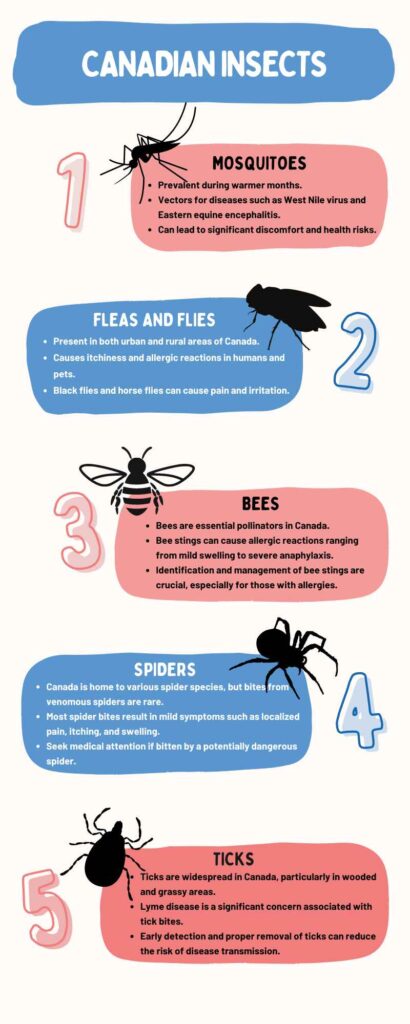
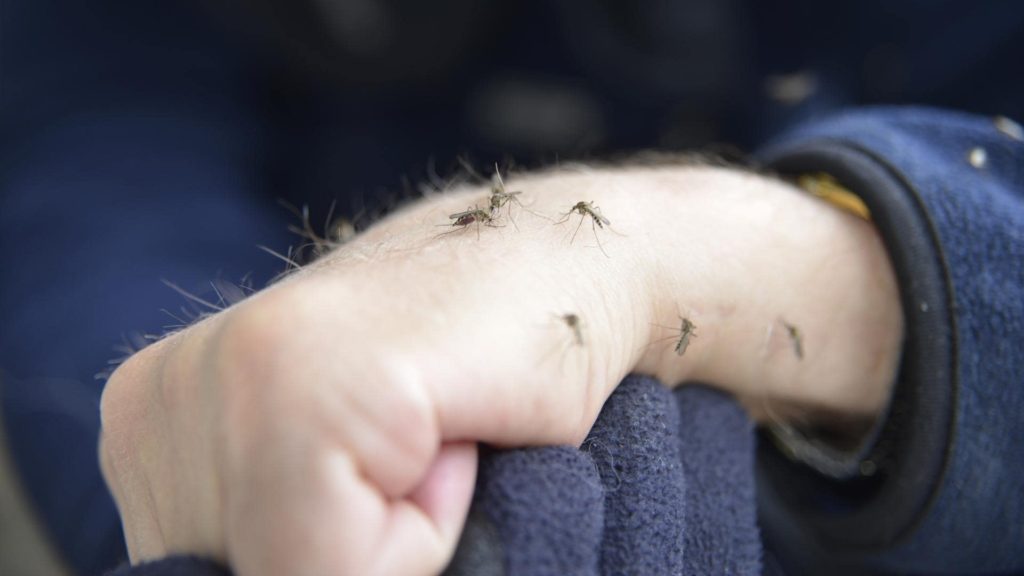
A mosquito’s bites commonly result in a red, swollen lump on the skin. This can be painful and cause considerable itching. The majority of people infected with the viruses carried by mosquitoes experience either no symptoms or mild ones, such as a fever, headache, muscle pain and fatigue. However, viruses such as malaria, west nile or zika can cause severe life threatening conditions such as paralysis or even coma.
Fleas are tiny, wingless insects with a hard, gleaming surface that jump about. The majority of human flea bites cause only minor discomfort, which may be relieved by household treatment methods such as non-prescription cortisone cream.
The signs and symptoms of flea bites might include the following:
Flies are known to make numerous bites in the same regions of the body. The size of the bite does not always indicate what type of fly bit a person. A tiny fly might give rise to a severe, inflamed bite. Swelling, itching, redness, and a tiny but apparent hole in the middle of a bite-like swelling are all signs that a fly has bitten you.
The symptoms of a fly bite can vary depending on the insect. Doctors understand that black fly bites can cause lymph node swelling, for example. Some individuals may have an allergic reaction to a fly’s sting. Symptoms of an allergic reaction include dizziness and weakness. Breathing difficulties or edema (swelling) in various parts of the body might begin to develop.
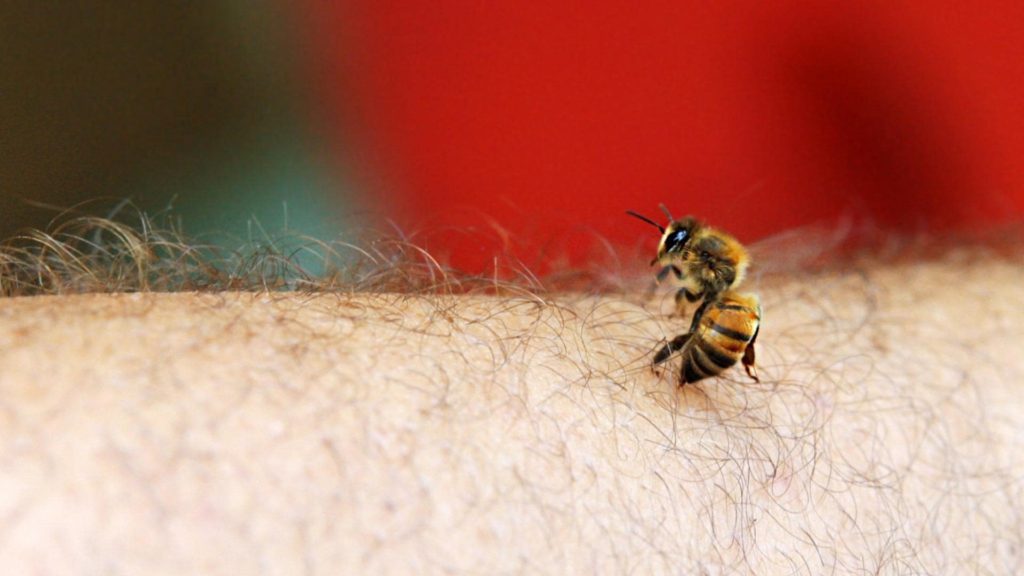
Bee and wasp stings are extremely painful, but they don’t transmit disease. Most people who have severe allergic reactions keep an EpiPen on hand, but for the majority of us, we just have to deal with the initial painful sting and wash out the area as quickly as possible. If your allergic reaction is minimal, you can take an allergy medication such as Benadryl.
Although spiders can not be categorized as an insect, it is likely to be bitten by one under certain circumstances. While the majority of spider bites are not poisonous and only result in side effects like red skin, swelling, and pain around where the bite occurred, some other spider bites can pose a real risk.
If you experience any adverse reaction to a spider bite, such as difficulty breathing, swallowing, or swelling of the face, seek medical attention immediately. It can be tricky to realize that someone has been bitten by a venomous spider because the signs and symptoms are often indistinguishable from other medical conditions. The only definitive way for a First Aider to know for sure is if they saw the event happen. If you have been bitten by a brown recluse spider, watch for signs and symptoms of a severe reaction. These can include nausea, vomiting, and joint pain within 72 hours of the bite.
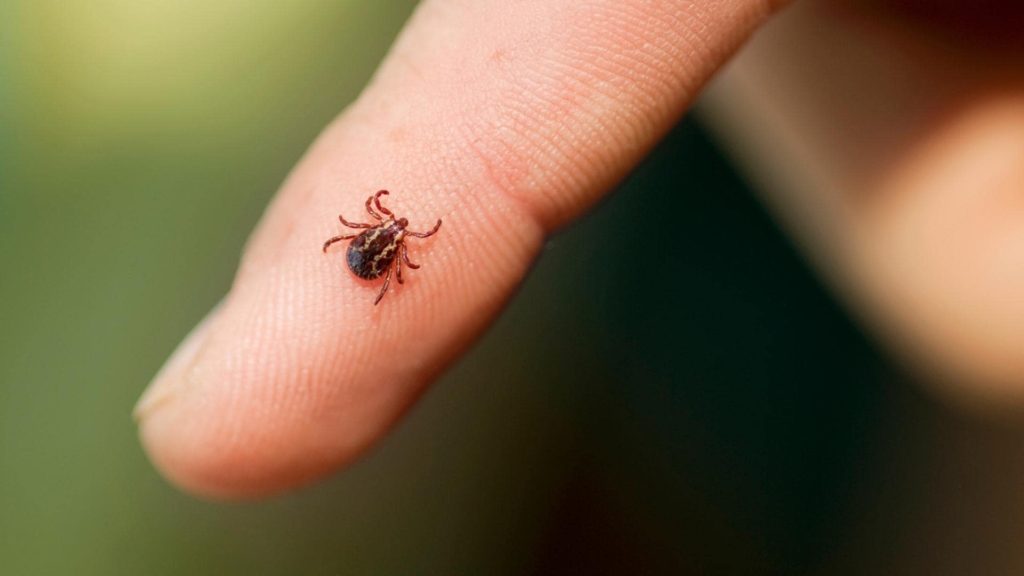
Ticks can be harmful because they may transmit disease. Black-legged ticks, formerly known as deer ticks, might transmit Lyme disease, and dog ticks can spread Rocky Mountain spotted fever. Lyme disease is an ailment that humans contract from the bite of a deer tick. Contrary to popular belief, people who are infected with Lyme disease may not experience symptoms immediately after they are bitten. It is critical that people with Lyme disease receive a timely diagnosis, since most patients respond well to antibiotics.
Being aware of the symptoms helps you know when you’ve been bitten or stung by an insect. Some individuals do not notice the insect and may not become aware of a bite or sting until one or more of the following symptoms appear:
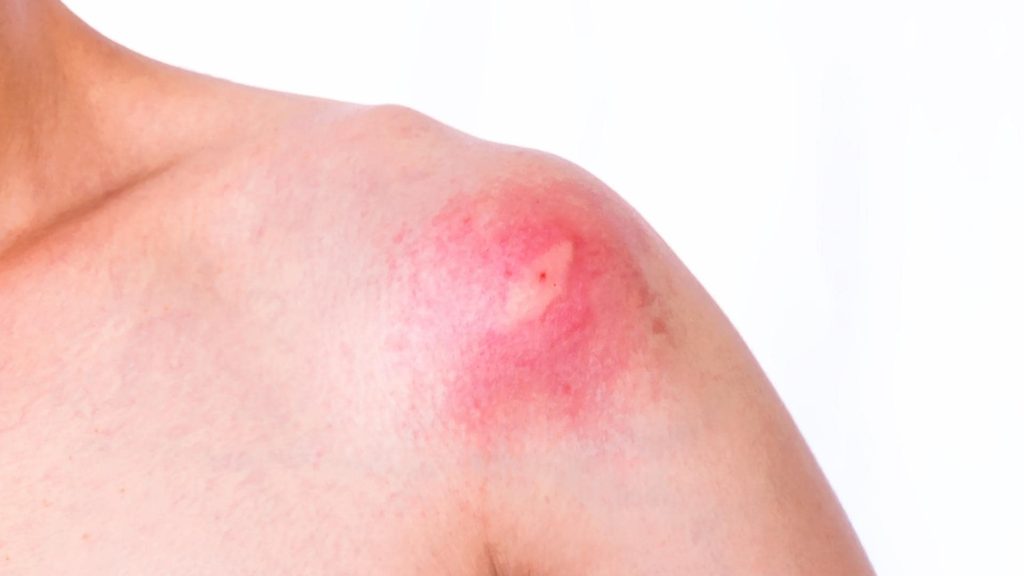
The following are some of the most serious symptoms of a severe reaction that necessitates immediate medical treatment:
If you’re concerned about an insect bite and have flu-like symptoms the next few days, get examined by a doctor for tests to confirm whether you have an infection or disease that was transferred from the insect.
First aid treatment may vary depending on the type of bite or sting. Typically, less severe bites and stings from mosquitoes, flies, spiders and bees can be treated with allergy medication and an ice pack to reduce swelling. Avoid scratching the area to increase healing speed. After a few days, the bite should reduce, but it is important to keep an eye on it to ensure it does not get worse.
In the cases of a bee sting, though, we suggest to do the following:
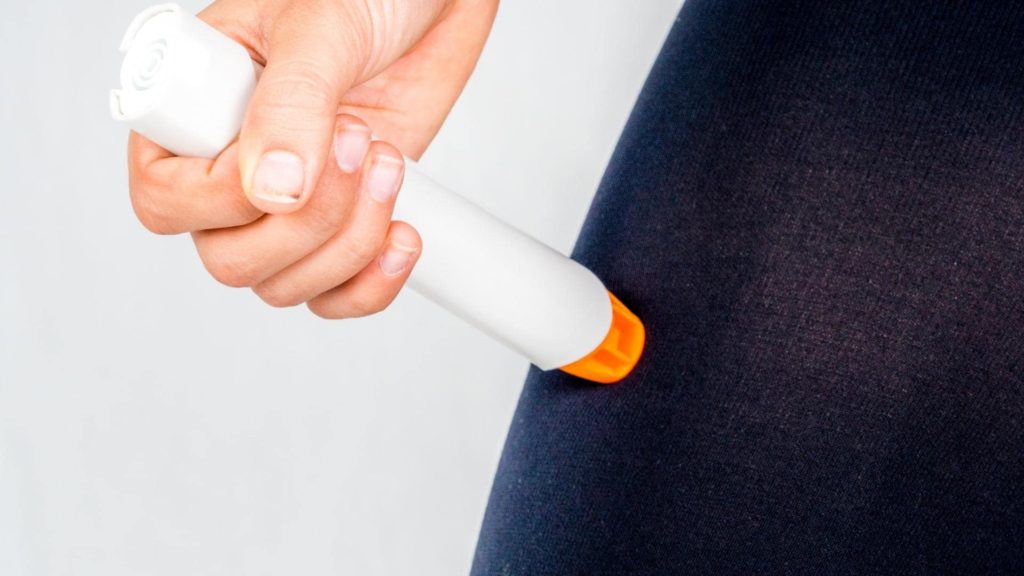
An epinephrine injection (EpiPen) is an adrenaline shot that helps control the severity of a severe allergic reaction, otherwise known as anaphylaxis. The EpiPen injection can be given to most people without medical assistance on the outer thigh, even if they are wearing clothing. Unless there is a first responder, anyone with the required training may assist them in giving adrenaline to assist save a life during an emergency caused by an allergic reaction.
To treat a non-venomous spider bite:
If you’ve been bitten by a black widow or brown recluse spider, take the following steps:
Brush the tick away if you discover it on the skin; grasp the head of the tick with tweezers or a tick removal key if it has burrowed into the skin. If you are able to remove the tick, be sure to wash the area well with soap and water. If you cannot remove the tick completely, it is best to seek medical attention as soon as possible.
Lyme disease is usually transmitted from the bite of a small deer tick that carries the bacterium. Although not every bite infected with this bacteria causes Lyme disease, it is important to carefully evaluate any bites since early detection and treatment are essential for preventing serious medical complications.


A bleed from the nose is not usually a sign of a severe problem, but it can be pretty frightening. Doctors call nosebleeds epistaxis, which refers to a nosebleed from one or both nostrils. It is usual for a nose to bleed for anything between one and fifteen minutes, and the flow can either be light or heavy. Frequent nosebleeds can indicate a problem and lead to anemia if not controlled.
Continue reading
Generally, in Canada, the most challenging part of becoming a private investigator (PI) is getting a license for the province you want to become a PI. Otherwise, the process in Ontario is more straightforward than you might think.
Continue reading
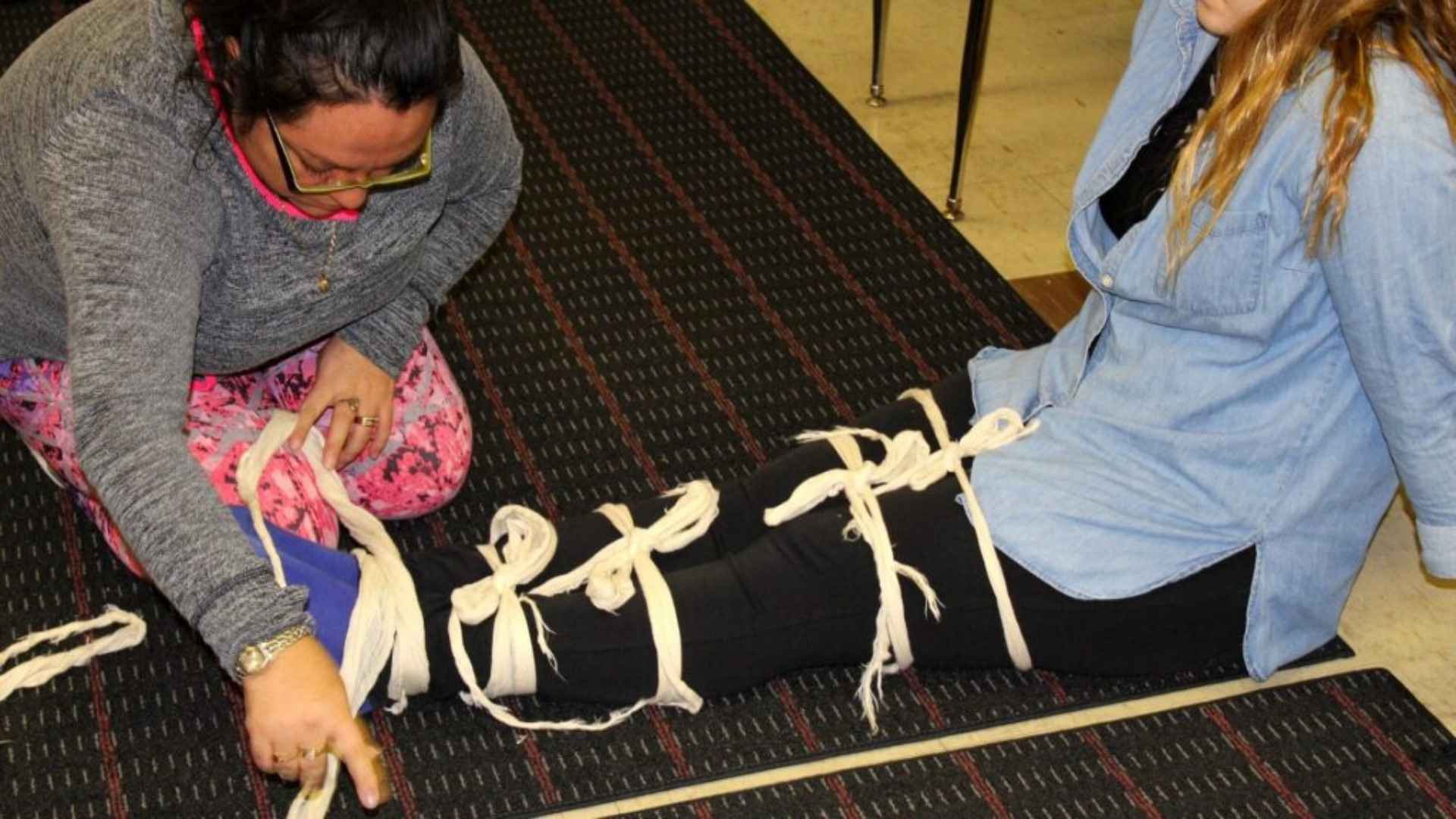
With the onset of summer and the increased number of outdoor activities, the probability of getting injured also increases. If you have injured a bone or joint, then splinting it may help. When dealing with such conditions, provide pain relief to the injured region using splints.
Continue reading