
Youth Programs · Canadian Red Cross Training Partner
Canadian Red Cross Youth Courses
Coast2Coast runs the two Canadian Red Cross youth programs: Babysitting for ages 11 to 15, and Stay Safe for ages 9 to 13. Both teach CPR and first aid skills alongside responsibility, leadership and handling a situation with no adult in the room. Both run live online, so your child can join from anywhere in Canada.
 4.9
4.9
Course Detail
Two Canadian Red Cross Youth Programs
Babysitting teaches a pre-teen or teen to look after somebody else's child. Stay Safe teaches a younger child to look after themselves. Age decides which one, and the two bands overlap at 11, 12 and 13.
These are youth programs, not workplace first aid certificates. The youth certificate does not expire, but it is not the certificate an employer asks for. Adults who need first aid certification for work should book a workplace first aid course: Intermediate/Standard First Aid, which the majority of workplaces require.
- Ages
-
11 to 15 years old
- Who it is for
-
- Pre-teens and teens who want a first paid job
- Older siblings left in charge after school
- Kids who watch cousins, neighbours or a friend's baby
- Scouts, Guides and school groups, booked together
- Length
-
7 to 8 hours
Virtual: four sessions of 90 minutes, plus 30 minutes of practice at home with family after each one. In class: the same 7 to 8 hours in one day.
Learn more
- How to book
-
Live online, anywhere in Canada
In-class Babysitting runs in Edmonton, Alberta. Groups of 12 or more can request an in-class course anywhere we train.
- Evaluation
-
- 100% attendance of the course
- The at-home practice after each virtual session
- Certificate
-
Canadian Red Cross certificate, no expiry
A youth certificate, not a workplace first aid certificate.
- For a virtual class
-
- Internet and Zoom
- A computer, tablet or smartphone with a camera and microphone
- A doll or stuffed animal
- A pair of gloves
- A towel or an unused diaper
- Course content
-
View all 14 course topics
- The Red Cross
- Importance of Responsibility and Respect
- Importance of Setting and Following Rules
- How to Stay Safe
- How to Prepare, Recognize and Respond to Unexpected Situations
- Check, Call, Care, including phoning EMS 911
- Recovery Position
- Conscious Choking — adult, child and alone
- Feeling Unwell
- Asthma, using an inhaler and spacer
- Anaphylaxis, using an EpiPen
- Poisoning
- Insect Stings
- Wound Care — cuts, scrapes, splinters, nosebleeds, bumps, bruises, life-threatening bleeding and burns
The Canadian Red Cross rewrote this program to cover day-to-day care, not only emergencies. Your child practises feeding, dressing and changing an infant, then works through choking, nosebleeds and splinters. The rest is difficult behaviour, conducting yourself as a babysitter, and a small babysitting business.
- Ages
-
9 to 13 years old
- Who it is for
-
- Children home alone for the first time
- Kids who walk or bus home from school
- Younger siblings not yet ready to babysit
- Classes and camp groups, booked together
- Length
-
4 to 5 hours online, 5 to 6 hours in class
Virtual: three sessions of 90 minutes, plus 30 minutes of practice at home with family after each one.
Learn more
- How to book
-
Live online, anywhere in Canada
In-class Stay Safe is private booking only. There is no open in-class calendar for it.
- Evaluation
-
- 100% attendance of the course
- The at-home practice after each virtual session
- Certificate
-
Canadian Red Cross certificate, no expiry
A youth certificate, not a workplace first aid certificate.
- For a virtual class
-
The same kit as Babysitting, with a towel in place of the diaper option
- Course content
-
The same fourteen Canadian Red Cross topics as Babysitting
Same running order: the Red Cross, responsibility and respect, setting and following rules, how to stay safe, then Check, Call, Care and on through choking, asthma, anaphylaxis, poisoning and wound care.
Stay Safe is built for the stretch of time a child is on their own — walking home, an hour before a parent gets in, a younger sibling in the next room. The instructor works through recognizing an emergency, calling for help and overcoming challenges, then the same CPR and first aid skills.
Registration
How to Register for a Youth Course
Pick the program that matches your child's age, then join the next live online class. For a school, a scout troop or any group of eight, send us your dates and we will run a course for you.
Eight participants is the minimum for a private youth course. Booking one child? Use the Register buttons above.
Babysitting or Stay Safe
Which Youth Course Does My Child Need?
Both end in a Canadian Red Cross certificate that does not expire. The choice comes down to whether your child is looking after somebody else, or looking after themselves.
Compare the Specs- CPR and first aid skills for infants and children, plus feeding, dressing and diaper changes
- Conducting yourself as a babysitter, handling difficult behaviour, running a small business
- Recognizing an emergency, overcoming challenges, and phoning EMS 911
- The same fourteen topics, taught for a child looking after themselves
In Class
Prefer a Classroom?
Online is the only route with open dates across Canada. There are two ways into a classroom.
In-class Babysitting, Edmonton
In-class Stay Safe, and in-class Babysitting outside Edmonton, are private bookings only.
Youth or Workplace
Youth Course or Workplace First Aid Course?
Babysitting and Stay Safe are youth programs, so neither one is WSIB approved workplace first aid training. In Ontario, a first aid course meets Regulation 1101: Basic/Emergency First Aid for five or fewer workers, Intermediate/Standard First Aid above that. Coast2Coast is a WSIB approved training provider, and those two first aid courses are the ones that satisfy Regulation 1101.
Teens age into that course. When a camp, a co-op placement or a first job asks for a certificate, a teen books the same first aid course an adult books: Intermediate/Standard First Aid with CPR C, which covers adult, child and infant. The skills day runs on an AED Trainer. A job asking for CPR alone points at our CPR training instead, and that does not replace a first aid course.
Why Coast2Coast
Why Parents Book Youth Training With Us
Plenty of places teach an adult CPR. Far fewer run a Canadian Red Cross program built for a nine-year-old, with an instructor who can hold that room for 90 minutes.
Testimonials
What Students Say About Our Training
Reviews From Our Students
4.9
Google
-
Mubasherah Rahman Coast2Coast Student
★★★★★
I had a wonderful experience with Edward Wong. His teaching methods were awesome and simple.
-
Sophia Bychkova Coast2Coast Student
★★★★★
Ms. Saika made class so fun and really allowed us to have so much hands-on experience through scenarios.
-
Stella A. Ayisey Coast2Coast Student
★★★★★
She was knowledgeable, patient, professional, and made the training very easy to understand.
-
Tayyaba Waseem Coast2Coast Student
★★★★★
Amandeep Kaur explained everything clearly and answered all of our questions with ease.
-
Leyla Khamesi Coast2Coast Student
★★★★★
The instructor was professional, caring, and very knowledgeable. Edward made sure we understood the material.
Verified Reviews from Our Students
Student Feedback
Who It Is For
What Are the Canadian Red Cross Youth Courses?
They are first aid courses with CPR skills, written for children, and they carry a second syllabus alongside it. Responsibility. Respect. Setting rules and following them. Deciding what to do when something goes wrong and there is no adult to ask.
Nobody needs a medical background. Your child leaves able to phone EMS 911, use the recovery position, help someone choking, and use an inhaler or an EpiPen.
- 11–15Babysitting ages
- 9–13Stay Safe ages
- 90 minLength of one class
- No expiryCertificate term
-
They are Canadian Red Cross programs
A Canadian Red Cross certificate with no expiry date, not an in-house attendance sheet.
-
Live classes, not a video to watch
An instructor is in the room, or on the call, the whole time. Ninety minutes at a time — about as long as a child holds a screen.
-
Taught by Canadian Red Cross instructors
First responders, nurses and other medical professionals teach our classes, and every class has a Canadian Red Cross instructor.
Private & Group Training
Train a School, a Troop or a Whole Class
Private youth courses run for groups of eight or more, on your date and at your location. We send a Canadian Red Cross instructor to you, at a discounted price on one bill.
Every participant leaves with the same Canadian Red Cross certificate, and it does not expire.
Inside the Classroom
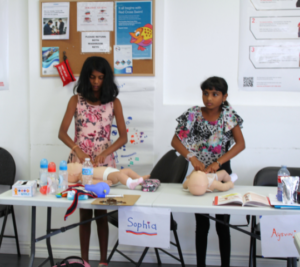
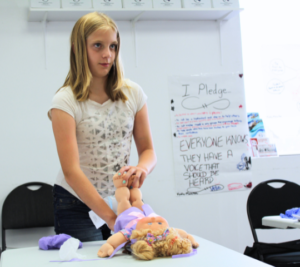
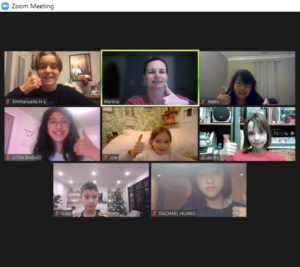
Our Youth Courses in Action


Where We Train
Our First Aid & CPR Training Facilities in Canada
Youth courses run live online, so your city does not limit you. These facilities host our first aid courses, CPR/AED, Basic Life Support and professional responder training, and any of them can host a private youth course.
-
Greater Toronto Area
Ajax, Aurora, Brampton, East York, Etobicoke, Markham, Milton, Mississauga, Newmarket, North York, Oakville, Oshawa, Richmond Hill, Scarborough, Toronto, Vaughan, Whitby
-
Western Ontario
Brantford, Burlington, Cambridge, Guelph, Hamilton, Kitchener, London, St Catharines, Waterloo, Windsor
-
Eastern Ontario
-
Alberta
Common Questions
Youth Course Questions, Answered
How old does my child have to be?
Babysitting is for children 11 to 15 years old, and Stay Safe is for children 9 to 13. A child aged 11, 12 or 13 falls inside both bands and can take either one:
- Looking after other people's children — Babysitting
- Spending time at home or out without an adult — Stay Safe
What is the difference between Babysitting and Stay Safe?
Babysitting teaches a pre-teen or teen to care for somebody else's child, and Stay Safe teaches a younger child to care for themselves. Both cover the same fourteen Canadian Red Cross topics and end in the same certificate. Babysitting adds the caregiving and small-business half, which is why it runs longer.
How long do the youth courses take?
Babysitting is 7 to 8 hours and Stay Safe is 4 to 5 hours online, or 5 to 6 hours in a classroom. Online it splits into 90-minute sessions, four for Babysitting and three for Stay Safe, each followed by 30 minutes of practice at home.
Are the youth courses online or in person?
Both youth courses run live online across Canada, and both have a classroom route as well. In-class Babysitting has open dates in Edmonton, Alberta. Everywhere else, a classroom course is a private group booking for eight or more.
Does the Babysitting course include first aid and CPR?
Yes — both youth programs teach first aid and CPR skills for infants and children. Your child practises the choking sequence on a conscious adult, child and on themselves, the recovery position, an inhaler and spacer, an EpiPen, and wound care up to life-threatening bleeding.
How long is the youth certificate valid?
The Canadian Red Cross certificate from Babysitting and from Stay Safe is issued with no expiry date. That is different from our adult courses: an Intermediate/Standard First Aid certificate is valid three years, and a CPR/AED certificate carries its own term.
Does a youth certificate count as workplace first aid training?
No — Babysitting and Stay Safe are youth programs, not workplace first aid certifications. An employer asking for first aid certification wants a workplace first aid course: Basic/Emergency First Aid, or Intermediate/Standard First Aid, which the majority of workplaces require. In Ontario those are the WSIB approved first aid courses, and a youth certificate is not one of them.
Do the youth courses include CPR C or AED training?
Neither youth program certifies a child in CPR C or in using an AED. Babysitting and Stay Safe teach CPR skills for children and infants. CPR C — adult, child and infant — and the AED Trainer belong to our adult CPR/AED and first aid courses. That is the CPR training an employer asks for.
Can my teen take a workplace first aid course instead?
A teen who needs a certificate for a job books the same first aid course an adult books. Intermediate/Standard First Aid runs 16 hours; Basic/Emergency First Aid runs 8 hours. Both include CPR C and an AED Trainer on the skills day. Neither is a youth program.
Is Intermediate First Aid the same as Standard First Aid?
Yes — Intermediate First Aid and Standard First Aid are two names for one course. The Canadian Red Cross changed the wording, so older certificates read Standard and newer ones read Intermediate. Neither is a youth course. See our first aid course page.
Is there an exam at the end?
The published requirement for both youth programs is 100% attendance of the course. Online students also complete the 30 minutes of at-home practice after each session, which rehearses the skills rather than testing them.
Can you run a youth course for my school or group?
Yes — we run private Babysitting and Stay Safe courses for groups of eight or more, on your date and at your location. An in-class Babysitting group needs 12 or more. Call 1-866-291-9121 or see private and group training.
Give your child skills that never expire
The day they need this, no adult will be standing there. Book a Canadian Red Cross youth course.