

Skip to content

Benefit Your Employees with Workplace Safety Training

Workplace safety training is a legal requirement for Ontario employers under the Occupational Health and Safety Act (OHSA), covering hazard identification, WHMIS, emergency procedures, and first aid certification under Regulation 1101. Effective programs equip workers with the skills and awareness to identify risks, follow safe work practices, and respond to emergencies before they escalate into serious injuries. Businesses that invest in structured occupational health and safety training consistently see fewer lost-time injuries, lower WSIB costs, and stronger overall workforce performance.

Workplace Training

Train Your Team to Meet Ontario’s Safety Requirements

Group and private workplace training available across Ontario. Schedule a session that works around your team.

Explore Group Training Options

20+
Workers required before a Joint Health and Safety Committee is mandatory in Ontario
3
Fundamental rights every Ontario worker holds under the OHSA: know, participate, refuse unsafe work
3 yrs
Validity of first aid certifications under Regulation 1101 before mandatory renewal

What Is Workplace Safety Training and Why Does It Matter?

Workplace safety training is a structured program that equips workers with the knowledge, skills, and awareness to identify hazards, follow safe work practices, and respond effectively to emergencies. It covers everything from day-to-day risk recognition to formal compliance requirements set by provincial law.

In Ontario, workplace safety training is not optional. The Occupational Health and Safety Act (OHSA) requires employers to provide a written occupational health and safety policy, review it at least annually, and ensure every worker understands the safety practices that apply to their specific role and environment. Employers who fail to meet these requirements can face Ministry of Labour orders, financial penalties, and increased WSIB costs.

Beyond legal compliance, effective occupational health and safety training protects the people who make your organization function. It builds the skills and awareness required to prevent incidents before they happen, creating a workplace where everyone is equipped to work safely from day one.

Compliance Note: Ontario’s OHSA mandatory safety awareness training is available free of charge through the Ontario Ministry of Labour, Immigration, Training and Skills Development. Employers are responsible for ensuring all workers complete this training as the starting point of any safety program.

What Does Health and Safety Training Cover?

Health and safety training is designed to address the full range of risks workers may encounter. A comprehensive program is developed around the specific hazards present in a workplace, but several topics are mandatory across Ontario workplaces regardless of industry.

Core topics include: hazard identification and risk assessment, WHMIS (required for workers exposed to hazardous or controlled products), personal protective equipment (PPE) selection and use, emergency procedures, safe work practices for specific tasks, incident investigation, and reporting protocols. Employers must also ensure workers understand how to identify a hazard in their specific work environment and what steps to take when they encounter one.

Updated information about controlled products and changes to safety data sheets must be communicated to workers promptly. Training is never a one-time event; it must be refreshed whenever a new hazard is introduced or a process changes in a way that affects worker safety.

Safety Awareness Training: Building a Culture of Prevention

Safety awareness training builds a shared culture of prevention across an organization. Rather than simply satisfying a compliance checkbox, it develops the skills workers need to recognize risks instinctively and communicate concerns before they escalate.

Effective safety awareness programs include hazard identification exercises, near-miss reporting protocols, and guidance on how to raise safety concerns through proper channels. When workers at every level, from new participants in their first week to experienced team leads, understand their role in preventing injury, the entire organization becomes more resilient. This is the difference between a reactive safety culture and a proactive one.

Ontario’s Ministry of Labour offers free online awareness training modules for both workers and supervisors. Completing this training is the mandatory starting point for any broader occupational health and safety program. Employers must ensure all workers complete it and retain records of completion.

Health and Safety Representatives and Committees in Ontario Workplaces

Ontario’s OHSA establishes formal internal structures to support workplace health and safety, and the requirements depend on the size of the workforce. These structures ensure workers have a formal voice in health and safety decisions and that hazards are identified and addressed through an organized, documented process.

When Is a Joint Health and Safety Committee Required?

A Joint Health and Safety Committee (JHSC) is required in Ontario workplaces with 20 or more regularly employed workers. The JHSC is composed of both worker and employer representatives, and its role is to identify hazards, conduct workplace inspections, review incident investigations, and make written recommendations to the employer.

JHSC members must complete provincially approved certification training to conduct inspections and fulfil their duties under the law. The committee must meet at least every three months, and records of all meetings and recommendations must be maintained. Employers must respond in writing to any written recommendation from the committee within 21 days.

When Is a Health and Safety Representative Required?

In Ontario workplaces with 6 to 19 regularly employed workers, a health and safety representative is required in place of a full committee. The representative is chosen by workers who do not exercise managerial functions, giving them direct representation in safety matters.

The representative’s responsibilities include inspecting the workplace at least once a month, identifying hazards, and bringing concerns to the employer. While the formal structure is less complex than a JHSC, the employer must still take the representative’s concerns seriously and respond to any written recommendations. The representative is entitled to be present during any workplace inspection conducted following an injury or incident.

Health and Safety Rights and Responsibilities Under the OHSA

Ontario’s OHSA gives every worker three fundamental rights that form the foundation of the province’s occupational health and safety system. These rights apply to all workers covered by the Act, regardless of their employment type or length of service.

The right to know means workers must be informed about any hazards they may encounter in their work environment, including through WHMIS training for controlled products. The right to participate means workers can engage in health and safety decisions through their representative or committee without fear of reprisal. The right to refuse unsafe work means any worker can stop work they believe presents a danger to themselves or others, and the employer must investigate and resolve the concern before work resumes.

What Additional Training Do Ontario Employers Need to Provide?

Beyond awareness training and WHMIS, Ontario employers must ensure workers are trained on the specific hazards present in their workplace and the procedures required to control those hazards. This includes equipment-specific training, PPE use, emergency evacuation procedures, and any task-specific safe work procedures the employer has developed.

Supervisors have additional training obligations. They must understand their duties under the OHSA, know how to conduct hazard assessments, and be able to identify and correct unsafe conditions or behaviors. Ontario’s OHSA also requires supervisors to complete mandatory awareness training separate from the training required of workers.

Awareness Training: The Mandatory Starting Point

Awareness training is the entry point for every Ontario workplace safety program. It is required for all workers and supervisors and covers the basic rights and responsibilities established under the OHSA. The province offers free e-learning modules through the Ministry of Labour to help employers meet this requirement at no cost.

While free awareness training meets the legal minimum, employers are encouraged to develop additional workplace-specific training that supports workers in understanding the hazards unique to their environment. Free awareness training provides the knowledge foundation; organization-specific programs develop the practical skills workers need to apply that knowledge safely on the job.

First Aid Training Requirements Under Regulation 1101

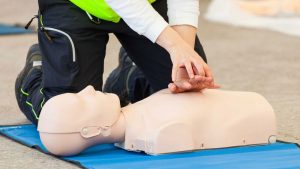
Under Ontario Regulation 1101 (First Aid Requirements), employers must maintain first aid equipment and at least one trained first aider on-site at all times during working hours. The required certification level depends on the number of workers present on a shift and the hazard classification of the workplace.

Low-hazard workplaces with fewer than five workers may satisfy requirements with a Basic First Aid certificate, while larger or higher-hazard workplaces require Standard First Aid certification. First aid certifications are valid for three years and must be renewed before expiry. Employers must keep records of all first aid certifications on file and ensure there is no gap in on-site certified coverage. Workplaces that use group training often find it the most practical way to certify multiple workers at once and maintain continuous coverage.

Safety Tip: Schedule first aid recertification at least two months before any certificate’s expiry date. This buffer ensures that if a course is cancelled or rescheduled, you still have time to maintain continuous on-site coverage as required by Regulation 1101.

Meet Your Regulation 1101 First Aid Requirement

Standard First Aid and CPR/AED certification for Ontario workplaces. Scheduled courses and private group options available.

View First Aid Courses

How Does Workplace Safety Training Benefit Employees?

The most direct benefit of workplace safety training is the reduction in injuries and fatalities. Workers who have been trained to identify hazards and follow safe work procedures are significantly less likely to experience a lost-time injury. WSIB data consistently shows that trained workforces have lower claim rates and lower total injury costs than untrained ones.

Beyond physical safety, structured occupational health training has meaningful effects on employee mental health and well-being. Workers who feel their employer has invested in their safety report higher job satisfaction, lower stress levels, and a stronger sense of belonging in the workplace. This translates directly into lower turnover rates, reduced absenteeism, and improved team morale.

Organizations that treat workplace health as a genuine priority, not just a compliance exercise, also develop stronger communication across all levels of the workforce. When workers are encouraged to identify and report hazards, they become active participants in the safety system rather than passive recipients of rules. This engagement supports a culture where everyone takes ownership of safety outcomes, which is the foundation of long-term injury prevention.

Investing in skills development through safety training also signals to current and prospective workers that the organization values their contribution. In competitive hiring environments, a demonstrated commitment to health and safety can be a meaningful differentiator when attracting skilled people.

How to Build an Effective Workplace Safety Program

An effective workplace safety program is not a single document or a once-a-year training session. It is a living system that evolves with the organization, the workforce, and the hazards present in the environment. Building one requires a structured approach that begins before the first worker is trained.

The first step is a thorough hazard assessment, which identifies every risk workers may encounter, evaluates the likelihood and severity of harm, and determines the controls required to reduce that risk. This assessment is the foundation of every training decision that follows. Without it, training programs address generic risks rather than the specific hazards workers actually face.

Once hazards are identified, employers must develop and communicate clear procedures for working safely around those hazards. This includes written safe work procedures, PPE requirements, and emergency response plans. Workers must be trained on all procedures relevant to their role, and that training must be documented.

Regular refresher training is essential for maintaining a safe workplace. People’s knowledge fades over time, and workplaces change. Refresher programs reinforce safe behaviors, introduce updated information, and ensure workers stay current with any changes to procedures or regulations. For first aid coverage, this means ensuring all CPR/AED certifications and Standard First Aid certificates are renewed before they expire.

Documentation is a critical and often underestimated component of a safety program. Employers must keep records of training completion, inspections, incident investigations, and JHSC meeting minutes. These records demonstrate compliance during Ministry of Labour inspections and provide the evidence needed to identify patterns and improve the program over time.

Finally, the most effective safety programs are supported at every level of the organization. When leaders model safe behavior, participate in inspections, and respond constructively to hazard reports, they reinforce the message that safety is a genuine priority. Workers who see that message lived out in practice are far more likely to engage with training and apply what they learn.

Compliance Note: Under Ontario’s OHSA, employers must keep all training records, inspection reports, and incident investigation documents on file. These records may be requested during a Ministry of Labour inspection. Best practice is to retain all safety documentation for a minimum of three years.

Train Your Whole Team in One Session

Private group training for Ontario workplaces. Satisfy your Regulation 1101 obligation for multiple workers at once, on your schedule.

Book Private Group Training

Key Takeaway

Workplace safety training is both a legal obligation and a practical investment in your workforce. Ontario’s OHSA requires every employer to maintain a health and safety policy, complete WHMIS training, ensure awareness training for all workers, and maintain first aid coverage under Regulation 1101. Organizations that build structured safety programs, starting with hazard assessment and continuing through refresher training and thorough documentation, protect their people, reduce WSIB costs, and build the kind of safety culture that attracts and retains skilled workers.

Get Certified

Join 150,000+ Canadians Who Are Certified

Find a first aid and CPR certification course near you. In-person, instructor-led, and valid for three years under Regulation 1101.

Find a Course Near You

Frequently Asked Questions: Workplace Safety Training 2026

Q1: Is workplace safety training mandatory in Ontario?

A: Yes. Under the Occupational Health and Safety Act (OHSA), Ontario employers are legally required to provide workplace safety training. This includes a written occupational health and safety policy (reviewed annually), WHMIS training for workers exposed to hazardous materials, awareness training available free through the Ontario Ministry of Labour, and first aid training under Regulation 1101. Failure to comply can result in orders, fines, and increased WSIB premiums. The law applies to virtually all Ontario workplaces regardless of size or industry.

Q2: What does workplace health and safety training include?

A: Workplace health and safety training typically covers hazard identification, WHMIS (Workplace Hazardous Materials Information System), personal protective equipment (PPE) use, emergency procedures, safe work practices, incident reporting, and first aid response. In Ontario, employers must also provide safety awareness training covering worker rights and responsibilities under the OHSA. The specific content varies by industry, workforce size, and hazard classification, but the goal is always to ensure every worker can identify risks in their environment and know how to respond appropriately.

Q3: What is a Joint Health and Safety Committee (JHSC) and when is one required?

A: A Joint Health and Safety Committee (JHSC) is a workplace group made up of worker and employer representatives who work together to identify hazards, conduct inspections, and support a culture of safety. In Ontario, a JHSC is required in workplaces with 20 or more regularly employed workers. The committee must meet at least every three months, conduct regular workplace inspections, and make written recommendations to the employer. Members must complete JHSC certification training through an approved provider to fulfil their duties under the OHSA.

Q4: When does an Ontario workplace need a health and safety representative instead of a committee?

A: Ontario workplaces with 6 to 19 regularly employed workers are required to have a health and safety representative rather than a full Joint Health and Safety Committee. The representative is chosen by workers who do not exercise managerial functions. Their role includes conducting workplace inspections, identifying hazards, and bringing concerns to the employer. While a representative has fewer formal obligations than a JHSC, the employer must still take their recommendations seriously and respond in writing.

Q5: What are the three fundamental rights workers have under the OHSA?

A: Under Ontario’s Occupational Health and Safety Act, every worker has three fundamental rights: the right to know about hazards in the workplace, the right to participate in health and safety decisions through their representative or committee, and the right to refuse unsafe work without fear of reprisal. These rights apply to all workers covered by the OHSA regardless of employment type. Employers are prohibited from penalizing workers who exercise these rights, and any such reprisal can be reported to the Ministry of Labour.

Q6: What is WHMIS and who needs training?

A: WHMIS stands for Workplace Hazardous Materials Information System. It is Canada’s national hazard communication standard for controlled products used in the workplace. In Ontario, WHMIS training is mandatory for any worker who works with or in proximity to hazardous materials. Training must cover how to read safety data sheets (SDS), how to interpret hazard labels, and how to handle, store, and dispose of controlled substances safely. WHMIS 2015 aligned Canada’s system with the Globally Harmonized System (GHS) of Classification and Labelling of Chemicals.

Q7: What is awareness training and where can Ontario workers get it for free?

A: Awareness training is the foundational mandatory safety training required under Ontario’s OHSA for all workers and supervisors. It covers the basics of workplace health and safety: hazard identification, worker rights and responsibilities, and how to work safely. Ontario’s Ministry of Labour, Immigration, Training and Skills Development offers free online awareness training modules for workers and supervisors. Employers are responsible for ensuring all workers complete this training, and it is considered the starting point for any broader occupational health and safety program.

More FAQs: Ontario OHSA Compliance and First Aid Requirements

Q8: What are the first aid requirements under Ontario Regulation 1101?

A: Under Ontario Regulation 1101 (First Aid Requirements), employers must maintain first aid equipment and at least one trained first aider on-site at all times during working hours. The required certification level depends on the number of workers present on a shift and the workplace’s hazard classification. Low-hazard workplaces with fewer than five workers may need only a Basic First Aid certificate, while larger or higher-hazard workplaces require Standard First Aid certification. Equipment must be maintained, accessible, and inspected regularly. Records of first aid training must be kept on file.

Q9: How does workplace safety training reduce injuries?

A: Workplace safety training reduces injuries by ensuring workers can identify hazards before incidents occur, understand safe work procedures for their specific tasks, and know how to respond when something goes wrong. Training builds the skills and awareness needed to make better decisions in real time. Research consistently shows that workplaces with structured health and safety programs have lower rates of lost-time injuries, near-misses, and fatalities. WSIB data supports that trained workforces experience fewer claims and lower total injury costs compared to untrained ones.

Q10: What documentation do Ontario employers need to keep for workplace safety training?

A: Ontario employers must maintain documentation covering: written health and safety policies (reviewed annually), WHMIS training records for all applicable workers, first aid certification records under Regulation 1101, records of workplace inspections and JHSC meeting minutes, incident investigation reports, and records of any safety awareness training completed. These documents may be requested during a Ministry of Labour inspection or following a workplace injury. Incomplete records can result in orders and financial penalties. Best practice is to keep training records for a minimum of three years.

Q11: What is safety awareness training and why is it important?

A: Safety awareness training goes beyond compliance to build a shared culture of prevention across the entire organization. It includes hazard identification exercises, near-miss reporting protocols, and guidance on communicating safety concerns through proper channels. When everyone in a workplace understands their role in preventing injuries, the organization shifts from reactive to proactive. This cultural shift is one of the most measurable benefits of a structured workplace safety program, and it reduces the frequency and severity of incidents over time.

Q12: Does workplace safety training improve employee morale and retention?

A: Yes. Research on workplace health and well-being consistently shows that employees who feel safe and supported at work report higher job satisfaction, better mental health outcomes, and stronger loyalty to their employer. When organizations invest in structured health and safety training, workers receive a clear signal that their well-being is valued. This reduces turnover, lowers absenteeism, and improves overall team performance. A positive safety culture also makes organizations more attractive to prospective hires, which supports long-term workforce stability.

Q13: What is a hazard assessment and why is it the foundation of a safety program?

A: A hazard assessment is a systematic process of identifying, evaluating, and controlling risks in the workplace. It is the essential starting point for any effective health and safety program because it determines what hazards workers face, how likely those hazards are to cause harm, and what controls should be implemented to reduce risk. Ontario’s OHSA requires employers to take every reasonable precaution to protect workers, which begins with knowing what the hazards are. Hazard assessments should be reviewed whenever new equipment or processes are introduced and after any workplace incident.

Q14: Can group or team-based safety training count toward OHSA compliance?

A: Yes. Group or team-based training can satisfy OHSA requirements as long as it covers all mandated content and is delivered by a qualified provider. Group training is one of the most efficient ways for employers to ensure consistent knowledge across their workforce, particularly for WHMIS, safety awareness, and first aid requirements under Regulation 1101. Private group delivery allows training to be scheduled on-site at a time that suits the organization, minimizes downtime, and can be customized to address hazards specific to the workplace.

Q15: How often does workplace safety training need to be refreshed or renewed?

A: Renewal requirements vary by training type. Ontario’s OHSA health and safety policy must be reviewed annually. WHMIS training should be updated whenever new hazardous products are introduced or when the safety data sheet for an existing product changes significantly. First aid certifications under Regulation 1101 are valid for three years and must be renewed before expiry to maintain continuous on-site coverage. JHSC certification is valid for three years as well. Employers are responsible for tracking renewal dates and ensuring no gaps in certified coverage occur.

Disclaimer: This article provides general information about workplace safety training and Ontario occupational health and safety legislation. It is not legal advice. Regulatory requirements may change; consult the Ontario Ministry of Labour, Immigration, Training and Skills Development or a qualified occupational health and safety professional for guidance specific to your workplace. Certification requirements under Regulation 1101 should be verified against the current regulation text.

Sources & Regulatory References

  • Ontario Occupational Health and Safety Act (OHSA), R.S.O. 1990, c. O.1
  • Ontario Regulation 1101 (First Aid Requirements) under the OHSA
  • Ontario Ministry of Labour, Immigration, Training and Skills Development: Mandatory Worker and Supervisor Safety Awareness Training
  • WHMIS 2015: Health Canada Hazardous Products Regulations
  • Workplace Safety and Insurance Board (WSIB) of Ontario: Injury and Illness Prevention Resources

Reviewed by Ashkon Pourheidary, B.Sc. Hons Neuroscience, Canadian Red Cross certified instructor since 2011, co-founder of Coast2Coast First Aid & Aquatics. Last reviewed May 2026.

Author

  • Sharareh "Shar" Meskoob, Paramedic & Certified Instructor Coast2Coast Specialist in Emergency Medical Response & BLS


    The Coast2Coast Bio:

    Global Frontline Expertise Meets Dynamic Instruction With extensive international experience in emergency medical services and disaster management, Sharareh "Shar" Meskoob is a cornerstone of the Coast2Coast instruction team. Specializing in First Aid, Basic Life Support (BLS), and Emergency Medical Responder (EMR) training, she brings a wealth of practical knowledge that bridges the gap between theory and real-world application. As a proud Coast2Coast instructor, Shar is committed to delivering training that is as engaging as it is essential.

    Real-World Scenarios with a Comedic Twist Before joining Coast2Coast, Shar built an impressive career as a paramedic in Dubai and gained critical, high-stakes experience in Mass Casualty Incidents (MCI) and disaster management operations across Canada. This elite background informs her unique teaching philosophy: empowering students through realistic scenarios, inclusive methods, and highly interactive learning. She believes that effective training shouldn't just be about passing a test; it’s about building the confidence to act when it matters most—a goal she achieves by brilliantly incorporating age-appropriate games and even stand-up comedy into her curriculum to keep learners engaged.

    The Personal Touch Beyond the classroom, Shar is a true global citizen who deeply values community connection. As a multilingual speaker fluent in Persian, Arabic, and Urdu, she effortlessly bridges cultural gaps to foster safety awareness in diverse populations. Whether she is actively contributing to national disaster response teams or brainstorming her next comedic icebreaker, she brings the same vibrant energy and passion to her personal life as she does to her students at Coast2Coast.


    Areas of Expertise:

    • BLS & EMR Instruction: Certified expert in delivering high-level Basic Life Support and Emergency Medical Responder training.

    • First Aid & CPR: Delivering top-tier certified programs with a focus on practical, real-world emergency preparedness.

    • Disaster Management & MCI: Leveraging frontline international paramedic and mass casualty experience to enrich classroom scenarios.


    Instructor Insights:

    Teaching Philosophy: "I believe in empowering people with life-saving skills through real-world scenarios and a little bit of humor. When we replace anxiety with laughter and hands-on practice, we build the true confidence needed to save a life."

About the Author
Sharareh Meskoob

Sharareh "Shar" Meskoob, Paramedic & Certified Instructor Coast2Coast Specialist in Emergency Medical Response & BLS The Coast2Coast Bio: Global Frontline Expertise Meets Dynamic Instruction With extensive international experience in emergency medical services and disaster management, Sharareh "Shar" Meskoob is a cornerstone of the Coast2Coast instruction team. Specializing in First Aid, Basic Life Support (BLS), and Emergency Medical Responder (EMR) training, she brings a wealth of practical knowledge that bridges the gap between theory and real-world application. As a proud Coast2Coast instructor, Shar is committed to delivering training that is as engaging as it is essential. Real-World Scenarios with a Comedic Twist Before joining Coast2Coast, Shar built an impressive career as a paramedic in Dubai and gained critical, high-stakes experience in Mass Casualty Incidents (MCI) and disaster management operations across Canada. This elite background informs her unique teaching philosophy: empowering students through realistic scenarios, inclusive methods, and highly interactive learning. She believes that effective training shouldn't just be about passing a test; it’s about building the confidence to act when it matters most—a goal she achieves by brilliantly incorporating age-appropriate games and even stand-up comedy into her curriculum to keep learners engaged. The Personal Touch Beyond the classroom, Shar is a true global citizen who deeply values community connection. As a multilingual speaker fluent in Persian, Arabic, and Urdu, she effortlessly bridges cultural gaps to foster safety awareness in diverse populations. Whether she is actively contributing to national disaster response teams or brainstorming her next comedic icebreaker, she brings the same vibrant energy and passion to her personal life as she does to her students at Coast2Coast. Areas of Expertise: BLS & EMR Instruction: Certified expert in delivering high-level Basic Life Support and Emergency Medical Responder training. First Aid & CPR: Delivering top-tier certified programs with a focus on practical, real-world emergency preparedness. Disaster Management & MCI: Leveraging frontline international paramedic and mass casualty experience to enrich classroom scenarios. Instructor Insights:

Teaching Philosophy: "I believe in empowering people with life-saving skills through real-world scenarios and a little bit of humor. When we replace anxiety with laughter and hands-on practice, we build the true confidence needed to save a life."

Course Locations
View All →
View Course Schedule →

Shopping cart