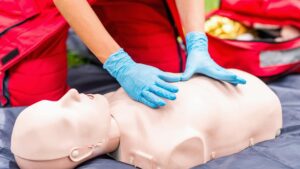

Sudden cardiac arrest is the leading cause of sudden death in Canada, claiming approximately 35,000 lives outside hospital each year, with a national survival rate of only 10 percent. Immediate bystander CPR can double or triple that survival rate, and combining High-Performance CPR with early AED deployment within 3 to 5 minutes can push survival as high as 75 percent. Canadian Red Cross CPR and AED certification is available to everyone through in-person and blended learning formats, and is a legal requirement for most Canadian workplaces under WSIB Regulation 1101 and CSA Z1210:24.
Find a CPR and First Aid Course Near You
Canadian Red Cross certified courses at 30+ locations across Canada for individuals, families, and teams.
35,000
out-of-hospital cardiac arrests in Canada each year
75%
survival rate when CPR and AED are used within 3 to 5 minutes
~10%
national survival rate for cardiac arrest without bystander CPR
Why Is CPR Training Essential for Cardiac Emergencies in Canada?
There is a common saying that “home is where the heart is,” and unfortunately, that phrase takes on a deeply literal and urgent meaning when you consider the clinical statistics surrounding sudden cardiac arrest. The vast majority of cardiac emergencies happen at home, where victims are often surrounded by family members, friends, or roommates who have no idea how to physically intervene. Without immediate action, the chances of survival drop by nearly 10 percent for every passing minute. Cardiac arrest is the leading cause of sudden death in Canada, and securing your CPR and AED certification is the definitive way to bridge that gap.
CPR training gives everyday people, not just medical professionals, the clinical skills to act decisively in those chaotic first moments. Adult basic life support forms the foundation of standardized resuscitation protocols, ensuring responders follow proven guidelines. CPR training is also a key component of emergency cardiovascular care, supporting a broader system designed to improve outcomes in cardiac emergencies. Whether you are a parent, a dedicated caregiver, or a professional needing to meet certification prerequisites for your career, learning CPR could mean the difference between neurological recovery and tragedy.
What Is Cardiac Arrest and Why Does Every Second Count?
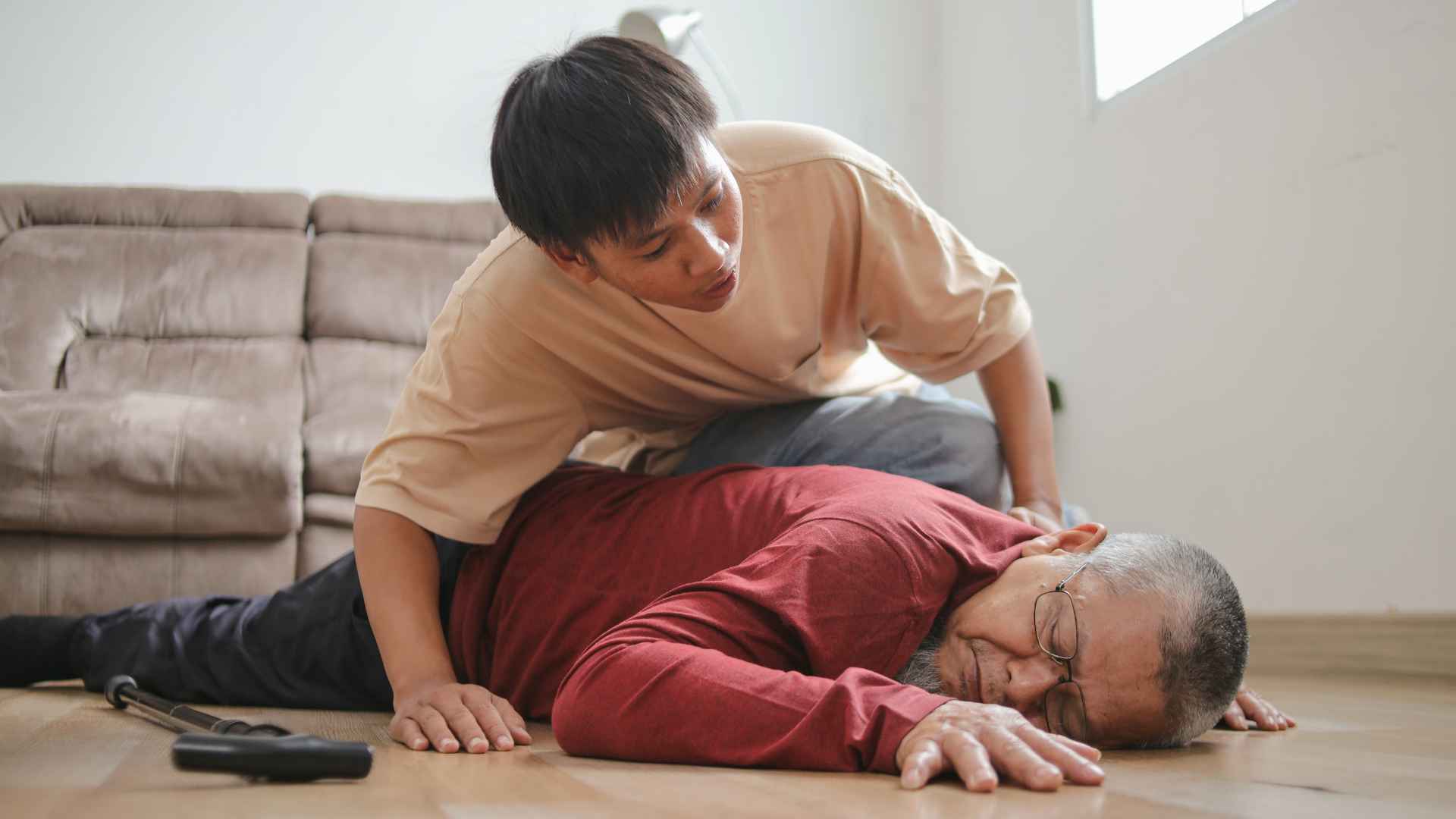
Cardiac arrest occurs when the heart’s electrical system malfunctions, causing it to suddenly stop beating effectively and cutting off blood flow to the brain and vital organs. It is critical to distinguish cardiac arrest from a heart attack, which is a “plumbing” problem involving a physical blockage in a coronary artery. While a heart attack victim is usually conscious and can communicate, a person in cardiac arrest will collapse instantly, lose consciousness, and stop breathing normally. Without immediate intervention, irreversible brain damage begins within four to six minutes.
In Canada, approximately 35,000 cardiac arrests occur outside of hospitals each year. Responding in an out-of-hospital setting presents unique challenges including limited equipment and no immediate access to advanced care. The national survival rate remains alarmingly low, hovering around 10 percent. One of the most common causes of cardiac arrest is ventricular fibrillation, a life-threatening arrhythmia in which the heart’s lower chambers quiver chaotically instead of pumping blood. VF cannot be corrected by CPR alone; it requires prompt defibrillation to restore normal heart rhythm. When a bystander performs High-Performance CPR immediately, however, survival rates can double or even triple by maintaining blood flow to the brain until an AED arrives.
This is why mastering the Chest Compression Fraction (CCF), the percentage of total rescue time spent actively pumping the heart, is a core focus of the 2026 curriculum. Maximizing CCF keeps hemodynamic pressure high, ensuring the brain receives a steady supply of oxygenated blood throughout the resuscitation attempt.
Understanding Heart Disease: The Root Cause of Cardiac Emergencies
Heart disease is the most common cause behind sudden cardiac arrest and heart attacks in Canada. When the heart muscle cannot pump enough blood due to narrowed or blocked coronary arteries, the risk of a cardiac emergency rises dramatically. Factors such as high blood pressure, elevated cholesterol, diabetes, and smoking all contribute to the development of heart disease, silently increasing the risk of a life-threatening event over years or even decades.
While CPR and AED use are the critical response to cardiac arrest once it occurs, understanding and addressing these root causes is equally important for long-term community health. By managing risk factors and prioritizing cardiovascular health, individuals can meaningfully reduce their personal risk. Prevention, awareness, and the practical skills to respond when prevention is not enough together form the best defense against the devastating impact of heart disease in Canada.
How Does AED Integration Change Cardiac Arrest Survival Rates?
An Automated External Defibrillator (AED) is a portable device that delivers a controlled electrical shock to restore the heart’s normal rhythm during ventricular fibrillation or other shockable rhythms. When high-quality chest compressions are combined with early defibrillation within the first 3 to 5 minutes, survival rates can soar as high as 75 percent. If an AED is available, deploy it as soon as possible; every second of delay reduces the chance of a successful shock. It is also critical to activate emergency medical services immediately so advanced care arrives as quickly as possible.
Many public spaces across Canada, including transit stations, community centres, and shopping malls, now have AEDs available. But they are useless if no one on site knows how to apply the pads and follow the voice prompts. A comprehensive CPR and AED training course removes the fear and hesitation that prevent bystanders from using these devices in the critical first minutes.
Why Are Most Cardiac Emergencies More Dangerous at Home Than in Public?
One of the most compelling reasons to pursue training is the reality of where cardiac arrests actually occur. According to the Heart and Stroke Foundation of Canada, nearly 80 percent of cardiac arrests happen in private residences. Cardiac arrest at home can arise from a range of causes including underlying heart disease, drug overdose, or other acute medical events, making home preparedness essential for everyone. Ironically, you are statistically better protected in a public airport or a large office building, because those environments often have security guards with Intermediate / Standard First Aid training and AEDs within reach. At home, you are the primary responder for your spouse, parent, or child, and there is no security guard coming.
What Do You Learn in a 2026 CPR Training Course?
A modern Canadian Red Cross course is rigorous and heavily focused on hands-on proficiency. Successful completion of both the written and practical skills assessments is required for certification. During your practical skills assessment, you will be tested on measurable clinical performance, not just effort:
- High-Quality Compressions: Achieving a depth of at least 2 inches for adults at a rate of 100 to 120 compressions per minute, placing hands on the lower half of the chest and pushing hard and fast.
- Airway Management: Using barrier devices such as pocket masks to deliver rescue breaths safely and effectively, including proper two-breath cycles after each compression sequence.
- Rapid AED Deployment: Setting up the device in under 30 seconds to maximize the CCF and minimize time without compressions.
- Team Resuscitation: Coordinating with other bystanders to prevent rescuer fatigue, switch roles smoothly, and maintain a high CCF throughout the rescue.
- Written Examination: Demonstrating your understanding of the legal and clinical protocols of emergency response, including CSA Z1210:24 guidelines.
Compression-only CPR is also introduced as an effective interim technique for situations where rescue breathing is not possible, such as when a bystander is alone, untrained, or unable to use a barrier device.
Watch: How to Perform High-Quality CPR
Is CPR Training a Legal Requirement for Canadian Workplaces?
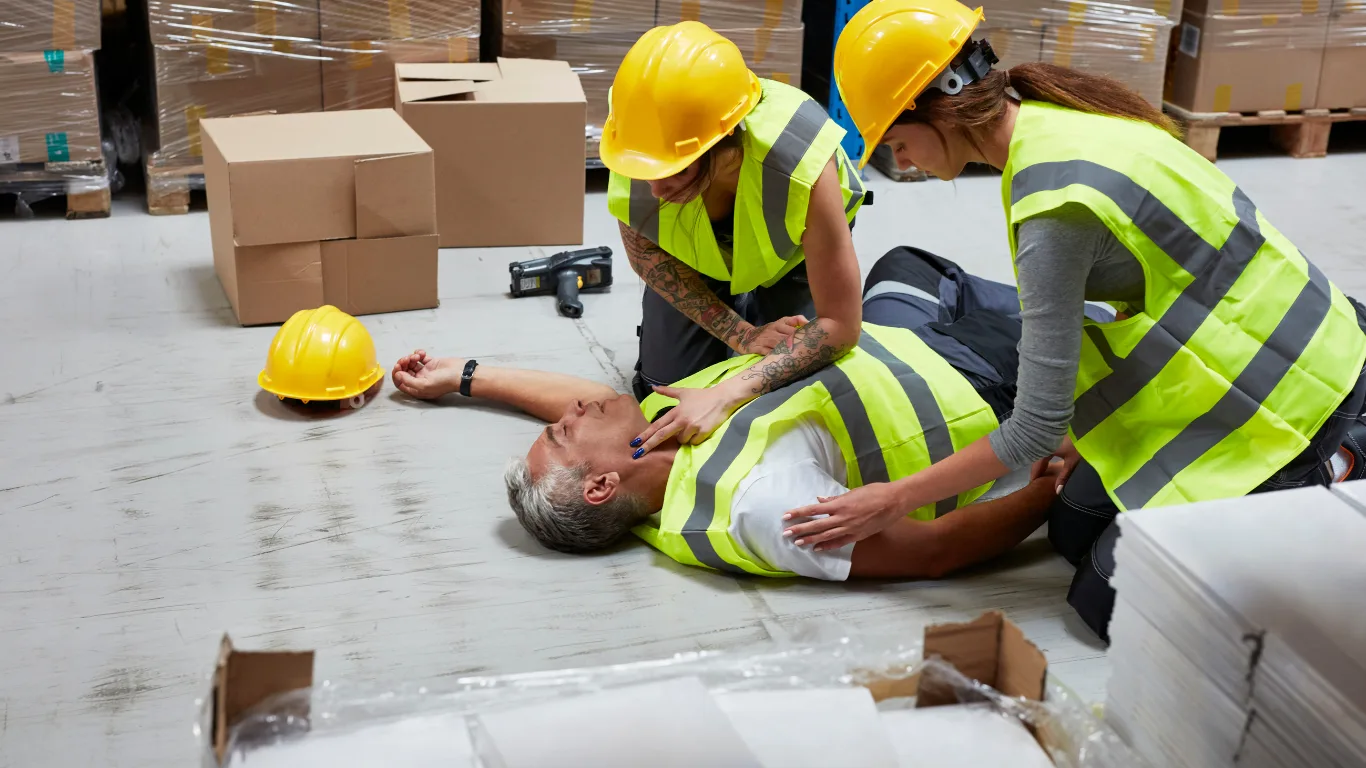
For Canadian businesses, CPR training is a strict legal mandate. Provincial boards such as WSIB in Ontario enforce Regulation 1101, which requires a specific ratio of trained responders based on shift size. Failure to maintain unexpired credentials can lead to significant Ministry of Labour fines and serious corporate liability in the event of a workplace medical emergency.
Coast2Coast offers private group training for businesses across Canada. Our instructors bring high-fidelity feedback manikins directly to your facility, ensuring your team is trained in an environment that mirrors their actual workspace. This proactive approach also frequently helps organizations secure lower commercial insurance premiums.
Who Needs CPR Certification in Canada?
While every Canadian benefits from CPR training, it is a non-negotiable professional requirement for a wide range of careers:
- Security Guards: Must hold Intermediate / Standard First Aid to keep their provincial licences valid and effectively manage public medical crises.
- Daycare Staff and Teachers: Legally required to hold CPR Level C to manage pediatric emergencies including infant choking and anaphylaxis.
- Healthcare Providers: Nurses, paramedics, and dental hygienists require Basic Life Support (BLS) to master team-based resuscitation and oxygen administration.
- Construction and Industrial Workers: High-risk job sites demand leaders who can manage trauma and deploy AEDs in remote or physically demanding conditions.
Get Your CPR and AED Certification Today
Hands-on CPR and AED training with Canadian Red Cross certified instructors for individuals and groups.
What Flexible CPR Training Formats Are Available?
To make certification accessible for busy Canadians, Coast2Coast offers a popular blended online learning format. This allows you to complete the theoretical modules online at your own pace from any device. Once finished, you attend a shortened in-person session focused entirely on the practical skills assessment. This ensures you get the hands-on experience required for WSIB compliance without committing to two full days in a classroom.
For organizations training large groups, private on-site sessions bring the course directly to your facility. Instructors customize scenarios to your actual environment, making the training far more effective than a generic off-site course.
How Can You Reduce Your Risk of Cardiac Arrest?
Preventing cardiac arrest starts with healthy lifestyle choices and staying alert to warning signs of cardiovascular trouble. Regular physical activity, a balanced diet low in saturated fats and sodium, and avoiding smoking are proven ways to meaningfully lower your risk of heart disease and the cardiac emergencies that follow from it. Recognizing early symptoms such as chest pain, shortness of breath, unexplained fatigue, or sudden dizziness is equally important, as these may signal a serious problem requiring immediate medical attention.
In the event of a cardiac emergency, immediate bystander CPR combined with AED use dramatically increases the chance of survival and reduces the risk of permanent brain injury. CPR training empowers bystanders to act quickly and confidently rather than freezing in panic. By combining prevention, awareness, and practical response skills, Canadians can meaningfully protect themselves and their loved ones from the devastating consequences of sudden cardiac arrest.
Train Your Entire Team On-Site
Private group CPR and first aid training delivered at your workplace for teams of any size.
Key Takeaway
Cardiac arrest is an equal-opportunity emergency that strikes at home far more often than in public settings, precisely where no trained responder will arrive in time to help. Immediate bystander CPR keeps blood moving to the brain while early AED deployment can restore a shockable heart rhythm, together pushing survival rates from 10 percent to as high as 75 percent. Getting your Canadian Red Cross CPR certification is not a passive safety gesture; it is an active, practiced skill that could be the only thing standing between a family member’s survival and a tragedy that could have been prevented.
Get Intermediate / Standard First Aid and CPR Certified Today
Two-day Canadian Red Cross Intermediate / Standard First Aid course satisfying CSA Z1210:24 and WSIB requirements across Canada.
Frequently Asked Questions: CPR Training and Cardiac Arrest in Canada 2026
More FAQs: Course Details, Compliance, Certificates, and Ventricular Fibrillation
Sources and Further Reading
- Heart and Stroke Foundation of Canada: Out-of-Hospital Cardiac Arrest Statistics (2024)
- CSA Group: CAN/CSA-Z1210:24 First Aid in the Workplace (National Standard of Canada)
- WSIB Ontario: Regulation 1101, First Aid Requirements (O. Reg. 1101)
- Canadian Red Cross: CPR and AED Course Guidelines, 2025 Curriculum Edition
Ashkon Pourheidary, B.Sc. (Hons) Neuroscience
Co-Founder, Coast2Coast First Aid & Aquatics
Ashkon has been a certified First Aid and CPR instructor since 2011 and an Instructor Trainer since 2013. He is also certified as an Emergency Medical Responder (EMR), Psychological First Aid, and Basic Life Support (BLS) instructor. Ashkon graduated with honours with a Bachelor of Science in Neuroscience from the University of Toronto in 2016. As co-founder of Coast2Coast First Aid & Aquatics, he has helped grow the organization to over 30 locations across Canada and into the United States, and has served on the First Aid Council for the Canadian Red Cross. Connect on LinkedIn