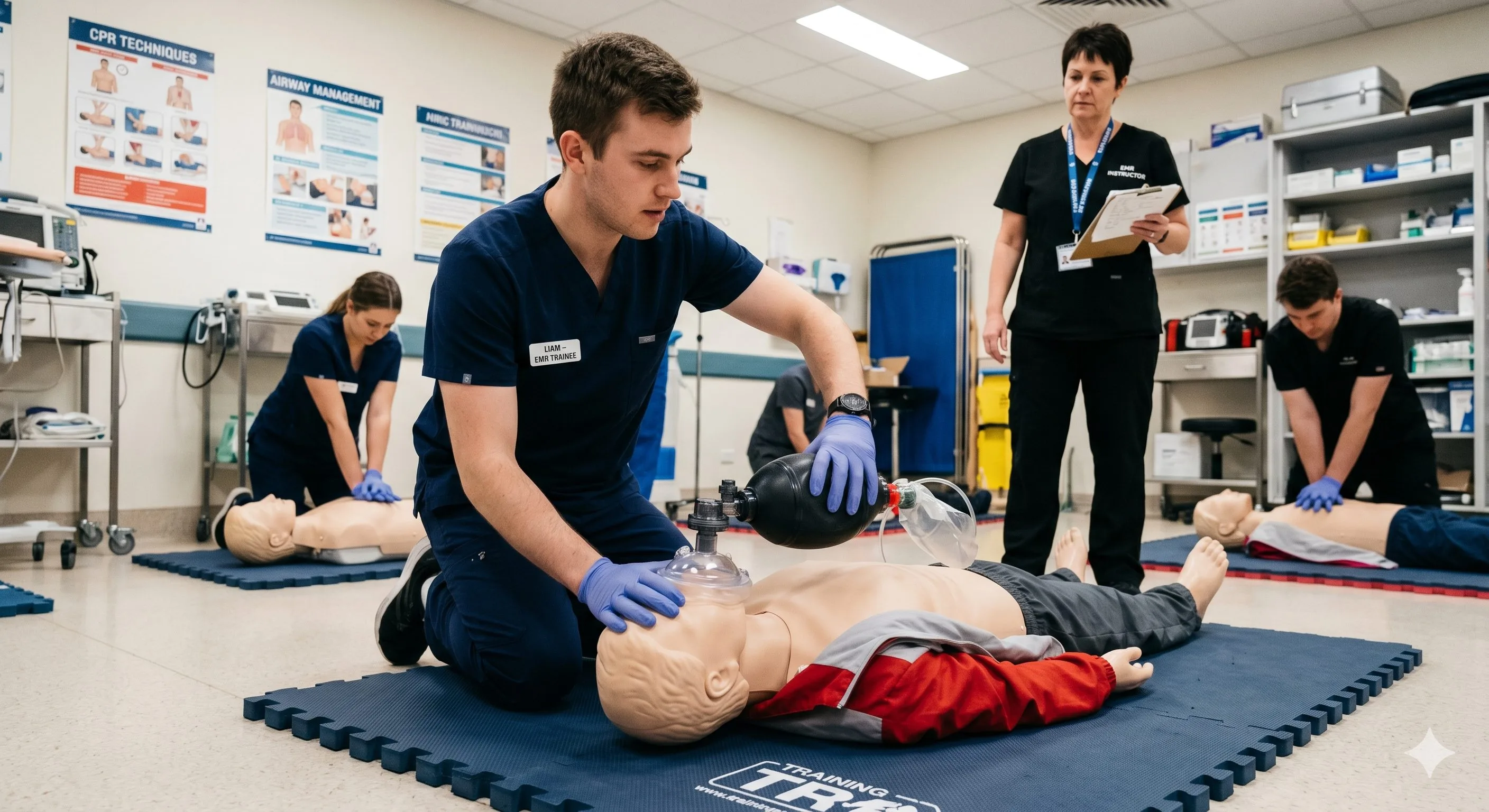
Infant CPR and Choking: A Parent’s Guide to Saving Your Baby’s Life

back blows on a choking baby

Why Every Parent and Caregiver Needs Infant CPR Training

The thought of an infant choking or becoming unresponsive is every parent’s worst nightmare. Yet the reality is that choking is one of the leading causes of injury and death among children under the age of four in Canada. Infants are particularly vulnerable because they explore the world by putting objects in their mouths, their airways are significantly smaller than those of older children or adults, and they have not yet developed the coordination to chew food thoroughly.

Knowing how to perform CPR on an infant and how to clear a choking infant’s airway are two of the most critical first aid skills a parent, grandparent, babysitter, or childcare professional can possess. Unlike adult CPR, infant CPR involves different hand positions, compression depths, and techniques that must be learned and practiced specifically for babies under one year of age.

How Infant CPR Differs from Adult CPR

Infant CPR follows the same general principles as adult CPR—maintain circulation and oxygenation until professional help arrives—but the technique is significantly different to account for the infant’s small body and fragile physiology.

For compression hand position, adult CPR uses the heel of both hands placed on the centre of the chest. Infant CPR uses only two fingers—the index and middle fingers—placed just below the nipple line on the centre of the breastbone. For healthcare providers performing two-rescuer infant CPR, the two-thumb encircling technique is preferred, where both thumbs press on the sternum while the hands encircle the infant’s torso.

Compression depth for adults is at least 5 centimetres, while infant compressions should depress the chest approximately 4 centimetres, roughly one-third of the chest depth. The compression rate remains the same at 100 to 120 compressions per minute for both adults and infants. The compression-to-breath ratio for single-rescuer infant CPR is 30 compressions to 2 breaths, identical to the adult ratio.

Rescue breaths for infants are delivered differently as well. Rather than tilting the head back significantly as you would for an adult, the infant’s head should be placed in a neutral position or only slightly tilted. Over-extending an infant’s neck can actually close the airway rather than open it. Breaths should be gentle puffs—just enough to make the chest visibly rise—rather than the fuller breaths given to adults. For infant rescue breaths, cover both the baby’s nose and mouth with your mouth to create a proper seal.

Did You Know?

Hands-on practice is the only way to learn proper infant CPR technique. Online-only courses cannot teach you the correct compression depth and hand position on an infant mannequin.

Book a Hands-On Course →

Step-by-Step: How to Perform Infant CPR

If you find an infant who is unresponsive and not breathing normally, follow these steps immediately.

Step 1: Check for responsiveness. Tap the bottom of the infant’s foot and shout their name. Never shake an infant, as this can cause serious brain injury. If the infant does not respond, they are unresponsive.

Step 2: Call 911. If you are alone, perform two minutes of CPR (approximately five cycles of 30 compressions and 2 breaths) before calling 911. If someone else is present, have them call 911 immediately while you begin CPR. This “CPR first” approach for infants differs from the adult protocol because the most common cause of cardiac arrest in infants is a breathing emergency rather than a heart problem.

Step 3: Place the infant on a firm, flat surface. A table, floor, or firm mattress works well. Ensure the surface is stable so your compressions are effective.

Step 4: Open the airway. Place one hand on the infant’s forehead and gently tilt the head into a neutral or slightly extended position. Lift the chin with the fingertips of your other hand. Do not press on the soft tissue under the chin, as this can obstruct the airway.

Step 5: Check for breathing. Look, listen, and feel for normal breathing for no more than 10 seconds. Occasional gasps are not normal breathing—if the infant is only gasping, treat them as not breathing.

Step 6: Give 2 rescue breaths. Cover the infant’s mouth and nose with your mouth. Give two gentle puffs of air, each lasting about one second, watching for the chest to rise. If the chest does not rise, reposition the head and try again.

Step 7: Begin chest compressions. Place two fingers on the centre of the infant’s chest, just below the nipple line. Press down approximately 4 centimetres (one-third of the chest depth) at a rate of 100 to 120 compressions per minute. Allow the chest to fully recoil between each compression.

Step 8: Continue cycles of 30:2. Alternate 30 compressions with 2 rescue breaths. Continue CPR until the infant begins breathing on their own, emergency medical services arrive and take over, an AED becomes available and advises a shock, or you become too physically exhausted to continue. Instructors at Coast2Coast’s Brampton facility emphasize that high-quality compressions are more important than perfect technique—push hard, push fast, and do not stop.

How to Help a Choking Infant

Choking in infants requires a different approach than the abdominal thrusts (Heimlich manoeuvre) used for adults and older children. Because of the infant’s size and the risk of internal organ damage, back blows and chest thrusts are used instead.

Step 1: Confirm the infant is choking. A choking infant may be unable to cry, cough, or breathe. Their skin may turn blue or dusky. If the infant can cough forcefully, encourage them to keep coughing—do not interfere. Only intervene if the infant cannot cough, cry, or breathe effectively.

Step 2: Position the infant face-down on your forearm. Support the infant’s head and jaw with your hand, keeping the head lower than the chest. Rest your forearm on your thigh for support.

Step 3: Deliver 5 back blows. Using the heel of your free hand, deliver five firm back blows between the infant’s shoulder blades. Each blow should be a distinct, forceful strike designed to dislodge the object.

Step 4: Turn the infant face-up. Supporting the head and neck, carefully turn the infant onto their back on your other forearm, again keeping the head lower than the chest.

Step 5: Deliver 5 chest thrusts. Place two fingers on the centre of the chest, just below the nipple line (the same position used for infant CPR compressions). Deliver five quick chest thrusts, pressing down approximately 4 centimetres each time.

Step 6: Repeat until the object is dislodged. Continue alternating five back blows and five chest thrusts until the object comes out, the infant begins to cry or breathe, or the infant becomes unresponsive. If the infant becomes unresponsive, immediately begin infant CPR and call 911 if not already done.

Common Choking Hazards for Infants

Prevention is always the best strategy. Understanding what commonly causes infant choking helps parents and caregivers create a safer environment. Food items that frequently cause choking in infants include hot dogs and sausages (particularly when cut into round coins rather than lengthwise strips), whole grapes, raw carrots, popcorn, nuts and seeds, chunks of meat or cheese, hard candy, chewing gum, and spoonfuls of peanut butter.

Non-food items that pose choking risks include small toy parts, buttons, coins, batteries (particularly button batteries, which also pose a chemical burn risk), balloons, pen caps, and small balls. The general guideline is that any object small enough to fit through a toilet paper tube is a potential choking hazard for an infant or toddler. Learning about child safety through a comprehensive first aid course helps parents identify and mitigate these risks before an emergency occurs.

Register for CPR or First Aid Training

Register today for a CPR or First Aid training course at one of our 30+ locations across Canada and the U.S. Check out our facilities and book your spot now.

Register Now

When to Seek Formal Training

Reading about infant CPR and choking response is a valuable starting point, but it is not a substitute for hands-on training with qualified instructors. The physical techniques involved in infant CPR—compression depth, hand position, breath volume, and head positioning—must be practiced on a mannequin under expert supervision to develop true competency and confidence.

Coast2Coast First Aid & Aquatics offers Standard First Aid and CPR Level C courses that include dedicated modules on infant and child emergencies, choking response for all age groups, and AED operation. These courses are available at over 30 locations across Canada—including Hamilton, Kitchener, Edmonton, and Oakville—and in the United States at our Los Angeles location. New parents, grandparents, babysitters, daycare workers, and anyone who cares for infants or young children should prioritize getting certified.

Conclusion

Infant CPR and choking response are skills that every parent and caregiver should learn before they ever need to use them. The techniques differ significantly from adult CPR, and proper training ensures that you can act confidently and correctly in the critical minutes before paramedics arrive. Whether your baby is six weeks old or ten months old, whether you are a first-time parent or an experienced grandparent, the time to learn these skills is now—not during an emergency.

A

About the Author

Ashkon Pourheidary, B.Sc. (Hons) — Co-Founder, Coast2Coast First Aid & Aquatics

Ashkon has been a certified First Aid and CPR instructor since 2011 and an Instructor Trainer since 2013. He is also a certified Emergency Medical Responder (EMR) instructor, Psychological First Aid instructor, and BLS (Basic Life Support) instructor. Ashkon graduated with honours with a Bachelor of Science in Neuroscience from the University of Toronto in 2016. As co-founder of Coast2Coast First Aid & Aquatics, he has helped grow the organization to over 30 locations across Canada and into the United States. Ashkon has served on the First Aid Council for the Canadian Red Cross. He spends his time coaching the team of over 100 instructors at Coast2Coast to ensure that students training at Coast2Coast locations receive the best training experience. Connect on LinkedIn

How to Use an EpiPen: A Step-by-Step First Aid Guide

What Is an EpiPen and Why Does It Matter?

An EpiPen is a brand-name auto-injector that delivers a pre-measured dose of epinephrine (adrenaline) to a person experiencing a severe allergic reaction known as anaphylaxis. Anaphylaxis is a life-threatening emergency that can cause the airway to swell shut, blood pressure to drop dangerously low, and the body to go into shock within minutes. Without prompt treatment with epinephrine, anaphylaxis can be fatal.

Despite the widespread availability of EpiPens in Canadian schools, workplaces, and homes, many people have never been trained to use one. Studies consistently show that bystanders hesitate to administer epinephrine because they are unsure of the correct technique, afraid of causing harm, or do not recognize the signs of anaphylaxis in time. This hesitation costs lives every year. Understanding how to use an EpiPen correctly is one of the most important first aid skills anyone can learn.

Recognizing Anaphylaxis: When to Use an EpiPen

Before you can use an EpiPen, you need to know when to use it. Anaphylaxis typically develops rapidly after exposure to a trigger allergen. The most common triggers include food allergens such as peanuts, tree nuts, shellfish, milk, and eggs, as well as insect stings from bees and wasps, certain medications including antibiotics and non-steroidal anti-inflammatory drugs, and latex.

The signs and symptoms of anaphylaxis can appear within seconds to minutes of exposure and may include difficulty breathing or wheezing, swelling of the throat, tongue, or lips, a sudden drop in blood pressure causing dizziness or fainting, widespread hives or skin flushing, nausea, vomiting, or abdominal cramps, a feeling of impending doom, and rapid or weak pulse. If you observe two or more body systems being affected simultaneously—for example, skin symptoms combined with breathing difficulty—treat the situation as anaphylaxis and prepare to use the EpiPen immediately.

Step-by-Step Guide: How to Use an EpiPen

Using an EpiPen is designed to be straightforward, even for people with no medical training. The device is engineered for emergency use by laypeople. Follow these steps carefully to administer epinephrine correctly.

Step 1: Call 911 immediately. Even if you plan to administer the EpiPen right away, call emergency medical services first or have someone else call while you prepare the injector. Epinephrine provides temporary relief, and the person will need professional medical emergency care afterward.

Step 2: Remove the EpiPen from its carrier tube. Flip open the cap of the carrier tube and slide the auto-injector out. Do not remove the blue safety cap until you are ready to inject.

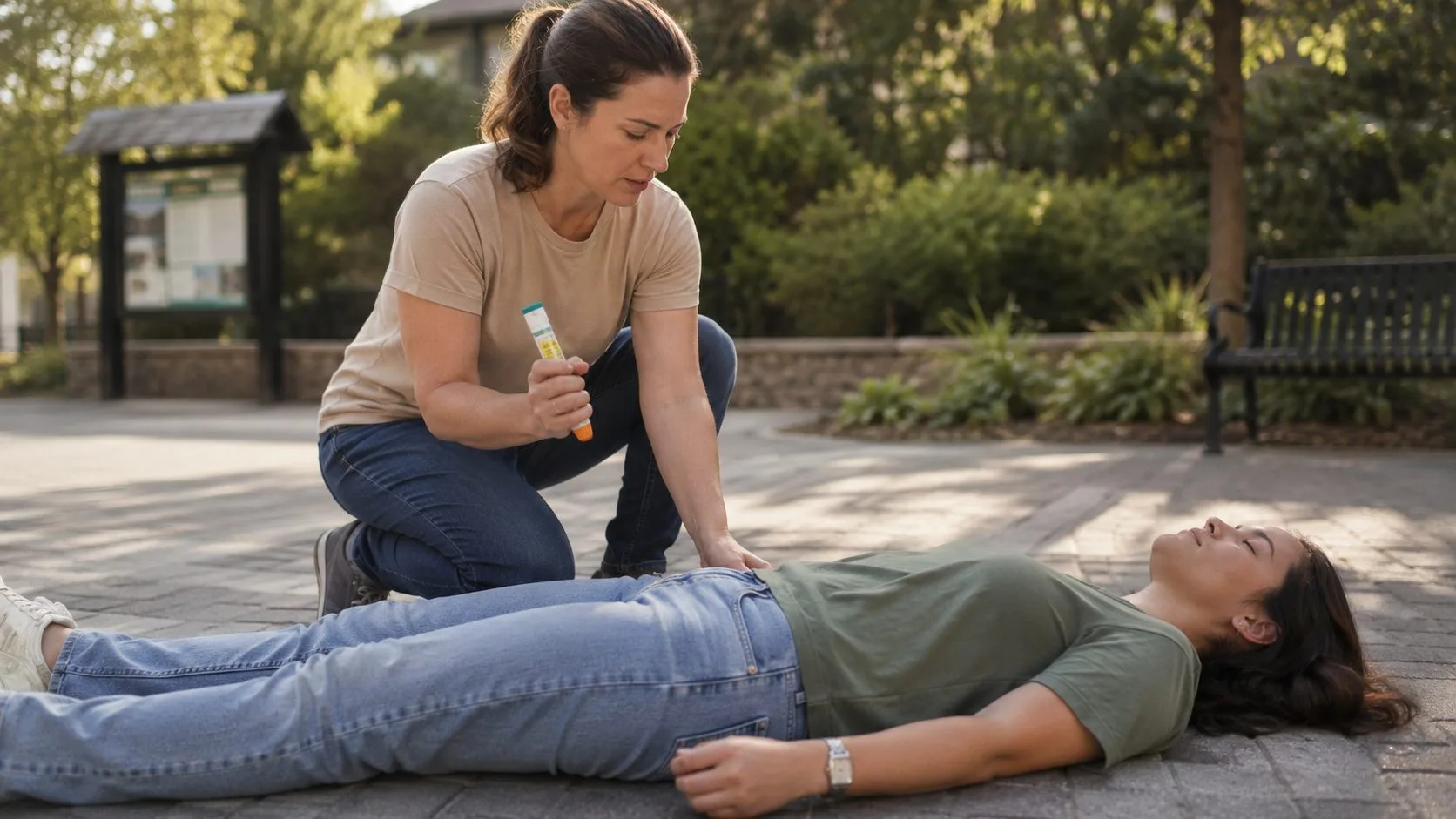
Step 3: Grip the EpiPen firmly. Hold the EpiPen in your dominant hand with your fist wrapped around the middle of the device. The orange tip should point downward, and the blue safety cap should face upward. Remember the phrase “blue to the sky, orange to the thigh.”

Step 4: Remove the blue safety cap. Pull the blue safety cap straight off with your other hand. Do not bend or twist it. Do not touch the orange tip, as this is where the needle deploys.

Step 5: Inject into the outer mid-thigh. Swing the orange tip firmly into the outer mid-thigh at a 90-degree angle. You can inject through clothing—there is no need to remove pants or jeans. The injection site should be on the outer portion of the thigh, roughly halfway between the hip and the knee. Press firmly until you hear or feel a click, which indicates the needle has deployed and the epinephrine is being delivered.

Step 6: Hold in place for 10 seconds. Keep the EpiPen pressed firmly against the thigh for a full 10 seconds to ensure the complete dose is delivered. Count slowly to ten before removing the device.

Step 7: Remove and massage the injection site. Pull the EpiPen straight out from the thigh. The orange tip will extend to cover the needle automatically. Gently massage the injection site for 10 seconds to help the medication absorb into the bloodstream more quickly.

Step 8: Note the time and monitor the person. Record the time of the injection. Continue monitoring the person’s condition until emergency medical services arrive. If symptoms do not improve or worsen after 5 to 15 minutes, a second EpiPen may be administered if available. Place the person in a comfortable position—if they are having difficulty breathing, allow them to sit upright. If they are feeling faint or dizzy, lay them down and elevate their legs to manage shock.

Register for CPR or First Aid Training

Register today for a CPR or First Aid training course at one of our 30+ locations across Canada and the U.S. Check out our facilities and book your spot now.

Register Now

Common Mistakes When Using an EpiPen

Even with clear instructions, people make preventable errors when using an EpiPen under the stress of a real emergency. Being aware of these common mistakes will help you avoid them when it matters most.

The most frequent error is injecting into the wrong location. The EpiPen should always be injected into the outer mid-thigh—never into the buttocks, arms, hands, feet, or veins. Injecting into the wrong area can reduce the medication’s effectiveness or cause serious tissue damage, particularly if injected into the fingers or hands, where reduced blood flow can lead to tissue death.

Another common mistake is not holding the device in place long enough. Many people instinctively pull the EpiPen away immediately after feeling the click, but the medication requires a full 10 seconds to fully deploy. Removing it too soon means the person receives only a partial dose.

Some people accidentally inject themselves in the thumb by placing their thumb over the orange tip while trying to remove the blue safety cap. Always keep your fingers and thumbs clear of both ends of the device. If you accidentally inject yourself, seek medical attention immediately, as epinephrine in the thumb can restrict blood flow to the digit.

Finally, many people do not call 911 before or immediately after using the EpiPen. Epinephrine’s effects are temporary—typically lasting 15 to 20 minutes—and the allergic reaction can return once the medication wears off. This rebound reaction, known as a biphasic reaction, occurs in up to 20 percent of anaphylaxis cases. Hospital monitoring for at least four to six hours after an episode is strongly recommended by the Canadian medical community.

EpiPen Storage and Maintenance

An EpiPen is only useful in an emergency if it is properly stored and not expired. Epinephrine degrades over time and when exposed to extreme temperatures or direct sunlight. Store your EpiPen at room temperature between 15 and 25 degrees Celsius, away from direct heat and sunlight. Do not refrigerate or freeze the device, and do not store it in a car during summer or winter months when temperatures can reach extremes.

Check the expiration date on your EpiPen regularly. In Canada, EpiPens typically have a shelf life of 12 to 18 months from the date of manufacture. Before each use, look through the viewing window on the device to verify that the liquid inside is clear and colourless. If the solution appears discoloured, cloudy, or contains particles, the EpiPen should be replaced. Training courses offered at Coast2Coast’s Toronto training centre include hands-on practice with EpiPen trainers so you can build confidence without the pressure of a real emergency.

Who Should Carry an EpiPen?

Anyone who has been diagnosed with a severe allergy that puts them at risk of anaphylaxis should carry at least two EpiPens at all times. Carrying two devices is recommended because a single dose may not be sufficient to fully reverse a severe reaction, and a second dose may be needed if symptoms return before emergency services arrive.

Parents of children with known allergies should ensure that EpiPens are available at home, at school, and during all activities outside the home. In many Canadian provinces, schools are required to have anaphylaxis policies in place, and teachers and staff should be trained in EpiPen administration. Workplaces that handle food, operate in outdoor environments, or employ individuals with known allergies should also maintain accessible EpiPens and ensure that trained first aiders are available on site.

Even if you do not have a personal allergy, learning to use an EpiPen is valuable because you may be the only trained person present when a coworker, friend, family member, or stranger experiences anaphylaxis. First aid and CPR courses in Mississauga and across Canada include comprehensive allergy and anaphylaxis training as part of the standard curriculum.

Canadian Laws Protecting Good Samaritans Who Use an EpiPen

Some bystanders hesitate to use an EpiPen on another person because they fear legal consequences if something goes wrong. In Canada, Good Samaritan legislation exists in every province and territory to protect individuals who provide emergency assistance in good faith. As long as you act reasonably and within the scope of your training, you are legally protected when administering an EpiPen to a person experiencing anaphylaxis.

This legal protection reinforces the importance of completing a certified first aid course. Choosing a reputable training provider like Coast2Coast First Aid & Aquatics ensures that your training is recognized by employers, regulatory bodies, and the legal system. With training centres available in Calgary, Ottawa, and Los Angeles, getting certified has never been more accessible.

Ready to learn life-saving skills? Coast2Coast’s Standard First Aid and CPR courses cover EpiPen administration, anaphylaxis response, and dozens of other emergency scenarios. Find a course near you →

Conclusion

Knowing how to use an EpiPen can mean the difference between life and death during an anaphylactic emergency. The steps are simple—remove, grip, pull the safety cap, inject into the outer thigh, hold for 10 seconds, and call 911—but they must be performed quickly and confidently under pressure. Regular first aid training builds that confidence and ensures your skills remain sharp when seconds count. Whether you are a parent, teacher, coach, healthcare professional, or simply someone who wants to be prepared, mastering EpiPen use is a critical part of your first aid toolkit.

A

About the Author

Ashkon Pourheidary, B.Sc. (Hons) — Co-Founder, Coast2Coast First Aid & Aquatics

Ashkon has been a certified First Aid and CPR instructor since 2011 and an Instructor Trainer since 2013. He is also a certified Emergency Medical Responder (EMR) instructor, Psychological First Aid instructor, and BLS (Basic Life Support) instructor. Ashkon graduated with honours with a Bachelor of Science in Neuroscience from the University of Toronto in 2016. As co-founder of Coast2Coast First Aid & Aquatics, he has helped grow the organization to over 30 locations across Canada and into the United States. Ashkon has served on the First Aid Council for the Canadian Red Cross. He spends his time coaching the team of over 100 instructors at Coast2Coast to ensure that students training at Coast2Coast locations receive the best training experience. Connect on LinkedIn

BLS vs CPR: What’s the Difference and Which Course Do You Need?

difference between bls cpr

Life-threatening emergencies can happen at any time, and it’s crucial to know how to respond quickly and effectively. If you’re not trained in emergency response, terms like “BLS” and “CPR” might sound confusing and even interchangeable. However, understanding the difference between these two life-saving certifications will help you be prepared and meet workplace requirements.

Continue reading

Free BLS, First Aid & CPR Course 2026 Guide to Get Certified for $0

Student filming a selfie video during a free first aid and CPR course training session at Coast2Coast First Aid & Aquatics. - How to Get Your BLS, First Aid & CPR Course for Free: The "Go Viral" Challenge (2026 Guide)
  • Executive Summary: The Deal at a Glance
  • The Offer: Register for a course, film your experience, and post it online.

  • The Goal: Hit 5,000 views on Instagram, TikTok OR 2,000 views on YouTube.

  • The Reward: A FULL REFUND of your course fee.

  • Eligible Courses: Standard First Aid, Emergency First Aid, CPR Level C, and Basic Life Support (BLS).

  • Locations: Toronto, Brampton, Ottawa, Calgary, Edmonton, and more.

free first aid bls course at a glance

We know that for students, job seekers, and healthcare professionals, training costs can add up. You are constantly searching for a free first aid and cpr course or a free bls course near me, only to find that most “free” options online are just informational videos that don’t offer the official WSIB-approved certification you need to actually get hired.

At Coast2Coast First Aid & Aquatics, we believe life-saving education should be accessible to everyone. That is why we are launching our biggest student-creator campaign ever. We are giving you the chance to turn your creativity into cash—literally.

Here is your complete guide on how to get official Red Cross training for $0, plus everything you need to know about choosing the right course.

How It Works: 4 Steps to a Free Course

You don’t need to be a professional influencer to qualify. You just need a smartphone and a little creativity during your training session.

1. Register for Your Course

Sign up for any of our eligible training sessions across Ontario or Alberta. You pay for the course upfront to secure your spot.

2. Film Your Experience

During your class (during break times or practice sessions, ensuring you don’t disrupt the class), capture content!

  • Film yourself practicing CPR on a mannequin.

  • Show off your bandaging skills.

  • Share a “Day in the Life” of getting certified.

3. Post & Tag Us

Upload your video to Instagram Reels, TikTok or YouTube Shorts.

4. Hit the Views & Get Paid

If your video hits 5,000 Views on Instagram, TikTok OR 2,000 Views on YouTube, email us at marketing [at] c2cfirstaidaquatics.com and mention that you have took part in this challenge and you have hit the mark by sending us the link! Once verified, we will issue a full refund to your original payment method.

(Terms and conditions apply. Views must be organic. Offer valid for a limited time.)

free first aid bls course steps

Why Are We Doing This?

We want to spread awareness about the importance of CPR and First Aid. When you search for a first aid and cpr course free, you often find non-accredited videos that won’t help you get a job. We want to change that.

By sharing your journey, you aren’t just getting a free cpr course; you are inspiring your friends and followers to learn skills that save lives.

Wait, Which Course Do I Need? (The Ultimate Guide)

Before you sign up and start filming, you need to make sure you are taking the right course. Choosing the wrong certification is the most common mistake students make.

Here is a simple breakdown to help you pick the perfect training for your needs.

1. Standard First Aid & CPR/AED Level C

  • Best For: Construction workers, daycare staff, lifeguards, and general workplace compliance.

  • What It Covers: This is our most comprehensive course. It covers everything from spinal injuries and bone fractures to severe bleeding and CPR for adults, children, and infants.

  • Validity: 3 Years.

2. Emergency First Aid & CPR/AED Level C

  • Best For: Security guards, fitness instructors, government employees, or those needing a basic overview.

  • What It Covers: A shorter, 1-day course focusing on immediate life-saving interventions like choking, CPR, and using an AED.

  • Validity: 3 Years.

3. Basic Life Support (BLS)

  • Best For: Healthcare professionals (Nurses, Dentists, Paramedics, Firefighters).

  • What It Covers: This is a high-intensity, fast-paced course that focuses on high-performance CPR, trauma response, and team dynamics in a clinical setting.

  • Validity: 1 Year (Annual renewal is required).

The “Blended Learning” Advantage

If you are looking for an online cpr course free of classroom time, “Blended Learning” is the closest you can get while still remaining certified.

How It Works:

  1. Online Theory: You complete the “textbook” portion of the course online, at your own pace, from the comfort of your home.

  2. In-Class Skills: You attend a shorter, focused in-person session to practice hands-on skills.

Why Students Love It:

  • Flexible: Study late at night or on weekends.

  • Efficient: Cut your classroom time in half.

  • WSIB & OHS Approved: Yes, it is fully recognized by employers in Ontario and Alberta.

Tips to Go Viral (and Get Your Refund)

Want to hit those 5,000 views fast to secure your refund? Here are some content ideas that perform well on social media:

  • The “Stayin’ Alive” Challenge: Perform CPR compressions to the beat of the famous Bee Gees song.

  • Nursing Student Vlogs: Show the reality of your BLS course online free study session vs. the intense in-class practical training.

  • “Did You Know?”: Share a surprising fact you learned from your Coast2Coast instructor (e.g., “I bet you didn’t know this about using an AED…”).

  • Local Vibes: Tag your location! Whether it’s First Aid in Vaughan, CPR in London, or Training in Mississauga, local content trends faster.

(Terms and conditions apply. Views must be organic. Offer valid for a limited time.)

free first aid bls course gap

Frequently Asked Questions (FAQ)

We know you have questions. Here are the answers to the most common queries about our courses and the refund offer.

About the “Free Course” Offer

1. Is this really a free first aid and cpr course with certificate? Yes! You pay upfront to reserve your seat and receive your official Canadian Red Cross certificate. However, if you meet the social media view requirements, we refund 100% of your fee, effectively making it a free cpr course with certificate.

2. Can I find a free bls course near me? Official BLS (Basic Life Support) training usually requires payment because it is a professional-level certification. However, our campaign applies to BLS courses too! If you are a nursing student looking for a free bls course, this challenge is your best route to getting certified for free.

3. Does this apply to the online cpr course free portion? Our courses are “Blended Learning,” meaning you do half online and half in-class. The refund covers the entire cost of the training, including the online access and the in-person workshop.

4. I am looking for a free cpr refresher course. Does this count? Absolutely. Whether it is a full certification or a cpr refresher course online free of charge (via refund), the challenge applies as long as you are registered in a Coast2Coast session.

5. Is this available in my city? This offer is valid at all Coast2Coast locations. So whether you are searching for a free cpr course Toronto, free cpr course Ottawa, free cpr course Calgary, or a free cpr course Belleville, you are eligible to participate!

About Certification & Validity

6. Is the certificate WSIB approved? Yes. Unlike many generic online free cpr course options you find on the web, our training is fully WSIB (Ontario) and OHS (Alberta) approved.

7. How long is my First Aid certificate valid? For Standard and Emergency First Aid, your certificate is valid for 3 years. If you take Basic Life Support (BLS), you must renew it every 1 year.

8. Can I recertify instead of taking the full course? Yes! If your current Standard First Aid certificate has not expired yet, you can take a shorter Recertification Course. This saves you time and money.

9. Can I do the cpr course online free without attending class? No. To get the official certificate, you must attend the in-class skills session. Purely online courses are rarely accepted by employers in Canada.

10. What if I lose my certificate? All Canadian Red Cross certificates are digital. You can access your profile online at any time to download a new copy for free.

Logistics & Details

11. Do I need to bring my own equipment? No. We provide all mannequins, AED trainers, and first aid supplies.

12. Can I get a free cpr course with certificate if I am not a student? Yes! This offer is open to everyone—students, parents, teachers, and professionals.

13. What if I am taking the course for a group? The refund applies to the individual who posts the content. If you book for a group, each person can post their own video to try and earn their own refund.

14. Does the bls course free offer include the manual? The digital eBook is included in your course registration.

15. How long does the refund take? Once you email us your video link and we verify the views, the refund is typically processed within 5-10 business days.

16. Can I combine this with other promo codes? Since the reward is a full refund, it cannot be combined with other discounts. You are getting the whole course for free!

17. What hashtags should I use to help it go viral? We recommend using local tags like #TorontoLife, #CalgaryViews, or #StudentLife alongside our official tag #Coast2CoastFirstAid.

18. Where do I send my video link? Send your booking ID and the link to your viral video to our marketing team email (listed on our contact page) with the subject line “Go Viral Refund Claim.”

19. What if I don’t hit the view count? You still walk away with a valuable, federally recognized certification that boosts your resume. You have nothing to lose!

20. Can I post on TikTok instead? Currently, our tracking is set up for Instagram Reels, TikTok and YouTube Shorts as they allow for the best reach verification. However, feel free to cross-post to TikTok for extra exposure!

Ready to Go Viral?

Don’t settle for an unaccredited online free cpr course that your employer won’t accept. Get the Gold Standard of Red Cross training, have fun filming it, and let us foot the bill.

Find Your Course & Register Now

(Terms and conditions apply. Views must be organic. Offer valid for a limited time.)

Regina Winter Safety and First Aid Guide

woman who has fallen on ice in the winter time

Winter in Regina brings beauty and hidden hazards. Learn essential winter safety tips for frostbite, hypothermia, slips, falls, and even carbon monoxide risks. With proper preparation and first aid training in Regina, you can protect yourself, your family, and coworkers during the coldest months.

Continue reading

Why CPR Training Matters for Everyone

CPR course with a student performing CPR technique on a mannequin and other students and instructor overseeing

Learn common misconceptions about CPR and why learning it is just as essential as having a driver’s license. You’ll discover how CPR works, why quick action saves lives, and how simple it is to get trained. If you’ve been on the fence about CPR certification, this guide shows why it matters and how it can prepare you to act confidently in an emergency.

Continue reading