
Medical shock is a life-threatening failure of the circulatory system in which the body cannot deliver enough oxygenated blood to vital organs, leading to rapid deterioration and death without prompt intervention. There are six types of shock taught in Canadian Red Cross first aid courses, each with a distinct cause, and all share early warning signs including pale, cool, clammy skin, a rapid weak pulse, and fast shallow breathing. First aid treatment centers on calling 911 immediately, controlling bleeding, applying the Shock Position if no spinal injury is suspected, and keeping the victim warm until emergency services arrive.
Find a First Aid Course Near You
Canadian Red Cross certified courses including shock management at 30+ locations across Canada.
6 Types
of medical shock covered in the Canadian Red Cross Intermediate / Standard First Aid curriculum
4–6 min
before irreversible brain damage begins without adequate blood circulation
3 Years
validity of a Canadian Red Cross first aid and CPR certificate
What Is Medical Shock and Why Is It So Dangerous?
Shock is one of the most dangerous and commonly misunderstood conditions that a first aider may encounter in the field. In everyday language, people often use the word “shock” to describe emotional surprise or psychological distress. However, in strict medical terms, shock is a life-threatening physiological condition and a medical emergency that requires immediate action. It occurs when the body’s circulatory system fails, preventing enough oxygenated blood from reaching vital organs. Without prompt recognition and immediate clinical treatment, shock can rapidly progress to multiple organ failure and death, even when the original injury or illness might have been survivable.
Understanding how to recognize the clinical signs of shock and knowing the appropriate first aid response is an essential skill that every person should possess. At Coast2Coast First Aid & Aquatics, shock management is a core, mandatory component of all our Intermediate / Standard First Aid certification courses because of how frequently it accompanies other severe injuries and medical emergencies. In a medical emergency, the best way to treat shock is to call 911 immediately and provide first aid to maintain blood flow to vital organs until professional help arrives.
What Happens Inside the Body During Medical Shock?
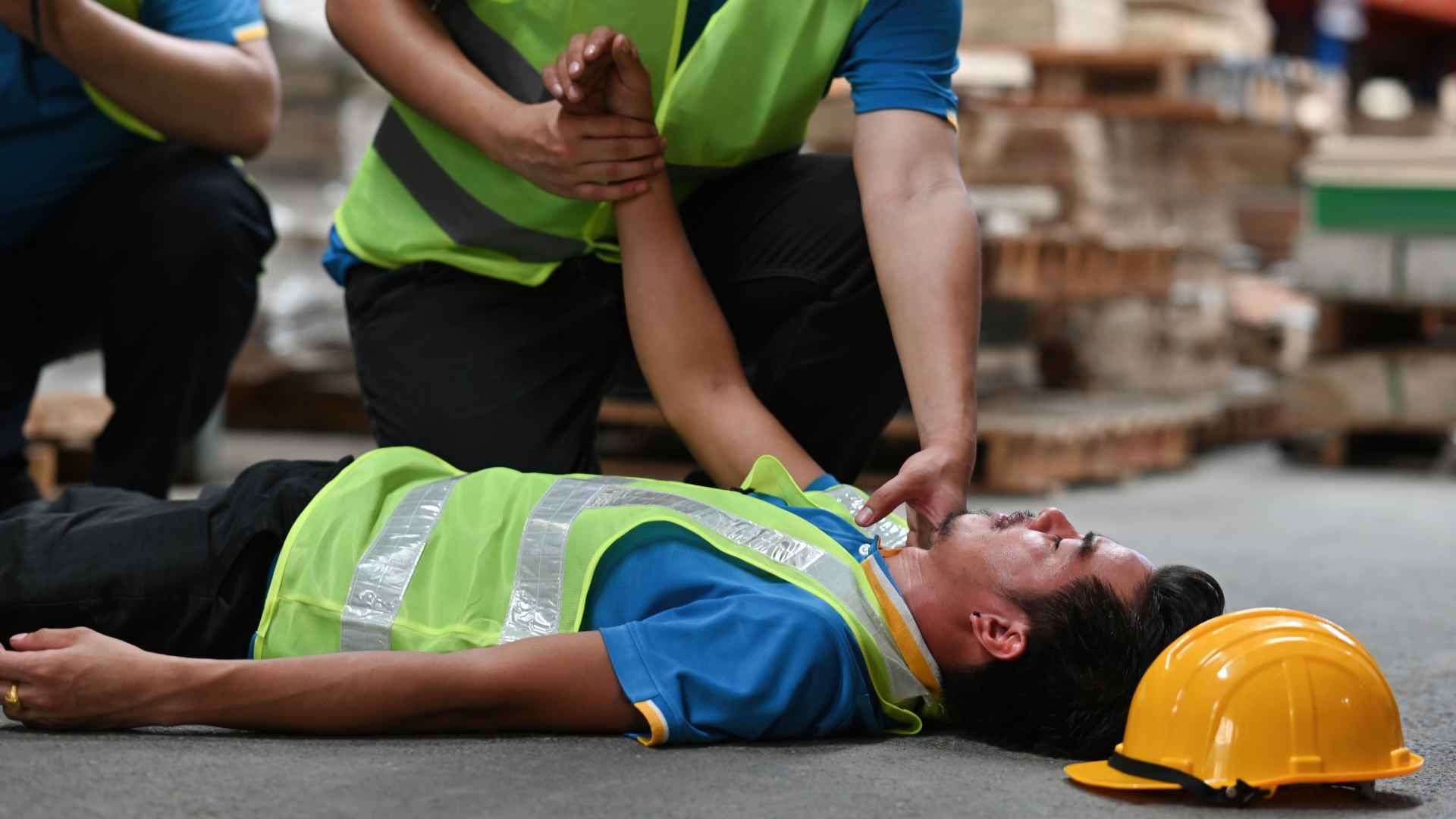
Medical shock occurs when the body cannot maintain sufficient systemic blood circulation to deliver oxygen and nutrients to its tissues and organs. The brain, heart, kidneys, and lungs require a constant, high-pressure supply of oxygenated blood to function. Shock can result from a sudden drop in blood volume or blood pressure, leading to inadequate blood flow and oxygen supply to vital organs. When that supply is disrupted, whether due to catastrophic blood loss, heart failure, a systemic infection, or a severe allergic reaction, the body enters a state of progressive deterioration known as “compensated” and eventually “uncompensated” shock.
There are six major types of shock taught in the Canadian Red Cross curriculum:
- Hypovolemic Shock: Caused by severe blood or fluid loss, typically from major trauma, internal bleeding, or severe burns, resulting in a drop in blood volume and low blood pressure.
- Cardiogenic Shock: Occurs when the heart cannot pump blood effectively, often following a massive heart attack, leading to inadequate blood flow and dangerously low blood pressure.
- Anaphylactic Shock: A severe allergic reaction that causes the immune system to release histamine, leading to increased capillary permeability, fluid leakage from blood vessels, massive blood vessel dilation, and airway constriction.
- Septic Shock: Results from a severe infection that triggers a systemic inflammatory response, causing blood vessels to dilate and producing dangerously low blood pressure and poor circulation throughout the body.
- Neurogenic Shock: Often seen after spinal cord injuries that disrupt the nervous system’s control over blood vessel tone and heart rate, causing vessels to dilate and blood pressure to drop.
- Obstructive Shock: Caused by a physical blockage in blood vessels, most commonly a pulmonary embolism, which impairs the heart’s ability to pump blood and leads to inadequate circulation despite a structurally intact heart.
What Are the Clinical Signs and Progressive Symptoms of Shock?
Early recognition is the key to preventing death. As the body enters shock, it attempts to compensate by redirecting blood flow away from the skin and extremities toward the vital core organs. This produces the classic “Triple-P” symptoms: Pale, Perspiring, and Pulse (Rapid). Early signs also include fast shallow breathing, restlessness, confusion, fear, and nausea or vomiting. Excessive sweating can be an early indicator, particularly in cases involving significant fluid loss, and difficulty breathing is a critical symptom requiring immediate attention.
In the early stages, the victim may appear restless, anxious, or unusually agitated. Their skin becomes cool and clammy to the touch, and their pulse becomes rapid but weak. As the condition worsens, they may become confused or disoriented. Shock can worsen rapidly even if symptoms initially seem mild, so call for help immediately rather than waiting for the situation to develop. In later stages, the skin may develop a greyish or bluish tint (cyanosis) around the lips and fingernails, the pupils may dilate, and the pulse may become absent. Without rapid professional intervention, cardiac arrest is the next stage.
How Do You Treat Shock? The Shock Position and First Aid Protocol
If you suspect a victim is entering shock, following these 2026 clinical protocols can help stabilize them until paramedics take over:
- Activate EMS: Call 911 immediately. Shock cannot be treated with a first aid kit; it requires IV fluids, blood products, and hospital-level care.
- Address the Cause: Stop any visible bleeding by applying firm, direct pressure to the wound using a clean cloth or bandage. If necessary, apply a tourniquet for severe, uncontrolled limb bleeding.
- The Shock Position: Position the person flat on their back and elevate the legs approximately 12 inches (30 cm) above the heart, provided there are no suspected spinal injuries, lower limb fractures, or breathing difficulties. This uses gravity to help direct blood flow to the brain and heart.
- Maintain Temperature: Cover the person with a blanket, jacket, or thermal foil blanket. Shock impairs the body’s ability to regulate heat; keeping them warm prevents the condition from accelerating. Do not use heating pads or direct heat sources.
- Nothing by Mouth: Do not give food or drink to someone in shock, as this can cause choking or vomiting, particularly if emergency surgery is required.
- Suspected Spinal Injury: If you suspect a spinal injury, do not move the person unless they are in immediate physical danger. Modify the position accordingly.
- If Not Breathing: If the person stops breathing, ensure any severe bleeding is controlled first, then begin CPR immediately and continue until professional help arrives or an AED becomes available.
Watch: How to Perform High-Quality CPR
Which Professions Require Shock Management Training in Canada?
In Canada, mastering shock management is a mandatory certification prerequisite for many high-stakes professions governed by WSIB Regulation 1101 and the updated CSA Z1210:24 standards:
- Security Guards and Loss Prevention: Must be able to manage trauma and shock while patrolling commercial properties to maintain their valid provincial security licences.
- Construction Foremen and Industrial Workers: High-risk environments frequently involve severe bleeding, making shock training a legal necessity for site safety officers under provincial OHS legislation.
- Daycare Staff and Teachers: Required to hold CPR Level C to manage anaphylactic shock in children, including assisting with the administration of epinephrine auto-injectors.
- Healthcare Providers: Nurses and dental hygienists require Basic Life Support (BLS) to manage oxygen administration and advanced resuscitation in clinical settings where shock may be secondary to a primary medical event.
What Is the First Aid Response for Anaphylactic Shock?
Anaphylaxis is a rapidly progressing and potentially fatal form of shock that closes the airway through massive immune-mediated blood vessel dilation and tissue swelling. If a victim has a prescribed epinephrine auto-injector, you must help them use it immediately without delay. Inject the epinephrine into the outer thigh, through clothing if necessary, and hold it in place for the required number of seconds per the device instructions. Even if the victim feels better shortly after the injection, you must still call 911. The medication’s effects are temporary and a secondary biphasic reaction can occur hours later, requiring hospital monitoring.
First aid courses include hands-on practice with trainer auto-injectors specifically so students develop the muscle memory and confidence to act without hesitation when seconds matter.
How Does First Aid Certification Support Career Advancement?
Holding an unexpired Canadian Red Cross certificate proves to hiring managers that you possess the clinical skills and composure needed to handle high-stress medical events. Whether you are applying for a role in hospitality, property management, or as a camp counselor, your ability to pass both a written examination and a practical skills assessment makes you a more valuable, lower-risk employee. Corporate insurers also frequently offer reduced premiums to businesses that invest in comprehensive team training through private group training sessions.
Learn CPR Alongside Shock Management
Hands-on CPR and AED training that pairs with first aid shock response skills for complete emergency preparedness.
What Training Format Options Are Available for First Aid Certification?
Coast2Coast offers a highly effective blended online learning format that allows you to complete the medical theory, including shock physiology, recognition, and treatment protocols, online at your own pace. Once finished, you attend a shortened in-person session focused entirely on the practical skills assessment. This approach provides the hands-on experience required for WSIB compliance while fitting into a busy professional schedule.
For organizations needing to train entire departments, private group sessions can be delivered on-site at your facility. Instructors bring all required manikins and training equipment and can customize scenarios to the specific hazards present in your environment, making the training significantly more effective than generic off-site courses.
Train Your Whole Team in First Aid and Shock Response
Private group sessions delivered at your workplace, tailored to your team size and industry hazards.
Key Takeaway
Medical shock is not a condition you can manage with common sense alone. It is a rapidly progressive circulatory failure with six distinct causes and a narrow window for effective first aid intervention. The skills needed to recognize it early, apply the Shock Position correctly, manage severe bleeding, and initiate CPR when breathing stops are all physically practised in a Canadian Red Cross Intermediate / Standard First Aid course. Certification is not just a workplace requirement under CSA Z1210:24; it is the difference between knowing what to do and wishing you had when it matters most.
Get Intermediate / Standard First Aid Certified Today
Two-day Canadian Red Cross Intermediate / Standard First Aid course covering shock management, CPR, and all major workplace first aid requirements under CSA Z1210:24.
Frequently Asked Questions: Medical Shock and First Aid in Canada 2026
More FAQs: Shock Types, Certification, Barrier Devices, and Obstructive Shock
Sources and Further Reading
- Canadian Red Cross: Intermediate / Standard First Aid and CPR Course Guidelines, 2025 Curriculum Edition
- CSA Group: CAN/CSA-Z1210:24 First Aid in the Workplace (National Standard of Canada)
- WSIB Ontario: Regulation 1101, First Aid Requirements (O. Reg. 1101)
- Heart and Stroke Foundation of Canada: Cardiac Arrest and Shock Response Guidelines (2024)