




Quick Answer
The benefits of providing first aid and CPR training for employees in Canada include legal compliance with WSIB Regulation 1101 and provincial OHS laws, reduced workplace accidents and recovery times, lower liability exposure, and a measurably stronger safety culture. Employers across Canada are legally required to maintain a minimum number of certified first aiders on every shift, and the 2026 CSA Z1210:24 standard now defines updated Basic and Intermediate First Aid frameworks for all workplace sizes.
Find a Class Near You
Canadian Red Cross CPR & First Aid courses across Ontario and Alberta. Register online in 2 minutes.
8–12 min
Extra paramedic delay in high-rise buildings — making trained personnel on-site essential
3 years
Validity period for Canadian Red Cross first aid and CPR certification
25%
Recommended staff certification rate to ensure shift-level redundancy
What You Will Learn in This Article
- How WSIB Regulation 1101, the Canada Labour Code, and the 2026 CSA Z1210:24 standard define first aid requirements for Canadian workplaces of every size
- The numerous benefits of first aid training for employees — from reducing workplace accidents to shortening recovery time and saving lives
- Why High-Performance CPR and Automated External Defibrillators (AEDs) are central to an effective workplace emergency response
- How documented safety training reduces corporate liability and can lower insurance premiums
- How a robust aid training program improves hazard awareness, team cohesion, employee morale, and retention
The benefits of providing first aid and CPR training for employees in Canada extend far beyond meeting a regulatory checkbox. In any work environment — whether a high-rise office, a manufacturing floor, or a retail setting — the ability to respond quickly and correctly during medical emergencies is one of the most important things an organization can do to protect its workforce. When employees have the life-saving skills to act before paramedics arrive, the outcomes for injured or ill colleagues improve dramatically.
Workplaces with a high density of trained personnel experience significantly better clinical outcomes during medical events. Prompt treatment for severe injuries can prevent long-term complications and shorten recovery times, and life-saving interventions such as CPR and the use of Automated External Defibrillators (AEDs) can significantly improve survival rates during cardiac emergencies. Investing in a comprehensive first aid training program for your employees is, in the most literal sense, an investment in saving lives.
What Are the Legal First Aid Requirements for Canadian Workplaces?
Understanding the legal framework is the first step to building a safe work environment. Across Canada, employers are legally required to assess specific risks within their work environment and maintain a minimum number of certified first aiders on every shift — with the exact number determined by provincial regulations and total headcount. Meeting these first aid requirements is not optional; non-compliance exposes employers to Ministry of Labour fines and significant corporate liability.
In Ontario, WSIB Regulation 1101 mandates that all employers have at least one certified first aid responder on duty at all times during every shift. Employers must also ensure that first aid kits are stocked to the correct standard — Type 1, 2, or 3 — based on the number of workers per shift, and that all first aid equipment is easily accessible throughout the facility. A clearly labelled first aid station should be located near areas of highest risk and checked on a regular maintenance schedule.
Organizations that are federally incorporated must comply with the Canada Labour Code regarding minimum certification requirements for first aid attendants, while provincially regulated businesses — including those in British Columbia — must complete hazard assessments that account for staff counts and proximity to medical services before determining the appropriate level of aid training required. Employers in Canada are legally required to customize their first aid protocols to reflect the specific risks of their work environment, and to maintain ongoing readiness by scheduling regular refresher courses and updating first aid kits and equipment on a consistent cycle.
The updated 2026 CSA Z1210:24 standard, developed by the Canadian Standards Association (CSA), has shifted the traditional course framework to two tiers: Basic First Aid for smaller workplaces and Standard First Aid (Intermediate) for workplaces with six or more employees per shift. Employers should audit current certifications and aid equipment against the new standard to ensure their entire workforce meets updated program requirements.
Compliance Notice — 2026 CSA Z1210:24
The 2026 CSA Z1210:24 update revised responder-to-employee ratios and first aid kit classifications across Canada. Employers should audit current certifications, first aid equipment, and kit types against the updated program now to avoid regulatory penalties. Review your requirements at c2cfirstaidaquatics.com/first-aid-courses/.
How Does First Aid and CPR Training Reduce Workplace Accidents and Injuries?
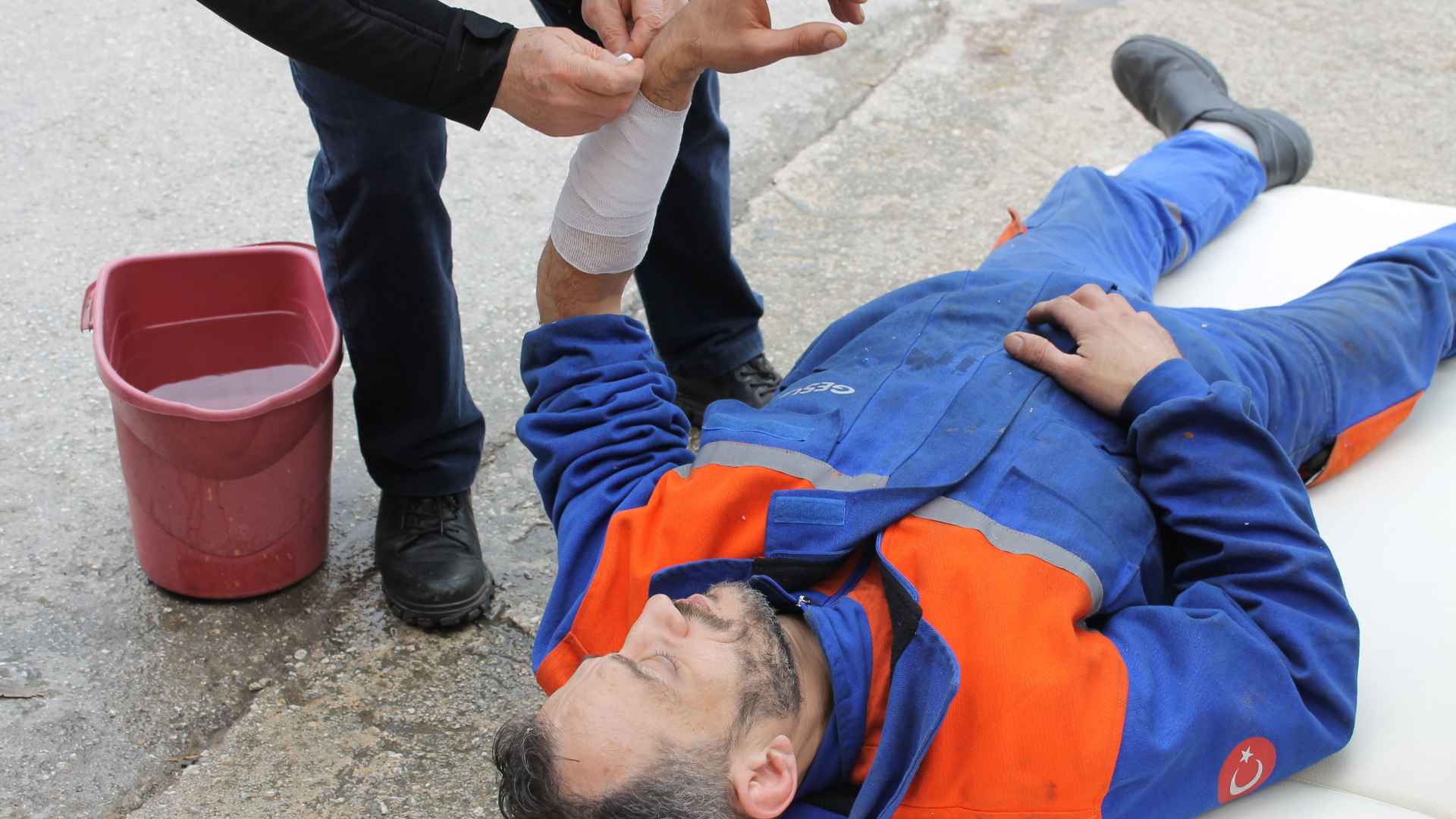
One of the most significant — and often underappreciated — benefits of first aid training is its direct impact on accident prevention. Training enhances hazard awareness, empowering employees to identify and mitigate specific risks before accidents occur. When workers understand emergency response protocols, they actively create a safer work environment. Workplaces with a strong CPR training and safety training culture consistently reduce workplace accidents across all industry sectors.
When workplace accidents do happen, the speed and quality of the initial response directly determines outcomes. Investing in an aid training program leads to faster response times during emergencies, which saves lives, reduces recovery time, and minimizes time lost from injuries — all of which protect the workforce and benefit overall business operations. First aid training also helps mitigate operational disruptions caused by workplace accidents, allowing for a faster return to work and reducing the indirect costs of absenteeism.
Regular refresher training is a critical component of any updated program. Skill proficiency declines after initial certification — a phenomenon known as “knowledge decay” — and scheduling recertification before the three-year expiry date keeps designated first aiders at peak readiness. Organizations that treat first aid certification as an ongoing process, rather than a one-time requirement, build a more resilient and effective workplace safety program over time.
Why Are High-Performance CPR and Automated External Defibrillators Essential for Workplace Safety?
Cardiac arrest is one of the leading causes of workplace death in Canada. Life-saving interventions such as CPR and the use of Automated External Defibrillators (AEDs) can significantly improve survival rates — but only when trained personnel are present, confident, and ready to respond. In a busy office building, factory floor, or retail environment, the first few minutes of a cardiac emergency are entirely in the hands of the employees on-site before paramedics arrive.
Modern High-Performance CPR training focuses on maximizing Chest Compression Fraction (CCF) — the percentage of total rescue time spent actively compressing the heart. Higher CCF correlates directly with higher survival rates because continuous compressions maintain blood flow to the brain and vital organs. In settings where “Vertical Response Delay” — the time lost navigating elevators and building security — can add 8 to 12 minutes to EMS arrival, trained employees performing high-quality CPR are the single most important factor in patient survival.
For AEDs to be effective, they must be easily accessible. Employers should ensure AED units are strategically placed throughout the facility — ideally within a two-minute retrieval window from any point on the floor — and that every designated first aider knows exactly where to access them. A well-placed, clearly marked first aid station that includes an AED is a fundamental component of any Heart Safe workplace in Canada.
Watch: How to Perform High-Quality CPR
Can First Aid Certification Reduce Corporate Liability and Lower Insurance Costs?
Investing in a CPR and AED certification program is a powerful risk mitigation tool. Many liability insurers offer premium reductions to businesses that can demonstrate 100% staff certification and a documented emergency response plan — recognizing a WSIB-compliant workforce with certified first aiders as a lower-risk entity. Businesses may experience lower insurance premiums by providing robust safety training regimens, and the financial benefits of first aid training compound over time as fewer incidents and faster response times reduce claims.
Beyond insurance, first aid certification delivers legal protection that matters when workplace injuries lead to proceedings. Having a documented history of training and a fast response time can be the deciding factor in legal proceedings, demonstrating that the employer exercised due diligence in protecting its workers — a critical standard under Canadian OHS law. Training at an accredited facility ensures that records meet national written examination and skills standards recognized across all Canadian provinces and territories.
Employer Best Practice: Safety experts recommend certifying at least 25% of your staff — not just the legal minimum number — to maintain shift-level redundancy during vacations, sick leave, and remote work rotations. An updated program with staggered renewal dates ensures your organization is never exposed during shift changes, and regular refresher training prevents knowledge decay between formal renewals.
Which Canadian Industries Have Non-Negotiable Aid Training Requirements?
While first aid requirements apply to all Canadian employers, many industries carry specific mandates that go beyond the general OHS baseline. Providing aid training as an employer benefit helps workers maintain professional standing and keeps organizations compliant across multiple regulatory frameworks:
- Security Guards & Concierge Staff: Must hold Standard First Aid and CPR Level C to maintain provincial security licences. These workers are often the first designated first aiders to respond in high-rise emergencies where EMS access is delayed and paramedic response times are extended.
- Child Care & Early Childhood Educators: Legally required to hold Pediatric CPR to manage choking, anaphylaxis, and cardiac events in child care settings. Provincial childcare licensing regulations embed first aid certification as a condition of employment, making access to an updated program essential.
- Construction Foremen & Site Supervisors: Required under provincial OHS regulations to manage industrial trauma, severe bleeding, and oxygen administration on high-risk worksites. Hazard assessments must account for the distance from medical services to determine the correct level of aid training.
- Healthcare & Clinic Staff: Require annual Basic Life Support (BLS) certification covering team-based resuscitation and clinical response. Access to BLS-level training is a non-negotiable standard across most healthcare licensing bodies in Canada.
- Hospitality & Event Managers: Serve as the first trained responders during cardiac emergencies in busy venues before paramedics arrive. A clearly marked first aid station stocked with basic first aid equipment and an AED is a minimum requirement for large public events across most provinces.
How Does First Aid Training Improve Employee Morale, Confidence, and Retention?
The benefits of first aid training extend well beyond clinical and legal outcomes. Providing first aid training sends a clear message to employees that their safety and wellbeing are valued — and this investment in well-being significantly boosts employee morale and loyalty. Employees who feel safe and supported are more engaged and productive in their roles, and organizations that maintain a strong safety culture consistently report lower staff turnover. Increased confidence in emergency response also translates to increased confidence in the everyday work environment.
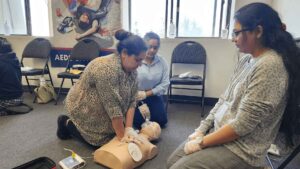
The hands-on nature of first aid courses acts as an excellent team-building exercise, requiring staff to communicate and coordinate during simulated high-pressure scenarios that enhance team cohesion in ways that traditional workshops cannot replicate. Investing in health and safety training signals that management values employee well-being, which increases job satisfaction and retention. A workforce that trains together to protect each other’s lives develops a lasting culture of mutual care that extends to how they work, collaborate, and respond to everyday challenges.
Whether organizations choose a blended online learning format or a full private group course, the shared experience of building life-saving skills together is one of the most meaningful safety investments an employer can make for their team.
Key Takeaway
The numerous benefits of providing first aid and CPR training for employees in Canada include legal compliance, reduced workplace accidents, faster emergency response, lower liability exposure, and a stronger workplace safety culture. Every Canadian employer is legally required to maintain a minimum number of certified first aiders and ensure first aid kits, aid equipment, and a clearly marked first aid station are easily accessible on every shift. The 2026 CSA Z1210:24 update makes it essential for employers to audit their aid training program, equipment, and responder ratios now rather than after an incident.
Get Your Team Certified — WSIB-Approved Group Training Across Canada
Coast2Coast First Aid & Aquatics delivers private group training tailored to your industry’s specific risks. Ensure your workforce meets the 2026 CSA standard and maintain continuous first aid compliance with certified Canadian Red Cross instructors.
Frequently Asked Questions: 2026 Corporate First Aid & CPR Training
Q1: What are the main benefits of providing first aid training for employees in Canada?
A: The numerous benefits of first aid training for employees include legal compliance with provincial OHS laws and WSIB Regulation 1101, the ability to save lives and reduce recovery time during workplace emergencies, reduced workplace accidents through enhanced hazard awareness, lower insurance premiums, and stronger employee morale and retention. Training also helps mitigate operational disruptions caused by workplace accidents and demonstrates employer due diligence — which is critical in limiting corporate liability. Every Canadian employer is legally required to maintain certified first aiders and appropriate first aid equipment on every shift.
Q2: Is first aid training mandatory for all Canadian businesses?
A: Yes. Under provincial occupational health and safety (OHS) laws, every employer in Canada is legally required to have a minimum number of certified first aiders present on every shift. In Ontario, WSIB Regulation 1101 defines exact responder-to-employee ratios and mandates that first aid kits and aid equipment are easily accessible at all times. Federally incorporated organizations must also comply with the Canada Labour Code’s first aid certification requirements. Legal mandates for providing certified first aiders exist across Canada, varying by province and total number of employees per shift.
Q3: How often do employees need to recertify their first aid credentials?
A: Most Canadian Red Cross first aid and CPR certifications are valid for exactly three years from the date of completion. Employees must attend a recertification course before the certificate expiry date to maintain continuous compliance under WSIB Regulation 1101. Regular refresher training is also recommended between renewals to prevent knowledge decay and maintain skill proficiency in workers. Employers should track renewal dates across their entire workforce and schedule group recertification cycles in advance to avoid gaps in on-shift first aid coverage.
Q4: What is the difference between Basic First Aid and Standard First Aid for workplaces?
A: Under the 2026 CSA Z1210:24 standard, workplace first aid training is categorized as Basic First Aid — a one-day course for small workplaces with fewer than six employees per shift — or Standard First Aid (Intermediate), a two-day course for workplaces with six or more employees per shift. Standard First Aid covers a broader range of emergency scenarios including spinal injuries, fractures, burns, and extended patient management. Employers should confirm which level applies to their work environment based on provincial OHS requirements and shift headcount before enrolling employees in a training program.
Q5: Can an aid training program reduce corporate insurance premiums?
A: Yes. Many liability insurers offer premium reductions to businesses that can demonstrate 100% staff certification and a documented emergency response plan. A WSIB-compliant workforce with certified first aiders and accessible first aid equipment on every shift is classified as a lower-risk entity, which can translate to measurable savings on annual premiums. In the event of a workplace injury, documented training records also demonstrate employer due diligence, which can limit corporate liability in legal proceedings. The financial benefits of first aid training compound over time as faster response times and fewer incidents reduce the frequency and cost of claims.
Q6: How does first aid training reduce workplace accidents and enhance safety?
A: First aid training helps employees become more conscious of safety in the workplace, leading to a reduced number of accidents and injuries. Training enhances hazard awareness, empowering workers to identify and mitigate specific risks before accidents occur. Employees who understand emergency response protocols are more likely to follow safe work procedures day-to-day. Workplaces with a high density of trained personnel experience significantly better clinical outcomes when incidents do occur, because faster response times reduce recovery time and minimize time lost from injuries across the workforce.
Q7: Can employees complete their first aid training entirely online?
A: No. While the theory component can be completed online through a blended learning format, a physical practical skills assessment with a certified instructor is legally required for a certificate to be recognized under WSIB Regulation 1101 and provincial OHS standards. The practical component ensures that employees can correctly perform CPR, use Automated External Defibrillators, and manage a patient — skills that cannot be validated through an online test alone. Blended learning is a flexible option that allows workers to complete theory modules at home before attending a shorter in-person skills session, reducing time away from the workplace.
Q8: Does first aid training function as a team-building exercise?
A: Yes. The hands-on nature of first aid courses acts as an excellent team-building exercise, requiring staff to communicate and coordinate during simulated high-pressure scenarios that enhance team cohesion and build increased confidence across the group. Employees who train together to respond to medical emergencies develop greater trust in their colleagues and a lasting culture of mutual care. Investing in health and safety training also signals that management values employee well-being, which increases job satisfaction and retention — two outcomes that create a more stable and effective workforce over time.
Q9: Does first aid training include Automated External Defibrillator (AED) use?
A: Yes. AED training is a mandatory, core component of every Standard First Aid and CPR Level C course. Participants learn to recognize cardiac arrest, retrieve and power on the device, attach electrode pads correctly, and coordinate AED use with uninterrupted chest compressions. Life-saving interventions such as CPR and Automated External Defibrillators can significantly improve survival rates during cardiac emergencies, particularly when the device is easily accessible and trained personnel are present on-site. Employers should ensure AED units are strategically placed at each first aid station and that every aid responder knows exactly where to access them.
Q10: What is WSIB Regulation 1101 and what does it require from Ontario employers?
A: WSIB Regulation 1101 is an Ontario law under the Workplace Safety and Insurance Act that defines mandatory first aid requirements for all provincially regulated workplaces. It specifies the minimum number of certified first aid responders required per shift based on total employee headcount, the type of first aid kit and aid equipment required (Type 1, 2, or 3), and the documentation and record-keeping standards employers must maintain. Employers who fail to comply with these first aid requirements face Ministry of Labour penalties and increased liability exposure if a workplace injury occurs in the absence of a certified responder on-shift.
Q11: How many first aid responders does a Canadian workplace legally need per shift?
A: The required number of certified first aid responders per shift depends on the provincial regulation that governs the workplace and the total number of workers on shift. In Ontario, WSIB Regulation 1101 sets minimum ratios based on headcount — typically one certified first aider for smaller workplaces, with additional responders required as workforce size increases. Under the 2026 CSA Z1210:24 standard, workplaces with fewer than six employees per shift may satisfy requirements with a Basic First Aid certificate, while larger shifts require Standard First Aid. Employers should consult their provincial OHS authority and complete a hazard assessment to confirm the exact ratio that applies to their specific work environment.
Q12: What first aid kit type is required in a Canadian workplace?
A: Under Ontario’s WSIB Regulation 1101 and the updated 2026 CSA Z1210:24 standard, workplaces are required to stock a Type 1, Type 2, or Type 3 first aid kit based on the number of workers per shift and the level of hazard in the work environment. Type 1 kits are designed for low-hazard workplaces with fewer employees, while Type 2 and Type 3 kits contain progressively more comprehensive supplies for larger or higher-risk settings. All kits must be easily accessible, clearly labelled, inspected regularly, and restocked after use. Employers outside Ontario should verify kit requirements under their applicable provincial OHS regulation.
Q13: What is the difference between CPR Level A, B, and C in Canada?
A: Canadian Red Cross CPR certifications are tiered by the population the responder is trained to assist. CPR Level A covers adult CPR only and is the entry-level option. CPR Level B adds infant and child CPR techniques, making it appropriate for those working with young children. CPR Level C — the most commonly required level in workplace settings — covers adult, child, and infant CPR, plus two-rescuer scenarios and AED use. Most provincial OHS laws and WSIB Regulation 1101 specify CPR Level C as the minimum standard for designated workplace first aid responders. Healthcare providers typically require the higher BLS (Basic Life Support) standard.
Q14: Who is responsible for paying for employee first aid training in Canada?
A: In Canada, the cost of mandatory first aid training is generally the employer’s responsibility. Because provincial OHS laws legally require employers to maintain certified first aiders on every shift, the expense of achieving and maintaining that compliance — including course fees, time away from the job, and recertification — falls to the organization. Many employers choose to pay for training beyond the minimum required number of employees, covering 25% or more of their workforce to ensure shift-level redundancy. Providing funded first aid training is also widely recognized as a meaningful employee benefit that improves morale, retention, and overall workplace safety culture.
Q15: What is the Canada Labour Code’s role in workplace first aid requirements?
A: The Canada Labour Code, Part II governs occupational health and safety for federally regulated workplaces in Canada — including banks, telecommunications companies, interprovincial transportation, and federal government employees. It requires federally regulated employers to appoint a sufficient number of qualified first aid attendants based on workforce size and workplace hazards, and to maintain appropriate first aid supplies and equipment. Federally regulated employers must comply with the Canada Occupational Health and Safety Regulations (SOR/86-304) for first aid requirements, which operate separately from provincial OHS rules such as Ontario’s WSIB Regulation 1101. Employers should verify whether their organization falls under federal or provincial jurisdiction before auditing their first aid program.
Sources & Regulatory References
- Workplace Safety and Insurance Board (WSIB) — Regulation 1101: First Aid Requirements, Government of Ontario. ontario.ca/laws/regulation/900001101
- CSA Group — CSA Z1210:24: First Aid Kits and First Aid Organizations for the Workplace, 2024 edition.
- Canadian Red Cross — First Aid & CPR/AED Training Standards.
- Heart and Stroke Foundation of Canada — Cardiac Arrest Statistics and Chain of Survival. heartandstroke.ca
- Ministry of Labour, Immigration, Training and Skills Development — Occupational Health and Safety Act (OHSA), R.S.O. 1990. ontario.ca/laws/statute/90o01
- Government of Canada — Canada Labour Code, Part II: Occupational Health and Safety. laws-lois.justice.gc.ca
Content reviewed by Ashkon Pourheidary, B.Sc. (Hons), co-founder of Coast2Coast First Aid & Aquatics. Ashkon has been a certified Canadian Red Cross First Aid and CPR Instructor since 2011 and an Instructor Trainer since 2013. He holds certifications as an Emergency Medical Responder (EMR) instructor, Psychological First Aid instructor, and BLS instructor. He graduated with honours in Neuroscience from the University of Toronto (2016) and has served on the First Aid Council for the Canadian Red Cross.