
You’re required to be First Aid and CPR/AED certified for your job, but do you know what the different levels of First Aid and CPR entail?
Continue reading



You’re required to be First Aid and CPR/AED certified for your job, but do you know what the different levels of First Aid and CPR entail?
Continue reading
First Aid & CPR training is a great way to learn amazing life-saving skills. But how much is a First Aid training course?
Continue reading
You’re interested in becoming First Aid and CPR certified, but how long is First Aid and CPR valid for in Ontario? Always keep your certificate up-to-date!
Continue reading
More than 300 thousand people die because of cardiac arrest every year. The risk of heart disease is higher in senior citizens. 70% of adults above the age of 60 have some kind of cardiac problem in their lifetimes. There are many different types of health issues that can be the cause of cardiac arrest as well as other social factors that can lead to this situation of life or death. Knowing CPR can save lives.
Continue reading
At Coast2Coast First Aid and Aquatics, we believe that everyone deserves access to life-saving knowledge, regardless of their financial situation. That is why we are proud to offer free first aid workshops to communities across the Greater Toronto Area, including North York. These workshops provide participants with essential emergency response skills at no cost, breaking down the financial barriers that prevent many Canadians from accessing quality first aid training. Our mission is simple: the more people who know first aid, the safer our communities become.
Our free workshops are designed to give community members a taste of what comprehensive first aid training involves while equipping them with practical skills they can use immediately. While these workshops are not a substitute for full first aid certification, they provide a valuable introduction to emergency response that empowers participants to act confidently in common emergency situations. For many attendees, these workshops serve as the spark that motivates them to pursue full certification.
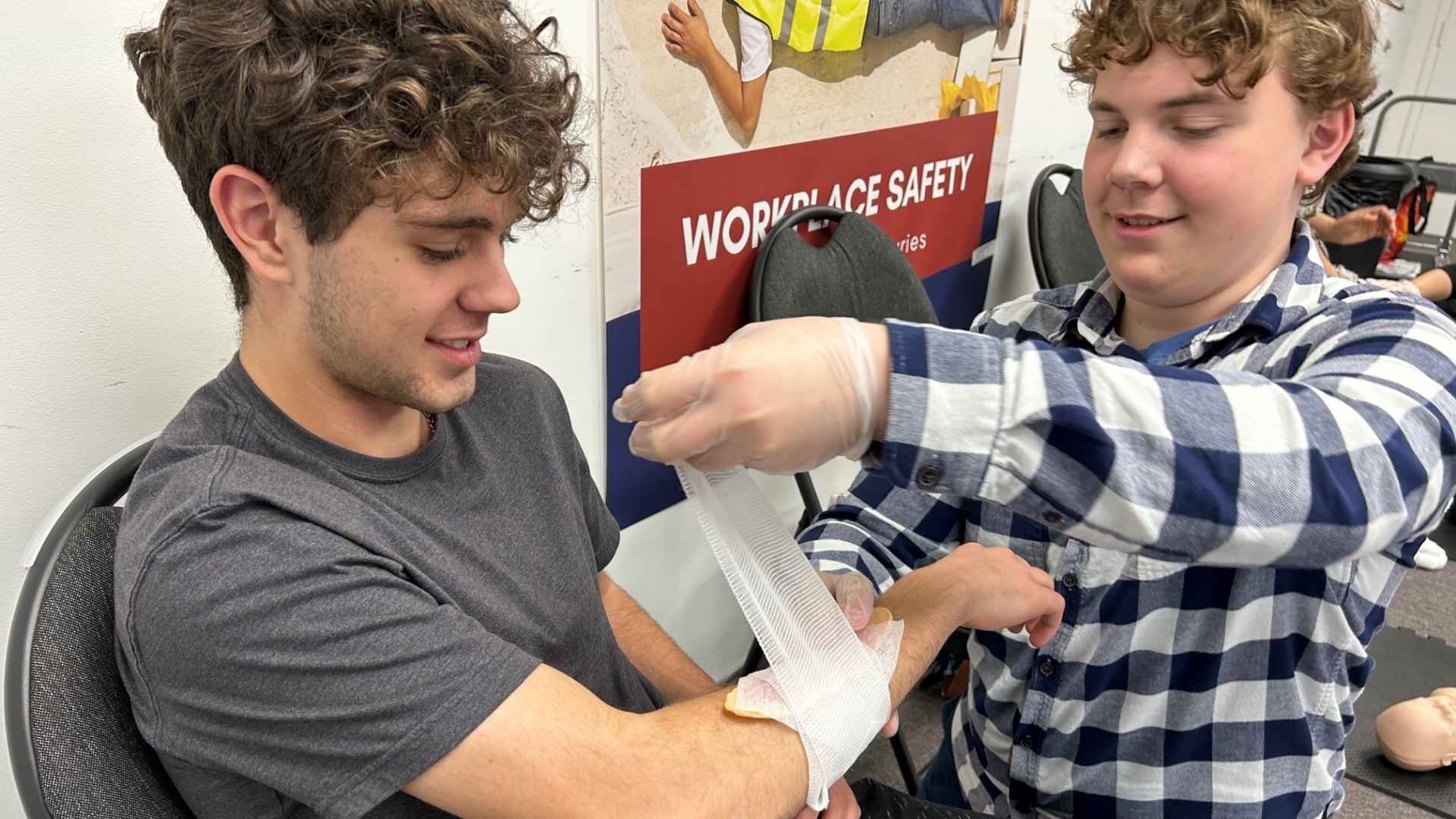
Our free first aid workshops pack essential knowledge and hands-on practice into an accessible format that works for busy community members. Here is what participants can expect to learn:
Hands-only CPR — continuous chest compressions without rescue breathing — is the recommended bystander response for adult cardiac arrest. Workshop participants learn how to recognize cardiac arrest, call 911 effectively, and perform chest compressions at the correct rate and depth. Using practice mannequins, every participant gets the opportunity to feel what effective compressions should feel like. This single skill can double or triple a cardiac arrest victim’s chance of survival when applied in the critical minutes before paramedics arrive.
Choking is one of the most common emergencies that Canadians encounter in their daily lives, and knowing how to respond can prevent a terrifying situation from becoming a fatal one. Workshop participants learn to recognize the signs of choking, perform abdominal thrusts (the Heimlich manoeuvre) on adults and children, and provide back blows for infants. These techniques are straightforward to learn but require practice to perform effectively under pressure.
From minor cuts to more serious lacerations, knowing how to properly clean, dress, and manage wounds is a fundamental first aid skill. Participants learn the basics of direct pressure for bleeding control, proper wound cleaning and dressing techniques, and when a wound requires professional medical attention. These skills are applicable to countless everyday situations, from playground injuries to kitchen accidents.
Before providing any first aid, you need to ensure the scene is safe and understand how to manage an emergency effectively. Workshop participants learn to assess scene safety, prioritize actions in an emergency, communicate effectively with 911 dispatchers, and coordinate with bystanders to ensure the most effective response possible.
North York is one of the most diverse and densely populated communities in the Greater Toronto Area, home to hundreds of thousands of residents, numerous schools, bustling commercial districts, and extensive recreational facilities. With this concentration of people comes an inevitable occurrence of medical emergencies — cardiac arrests in shopping centres, choking incidents in restaurants, injuries on playgrounds, and accidents on busy streets. The more residents who possess basic first aid knowledge, the better equipped the entire community is to respond to these emergencies.
Research consistently shows that communities with higher rates of first aid and CPR training have significantly better survival outcomes for cardiac arrest and other medical emergencies. By bringing free workshops directly to North York neighbourhoods, Coast2Coast is investing in the community’s collective ability to protect and care for its members. Every workshop participant who learns CPR becomes a potential life-saver for their neighbours, coworkers, friends, and family.
Whether you are a student at York University or a professional working near the North York City Centre, emergencies can happen anywhere. Our workshops have trained residents near Bayview Village, Downsview Park, and Willowdale, ensuring that North York remains one of the safest hubs in the GTA.
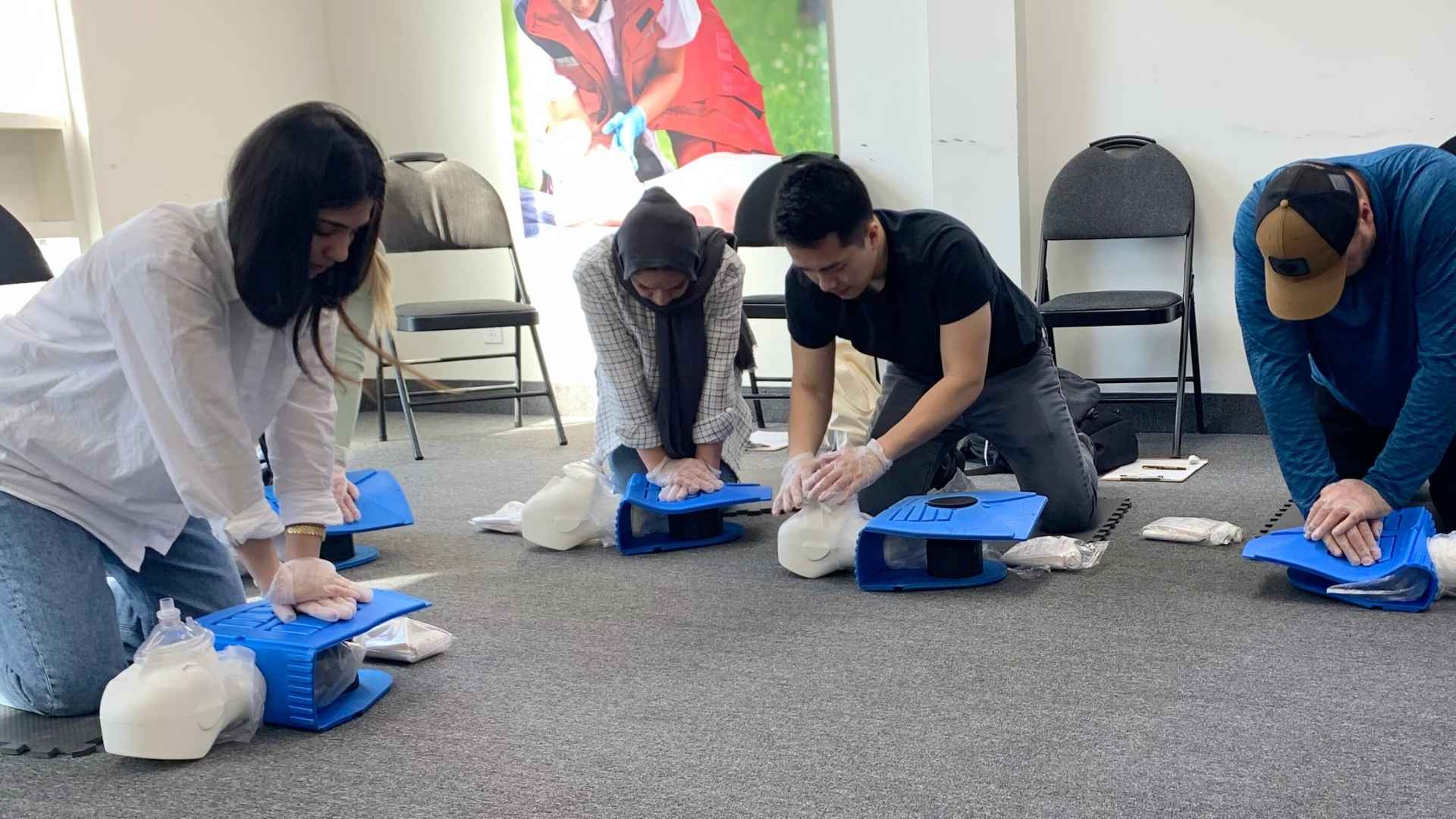
Our free first aid workshops are open to everyone, but they are particularly valuable for parents and grandparents who want to protect their families, teachers and school staff, community volunteers and youth group leaders, newcomers to Canada who may not have had access to first aid training, seniors who want to refresh their emergency response knowledge, teenagers interested in babysitting, lifeguarding, or healthcare careers, and anyone who has never taken a first aid course and wants to learn the basics.
No prior knowledge or experience is required. Our instructors are skilled at teaching participants of all ages and backgrounds, and the workshop format is designed to be welcoming, inclusive, and accessible. Whether you are sixteen or seventy-six, you will leave the workshop with practical skills you did not have when you arrived.
While our North York Free First Aid Workshop provides life-saving skills, it is an awareness session only. If you require WSIB/OHS compliance for your workplace, you must register for a full Basic (Emergency) or Intermediate (Standard) course to meet the CSA Z1210:24 legal standards.
While our free workshops provide an excellent introduction to first aid, many participants choose to continue their training with a full certification course. Certified first aid courses go deeper into every topic, covering a comprehensive range of medical emergencies, injuries, and environmental hazards. Full certification includes extended hands-on practice with mannequins and training equipment, certification that is valid for three years, training in AED (Automated External Defibrillator) use, coverage of additional emergencies including fractures, burns, poisoning, and diabetic events, and a certification card recognized by employers and regulatory bodies across Canada.
Coast2Coast offers a range of certification courses including CPR and AED certification, Emergency First Aid, Standard First Aid, Basic Life Support (BLS), and Emergency Medical Responder courses. Online blended learning options are also available for those who prefer flexible scheduling.
Coast2Coast is committed to making first aid education accessible to communities across Canada. If you represent a community organization, school, workplace, religious institution, or neighbourhood group in North York or the Greater Toronto Area and would like to host a free first aid workshop, we would love to hear from you. Contact our team to discuss how we can bring life-saving training to your community at no cost.
We also offer private group training for organizations that want comprehensive certification for their teams. Whether you need workplace compliance training, school staff certification, or team-building through first aid education, we can customize a program to meet your needs.
Loved the free workshop? Continue building your emergency response skills with a full Canadian Red Cross First Aid certification course from Coast2Coast First Aid and Aquatics.

Last Updated: March 4, 2026 Medical Review: Aryan Sekhavati, Director at Coast2Coast
Bystander CPR can double or triple cardiac arrest survival rates by maintaining brain oxygenation until paramedics arrive. Performing chest compressions within the first 2–4 minutes is critical to preventing permanent neurological damage. This 2026 guide covers WSIB-approved techniques, AED use, and legal protections under Ontario’s Good Samaritan Act.
Every 12 minutes, someone in Canada suffers a cardiac arrest outside of a hospital setting. In the Greater Toronto Area (GTA) alone, paramedics respond to thousands of cardiac emergencies annually. The survival rate for these events depends almost entirely on what happens in the first few minutes—the “Platinum Minutes”—before professional medical help arrives. Bystander CPR is the single most important factor in determining whether a cardiac arrest victim survives.
Knowing CPR and AED use transforms you from a helpless observer into a lifesaver. The skills are straightforward, the training takes less than a day, and the potential impact is immeasurable. A person trained in CPR carries the ability to save a life wherever they go—at home, at work, in a shopping mall, or on public transit. Coast2Coast First Aid and Aquatics, a Canadian Red Cross Training Partner, has certified thousands of Canadians at training locations across the GTA, ensuring that our communities are prepared for the unexpected.
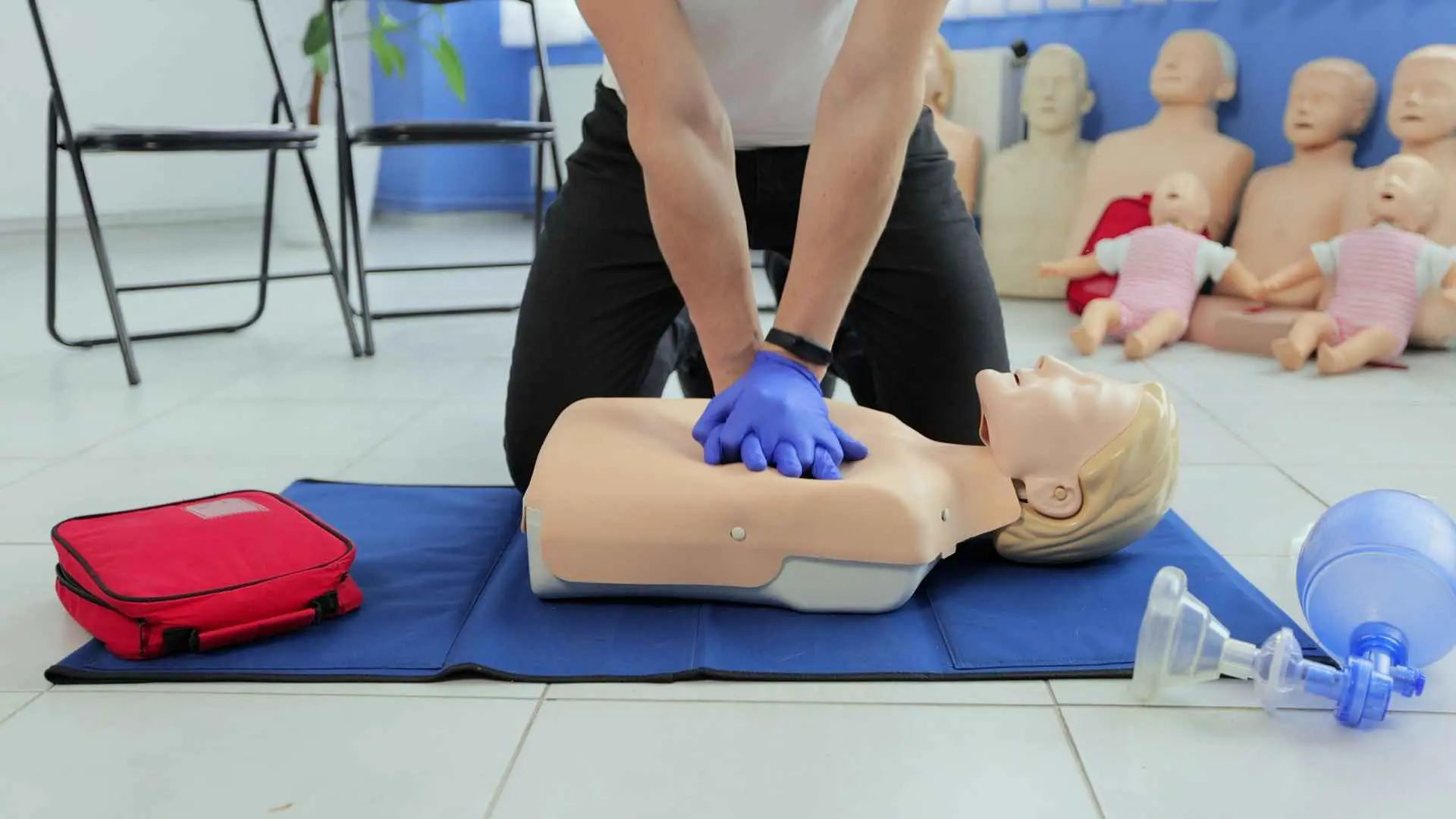
Cardiac arrest is often confused with a heart attack, but the two are clinically distinct. A heart attack is a “plumbing” problem caused by a blockage in the blood vessels supplying the heart. In contrast, cardiac arrest is an “electrical” problem where the heart suddenly stops beating effectively. The heart begins to quiver chaotically (ventricular fibrillation) instead of pumping blood.
Without blood flow, the brain begins to suffer permanent damage within four to six minutes. Death follows within eight to ten minutes without intervention. This unpredictable malfunction can strike anyone, at any age. While heart disease and high blood pressure are risk factors, cardiac arrest also affects seemingly healthy athletes and young adults due to undiagnosed heart defects or “commotio cordis”—a cardiac arrest caused by a blow to the chest. This is why widespread Basic Life Support (BLS) training for professionals and Level C training for the public is so critical.
Many people ask, “How can pushing on someone’s chest actually save them?” The answer lies in the Manual Pump Theory. When you perform high-quality chest compressions, you are physically squeezing the heart between the breastbone (sternum) and the spine. This action creates enough internal pressure to force oxygenated blood out of the heart and up to the brain.
During CPR, you aren’t just “beating” the heart; you are maintaining a artificial circulatory system. Even though CPR only provides about 25–30% of normal blood flow, that is often enough to keep the brain cells alive until an Automated External Defibrillator (AED) can be used to restart the heart’s natural rhythm.
Watch: How To Perform CPR – Coast2Coast Official
When someone collapses, a countdown begins. For every minute that passes without CPR, the chance of survival decreases by 7% to 10%. By the time ten minutes have passed without intervention, survival is statistically unlikely. In a sprawling metropolis like the GTA, traffic conditions and high call volumes can push ambulance response times to 8 minutes or longer.
Bystander CPR serves as the “Bridge to Life.” When a bystander begins compressions within the first two minutes, survival rates can exceed 40%. These statistics prove that the most important link in the Chain of Survival is not the doctor in the ER, but the person standing next to the victim when they fall.
Safety Tip: If you witness a collapse, call 911 and put your phone on speaker. Begin chest compressions immediately. Push hard (at least 2 inches deep) and fast (100–120 beats per minute) in the center of the chest. Do not stop until help arrives or an AED is ready to analyze the victim.
While CPR maintains blood flow, it rarely “restarts” the heart. That is the job of the AED. These portable devices analyze the heart’s rhythm and deliver a targeted electrical shock to “reset” the electrical system. When CPR and AED use are combined within the first few minutes, survival rates can climb as high as 75%.
AEDs are now standard in public spaces across Ontario—from Union Station to local community centers. They are designed for use by anyone, providing step-by-step voice instructions. However, taking a CPR and AED course removes the “fear factor.” In a high-stress emergency, you won’t have to read the manual for the first time; you will act on instinct.
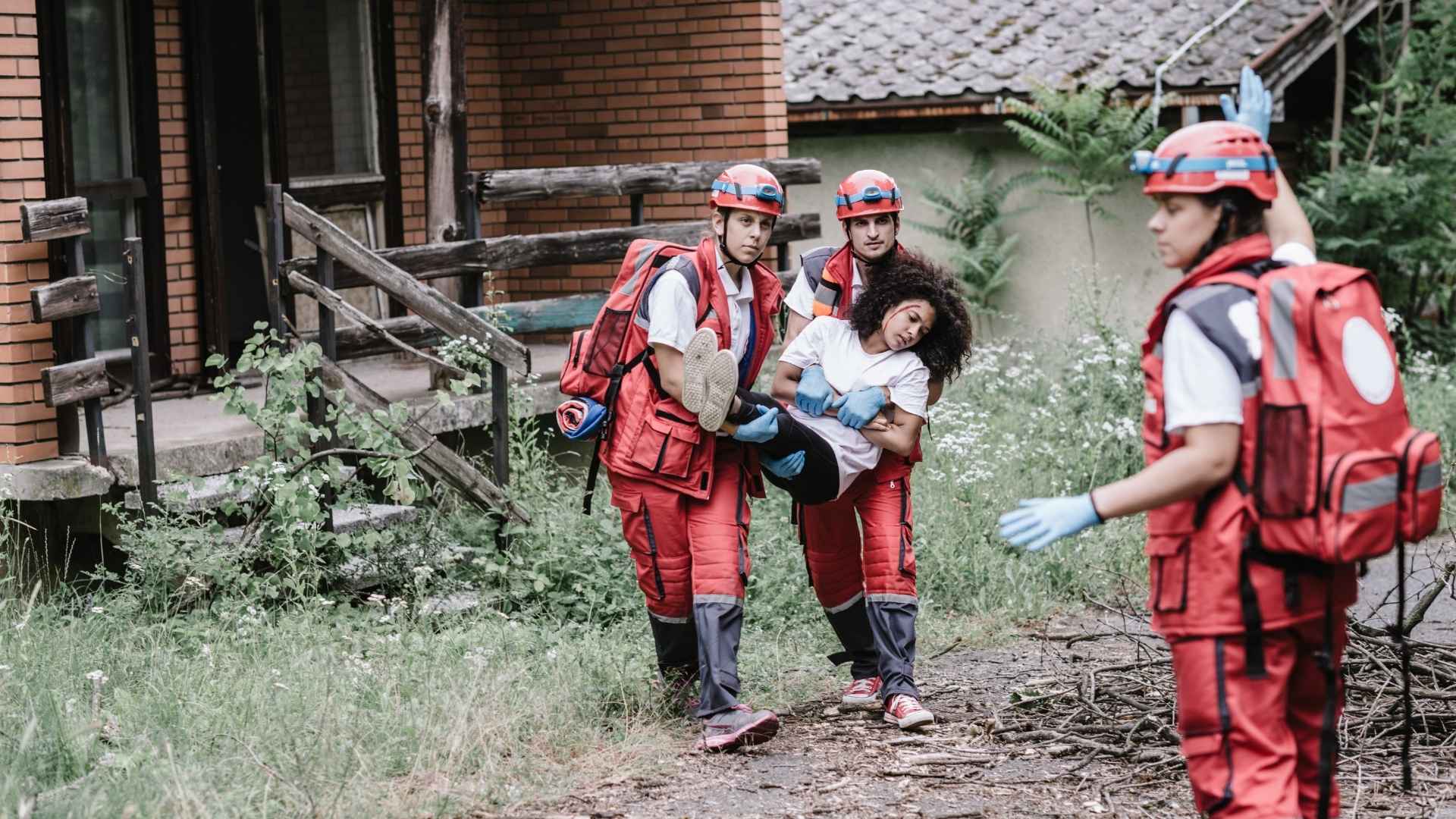
The biggest barrier to bystander intervention is fear—fear of doing it wrong, fear of breaking ribs, or fear of being sued. In Ontario, the Good Samaritan Act (2001) protects you from these concerns.
Legally, you cannot be held liable for damages while providing emergency assistance in good faith, provided you act within the scope of your training and without gross negligence. Furthermore, it is important to remember that a person in cardiac arrest is clinically dead; you cannot make their situation “worse” by attempting to save them. Yes, ribs may crack during effective CPR, but as the saying goes: “Broken ribs heal; death does not.”
Not all CPR training is the same. It is vital to choose the level that matches your needs or workplace requirements:
CPR Level C: The standard for the general public, parents, and most workplaces. It covers adult, child, and infant CPR.
Basic Life Support (BLS): Formerly known as Healthcare Provider (HCP) CPR. This is required for nurses, doctors, paramedics, and firefighters. It focuses on team-based high-performance rescue.
Emergency First Aid: A shorter course for those who need a basic overview of life-saving skills.
All our courses are certified by the Canadian Red Cross and meet 2026 WSIB compliance standards.
When you get certified, you aren’t just gaining a certificate; you are gaining the power to change the outcome of a tragedy. Coast2Coast offers Blended Online Learning so you can complete the theory at home, followed by a brief in-person practical session at one of our GTA branches.
For untrained bystanders, “Hands-Only CPR” (compressions only) is highly effective and recommended by the Red Cross for adult victims. However, in our courses, we teach you how to use pocket masks and provide rescue breaths, which are critical for drowning and pediatric victims.
Yes. Most modern AEDs have pediatric pads or a “child mode.” If those are not available, you can use adult pads, ensuring they do not touch each other (typically one on the chest and one on the back for infants).
The brain can only survive for approximately four minutes without oxygen before permanent damage begins. This is why immediate bystander CPR is necessary; you must keep the brain oxygenated until professional help arrives.
In Canada, CPR certifications are valid for three years. However, many healthcare and workplace settings require annual recertification to ensure skills remain sharp and up-to-date with the latest medical guidelines.
For an adult, you must compress the chest at least 2 inches (5 cm). It requires significant force, which is why we practice on mannequins to help you gauge the necessary pressure.
Yes. You can still use an AED. Simply avoid placing the AED pad directly over the visible lump of the pacemaker (place it at least an inch away). The AED will still function correctly.
Yes. As long as you act in good faith and trying to help the victim to the best of your ability, the law protects you from liability in Ontario.
Cardiac arrest doesn’t wait for a convenient time. Be ready to save a life by getting certified in First Aid and CPR with Coast2Coast.

The Evidence: Decades of medical data confirm that immediate bystander CPR can double or triple a victim’s chance of survival. In 2026, the Canadian Red Cross curriculum emphasizes high-performance CPR and rapid AED integration—the two most critical factors in successful resuscitation. By following CSA Z1210:24 standards, Coast2Coast ensures responders have the muscle memory to act during the “Platinum Minutes” of a cardiac emergency.
The answer is an unequivocal yes. Every year across Canada, thousands of lives are saved because a bystander knew how to perform CPR, stop severe bleeding, or manage an airway obstruction. The evidence supporting the life-saving power of first aid and CPR training is overwhelming, and the statistics paint a clear picture of just how critical these skills are in emergency situations.
In Canada, approximately 35,000 cardiac arrests occur outside of hospital settings each year. When a bystander performs CPR immediately, the victim’s chance of survival can double or even triple. Yet despite these compelling numbers, only a fraction of Canadians hold current CPR certification. This gap between the need for trained responders and the number of people who actually have the skills represents one of the most significant public health challenges in our communities.
Coast2Coast First Aid and Aquatics, a Canadian Red Cross Training Partner, is working to close this gap by making high-quality first aid and CPR training accessible to people across the Greater Toronto Area and beyond. With more than 30 training locations and flexible scheduling options, there has never been an easier time to learn these life-saving skills.
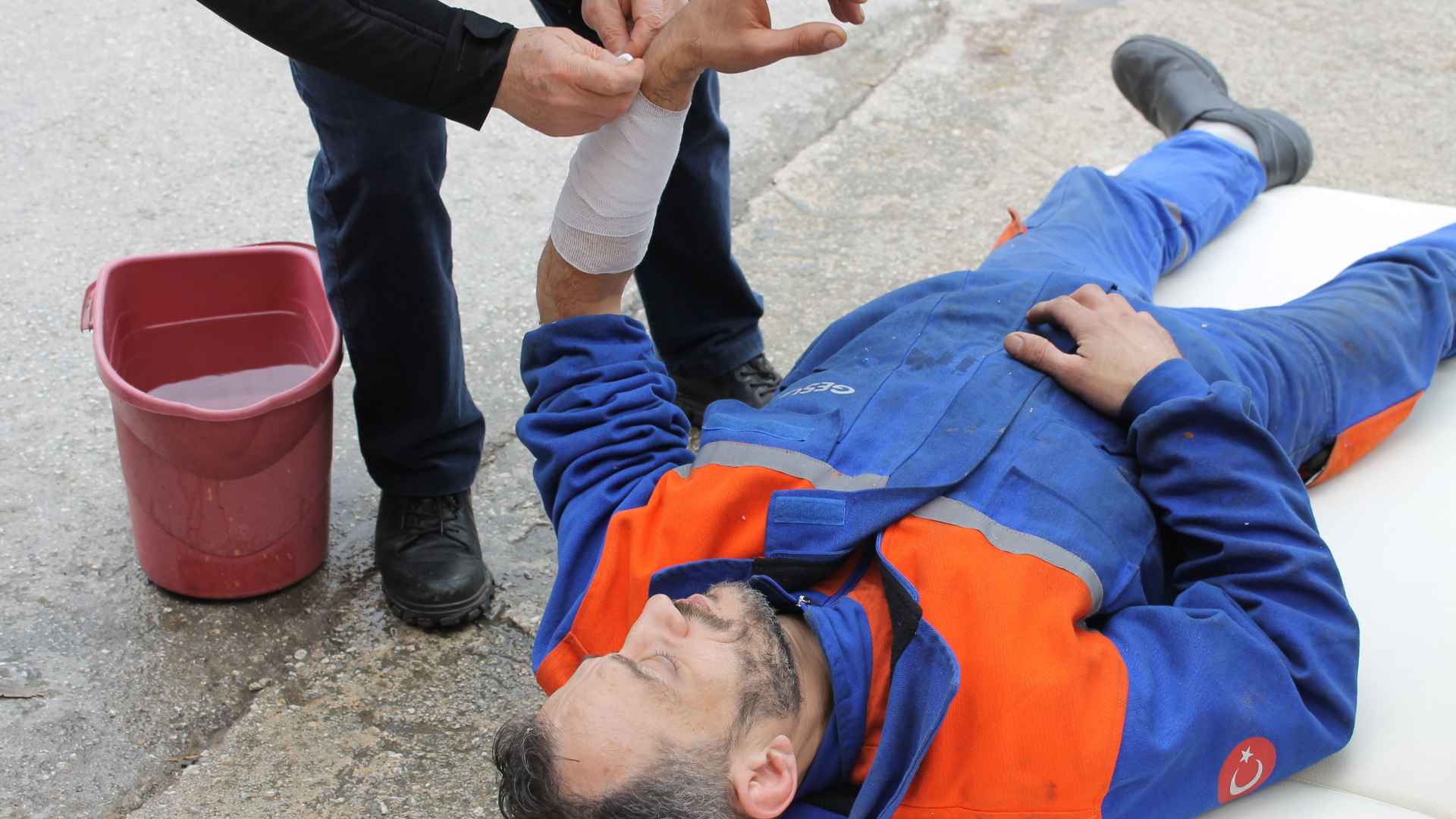
When a person experiences cardiac arrest, their heart stops pumping blood effectively. Within four to six minutes without oxygenated blood flow, the brain begins to suffer irreversible damage. After ten minutes without intervention, survival becomes extremely unlikely. This narrow window of time is why immediate bystander CPR is so critically important.
CPR works by manually pumping the heart through chest compressions, which forces blood to circulate through the body and deliver oxygen to vital organs. While CPR alone may not restart the heart, it maintains blood flow and buys precious time until paramedics arrive with advanced equipment or an automated external defibrillator can be applied to restore a normal heart rhythm.
Research published in medical journals consistently demonstrates that communities with higher rates of bystander CPR have significantly better cardiac arrest survival rates. Cities that have invested in widespread CPR training programs have seen survival rates increase by as much as 50 percent compared to communities where fewer residents are trained.
First aid training extends far beyond cardiac emergencies. Trained first aiders save lives and prevent injuries from worsening in countless everyday situations. A parent who recognizes the signs of anaphylaxis and administers an epinephrine auto-injector can save their child from a fatal allergic reaction. A coworker who knows how to apply direct pressure to a severe wound can prevent life-threatening blood loss before paramedics arrive.
Choking is another common emergency where immediate first aid intervention is essential. The Canadian Red Cross reports that choking is a leading cause of injury death in children under four years of age. A caregiver trained in back blows and abdominal thrusts can clear an airway obstruction in seconds, turning what could be a tragedy into a momentary scare.
In workplace settings, trained first aiders respond to falls, burns, electrical injuries, chemical exposures, and heat-related illnesses every day. The presence of certified first aiders in the workplace is not just a legal requirement under Ontario’s Workplace Safety and Insurance Act — it is a practical necessity that protects employees and reduces the severity of workplace injuries.
When the heart stops, the “internal clock” for brain death begins. CPR isn’t just a physical action; it is a clinical bridge. By performing deep, rapid compressions, you are creating manual perfusion. This process forces oxygenated blood that is already in the lungs into the carotid arteries and up to the brain. In 2026, we focus on Chest Compression Fraction (CCF)—the goal is to keep your hands on the chest at least 80% of the time to maintain the blood pressure required to keep the brain “primed” for a successful shock from an AED.
Emergency medical professionals use a concept called the Chain of Survival to describe the series of actions that give a cardiac arrest victim the best chance of survival. Each link in the chain is critical, and the strength of the chain depends on every link being executed quickly and effectively.
The first link is early recognition and calling for help. Recognizing that someone is in cardiac arrest and calling 911 immediately ensures that professional help is dispatched without delay. The second link is early CPR, which is where bystander training makes the biggest difference. Starting compressions within the first few minutes of cardiac arrest can double the victim’s chance of survival.
The third link is early defibrillation. AEDs are now installed in many public buildings, shopping centres, sports facilities, and transit stations across Toronto. These devices are designed to be used by anyone, even without formal training, but CPR and AED training dramatically increases a bystander’s confidence and effectiveness when using one. The fourth link is early advanced care provided by paramedics and hospital emergency departments.
One of the most common barriers to bystander intervention is fear — fear of doing something wrong, fear of hurting the victim, or fear of legal consequences. First aid and CPR training directly addresses all of these concerns. When you have practiced the skills in a classroom setting, you develop the muscle memory and confidence needed to act decisively in a real emergency.
Canada’s Good Samaritan laws provide legal protection to anyone who provides emergency assistance in good faith. As long as you act reasonably and within the scope of your training, you are protected from liability. This legal framework exists specifically to encourage bystanders to help without hesitation.
The emotional impact of being prepared should not be underestimated either. People who have used their first aid training to help someone in an emergency consistently report a profound sense of purpose and accomplishment. Conversely, people who witness an emergency and feel helpless because they lack training often experience lasting regret and emotional distress.
Coast2Coast First Aid and Aquatics offers a range of certification options to fit every schedule and budget. Whether you prefer a full in-person course, a blended online learning format, or private group training at your workplace, there is an option that works for you.
Courses are available at multiple locations across the GTA including Toronto, Mississauga, Brampton, North York, Oakville, and Hamilton. With weekday, weekend, and evening classes available, even the busiest Torontonians can find time to learn these critical skills. Certifications are valid for three years and can be renewed through shorter recertification courses.
First aid and CPR skills save lives every day across Canada. Get certified with Coast2Coast First Aid and Aquatics and be ready to make a difference when it matters most.
CPR alone typically does not restart the heart. Its primary purpose is to maintain blood flow to the brain and vital organs until an AED or advanced medical care can be used. However, CPR is essential because without it, the chances of successful defibrillation drop dramatically with every passing minute.
Studies show that bystander CPR can double or triple the survival rate from out-of-hospital cardiac arrest. In communities with high rates of bystander CPR, survival rates of 20 percent or higher have been achieved, compared to less than 10 percent in areas with low bystander intervention rates.
Absolutely not. First aid training is designed for everyone, regardless of their profession or background. Parents, teachers, coaches, office workers, construction workers, and seniors all benefit from knowing how to respond in an emergency. The skills you learn in a first aid course are applicable in every area of your life.
Children as young as nine or ten can begin learning basic first aid concepts. Teenagers are physically capable of performing effective CPR and many schools now include first aid awareness in their curriculum. Teaching children early builds a culture of preparedness that benefits entire communities.
Ashkon Pourheidary, B.Sc. (Hons) — Co-Founder, Coast2Coast First Aid & Aquatics
Ashkon has been a certified First Aid and CPR instructor since 2011 and an Instructor Trainer since 2013. He is also a certified Emergency Medical Responder (EMR) instructor, Psychological First Aid instructor, and BLS (Basic Life Support) instructor. Ashkon graduated with honours with a Bachelor of Science in Neuroscience from the University of Toronto in 2016. As co-founder of Coast2Coast First Aid & Aquatics, he has helped grow the organization to over 30 locations across Canada and into the United States. Ashkon has served on the First Aid Council for the Canadian Red Cross. He spends his time coaching the team of over 100 instructors at Coast2Coast to ensure that students training at Coast2Coast locations receive the best training experience. Connect on LinkedIn

Toronto Selection Guide: Choosing a first aid course in Toronto in 2026 requires matching your certification to your industry risk. Per WSIB Regulation 1101 and CSA Z1210:24, workplaces with 1-5 employees need Basic First Aid, while those with 6+ require Intermediate First Aid. Whether you are in North York, Etobicoke, or Downtown, ensure your provider is a Canadian Red Cross Partner to guarantee your certificate is recognized by Ontario’s Ministry of Labour.
First aid training is an essential life skill that every Toronto resident should consider acquiring. In a city with a population approaching three million people, medical emergencies happen constantly. From workplace injuries on construction sites along the Gardiner Expressway to sports injuries at community recreation centres across North York and Scarborough, the need for trained first aiders is always present.
Choosing the right first aid course requires careful consideration of several factors, including your personal goals, professional requirements, scheduling needs, and the reputation of the training provider. Understanding these factors before you enroll ensures you get the most value from your training investment and earn a certification that meets your needs.
Coast2Coast First Aid and Aquatics is a Canadian Red Cross Training Partner with training locations throughout the Greater Toronto Area. As one of the most trusted providers in Ontario, Coast2Coast has helped thousands of Toronto residents gain the confidence and skills to respond effectively in emergency situations.

The Canadian Red Cross offers multiple levels of first aid certification, and selecting the appropriate level depends on your goals and requirements. Emergency First Aid is a one-day course that covers the fundamentals including CPR, choking management, wound care, and how to handle common medical emergencies. This course is ideal for individuals seeking basic certification for personal preparedness or to meet minimum workplace requirements.
Standard First Aid is a comprehensive two-day program that covers everything in Emergency First Aid plus additional topics such as head and spinal injuries, bone and joint injuries, chest injuries, poisoning, environmental emergencies, and multiple casualty management. Standard First Aid is the most widely recognized certification in Ontario and is the level most commonly required by employers in higher-risk industries.
Healthcare professionals and those pursuing careers in medicine should consider the Basic Life Support (BLS) course, which provides advanced resuscitation skills designed specifically for clinical environments. Individuals who work with children may benefit from Child Care First Aid, a specialized course focusing on pediatric emergencies.
Ontario’s Workplace Safety and Insurance Act establishes clear requirements for first aid coverage in the workplace. Businesses with six or more employees must have at least one worker with valid first aid certification on site during all working hours. Larger workplaces and those in higher-risk industries require multiple certified employees and more advanced first aid equipment.
Beyond workplace requirements, many professional licensing bodies in Ontario require first aid certification. Teachers, early childhood educators, personal trainers, lifeguards, security guards, and many healthcare professionals must maintain current first aid credentials as a condition of their professional designation.
When evaluating these requirements, ensure that the course you select meets the specific standard required by your employer or licensing body. Canadian Red Cross certifications are universally recognized across Ontario and throughout Canada, making them the safest choice for broad professional acceptance.
Modern first aid training is available in several formats to accommodate different learning preferences and schedules. Traditional in-person courses offer the most immersive experience with hands-on practice throughout the entire program. These classroom-based courses are available on weekdays, weekends, and some evenings at Coast2Coast locations across the GTA.
The blended online learning format has become increasingly popular among busy Toronto professionals. This option allows you to complete the theory portion of your course online at your own pace before attending a shorter in-person session for hands-on skills evaluation. Blended learning is particularly convenient for people with demanding work schedules or family commitments.
For businesses looking to train multiple employees, private group training is an excellent option. Coast2Coast instructors come to your workplace with all necessary equipment and materials, minimizing disruption to your operations while ensuring your team receives high-quality instruction tailored to your industry.
Below is a breakdown of how 2026 regulations specifically impact the most common sectors in the GTA.
With massive transit projects like the Ontario Line and the Eglinton Crosstown extension dominating the city, construction safety is under a microscope in 2026.
The Certification: Almost all construction workers in Toronto now require Intermediate First Aid (formerly Standard). Because sites are physically demanding and often spread out, WSIB inspectors look for a high ratio of trained responders—typically one for every 15–20 workers—to ensure the “120-Second Rule” is met.
The 2026 AED Mandate: As of January 1, 2026, new Ontario legislation (O. Reg. 157/25) mandates that any construction project employing 20 or more workers and lasting longer than three months must have an Automated External Defibrillator (AED) on-site. This makes AED mastery an absolute “essential” for Toronto’s tradespeople.
Downtown Toronto’s financial hub and the “Silicon Valley North” tech corridor in Liberty Village have a different set of challenges.
The Certification: Most office environments legally satisfy WSIB requirements with Basic First Aid (formerly Emergency) if they have 1–5 workers per shift. However, best practice in high-rise towers is to have at least two trained responders per floor.
The Point to Consider: The “Vertical Response” time. In a 50-story tower, paramedics may take 10+ minutes to reach your desk. Corporate training in 2026 prioritizes Advanced AED usage and Emergency Communication, ensuring your team can sustain a victim’s life until the elevator arrives with professional help.
For Early Childhood Educators (ECEs) and daycare owners in North York, Scarborough, and Etobicoke, first aid isn’t just a suggestion—it’s a licensing requirement under the Child Care and Early Years Act (CCEYA).
The Certification: ECEs must hold a valid Standard First Aid with CPR Level C (Intermediate) certificate. In 2026, the Ministry of Education has increased scrutiny on Anaphylaxis (EpiPen) training and Pediatric-specific choking maneuvers.
Toronto Specifics: Many Toronto-based daycare chains now require annual “skills refreshes” even though the certificate is valid for three years, ensuring that those caring for our youngest residents have the sharpest possible response skills.
If you are working security at the Scotiabank Arena or managing a high-traffic hotel on Front Street, you are often the actual first responder.
The Certification: The Ministry of the Solicitor General requires all licensed security guards to be first aid certified. In 2026, the industry standard has moved toward Intermediate First Aid with a heavy focus on Naloxone (Opioid Overdose) training.
The Shift: Due to the 2026 update in the Occupational Health and Safety Act, any workplace with a perceived risk of opioid overdose must provide Naloxone kits and trained staff. For Toronto’s nightlife and security sectors, this has become a non-negotiable “essential” of the job.
In the industrial pockets of Etobicoke and North York, the focus shifts to machinery-related trauma.
The Certification: Because these are high-risk environments, Intermediate First Aid is mandatory. Training for 2026 includes advanced modules on Tourniquet Application and Wound Packing, skills that were once reserved for paramedics but are now considered “essential” for industrial first aiders to prevent life-threatening blood loss on the factory floor.
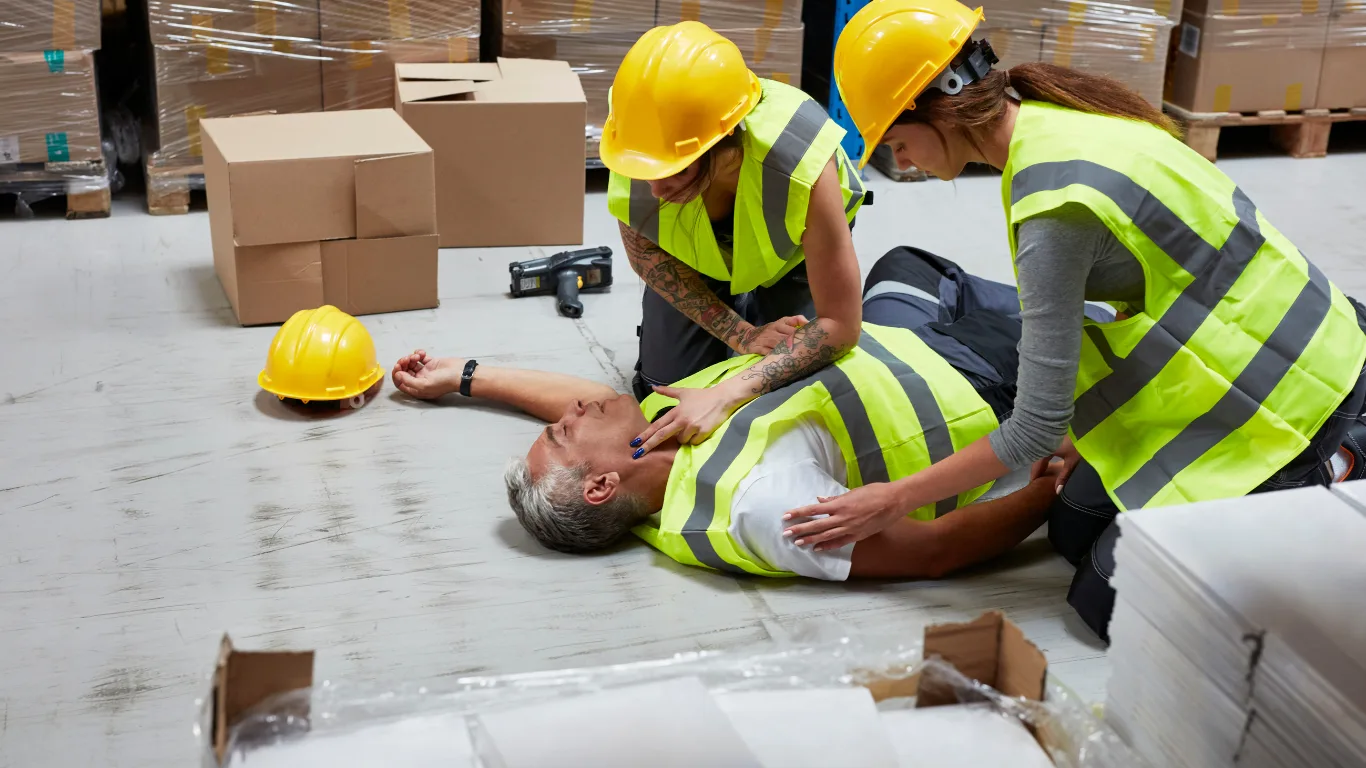
The quality of your training experience depends heavily on the provider you choose. Look for a training organization that is officially affiliated with the Canadian Red Cross, as this guarantees the curriculum meets national standards and that your certification carries weight with employers and regulatory bodies.
Instructor quality is perhaps the most important factor in your learning experience. The best instructors combine professional credentials with real-world emergency experience and a genuine ability to teach. Coast2Coast instructors are known for creating an engaging, supportive learning environment where students feel comfortable asking questions and making mistakes during practice sessions.
Class size also matters. Smaller classes mean more individual attention from your instructor and more time practicing skills on training manikins. Coast2Coast maintains controlled class sizes to ensure every student receives adequate hands-on practice time and personalized feedback.
Canadian Red Cross first aid certifications are valid for three years. As your expiration date approaches, you will need to complete a recertification course to maintain your credentials. Recertification courses are shorter and less expensive than initial certification courses, making regular renewal both convenient and affordable.
It is important to recertify before your certification expires. If you allow your credentials to lapse, you will need to retake the full course rather than the abbreviated recertification program. Setting a calendar reminder approximately three months before your expiration date gives you plenty of time to find a convenient course date.
Gain the skills and confidence to respond in any emergency. Register for a Canadian Red Cross certified first aid course with Coast2Coast today.
Emergency First Aid is a one-day course taking approximately eight hours. Standard First Aid is a two-day course. Blended learning options allow you to complete theory online, reducing in-person time significantly.
In some cases, first aid training costs may be deductible as a professional development expense if required by your employer or professional licensing body. Consult your tax professional for guidance specific to your situation.
Course materials are primarily in English, though Coast2Coast instructors can accommodate students with varying language backgrounds. Contact the team directly to discuss your specific needs.
The evaluation is skills-based and most students pass on their first attempt. If additional practice is needed, your instructor will work with you during the course to ensure you develop competence in all required skills before the final evaluation.
Ashkon Pourheidary, B.Sc. (Hons) — Co-Founder, Coast2Coast First Aid & Aquatics
Ashkon has been a certified First Aid and CPR instructor since 2011 and an Instructor Trainer since 2013. He is also a certified Emergency Medical Responder (EMR) instructor, Psychological First Aid instructor, and BLS (Basic Life Support) instructor. Ashkon graduated with honours with a Bachelor of Science in Neuroscience from the University of Toronto in 2016. As co-founder of Coast2Coast First Aid & Aquatics, he has helped grow the organization to over 30 locations across Canada and into the United States. Ashkon has served on the First Aid Council for the Canadian Red Cross. He spends his time coaching the team of over 100 instructors at Coast2Coast to ensure that students training at Coast2Coast locations receive the best training experience. Connect on LinkedIn

The Quick Take: Succeeding in a Toronto CPR course in 2026 requires mastering the CSA Z1210:24 standards and high-performance resuscitation techniques. Whether you are a healthcare provider seeking BLS/ACLS or a community responder aiming for Level C, your training focuses on the “Platinum Minutes” of an emergency. Learn why immediate recognition and the use of feedback-enabled manikins are the gold standards for survival in the GTA.
Toronto is a city of nearly three million people, and with that population comes the reality that cardiac emergencies, choking incidents, and other life-threatening situations occur every single day. Whether you are navigating the Financial District, commuting on the TTC, or coaching youth sports in Scarborough, the ability to perform CPR is the ultimate urban survival skill. In an emergency, knowing CPR can save someone’s life by providing immediate care until professional help arrives.
Taking a CPR course in Toronto is one of the most valuable investments you can make in your personal preparedness. These courses teach you how to recognize cardiac arrest, perform high-quality chest compressions, deliver rescue breaths, and use an automated external defibrillator (AED). At Coast2Coast, we’ve updated our curriculum to reflect the fast-paced nature of the GTA, ensuring you have the hands-on, scenario-based training needed to build real confidence.
Cardiac arrest is a sudden, life-threatening emergency where the heart unexpectedly stops beating, cutting off blood flow and oxygen to the brain and vital organs. This can be triggered by heart attack, stroke, severe trauma, or electrical shock. Immediate recognition is essential—every minute without basic life support (BLS) reduces survival chances by about 10%. This is why healthcare providers and trained community responders are the most vital link in the survival chain.
For healthcare professionals, Advanced Cardiovascular Life Support (ACLS) and Pediatric Advanced Life Support (PALS) provide the specialized skills needed for complex emergencies. However, for the general public, the foundation of every “save” starts with high-quality Basic Life Support. In every Coast2Coast course, we emphasize rapid recognition and effective communication because, in a cardiac emergency, every second counts toward survival.
In 2026, CPR is recognized as a clinical “bridge” to survival. When a person experiences cardiopulmonary arrest, the brain begins to suffer irreversible damage within four to six minutes. CPR works by manually pumping the heart through chest compressions, forcing oxygenated blood to circulate to vital organs. While CPR alone may not restart the heart, it maintains blood flow and buys precious time for an AED or paramedics to arrive. We focus heavily on Chest Compression Fraction (CCF)—keeping your hands on the chest at least 80% of the time to maintain critical blood pressure.
Modern training has moved away from rubber dolls to High-Fidelity Feedback Manikins. These trainers use sensors to provide real-time data on your depth (at least 2 inches) and rate (100-120 bpm). This data-driven approach builds Correct Muscle Memory, making you 50% more likely to deliver effective compressions in a high-stress scenario. We ensure every student masters airway management and trauma response using these advanced tools at our Toronto training locations.
If you work in a high-rise in the Financial District or live in a CityPlace condo, you face the “Vertical Delay.” Reaching the 40th floor adds 5–8 minutes to emergency response times. Our training covers urban logistics, such as coordinating “Elevator Recall” with security and locating AEDs in lobbies. In a skyscraper, you aren’t just a bystander; you are the primary medical responder until help navigates the building’s architecture.
CPR training is more than a certification—it’s an investment in community safety. Organizations like the Stroke Foundation highlight the importance of widespread education in improving survival rates. By learning CPR, you gain the confidence to respond to cardiac arrest, stroke, and trauma at home or in the workplace. Successful completion empowers you to provide care that potentially saves a life, joining a foundation of responders committed to quality intervention.
The Canadian Red Cross offers several levels to meet professional and personal needs:
In Ontario, the Good Samaritan Act provides legal protection to those helping in good faith within their training scope. Professionally, WSIB Regulation 1101 mandates certified first aiders on staff. The 2026 shift to CSA Z1210:24 standards ensures your training meets the latest international scientific evidence for emergency cardiovascular care. Whether you choose in-person or blended first aid learning, your certificate is a career-boosting asset.
Join thousands of Torontonians who have earned their certification with Coast2Coast. Choose from flexible dates at convenient GTA locations.
No prior experience is required. Courses are designed for complete beginners and your instructor will guide you through every skill from the basics.
Fees vary by level (A, C, or BLS). You can find current pricing on our registration page.
You can complete the theory via blended learning online, but the hands-on skills evaluation must be done in person for official certification.
Wear comfortable clothes, bring photo ID, and your confirmation email. All training equipment is provided by Coast2Coast.
We offer fast-track recertification training in Toronto to help you keep your skills current before they expire.
Ashkon Pourheidary, B.Sc. (Hons) — Co-Founder, Coast2Coast First Aid & Aquatics
Ashkon has been a certified First Aid and CPR instructor since 2011 and an Instructor Trainer since 2013. He is also a certified Emergency Medical Responder (EMR) instructor, Psychological First Aid instructor, and BLS (Basic Life Support) instructor. Ashkon graduated with honours with a Bachelor of Science in Neuroscience from the University of Toronto in 2016. As co-founder of Coast2Coast First Aid & Aquatics, he has helped grow the organization to over 30 locations across Canada and into the United States. Ashkon has served on the First Aid Council for the Canadian Red Cross. He spends his time coaching the team of over 100 instructors at Coast2Coast to ensure that students training at Coast2Coast locations receive the best training experience. Connect on LinkedIn

The Core Value: In 2026, first aid training is more than a workplace requirement—it is a vital pillar of community safety. With over 35,000 out-of-hospital cardiac arrests in Canada annually, the first few minutes determine the outcome. Being certified provides you with the “Three Ps” of first aid: preserving life, preventing further injury, and promoting recovery. Whether in a high-rise office or at home, your ability to act transforms you from a bystander into a lifesaver.
In a city as large and active as Toronto, medical emergencies are an unavoidable part of daily life. From the bustling downtown core to the quiet suburban streets of Scarborough, North York, and Etobicoke, accidents, injuries, and sudden medical crises happen every day to people of all ages and backgrounds. The question is not whether you will ever encounter such a situation, but whether you will be prepared to respond when it happens.
A first aid course gives you the skills, knowledge, and confidence to make a meaningful difference in an emergency. It transforms you from someone who watches helplessly into someone who can take action, stabilize a victim, and potentially save a life. For Torontonians, where busy streets, crowded transit, diverse workplaces, and active recreational scenes create countless opportunities for emergencies, first aid training is not a luxury — it is a necessity.
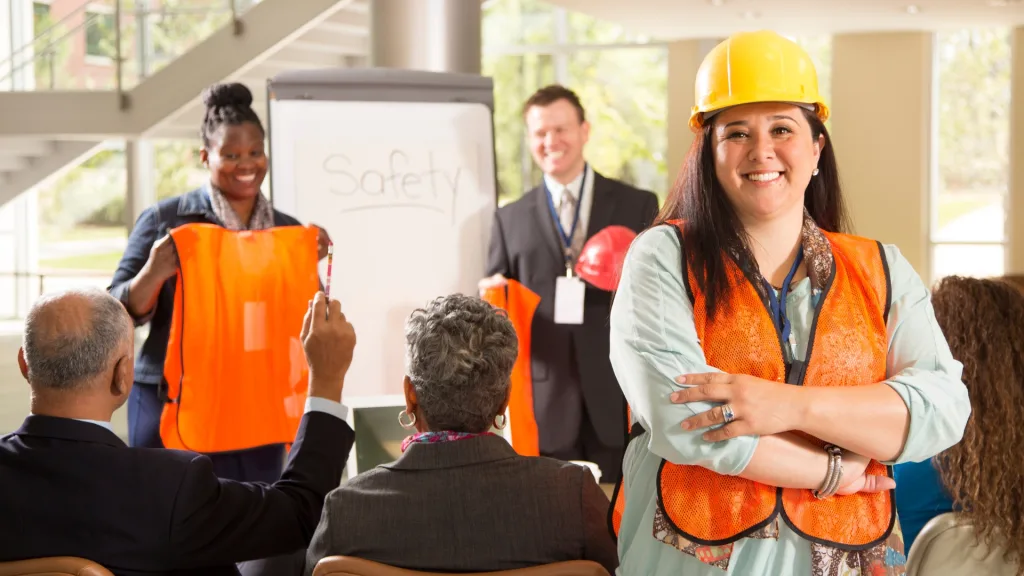
One of the most significant barriers to emergency response is the “Bystander Effect.” In a high-density city like Toronto, people often assume someone else will call 911 or step in to help. This hesitation is rarely due to a lack of compassion; rather, it is a lack of confidence. Without training, the human brain often freezes under the pressure of a medical crisis.
First aid training fundamentally rewires this response. By practicing on high-fidelity manikins and running through realistic scenarios, you develop muscle memory. In 2026, Coast2Coast focuses on the “Rescuer Mindset,” ensuring that when an emergency occurs at Union Station or a local community center, your training takes over. You become the person who points to a specific individual and says, “You, call 911,” and “You, find an AED,” while you begin life-saving interventions.
The most compelling reason to take a first aid course is the ability to protect the people you care about most. As we have discussed, the majority of medical emergencies happen at home, which means your family members are the people most likely to need your help. A parent who knows how to respond when a child chokes, a spouse who can perform CPR during a cardiac arrest, or an adult child who can manage a fall injury for an aging parent — these are the real-world scenarios that first aid training prepares you for.
Toronto families face a wide range of potential emergencies depending on the season and their activities. Winter brings risks of hypothermia, frostbite, and falls on icy surfaces. Summer introduces heat-related illnesses, water safety concerns, and sports injuries. Year-round, choking, allergic reactions, cardiac events, and household accidents remain constant risks. A comprehensive Standard First Aid course covers all of these scenarios and more.
For parents with young children, specialized courses like Child Care First Aid provide focused training on pediatric emergencies that are most relevant to infant and child safety. Knowing how to differentiate between a mild cough and a partial airway obstruction in a toddler can prevent a terrifying trip to the ER.
First aid certification is a professional credential that is valued by employers across virtually every industry in Toronto. While some professions explicitly require it — childcare, education, healthcare, nurses, construction, security, fitness, and hospitality, among others — many other employers view first aid certification as a positive differentiator that demonstrates responsibility, leadership, and a commitment to workplace safety.
In Toronto’s competitive job market, having CPR and first aid certification on your resume can set you apart from other candidates. It signals that you are proactive about safety, willing to invest in your own development, and capable of handling high-pressure situations. These qualities are valued in any professional context, from corner offices to retail floors.
Ontario’s workplace safety legislation requires employers to maintain adequate first aid coverage, and Toronto businesses must comply with these standards. Depending on the number of employees and the nature of the work, employers need certified first aiders on staff, properly equipped first aid stations, and documented emergency procedures.
For employees, having a current first aid certification means you are eligible to serve as your workplace’s designated first aid responder. This role often comes with additional recognition, responsibility, and in some cases, compensation. For employers, investing in group first aid training for their Toronto workforce ensures compliance, reduces liability, and creates a safer environment for everyone.
Coast2Coast’s private group training program can be delivered at any Toronto workplace, from downtown office towers to suburban industrial parks. Our instructors customize the training to address the specific hazards present in your work environment, ensuring that the skills your employees learn are directly applicable to their daily activities.
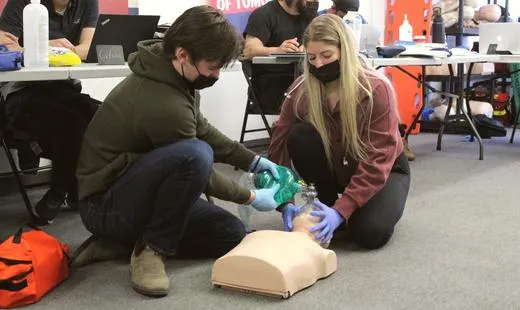
In 2026, medical science has narrowed down the most critical time for intervention to what experts call the “Platinum Minutes.” These are the first 10 minutes following a major medical event, such as a massive hemorrhage or cardiac arrest. In a city as dense as Toronto, traffic congestion and vertical response times in high-rise buildings mean that professional paramedics often arrive *after* this window has closed.
When you are trained in first aid, you provide the manual perfusion (circulation) and oxygenation required to keep the brain alive. Without your intervention, a victim’s survival rate drops by nearly 10% for every minute that passes. By acting within the Platinum Minutes, you are not just helping; you are providing the only chance the victim has for a full neurological recovery. Our courses teach you how to maintain this “Bridge of Life” until the sirens arrive.
Toronto’s diverse population and dynamic environment mean that first aid training needs are equally varied. Fortunately, the city offers a broad spectrum of aid training courses designed to meet the needs of individuals, families, workplaces, and schools. Whether you’re a parent looking to learn essential skills for child safety, an employee seeking workplace certification, or someone interested in advanced instructor courses, there’s a program tailored for you.
Basic first aid courses provide foundational knowledge and practical skills to help you respond to common injuries and emergencies at home, school, or in public spaces. For those who want to focus on life saving skills related to cardiac arrest, specialized CPR and AED training in Toronto is available. More advanced options, such as Basic Life Support (BLS) and instructor courses, are designed for healthcare professionals or those who wish to teach others.
CPR and AED certification are among the most valuable credentials you can obtain when it comes to emergency preparedness. The Stroke Foundation emphasizes the importance of these essential skills, as immediate action during a cardiac arrest can dramatically increase survival rates. In Toronto, a variety of courses are available to teach you how to perform effective chest compressions, provide rescue breaths, and use an automated external defibrillator (AED) with confidence.
These certification courses combine theoretical knowledge with hands-on practice, ensuring that you not only understand the steps but can also perform them under pressure. Upon successful completion, individuals receive a certification—typically valid for three years through the Red Cross—demonstrating their ability to respond to cardiac emergencies and use an AED safely. By investing in this training, you’ll be prepared to respond quickly and effectively when every second counts.
Despite the clear benefits, several myths about first aid training persist. One common misconception is that aid training is only necessary for healthcare professionals or those working in high-risk environments. In reality, first aid courses are designed for everyone—students, parents, teachers, and anyone who wants to be prepared to respond in an emergency. Another myth is that first aid courses are too time-consuming or costly. In fact, there are many comprehensive training options available in Toronto that fit a variety of schedules and budgets, including blended online learning.
Getting started with first aid training in Toronto is straightforward. Coast2Coast offers courses at all levels of certification through the Canadian Red Cross. The CPR/AED course provides focused cardiac emergency training. The Emergency First Aid course offers one-day foundational training. The Standard First Aid course delivers comprehensive two-day training that meets all Ontario workplace requirements. Classes are available throughout the week at our various GTA locations.
Healthcare professionals can pursue BLS certification, aspiring instructors can enroll in the Instructor course, and those with expiring certifications can take a recertification course to stay current. For more information or assistance with registration, contact Coast2Coast.
Take the most important step toward personal and family safety. Register for a first aid or CPR course with Coast2Coast and get certified by the Canadian Red Cross.
Visit the Coast2Coast course locations page to find upcoming sessions. Online registration is secure, and confirmation is sent immediately.
You will receive a Canadian Red Cross certification valid for three years and recognized by all Canadian provinces and territories.
No. All training materials, feedback-enabled manikins, AED trainers, and supplies are provided. Just wear comfortable clothing.
Yes, Coast2Coast offers courses on weekdays, evenings, and weekends at locations across Toronto to fit your schedule.
Yes, our instructors incorporate urban-specific scenarios, such as managing a victim in an elevator or coordinating with high-rise security teams.
Ashkon Pourheidary, B.Sc. (Hons) — Co-Founder, Coast2Coast First Aid & Aquatics
Ashkon has been a certified First Aid and CPR instructor since 2011 and an Instructor Trainer since 2013. He is also a certified Emergency Medical Responder (EMR) instructor, Psychological First Aid instructor, and BLS (Basic Life Support) instructor. Ashkon graduated with honours with a Bachelor of Science in Neuroscience from the University of Toronto in 2016. As co-founder of Coast2Coast First Aid & Aquatics, he has helped grow the organization to over 30 locations across Canada and into the United States. Ashkon has served on the First Aid Council for the Canadian Red Cross. He spends his time coaching the team of over 100 instructors at Coast2Coast to ensure that students training at Coast2Coast locations receive the best training experience. Connect on LinkedIn
Shopping cart