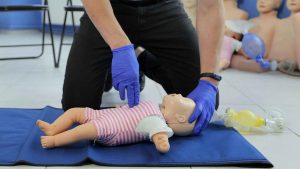

Becoming a Canadian Red Cross First Aid and CPR Instructor requires completing a rigorous four-phase pathway: a formal skills evaluation by an Instructor Trainer, the Fundamentals of Instruction (FOI) module, discipline-specific classroom training, and a supervised teaching experience. Candidates must already hold a valid Intermediate / Standard First Aid with CPR Level C certificate and be at least 18 years of age. The resulting instructor certification is valid for three years and authorizes you to train and certify others under CSA Z1210:24 and provincial workplace first aid regulations across Canada.
Instructor Training
Find a Coast2Coast Training Location Near You
Over 30 Canadian Red Cross Training Partner locations across Canada for individuals and organizations.
18:1
maximum student-to-instructor ratio mandated by Canadian Red Cross
14.5 hrs
in-person FOI classroom training required before discipline-specific phases
3 Years
validity of a Canadian Red Cross instructor certificate before recertification
Why Become a Canadian Red Cross First Aid and CPR Instructor?
There is no professional milestone quite as fulfilling as transitioning from a trained responder to a certified educator. Becoming a Canadian Red Cross First Aid and CPR Instructor allows you to lead a new generation of life-savers, ensuring that Canadian workplaces, schools, and homes remain protected during medical crises. This role is not just about demonstrating chest compressions; it is about mastering adult learning principles, managing dynamic classroom environments, and providing the high-quality feedback necessary for students to pass their practical skills assessment.
In 2026, the demand for certified instructors is at an all-time high as more industries adopt the updated CSA Z1210:24 national standards. As an instructor, you play a vital role in saving lives and promoting safety training in workplaces, schools, and communities. Whether you aim to work as a freelance trainer, enhance your standing within a corporate safety department, or join the team at one of our 30+ training locations in Canada, the instructor pathway is your definitive roadmap to professional success. This guide outlines the mandatory certification prerequisites and the intensive training modules required to earn your teaching credentials.
What Is the 2026 Canadian Red Cross Instructor Pathway?
The journey to becoming a certified educator is designed to be comprehensive and academically rigorous. The Canadian Red Cross uses a multi-phase approach to ensure that every instructor possesses both clinical competency and the instructional theory covered in the Fundamentals of Instruction (FOI). The pathway is structured through a blended learning format that combines online self-paced modules with in-person, instructor-led sessions, ensuring candidates are fully prepared to deliver effective, life-saving training before they ever stand in front of a real class.
Phase 1: Skills Evaluation and Certification Prerequisites
Before you can teach, you must prove you are a master of the material. All candidates must hold a valid, unexpired Intermediate / Standard First Aid with CPR Level C certificate. During the initial skills evaluation, an Instructor Trainer will assess your ability to perform High-Performance CPR, utilize barrier devices, and manage trauma scenarios without any coaching. Candidates are also required to pass written exams as part of the assessment process to ensure comprehensive instructor qualification. You must also be at least 18 years of age to enter the program.
Phase 2: Fundamentals of Instruction (FOI)
This phase focuses on the “how” of teaching. Candidates complete an 8-hour online module followed by a 14.5-hour in-class session. You will explore adult learning styles, classroom management, the use of instructional media, and the importance of clear communication skills for engaging students and ensuring understanding. This foundation ensures you can adapt your teaching to diverse learners, from daycare staff to construction foremen.
Phase 3: Discipline-Specific Classroom Component
Once you have mastered the FOI, you move into the 14.5-hour discipline-specific training. In this classroom component, attending every session is mandatory to meet certification requirements. This is where you learn to deliver the specific content for Emergency First Aid, Intermediate / Standard First Aid, and CPR courses. Participants will practice micro-teaching sessions, delivering portions of the curriculum to peers and receiving critical feedback on delivery and written examination preparation strategies.
Candidates are provided with comprehensive course materials including manuals, lesson plans, and practice assignments. These materials are essential for developing effective teaching skills and ensuring readiness for real-world scenarios.
What Clinical Skills Must a First Aid Instructor Master?
As an instructor, your students will look to you for the highest level of clinical precision. You must be an expert in patient assessment and care, teaching students to recognize patient needs and respond effectively during emergencies. A central concept is Chest Compression Fraction (CCF), the percentage of time during a rescue that is spent actively compressing the chest. You will learn to use high-fidelity feedback manikins that provide real-time data on compression depth and rate, and you will teach your students to minimize pauses during AED deployment or rescue breathing to keep the CCF as high as possible.
These advanced skills are especially critical for healthcare providers who require comprehensive training tailored to emergency response in clinical settings.
Watch: How to Perform High-Quality CPR (Instructor Standard)
Who Should Become a CPR Instructor? Ideal Candidates for the Program
The instructor rating is a powerful asset for anyone who is passionate about teaching, committed to empowering others, and motivated by public safety. New instructors must complete a structured training process including required coursework, hands-on practice, and a monitored teaching session to ensure quality and effectiveness. Becoming an in-house trainer allows organizations to keep their safety certification self-sufficient:
- Teachers and Educators: Schools often certify their own staff to manage daycare staff training and student babysitting courses, with engaged instructors making sessions informative for all participants.
- Healthcare Trainers: Nurses and paramedics often upgrade to Basic Life Support (BLS) Instructor to certify clinical teams in oxygen administration and team resuscitation.
- Security and Property Managers: Large firms certify their managers to ensure security guards maintain unexpired credentials for provincial licensing.
- Firefighters and First Responders: Many professional responders become instructors to lead community outreach programs and high-level industrial safety sessions.
How Does the Instructor Certification Advance Your Career?
Adding “Canadian Red Cross Instructor” to your resume is a significant differentiator. It proves you possess advanced leadership skills, public speaking confidence, and a mastery of medical emergency protocols. Many instructors find rewarding opportunities delivering private group training for corporate clients or working part-time at established Training Partner facilities like Coast2Coast.
Beyond the financial benefits, instructors prepare their students to respond effectively in real emergencies, giving hope and confidence to people who would otherwise freeze in a crisis. Whether you are teaching a parent how to manage a choking infant or a factory worker how to use a tourniquet, your impact as an instructor ripples through the entire community, multiplying the number of people prepared to save a life.

What Flexible Learning Options Are Available for Instructor Candidates?
We understand that potential instructors are often busy professionals. The FOI and teaching experience modules are delivered in a blended learning format that combines an online self-paced portion, which must be completed before attending the in-person instructor-led sessions, with hands-on classroom components. This flexible approach allows you to balance your current career with your transition into first aid education without disrupting your existing schedule.
If you are already an instructor with another agency such as the Heart and Stroke Foundation or St. John Ambulance, you may be eligible for a fast-track transfer pathway to earn your Canadian Red Cross credentials in less time. Contact a Training Partner to confirm your eligibility and the documentation required.
Start With Your Provider Certification First
A valid CPR/AED certificate is the foundation of the instructor pathway. Get certified before you can certify others.
What Happens During the Supervised Teaching Experience (Phase 4)?
The supervised teaching experience is the final and most important phase of the instructor pathway. This is where candidates apply everything learned in the FOI and discipline-specific components by leading an actual first aid or CPR course in front of real students, with a certified Teaching Experience Supervisor observing and evaluating every aspect of your delivery.
The supervisor evaluates your ability to explain clinical techniques clearly, manage the student-to-manikin ratio, deliver constructive feedback during skills practice, administer the written examination correctly, and complete all required course documentation. Candidates who do not meet the required standard are given specific developmental feedback and may schedule an additional supervised session before certification is granted.
Once the supervisor formally signs off, your paperwork is submitted to the Canadian Red Cross and your digital instructor eCard is typically issued within 5 to 10 business days. This credential authorizes you to independently deliver and certify students in the disciplines covered by your training.
Deliver Training Directly at Your Organization
Once certified, instructors can arrange private group sessions for their own teams through Coast2Coast.
Key Takeaway
Becoming a Canadian Red Cross First Aid and CPR Instructor is one of the most impactful professional investments a safety-minded person can make. The four-phase pathway, from skills evaluation through supervised teaching, is rigorous by design: the quality of every certificate issued in Canada depends on the instructors who deliver the training. With instructor demand at an all-time high under the 2026 CSA Z1210:24 standards, the credential opens doors to corporate training contracts, part-time roles with Training Partners, and the profound professional reward of multiplying life-saving skills through your community.
Start Your Instructor Journey
Have Questions About the Instructor Pathway?
Contact the Coast2Coast team to discuss prerequisites, transfer pathways, and upcoming instructor training dates.
Frequently Asked Questions: CPR Instructor Certification in Canada 2026
More FAQs: Credentials, Equipment, Transfers, and Certification Timelines
Sources and Further Reading
- Canadian Red Cross: First Aid and CPR Instructor Pathway Documentation, 2025 Edition
- CSA Group: CAN/CSA-Z1210:24 First Aid in the Workplace (National Standard of Canada)
- WSIB Ontario: Regulation 1101, First Aid Requirements (O. Reg. 1101)
- Canadian Red Cross: Fundamentals of Instruction (FOI) Course Overview