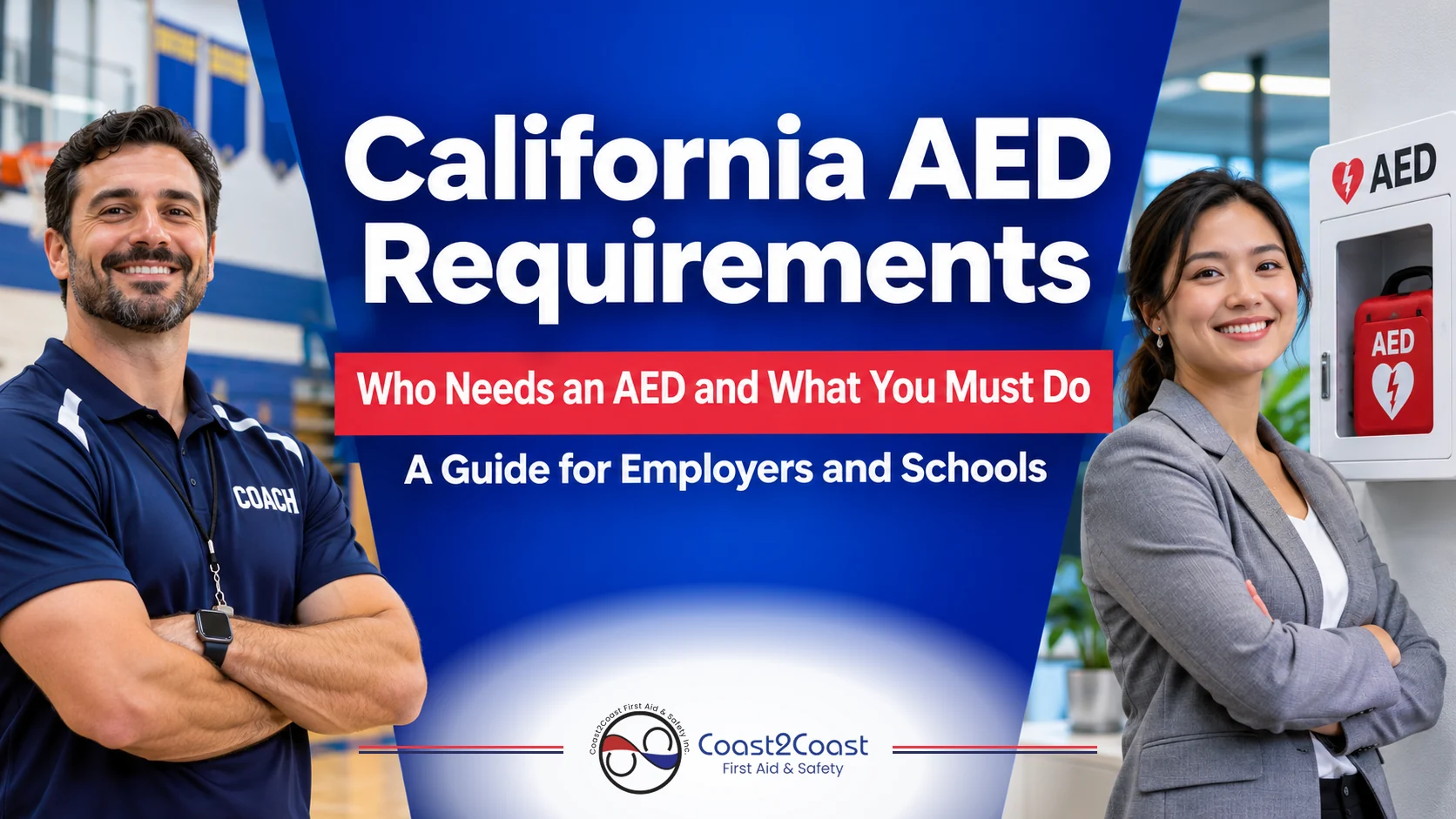
California AED requirements depend on who you are. Individuals are not required to own an AED, but certain schools, public pools, health studios, commuter trains and newer or renovated buildings
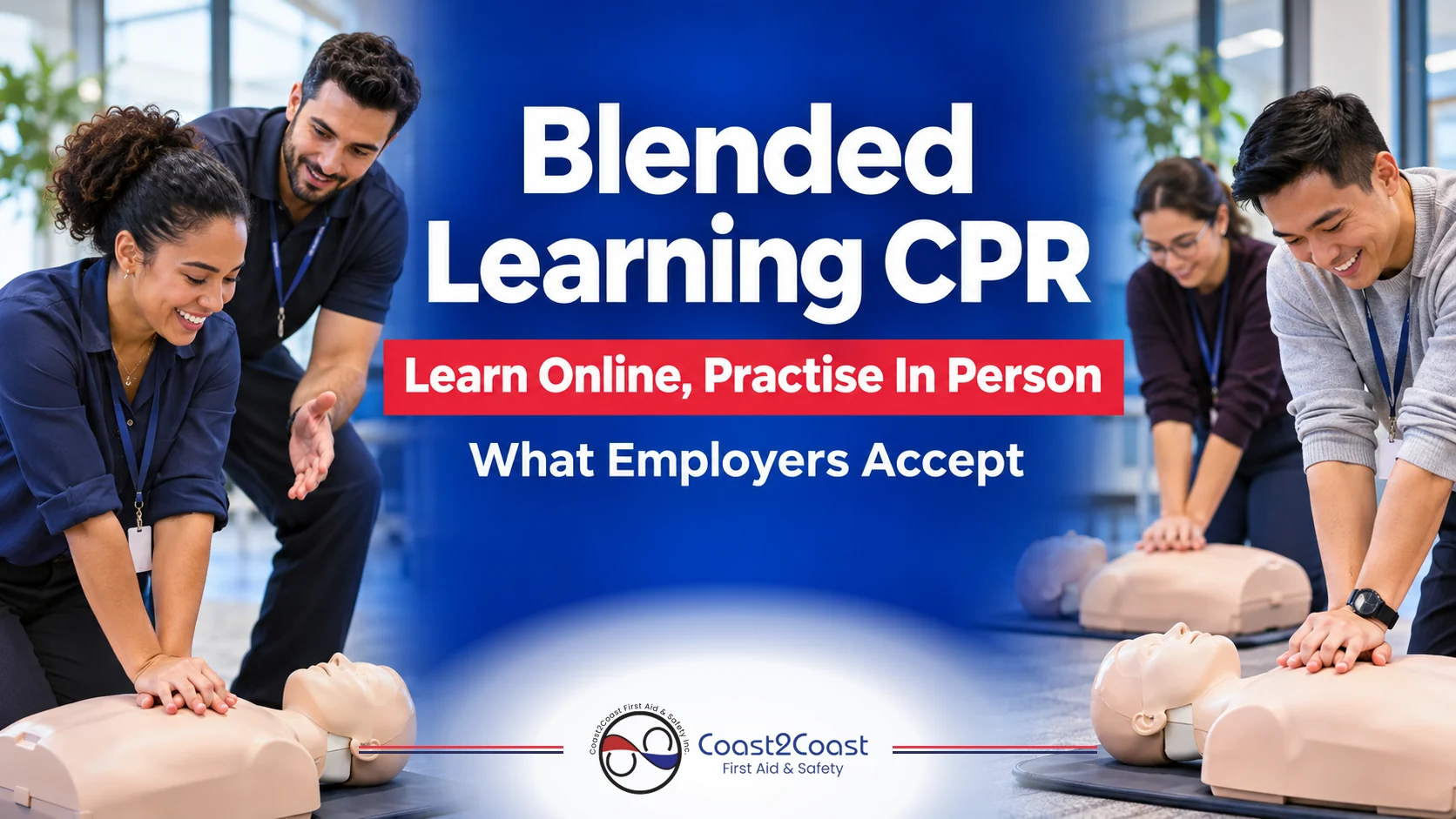

Blended learning CPR combines an online lesson with a short in-person skills session where an instructor watches you practise on a manikin. Online-only CPR courses have no hands-on practice, and
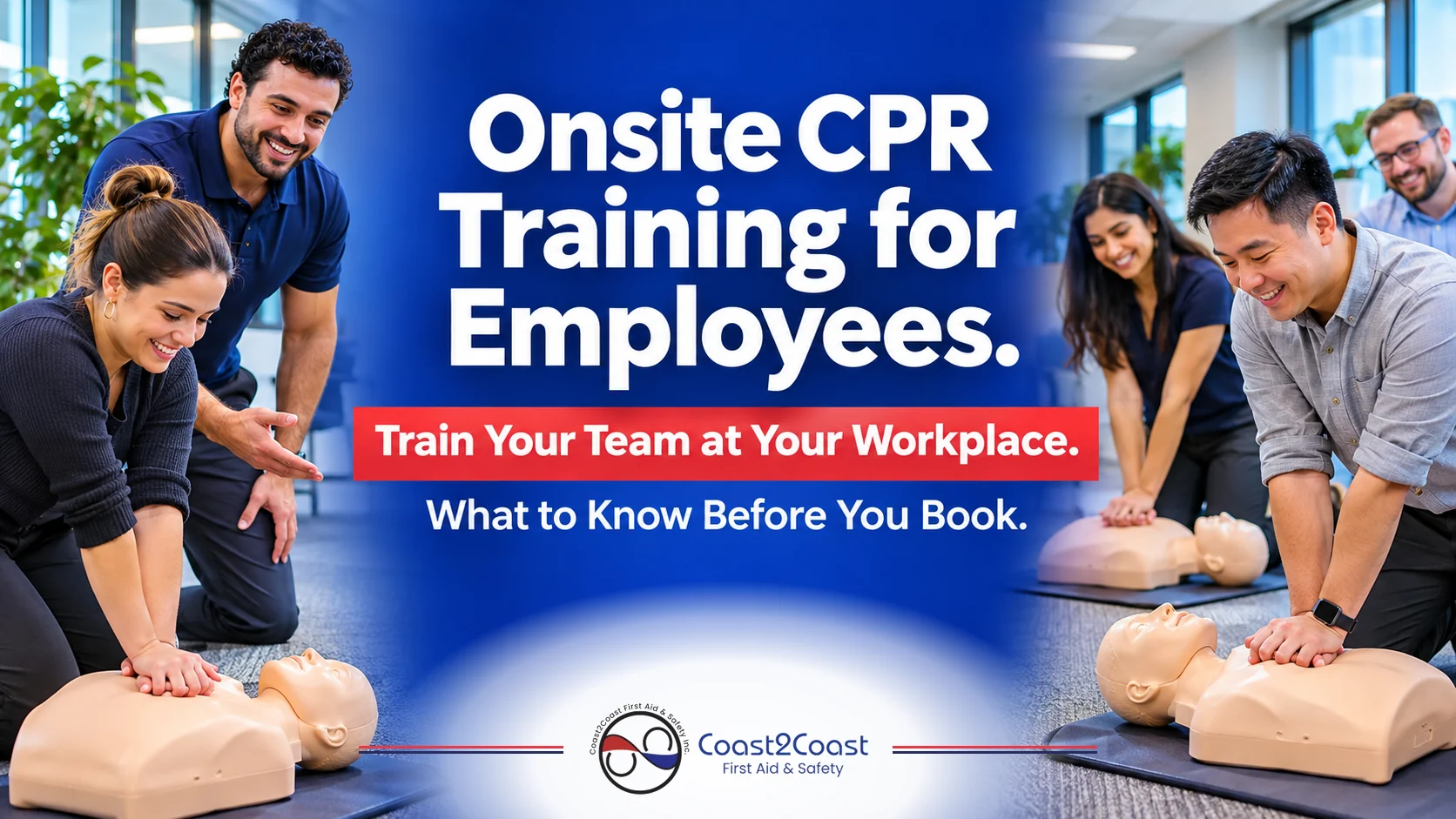
Onsite CPR training means a certified instructor brings the class to your workplace so a whole team learns CPR and AED use in one session. OSHA’s medical services and first
A blackout can last hours or several days, so Ready.gov advises keeping at least three days of supplies at home: water (one gallon per person per day), non-perishable food, flashlights,
An expired CPR certification means your card is past its expiry date, which is usually two years after your class. There is no universal grace period, so ask your employer
BLS vs CPR comes down to who you are and who you might have to help. A standard CPR/AED course teaches everyday responders to use chest compressions, rescue breaths and
California childcare providers cannot meet Title 22 or EMSA pediatric first aid and CPR certification requirements with a 100% online course. An in person, hands on skills assessment supervised by
No. You cannot renew a Red Cross BLS card, Canadian or American, through the American Heart Association. AHA renewal courses require a current AHA BLS eCard as a prerequisite, and
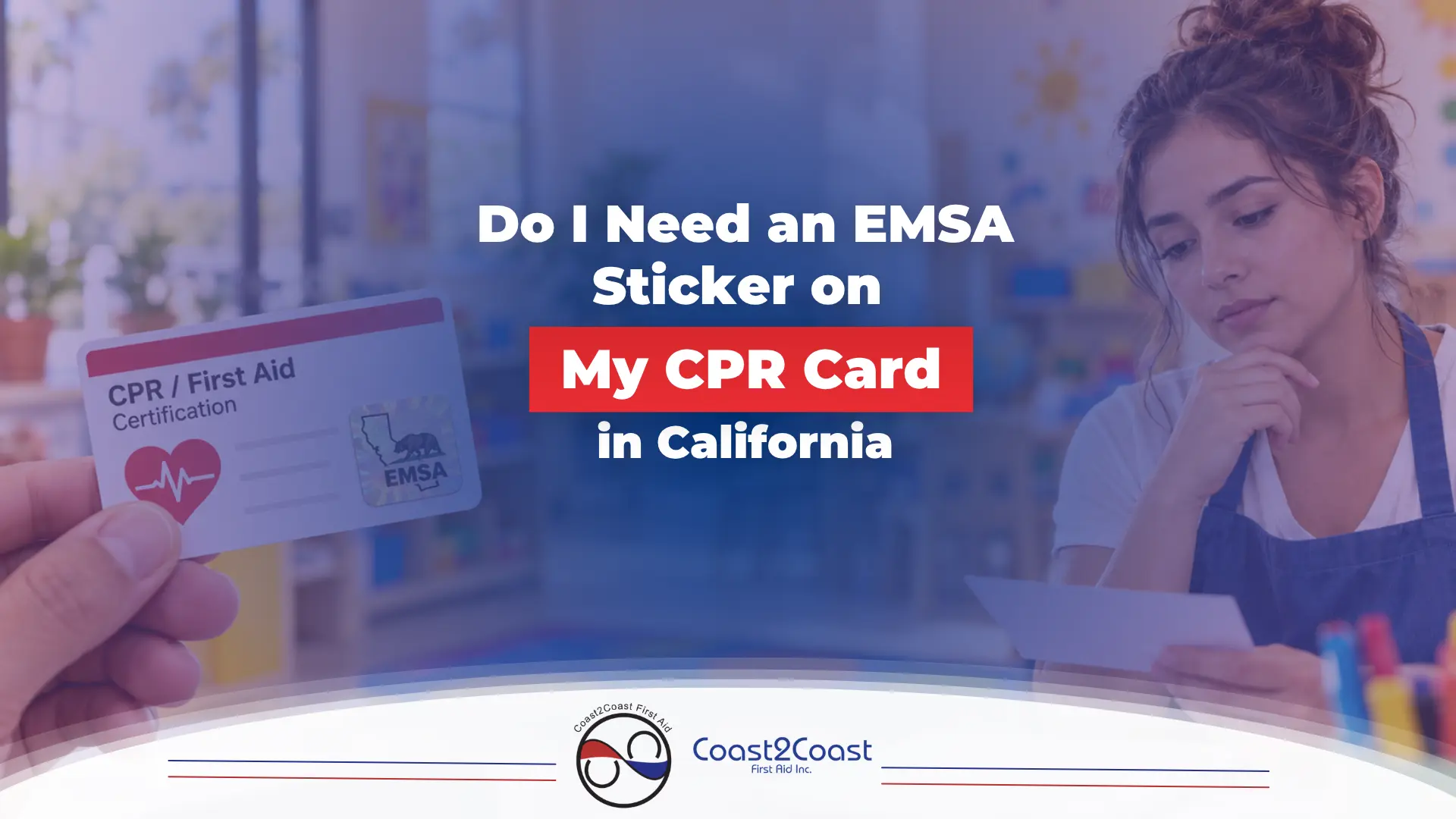
California requires licensed childcare providers to hold pediatric first aid and CPR certification from either an EMSA-approved training program (which issues cards bearing an EMSA sticker) or the specific American