
How long can a blackout last, and how much should you prepare for?
Most outages are over in a few hours, but storms, wildfires, heat waves, high winds and grid failures can leave neighborhoods dark for days. When a large area is affected, utility crews restore power in stages, starting with hospitals, emergency services and major lines before individual streets.
That is why emergency agencies recommend planning for at least three days. Three days is a baseline, not a forecast. If you live in a wildfire or storm-prone area, or far from major roads, consider stocking for a week.
An outage is also a first aid problem. People turn to generators, candles, grills and space heaters, and the injuries that follow are predictable and preventable.
What emergency supplies do you need for a 3-day blackout?
Keep your kit in one place, in a bin or backpack that everyone in the household can find in the dark.
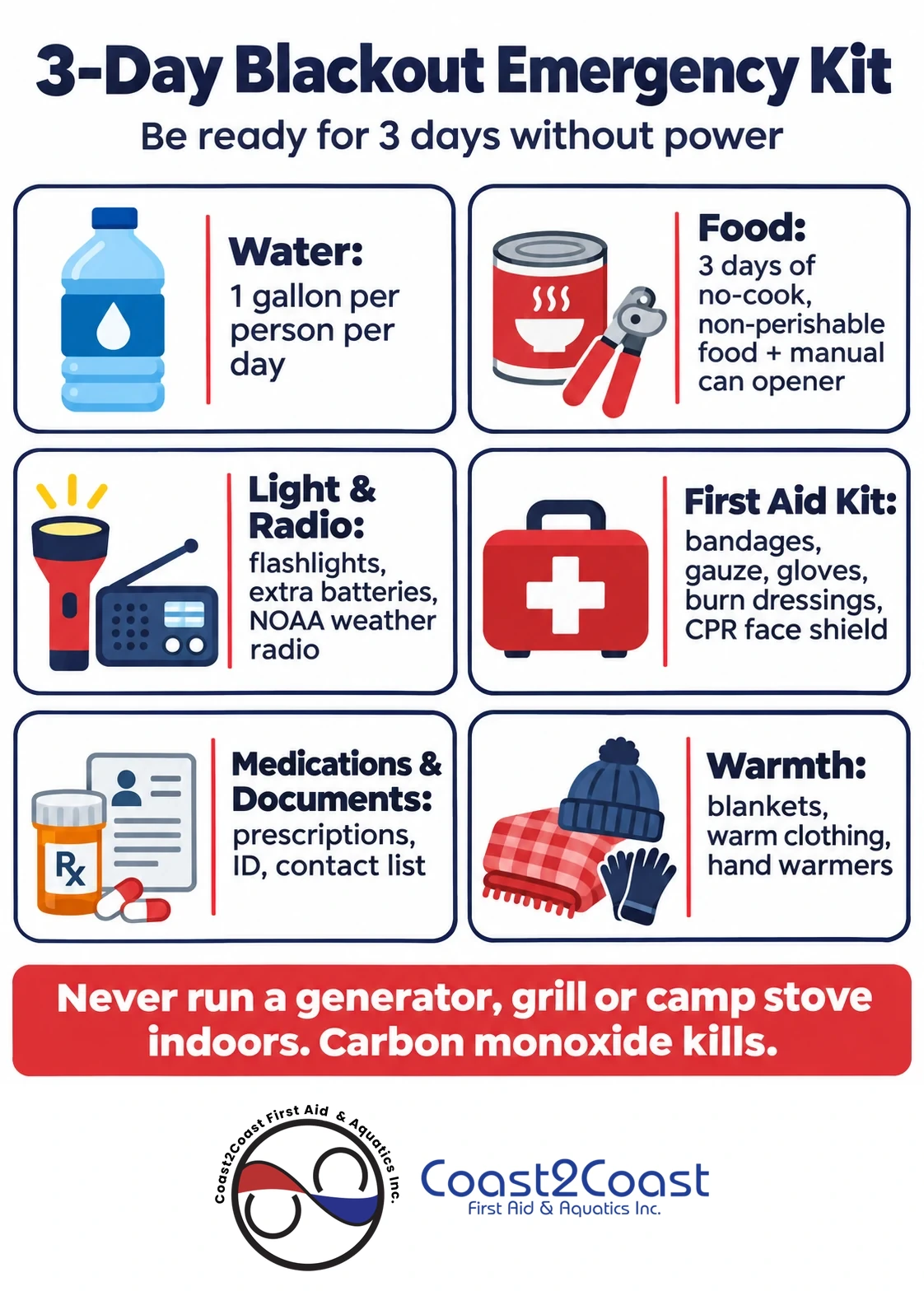
Water. Store one gallon per person per day, which covers drinking and basic sanitation. For a family of four over three days, that is 12 gallons. Add extra for pets, infants and anyone who is ill.
Food. Pack at least three days of non-perishable food that needs no cooking: canned goods, protein bars, peanut butter, dried fruit and crackers. Include a manual can opener, plus formula, baby food and pet food if needed.
Light and power. Keep flashlights or headlamps with extra batteries. LED lanterns are safer than candles. Keep power banks charged, and consider a car charger for your phone.
Information. A battery-powered or hand-crank NOAA weather radio gives updates when cell towers and internet are down. Write key phone numbers on paper.
Warmth and basics. Pack blankets, warm clothing, a whistle, garbage bags, wipes, hand sanitizer and a small amount of cash in small bills.
Medications and documents. Keep at least a week of prescriptions where possible, and store copies of ID, insurance and a list of medical conditions and allergies in a waterproof bag.
What should be in your blackout first aid kit?
A well-stocked home kit covers most outage injuries. Check yours for the following and replace anything expired.
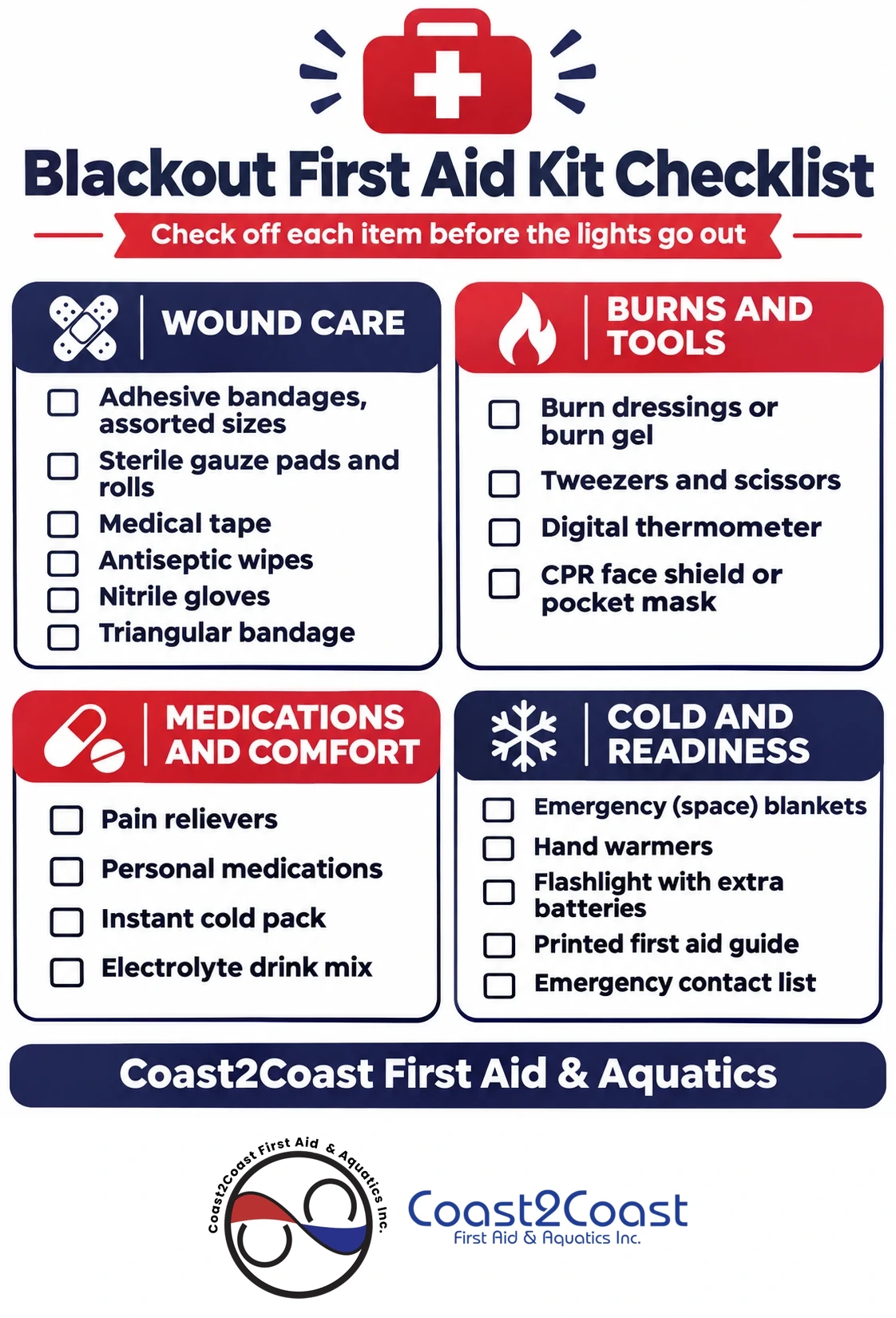
Wound care: adhesive bandages in assorted sizes, sterile gauze pads and rolls, medical tape, antiseptic wipes, a triangular bandage and nitrile gloves. Burn care: sterile non-stick dressings and burn gel dressings. Tools: tweezers, scissors, a digital thermometer and a CPR face shield. Symptom care: pain relievers, personal medications and an instant cold pack. Cold and heat: emergency blankets, hand warmers and electrolyte mix. Reference: a printed first aid guide and a list of emergency contacts.
Store the kit next to your flashlight and review it twice a year.
Blackout First Aid Kit Checklist
- ☐ Adhesive bandages, assorted sizes
- ☐ Sterile gauze pads and rolls
- ☐ Medical tape
- ☐ Antiseptic wipes
- ☐ Non-latex gloves
- ☐ Triangular bandage
- ☐ Burn dressings or burn gel
- ☐ Tweezers and scissors
- ☐ Digital thermometer
- ☐ CPR face shield or pocket mask
- ☐ Pain relievers
- ☐ Personal medications
- ☐ Instant cold pack
- ☐ Emergency (space) blankets
- ☐ Hand warmers
- ☐ Electrolyte drink mix
- ☐ Flashlight with spare batteries
- ☐ Printed first aid guide
- ☐ Emergency contact list
How do you prevent carbon monoxide poisoning during a blackout?
Carbon monoxide (CO) is a colorless, odorless gas produced when fuel burns, and the CDC reports that it sends thousands of people to emergency rooms every year, with outages a common trigger. People die when they run generators or grills in the wrong place.
Never run a generator, charcoal grill, camp stove or propane heater inside your home, garage, basement or any enclosed space, even with windows or doors open. Place generators outdoors, well away from windows, doors and vents. Never heat your home with a gas oven or stovetop. Test your CO alarms and use battery-powered or battery-backup models.
Symptoms resemble the flu: headache, dizziness, nausea, weakness, chest pain and confusion. If several people feel sick at once, or alarms sound, get everyone outside to fresh air, call 911 and do not go back in. If someone is unresponsive and not breathing normally, call 911 and start CPR.
How do you treat burns and prevent fires from candles and heaters?
Candles, fireplaces and space heaters are leading causes of home fires during outages. Use LED lights where you can. If you use candles, keep them in sturdy holders on a flat surface, away from curtains, bedding and children, and never leave them burning while you sleep. Keep smoke alarms working with battery backup and a fire extinguisher within reach.
For a burn, move the person away from the source, remove rings and tight clothing near the area before swelling begins, and cool the burn under cool running water for at least 10 minutes. Do not apply ice, butter or oils. Cover loosely with a clean, non-stick dressing. Call 911 or seek urgent care for burns that are large, deep, on the face, hands, feet or genitals, caused by chemicals or electricity, or that affect an infant or older adult.
How do you recognize and treat hypothermia without heat?
Cold-weather outages can drop indoor temperatures fast, and infants, older adults and people with medical conditions are most at risk.
Early signs of hypothermia are shivering, cold pale skin, fatigue and clumsiness. As it worsens, shivering may stop, speech slurs and the person becomes confused or drowsy. Move them to the warmest space, remove wet clothing and wrap them in dry blankets, covering the head and neck. If they are alert, offer warm drinks without alcohol or caffeine. Handle them gently and do not rub the skin. Call 911 if they are confused, very drowsy or unresponsive.
To stay warm safely, gather in one room, close off unused spaces, cover windows with blankets and dress in layers. Never use an oven or outdoor heater inside. For frostbite, warm the area gently with body heat or warm (not hot) water and seek medical care.
What about heat, food safety and medications?
Summer blackouts are dangerous too. Without fans or air conditioning, heat exhaustion and heat stroke become real risks. Move to the coolest part of the home or a cooling center, drink water, take cool showers and wear loose clothing. Heat stroke, signaled by confusion, hot dry skin or a very high body temperature, is an emergency: call 911 and cool the person with water and fans.
For food, the USDA advises that refrigerated food stays safe for about four hours if the door stays closed. A full freezer holds its temperature for about 48 hours, and a half-full freezer for about 24 hours. Discard perishable food, such as meat, dairy and leftovers, that has been above 40 degrees Fahrenheit for more than two hours. When in doubt, throw it out.
Insulin and some other medications need cool storage. Ask your pharmacist how long they stay safe at room temperature.
How do you protect older adults, children and people who use medical equipment?
Check on older neighbors and relatives early, because heat, cold and isolation affect them quickly. If someone relies on an oxygen concentrator, CPAP, nebulizer or other powered equipment, make a backup plan with their health care provider and contact your utility about medical baseline or priority notification programs where available.
For infants and children, keep formula, diapers and comfort items in your kit, dress them in layers and watch for dehydration signs such as fewer wet diapers, unusual sleepiness or irritability. Include pets with extra food, water and any medications.
Why do CPR and first aid skills matter when help is delayed?
During widespread outages, traffic signals fail, roads may be blocked and 911 centers can be overwhelmed. The minutes before help arrives are the ones you control. CPR, choking relief, bleeding control and recognizing carbon monoxide poisoning or hypothermia let you help family, neighbors and coworkers until professionals take over.
Workplaces, schools and care facilities lose power too, so having trained staff through private group training and stocked kits matters there as well. You do not need to be an expert to help, but practicing hands-on skills builds the confidence you will want in the moment.
How do you build a blackout plan your household can follow?
Write a short plan. Choose a meeting place, list emergency contacts on paper and decide who handles which supplies. Know how to open your garage door manually, and where your breaker panel and water shut-off are. Keep your car’s gas tank at least half full when a storm is forecast. Before the outage, charge devices, fill water containers and group perishables together in the fridge.
Review the plan twice a year, and walk through it with everyone, including children.
Key Takeaway
Plan for at least three days without power. Stock water, food, light, a radio, medications and a first aid kit, never burn fuel indoors, and learn the First Aid and CPR skills that treat the injuries blackouts cause most. A little preparation now turns the next blackout into an inconvenience instead of an emergency.
Join 200,000+ People Who Are Certified
Learn First Aid, CPR and AED skills from certified Coast2Coast instructors.
Frequently Asked Questions: Blackout Safety and Emergency Supplies 2026
Q1: How many days of supplies should I have for a blackout?
A: Ready.gov recommends keeping at least three days of supplies at home, including water, non-perishable food, flashlights, a radio, medications and a first aid kit. Most outages end sooner, but storms, wildfires and grid failures can last days. If you live in a rural area or a region prone to severe weather or wildfires, consider stocking for a week.
Q2: How much water do I need per person during a blackout?
A: Store one gallon of water per person per day, which covers drinking and basic sanitation. For three days, that is three gallons per person, or 12 gallons for a family of four. Add extra for pets, infants, pregnant people and anyone who is ill, and replace stored water on a regular schedule.
Q3: What should be in a blackout first aid kit?
A: Include adhesive bandages, sterile gauze, medical tape, antiseptic wipes, nitrile gloves, a triangular bandage, burn dressings, tweezers, scissors, a thermometer, a CPR face shield, pain relievers and personal medications. Add emergency blankets, hand warmers and electrolyte mix for cold or heat. Keep the kit near your flashlight, check expiration dates twice a year and include a printed first aid guide.
Q4: Is it safe to use a generator or grill indoors during a blackout?
A: No. Never run a generator, charcoal grill, camp stove or propane heater inside your home, garage or any enclosed space, even with doors or windows open. They produce carbon monoxide, a colorless, odorless gas that can kill quickly. Keep generators outdoors, far from windows, doors and vents, and use battery-powered or battery-backup CO alarms.
Q5: What are the symptoms of carbon monoxide poisoning?
A: Symptoms include headache, dizziness, nausea, weakness, chest pain and confusion, and they often feel like the flu. If several people in the same space feel sick at once, suspect carbon monoxide. Get everyone outside to fresh air immediately, call 911 and do not go back inside. If someone is unresponsive and not breathing normally, call 911 and begin CPR.
Q6: How do I treat a burn from a candle or camp stove?
A: Cool the burn under cool running water for at least 10 minutes. Remove rings and tight clothing near the burn before swelling starts, unless stuck to the skin. Do not use ice, butter or oils. Cover loosely with a clean, non-stick dressing. Call 911 or seek urgent care for burns that are large, deep, on the face, hands, feet or genitals, caused by chemicals or electricity, or that affect an infant or older adult.
Q7: What are the signs of hypothermia during a winter blackout?
A: Early signs are shivering, cold pale skin, fatigue and clumsiness. As hypothermia worsens, shivering may stop, speech becomes slurred and the person grows confused or drowsy. Move them to the warmest space, remove wet clothing and wrap them in dry blankets, including the head and neck. Offer warm drinks without alcohol or caffeine if alert. Call 911 if they are confused, very drowsy or unresponsive.
More FAQs: Heat, Food Safety and Vulnerable People
Q8: How can I stay warm safely without power?
A: Gather everyone in one room, close off unused spaces, cover windows with blankets and dress in layers, including a hat and warm socks. Use extra blankets or sleeping bags at night. Never use an oven, gas stovetop, grill or outdoor heater to heat your home. If indoor temperatures become unsafe, go to a warming center, a heated public building or a friend or relative with power.
Q9: How do I stay cool during a summer blackout?
A: Move to the coolest part of the home, usually a lower floor, and close blinds to block sun. Drink water regularly, take cool showers and wear loose, light clothing. Use battery-powered fans if you have them, or go to a cooling center. Heat stroke, with confusion, hot dry skin or a very high body temperature, is an emergency, so call 911 and cool the person with water and fans.
Q10: How long is food safe in the fridge and freezer during a blackout?
A: The USDA advises that refrigerated food stays safe for about four hours if the door stays closed. A full freezer holds its temperature for about 48 hours, and a half-full freezer about 24 hours. Discard perishable foods such as meat, dairy and leftovers that have been above 40 degrees Fahrenheit for more than two hours. When in doubt, throw it out.
Q11: What should I do if I rely on medical equipment that needs electricity?
A: Make a backup plan before an outage. Ask your health care provider about battery backup, a generator or alternate care options, and contact your utility about medical baseline or priority notification programs. Keep spare batteries charged, know where the nearest facility with power is, and keep a list of medications, conditions and emergency contacts ready to share.
Q12: How do I keep infants and older adults safe in a blackout?
A: Check on older relatives and neighbors early, since heat, cold and isolation affect them quickly. For infants, keep formula, diapers and comfort items in your kit, dress them in layers and watch for dehydration signs such as fewer wet diapers, unusual sleepiness or irritability. Keep everyone in one comfortable room, offer fluids often and call 911 if someone becomes confused or very drowsy.
Q13: Do I need first aid training to help during a blackout?
A: No, anyone can help, but training makes you faster and more confident. A hands-on First Aid and CPR course teaches wound care, burns, choking, CPR and recognition of carbon monoxide poisoning and hypothermia. During widespread outages, ambulances can be delayed, so the first minutes often rest with family members, neighbors and coworkers.
Q14: What should I do before a storm that could cause a blackout?
A: Charge phones and power banks, fill water containers and group perishables in the fridge. Check flashlights, batteries and your radio. Fill your gas tank at least halfway, find your breaker panel and learn to open your garage door manually. Review your household plan, confirm CO and smoke alarms have working batteries and check on neighbors who may need help.
Q15: When should I call 911 during a blackout?
A: Call 911 for any life-threatening emergency: someone who is unresponsive, not breathing normally, choking, having chest pain or trouble breathing, or showing signs of carbon monoxide poisoning, hypothermia with confusion, heat stroke or severe burns. During widespread outages, lines may be busy, so state your location clearly and stay on the line. Do not call 911 to ask when power will return; use your utility’s outage line.
Reviewed & Sourced
Reviewed by a Coast2Coast Certified Lead First Aid & CPR Instructor. Last updated November 16, 2026.
Reference: Ready.gov, Power Outages.