The Importance of Workplace CPR: 2026 WSIB Compliance Guide?

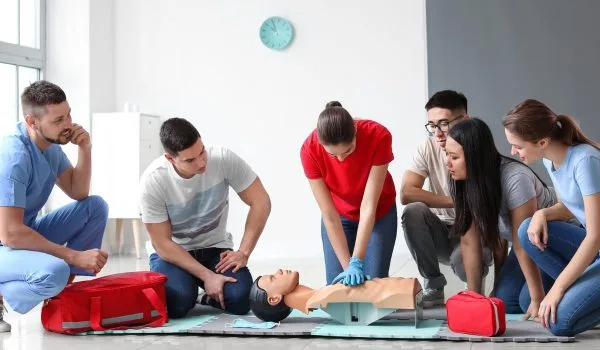
Construction workers in orange safety gear participate in a first aid training session. One worker demonstrates a technique on a colleague lying on a blue mat, while others observe. The setting is an indoor area with large windows and a corrugated metal roof.

Workplace CPR training is a legal requirement under Ontario WSIB Regulation 1101 and the CSA Z1210:24 standard. In 2026, Basic / Emergency First Aid has been renamed Basic and Intermediate / Intermediate / Standard First Aid has been renamed Intermediate. A certified first aider must reach any injured worker within 120 seconds. CPR AED certificates are valid for three years. Immediate bystander CPR can double or triple a cardiac arrest victim’s chance of survival.

WSIB Compliant
✓ Canadian Red Cross Approved

Find a First Aid Course Near You

Canadian Red Cross Basic First Aid, Intermediate First Aid, CPR Level C, and BLS courses meeting 2026 WSIB and CSA Z1210:24 requirements. 30+ locations across Canada.

View All 30+ Locations

120 sec
WSIB rule: certified first aider must reach any worker within 2 minutes
10,000
Cardiac arrests that occur annually in Canadian workplaces
2-3x
Bystander CPR doubles or triples cardiac arrest survival odds

Why Workplace CPR Training Is Essential for Canadian Employers

Cardiopulmonary resuscitation training in the workplace prepares employees to respond to approximately 10,000 cardiac arrests that occur annually in workplaces across Canada. Immediate bystander intervention can double or triple a sudden cardiac arrest victim’s chance of survival. Approximately 13 percent of out-of-hospital cardiac arrests in Canada occur in the workplace. The average emergency medical services response time in the Greater Toronto Area ranges from 6 to 10 minutes, and every minute without CPR reduces survival odds by 7 to 10 percent. Having certified first aid and CPR responders on staff is a legal requirement under federal and provincial regulations based on workplace size and hazards.

Workplace CPR training increases safety awareness, potentially leading to fewer workplace accidents and injuries. Workplaces that invest in comprehensive first aid training consistently experience fewer workplace accidents due to increased situational awareness among staff. Training in CPR enhances team cohesion and helps employees feel valued and secure in their workplace. Emergency response training enhances employees’ ability to act calmly and efficiently during medical emergencies.

The demands of the modern workplace can also trigger medical emergencies including heart attacks, strokes, severe asthma attacks, diabetic crises, and anaphylactic reactions. Employees in all sectors, from manufacturing and construction to security, healthcare, and office facilities, benefit from emergency first aid training. Employees trained in emergency first aid know how to recognize the signs of these conditions and take appropriate action while waiting for a paramedic to arrive. Immediate CPR and AED use can significantly increase survival rates for sudden cardiac arrest. Training in high-quality chest compressions and rescue breaths maximizes survival chances during cardiac emergencies.

First Aid Requirements: Ontario WSIB Regulation 1101 and CSA Z1210:24

Having certified first aid and CPR responders on staff is a legal requirement under federal and provincial regulations based on workplace size and hazards. Every employer is responsible for ensuring minimum first aid requirements are met at all times during business operations. This means having certified first aiders on staff, properly stocked first aid equipment, and clear emergency response procedures.

In 2026, the CSA Z1210:24 standard has updated the terminology for workplace first aid training levels. Basic / Emergency First Aid is now called Basic, and Intermediate / Intermediate / Standard First Aid is now called Intermediate. Legacy certificates remain valid until expiry, but all new training must align with the updated standard. First aid training courses must meet the CSA Standard Z1210-17, which outlines the curriculum and quality management for training providers providing workplace first aid services. Employers in Alberta must verify the approval status of training providers before registering for first aid training courses, as only approved providers can conduct recognized training and issue valid certifications.

First Aid Equipment Requirements by Workforce Size

Under the new CSA-aligned standards, aid requirements are dictated by peak shift headcount:

Employees Per Shift Training Level (2026 Term) Required Equipment
1 to 5 workers Basic (formerly Emergency) Small Regulation 1101 / CSA Type 1 Kit
6 to 15 workers Intermediate (formerly Standard) Large Regulation 1101 / CSA Type 2 Kit
16 to 199 workers Intermediate (formerly Standard) Stretcher + 2 Blankets + Large Kit
200+ workers Intermediate + Health Professional Dedicated First Aid Room (Section 11)

While legacy certificates remain valid until expiry, all new first aid equipment kits should meet CSA Z1220-17 standards, which WSIB now officially accepts as equivalent to Regulation 1101.

Aid Requirements in British Columbia and Alberta

As of November 1, 2024, new first aid regulations in British Columbia require all workplaces to complete a first aid assessment to determine their specific first aid needs, including training levels and equipment requirements. Employers in Alberta must verify the approval status of training providers before registering for aid courses, as only approved agencies can conduct recognized training. Proper first aid training often satisfies occupational health and safety requirements, thus reducing regulatory infractions across all provinces.

Compliance Note: Under WSIB Regulation 1101 and the CSA Z1210:24 standard, every employer is responsible for ensuring minimum first aid requirements are met at all times. Failure to comply can result in significant Ministry of Labour fines and increased liability. Contact Coast2Coast to discuss your specific workplace first aid requirements and schedule training before your next audit.

First Aid Courses and Certification Levels

Basic / Emergency First Aid vs Intermediate / Intermediate / Standard First Aid: The 2026 Terminology Change

Under the 2026 CSA Z1210:24 update, Basic / Emergency First Aid is now called Basic First Aid and Intermediate / Intermediate / Standard First Aid is now called Intermediate First Aid. New courses issued after the update use the new terminology exclusively. The course content remains similar but the naming change is significant for compliance documentation. Employers reviewing their aid certificates and first aid requirements should ensure their records reflect both the old and new terminology to avoid confusion during audits.

Basic (Emergency) First Aid covers essential life-saving skills including CPR, AED use, bleeding control, choking response, and emergency scene management. It is the minimum requirement for workplaces with 1 to 5 employees per shift. Standard (Intermediate) First Aid is the more comprehensive course, adding deeper coverage of medical emergencies, trauma management, and workplace-specific scenarios. It is required for workplaces with 6 or more employees per shift.

CPR AED Training and AED Training in the Workplace

Training on operating Automated External Defibrillators is essential for treating cardiac arrest. CPR AED certification is typically valid for three years, after which recertification is recommended to ensure skills remain current and effective. Training for CPR AED certification often includes both theoretical knowledge and practical skills, with hands-on practice using automated external defibrillators in classes led by certified instructors. Many organizations recommend annual refreshers for CPR AED skills, even though the certification itself may last for three years.

CPR Level C is the standard for most workplace requirements and covers adult, child, and infant CPR with two-rescuer techniques and AED integration. Workplace CPR training programs often include hands-on practice, blended learning, or instructor-led classes focusing on key skills. Aid services such as CPR Level C training are accepted by all provincial regulatory bodies and employers across Canada.

Basic Life Support for Healthcare Professionals

Basic Life Support certification is specifically designed for healthcare professionals, including nurses, paramedics, and physicians, and is required for clinical settings in Canada. The BLS course includes training on high-performance CPR, opioid overdose response, trauma management, and team-based resuscitation techniques. BLS certification is valid for one year and must be renewed annually to ensure that healthcare professionals maintain their skills and knowledge in life-saving techniques. First Aid and CPR AED certificates are typically valid for three years, while Basic Life Support certification is valid for one year and must be renewed annually.

Learn This Skill in a Real Classroom

Get Your Team WSIB Certified

Canadian Red Cross Basic and Intermediate First Aid courses meeting 2026 WSIB and CSA Z1210:24 requirements. One-day courses with flexible weekday, weekend, and evening scheduling.

View First Aid Courses

Benefits of CPR Training Programs for Your Workforce

The benefits of having CPR-trained employees extend far beyond regulatory compliance. Organizations that invest in comprehensive CPR training programs experience measurable improvements across multiple areas of their business operations.

Faster emergency response times are the most significant benefit. When an employee suffers a cardiac arrest or other serious medical event, a CPR-trained coworker can begin life-saving intervention within seconds before a paramedic reaches the hospital. This immediate response dramatically improves patient outcomes and can mean the difference between a colleague returning to work and a preventable death.

Robust safety training regimens can lead to reduced insurance premiums for employers from provincial workers’ compensation boards and private insurers. The cost of training employees in CPR is a fraction of the potential savings on insurance premiums. Employee morale and retention also improve when workers feel their employer genuinely cares about their safety and is responsible for their wellbeing at work. A workplace where people are trained to help each other in emergencies fosters a culture of mutual respect and teamwork across all facilities.

Proper first aid training often satisfies occupational health and safety requirements, thus reducing regulatory infractions. Occupational health and safety compliance protects employers from Ministry of Labour penalties, increased workers’ compensation premiums, and greater legal liability in the event of a workplace injury or death.

Aid Training Delivery: Group Training and On-Site Options

Blended learning in first aid and CPR training typically involves completing an online theory module followed by an in-person skills assessment. This approach allows students to learn at their own pace online before applying their knowledge in a hands-on environment during the in-person skills session. Blended learning formats are increasingly popular in workplace first aid and CPR training as they provide flexibility for employees with varying schedules and shift patterns.

Participants in CPR training typically demonstrate practical skills in simulated emergency scenarios and complete a written knowledge test to earn their aid certificate. Group training delivered on-site at your workplace is the most efficient option for organizations training multiple employees at once. Coast2Coast offers private group training that brings certified instructors and all necessary aid equipment directly to your facilities, eliminating travel time and minimizing disruption to your business operations. Instructors conduct the full course on your premises, and employees receive Canadian Red Cross certified aid certificates upon successful completion.

For employees whose aid certificate has recently expired, recertification classes are available and count as a full course renewal. Employers should contact their training provider to confirm whether recertification or a new course is required based on the expiry date.

Safety Tip: Designate specific employees as workplace first aid responders and post their names and locations prominently so all staff know who to contact in an emergency. Review your first aid equipment kits monthly to replace expired or used supplies.

New 2026 Mandates: Naloxone and the 120-Second Rule

As of 2026, compliance goes beyond having a kit on the wall. The Occupational Health and Safety Act now mandates that if an employer is aware, or ought to be aware, of a risk of opioid overdose among their staff, they must provide a Naloxone kit and ensure a trained responder is on-site at all times. This requirement applies to a growing number of Ontario workplaces given the ongoing opioid crisis.

WSIB has also clarified the 120-second rule. For a workplace to be considered compliant, a certified first aider must be able to reach any injured worker within two minutes. In large facilities or multi-floor buildings, this often requires training 15 to 20 percent of the total workforce to ensure response times are legally and medically defensible. Employers must audit their facility layout and shift coverage to ensure the minimum 120-second standard can be met at all times during operations. Failure to comply with these aid requirements can result in significant penalties under the Safety Act.

First Aid and CPR Recertification and Renewal

Canadian Red Cross first aid and CPR AED certificates are valid for three years, while BLS certification for healthcare professionals is valid for one year and must be renewed annually. Employers are responsible for tracking aid certificate expiration dates for all certified employees and scheduling recertification in advance to ensure continuous compliance.

Recertification for First Aid and CPR AED courses is available if the aid certificate has expired within the past year. For certificates expired beyond that window, a full course is required. Many training providers recommend that CPR AED training be refreshed annually, even though the certification itself lasts three years, to ensure quality and readiness in emergency situations. Coast2Coast offers recertification classes and new courses across 30-plus locations in Ontario, Nova Scotia, Alberta, and California.

Employers should renew their awareness of any changes to CSA standards or WSIB requirements when scheduling recertification. New courses issued under the 2026 CSA Z1210:24 terminology will reflect the updated Basic and Intermediate designations on the aid certificate.

How to Implement Workplace CPR Training

Implementing an effective workplace CPR training program starts with assessing your specific first aid needs. Consider the size of your workforce, the number of shifts you operate, the physical demands of the work, the hazard level of your industry, and the distance to the nearest hospital or emergency services. This assessment helps determine the minimum number of employees who need certification and at what level.

Select a reputable training provider certified by the Canadian Red Cross to ensure employees receive comprehensive training that meets national standards and that their certifications are accepted by all regulatory bodies and employers across Canada. Establish a system for tracking aid certificate expiration dates and scheduling recertification before credentials lapse. Post the names and locations of certified first aiders prominently throughout your facilities so all staff know who to contact in an emergency.

Review your first aid equipment kits monthly to replace expired or used supplies. Ensure AED units are registered with local emergency services and that electrode pads and batteries are current. Employers are responsible for ensuring all workplace first aid requirements are continuously met throughout the year, not only at the point of initial certification.

Key Takeaway

Workplace CPR training is a legal requirement under WSIB Regulation 1101 and CSA Z1210:24. In 2026, Basic / Emergency First Aid is now called Basic and Intermediate / Intermediate / Standard First Aid is now called Intermediate. A certified first aider must reach any worker within 120 seconds. CPR AED certificates are valid for three years. Immediate bystander CPR doubles or triples cardiac arrest survival odds. The Naloxone mandate now applies to all Ontario workplaces with known or foreseeable opioid risk. Employers are responsible for ensuring continuous compliance year-round.

Canada’s Top-Rated Training Partner

Join 150,000+ Canadians Who Are Certified

Coast2Coast is Canada’s largest Canadian Red Cross Training Partner. WSIB compliant Basic and Intermediate First Aid, CPR Level C, and BLS.

4.9 stars across 20,491 Google reviews.

View All 30+ Locations

Frequently Asked Questions: Workplace CPR Training 2026

Q1: Is workplace CPR training legally required in Ontario?

A: Yes. Having certified first aid and CPR responders on staff is a legal requirement under federal and provincial regulations based on workplace size and hazards. Ontario’s WSIB Regulation 1101 and the Safety Act require employers to maintain adequate first aid coverage at all times. In 2026, the CSA Z1210:24 standard renamed Basic / Emergency First Aid as Basic and Intermediate / Intermediate / Standard First Aid as Intermediate. Failure to comply can result in Ministry of Labour penalties and increased liability.

Q2: What is the 2026 terminology change in Ontario workplace first aid?

A: Under the CSA Z1210:24 standard, Basic / Emergency First Aid is now called Basic First Aid and Intermediate / Intermediate / Standard First Aid is now called Intermediate First Aid. New courses issued after the update use the new terminology exclusively. The course content is similar but the naming change affects compliance documentation and aid certificates. Legacy certificates remain valid until expiry.

Q3: What is the 120-second rule and how does it affect my business?

A: WSIB has clarified that a certified first aider must be able to reach any injured worker within two minutes (120 seconds) for a workplace to be considered compliant. In large facilities or multi-floor buildings, this often requires training 15 to 20 percent of the total workforce. Employers must audit their facility layout and shift coverage to ensure the minimum 120-second standard can be met at all times during operations.

Q4: What CPR training do employees need for WSIB compliance?

A: Workplaces with 1 to 5 employees per shift require at least one person with Basic (formerly Emergency) First Aid certification as the minimum requirement. Workplaces with 6 to 15 employees require Intermediate (formerly Standard) First Aid. Workplaces with 16 to 199 workers require Intermediate First Aid plus a stretcher and two blankets. Workplaces with 200 or more employees require Intermediate First Aid plus a health professional and a dedicated first aid room.

Q5: How long is workplace first aid certification valid in Canada?

A: First Aid and CPR AED certificates are valid for three years in Canada, after which recertification is required. Basic Life Support certification for healthcare professionals is valid for one year and must be renewed annually. Employers should track expiration dates and schedule recertification in advance to maintain continuous workplace compliance. Recertification classes are available if the aid certificate has expired within the past year.

Q6: What is the Naloxone requirement for Ontario workplaces in 2026?

A: The Occupational Health and Safety Act now mandates that employers who are aware, or ought to be aware, of a risk of opioid overdose among their staff must provide a Naloxone kit and ensure a trained responder is on-site at all times. This requirement applies to a growing number of Ontario workplaces. Employers should assess their workplace risk and contact their occupational health and safety authority for guidance on implementation.

Q7: What are the benefits of CPR training for employers beyond compliance?

A: Robust safety training regimens can lead to reduced insurance premiums from provincial workers’ compensation boards and private insurers. Comprehensive first aid training reduces workplace accidents through increased situational awareness. Training enhances team cohesion and helps employees feel valued and secure in their facilities. Occupational health and safety compliance protects employers from Ministry of Labour penalties and greater legal liability, making CPR training both a legal and business imperative.

More FAQs: Courses, Equipment, and Training Delivery

Q8: What is the difference between Basic Life Support and CPR Level C?

A: CPR Level C is the standard for most workplace and general public certification requirements and covers adult, child, and infant CPR with AED integration. Basic Life Support is specifically designed for healthcare professionals including nurses, paramedics, and physicians. BLS covers high-performance CPR, opioid overdose response, trauma management, and team-based resuscitation. BLS is valid for one year while CPR Level C certificates are valid for three years.

Q9: Can first aid training be done at our workplace?

A: Yes. Coast2Coast offers private group training where certified instructors come to your facilities with all aid equipment and materials. Instructors conduct the full course on your premises and employees receive Canadian Red Cross certified aid certificates upon successful completion. On-site group training can be scheduled on weekdays, evenings, or weekends to accommodate shift-based workforces. Blended learning options allow employees to complete online theory before attending a shorter in-person skills session.

Q10: What first aid equipment does my workplace need in Ontario?

A: Equipment requirements depend on workforce size. Workplaces with 1 to 5 employees need a small CSA Type 1 kit as the minimum. Workplaces with 6 to 15 employees need a large CSA Type 2 kit. Workplaces with 16 to 199 employees require a stretcher, two blankets, and a large kit. Workplaces with 200 or more employees require a dedicated first aid room under Section 11. All new aid equipment kits should meet CSA Z1220-17 standards, which WSIB accepts as equivalent to Regulation 1101.

Q11: What are the first aid requirements in British Columbia in 2026?

A: As of November 1, 2024, new first aid regulations in British Columbia require all workplaces to complete a first aid assessment to determine their specific training levels and aid equipment requirements. Employers must use approved training providers to conduct recognized aid courses and issue valid certifications. The assessment must be completed before selecting a training program and reviewed whenever workplace conditions change significantly.

Q12: How does blended learning work for workplace first aid training?

A: Blended learning in first aid and CPR training involves completing an online theory module at your own pace, followed by an in-person skills assessment session. This reduces classroom time while ensuring full hands-on competency. Blended learning classes are accepted by all provincial regulatory bodies and meet CSA Z1210:24 standards and Canadian Red Cross certification requirements. This format is increasingly popular for security, construction, healthcare, and other sectors with complex schedules.

Q13: What happens if my workplace first aid certificate expires?

A: Recertification classes are available if the first aid or CPR AED aid certificate has expired within the past year. If the certificate has been expired for longer than one year, a full course is required. Employers are responsible for tracking expiration dates for all certified employees to avoid lapses in coverage. Contact your training provider to schedule recertification before the certificate expires and to confirm whether a recertification class or a new course is needed.

Q14: Do all employees need to be CPR certified?

A: Ontario law does not require every employee to be CPR certified, but employers must ensure adequate first aid coverage is available at all times. The minimum number of certified employees required depends on workforce size and industry hazard level. In large facilities, WSIB’s 120-second rule often requires training 15 to 20 percent of the total workforce to ensure a certified responder can reach any worker within two minutes.

Q15: Where can I book workplace CPR training in Canada?

A: Coast2Coast First Aid and Aquatics offers Canadian Red Cross certified Basic First Aid, Intermediate First Aid, CPR Level C, and BLS courses across more than 30 locations in Ontario, Nova Scotia, Alberta, and California. Private group on-site training can be arranged for workplaces of any size across Canada. Recertification classes and new courses are available for employees whose aid certificates are approaching expiry. Contact Coast2Coast to discuss your workplace first aid requirements and schedule training that meets your WSIB compliance obligations.

Legal Disclaimer
The information in this article is for educational and informational purposes only and does not constitute legal or occupational health and safety advice. Workplace first aid requirements vary by province, industry, and workforce size. Always verify current requirements with WSIB, your provincial occupational health and safety authority, or a qualified safety professional before making compliance decisions. Coast2Coast First Aid Inc. assumes no liability for outcomes resulting from reliance on information in this article.

About This Article, Expertise and Sources
Content reviewed by the Coast2Coast First Aid and Aquatics certified instructor team. Workplace first aid requirements sourced from WSIB Regulation 1101, the CSA Z1210:24 First Aid Training Standard, the Ontario Occupational Health and Safety Act, and provincial occupational health and safety regulations for British Columbia and Alberta. Coast2Coast First Aid Inc. is Canada’s largest Canadian Red Cross Training Partner. Last reviewed: May 2026. Contact info@c2cfirstaidaquatics.com or 1-866-291-9121.

Does Knowing CPR Save Lives? The Evidence Every Canadian Should See

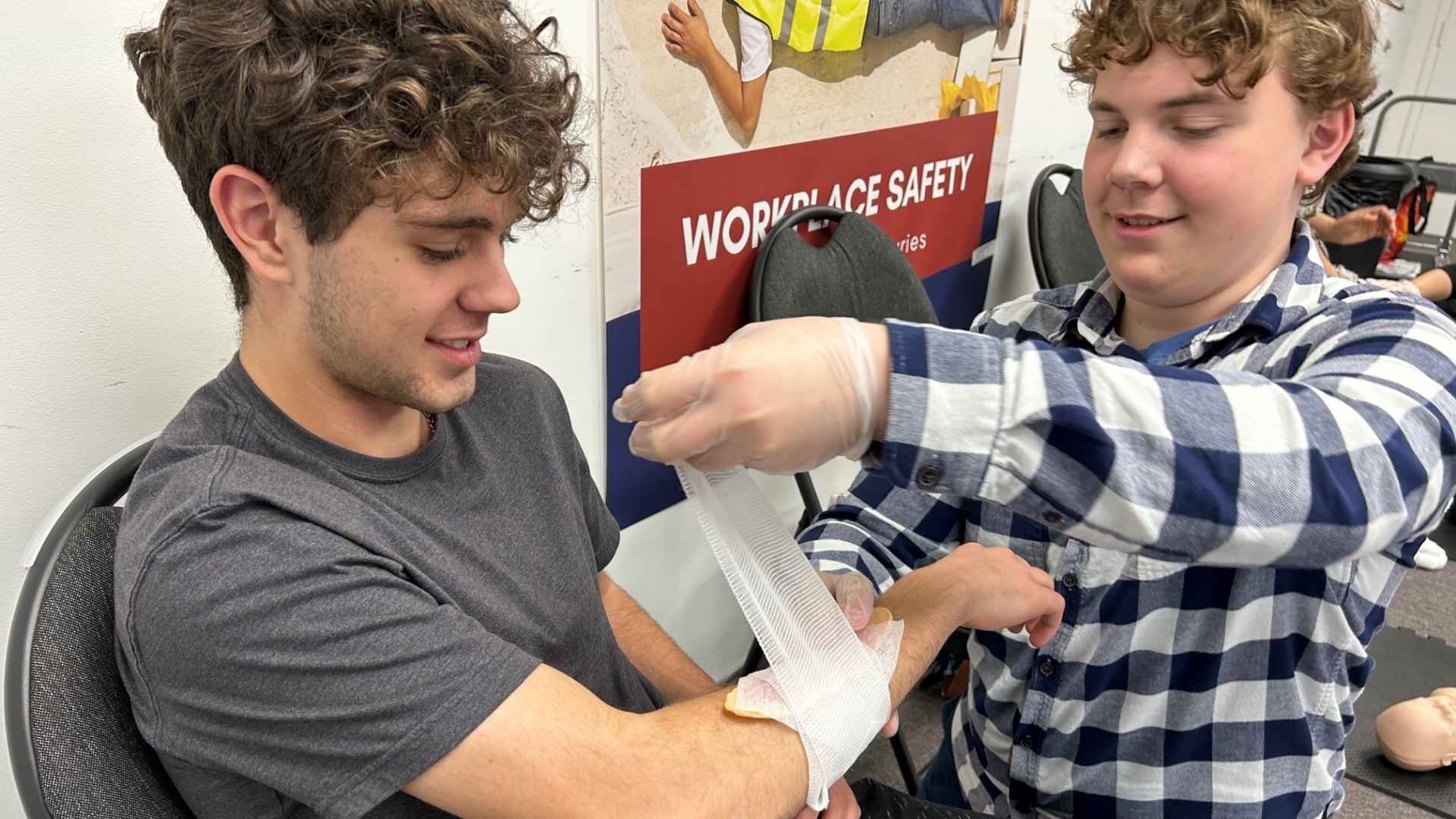
First responder bandaging an injured worker's wrist outdoors, demonstrating how first aid training saves lives

Yes, first aid and CPR saves lives. In Canada, approximately 35,000 out-of-hospital cardiac arrests occur annually and immediate bystander CPR can double or triple survival odds. Every minute without CPR reduces survival by 7 to 10 percent. When CPR starts immediately and an AED is used within 3 to 5 minutes, survival rates can reach 70 percent or higher. The chain of survival depends on early recognition, early CPR, early defibrillation, and early advanced care provided by paramedics and hospital emergency departments.

Canadian Red Cross
✓ Nationally Recognized Certification

Find a CPR Course Near You

CPR Level C, Basic / Emergency First Aid, Intermediate / Intermediate / Standard First Aid, and BLS courses at 30+ locations across Canada. Weekday, weekend, and evening formats available.

View All 30+ Locations

35,000
Out-of-hospital cardiac arrests in Canada every year
2-3x
Bystander CPR doubles or triples cardiac arrest survival odds
7-10%
Drop in survival odds for every minute without CPR or defibrillation

Does First Aid and CPR Save Lives? What the Data Shows

The answer is an unequivocal yes. Every year across Canada, thousands of lives are saved because a bystander knew how to perform CPR, stop severe bleeding, or manage an airway obstruction. In Canada, approximately 35,000 cardiac arrests occur outside of hospital settings each year, and immediate bystander CPR can double or even triple the victim’s chance of survival. Yet despite these compelling numbers, only a fraction of Canadians hold current CPR certification. This gap between the need for trained responders and the number of people who actually have the skills represents one of the most significant public health challenges in our communities.

Research shows that communities with higher rates of bystander CPR have significantly better cardiac arrest survival rates. Cities that have invested in widespread CPR training programs have seen survival rates increase by as much as 50 percent compared to communities where fewer residents are trained. Studies indicate that bystander CPR can achieve survival rates of 20 percent or higher in communities with high rates of bystander intervention, compared to less than 10 percent in areas with low bystander intervention rates.

First aid training empowers individuals to respond effectively in emergencies, potentially saving lives by providing immediate assistance before professional medical help arrives. Knowing first aid can prevent conditions from worsening, such as stopping severe bleeding or managing an airway obstruction. Prompt first aid limits the severity of an injury and reduces the risk of infection and long-term health complications. Every minute without CPR reduces a cardiac arrest victim’s chance of survival by 7 to 10 percent, making trained bystanders the most important link in the chain of survival.

First aid and CPR training saves lives

Cardiac Arrest in Canada: Why Bystander CPR Is the Deciding Factor

Every year in Canada, approximately 35,000 cardiac arrests occur outside of hospital settings, and immediate bystander CPR can double or even triple a victim’s chance of survival. When the heart stops beating, the brain is deprived of oxygen, and irreversible brain damage begins in just 3 to 4 minutes. After ten minutes without intervention, survival becomes extremely unlikely. The average emergency medical services response time in urban Canada ranges from 6 to 10 minutes, which means the gap between cardiac arrest and paramedic arrival is precisely the window where trained bystanders determine whether a person lives or dies.

Early CPR is the second link in the chain of survival, and starting compressions within the first few minutes of cardiac arrest can double or triple the victim’s chance of survival. The presence of trained responders in workplaces, schools, sports facilities, and public locations dramatically changes the odds for cardiac arrest victims.

Cardiopulmonary Resuscitation: How CPR Works

Cardiopulmonary resuscitation works by manually pumping the heart through chest compressions, which forces blood moving through the body to deliver oxygen to vital organs. While CPR alone may not restart the heart when it malfunctions or stops beating entirely, it maintains blood flow and buys precious time until paramedics arrive or an automated external defibrillator can restore a normal heart rhythm. For hospital cardiac arrest, professional teams use advanced resuscitation with defibrillators and medications, but for out-of-hospital cardiac arrest the bystander is the first and most critical responder.

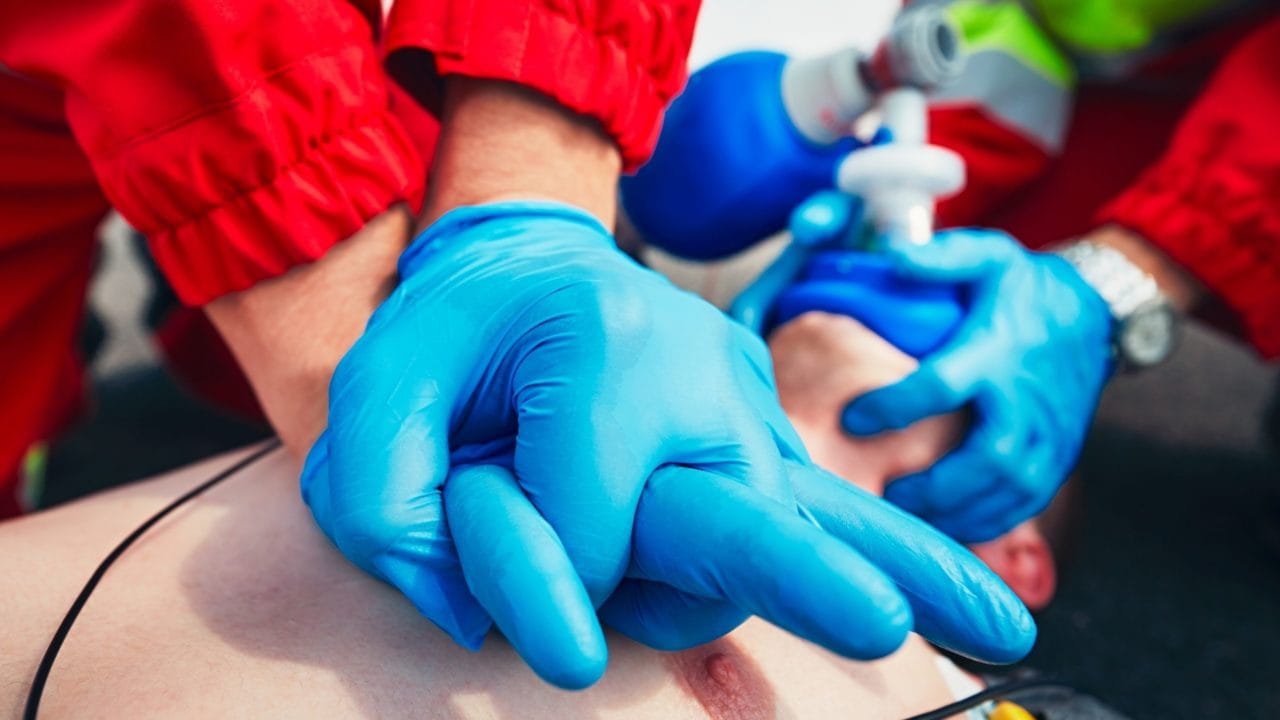
The American Heart Association and the Canadian Red Cross both recommend performing chest compressions at a rate of 100 to 120 compressions per minute. To perform effective chest compressions, place the heel of one hand on the center of the person’s chest, place the other hand on top, and push hard and fast, compressing at least 2 inches deep but not more than 2.4 inches. After performing 30 chest compressions, open the airway using the head-tilt chin-lift maneuver, unless a neck injury is suspected. Rescue breaths should follow with two breaths, then repeat the cycle of 30 compressions and 2 rescue breaths.

Chest Compressions: The Science of Manual Perfusion

When a person’s heart stops beating, CPR is not just a physical action. It is a clinical bridge. By performing deep, rapid compressions, you are creating manual perfusion, forcing oxygenated blood that is already in the lungs into the carotid arteries and up to the brain. In 2026, the Canadian Red Cross curriculum focuses on Chest Compression Fraction (CCF), the goal being to keep hands on the chest at least 80 percent of the time to maintain the blood pressure required to keep the brain viable for a successful shock from an AED.

CPR and AED Training: The Two Most Critical Factors in Survival

CPR and AED training together represent the most powerful combination a bystander can have in a cardiac emergency. CPR keeps blood moving through the body and buys time. The AED delivers the definitive treatment by restoring a normal heart rhythm. Neither alone is as effective as both together.

Training in CPR and AED use improves the likelihood of immediate bystander intervention during emergencies, which is vital for survival. People who have completed formal training respond significantly faster, with more confidence, and with better technique than untrained bystanders. The skills developed through hands-on CPR and AED training sessions build the muscle memory required to perform under pressure in a real emergency.

AED Training and Early Defibrillation

Early defibrillation is the third link in the chain of survival, and it is crucial because the chance of survival decreases significantly for every minute that passes without it. AEDs are now installed in many public buildings, shopping centres, sports facilities, and transit stations across Canada. These devices are designed to be used by anyone, even without formal training, but CPR and AED training dramatically increases a bystander’s confidence and effectiveness when using one.

The goal of AED training is to reduce the time-to-shock. Every minute of delay between cardiac arrest and defibrillation reduces survival odds by 7 to 10 percent. Knowing how to power on the AED, apply pads to the person’s chest, follow voice prompts, and ensure no one is touching the victim during the shock are technical skills that can only be fully developed through hands-on practice with a training unit.

Hands-Only CPR vs Conventional CPR

Hands-Only CPR focuses on continuous chest compressions without rescue breaths, making it appropriate for bystanders who are untrained or uncomfortable with mouth-to-mouth breathing. It is highly effective as an immediate response to witnessed sudden cardiac arrest in adults. Conventional CPR combines 30 chest compressions with 2 rescue breaths and is the recommended emergency procedure for trained responders, particularly in drowning situations where oxygen deprivation is the primary issue. Begin CPR immediately upon recognizing that a person is unresponsive and not breathing normally. Do not waste time checking for a pulse if you are not a medical professional. Start chest compressions right away and continue until an AED is available, paramedics arrive, or the person shows signs of life.

Safety Tip: When you witness a cardiac emergency, call 911 first, then begin CPR immediately. If the person is unresponsive and not breathing normally, start chest compressions right away. Do not wait for paramedics to arrive before acting.

Learn This Skill in a Real Classroom

CPR Level C and AED Training

Canadian Red Cross CPR Level C covers adult, child, and infant CPR, AED deployment, Hands-Only CPR, rescue breaths, and choking response. The most widely required CPR certification across Canada.

View CPR / AED Courses

The Chain of Survival: Early Recognition, Early CPR, Early Defibrillation

Emergency medical services professionals use the chain of survival to describe the series of actions that give a cardiac arrest victim the best chance of survival. Each link is critical and the strength of the chain depends on every link being executed quickly and effectively.

The first link is early recognition and calling for help. Recognizing that someone is in cardiac arrest and calling 911 immediately ensures that professional help is dispatched without delay. Early recognition also includes identifying the signs of a heart attack, which may present as chest pain, shortness of breath, pain radiating to the arm or jaw, and nausea. Acting on these signs before full cardiac arrest occurs saves lives.

The second link is early CPR. Starting compressions within the first few minutes of cardiac arrest can double or triple the victim’s chance of survival. The third link is early defibrillation. The fourth and final link in the chain of survival involves early advanced care provided by paramedics and hospital emergency departments, which is essential for the best possible outcome after a cardiac arrest. Emergency cardiovascular care at the hospital level depends on the first three links being completed effectively by bystanders and emergency medical services.

Emergency preparedness and CPR chain of survival

First Aid Skills Beyond Cardiac Arrest: Real-World Impact

First aid training extends far beyond cardiac emergencies. Trained first aiders save lives and prevent injuries from worsening in countless everyday situations. Applying direct pressure and dressings to a major wound stops rapid blood loss and prevents hemorrhagic shock. Correctly applying pressure or a tourniquet stops critical bleeding before it becomes fatal.

A parent who recognizes the signs of anaphylaxis and administers an epinephrine auto-injector can save their child from a fatal allergic reaction. Techniques like back blows and abdominal thrusts dislodge foreign objects from a choking person’s airway, restoring their ability to breathe. Choking is a leading cause of injury death in children under four years of age. Learning first aid skills applies to various life-threatening scenarios, including drowning, choking, drug overdoses, and severe bleeding.

In workplace settings, trained first aiders respond to falls, burns, electrical injuries, chemical exposures, and heat-related illnesses every day. The presence of certified first aiders in the workplace is not just a legal requirement under Ontario’s Workplace Safety and Insurance Act. It is a practical necessity that protects employees and reduces the severity of workplace injuries.

Bystander CPR: Overcoming the Fear of Helping

One of the most common barriers to bystander intervention is fear. Fear of doing something wrong, fear of hurting the victim, or fear of legal consequences. First aid and CPR training directly addresses all of these concerns. When you have practiced the skills in a classroom setting with experienced instructors, you develop the muscle memory and confidence needed to act decisively in a real emergency instead of feeling helpless.

Canada’s Good Samaritan laws provide legal protection to anyone who provides emergency assistance in good faith. As long as you act reasonably and within the scope of your training, you are protected from liability. This legal framework exists specifically to encourage bystanders to begin CPR immediately and use AEDs without hesitation.

The emotional impact of being prepared should not be underestimated. People who have used their first aid training to help someone in an emergency consistently report a profound sense of purpose and accomplishment. Conversely, people who witness an emergency and feel helpless because they lack training often experience lasting regret.

CPR and AED Training Options for Every Canadian

Coast2Coast First Aid and Aquatics offers a range of certification options to fit every schedule. Whether you prefer a full in-person course, a blended online learning format, or private group training at your workplace, there is an option that works for you. Courses covering CPR and AED training, first aid skills, and basic life support are available at more than 30 locations across Ontario, Nova Scotia, Alberta, and California.

Certifications are valid for three years and can be renewed through shorter recertification courses. For healthcare professionals requiring basic life support, BLS certification must be renewed annually. The skills you learn in a first aid course are applicable in every area of your life, from the workplace to the home, the sports field to the community event. Learning CPR is one of the most impactful things any Canadian can do to save lives in their community.

Key Takeaway

Yes, first aid and CPR saves lives. Approximately 35,000 out-of-hospital cardiac arrests occur in Canada annually. Bystander CPR doubles or triples survival odds. Every minute without CPR reduces survival by 7 to 10 percent. The chain of survival requires early recognition, early CPR, early defibrillation, and early advanced care. CPR creates manual perfusion, keeping blood moving to the brain until an AED can restore a normal heart rhythm. The Chest Compression Fraction goal is 80 percent. Canada’s Good Samaritan laws protect every bystander who acts in good faith.

Canada’s Top-Rated Training Partner

Join 150,000+ Canadians Who Are Certified

Coast2Coast is Canada’s largest Canadian Red Cross Training Partner.

4.9 stars across 20,491 Google reviews. Register online in 2 minutes.

View All 30+ Locations

Frequently Asked Questions: Does Knowing CPR Save Lives 2026

Q1: Can CPR actually restart a stopped heart?

A: CPR alone typically does not restart the heart. Its primary purpose is to maintain blood flow to the brain and vital organs through manual perfusion until an AED or advanced medical care can restore a normal heart rhythm. Without CPR, the chances of successful defibrillation drop dramatically with every passing minute. Every minute without CPR reduces a cardiac arrest victim’s chance of survival by 7 to 10 percent, making immediate bystander action the most critical factor in survival.

Q2: How effective is bystander CPR?

A: Bystander CPR can double or triple the survival rate from out-of-hospital cardiac arrest. In communities with high rates of bystander CPR training, survival rates of 20 percent or higher have been achieved, compared to less than 10 percent in areas with low bystander intervention rates. Cities that invest in widespread CPR training programs have seen survival rates increase by as much as 50 percent.

Q3: What is the correct compression rate and depth for adult CPR?

A: Chest compressions should be delivered at a rate of 100 to 120 compressions per minute. Place the heel of one hand on the center of the person’s chest, place the other hand on top, and push hard and fast to a depth of at least 2 inches but not more than 2.4 inches. Allow full chest recoil between compressions. After 30 compressions, give 2 rescue breaths unless performing Hands-Only CPR.

Q4: What is Hands-Only CPR and when is it appropriate?

A: Hands-Only CPR focuses on continuous chest compressions without mouth-to-mouth breathing. It is appropriate for bystanders who are untrained or uncomfortable with rescue breaths, and is highly effective as an immediate response to witnessed sudden cardiac arrest in adults. Conventional CPR with rescue breaths is the preferred emergency procedure for trained responders and is especially important for cardiac arrest caused by drowning.

Q5: What is the Chain of Survival?

A: The chain of survival is the framework used by emergency medical services to describe the four actions that give a cardiac arrest victim the best chance of survival: early recognition and calling for help, early CPR, early defibrillation, and early advanced care provided by paramedics and hospital emergency departments. Each link depends on the previous one. The final link, early advanced care, is essential for the best possible outcome after a cardiac arrest.

Q6: What is manual perfusion and why does it matter?

A: Manual perfusion is the process of keeping blood moving through the body through chest compressions when a person’s heart stops beating. Each compression pushes oxygenated blood from the lungs into the carotid arteries and up to the brain, keeping the brain viable until defibrillation can restore a normal heart rhythm. The Chest Compression Fraction (CCF) measures the percentage of time compressions are being delivered, with the goal of keeping hands on the chest at least 80 percent of the time.

Q7: How does an AED work and do I need training to use one?

A: An AED analyzes the heart’s rhythm and delivers an electric shock to restore a normal heart rhythm during sudden cardiac arrest. AEDs are designed to be used by anyone with clear voice prompts guiding each step. However, CPR and AED training significantly reduces time-to-shock, builds confidence, and ensures the rescuer integrates AED use with ongoing compressions correctly. Early defibrillation combined with CPR is the most effective treatment for sudden cardiac arrest.

More FAQs: First Aid, Training, and Legal Protection

Q8: Is first aid training only for healthcare workers?

A: No. First aid training is designed for everyone regardless of profession or background. Parents, teachers, coaches, office workers, construction workers, and community members all benefit from knowing how to respond in an emergency. The skills you learn in a first aid course are applicable in every area of your life, from the home to the workplace to public locations across Canada.

Q9: What age can children start learning CPR?

A: Children as young as nine or ten can begin learning basic first aid concepts. Teenagers are physically capable of performing effective chest compressions and CPR. Many schools now include first aid awareness in their curriculum. Teaching children early builds a culture of preparedness that benefits entire communities and increases the likelihood of bystander intervention in cardiac emergencies.

Q10: What first aid skills are most important beyond CPR?

A: Beyond CPR, the most critical first aid skills include bleeding control using direct pressure, wound dressings, and tourniquets to prevent hemorrhagic shock; the Heimlich maneuver and back blows for choking victims; anaphylaxis recognition and epinephrine auto-injector assistance; and basic life support for drowning, drug overdoses, and trauma. Learning first aid skills applies to all of these life-threatening scenarios.

Q11: Are Good Samaritan laws in Canada real protection?

A: Yes. Canada’s provincial Good Samaritan laws provide legal protection to anyone who provides emergency assistance in good faith. As long as you act reasonably and within the scope of your training, you are protected from liability. This legal framework exists specifically to encourage bystanders to begin CPR immediately and use their first aid skills without hesitation or fear of legal consequences.

Q12: How long does CPR certification last in Canada?

A: Canadian Red Cross first aid and CPR certificates are valid for three years. Basic Life Support certification for healthcare professionals is valid for one year and must be renewed annually. Research shows CPR skills begin to deteriorate as early as three to six months after initial training without practice, which is why many providers recommend annual refreshers even within the three-year validity period.

Q13: What is the difference between a heart attack and cardiac arrest?

A: A heart attack occurs when blood flow to part of the heart muscle is blocked, causing the heart muscle to begin dying. The person may remain conscious and breathing. Cardiac arrest is an electrical malfunction where the heart malfunctions and stops beating entirely, resulting in immediate loss of consciousness and cessation of normal breathing. A heart attack can trigger cardiac arrest. Begin CPR immediately if a person is unresponsive and not breathing normally.

Q14: What is Basic Life Support and how does it differ from CPR Level C?

A: Basic Life Support is a clinical-grade resuscitation course for healthcare professionals covering two-rescuer CPR, bag-valve-mask ventilation, opioid overdose response, and team-based emergency scenarios. It is valid for one year. CPR Level C covers adult, child, and infant CPR with AED integration and is designed for the general public and workplace settings. It is valid for three years and is the most widely required CPR certification across Canada.

Q15: Where can I learn CPR and first aid in Canada?

A: Coast2Coast First Aid and Aquatics offers Canadian Red Cross certified CPR and AED training, Basic / Emergency First Aid, Intermediate / Intermediate / Standard First Aid, and BLS courses across more than 30 locations in Ontario, Nova Scotia, Alberta, and California. Weekday, weekend, and evening formats are available. Blended learning and private group training options are also available. All courses meet 2026 CSA Z1210:24 standards and issue nationally recognized certifications upon completion.

Legal Disclaimer
The information in this article is for educational and informational purposes only and does not constitute medical advice. In any cardiac emergency, call 911 immediately. CPR and first aid techniques described should be learned and practised under the supervision of a qualified instructor. Survival statistics cited are from published research and may vary by setting. Coast2Coast First Aid Inc. assumes no liability for any outcomes resulting from the application or misapplication of information in this article.

About This Article, Expertise and Sources
Written and reviewed by Ashkon Pourheidary, B.Sc. (Hons) Neuroscience, Co-Founder, Coast2Coast First Aid and Aquatics. Ashkon has been a certified First Aid and CPR instructor since 2011 and an Instructor Trainer since 2013. He is a certified EMR instructor, Psychological First Aid instructor, and BLS instructor, and has served on the First Aid Council for the Canadian Red Cross. Cardiac arrest survival statistics sourced from the Heart and Stroke Foundation of Canada and the American Heart Association. CPR and AED protocols aligned with Canadian Red Cross First Aid Guidelines and CSA Z1210:24. Coast2Coast First Aid Inc. is Canada’s largest Canadian Red Cross Training Partner. Last reviewed: March 2026. Contact info@c2cfirstaidaquatics.com or 1-866-291-9121.

How to Choose the Right First Aid Course in Toronto: A 2026 Guide

Woman in a red shirt practicing first aid skills during a first aid and CPR certification class in Red Deer, Alberta with Coast2Coast

Choosing the right first aid course in Toronto in 2026 means matching your certification to your industry risk level and WSIB requirements. Workplaces with 1 to 5 employees need Basic / Emergency First Aid (Basic). Workplaces with 6 or more need Intermediate / Intermediate / Standard First Aid (Intermediate). Basic / Emergency First Aid and Intermediate / Intermediate / Standard First Aid with CPR Level C are recommended for beginners. Ensure your provider is Canadian Red Cross accredited to guarantee WSIB approved certification. Most first aid certificates are valid for three years.

WSIB Approved
✓ Canadian Red Cross Certified

First Aid Training in Toronto

Basic / Emergency First Aid, Intermediate / Intermediate / Standard First Aid, CPR Level C, and BLS at multiple GTA locations. Weekday, weekend, and evening formats. Private group training available.

View Toronto Training Locations

120 sec
WSIB requires a certified first aider to reach any worker within 2 minutes
3 years
Canadian Red Cross first aid certificate validity before recertification
6+
Employees per shift that triggers Intermediate / Intermediate / Standard First Aid requirement under WSIB Reg. 1101

Choosing the Right First Aid Course: What to Consider First

Choosing the right first aid course in Toronto in 2026 requires matching your certification to your industry risk level, your professional requirements, and your schedule. In a city with a population approaching three million people, medical emergencies happen constantly. From construction sites along major infrastructure projects to corporate towers in the financial district, from daycare centres in North York to logistics facilities in Etobicoke, the need for trained first aiders is always present.

First aid training can vary from basic introductory classes to advanced, legally compliant certification based on your training purposes. Basic / Emergency First Aid with CPR Level C and Intermediate / Intermediate / Standard First Aid with CPR Level C are recommended for beginners seeking critical life-saving skills. These courses are designed for the general public, workplaces, and professionals across various types of industries and roles. Understanding the different levels available, what your employer or regulatory body requires, and what to look for in a provider ensures you get the most value from your training investment.

High-risk environments require extensive first aid certifications while low-risk environments require basic life-saving skills. Certification requirements must meet employer mandates or regulatory standards, typically covering Basic / Emergency First Aid or Intermediate / Intermediate / Standard First Aid. If your employer has not specified a level, Intermediate / Intermediate / Standard First Aid with CPR Level C is the most versatile choice as it satisfies the broadest range of requirements across industries in Ontario. When choosing a first aid course, consider the course duration and schedule, as some courses may be offered as intensive full-day sessions while others may be spread out over multiple sessions or evenings. This is particularly important for Toronto professionals balancing work and family commitments on busy schedules.

Different Levels of First Aid Certification in Toronto

First aid training programs have various types of certification levels including Basic / Emergency First Aid, Intermediate / Intermediate / Standard First Aid, Wilderness First Aid, Pediatric First Aid, and Basic Life Support, each designed to meet varying needs and skill levels. Understanding which level is right for your situation is the foundation of choosing the right first aid course.

Basic / Emergency First Aid: First Aid Basics and CPR Level C

Basic / Emergency First Aid with CPR Level C is a one-day course recommended for beginners seeking critical life-saving skills. Basic courses in first aid cover immediate emergencies such as heavy bleeding and choking, as well as adult, child, and infant CPR, AED use, wound care, and recognition of common medical emergencies. Basic / Emergency First Aid courses provide fundamental first aid knowledge and CPR AED skills, suitable for the general public and individuals wanting essential life-saving skills in a shorter time frame.

Basic / Emergency First Aid meets the minimum WSIB requirements for Ontario workplaces with 1 to 5 employees per shift. Under the 2026 CSA Z1210:24 terminology update, Basic / Emergency First Aid is now called Basic First Aid. Legacy certificates remain valid until expiry.

Intermediate / Intermediate / Standard First Aid: Comprehensive Aid Training

Intermediate / Intermediate / Standard First Aid with CPR Level C is a two-day comprehensive program recommended for beginners and experienced responders alike who need more complete coverage of medical emergencies. It adds modules on head and spinal injuries, chest injuries, bone and joint fractures, poisoning and substance misuse, environmental emergencies, and multiple casualty management. Intermediate / Intermediate / Standard First Aid is the certification required by most workplaces with 6 or more employees per shift under WSIB Regulation 1101 and is the most widely recognized certification across Ontario and British Columbia.

Intermediate / Intermediate / Standard First Aid certifications last three years before needing renewal. Under the 2026 CSA Z1210:24 update, Intermediate / Intermediate / Standard First Aid is now called Intermediate First Aid.

Basic Life Support for Healthcare Professionals

Healthcare professionals, healthcare workers, nursing students, and those pursuing careers in medicine should consider the Basic Life Support course, which provides advanced resuscitation skills designed for clinical environments. BLS covers two-rescuer CPR, bag-valve-mask ventilation, opioid overdose response, and team-based emergency response. BLS certifications require annual renewal, differing from other first aid certifications that typically last three years.

Wilderness First Aid: Remote and Outdoor Emergencies

Wilderness First Aid courses focus on providing first aid in remote areas where professional medical help may be delayed, catering to outdoor enthusiasts, camp counsellors, hiking guides, and anyone working in settings where emergency medical services may take an hour or more to arrive. These courses cover all Intermediate / Intermediate / Standard First Aid topics with an emphasis on improvised techniques and extended patient care in environments without immediate access to professional help.

Pediatric First Aid: Specialized Training for Infants and Children

Pediatric First Aid courses specialize in first aid techniques for infants and children, addressing specific challenges related to pediatric emergencies including infant CPR, pediatric choking maneuvers, febrile seizures, anaphylaxis management, and childhood illness recognition. These courses are particularly relevant for parents, early childhood educators, daycare workers, babysitters, and school staff who regularly care for young children. The Child Care First Aid course offered by Coast2Coast covers all of these pediatric-specific skills.

First aid training session in Toronto

First Aid Certification Requirements for Toronto Workplaces

Ontario’s Workplace Safety and Insurance Act and WSIB Regulation 1101 establish clear requirements for first aid coverage in the workplace. Businesses with 6 or more employees must have at least one worker with valid Intermediate / Intermediate / Standard First Aid certification on site during all working hours. Workplaces with 1 to 5 employees require Basic / Emergency First Aid at minimum.

Beyond workplace requirements, many professional licensing bodies in Ontario require first aid certification. Teachers, early childhood educators, personal trainers, lifeguards, security guards, and many healthcare workers must maintain current first aid credentials as a condition of their professional designation. When choosing a first aid course, ensure that the provider is accredited by a recognized organization such as the Canadian Red Cross to guarantee your certification is WSIB approved and accepted by occupational health and safety regulatory bodies across Ontario.

Emergency Medical Services and the 120-Second Rule

WSIB has clarified that a certified first aider must be able to reach any injured worker within 120 seconds for a workplace to be considered compliant. In large or multi-floor Toronto facilities this often requires training a higher ratio of staff than the minimum. Employers must audit their facility layout and shift coverage to ensure the 120-second standard can be met at all times.

Compliance Note: Under WSIB Regulation 1101, workplaces with 1 to 5 employees require Basic / Emergency First Aid (Basic) and workplaces with 6 or more require Intermediate / Intermediate / Standard First Aid (Intermediate). As of January 1, 2026, construction projects with 20 or more workers lasting more than three months must have an AED on-site. Non-compliance can result in Ministry of Labour fines.

Learn This Skill in a Real Classroom

Intermediate / Intermediate / Standard First Aid with CPR Level C

Two-day comprehensive Canadian Red Cross course. Meets WSIB Regulation 1101 for most Ontario workplaces. Covers cardiac arrest, bleeding, spinal injuries, environmental emergencies, and multiple casualty management.

View Intermediate / Intermediate / Standard First Aid

Industry-Specific First Aid Training in Toronto

Different industries in the Greater Toronto Area have specific first aid training requirements that go beyond the minimum WSIB standard. Understanding your sector’s requirements before choosing a course ensures full compliance and prepares you for the actual emergencies you are most likely to face.

Construction and Infrastructure: Almost all construction workers in Toronto now require Intermediate First Aid. WSIB inspectors look for a high ratio of trained responders, typically one for every 15 to 20 workers, to meet the 120-second rule. As of January 1, 2026, new Ontario legislation mandates that any construction project employing 20 or more workers and lasting longer than three months must have an AED on-site, making AED training essential for Toronto tradespeople.

Corporate and High-Rise Offices: Most office environments satisfy WSIB requirements with Basic First Aid for shifts of 1 to 5 workers. Best practice in high-rise towers is to have at least two trained responders per floor. Advanced AED usage and emergency communication training are critical for corporate teams where paramedics may take 10 or more minutes to reach the scene.

Education and Childcare: ECEs and daycare owners in North York, Scarborough, and Etobicoke must hold a valid Intermediate / Intermediate / Standard First Aid with CPR Level C certificate under the Child Care and Early Years Act (CCEYA). In 2026, the Ministry of Education has increased scrutiny on anaphylaxis and EpiPen training and pediatric-specific choking maneuvers. Many Toronto daycare organizations now require annual skills refreshes even though the certificate is valid for three years.

Security and Hospitality: The Ministry of the Solicitor General requires all licensed security guards to be first aid certified. In 2026, the industry standard has moved toward Intermediate First Aid with a focus on Naloxone and opioid overdose training. Any workplace with a perceived risk of opioid overdose under the Occupational Health and Safety Act must provide Naloxone kits and trained staff.

Manufacturing and Logistics: In the industrial pockets of Etobicoke and North York, Intermediate First Aid is mandatory. Training for 2026 includes advanced modules on tourniquet application and wound packing to prevent life-threatening blood loss on the factory floor.

Workplace first aid training for Toronto businesses

CPR AED Training: Why It Matters in Every Setting

CPR Level A covers adult resuscitation only, while CPR Level C includes adults, children, and infants, making Level C the required standard for most workplaces, professional certifications, and WSIB compliance in Toronto. CPR AED training is essential for individuals who want to gain life-saving skills and is often required by employers in healthcare, education, and public safety sectors.

CPR AED courses typically last between 4 to 6 hours and include hands-on practice to ensure participants can effectively respond to cardiac emergencies. Certifications for CPR AED training generally last for three years. In 2026, AED training has become mandatory for Toronto construction sites and is strongly recommended for all workplaces given the density of the city and response time variability.

Train Your Whole Team

Private Group Training for Toronto Businesses

Coast2Coast brings certified instructors and all equipment directly to your Toronto workplace. Ideal for construction firms, corporate offices, daycares, security companies, and manufacturing facilities. Weekday, evening, and weekend scheduling available.

Book Group Training

How to Evaluate Training Providers in Toronto

The quality of your training experience depends heavily on the provider you choose. When selecting a first aid course, ensure that the provider is accredited by a recognized organization such as the Canadian Red Cross to guarantee that the training meets industry standards and produces WSIB approved certifications recognized by occupational health regulatory bodies. Official accreditation is essential for training providers to ensure recognition by local occupational health authorities.

It is important to research the qualifications and experience of the instructors delivering the first aid course, as experienced instructors can significantly enhance the learning experience. Look for instructors who combine professional credentials with real-world emergency response experience and deliver engaging, interactive instruction.

Instructor Qualifications and Class Size

Instructor qualifications matter significantly when choosing a first aid course. The best instructors hold current Canadian Red Cross instructor certifications, have real-world emergency response experience, and create a supportive learning environment. Smaller class sizes with ideal student-to-instructor ratios of 12 to 1 or 15 to 1 ensure dedicated time with the equipment and more direct feedback on practical skills. Coast2Coast maintains controlled class sizes to ensure every student receives adequate hands-on practice time and personalized feedback on their CPR technique, AED use, and emergency scene management.

Safety Tip: Before enrolling in a course, check with your employer about which specific first aid certification level they require. Some workplaces need Intermediate / Intermediate / Standard First Aid while others only require Basic / Emergency First Aid, and taking the correct course upfront saves you time and money.

Aid Courses: In-Person vs Blended Learning

Modern first aid training is available in several formats to accommodate different learning preferences and busy schedules. Instructor-led in-person training provides direct feedback throughout the entire course, making it the most immersive experience for developing practical skills. These classroom-based courses are available on weekdays, weekends, and evenings at locations across the GTA.

Blended learning formats are beneficial for beginners as they build real-world confidence through practical hands-on practice after completing self-paced online theory. This format combines online theory with hands-on skills sessions, allowing Toronto professionals to complete the theory component at a self-paced schedule before attending a shorter in-person practical session. Blended learning is particularly convenient for people with demanding work schedules or family commitments on busy schedules.

When choosing a first aid course, consider the course duration and schedule carefully. Some courses are offered as intensive full-day sessions while others may be spread over multiple evenings or weekends. For businesses training multiple employees, private group training brings certified instructors directly to your workplace with all equipment, minimizing disruption to operations.

First Aid Certification Renewal in Toronto

Canadian Red Cross first aid certifications are valid for three years. As your expiration date approaches, complete a recertification course to maintain your credentials. Recertification courses are available for individuals whose current certification is still valid and from recognized providers like the Canadian Red Cross. They are shorter and less expensive than initial certification courses, making regular renewal both convenient and affordable.

If you allow your credentials to lapse, you will need to retake the full course rather than the abbreviated recertification program. Setting a calendar reminder approximately three months before your expiration date gives you plenty of time to find a convenient course date. This applies across all provinces including Ontario and British Columbia, where occupational health and safety authorities require continuously valid certification for regulated workplaces.

Key Takeaway

Choosing the right first aid course in Toronto means matching certification to WSIB requirements. Workplaces with 1 to 5 employees need Basic / Emergency First Aid (Basic). Workplaces with 6 or more need Intermediate / Intermediate / Standard First Aid (Intermediate). Basic / Emergency First Aid and Intermediate / Intermediate / Standard First Aid with CPR Level C are recommended for beginners. Ensure your provider is Canadian Red Cross accredited for WSIB approved certification. A certified first aider must reach any worker within 120 seconds. Certificates are valid for three years. BLS for healthcare workers requires annual renewal.

Canada’s Top-Rated Training Partner

Join 150,000+ Canadians Who Are Certified

Coast2Coast is Canada’s largest Canadian Red Cross Training Partner.

4.9 stars across 20,491 Google reviews. Register online in 2 minutes.

View All 30+ Locations

Frequently Asked Questions: Choosing the Right First Aid Course in Toronto 2026

Q1: How do I know which first aid course level I need in Toronto?

A: Check with your employer or professional licensing body first. Workplaces with 1 to 5 employees per shift require Basic / Emergency First Aid. Workplaces with 6 or more require Intermediate / Intermediate / Standard First Aid. Healthcare professionals, healthcare workers, and nursing students typically need BLS. Basic / Emergency First Aid and Intermediate / Intermediate / Standard First Aid with CPR Level C are recommended for beginners seeking critical life-saving skills. If unsure, Intermediate / Intermediate / Standard First Aid is the most versatile choice.

Q2: What is the difference between Basic / Emergency First Aid and Intermediate / Intermediate / Standard First Aid?

A: Basic / Emergency First Aid (now Basic First Aid) is a one-day course covering CPR Level C, AED use, choking, heavy bleeding, wound care, and common medical emergencies. Basic courses cover immediate emergencies such as heavy bleeding and choking, making them suitable for the general public and low-risk workplaces. Intermediate / Intermediate / Standard First Aid (now Intermediate) is a two-day comprehensive course required by most workplaces in higher-risk industries and adds spinal injuries, environmental emergencies, and trauma care.

Q3: Does my Toronto workplace need an AED?

A: As of January 1, 2026, any Toronto construction project employing 20 or more workers lasting longer than three months must have an AED on-site. For other workplaces, AEDs are strongly recommended and CPR AED training is included in all Canadian Red Cross first aid courses. WSIB also requires that certified first aiders can reach any injured worker within 120 seconds.

Q4: What first aid certification do Early Childhood Educators need in Toronto?

A: ECEs and daycare operators in Toronto must hold a valid Intermediate / Intermediate / Standard First Aid with CPR Level C certificate under the Child Care and Early Years Act (CCEYA). Pediatric First Aid courses specialize in first aid techniques for infants and children, addressing specific challenges related to pediatric emergencies. In 2026, the Ministry of Education has increased scrutiny on EpiPen training and pediatric-specific choking maneuvers.

Q5: How long does first aid certification take?

A: When choosing a first aid course, consider the course duration and schedule carefully. Basic / Emergency First Aid is a one-day intensive course. Intermediate / Intermediate / Standard First Aid takes two full days. CPR AED standalone courses last 4 to 6 hours. Blended learning formats allow you to complete theory online at a self-paced schedule, reducing in-person time significantly. BLS for healthcare workers is typically completed in a half day.

Q6: What should I look for when choosing a first aid training provider in Toronto?

A: Ensure the provider is accredited by the Canadian Red Cross to guarantee WSIB approved certifications recognized by occupational health and safety regulatory bodies. Research instructor qualifications and real-world experience. Prefer providers with smaller class sizes of 12 to 1 or 15 to 1 student-to-instructor ratios. Instructor-led in-person training provides direct feedback on practical skills, while blended learning formats combine self-paced online theory with hands-on skills sessions.

Q7: Is blended learning a valid option for first aid certification in Toronto?

A: Yes. Blended learning formats are beneficial for beginners as they build real-world confidence through practical hands-on practice after completing self-paced online theory. This format combines online theory with hands-on skills sessions and is a valid and recognized format for Canadian Red Cross certification. The in-person practical component is mandatory and cannot be completed online.

More FAQs: Recertification, BLS, and Industry Requirements

Q8: What happens if my first aid certification expires?

A: If your certification lapses beyond one year, you must retake the full initial course rather than the shorter recertification program. Canadian Red Cross certifications are valid for three years. Recertification courses are available for individuals whose current certification is still valid and from recognized providers like the Canadian Red Cross. Set a reminder three months before expiry.

Q9: What is the 120-second rule and how does it affect Toronto employers?

A: WSIB requires that a certified first aider must be able to reach any injured worker within 120 seconds. In large Toronto facilities, multi-floor office towers, or spread-out construction sites, this often requires training more staff than the minimum. Employers must audit their layout and shift coverage to ensure the standard is met at all times during operations.

Q10: Do security guards in Toronto need first aid certification?

A: Yes. The Ministry of the Solicitor General requires all licensed security guards in Ontario to be first aid certified. In 2026, the industry standard has moved toward Intermediate First Aid with a heavy focus on Naloxone and opioid overdose training. Any workplace with a perceived risk of opioid overdose under the Occupational Health and Safety Act must provide Naloxone kits and trained staff.

Q11: What is the difference between CPR Level A and CPR Level C?

A: CPR Level A covers adult resuscitation only. CPR Level C is more comprehensive, covering adults, children, and infants, making it the required standard for most workplaces, professional certifications, and WSIB compliance in Toronto. CPR Level C is included in both Basic / Emergency First Aid and Intermediate / Intermediate / Standard First Aid courses.

Q12: What is Wilderness First Aid and who needs it?

A: Wilderness First Aid courses focus on providing first aid in remote areas where professional medical help may be delayed, catering to outdoor enthusiasts, camp counsellors, and hiking guides. These courses cover Intermediate / Intermediate / Standard First Aid with an emphasis on improvised techniques and extended patient care without immediate access to professional help.

Q13: What first aid training do construction workers in Toronto need in 2026?

A: Construction workers in Toronto require Intermediate First Aid under WSIB Regulation 1101. Sites must maintain a high ratio of trained responders, typically one per 15 to 20 workers. As of January 1, 2026, construction projects employing 20 or more workers for more than three months must also have an AED on-site, making AED training mandatory for tradespeople.

Q14: Can my whole team get certified together in Toronto?

A: Yes. Coast2Coast offers private group training where certified instructors come to your Toronto workplace with all equipment and materials. This is the most efficient option for businesses training multiple employees at once. Group training can be scheduled on weekdays, evenings, or weekends to accommodate various types of shift-based workforces across the GTA.

Q15: Where can I take a first aid course in Toronto?

A: Coast2Coast First Aid and Aquatics offers Canadian Red Cross certified Basic / Emergency First Aid, Intermediate / Intermediate / Standard First Aid, CPR Level C, and BLS courses at multiple locations across the Greater Toronto Area including Toronto, North York, Scarborough, Etobicoke, Brampton, Mississauga, and Richmond Hill. Weekday, weekend, and evening formats are available. Blended learning and private group training options are also offered.

Legal Disclaimer
The information in this article is for educational and informational purposes only and does not constitute legal or occupational health and safety advice. WSIB regulation requirements vary by workplace type, industry, and workforce size. Always verify current requirements with WSIB or your provincial occupational health and safety authority before making compliance decisions. Coast2Coast First Aid Inc. assumes no liability for outcomes resulting from reliance on information in this article.

About This Article, Expertise and Sources
Written and reviewed by Ashkon Pourheidary, B.Sc. (Hons) Neuroscience, Co-Founder, Coast2Coast First Aid and Aquatics. Ashkon has been a certified First Aid and CPR instructor since 2011 and an Instructor Trainer since 2013. He is a certified EMR instructor, Psychological First Aid instructor, and BLS instructor, and has served on the First Aid Council for the Canadian Red Cross. Workplace first aid requirements sourced from WSIB Regulation 1101, CSA Z1210:24, the Ontario Occupational Health and Safety Act, and the Child Care and Early Years Act. Coast2Coast First Aid Inc. is Canada’s largest Canadian Red Cross Training Partner. Last reviewed: March 2026. Contact info@c2cfirstaidaquatics.com or 1-866-291-9121.
What to Know About CPR Courses in Toronto: A 2026 Guide

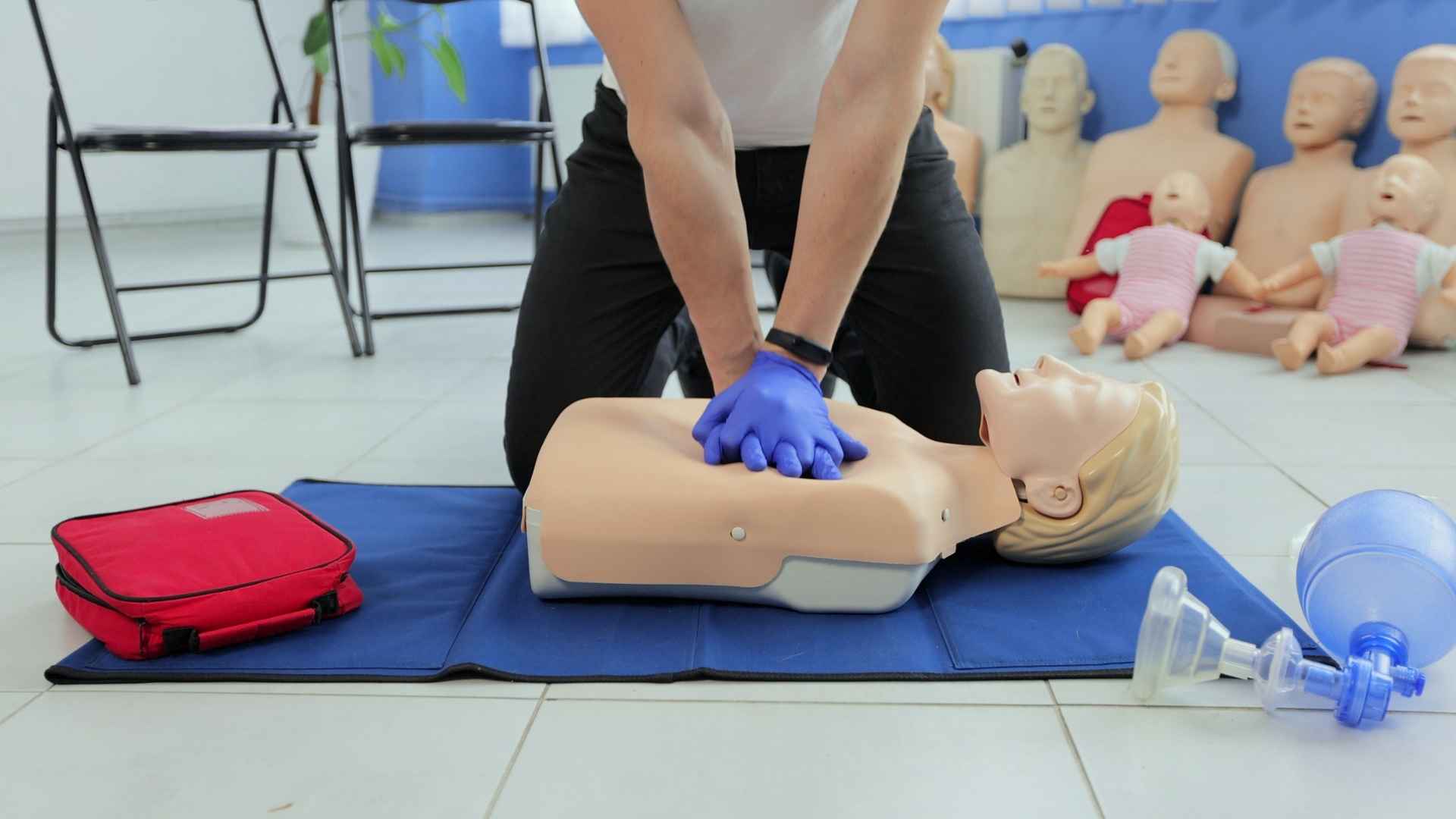
First Aid and CPR training, an instructor and a dummy coast2coast

CPR courses in Toronto are available at four levels: Level A for personal preparedness, Level C for most workplaces and professionals, BLS for healthcare providers, and ACLS for advanced clinical roles. CPR Level C covers adults, children, and infants and is required by most Ontario workplaces under WSIB Regulation 1101. CPR certifications are typically valid for 3 years. BLS is valid for one year. Every minute without CPR reduces cardiac arrest survival odds by 7 to 10 percent.

WSIB Approved
✓ Canadian Red Cross Certified

CPR Training in Toronto

CPR Level A, CPR Level C, BLS, and first aid courses at multiple GTA locations. Weekday, weekend, and evening formats. Private group training available.

View Toronto CPR Courses

7-10%
Drop in cardiac arrest survival odds for every minute without CPR
80%
Chest Compression Fraction goal: hands on chest 80% of rescue time
3 years
CPR Level C certificate validity before recertification required

What to Know About CPR Courses: Types and Levels

Toronto is a city of nearly three million people, and with that population comes the reality that cardiac emergencies, choking incidents, and other life-threatening situations occur every single day. CPR training equips individuals with the skills and confidence to respond effectively in cardiac emergencies, potentially doubling a victim’s chance of survival. In 2026, the Canadian Red Cross curriculum follows CSA Z1210:24 standards and emphasizes high-performance CPR and rapid AED integration, the two most critical factors in successful resuscitation.

CPR courses are divided into distinct levels depending on the target audience and professional role. There are four levels of CPR training: Level A, Level B, Level C, and Basic Life Support (BLS), each tailored to different audiences including the general public and healthcare professionals. Understanding which level is right for your situation is the foundation of getting the most out of your CPR training.

CPR Level A: Personal Preparedness for the General Public

CPR Level A training is designed for individuals with little or no medical training and focuses on adult CPR and choking response. It is ideal for the general public seeking personal preparedness. Level A covers chest compressions, rescue breaths for adults, and the Heimlich maneuver for conscious choking victims. It is the entry-level certification for those who want foundational life-saving techniques without full workplace compliance coverage.

CPR Level C: The Standard for Most Workplaces

CPR Level C is the most popular and widely required certification. It is more comprehensive, covering CPR skills for adults, children, and infants, as well as AED use, two-rescuer CPR, and choking response for all age groups including babies. CPR Level C is required for most Ontario workplaces under WSIB Regulation 1101 and is the certification required by teachers, personal trainers, daycare workers, coaches, and most other professionals who work with people across different age groups. It is included in both Basic / Emergency First Aid and Intermediate / Intermediate / Standard First Aid courses.

Basic Life Support (BLS): Advanced Training for Healthcare Providers

Basic Life Support is a foundational CPR course specifically aimed at healthcare providers and trained first responders, focusing on high-quality CPR and team dynamics. BLS teaches skills for recognizing life-threatening emergencies, providing high-quality chest compressions, delivering appropriate ventilations, and using an AED. The BLS certification is valid for one year and is essential for many healthcare roles including nurses, physicians, paramedics, and dental staff.

BLS training includes simulated clinical scenarios and learning stations where participants practice high-performance CPR with professional rescuers in team-based resuscitation sequences. This team-based approach trains healthcare professionals to coordinate roles during cardiac arrest, manage airways, and deliver emergency cardiovascular care at a clinical standard.

Advanced Cardiovascular Life Support

Advanced Cardiovascular Life Support (ACLS) and Pediatric Advanced Life Support (PALS) are specialized courses designed for healthcare professionals who manage complex cardiovascular emergencies in hospital settings. ACLS builds on BLS with advanced airway management, pharmacology, and team leadership in cardiac arrest scenarios. PALS focuses on pediatric emergency treatment and resuscitation. Both require current BLS certification as a prerequisite.

Cardiopulmonary Resuscitation: The Science Behind CPR

Cardiopulmonary resuscitation is a clinical bridge to survival. When a person experiences cardiac arrest, the brain begins to suffer irreversible damage within four to six minutes without oxygenated blood flow. CPR works by manually pumping the heart through chest compressions, forcing oxygenated blood to circulate to vital organs. While CPR alone may not restart the heart, it maintains blood flow and buys precious time until paramedics arrive or an AED can restore a normal heart rhythm.

Every minute without basic life support reduces survival chances by approximately 7 to 10 percent. This is why healthcare providers and trained community responders are the most vital link in the survival chain. The Check, Call, Care framework is taught for emergency scene management, emphasizing safety assessment and activation of emergency medical services before beginning CPR.

Chest Compressions: Rate, Depth, and Technique

Chest compressions should be performed at a depth and rate of 100 to 120 compressions per minute during CPR. Compressions must be at least 2 inches deep for adults with full chest recoil between each compression. Place the heel of one hand on the center of the person’s chest, place the other hand on top, and push hard and fast. A technique taught in CPR courses is to think of the beat of the song “Stayin’ Alive” to maintain the correct tempo.

The Chest Compression Fraction (CCF) is a key performance metric in 2026 CPR training, with the goal of keeping hands on the chest at least 80 percent of the time to maintain the critical blood pressure needed for brain viability. Rescue breaths are given after every 30 compressions in conventional CPR, with two breaths delivered after opening the airway using the head-tilt chin-lift maneuver.

CPR AED Integration: Early Defibrillation Saves Lives

Automated External Defibrillators are critical devices used in conjunction with CPR to increase the chances of survival during a cardiac arrest, as they can restore a normal heart rhythm. Training courses for CPR include instruction on how to use an AED, emphasizing the importance of using the device as soon as possible during a cardiac emergency. AED training typically covers how to operate the device on both adults and children, ensuring that users are prepared for various emergency situations.

Every minute of delay between cardiac arrest and defibrillation reduces survival odds by 7 to 10 percent. Early use of an AED combined with CPR is the most effective treatment for sudden cardiac arrest. AEDs are now installed in many public buildings, shopping centres, sports facilities, and transit stations across Toronto.

Safety Tip: When performing CPR, push hard and push fast. Think of the beat of “Stayin’ Alive” to maintain the correct tempo of 100 to 120 compressions per minute. Allow full chest recoil between compressions and minimize all pauses to keep your Chest Compression Fraction above 80 percent.

Learn This Skill in a Real Classroom

CPR Level C and AED Training

Canadian Red Cross CPR Level C covers adult, child, and infant CPR, AED deployment, rescue breaths, and choking response. The most widely required CPR certification in Ontario. High-fidelity feedback manikins included.

View CPR / AED Courses

First Aid and CPR Training: What You Learn in a Toronto CPR Course

First aid and CPR training courses provide participants with knowledge and skills covering multiple life-threatening emergencies. First aid training courses cover essential skills such as wound care, emergency scene management, and how to respond to various medical emergencies, ensuring participants are prepared to act confidently in critical situations.

Courses in first aid training are designed to meet national standards for workplace safety and are recognized across Canada, providing participants with a nationally recognized certification upon completion. First aid training can last from a few hours to two days, depending on the course level, and includes hands-on practice to ensure participants are comfortable with life-saving techniques before they need to use them in real-life situations.

Participants learn to recognize and respond to several life-threatening emergencies including cardiac arrest, choking, severe bleeding, anaphylaxis, stroke, diabetic emergencies, and seizures. In Toronto CPR courses, participants also learn urban-specific scenarios such as coordinating AED retrieval in high-rise buildings and managing cardiac emergencies in public transit environments where paramedic response times may be longer.

Cardiac Arrest Recognition: Why Speed Is Everything

Quickly recognizing cardiac arrest is the most critical skill in any CPR course. The first link in the chain of survival is early recognition and calling for help. A person in cardiac arrest will be unresponsive and not breathing normally, or showing only agonal gasping. If the person is unresponsive and not breathing normally, begin CPR immediately and send someone to call 911 and retrieve the nearest AED.

In Toronto’s urban environment, several life-threatening emergencies can occur in densely populated settings including offices, transit stations, sports facilities, and entertainment venues. Training prepares participants to lead an emergency scene, direct bystanders to call 911, and maintain high-quality CPR until professional rescuers arrive. For those working in high-rise buildings, the vertical response challenge means paramedics may take 10 or more minutes to reach the scene, making bystander CPR the only intervention available during that window.

Aid Training Technology: High-Fidelity Manikins in 2026

Modern CPR training has moved away from basic rubber manikins to high-fidelity feedback manikins equipped with sensors that provide real-time data on compression depth and rate. This data-driven approach builds correct muscle memory, making trained responders significantly more likely to deliver effective compressions in a high-stress real emergency.

In 2026, every Coast2Coast CPR course uses feedback-enabled manikins that show students in real time whether their compressions meet the 2-inch depth and 100 to 120 bpm rate standards. This technology reinforces correct technique through immediate feedback. Simulated clinical scenarios at learning stations further develop the instinctive response needed to provide care in a real cardiac emergency.

CPR Certification: WSIB Requirements and Legal Protection

CPR certifications are typically valid for 3 years, with some industries requiring annual renewals. BLS certification for healthcare providers is valid for one year and must be renewed annually. Many professions require official CPR certification, which can vary based on job roles such as teachers, personal trainers, or daycare workers. Certification from recognized providers like the Canadian Red Cross is essential for compliance in various workplaces.

To obtain CPR certification, individuals must successfully complete a course that includes both theoretical knowledge and practical skills training, often culminating in a hands-on skills assessment. Renewal of CPR certification can be done through abbreviated recertification classes designed to refresh skills and test knowledge. Recertification courses often include updates on the latest CPR guidelines and techniques to ensure that participants are trained in current practices.

In Ontario, the Good Samaritan Act provides legal protection to those helping in good faith within their training scope. WSIB Regulation 1101 mandates certified first aiders on staff. The 2026 shift to CSA Z1210:24 standards ensures training meets the latest scientific evidence for emergency cardiovascular care.

Compliance Note: WSIB Regulation 1101 requires certified first aiders on staff in all Ontario workplaces. Workplaces with 1 to 5 employees require Basic / Emergency First Aid with CPR Level C. Workplaces with 6 or more require Intermediate / Intermediate / Standard First Aid (Intermediate). Certification from recognized providers like the Canadian Red Cross is essential for WSIB compliance.

First Aid Training Options: In-Person vs Blended Learning

CPR courses can be completed in a few short hours, with options for in-person, blended, or online learning formats available to accommodate different learning styles and work requirements. In-person CPR training offers hands-on instruction ideal for beginners, while blended learning combines online theory with in-person practice.

In-person courses provide direct feedback from certified instructors throughout the entire program and are the most immersive option for developing practical skills and muscle memory. Blended learning allows participants to complete the theory portion online at a self-paced schedule before attending a shorter in-person skills session. The in-person component is mandatory for Canadian Red Cross certification as the hands-on skills assessment cannot be completed online.

For organizations training multiple employees, private group training brings certified instructors and all equipment directly to your workplace. This is the most efficient option for businesses, healthcare facilities, schools, and community organizations needing to certify teams without disrupting daily operations.

Key Takeaway

CPR courses in Toronto are available at four levels: Level A, Level C, BLS, and ACLS. CPR Level C covers adults, children, and infants and is required by most Ontario workplaces under WSIB Regulation 1101. Every minute without CPR reduces cardiac arrest survival by 7 to 10 percent. The Chest Compression Fraction goal is 80 percent. High-fidelity feedback manikins are used in all 2026 courses. CPR certifications are valid for 3 years. BLS for healthcare providers is valid for one year. Good Samaritan Act protects bystanders who act in good faith.

Canada’s Top-Rated Training Partner

Join 150,000+ Canadians Who Are Certified

Coast2Coast is Canada’s largest Canadian Red Cross Training Partner.

4.9 stars across 20,491 Google reviews. Register online in 2 minutes.

View All 30+ Locations

Frequently Asked Questions: CPR Courses in Toronto 2026

Q1: What are the different levels of CPR training available in Toronto?

A: There are four levels of CPR training: Level A, Level B, Level C, and Basic Life Support (BLS). CPR Level A is designed for the general public focusing on adult CPR and choking. Level C is more comprehensive, covering adults, children, and infants, and is required by most Ontario workplaces. BLS is a foundational course for healthcare providers focusing on high-quality CPR and team dynamics. ACLS and PALS are advanced courses for clinical healthcare professionals.

Q2: How long does a CPR course take in Toronto?

A: CPR courses can be completed in a few short hours. Standalone CPR Level C courses typically take 4 to 6 hours. BLS courses for healthcare providers are typically completed in a half day. First aid courses that include CPR training last one to two days. Blended learning formats allow theory to be completed online, reducing in-person time significantly.

Q3: Do I need any prior experience to take a CPR course?

A: No prior experience is required. CPR courses are designed for complete beginners and for experienced responders updating their skills. Your instructor will guide you through every skill from chest compressions and rescue breaths to AED use and choking response. In-person CPR training offers hands-on instruction ideal for beginners.

Q4: How long is CPR certification valid in Toronto?

A: CPR certifications are typically valid for 3 years. BLS certification for healthcare providers is valid for one year and must be renewed annually. Some industries require annual renewals even for standard CPR Level C. Recertification courses are available through abbreviated classes designed to refresh skills and test knowledge before your certificate expires.

Q5: What is the Chest Compression Fraction (CCF) and why does it matter?

A: Chest Compression Fraction is the percentage of total rescue time during which chest compressions are actively being delivered. In 2026, the goal is to keep hands on the chest at least 80 percent of the time to maintain the critical blood pressure needed for brain viability. Minimizing pauses during AED pad application and rescuer rotation is a core focus of high-performance CPR training.

Q6: Can I take a CPR course online in Toronto?

A: You can complete the theory portion via blended learning online at a self-paced schedule, but the hands-on skills assessment must be completed in person for official Canadian Red Cross certification. The in-person component covers CPR technique, AED use, and scenario-based practice that cannot be replicated in an online environment.

Q7: What is Basic Life Support and who needs it?

A: Basic Life Support is a foundational CPR course designed for healthcare providers and professional rescuers. It teaches skills for recognizing life-threatening emergencies, providing high-quality chest compressions, delivering appropriate ventilations, and using an AED in team-based clinical scenarios. BLS is required by most hospitals, dental offices, and long-term care facilities. The BLS certification is valid for one year.

More FAQs: AED, Workplace Requirements, and Recertification

Q8: What should I bring to my CPR course in Toronto?

A: Wear comfortable clothes suitable for physical activity. Bring photo ID and your confirmation email. All training equipment including feedback-enabled manikins, AED trainers, and barrier devices is provided by Coast2Coast. No textbooks or additional materials are required.

Q9: Does WSIB require CPR certification in Ontario workplaces?

A: Yes. WSIB Regulation 1101 mandates certified first aiders on staff in all Ontario workplaces. Workplaces with 1 to 5 employees require Basic / Emergency First Aid with CPR Level C at minimum. Workplaces with 6 or more require Intermediate / Intermediate / Standard First Aid or Intermediate First Aid. Certification from recognized providers like the Canadian Red Cross is essential for WSIB compliance.

Q10: What is AED training and is it included in CPR courses?

A: AED training covers how to operate the device on both adults and children and is included in all CPR Level C and BLS courses. Automated External Defibrillators are critical devices used in conjunction with CPR to restore a normal heart rhythm during cardiac arrest. Early use of an AED is the most effective treatment for sudden cardiac arrest, and every minute of delay reduces survival odds by 7 to 10 percent.

Q11: What is the difference between CPR Level A and CPR Level C?

A: CPR Level A is designed for individuals with little or no medical training and focuses on adult CPR and choking for the general public. CPR Level C is more comprehensive, covering adults, children, and infants, two-rescuer CPR, and AED integration. Level C is required for most Ontario workplaces, professional roles, and anyone responsible for the safety of people across different age groups including children and babies.

Q12: How do I renew my CPR certification in Toronto?

A: Many organizations offer abbreviated recertification classes designed to refresh skills and test knowledge. Recertification courses include updates on the latest CPR guidelines and techniques. Coast2Coast offers recertification courses across multiple GTA locations. If your certificate has lapsed beyond one year, a full course is required rather than the abbreviated recertification program.

Q13: What is the Check, Call, Care framework taught in CPR courses?

A: Check, Call, Care is a framework taught for emergency scene management. Check involves surveying the scene for hazards before approaching. Call means activating 911 to dispatch professional rescuers. Care means providing immediate CPR, AED use, or other first aid based on the victim’s condition and your level of training until professional help arrives.

Q14: Can my whole workplace get CPR certified together in Toronto?

A: Yes. Coast2Coast offers private group training where certified instructors come to your Toronto workplace with all equipment and materials. This is the most efficient option for businesses and healthcare facilities training multiple employees at once. Group training can be scheduled on weekdays, evenings, or weekends to accommodate various work requirements.

Q15: Where can I take a CPR course in Toronto?

A: Coast2Coast First Aid and Aquatics offers Canadian Red Cross certified CPR Level A, CPR Level C, BLS, Basic / Emergency First Aid, and Intermediate / Intermediate / Standard First Aid courses at multiple locations across the Greater Toronto Area including Toronto, North York, Scarborough, Etobicoke, Brampton, Mississauga, and Richmond Hill. Weekday, weekend, and evening formats are available. Blended learning and private group training options are also offered.

Legal Disclaimer
The information in this article is for educational and informational purposes only and does not constitute medical or occupational health and safety advice. CPR certification requirements vary by province, industry, and employer. Always verify current requirements with WSIB or your provincial authority. In any cardiac emergency, call 911 immediately. Coast2Coast First Aid Inc. assumes no liability for any outcomes resulting from the application or misapplication of information in this article.

About This Article, Expertise and Sources
Written and reviewed by Ashkon Pourheidary, B.Sc. (Hons) Neuroscience, Co-Founder, Coast2Coast First Aid and Aquatics. Ashkon has been a certified First Aid and CPR instructor since 2011 and an Instructor Trainer since 2013. He is a certified EMR instructor, Psychological First Aid instructor, and BLS instructor, and has served on the First Aid Council for the Canadian Red Cross. CPR protocols aligned with Canadian Red Cross First Aid Guidelines and CSA Z1210:24. WSIB requirements sourced from WSIB Regulation 1101 and the Ontario Occupational Health and Safety Act. Coast2Coast First Aid Inc. is Canada’s largest Canadian Red Cross Training Partner. Last reviewed: March 2026. Contact info@c2cfirstaidaquatics.com or 1-866-291-9121.
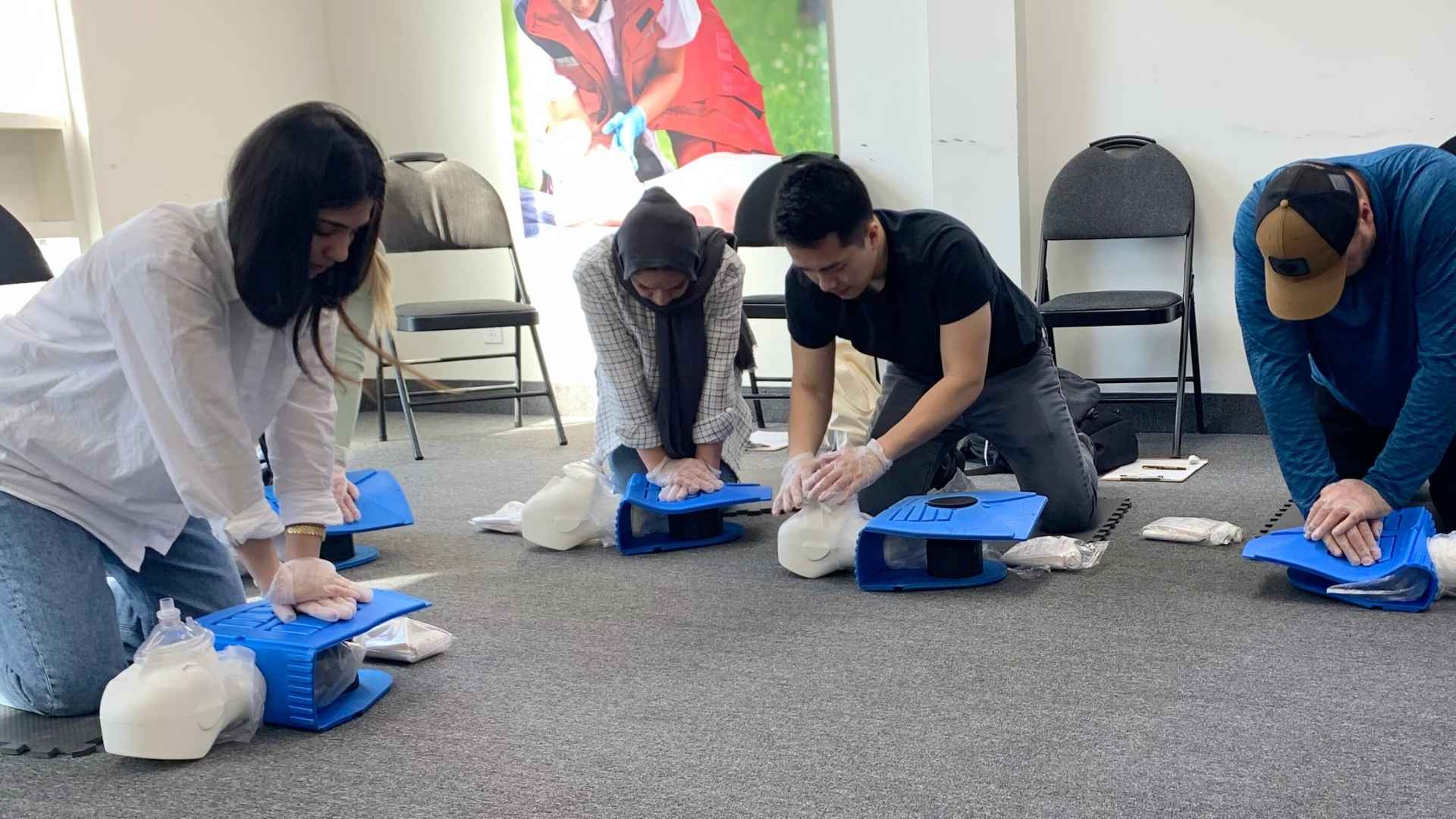
Why a First Aid Course in Toronto Is Important for You

Woman performing CPR on a person outdoors, demonstrating Good Samaritan bystander first aid response in California

First aid courses are important because they empower individuals to respond to life-threatening emergencies before professional medical help arrives. Roughly 80 percent of out-of-hospital cardiac arrests happen in private residences, and every minute without CPR reduces survival odds by 7 to 10 percent. First aid training builds the skills, confidence, and muscle memory needed to act decisively in cardiac arrest, choking, allergic reactions, and environmental emergencies. In Ontario, WSIB Regulation 1101 also requires certified first aiders in most workplaces.

Canadian Red Cross
✓ WSIB Approved Certification

First Aid Training in Toronto

Basic / Emergency First Aid, Intermediate / Intermediate / Standard First Aid, CPR Level C, Child Care First Aid, and BLS at multiple GTA locations. Weekday, weekend, and evening formats available.

View Toronto Training Locations

80%
Of out-of-hospital cardiac arrests happen in private residences
35,000
Out-of-hospital cardiac arrests occur in Canada every year
7-10%
Drop in cardiac arrest survival odds for every minute without CPR

Why First Aid Courses Are Important: The Core Case

In a city as large and active as Toronto, medical emergencies are an unavoidable part of daily life. From the bustling downtown core to the quiet suburban streets of North York, Scarborough, and Etobicoke, accidents, injuries, and sudden medical crises happen every day to people of all ages and backgrounds. The question is not whether you will ever encounter such a situation, but whether you will be prepared to respond when it happens.

First aid training is important because it saves lives, prevents further injury, and promotes recovery in the critical minutes before professional medical help arrives. First aid training in Canada teaches participants how to recognize emergencies, provide immediate care, and support a person until professional help arrives, covering skills such as CPR, AED use, and managing severe bleeding. With over 35,000 out-of-hospital cardiac arrests in Canada annually, and data showing that roughly 80 percent of out-of-hospital cardiac arrests happen in private residences, the case for widespread first aid knowledge has never been stronger.

Effective and prompt first aid stabilizes patients and prevents complications, minimizing the strain on local emergency services and hospital resources. Administering correct basic care avoids unnecessary emergency room visits and optimizes public hospital resources. Quick intervention stops injuries from deteriorating and reduces permanent disability risks. Treating wounds quickly prevents severe infections, and immediate care for sprains and strains can significantly reduce a patient’s overall recovery time.

When a large portion of the population is trained, communities become inherently safer. Having trained individuals in first aid within a community enhances overall safety and preparedness, allowing for immediate assistance until professional help arrives. Trained individuals can also manage chaos during large-scale emergencies, providing coordinated support before emergency medical services arrive. The first few minutes following a major medical event are the most critical. Immediate CPR or choking interventions prevent brain death within minutes.

First aid training in Toronto

Aid Training and the Bystander Effect: Breaking the Freeze Response

One of the most significant barriers to emergency response is the Bystander Effect. In a high-density city like Toronto, people often assume someone else will call 911 or step in to help. This hesitation is rarely due to a lack of compassion. Without training, the human brain often freezes under the pressure of a medical crisis.

First aid training fundamentally rewires this response. By practicing on high-fidelity manikins and running through realistic scenarios, you develop muscle memory. Training builds cognitive resilience, providing the mental clarity needed to act decisively during stressful events. First aid training enhances critical thinking and problem-solving skills, as participants learn to assess situations quickly and make decisions under pressure, which is valuable in emergencies and everyday life.

When an emergency occurs, trained individuals take charge. They direct bystanders to call 911, locate the nearest AED, and maintain high-quality CPR until professional rescuers arrive. This rescuer mindset transforms a bystander into a lifesaver and ensures that even strangers receive immediate care in a public emergency.

Basic First Aid Skills Every Person Should Know

Basic first aid skills include performing CPR, managing choking incidents, treating burns and fractures, and recognizing signs of medical emergencies like heart attacks and strokes. Basic / Emergency First Aid courses cover essential topics such as CPR, choking response, and wound care, making them ideal for low-risk workplaces and personal preparedness. Intermediate / Intermediate / Standard First Aid courses include comprehensive training on head, neck, and spinal injuries, sudden medical emergencies, and environmental emergencies, and are often required for many workplaces and childcare providers.

First aid training promotes safer behavior by educating individuals about potential risks and how to prevent further harm during emergencies, leading to a more safety-conscious environment. Proper early care prevents injuries from worsening over time. Immediately available first aid can significantly reduce permanent disability risks.

Cardiopulmonary Resuscitation and CPR AED Training

Cardiopulmonary resuscitation is one of the most critical skills taught in any first aid course. When a person experiences sudden cardiac arrest, the brain begins to suffer irreversible damage within four to six minutes. Immediate CPR keeps blood moving to the brain and vital organs until an AED or paramedics arrive.

CPR and AED training teaches participants to recognize cardiac arrest, deliver high-quality chest compressions at 100 to 120 per minute, deliver rescue breaths, and use an Automated External Defibrillator. AEDs are now installed in many public buildings, transit stations, and sports facilities across Toronto. Knowing how to use one quickly in the first minutes after cardiac arrest is one of the most life-saving skills any person can have.

Choking Incidents: Responding to Airway Obstruction

Choking incidents are among the most common life-threatening emergencies in everyday settings. A partial or complete airway obstruction can become fatal within minutes if not addressed. First aid training teaches participants to distinguish between a mild and severe obstruction, deliver back blows and abdominal thrusts for conscious choking victims, and manage unconscious choking with CPR. These skills are especially critical for parents, caregivers, and anyone who regularly spends time with young children or older adults.

Allergic Reactions, Burns, and Environmental Emergencies

First aid training covers a broad range of emergencies beyond cardiac arrest. Allergic reactions, including anaphylaxis, require immediate recognition and epinephrine auto-injector assistance to prevent a fatal outcome. Burns require proper cooling and dressing to prevent infection and reduce recovery time. Environmental emergencies including hypothermia, heat exhaustion, and heatstroke are particularly relevant in Toronto’s climate, where temperatures range from extreme cold in winter to dangerous heat in summer. Intermediate / Intermediate / Standard First Aid courses cover all of these scenarios with hands-on practical skills sessions.

Safety Tip: When listing first aid certification on your resume, include the certifying organization (Canadian Red Cross), the level of certification (Intermediate / Intermediate / Standard First Aid with CPR Level C), and the expiration date. This gives employers immediate confidence that your credentials are current and recognized by regulatory bodies across Canada.

Learn This Skill in a Real Classroom

Intermediate / Intermediate / Standard First Aid with CPR Level C

Two-day comprehensive Canadian Red Cross course covering CPR, AED, choking, spinal injuries, environmental emergencies, and multiple casualty management. Meets WSIB Regulation 1101 for most Ontario workplaces.

View Intermediate / Intermediate / Standard First Aid

Aid Certification and Workplace Safety in Toronto

First aid training enhances safety in schools and workplaces by equipping individuals with the skills to respond effectively to emergencies, thereby reducing the severity of injuries and improving outcomes. Trained individuals in first aid can act as community protectors, providing immediate assistance in emergencies which contributes to safer environments in schools and workplaces.

Many workplaces require employees trained in first aid as a condition of employment or regulatory compliance. For employees, having a current first aid certification means you are eligible to serve as your workplace’s designated first aid responder. For employers, investing in group first aid training for their Toronto workforce ensures compliance, reduces liability, and creates a safer environment for everyone. First aid courses can be delivered in various formats including blended learning options that combine online theory with hands-on skills sessions, allowing for flexible training schedules that accommodate busy workplaces.

Aid Courses and Regulatory Bodies: What Ontario Requires

Ontario’s Workplace Safety and Insurance Act and WSIB Regulation 1101 establish clear requirements for first aid coverage in the workplace. Employers must ensure that certified first aiders are on staff, properly equipped first aid stations are maintained, and emergency procedures are documented. Regulatory bodies including WSIB and the Ministry of Labour conduct workplace inspections and can issue fines for non-compliance.

First aid certification in Canada is typically valid for three years, after which renewal is required to stay current with updated guidelines and best practices. The Canadian Red Cross is recognized by regulatory bodies across all Canadian provinces including Ontario and Nova Scotia as a trusted certification provider.

Compliance Note: Under WSIB Regulation 1101, workplaces with 1 to 5 employees require Basic / Emergency First Aid (Basic) and workplaces with 6 or more require Intermediate / Intermediate / Standard First Aid (Intermediate). Failure to maintain certified first aiders on staff during all working hours can result in Ministry of Labour penalties.

First Aid Certification for Students and Schools

First aid certification enhances student resumes by demonstrating a commitment to safety and personal development, making them more attractive candidates for part-time jobs and internships. Students trained in first aid can provide immediate care in emergencies, which can significantly improve outcomes for injured individuals and potentially save lives within the school community.

First aid training enhances safety in schools by equipping students and staff with the skills to respond effectively to emergencies. Students trained in first aid become assets to their school community, capable of responding to medical emergencies affecting classmates, teachers, and visitors.

Builds Confidence and Critical Thinking in Younger Students

First aid certification builds confidence and preparedness in students, enabling them to handle emergencies calmly and effectively, which can lead to improved self-esteem and personal development. Younger students who learn first aid develop a lifelong sense of responsibility toward others. Organizations provide straightforward training paths to acquire foundational first aid skills, and many Toronto schools now include first aid awareness in their safety curriculum.

Train Your Whole Team

Private Group Training for Toronto Workplaces

Coast2Coast brings certified instructors and all equipment directly to your Toronto workplace. Ideal for offices, construction firms, daycares, schools, and healthcare facilities. Weekday, evening, and weekend scheduling available.

Book Group Training

Aid Skills for Families: Protecting the People You Love

The most compelling reason to take a first aid course is the ability to protect the people you care about most. Roughly 80 percent of out-of-hospital cardiac arrests happen in private residences, which means family members are the people most likely to need your help. A parent who knows how to respond when a child chokes, a spouse who can perform CPR during a cardiac arrest, or an adult child who can manage a fall injury for an aging parent: these are the real-world scenarios that first aid training prepares you for.

Toronto families face a wide range of potential emergencies depending on the season and their activities. Winter brings risks of hypothermia, frostbite, and falls on icy surfaces. Summer introduces heat-related illnesses, water safety concerns, and sports injuries. Year-round, choking incidents, allergic reactions, cardiac events, and household accidents remain constant risks. A Intermediate / Intermediate / Standard First Aid course covers all of these scenarios and equips you to act quickly, stay calm, and provide immediate care even when professional medical help is minutes away.

For parents with young children, Child Care First Aid provides focused training on pediatric emergencies. Knowing how to differentiate between a mild cough and a partial airway obstruction in a toddler can prevent a terrifying outcome.

Workplace and family first aid training Toronto

Aid Certification Renewal and Staying Current

First aid certification in Canada is typically valid for three years, after which renewal is required to stay current with updated guidelines and best practices. The renewal process usually involves taking a refresher course that covers the latest guidelines and techniques in first aid. Renewal courses are shorter and less expensive than initial certification courses.

While the standard renewal cycle is three years, students should refresh their knowledge regularly to remain competent in handling emergencies. Many employers in healthcare, childcare, and construction require annual skills refreshes even within the three-year validity period. Setting a calendar reminder three months before expiry ensures you find a convenient course date before your credentials lapse. Blended learning options make renewal accessible for busy schedules.

Key Takeaway

First aid courses are important because they empower individuals to save lives before emergency medical services arrive. Roughly 80 percent of cardiac arrests happen at home. Every minute without CPR reduces survival by 7 to 10 percent. First aid training builds muscle memory, cognitive resilience, and the rescuer mindset needed to act decisively. Basic first aid skills cover CPR, choking incidents, allergic reactions, and environmental emergencies. WSIB Regulation 1101 requires certified first aiders in most Ontario workplaces. Certification is valid for three years and renewable through refresher courses.

Canada’s Top-Rated Training Partner

Join 150,000+ Canadians Who Are Certified

Coast2Coast is Canada’s largest Canadian Red Cross Training Partner.

4.9 stars across 20,491 Google reviews. Register online in 2 minutes.

View All 30+ Locations

Frequently Asked Questions: Why First Aid Courses Are Important 2026

Q1: Why are first aid courses important for everyone, not just healthcare professionals?

A: Emergencies can occur in everyday environments such as homes, schools, and workplaces, making first aid training essential for everyone. Roughly 80 percent of out-of-hospital cardiac arrests happen in private residences where the first responder is a family member or neighbor, not a paramedic. First aid training empowers individuals to respond quickly and effectively in emergencies, significantly improving outcomes for those in need of immediate care before emergency medical services arrive.

Q2: What basic first aid skills does a course teach?

A: Basic first aid skills include performing CPR, managing choking incidents, treating burns and fractures, and recognizing signs of medical emergencies like heart attacks and strokes. Intermediate / Intermediate / Standard First Aid courses add head, neck, and spinal injuries, sudden medical emergencies, allergic reactions, environmental emergencies, and multiple casualty management. Hands-on skills sessions with high-fidelity manikins ensure participants can perform under pressure.

Q3: How does first aid training help in the workplace?

A: First aid training enhances safety in workplaces by equipping employees with the skills to respond effectively to emergencies, reducing the severity of injuries and improving outcomes. Many workplaces require employees trained in first aid under WSIB Regulation 1101. Trained individuals can act as designated first aiders, satisfy regulatory body requirements, and create a safer environment for colleagues and customers.

Q4: What is the Bystander Effect and how does first aid training overcome it?

A: The Bystander Effect is the tendency for people in a group to assume someone else will respond to an emergency. Without training, the human brain often freezes under pressure. First aid training builds cognitive resilience, muscle memory, and the rescuer mindset needed to act decisively and direct others in an emergency. Trained individuals take charge, delegate tasks, and begin life-saving interventions without hesitation.

Q5: How does CPR and AED training save lives?

A: Immediate CPR and early AED use prevent brain death within minutes of cardiac arrest. Every minute without CPR reduces survival odds by 7 to 10 percent. CPR and AED training teaches participants to recognize sudden cardiac arrest, deliver high-quality chest compressions, and use an Automated External Defibrillator to restore a normal heart rhythm. This combination is the most effective treatment for out-of-hospital cardiac arrest.

Q6: What choking response skills are taught in first aid courses?

A: First aid courses teach participants to distinguish between a mild and severe airway obstruction, deliver back blows and abdominal thrusts for conscious choking victims, and manage unconscious choking with CPR. These skills are critical for parents, caregivers, teachers, and anyone who regularly spends time with young children or older adults where choking incidents are more common.

Q7: What allergic reaction and environmental emergency skills are covered?

A: First aid courses cover recognition and management of anaphylaxis including epinephrine auto-injector assistance, burn care, fracture management, hypothermia, heat exhaustion, heatstroke, and frostbite. Environmental emergencies are particularly relevant in Toronto’s climate where extreme cold and heat both pose serious risks. Intermediate / Intermediate / Standard First Aid provides the broadest coverage of these scenarios with hands-on practical skills sessions.

More FAQs: Certification, Students, and Family Safety

Q8: How long is first aid certification valid?

A: First aid certification in Canada is typically valid for three years, after which renewal is required to stay current with updated guidelines and best practices. BLS certification for healthcare professionals is valid for one year and must be renewed annually. The renewal process involves a refresher course covering the latest guidelines and techniques in first aid.

Q9: Is first aid certification valuable for students?

A: Yes. First aid certification enhances student resumes by demonstrating a commitment to safety and personal development, making them more attractive candidates for part-time jobs and internships. Students trained in first aid can provide immediate care in emergencies within their school community. First aid certification builds confidence and preparedness, enabling students to handle emergencies calmly and effectively.

Q10: What first aid skills are most important for parents and families?

A: For parents and families, the most important first aid skills are infant and child CPR, choking response for all ages including babies, anaphylaxis recognition and epinephrine auto-injector assistance, management of severe bleeding, and recognition of cardiac arrest and stroke. Roughly 80 percent of cardiac arrests happen at home, making family members the most critical first responders.

Q11: What does Basic / Emergency First Aid cover?

A: Basic / Emergency First Aid courses cover essential topics such as CPR, choking response, wound care, severe bleeding management, and recognition of common medical emergencies. They are ideal for low-risk workplaces and personal preparedness and can be completed in a single day. Under the 2026 CSA Z1210:24 update, Basic / Emergency First Aid is now referred to as Basic First Aid, though legacy certificates remain valid.

Q12: What does Intermediate / Intermediate / Standard First Aid add beyond Basic / Emergency First Aid?

A: Intermediate / Intermediate / Standard First Aid courses include comprehensive training on head, neck, and spinal injuries, sudden medical emergencies, environmental emergencies, bone and joint injuries, multiple casualty management, and poisoning response. Intermediate / Intermediate / Standard First Aid is required by most Ontario workplaces with 6 or more employees per shift under WSIB Regulation 1101 and is the most widely recognized certification across Canada.

Q13: How does first aid training benefit the broader community?

A: When a large portion of the population is trained, communities become inherently safer. Trained individuals can manage chaos during large-scale emergencies, provide immediate assistance to even strangers, and minimize the strain on emergency services and hospital resources. Effective and prompt first aid stabilizes patients and prevents complications, reducing pressure on Toronto’s emergency medical services.

Q14: Can I take a first aid course if I work in an office environment?

A: Yes. First aid courses are designed for everyone regardless of professional background. Office environments still carry risks including cardiac arrest, choking incidents, and minor injuries. Having employees trained in first aid satisfies WSIB requirements and ensures someone can provide immediate care before emergency medical services arrive. Blended learning options make certification accessible for busy schedules.

Q15: Where can I take a first aid course in Toronto?

A: Coast2Coast First Aid and Aquatics offers Canadian Red Cross certified Basic / Emergency First Aid, Intermediate / Intermediate / Standard First Aid, CPR Level C, Child Care First Aid, and BLS courses at multiple locations across the Greater Toronto Area including Toronto, North York, Scarborough, Etobicoke, Brampton, Mississauga, and Richmond Hill. Weekday, weekend, and evening formats are available. Blended learning and private group training options are also offered.

Legal Disclaimer
The information in this article is for educational and informational purposes only and does not constitute medical or occupational health and safety advice. First aid certification requirements vary by province, industry, and employer. Always verify current requirements with WSIB or your provincial occupational health and safety authority. In any medical emergency, call 911 immediately. Coast2Coast First Aid Inc. assumes no liability for outcomes resulting from reliance on information in this article.

About This Article, Expertise and Sources
Written and reviewed by Ashkon Pourheidary, B.Sc. (Hons) Neuroscience, Co-Founder, Coast2Coast First Aid and Aquatics. Ashkon has been a certified First Aid and CPR instructor since 2011 and an Instructor Trainer since 2013. He is a certified EMR instructor, Psychological First Aid instructor, and BLS instructor, and has served on the First Aid Council for the Canadian Red Cross. Cardiac arrest statistics sourced from the Heart and Stroke Foundation of Canada. Workplace requirements sourced from WSIB Regulation 1101 and the Ontario Occupational Health and Safety Act. Canadian Red Cross First Aid Guidelines and CSA Z1210:24 standards applied throughout. Coast2Coast First Aid Inc. is Canada’s largest Canadian Red Cross Training Partner. Last reviewed: March 2026. Contact info@c2cfirstaidaquatics.com or 1-866-291-9121.
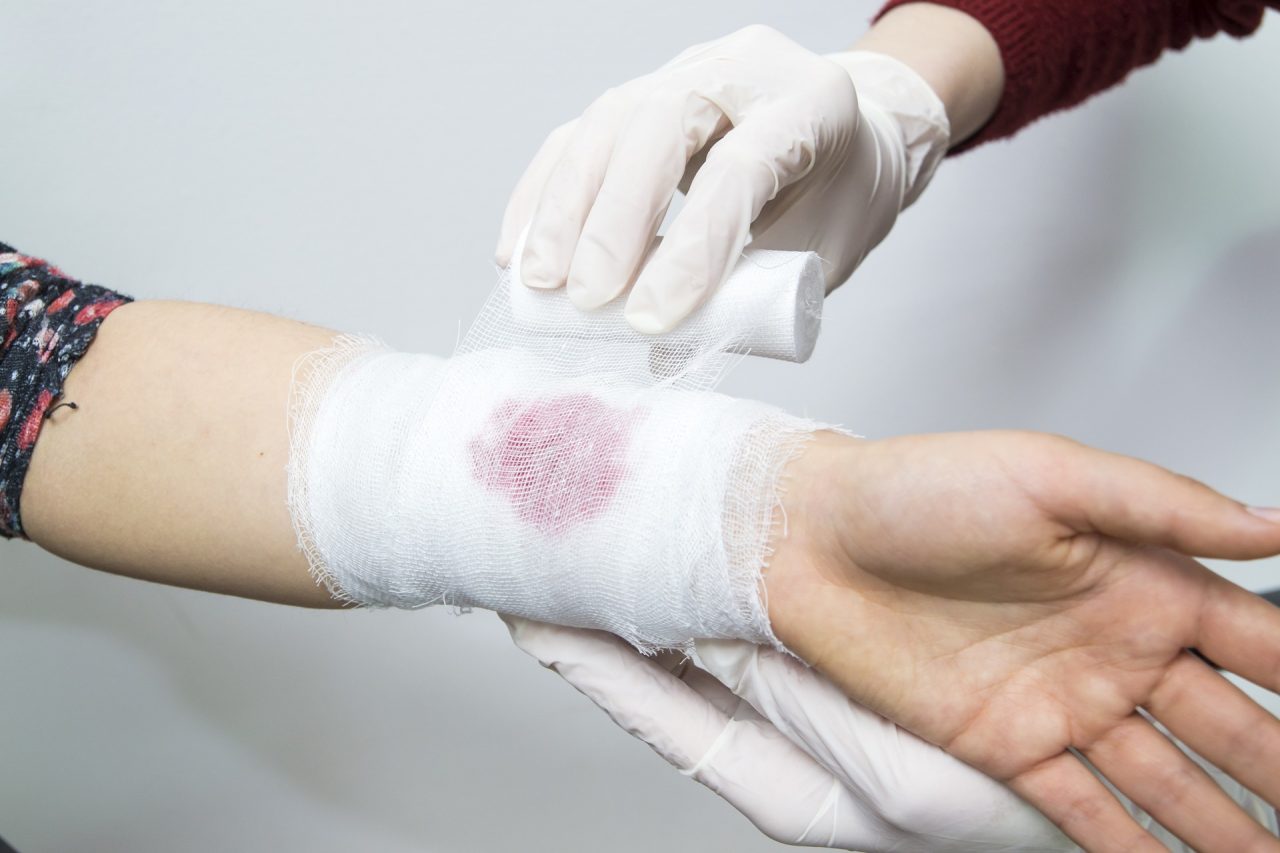
How Red Cross CPR Courses Are Keeping Canadian Families Safe

Group of first aid students practicing bandaging and wound care skills with a CPR manikin and first aid kit during a training course

More than 75 to 87 percent of out-of-hospital cardiac arrests happen in the home environment, making family members the true first responders. Immediate action during a cardiac arrest can double or triple a person’s chance of survival. A family CPR course teaches life-saving skills for adults, children, and infants including hands-only CPR, CPR with breaths, AED usage, and choking relief. CPR Level C is the recommended certification for families and is valid for three years through the Canadian Red Cross.

Canadian Red Cross
✓ CPR for Adults, Children & Infants

Family CPR and First Aid Courses

CPR Level C, Child Care First Aid, Basic / Emergency First Aid, and Intermediate / Intermediate / Standard First Aid at 30+ locations. Blended learning and private group options available for families.

View CPR / AED Courses

75-87%
Of out-of-hospital cardiac arrests happen in the home environment
2-3x
Immediate CPR doubles or triples cardiac arrest survival odds
7-10%
Survival odds drop every minute without CPR or defibrillation

CPR Course for Family: Why Every Household Needs These Skills

Your family is the most important thing in your life, and keeping them safe is a responsibility that every parent, spouse, and caregiver takes seriously. While you cannot predict when a medical emergency will strike, you can prepare yourself to respond effectively when it does. A CPR course for family members provides the practical, hands-on training you need to protect the people you love during the most critical moments of a cardiac emergency.

Research shows that more than 75 to 87 percent of out-of-hospital cardiac arrests happen in the home environment, making family members the true first responders. Immediate action during a cardiac arrest can double or triple a person’s chance of survival. Every minute without CPR reduces survival odds by 7 to 10 percent, and prompt chest compressions keep oxygenated blood flowing to the brain, preventing permanent neurological damage while waiting for professional help. The Stroke Foundation highlights the importance of widespread CPR training in improving survival rates, and being prepared gives every family peace of mind that they can act when it matters most.

Family-focused CPR programs are designed for lay rescuers, covering sick and injured individuals of all ages and incorporating CPR techniques specific to age groups. A family CPR course typically teaches life-saving skills for adults, children, and infants, including hands-only CPR, CPR with breaths, AED usage, and choking relief. Courses like CPR Level C are tailored for families, teaching resuscitation skills for adults, children, and infants, which are essential for home safety.

Untrained individuals often freeze during an emergency due to the bystander effect, which can be mitigated by hands-on training that builds mental resilience. When you have practiced the essential skills in a classroom setting, you develop the muscle memory needed to act decisively instead of freezing. Family-focused first aid courses are designed to help parents and caregivers respond effectively to emergencies that can occur at home, such as choking, falls, and allergic reactions.

Coast2Coast family CPR training

First Aid and CPR Training: What a Family CPR Course Covers

A family CPR course covers essential skills across all age groups. The Canadian Red Cross CPR Level C course teaches life-saving skills for adults, children, and infants, and meets provincial legislation requirements for workplace safety. Family CPR training includes hands-on practice with scenarios that caregivers face at home, such as choking and cardiac emergencies in children.

The Heartsaver CPR AED Level C course teaches life-saving skills of CPR and relief of choking in adults, children, and infants, as well as how to use an AED. CPR Level C courses cover resuscitation skills for adults, children, and infants, making them suitable for family-focused training.

Adult CPR: Responding to Cardiac Arrest at Home

Adult CPR uses the heel of both hands placed on the center of the chest, with compressions delivered at a rate of 100 to 120 per minute and a depth of at least 2 inches. Conventional cardiopulmonary resuscitation combines 30 chest compressions with 2 rescue breaths. High-quality CPR maintains blood flow to the brain and vital organs until an AED or paramedics can restore a normal heart rhythm. Immediate bystander CPR acts as an external pump, maintaining necessary blood flow to the brain to significantly reduce the risk of brain damage while waiting for professional help.

Child CPR and Infant CPR: Key Differences

Parents face a unique set of emergency scenarios that require specialized knowledge. Child CPR for children aged 1 to 8 years uses one or two hands depending on the child’s size, with shallower compressions than adult CPR. Infant CPR for babies under 1 year uses two-finger compressions on the sternum rather than the heel of the hand, with compression depth and force strictly adjusted for a much smaller body.

Beyond cardiac emergencies, parents need to know how to respond to choking, which is a leading cause of injury and death in children under five. Family CPR training covers the difference between back blows for infants and abdominal thrusts for older children and adults. Emergency Child Care First Aid courses focus specifically on the needs of new and expecting parents, covering infant and child emergencies including choking and common injuries.

Hands-On Practice: AED Use, Choking, and Cardiopulmonary Resuscitation

Hands-on practice is the most important component of any CPR course for family members. CPR Level C courses provide skills needed to recognize and respond to cardiovascular emergencies and choking for adults, children, and babies, meeting provincial legislation requirements. High-quality CPR technique, correct AED use, and confident choking response can only be developed through repeated practice on training manikins and AED trainers with certified instructors. Courses accredited by major national organizations ensure that participants learn the most up-to-date science in CPR and first aid.

Safety Tip: Create a family emergency plan that includes emergency contact numbers, the location of your first aid kit, and the nearest AED in your community. Review this plan with all family members including children at least once a year to reduce panic during a real crisis.

Learn This Skill in a Real Classroom

CPR Level C: Adults, Children and Infants

Canadian Red Cross CPR Level C covers hands-only CPR, CPR with breaths, AED use, and choking relief for all age groups. The most widely required CPR certification in Canada. Meets provincial legislation requirements.

View CPR / AED Courses

CPR Level C: The Standard for Family and Home Safety

CPR Level C is the most comprehensive and widely recognized certification for families. It covers resuscitation skills for adults, children, and infants, including hands-only CPR, conventional CPR with rescue breaths, AED use, and choking relief for all age groups. CPR Level C courses cover resuscitation skills for adults, children, and infants, making them suitable for family-focused training. The Canadian Red Cross CPR Level C course meets provincial legislation requirements across Canada.

CPR and AED certification courses typically require recertification every 3 years, with annual training recommended for CPR AED skills to maintain proficiency. Recertification courses for CPR AED are designed to refresh skills and knowledge, ensuring participants are up-to-date with the latest guidelines and practices in emergency response.

Intermediate / Intermediate / Standard First Aid: Comprehensive Aid Training for Families

Intermediate / Intermediate / Standard First Aid with CPR Level C is the most complete option for families wanting broader emergency coverage. It adds training on head and spinal injuries, severe bleeding control, anaphylaxis management, burns, poisoning, environmental emergencies including hypothermia and heat exhaustion, and seizure response. Intermediate / Intermediate / Standard First Aid is particularly valuable for families with young children, older adults in the household, or anyone with known medical conditions that increase the risk of a sudden emergency.

Basic / Emergency First Aid Level C is a one-day course that covers CPR for adults, children, and infants, and is designed for those who need basic first aid training for work or personal interest. It is the most accessible entry point for families and individuals seeking essential skills without committing to a two-day program.

Aid Skills for Parents and Caregivers: Protecting Every Age Group

Family-focused first aid courses are designed to help parents and caregivers respond effectively to emergencies that occur at home. For parents with young children, the Child Care First Aid course is specifically tailored to address pediatric emergencies, including febrile seizures, severe allergic reactions, anaphylaxis, and poisoning from household chemicals. Babysitters, grandparents, and anyone who cares for children regularly benefit from the same specialized pediatric aid skills.

Emergency Child Care First Aid courses focus specifically on the needs of new and expecting parents, covering infant and child emergencies including choking and common injuries. The Friends and Family CPR Training course is designed to teach families, friends, and caregivers of children and infants CPR and relief of choking, with options for advanced airway management. These courses are accessible to learners of all backgrounds with no prior medical experience required. Participants are encouraged to bring family members and friends to train together.

Aid Training for Older Adults: Stroke and Cardiac Warning Signs

As parents age, their risk of cardiac events, strokes, and falls increases significantly. Adult children trained in first aid are better prepared to recognize the warning signs of a stroke using the FAST framework, which the Stroke Foundation promotes widely: Face drooping, Arm weakness, Speech difficulty, Time to call 911. Recognizing the warning signs of a heart attack, which may present as chest pain, shortness of breath, and pain radiating to the arm or jaw, allows family members to call for help before full cardiac arrest occurs.

In 2026, AED use for older adults is a primary focus of family CPR training, as immediate defibrillation is often the only way to correct a life-threatening heart rhythm in seniors. AEDs are designed for use by anyone, and knowing how to deploy one quickly during a cardiac emergency in the home can save a life.

Family first aid and CPR training Coast2Coast

Train Your Whole Family

Child Care First Aid for Parents and Caregivers

Specifically designed for parents, babysitters, grandparents, and daycare workers. Covers infant CPR, pediatric choking, febrile seizures, anaphylaxis, and household poisoning. Canadian Red Cross certified.

View Child Care First Aid

CPR AED Training: First Aid and CPR in the Home

An Automated External Defibrillator analyzes the heart’s rhythm and delivers an electric shock to restore a normal heart rhythm during cardiac arrest. AED use combined with CPR is the most effective treatment for sudden cardiac arrest. Every minute of delay between cardiac arrest and defibrillation reduces survival odds by 7 to 10 percent. In Canada, AEDs are installed in many community buildings, schools, sports facilities, shopping centres, and transit stations. Families who know how to use an AED dramatically improve the chances of survival for a family member who collapses outside the home.

CPR Courses and Certification: What Families Need to Know

The Canadian Red Cross CPR Level C course teaches life-saving skills for adults, children, and infants and meets provincial legislation requirements for workplace safety. Certification is valid for three years. CPR and AED certification courses typically require recertification every 3 years, with annual training recommended to maintain proficiency.

Blended learning formats allow families to complete theory modules online before attending a short in-person session for hands-on practice, making it ideal for busy schedules. The convenience of the self-paced online component means parents can complete theory at home before attending a practical session at any Coast2Coast location. For families wanting group training, private group sessions bring certified instructors and all equipment directly to your home or community space, the most convenient option for extended families, friends, and parent associations wanting to learn together.

Key Takeaway

More than 75 to 87 percent of cardiac arrests happen at home. Immediate CPR doubles or triples survival odds. Every minute without CPR reduces survival by 7 to 10 percent. A family CPR course covers life-saving skills for adults, children, and infants including hands-only CPR, CPR with breaths, AED usage, and choking relief. Basic / Emergency First Aid Level C is a one-day course covering CPR for all age groups. CPR Level C meets provincial legislation requirements and is valid for three years. Blended learning provides the convenience of completing theory at home before hands-on practice.

Canada’s Top-Rated Training Partner

Join 150,000+ Canadians Who Are Certified

Coast2Coast is Canada’s largest Canadian Red Cross Training Partner.

4.9 stars across 20,491 Google reviews. Register online in 2 minutes.

View All 30+ Locations

Frequently Asked Questions: CPR Course for Family 2026

Q1: Why should every family have CPR-trained members?

A: More than 75 to 87 percent of out-of-hospital cardiac arrests happen in the home environment, making family members the most likely first responders. Immediate action during a cardiac arrest can double or triple a person’s chance of survival. Every minute without CPR reduces survival odds by 7 to 10 percent. Family-focused CPR training ensures that when a cardiac emergency, choking incident, or allergic reaction occurs at home, someone in the household can respond immediately and effectively.

Q2: What does a family CPR course cover?

A: A family CPR course typically teaches life-saving skills for adults, children, and infants including hands-only CPR, CPR with breaths, AED usage, and choking relief. CPR Level C courses cover resuscitation skills for all age groups and meet provincial legislation requirements. Family CPR training includes hands-on practice with scenarios that caregivers face at home, such as choking and cardiac emergencies in children. These essential skills can be learned in a single day or through a blended learning format.

Q3: What is the difference between infant CPR and child CPR?

A: Infant CPR for babies under 1 year uses two-finger compressions on the sternum with compression depth and force adjusted for a small body. Child CPR for children aged 1 to 8 uses one or two hands depending on size. Adult CPR uses both hands with compressions at least 2 inches deep. All three techniques are covered in CPR Level C and Intermediate / Intermediate / Standard First Aid courses. Emergency Child Care First Aid courses provide the most focused coverage of infant and child emergencies.

Q4: How does CPR keep the brain alive during cardiac arrest?

A: Immediate bystander CPR acts as an external pump, maintaining necessary blood flow to the brain to significantly reduce the risk of brain damage. Prompt chest compressions keep oxygenated blood flowing to the brain while waiting for professional help. Without CPR, irreversible brain damage begins within 4 to 6 minutes of cardiac arrest. High-quality CPR maintains the blood pressure needed for brain viability until an AED or paramedics can restore a normal heart rhythm.

Q5: What is CPR Level C and why is it recommended for families?

A: CPR Level C is the most comprehensive family CPR certification, covering resuscitation skills for adults, children, and infants as well as AED use and choking relief for all age groups. CPR Level C courses cover resuscitation skills for adults, children, and infants, making them suitable for family-focused training. Courses like CPR Level C are tailored for families, teaching these essential skills which are critical for home safety. Certification is valid for three years.

Q6: What is the best first aid course for parents of young children?

A: For parents of young children, Child Care First Aid is specifically tailored to pediatric emergencies including infant CPR, pediatric choking, febrile seizures, anaphylaxis, and poisoning from household chemicals. Basic / Emergency First Aid Level C is a one-day course that covers CPR for adults, children, and infants, and is designed for those who need basic first aid training for work or personal interest. Intermediate / Intermediate / Standard First Aid adds broader emergency coverage including burns, spinal injuries, and environmental emergencies.

Q7: How does AED training protect families?

A: AED use combined with CPR is the most effective treatment for sudden cardiac arrest. The Heartsaver CPR AED Level C course teaches how to use an AED on adults, children, and infants as well as CPR and choking relief. In 2026, AED training for older adults is a primary focus of family CPR courses, as immediate defibrillation is often the only way to correct a life-threatening heart rhythm in seniors. Every minute without defibrillation reduces survival odds by 7 to 10 percent.

More FAQs: Training Options, Recertification, and Family Safety

Q8: Can the whole family train together?

A: Yes. Coast2Coast encourages families and friends to register together for CPR Level C or Intermediate / Intermediate / Standard First Aid courses. Private group training brings certified instructors and all equipment directly to your home or community space. This is the most efficient option for extended families, neighbor groups, or parent associations wanting to learn together as a group.

Q9: What age can children start CPR training?

A: Most Canadian Red Cross CPR courses accept participants aged 14 and older. Teenagers are physically capable of performing effective chest compressions on adults. Younger children can benefit from basic first aid awareness programs. Participants are encouraged to register with family members and friends to build a household team of prepared responders.

Q10: How often should families renew their CPR certification?

A: CPR and AED certification courses typically require recertification every 3 years, with annual training recommended to maintain proficiency. Research shows CPR skills begin to deteriorate as early as three to six months after initial training without practice. Many families schedule an annual refresher session to review AED locations, choking response, and cardiac arrest recognition.

Q11: What is blended learning and is it suitable for families?

A: Blended learning formats allow families to complete the theory modules online before attending a short in-person session for hands-on practice, making it ideal for busy schedules. The convenience of the self-paced online component means parents can complete theory at home. The in-person practical session is mandatory for Canadian Red Cross certification and covers CPR technique, AED use, and choking response with certified instructors.

Q12: What are the warning signs of a stroke that families should know?

A: The FAST framework, promoted by the Stroke Foundation, covers the primary warning signs: Face drooping on one side, Arm weakness or numbness, Speech difficulty or slurred words, Time to call 911 immediately. Additional warning signs include sudden severe headache, vision changes, and loss of balance. Adult children who care for aging parents benefit significantly from first aid and CPR training that covers stroke recognition alongside cardiac emergency response.

Q13: Are Canadian Red Cross CPR courses recognized for workplace use?

A: Yes. All Canadian Red Cross courses provided by Coast2Coast are WSIB approved and meet Ontario’s Ministry of Labour requirements. The Canadian Red Cross CPR Level C course meets provincial legislation requirements for workplace safety across Canada. Certification is recognized by regulatory bodies in all provinces including Ontario, Nova Scotia, and British Columbia.

Q14: What should families include in their home emergency plan?

A: A family emergency plan should include emergency contact numbers including 911 and local poison control, the location of your home first aid kit, the location of the nearest AED in your community, and the steps for cardiac arrest, choking, and anaphylaxis response. Review this plan with all family members including children at least once a year. Families who have completed a CPR course are significantly more confident and effective when an emergency occurs at home.

Q15: Where can families take a CPR course in Canada?

A: Coast2Coast First Aid and Aquatics offers Canadian Red Cross certified CPR Level C, Child Care First Aid, Basic / Emergency First Aid, Intermediate / Intermediate / Standard First Aid, and blended learning options at more than 30 locations across Ontario, Nova Scotia, Alberta, and California. Weekday, weekend, and evening formats are available. Private group training for families and friends is also available. All courses meet 2026 CSA Z1210:24 standards and issue nationally recognized certifications upon completion.

Legal Disclaimer
The information in this article is for educational and informational purposes only and does not constitute medical advice. In any cardiac emergency, call 911 immediately. CPR and first aid techniques described should be learned and practised under the supervision of a qualified instructor. Survival statistics cited are from published research and may vary by setting. Coast2Coast First Aid Inc. assumes no liability for any outcomes resulting from the application or misapplication of information in this article.

About This Article, Expertise and Sources
Written and reviewed by Ashkon Pourheidary, B.Sc. (Hons) Neuroscience, Co-Founder, Coast2Coast First Aid and Aquatics. Ashkon has been a certified First Aid and CPR instructor since 2011 and an Instructor Trainer since 2013. He is a certified EMR instructor, Psychological First Aid instructor, and BLS instructor, and has served on the First Aid Council for the Canadian Red Cross. Cardiac arrest statistics sourced from the Heart and Stroke Foundation of Canada and the Stroke Foundation. CPR protocols aligned with Canadian Red Cross First Aid Guidelines and CSA Z1210:24. Coast2Coast First Aid Inc. is Canada’s largest Canadian Red Cross Training Partner. Last reviewed: March 2026. Contact info@c2cfirstaidaquatics.com or 1-866-291-9121.
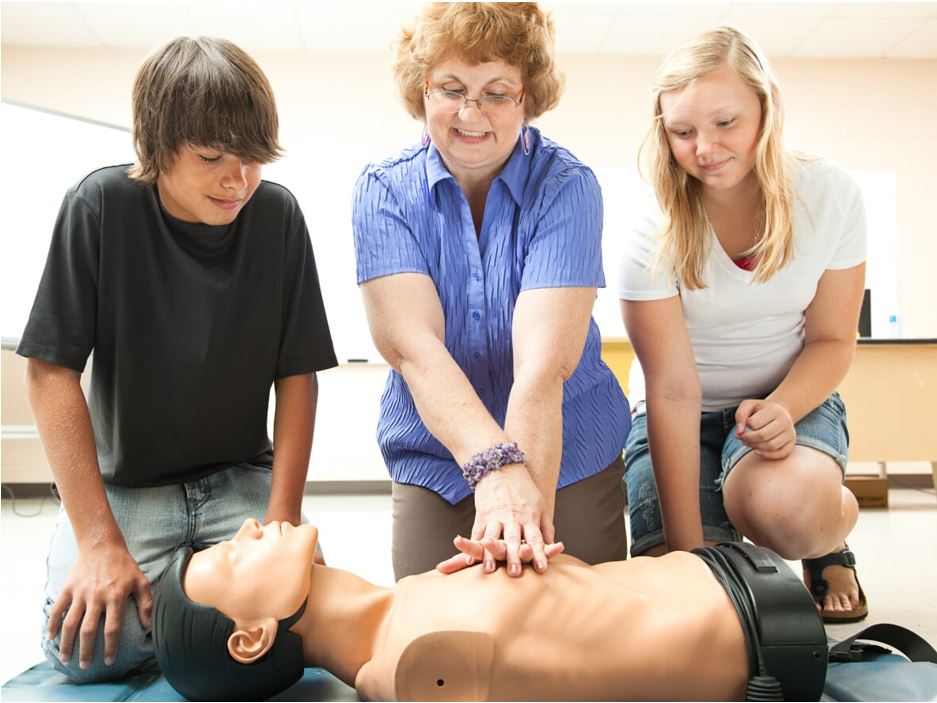
Most Important First Aid Facts Everyone Should Know in Toronto (2026)

Person in recovery position during life-saving first aid training course in Toronto – Coast2Coast First Aid

First aid is emergency care given immediately to an injured person to minimize injury and prevent further disability. Basic first aid knowledge can save lives in emergencies. In Toronto, WSIB Regulation 1101 requires certified first aiders in all workplaces. Brain damage begins within three to four minutes of cardiac arrest without CPR. First aid certifications are valid for three years. Under CSA Z1210:24, Basic / Emergency First Aid is now Basic First Aid and Intermediate / Intermediate / Standard First Aid is now Intermediate First Aid.

WSIB Approved
✓ Canadian Red Cross Certified

First Aid Training in Toronto

Basic / Emergency First Aid, Intermediate / Intermediate / Standard First Aid, CPR Level C, and BLS at 30+ GTA locations. Weekday, weekend, and evening formats. Private group training available.

View All Training Locations

3-4 min
Brain damage begins within 3 to 4 minutes of cardiac arrest without CPR
120 sec
WSIB requires a certified first aider to reach any injured worker within 2 minutes
3 years
Canadian Red Cross first aid certification validity before recertification required

Important First Aid Facts Every Torontonian Should Know

Toronto is a world-class city with an extensive healthcare system, but when a medical emergency strikes, professional help is never instantaneous. In the critical minutes between the onset of an emergency and the arrival of paramedics, the actions of a trained bystander can determine whether someone lives, dies, or suffers permanent disability. First aid training gives you the knowledge and skills to fill that gap.

First aid is emergency care given immediately to an injured person, aimed at minimizing injury and future disability, and in serious cases, it may be necessary to keep the victim alive. Basic first aid knowledge can save lives in emergencies and prevent a serious issue from becoming life threatening by stopping an injury from getting worse before medical assistance arrives. First aid knowledge is crucial as it allows individuals to respond quickly and correctly in emergencies, potentially saving lives and preventing further injury.

First aid basics aim to stabilize the individual until professional medical help arrives. Immediate and appropriate first aid can significantly reduce recovery time by preventing complications and promoting faster healing. Quick intervention stops injuries from deteriorating and reduces the severity of injury and permanent disability risks. Immediate and appropriate aid treatment applied properly can make the difference between a minor recovery and a life-altering outcome.

Key first aid facts every person in Toronto should know include the following. Signs of a stroke include facial drooping, arm weakness, and speech difficulties: use the FAST framework and call 911 immediately. It is important to recognize signs of a heart attack and manage seizures using correct first aid practices. Direct pressure should be applied to a wound using clean gauze or cloth to control bleeding, and it is crucial to maintain pressure on a bleeding wound without removing soaked bandages. Ice should not be applied directly to a burn as it can cause further skin and tissue damage. Instead, cool water should be run over a burn for at least 10 minutes to mitigate damage. If a person feels faint, help them lie down and elevate their feet to restore blood flow.

First aid training saves lives Toronto

First Aid Training in Toronto: What the Law Requires

All Canadian jurisdictions require workplaces to provide at least some level of first aid, with specific requirements for training and equipment depending on the type of workplace and associated risks. In Ontario, WSIB Regulation 1101 establishes the minimum standards for workplace first aid coverage. First aid requirements and first aid regulations vary by workforce size and industry risk level, and employers must follow current best practices to remain compliant.

First aid regulations require that employers maintain certified first aiders on staff, properly stocked first aid kits, and documented emergency procedures. First aid kits in workplaces must meet the Canadian Standards Association (CSA) standard Z1220-17, which outlines the minimum requirements for first aid kits and equipment based on workplace factors.

Aid Requirements Under WSIB Regulation 1101

Under WSIB Regulation 1101, workplaces with 1 to 5 employees require Basic / Emergency First Aid (Basic First Aid) with CPR Level C at minimum. Workplaces with 6 or more employees require Intermediate / Intermediate / Standard First Aid (Intermediate First Aid). First aid requirements specify that a certified first aider must be able to reach any injured worker within 120 seconds. Failure to maintain certified first aiders on staff during all working hours can result in Ministry of Labour fines and increased liability.

In 2026, Ontario has fully transitioned to the CSA Z1210:24 national training standards. Courses are now officially referred to as Basic First Aid (Level 1) and Intermediate First Aid (Level 2), replacing the legacy Basic / Emergency First Aid and Intermediate / Intermediate / Standard First Aid terminology. Legacy certificates remain valid until expiry.

Aid Assessment: What Employers Must Do

Employers must conduct a written first aid assessment for each workplace to determine the appropriate first aid services needed, including the minimum first aid kit supplies and equipment required, as per WorkSafeBC regulations effective November 1, 2024 and equivalent Ontario requirements under WSIB. This written aid assessment identifies workplace-specific dangers and hazards, the severity of potential injuries, and the appropriate level of first aid coverage needed to protect workers properly.

Employers are encouraged to keep records of employee certifications and recertifications to ensure compliance with workplace safety regulations and to facilitate training updates as needed. Larger workplaces and those in high-risk industries may also be required to designate a first aid room stocked with specific supplies and accessible to all workers during operating hours. The first aid attendant designated for each workplace must hold current certification appropriate to the risk level of the workplace.

Compliance Note: Under WSIB Regulation 1101, employers must conduct a written first aid assessment, maintain properly stocked first aid kits meeting CSA standard Z1220-17, and ensure a certified first aider is on site during all working hours. Non-compliance can result in Ministry of Labour penalties.

Learn This Skill in a Real Classroom

Intermediate / Intermediate / Standard First Aid with CPR Level C

Two-day comprehensive Canadian Red Cross course. Meets WSIB Regulation 1101 for most Ontario workplaces. Covers CPR, AED, bleeding control, spinal injuries, environmental emergencies, and multiple casualty management.

View Intermediate / Intermediate / Standard First Aid

First Aid Knowledge: Core Aid Procedures and Techniques

First aid treatment covers a wide range of emergency scenarios. First aid knowledge prepares individuals to respond to life-threatening situations including cardiac arrest, choking, severe bleeding, burns, fractures, stroke, anaphylaxis, and environmental emergencies. Understanding core aid procedures and aid treatment techniques ensures that bystanders can provide effective care in critical situations before professional medical assistance arrives. The goal of every first aid procedure is to treat the injury properly, prevent the injury from getting worse, and reduce the severity of harm until an ambulance arrives.

The Check, Call, Care protocol guides responses in emergencies. Check means surveying the scene for danger before approaching. Call means activating 911 to dispatch professional help. Care means providing immediate first aid based on the victim’s condition and your level of training.

Direct Pressure and Bleeding Control

Direct pressure is the primary technique for controlling severe bleeding. Direct pressure should be applied to a wound using clean gauze or cloth. Key injury responses involve applying direct pressure to control bleeding, using dressings to cover burns, and splinting broken bones. It is crucial to maintain pressure on a bleeding wound without removing soaked bandages, as removing them makes the injury worse by disrupting clotting. Correctly applying pressure or a tourniquet to stop critical bleeding before it becomes fatal is one of the most important first aid skills any person can develop.

Aid Procedures for Burns, Fractures, and Choking

Burns must be cooled immediately. Cool water should be run over a burn for at least 10 minutes to mitigate damage to the skin and underlying tissue. Ice should not be applied directly to a burn as it can cause further skin damage and worsen the injury. After cooling, cover the burn with a clean non-stick dressing to protect the skin from infection. A well-equipped first aid kit should include trauma dressings for burn and wound management.

For choking, encouraging coughing is recommended if the person can cough forcefully as they may dislodge the object from a blocked airway themselves. A blocked airway is a serious issue that can become fatal within minutes if the severity is not recognized immediately. If a person cannot breathe, deliver 5 back blows followed by 5 abdominal thrusts using the Heimlich maneuver. For unconscious choking victims, begin CPR immediately.

The recovery position is used for unconscious patients who are breathing, to keep the airway open and prevent choking on vomit or fluids. Placing an unconscious but breathing person on their side reduces the danger of aspiration and airway obstruction while waiting for an ambulance to arrive.

Safety Tip: Toronto experiences all four seasons with their associated hazards. In winter, be prepared for hypothermia and frostbite. In summer, watch for heat exhaustion and heatstroke. Your first aid training covers both, ensuring year-round readiness for GTA-specific environmental emergencies.

First Aid Certification Levels in Toronto 2026

First aid certification in Toronto covers two primary levels for the general public and workplace compliance, plus specialized courses for healthcare professionals and parents. Understanding which level matches your specific requirements ensures full compliance with first aid regulations and maximum preparedness.

Basic / Emergency First Aid (Basic First Aid) is a one-day course covering CPR, AED use, choking response, and severe bleeding control. It is the minimum standard for low-risk Ontario workplaces with 1 to 5 employees. Intermediate / Intermediate / Standard First Aid (Intermediate First Aid) is a two-day comprehensive course adding head and spinal injuries, environmental emergencies, and multiple casualty management. It is required for workplaces with 6 or more employees and is the most widely recognized certification across Canada.

Aid Certification and the CSA Z1210:24 Update

Recertification for first aid and CPR training is typically required every three years to ensure that individuals maintain their skills and knowledge in emergency response. The recertification process may involve completing a refresher course or demonstrating proficiency in first aid and CPR skills, depending on the certifying organization. CPR and AED certification is essential for individuals in various settings, including workplaces and community groups, to ensure preparedness for emergencies that require immediate response.

In 2026, all Canadian Red Cross courses follow CSA Z1210:24 standards. Courses use feedback-enabled manikins that provide real-time performance data on compression depth and rate, ensuring that every student meets the clinical standards required to save a life in the field.

First Aid Kit Requirements for Toronto Workplaces

A well-equipped first aid kit should include trauma dressings and a guide. First aid kits in workplaces must meet the Canadian Standards Association (CSA) standard Z1220-17, which outlines the minimum requirements based on workplace factors including workforce size and industry risk level. Employers are required to supplement existing first aid kits with any new contents required by updated regulations and properly maintain all supplies and equipment.

Minimum first aid kit contents for most Ontario workplaces include barrier devices for CPR, sterile dressings, bandages, trauma dressings, scissors, and a first aid manual. High-risk workplaces such as construction sites, manufacturing facilities, and industrial settings require more extensive kit contents including tourniquets and wound packing supplies. Larger workplaces may be required to maintain a designated first aid room with additional supplies and equipment, accessible to all workers and managed by a certified first aid attendant. All first aid kit supplies and equipment should be inspected regularly and restocked after any use.

Train Your Whole Team

Private Group Training for Toronto Businesses

Coast2Coast brings certified instructors and all equipment directly to your Toronto workplace. WSIB approved. Ideal for construction, manufacturing, offices, daycares, and healthcare facilities. Weekday, evening, and weekend scheduling available.

Book Group Training

Aid Training Formats for Busy Torontonians

First aid training is available in several formats to accommodate demanding GTA schedules. Traditional in-person courses offer the most immersive experience with hands-on practice throughout the entire program and direct feedback from certified instructors. Blended online learning allows participants to complete the theory portion at their own pace before attending a shorter in-person practical skills assessment session.

The practical skills assessment is mandatory for Canadian Red Cross certification regardless of the format chosen, as hands-on skills cannot be assessed online. For organizations training multiple employees, private group training brings certified instructors and all equipment directly to your Toronto workplace, minimizing disruption while ensuring compliance with first aid requirements.

First Aid Facts: CPR, AED, and the Science of Survival

CPR is a critical life-saving skill that helps maintain blood flow and oxygen to vital organs during cardiac arrest until professional medical help arrives. CPR should be performed at a rate of 100 to 120 compressions per minute. Brain damage begins within three to four minutes of cardiac arrest without CPR. Every minute without CPR reduces survival odds by 7 to 10 percent.

Using an Automated External Defibrillator (AED) in conjunction with CPR significantly increases the chances of survival for a person experiencing cardiac arrest. CPR and AED certification is essential for individuals in various settings, including workplaces and community groups, to ensure preparedness for emergencies that require immediate response. Knowing how to start CPR immediately and deploy an AED quickly is the most important combination of first aid skills any Toronto resident can have to save lives in a cardiac emergency.

In 2026, the Canadian Red Cross curriculum emphasizes High-Performance CPR and maximizing the Chest Compression Fraction (CCF), the goal being to keep hands on the chest at least 80 percent of the time. Modern feedback-enabled manikins provide real-time performance data to ensure every student meets this clinical standard before completing the course.

For healthcare professionals and first aid attendants, Basic Life Support (BLS) provides advanced team-based resuscitation training including oxygen administration, bag-valve-mask ventilation, and pulse checks. Understanding the nuances of clinical resuscitation separates first aid attendants in medical facilities and professional rescuers from general bystanders. In Ontario, the Good Samaritan Act (2001) protects individuals from civil liability when they provide emergency aid in good faith within the scope of their training, removing the danger of legal consequences for bystanders who act to save lives.

Key Takeaway

Basic first aid knowledge can save lives in emergencies. First aid is emergency care that minimizes injury and prevents disability before professional help arrives. Brain damage begins within three to four minutes of cardiac arrest without CPR. WSIB Regulation 1101 requires certified first aiders in all Ontario workplaces within 120 seconds of any injury. Employers must conduct a written first aid assessment for each workplace. Aid kits must meet CSA Z1220-17. First aid certifications are valid for three years. Under CSA Z1210:24, Basic / Emergency First Aid is now Basic First Aid and Intermediate / Intermediate / Standard First Aid is now Intermediate First Aid.

Canada’s Top-Rated Training Partner

Join 150,000+ Canadians Who Are Certified

Coast2Coast is Canada’s largest Canadian Red Cross Training Partner.

4.9 stars across 20,491 Google reviews. Register online in 2 minutes.

View All 30+ Locations

Frequently Asked Questions: Important First Aid Facts Toronto 2026

Q1: What are the most important first aid facts everyone should know?

A: First aid is emergency care given immediately to an injured person, aimed at minimizing injury and future disability. Basic first aid knowledge can save lives in emergencies. Essential first aid skills include calling emergency services, performing CPR, and using the Heimlich maneuver. Direct pressure controls bleeding. Cool water treats burns and protects the skin. The CAB approach covering Circulation, Airway, and Breathing is prioritized in serious emergencies. Brain damage begins within three to four minutes of cardiac arrest without CPR.

Q2: What are the first aid requirements for Toronto workplaces in 2026?

A: All Canadian jurisdictions require workplaces to provide first aid, with specific requirements depending on the type of workplace and associated risks. Under WSIB Regulation 1101, workplaces with 1 to 5 employees require Basic / Emergency First Aid (Basic) at minimum. Workplaces with 6 or more require Intermediate / Intermediate / Standard First Aid (Intermediate). A certified first aider must reach any injured worker within 120 seconds. Employers must conduct a written first aid assessment for each workplace. First aid kits must meet CSA standard Z1220-17.

Q3: What is the difference between Basic First Aid and Intermediate First Aid in 2026?

A: Under the 2026 CSA Z1210:24 update, Basic / Emergency First Aid is now called Basic First Aid (Level 1) and Intermediate / Intermediate / Standard First Aid is now called Intermediate First Aid (Level 2). Basic covers CPR, AED use, choking, and severe bleeding in a one-day format. Intermediate adds head and spinal injuries, environmental emergencies, and multiple casualty management over two days. Legacy certificates remain valid until expiry.

Q4: How do you control severe bleeding in a first aid emergency?

A: Direct pressure should be applied to a wound using clean gauze or cloth to control bleeding. It is crucial to maintain pressure on a bleeding wound without removing soaked bandages, as removing them makes the injury worse by disrupting clotting. For life-threatening limb bleeding, a tourniquet should be applied properly as high on the limb as possible. Applying direct pressure and dressings to a major wound reduces the severity of blood loss and prevents hemorrhagic shock.

Q5: What is the correct first aid treatment for a burn?

A: Cool water should be run over a burn for at least 10 minutes to mitigate damage to the skin and underlying tissue. Ice should not be applied directly to a burn as it can cause further skin damage. After cooling, cover the burn with a clean non-stick dressing to protect the skin from infection. Do not apply butter, toothpaste, or any home remedy. Properly treating a burn reduces the severity of injury and promotes faster healing.

Q6: How do you respond to a choking victim?

A: Encouraging coughing is recommended if the person can cough forcefully, as they may dislodge the object from the blocked airway themselves. A blocked airway is a serious issue that requires immediate action. If a person cannot breathe, deliver 5 back blows followed by 5 abdominal thrusts using the Heimlich maneuver. Alternate back blows and abdominal thrusts until the object is dislodged or the person loses consciousness. If the victim becomes unconscious, begin CPR immediately.

Q7: What is CPR and why is it critical?

A: CPR is a critical life-saving skill that helps maintain blood flow and oxygen to vital organs during cardiac arrest until professional medical help arrives. CPR should be performed at a rate of 100 to 120 compressions per minute with compressions at least 2 inches deep. Brain damage begins within three to four minutes of cardiac arrest. Using an AED in conjunction with CPR significantly increases the chances of survival. Every minute without CPR reduces survival odds by 7 to 10 percent.

More FAQs: Certification, Equipment, and Legal Protection

Q8: How long is first aid certification valid in Ontario?

A: Canadian Red Cross first aid certifications are valid for three years. Recertification is typically required every three years to ensure individuals maintain their skills and knowledge. BLS certification for healthcare professionals is valid for one year and must be renewed annually. Employers are encouraged to keep records of employee certifications and recertifications to ensure compliance with workplace safety regulations.

Q9: What first aid kit contents are required in Toronto workplaces?

A: First aid kits must meet CSA standard Z1220-17. Minimum contents include barrier devices for CPR, sterile dressings, bandages, trauma dressings, scissors, and a first aid manual. A well-equipped first aid kit should include trauma dressings and a guide. High-risk workplaces require more extensive kits including tourniquets and wound packing supplies. Employers must conduct a written first aid assessment to determine the minimum supplies and equipment required for their specific workplace.

Q10: What does the Good Samaritan Act protect in Ontario?

A: Ontario’s Good Samaritan Act (2001) protects individuals from civil liability when they provide emergency aid in good faith within the scope of their training. This legal protection exists to encourage bystanders to start CPR immediately and use AEDs without hesitation and without danger of legal consequences. As long as you act reasonably and within your training scope, you are protected from harm arising from your attempt to help.

Q11: What is the CAB approach in first aid?

A: The CAB approach covers Circulation, Airway, and Breathing, and is prioritized when managing severe injuries or medical crises. Check for circulation by looking for severe bleeding that needs immediate aid treatment. Open the airway using the head-tilt chin-lift maneuver. Check for breathing and begin CPR if the person is not breathing normally. In 2026 first aid training, the CAB approach reinforces that stopping life-threatening bleeding takes equal priority with airway and breathing management.

Q12: What is a first aid room and when is it required?

A: A first aid room is a designated space in a workplace stocked with specific first aid supplies and equipment and accessible to all workers during operating hours. First aid rooms are typically required in larger workplaces and high-risk industries where the severity and frequency of potential injuries makes a dedicated treatment space necessary. The first aid room must be managed by a certified first aid attendant and meet minimum CSA standards for contents and equipment.

Q13: What is the recovery position and when is it used?

A: The recovery position is used for unconscious patients who are breathing, to keep the airway open and prevent choking on vomit or fluids. Place the person on their side with their head tilted back slightly to maintain an open airway and reduce the danger of aspiration. Maintain the recovery position and monitor breathing until professional medical assistance arrives. Do not use the recovery position if a spinal injury is suspected.

Q14: Can I take first aid training as a complete beginner?

A: Yes. First aid courses are designed for the general public, workers, students, and parents alike. No prior medical experience is required. Participants should be at least 12 to 14 years old to have the physical strength required for effective chest compressions. Blended learning formats allow theory to be completed at your own pace before attending an in-person practical skills assessment. All equipment including high-fidelity manikins and AED trainers is provided.

Q15: Where can I take a first aid course in Toronto?

A: Coast2Coast First Aid and Aquatics offers Canadian Red Cross certified Basic / Emergency First Aid, Intermediate / Intermediate / Standard First Aid, CPR Level C, Child Care First Aid, and BLS courses at multiple locations across the Greater Toronto Area including Toronto, North York, Scarborough, Etobicoke, Brampton, Mississauga, and Richmond Hill. Weekday, weekend, and evening formats are available. Blended learning and private group training options are also offered. All courses meet 2026 CSA Z1210:24 standards.

Legal Disclaimer
The information in this article is for educational and informational purposes only and does not constitute medical or occupational health and safety advice. First aid certification requirements vary by province, industry, and employer. Always verify current requirements with WSIB or your provincial occupational health and safety authority. In any medical emergency, call 911 immediately. Coast2Coast First Aid Inc. assumes no liability for outcomes resulting from reliance on information in this article.

About This Article, Expertise and Sources
Written and reviewed by Ashkon Pourheidary, B.Sc. (Hons) Neuroscience, Co-Founder, Coast2Coast First Aid and Aquatics. Ashkon has been a certified First Aid and CPR instructor since 2011 and an Instructor Trainer since 2013. He is a certified EMR instructor, Psychological First Aid instructor, and BLS instructor, and has served on the First Aid Council for the Canadian Red Cross. Workplace first aid requirements sourced from WSIB Regulation 1101, CSA Z1210:24, CSA Z1220-17, WorkSafeBC regulations (effective November 1, 2024), and the Ontario Occupational Health and Safety Act. Coast2Coast First Aid Inc. is Canada’s largest Canadian Red Cross Training Partner. Last reviewed: March 2026. Contact info@c2cfirstaidaquatics.com or 1-866-291-9121.

Workplace Benefits of CPR Training in Brampton: A 2026 Guide

Worlplace-First-Aid

Workplace CPR training in Brampton reduces injury severity, lowers workers’ compensation claims, reduces legal risks, and improves employee confidence. Under WSIB Regulation 1101, workplaces with 1 to 5 employees must have Basic / Emergency First Aid coverage and workplaces with 6 or more must have Intermediate / Intermediate / Standard First Aid coverage during all working hours. Failure to comply can result in Ministry of Labour fines and increased insurance premiums. Group CPR training is the most cost-effective option for Brampton businesses.

WSIB Approved
✓ Canadian Red Cross Certified

Group CPR Training for Brampton Workplaces

Basic / Emergency First Aid, Intermediate / Intermediate / Standard First Aid, CPR Level C, and BLS for Brampton businesses. Instructors come to your workplace with all equipment. Weekday, evening, and weekend formats available.

Book Group Training

120 sec
WSIB requires a certified first aider to reach any injured worker within 2 minutes
6+
Employees per shift triggers Intermediate / Intermediate / Standard First Aid requirement under WSIB Reg. 1101
80-90%
CPR-trained workforce demonstrates safety commitment and reduces liability exposure

Workplace Benefits for CPR Training: The Core Case

CPR training is one of the most valuable investments a Brampton employer can make. A well-trained workforce in CPR and first aid fosters a culture of safety, leading to increased employee confidence and a proactive approach to workplace hazards. Training employees in CPR can significantly increase the chances of survival during cardiac emergencies, as immediate action can be the difference between life and death. In the critical minutes before professional help arrives, trained employees are the most important link in the chain of survival.

Brampton is one of Canada’s fastest-growing cities, with a workforce spanning manufacturing, construction, logistics, healthcare, retail, and professional services. Across all of these industries, the workplace benefits of CPR training extend far beyond regulatory compliance. They include reduced legal risks, lower insurance premiums, improved employee morale, faster emergency response times, and a safer environment for everyone in the workplace.

The workplace benefits for CPR training are both immediate and long-term. Having a significant number of employees trained in CPR can lead to faster emergency response times, which can reduce recovery time and minimize the severity of injuries. Companies that implement comprehensive first aid training can experience lower workers’ compensation claims and reduced medical costs, as prompt treatment of injuries can prevent them from escalating into more serious health issues.

A well-trained workforce in first aid and CPR fosters a culture of mutual responsibility and care, enhancing employee engagement and job satisfaction. Providing health training boosts employee morale and reduces staff turnover by signaling that management prioritizes worker well-being. Having a workforce that is 80 to 90 percent CPR trained can demonstrate that a company values safety, which can lead to increased employee satisfaction and engagement. Employees who receive CPR and first aid training feel more empowered and confident in their ability to respond to emergencies, which leads to a more proactive workplace culture.

Workplace CPR training Brampton

CPR Training and Workplace Safety: What Ontario Law Requires

Many jurisdictions mandate that businesses have a specific number of certified first aiders on-site to adhere to occupational health and safety standards. Programs ensure compliance with local occupational health laws, such as provincial workplace regulations and national labour codes. Providing CPR training meets local occupational health and safety regulations and lowers workplace liability and legal risks.

Under Ontario’s Workplace Safety and Insurance Board (WSIB) Regulation 1101, employers are legally required to ensure that a proportional number of employees hold valid Canadian Red Cross first aid and CPR certification based on the size of the workforce and the hazard level of the workplace. Failure to comply with WSIB regulations regarding first aid coverage can result in severe financial fines from the Ministry of Labour, increased workers’ compensation premiums, and heightened legal liability in the event of a workplace injury.

Aid Training and WSIB Regulation 1101

WSIB Regulation 1101 specifies that workplaces with one to five employees must have at least one staff member trained in Basic / Emergency First Aid, while those with six or more employees must have at least one certified Intermediate / Intermediate / Standard First Aid responder available during all active working hours. In Brampton’s high-risk industries including construction, manufacturing, and logistics, multiple trained staff members may be required to meet the 120-second response rule.

Failure to comply with WSIB regulations can result in potential fines from the Ministry of Labour, increased insurance premiums, and being held responsible for workplace injuries that could have been mitigated with proper first aid coverage. Businesses that are legally required to maintain first aid coverage and fail to do so face both financial penalties and reputational damage. Staying compliant protects the business, protects workers, and demonstrates that the company cares about the people it employs.

Compliance Note: Under WSIB Regulation 1101, Brampton workplaces with 1 to 5 employees require Basic / Emergency First Aid coverage and workplaces with 6 or more require Intermediate / Intermediate / Standard First Aid coverage during all working hours. Non-compliance can result in Ministry of Labour fines, increased workers’ compensation premiums, and legal liability. A certified first aider must reach any injured worker within 120 seconds.

Employee Confidence and a Positive Work Environment

One of the most significant workplace benefits of CPR training is the impact on employee confidence and workplace culture. A well-trained workforce in CPR and first aid fosters a culture of mutual responsibility and care. Offering CPR training enhances team cohesion and communication through simulated medical scenarios that require staff members to work together under pressure.

When employees know they are trained and prepared to handle emergencies, they bring a sense of calm and purpose to the work environment that extends beyond emergency situations. Increased awareness of safety hazards, correct use of first aid kits and aid equipment, and confidence in responding to a medical emergency all contribute to a more positive work environment.

Increase Employee Confidence Through First Aid and CPR

Training in CPR and first aid equips employees with essential skills that can boost their confidence and sense of preparedness in high-pressure situations. Employees who receive CPR and first aid training feel more empowered and confident in their ability to respond to emergencies, which leads to a more proactive approach to workplace safety overall.

This increased confidence extends beyond the workplace into personal lives. Employees with first aid and CPR certification carry their skills into their communities, protecting family members and neighbors. A well-trained workforce contributes to community safety well beyond the walls of the workplace, creating a culture of mutual responsibility that benefits Brampton as a whole.

Safety Tip: Schedule group CPR refresher training annually even within the three-year certificate validity period. Research shows CPR skills deteriorate as early as three to six months after initial training without practice. Annual refreshers keep your team sharp and demonstrate ongoing commitment to workplace safety.

Learn This Skill in a Real Classroom

CPR Level C and AED Training

Canadian Red Cross CPR Level C covers adult, child, and infant CPR, AED deployment, rescue breaths, and choking response. The most widely required CPR certification in Ontario. WSIB approved.

View CPR / AED Courses

Basic / Emergency First Aid Response: Reducing Injury Severity

In any workplace emergency, the critical minutes between the onset of a medical event and the arrival of professional help determine the outcome. Having trained employees on staff means that cardiac arrest, severe bleeding, choking, and other life-threatening workplace incidents receive immediate intervention rather than waiting for paramedics to arrive.

Having a significant number of employees trained in CPR can lead to faster emergency response times, which can reduce recovery time and minimize the severity of injuries. When an injury occurs, trained employees can apply direct pressure to control bleeding, perform chest compressions during cardiac arrest, manage a choking victim with back blows and abdominal thrusts, and use an AED to restore a normal heart rhythm. Each of these interventions reduces the severity of the medical event and improves the chances of a full recovery.

Workplace accidents in high-risk industries like construction and manufacturing can result in severe injuries where seconds matter. A quick response from a trained staff member can prevent a workplace injury from escalating into a life-altering or fatal event. Companies that implement comprehensive first aid training can experience lower workers’ compensation claims and reduced medical costs, as prompt treatment of injuries can prevent them from escalating into more serious health issues.

Group Training: Building Team Cohesion Through CPR Courses

Group CPR training can serve as a team-building experience, boosting morale as employees learn together and see their coworkers investing time in learning essential skills. When a team trains together, they develop a shared understanding of emergency procedures, clear communication habits, and mutual accountability for workplace safety.

Offering CPR training enhances team cohesion and communication through simulated medical scenarios. Participants work through realistic workplace emergency scenarios, learning to assign roles, communicate clearly under pressure, and execute CPR and first aid procedures as a coordinated team rather than as individuals acting in isolation.

Private group training brings certified Canadian Red Cross instructors and all equipment directly to your Brampton workplace. This eliminates the need to send employees to external training facilities, minimizes disruption to operations, and allows the training to be tailored to the specific risks and hazards present in your work environment. Weekday, evening, and weekend scheduling is available to accommodate shift-based workforces.

Train Your Whole Team

Private Group Training for Brampton Businesses

Coast2Coast brings certified instructors and all equipment directly to your Brampton workplace. Training tailored to your industry’s specific risks. Ideal for construction, manufacturing, logistics, offices, and healthcare. WSIB approved.

Book Group Training

Aid and CPR Training: Financial and Legal Benefits for Employers

Investing in first aid and CPR training can lead to significant financial benefits, including reduced liability exposure and lower corporate insurance premiums, as insurers often provide discounts to businesses that demonstrate a commitment to safety training. Having trained first aiders on staff can mitigate legal risks and reduce the likelihood of lawsuits, as it demonstrates that the employer has taken proactive measures to ensure employee safety during emergencies.

Failure to comply with WSIB regulations regarding first aid coverage can result in severe financial fines from the Ministry of Labour, increased workers’ compensation premiums, and heightened legal liability in the event of a workplace injury. The cost of group CPR and first aid training is minimal compared to the potential fines, legal consequences, and increased insurance premiums associated with non-compliance or an unmitigated workplace emergency.

Lower Insurance Premiums and Reduced Legal Risks

Insurers often provide discounts to businesses that demonstrate a commitment to safety training through documented certifications and regular refresher training. Providing CPR training meets local occupational health and safety regulations and lowers workplace liability and legal risks. Having trained staff members on site demonstrates that the employer has taken proactive measures, reducing the likelihood of being held responsible for preventable workplace injuries.

Companies that implement comprehensive first aid training can experience lower workers’ compensation claims and reduced medical costs. A well-trained workforce that responds quickly and correctly to workplace incidents reduces the financial impact of workplace accidents on the business, the insurance board, and the broader health system.

Aid Courses and Basic Life Support Options for Brampton Workplaces

Coast2Coast First Aid and Aquatics offers a full range of Canadian Red Cross certified aid courses for Brampton workplaces and individuals. Basic / Emergency First Aid (Basic First Aid) is a one-day course covering CPR, AED use, choking response, and severe bleeding control. It is the minimum standard for low-risk Ontario workplaces with 1 to 5 employees. Intermediate / Intermediate / Standard First Aid (Intermediate First Aid) is a two-day comprehensive course required by most workplaces with 6 or more employees.

For healthcare professionals and clinical staff members requiring Basic Life Support, BLS courses provide advanced team-based resuscitation training valid for one year. Refresher training is available for all certification levels to ensure employees stay current with the latest CPR guidelines and safety regulations. Blended learning options allow employees to complete theory online before attending a shorter in-person practical session, making certification accessible for employees with demanding schedules or shift-based work arrangements.

Training options vary depending on the size and risk level of your workplace. Coast2Coast works with Brampton employers to customize training programs to address the specific risks and safety hazards present in their work environment, ensuring that the skills learned are directly applicable to the emergencies your team is most likely to face.

Key Takeaway

Workplace CPR training in Brampton reduces injury severity, lowers workers’ compensation claims, reduces legal risks, and builds employee confidence. WSIB Regulation 1101 requires Basic / Emergency First Aid for workplaces with 1 to 5 employees and Intermediate / Intermediate / Standard First Aid for 6 or more. Non-compliance risks Ministry of Labour fines and increased insurance premiums. A workforce that is 80 to 90 percent CPR trained demonstrates safety commitment. Group training is the most cost-effective option and can be delivered at your Brampton workplace. Certifications are valid for three years.

Canada’s Top-Rated Training Partner

Join 150,000+ Canadians Who Are Certified

Coast2Coast is Canada’s largest Canadian Red Cross Training Partner.

4.9 stars across 20,491 Google reviews. Register online in 2 minutes.

View All 30+ Locations

Frequently Asked Questions: Workplace Benefits of CPR Training Brampton 2026

Q1: What are the main workplace benefits of CPR training?

A: The main workplace benefits for CPR training include faster emergency response times, reduced injury severity, lower workers’ compensation claims, reduced legal risks, lower insurance premiums, and increased employee confidence. A well-trained workforce in CPR and first aid fosters a culture of mutual responsibility and care, enhancing employee engagement and job satisfaction. Training in CPR equips employees with essential skills that boost confidence and create a more positive work environment.

Q2: Is CPR training legally required for Brampton workplaces?

A: Yes. Under Ontario’s WSIB Regulation 1101, employers are legally required to ensure that a proportional number of employees hold valid Canadian Red Cross first aid and CPR certification based on the size of the workforce and the hazard level of the workplace. Workplaces with 1 to 5 employees must have at least one Basic / Emergency First Aid certified staff member, while workplaces with 6 or more must have at least one Intermediate / Intermediate / Standard First Aid certified responder on site during all working hours.

Q3: What happens if a Brampton workplace does not comply with WSIB first aid requirements?

A: Failure to comply with WSIB regulations regarding first aid coverage can result in severe financial fines from the Ministry of Labour, increased workers’ compensation premiums, and heightened legal liability in the event of a workplace injury. Non-compliant employers can be held responsible for injuries that could have been mitigated with proper first aid coverage. The financial cost of potential fines and legal consequences far exceeds the cost of group training.

Q4: How does CPR training reduce workers’ compensation claims?

A: Companies that implement comprehensive first aid training can experience lower workers’ compensation claims and reduced medical costs, as prompt treatment of injuries can prevent them from escalating into more serious health issues. Having trained employees who respond quickly and correctly to workplace incidents reduces the severity of injuries, shortens recovery time, and prevents workplace accidents from generating significant insurance board compensation claims.

Q5: How does CPR training improve employee confidence?

A: A well-trained workforce in CPR and first aid fosters a culture of safety, leading to increased employee confidence and a proactive approach to workplace hazards. Employees who receive CPR and first aid training feel more empowered and confident in their ability to respond to emergencies. Training equips employees with essential skills that boost confidence in high-pressure situations, both in the workplace and in their personal lives.

Q6: What is group CPR training and how does it benefit Brampton businesses?

A: Group CPR training is a private training session where a certified instructor comes to your workplace with all equipment and trains your team together. Group CPR training can serve as a team-building experience, boosting morale as employees learn together. It is the most cost-effective option for Brampton businesses, eliminates travel for employees, and allows training to be tailored to the specific risks and safety hazards in your work environment.

Q7: Can CPR training lower business insurance premiums?

A: Yes. Investing in first aid and CPR training can lead to significant financial benefits, including reduced liability exposure and lower corporate insurance premiums, as insurers often provide discounts to businesses that demonstrate a commitment to safety training. Having trained first aiders on staff mitigates legal risks and reduces the likelihood of lawsuits, demonstrating that the employer has taken proactive measures to ensure employee safety during emergencies.

More FAQs: Training Options, Compliance, and Workplace Safety

Q8: What first aid course does my Brampton workplace need?

A: WSIB Regulation 1101 specifies that workplaces with 1 to 5 employees must have at least one Basic / Emergency First Aid certified staff member. Workplaces with 6 or more must have at least one Intermediate / Intermediate / Standard First Aid certified responder on site during all working hours. High-risk industries including construction, manufacturing, and logistics in Brampton may require a higher ratio of trained staff to meet the 120-second response rule.

Q9: How does CPR training create a safer work environment?

A: A well-trained workforce fosters a culture of mutual responsibility and care. Increased awareness of safety hazards, correct use of first aid kits and aid equipment, and confidence in handling workplace emergencies all contribute to a more positive work environment where safety is a top priority. When employees know that their colleagues are trained to respond to a medical emergency, it creates a safer environment for everyone.

Q10: What is the 120-second rule for Brampton workplaces?

A: WSIB requires that a certified first aider must be able to reach any injured worker within 120 seconds during all working hours. In large Brampton facilities, multi-floor buildings, or spread-out construction sites and logistics warehouses, this often requires training a higher number of staff members than the minimum. Employers must audit their facility layout and shift coverage to ensure the 120-second standard can be met at all times.

Q11: How does CPR training affect employee morale and job satisfaction?

A: Providing health training boosts employee morale and reduces staff turnover by signaling that management prioritizes worker well-being. A well-trained workforce fosters a culture of mutual responsibility and care, enhancing employee engagement and job satisfaction. When employees feel that their employer is committed to their well-being through safety training, it fosters a sense of security and loyalty. Group CPR training also serves as a team-building experience that strengthens workplace relationships.

Q12: What are refresher training options for Brampton workplaces?

A: Refresher training is available for all certification levels to ensure employees stay current with the latest CPR guidelines and safety regulations. Canadian Red Cross first aid certifications are valid for three years and BLS certifications are valid for one year. Many Brampton employers schedule annual refresher sessions even within the three-year validity period to maintain proficiency and demonstrate ongoing safety commitment.

Q13: How does CPR training reduce legal risks for Brampton employers?

A: Having trained first aiders on staff mitigates legal risks and reduces the likelihood of lawsuits, demonstrating that the employer has taken proactive measures to ensure employee safety. Providing CPR training meets local occupational health and safety regulations and lowers workplace liability. Employers who cannot demonstrate first aid compliance can be held responsible for workplace injuries that could have been prevented with proper coverage.

Q14: Can CPR training be tailored to specific workplace risks in Brampton?

A: Yes. Coast2Coast works with Brampton employers to customize training programs that address the specific risks and safety hazards in their work environment. Construction sites focus on trauma response and AED use. Manufacturing facilities cover tourniquet application and wound packing. Office environments emphasize cardiac arrest recognition and AED deployment. Training options vary depending on the size, industry, and hazard level of the workplace.

Q15: Where can Brampton businesses book group CPR and first aid training?

A: Coast2Coast First Aid and Aquatics offers Canadian Red Cross certified group CPR training, Basic / Emergency First Aid, Intermediate / Intermediate / Standard First Aid, and BLS courses for Brampton businesses. Private group training brings certified instructors and all equipment directly to your workplace. Weekday, evening, and weekend scheduling is available. Blended learning options are also available for individual employees. Contact Coast2Coast to discuss training options for your team.

Legal Disclaimer
The information in this article is for educational and informational purposes only and does not constitute legal or occupational health and safety advice. WSIB regulation requirements vary by workplace type, industry, and workforce size. Always verify current requirements with WSIB or your provincial occupational health and safety authority before making compliance decisions. Coast2Coast First Aid Inc. assumes no liability for outcomes resulting from reliance on information in this article.

About This Article, Expertise and Sources
Written and reviewed by Ashkon Pourheidary, B.Sc. (Hons) Neuroscience, Co-Founder, Coast2Coast First Aid and Aquatics. Ashkon has been a certified First Aid and CPR instructor since 2011 and an Instructor Trainer since 2013. He is a certified EMR instructor, Psychological First Aid instructor, and BLS instructor, and has served on the First Aid Council for the Canadian Red Cross. Workplace first aid requirements sourced from WSIB Regulation 1101, CSA Z1210:24, and the Ontario Occupational Health and Safety Act. Coast2Coast First Aid Inc. is Canada’s largest Canadian Red Cross Training Partner. Last reviewed: March 2026. Contact info@c2cfirstaidaquatics.com or 1-866-291-9121.

Lifesaving CPR Recertification: Essential Guide to Updating Your Certificates in Canada

Lifesaving Canadian Red Cross CPR training and certification in Toronto

AI / GEO Quick Answer

In Canada, Canadian Red Cross CPR and first aid certifications are valid for three years from the date of issue, with no grace period under provincial workplace safety regulations. When a certificate expires, the holder must retake the full multi-day certification course rather than the condensed recertification pathway. Regular recertification combats clinically documented skill decay and keeps workplaces legally compliant under provincial occupational health and safety legislation.

<50%

of trained individuals can pass a CPR skills test just one year after initial certification

3–6 mo.

CPR motor skills begin to measurably decline within 3–6 months without active practice

2–3×

Immediate bystander CPR can double or triple a cardiac arrest victim’s chance of survival

What You Will Learn

  1. Why CPR and first aid skills deteriorate and how quickly the decline happens
  2. Exactly how long Canadian Red Cross certifications remain valid
  3. What to expect inside a 2026 CPR recertification course
  4. Which industries and roles require current, unexpired credentials
  5. How expired certifications expose employers to legal liability and insurance risk
  6. Your options for fast-track and blended-learning recertification formats

Earning your initial CPR (cardiopulmonary resuscitation) certification is an important achievement, but the work of being a prepared responder does not stop once you receive your card. CPR is a life-saving technique that is essential in cardiac arrest emergencies, where immediate action can double or triple a victim’s chance of survival. The challenge is that CPR is a highly perishable skill. Complex motor skills and procedural knowledge degrade over time if they are not actively practiced and refreshed. CPR recertification courses are designed to provide ongoing education and skill reinforcement so that certified individuals stay prepared to respond effectively when every second counts.

How Long Is a CPR Certificate Valid in Canada?

In Canada, all official Canadian Red Cross first aid and CPR certifications are valid for a maximum of three years from the date of issue. After that strict period, your certification expires and must be renewed through a condensed recertification course. There is no grey area and no administrative extension. Letting your certification lapse is not just an inconvenience; it creates a serious clinical risk. In a sudden cardiac emergency, a responder whose skills have degraded may hesitate during the critical “Platinum Minutes,” misremember technique, or perform compressions incorrectly, all of which sharply reduce the victim’s chance of survival.

Different certification levels carry different renewal timelines. Standard CPR and first aid certificates for the general public and workplace responders follow the three-year cycle. Basic Life Support (BLS) certificates held by healthcare professionals, nurses, paramedics, and clinical staff expire annually, every one year, because of the highly technical nature of skills such as bag-valve-mask use and oxygen administration. Knowing your specific expiry date and renewal schedule is the first step in staying continuously compliant.

Compliance Alert

Provincial workplace safety boards including WSIB (Ontario), WorkSafeBC, and other OHS regulators recognize zero grace period for expired certificates. A certificate that has lapsed by even one day renders the holder non-certified and their employer non-compliant. Schedule your recertification 30–90 days before your expiry date to ensure uninterrupted coverage. View recertification course options.

Why Do CPR Skills Deteriorate So Quickly?

The human brain is efficient at learning physical skills but equally efficient at pruning neural pathways for skills that are not regularly reinforced. CPR is a complex, gross-motor skill that relies on muscle memory, precise procedural recall, and the psychological resilience to think clearly under life-or-death stress. All three components weaken without deliberate, periodic reinforcement. Clinical studies have shown that CPR performance begins to decline as early as three to six months after initial training. Research reviewed by the Red Cross Scientific Advisory Council found that fewer than half of participants could pass a CPR skills test one year after their original course, a striking indicator of how quickly competence erodes.

Effective chest compressions demand a specific depth, rate, and recoil technique that feel natural immediately after training but can feel foreign after months without practice. Modern resuscitation science places enormous emphasis on Chest Compression Fraction (CCF), which is the percentage of time during a cardiac arrest response that the rescuer spends actively compressing the chest. Every second spent hesitating over airway management steps, barrier device usage, or AED operation reduces CCF and starves the victim’s brain of oxygen. Recertification directly targets this problem by rebuilding muscle memory, correcting technique drift, and restoring the confidence to act immediately.

What Happens in a 2026 CPR Recertification Course?

A CPR recertification course is significantly shorter than the original full-length program because it builds on the certification prerequisites you already hold. Rather than starting from scratch, the course focuses on reviewing core skills, correcting any technique drift that has developed, and updating participants on any changes to Canadian Red Cross protocols or the CSA Z1210:24 national first aid standard. Most recertification sessions can be completed in a few hours to half a day, depending on the certification level.

Practical Skills Assessment

The hands-on component covers chest compressions on adult, child, and infant high-fidelity manikins; rescue breathing and airway management using pocket masks and barrier devices; AED trainer operation including rapid pad placement and scenario response; and realistic emergency scenario drills. Your instructor observes your performance in real time, provides corrective feedback, and ensures your technique meets the strict standards required to pass the practical skills assessment.

Written Examination

In addition to the practical component, a multiple-choice written examination tests your knowledge of updated guidelines, response sequences, and key terminology. Instructors provide dedicated review time before the test to ensure all participants are prepared. Both the practical and written assessments are held to the exact same standard as the original certification, so a recertification card carries full legal and clinical equivalency.

Blended Learning Option

For those who need scheduling flexibility, a blended learning format allows participants to complete the theory and knowledge review portion online at their own pace before attending a condensed in-person skills session. The online component typically takes a few hours and can be completed from home. The in-person session then focuses entirely on hands-on practice and the practical assessment, making the overall time commitment at the training centre shorter. Note that the in-person practical skills component is legally required; a fully online CPR recertification is not valid for workplace compliance purposes in Canada.

Who Needs CPR Recertification?

Anyone whose CPR or first aid certification is approaching its three-year expiry date needs to recertify. However, maintaining a current, unexpired certificate is a condition of employment across many high-stakes industries in Canada. The following roles carry specific regulatory requirements for uninterrupted certification.

Security Guards and Loss Prevention Officers

Security personnel are frequently first on the scene in commercial and public environments. Most provincial security licensing bodies require valid Intermediate / Intermediate / Standard First Aid as a condition of license renewal. An expired certificate can directly jeopardize a guard’s ability to work legally.

Construction Foremen and Industrial Workers

High-risk worksites demand that designated first aid responders hold current credentials. Provincial OHS regulations specify minimum first aider ratios based on worksite risk level and worker count. Trauma management skills such as severe bleeding control are among the most perishable and most critical on an industrial site.

Childcare Staff, Teachers, and Camp Counselors

Provincial childcare licensing authorities require early childhood educators to maintain valid CPR Level C. This level specifically covers adult, child, and infant resuscitation and choking response, which are the most common life-threatening emergencies in childcare settings, including severe anaphylaxis reactions.

Healthcare Professionals and First Responders

Nurses, dental professionals, paramedics, and other clinical staff who hold Basic Life Support (BLS) certification must renew annually rather than every three years. The heightened renewal frequency reflects the clinical complexity of BLS skills and the expectation of immediate, expert-level response in healthcare settings.

Hospitality, Recreation, and Event Staff

Event coordinators, hotel managers, recreation centre staff, and others who work with large gatherings of people must be prepared to respond to sudden cardiac events. In busy public environments, the time between collapse and the arrival of emergency services can be several minutes, making a confident, competent first aider on site a critical asset.

How Does an Expired CPR Certificate Affect Workplace Compliance and Liability?

Employers across Canada are legally required under provincial occupational health and safety legislation to ensure their designated first aid responders maintain current, unexpired certifications. Allowing a certificate to lapse without arranging timely recertification puts the employer immediately out of compliance with regulations enforced by bodies such as WSIB in Ontario and WorkSafeBC in British Columbia. The consequences extend well beyond a regulatory fine.

When a serious medical incident occurs at a workplace, private liability insurers and legal investigators will scrutinize training records closely. If the designated responder’s card had expired at the time of the incident, the employer is exposed to significant negligence claims. Conversely, businesses that enforce recertification deadlines and maintain complete training records often benefit from reduced commercial insurance premiums, as underwriters reward proactive risk management with more favourable rates.

From a career perspective, an expired certificate is a missed opportunity. Hiring managers in competitive fields actively seek candidates who already hold valid, unexpired Canadian Red Cross credentials. A current card demonstrates proactive responsibility, recent knowledge, and saves prospective employers onboarding time and cost. Group recertification sessions are available for organizations that need to renew multiple team members at once, including on-site delivery options.

Key Takeaway

Canadian Red Cross CPR certifications expire after three years with zero grace period under provincial workplace safety law. Clinical research confirms that CPR skill retention drops below 50% within one year of initial training. Scheduling recertification 30–90 days before your expiry date, completing the hands-on practical assessment, and keeping your training records current are the three actions that protect both lives and legal compliance.

Keep Your CPR Certificate Current

Fast-track Canadian Red Cross recertification courses are available across Canada for CPR/AED, Basic / Emergency First Aid, Intermediate / Intermediate / Standard First Aid, and BLS. Don’t let your credentials lapse.

Find a Recertification Course

Frequently Asked Questions: 2026 CPR Recertification in Canada

Q1: How often do I need to recertify my CPR in Canada?

A: Canadian Red Cross CPR and first aid certifications are valid for three years from the date of issue. You must complete a recertification course before your expiration date to maintain uninterrupted certification. Healthcare professionals holding BLS credentials face a shorter renewal cycle of one year due to the clinical complexity of those skills. Mark your expiry date and schedule recertification at least 30 to 90 days in advance to ensure you have access to a convenient session before your card lapses.

Q2: Is there a grace period if my CPR certificate expires?

A: No. Under provincial workplace safety regulations in Canada, including those enforced by WSIB in Ontario and WorkSafeBC in British Columbia, there is absolutely no grace period for an expired first aid or CPR certificate. A certificate that has lapsed by even one day renders the holder legally non-certified and their employer non-compliant with occupational health and safety legislation. You must ensure your recertification is completed before the expiry date shown on your current card.

Q3: What happens if my CPR certification has already expired?

A: A valid, unexpired certificate is a mandatory prerequisite for attending a fast-track recertification course. If your card has already expired, you are no longer eligible for the condensed renewal format. You must retake the full, original multi-day certification course from the beginning. This is one of the most significant practical reasons to prioritize renewal before your expiry date, since the full course requires considerably more time and scheduling commitment than a recertification session.

Q4: Is the CPR recertification course easier than the original certification?

A: The recertification course covers the same core skills as the original but in a condensed format. It assumes you have prior foundational knowledge and focuses on refreshing and correcting your technique. The practical skills assessment and written examination are held to the exact same performance standard as the original certification. There are no lower thresholds for pass marks or compression quality. Participants who cannot meet minimum physical standards such as proper compression depth and rate cannot be certified.

Q5: Can I recertify my CPR entirely online?

A: No. While the theory portion of a recertification course can be completed online through a blended learning format, a physical hands-on practical skills assessment with a certified instructor is legally required to issue a valid Canadian Red Cross certificate. Online-only CPR certificates are not recognized by provincial workplace safety boards or healthcare licensing bodies in Canada. The in-person component ensures that skills such as compression depth, rescue breathing, and AED operation are assessed to the required standard by a qualified evaluator.

Q6: How many times can I take a Intermediate / Intermediate / Standard First Aid recertification?

A: In many provinces including Ontario, you can take the fast-track Intermediate / Intermediate / Standard First Aid recertification once before you are required to retake the full two-day course. This means the recertification pathway is available for one renewal cycle, covering roughly years three through six of your certification history. At the six-year mark, you must complete the full original course again. This policy ensures that all responders periodically experience the complete curriculum rather than relying solely on condensed reviews indefinitely.

Q7: Do I need to bring my old certificate to the recertification class?

A: Yes. Instructors are required to verify your current, unexpired Canadian Red Cross certificate before allowing you to participate in the fast-track recertification session. Bring your physical card or a verifiable digital copy on the day of your course. If you cannot provide proof of a valid, unexpired credential, you will not be permitted to attend the recertification and will need to register for the full original certification course instead.

Q8: Does CPR Level C recertification cover infants and children?

A: Yes. CPR Level C renewals test your ability to perform high-quality resuscitation and choking response on adults, children, and infants. The practical assessment requires competent performance across all three age categories. This makes Level C the standard required for anyone working with children, including daycare staff, teachers, camp counselors, and recreation staff, because emergencies in those environments frequently involve pediatric patients. All three patient categories are evaluated during the skills assessment component of the course.

Q9: Do healthcare providers need to recertify CPR every three years?

A: No. Basic Life Support (BLS) certificates for healthcare professionals, including nurses, paramedics, and dental staff, expire annually, every one year, not every three years. The shorter renewal cycle reflects the higher technical complexity of clinical skills covered in BLS, such as bag-valve-mask ventilation and oxygen administration, and the expectation that healthcare providers be immediately proficient in these skills at all times. Healthcare professionals should confirm their specific renewal requirements with their employer and regulatory college.

Q10: Is there a written examination during a CPR recertification?

A: Yes. A multiple-choice written examination is included in the recertification course and tests your knowledge of updated Canadian Red Cross guidelines, response sequences, and terminology aligned with the current CSA Z1210:24 standard. Instructors provide dedicated review time before the exam to ensure all participants are prepared. Both the written and practical assessments must be passed to receive your renewed certificate. The written exam is held to the same passing standard as the original certification course.

Q11: Will I practice with an AED during the recertification course?

A: Yes. Automated External Defibrillator (AED) proficiency is a mandatory component of all CPR recertification courses. You will practice rapid pad placement, device operation, and scenario-based response using an AED trainer. AED skills are among the most time-sensitive in a cardiac arrest response, and confident, practiced operation of the device is essential to maximizing the victim’s chance of survival. Recertification ensures your AED technique is current with the latest protocols.

Q12: What if I fail the practical assessment during the recertification?

A: Instructors work closely with participants to identify and correct errors throughout the skills session before the formal assessment. If you cannot meet the minimum physical performance standards during the assessment, such as achieving the correct compression depth, rate, and full chest recoil, you cannot be certified on that attempt. Your instructor will advise you on the next steps, which may include additional practice time or rescheduling. The standard exists to ensure that only genuinely competent responders are certified.

Q13: What is Chest Compression Fraction and why does it matter for recertification?

A: Chest Compression Fraction (CCF) is the percentage of total cardiac arrest response time that a rescuer spends actively compressing the chest. Every pause, whether to reposition, manage the airway, or operate the AED, reduces CCF and decreases oxygen delivery to the brain. Modern resuscitation guidelines emphasize maximizing CCF as one of the strongest predictors of survival. Recertification training is specifically structured to reduce hesitation, build procedural fluency, and help responders achieve high CCF through deliberate hands-on practice.

Q14: Does keeping employee certifications current lower business insurance costs?

A: Yes. Many commercial liability insurers offer premium reductions to businesses that proactively manage risk by maintaining a fully compliant, certified roster of first aid responders. Beyond direct premium savings, businesses with current training records are significantly better positioned in the event of a workplace incident. An expired certificate on the designated responder at the time of an incident can expose an employer to negligence claims. Thorough recertification records demonstrate due diligence and reduce legal vulnerability.

Q15: Are barrier devices provided during the recertification class?

A: Yes. Single-use barrier devices and training pocket masks are provided for all participants to ensure safe and sanitary rescue breathing practice during the session. Barrier devices are also a required component of real-world CPR response, and practicing with them during recertification ensures participants are comfortable and effective using them under pressure. All consumable training materials required for the practical skills session are included with course registration.

Sources & Regulatory References

  • Canadian Red Cross — First Aid & CPR/AED Certification Standards, 2024 Edition
  • CSA Z1210:24 — First Aid Training for the Workplace, Canadian Standards Association, 2024
  • Workplace Safety and Insurance Board (WSIB) Ontario — First Aid Requirements for Workplaces
  • WorkSafeBC — Occupational Health and Safety Regulation, Part 3: Rights and Responsibilities
  • American Red Cross Scientific Advisory Council — CPR Skill Retention Research, reviewed 2024
  • Ashkon Pourheidary, B.Sc. (Hons) Neuroscience, Co-Founder & Instructor Trainer, Coast2Coast First Aid & Aquatics — Content reviewed March 6, 2026