
Summer first aid in Canada covers heat exhaustion and heatstroke, drowning response, anaphylaxis from insect stings, cardiac arrest CPR, tick bites, sports injuries, and sunburns. Heatstroke is a medical emergency when core temperature exceeds 40 degrees Celsius. Call 911 and apply ice packs to the neck, armpits, and groin. For drowning victims, begin CPR with rescue breaths immediately. Ontario’s Good Samaritan Act (2001) protects bystanders who provide first aid in good faith. WSIB Regulation 1101 requires certified first aiders on all Ontario worksites.
✓ Canadian Red Cross Approved
Get Certified Before Summer Peaks
Canadian Red Cross Intermediate / Standard First Aid, Emergency First Aid, and CPR Level C courses. Weekday, weekend, and evening formats across 30+ locations in Canada.
Why Summer First Aid Training Is Essential in Canada
Summer in Canada brings a surge of outdoor activity, travel, and recreation that makes up-to-date first aid knowledge more important than ever. From crowded beaches along Lake Ontario to backyard barbecues in Brampton, hiking trails in the Niagara Escarpment to community sports leagues across the GTA, the warmer months expose Canadians to a unique set of health risks. Heat-related illnesses, drowning incidents, severe allergic reactions, tick bites, and sports injuries all peak during summer, requiring immediate intervention.
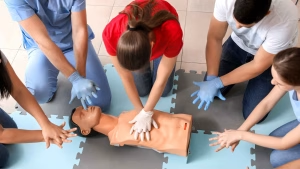
True preparedness comes from muscle memory, not from reading an article. When you train with certified instructors, you move past the bystander effect and become a capable, confident responder in your community. In a high-stress emergency, trained individuals act while others freeze. Whether you are a parent, a coach, a camp counsellor, or a concerned citizen, having a current aid certification is the difference between helplessness and action.
Summer heat and outdoor activities significantly increase the risk of minor and major environmental injuries. Preparing for outdoor activities includes reviewing essential first aid tips and considering relevant aid courses before the season begins. First aid protocols evolve regularly, and what was standard practice in previous years has been refined for 2026. The best time to get certified is before the peak of the season, not during it.
Common Summer Emergencies: What First Aid Courses Cover
Heat Exhaustion and Heatstroke: Knowing the Difference
Canadian summers, particularly in Southern Ontario, often produce extended periods of extreme heat where humidity amplifies the danger. It is vital to distinguish between heat exhaustion and the life-threatening condition of heatstroke.
Heat exhaustion is the body’s warning shot. Symptoms include heavy sweating, cold and clammy skin, nausea, and a fast, weak pulse. Move the person to a cool environment, loosen clothing, and provide small sips of water. Replacing lost electrolytes is also critical to preventing the condition from worsening.
Heatstroke occurs when the body’s temperature regulation fails entirely and core temperature rises above 40 degrees Celsius. Symptoms include hot, dry skin where sweating has stopped, confusion, a rapid and strong pulse, and loss of consciousness. This is a medical emergency. Call 911 immediately. While waiting for paramedics, initiate active cooling by moving the person to shade and applying ice packs or cold, wet cloths to the neck, armpits, and groin, where large blood vessels are close to the skin. Do not attempt to give them water if they are confused or unconscious.
Cardiac Arrest and Performing CPR in Summer Emergencies
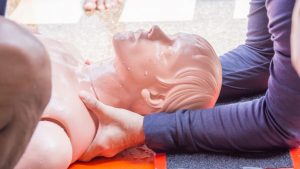
Cardiac arrest can happen anywhere and at any time, including during summer outdoor activities. When cardiac arrest occurs, start CPR immediately. Push hard and fast in the centre of the chest at a rate of 100 to 120 compressions per minute. If an AED is available, use it as soon as possible. Every minute without defibrillation reduces survival odds by 7 to 10 percent.
In drowning situations, performing CPR with rescue breaths is particularly important because the primary issue is oxygen deprivation. For drowning victims, providing rescue breaths early is often the key to survival. CPR Level C training covers this full sequence, including adult, child, and infant CPR with rescue breaths, as well as choking response for children, and is the recommended certification for anyone spending time near water this summer.
Allergic Reactions and Anaphylaxis from Insect Stings
Summer brings increased exposure to bees, wasps, and hornets. While a sting is merely painful for most people, it can trigger anaphylaxis in allergic individuals. Symptoms of severe allergic reactions include difficulty breathing and swelling of the face or throat. If a person has a prescribed epinephrine auto-injector, help them administer it immediately and call 911. Insect stingers should be scraped away gently with a flat edge to avoid squeezing more venom into the wound.
Drowning Prevention and Water Safety
Drowning remains a leading cause of accidental death in Canada, and real drowning is often silent. Victims rarely splash or shout as depicted in movies. Instead, they may appear to be treading water with their head tilted back and mouth at the surface as they struggle to breathe. Always designate a water watcher, a person who maintains 100 percent visual contact with swimmers and avoids all distractions including phones and books. Never swim alone, always swim in designated areas supervised by certified lifeguards, and learn about local water conditions before entering unfamiliar lakes or rivers.
Basic First Aid Skills Every Canadian Should Know This Summer
The RICE Protocol for Sports Injuries
From cycling to soccer, summer sports carry the risk of musculoskeletal injuries. The RICE protocol, Rest, Ice, Compression, and Elevation, remains the gold standard for soft tissue injuries like sprains and strains that commonly occur during summer sports activities. For suspected fractures, immobilize the area and never attempt to realign a limb. Effective wound care includes cleaning cuts immediately, applying antibiotic ointment, and covering with a bandage to prevent infection.
Tick Bites, Eye Injuries, and Wound Care
Tick bites are a rising concern in Ontario’s wooded trails and tall grasses. Some ticks carry Lyme disease, which can have long-term neurological effects if untreated. Proper removal involves using fine-tipped tweezers to grasp the tick as close to the skin as possible and pulling straight upward. Do not twist or use home remedies like matches or petroleum jelly, as this can cause the tick to regurgitate bacteria into the wound. After removal, monitor for a rash or flu-like symptoms and follow up with a healthcare provider if they appear. Eye injuries from debris, UV exposure, or chemical splashes are also common in summer outdoor settings. Never rub an eye injury. Flush with clean water continuously and seek medical attention promptly.
Concussion Awareness for Summer Athletes
If a person suffers a blow to the head during a summer sport and experiences confusion, dizziness, or sensitivity to light, they should be removed from play immediately. When in doubt, sit them out is the mantra of modern first aid concussion management. Do not allow a suspected concussion victim to return to play on the same day. Monitor for worsening symptoms and seek medical evaluation.
Learn This Skill in a Real Classroom
Intermediate / Standard First Aid with CPR Level C
One-day Canadian Red Cross certified course covering all summer emergencies: heat exhaustion, drowning CPR, anaphylaxis, bleeding control, and AED use. Meets Ontario WSIB Regulation 1101 requirements.
Building a Summer Ready First Aid Kit
What to Put in Your Summer First Aid Kit
A basic workplace kit is a start, but you can create a summer ready first aid kit tailored to your activities instead of relying only on a pre-packed option. A well-stocked summer kit should pair standard trauma gear with seasonal items.
Standard trauma items:
- Sterile gauze and bandages in multiple sizes
- Nitrile gloves
- CPR face shield
- Scissors and tweezers
- Instant cold packs
- Emergency blanket
- First aid manual
Seasonal additions for a summer ready kit:
- Oral rehydration salts, vital for severe dehydration and heat exhaustion
- Fine-tipped tweezers specifically for tick and splinter removal
- Additional instant cold packs for rapid cooling during heat emergencies
- High-SPF sunscreen and insect repellent, because prevention is the best first aid
- Aloe vera gel (95 percent or higher) to soothe and hydrate sunburned skin
- Water, not only for hydration but also for cleaning wounds and treating various summer ailments
- Sunscreen with at least SPF 30 to prevent sunburns and reduce skin cancer risk
A well-stocked first aid kit does not replace training. Knowing how to use what is in the kit is as important as having the items available.
Aid Training and CPR Level Requirements for Summer Camps and Workplaces
Aid Courses and Aid Certification for Ontario Employers
For Ontario business owners managing seasonal operations such as landscaping, roofing, construction, or summer camps, first aid is a legal mandate. Under WSIB Regulation 1101, every employer is responsible for ensuring a certified first aider is on-site and easily accessible at all times, though quick access to further medical help can vary by setting. The level of training required depends on workforce size. If you have fewer than 5 employees per shift, at least one person must hold Emergency First Aid certification. If you have 6 or more, Intermediate / Standard First Aid is the legal requirement.
Under Ontario health and safety regulations and provincial day camp guidelines, summer camp staff must be certified in at least Intermediate / Standard First Aid and CPR Level C to effectively handle childhood emergencies, allergic reactions, and water safety incidents. For staff supervising campers, CPR certification needs may increase for off-site trips in remote areas where medical care is farther away. Employers must also ensure their aid certification is current to maintain WSIB compliance. Failure to comply can result in significant fines and increased liability in the event of a workplace injury. During the summer, heat-stress prevention must also be documented in the workplace safety plan to support safety on the job.
Private group training is available to bring your seasonal staff up to speed efficiently, with courses delivered at your workplace location across Ontario.
The Good Samaritan Act and Legal Protection
A major barrier to helping in a public emergency is the fear of legal liability. Many people worry that if they perform CPR and accidentally break a rib, they will be sued. The Ontario Good Samaritan Act (2001) was created specifically to remove this fear. This law protects any individual who voluntarily provides first aid at the scene of an emergency. As long as you act in good faith and without gross negligence, acting within the scope of your training, you cannot be held liable for damages. This legal shield exists to encourage bystanders to use their aid skills to save lives without fear of repercussions.
First Aid Course Options: Intermediate / Standard First Aid, CPR Level C, and Blended Learning
Coast2Coast offers a full range of aid courses to match every need and schedule and teach essential first aid and CPR skills. Intermediate / Standard First Aid with CPR Level C is the most comprehensive day course, covering all major emergencies from cardiac arrest to anaphylaxis, bleeding control, and environmental emergencies. It meets the requirements for most Ontario workplaces and summer camp staff positions.
Emergency First Aid with CPR Level C is the shorter option, ideal for individuals who need essential life-saving skills quickly. CPR Level C standalone courses are available for those who already hold first aid certification and need to renew their CPR skills, including parents, coaches, or others responsible for people of all ages.
For those who prefer flexible scheduling, blended learning options allow you to complete the theory portion of the course at home before attending a shorter in-person practical skills session. If your certificate is nearing its three-year limit, recertification courses are available to bring your skills current with the latest 2026 guidelines. Coast2Coast offers weekday, weekend, and evening courses across 30-plus locations in Ontario, Nova Scotia, Alberta, and California, so learners can choose the level that leaves them prepared for summer emergencies.
Key Takeaway
Summer first aid covers heat exhaustion and heatstroke, cardiac arrest CPR, drowning response, anaphylaxis, tick bites, sports injuries, and sunburns. Heatstroke is a medical emergency above 40 degrees Celsius: call 911 and apply ice to neck, armpits, and groin. Ontario’s Good Samaritan Act protects anyone who acts in good faith. WSIB Regulation 1101 requires certified first aiders on all Ontario worksites. Get certified before summer peaks, not after an emergency happens.
Canada’s Top-Rated Training Partner
Join 150,000+ Canadians Who Are Certified
Coast2Coast is Canada’s largest Canadian Red Cross Training Partner.
4.9 stars across 20,491 Google reviews. Register online in 2 minutes.
Frequently Asked Questions: Summer First Aid 2026
Q1: What are the most common summer emergencies in Canada?
A: The most frequent summer emergencies include heat exhaustion, heatstroke, drowning, anaphylaxis from insect stings, severe sunburns, dehydration, tick bites, and musculoskeletal sports injuries. Heat-related illnesses and drowning incidents peak during warmer months when outdoor activity is highest. Proper first aid training allows you to recognize the symptoms of these conditions before they become life-threatening.
Q2: What is the difference between heat exhaustion and heatstroke?
A: Heat exhaustion symptoms include heavy sweating, cold and clammy skin, nausea, and a fast, weak pulse. The person is still sweating and can be treated by moving them to a cool area and providing water with electrolytes. Heatstroke occurs when the body’s temperature regulation fails and core temperature rises above 40 degrees Celsius. Sweating has stopped, the skin is hot and dry, and the person may lose consciousness. Heatstroke is a medical emergency. Call 911 immediately and initiate active cooling with ice packs to the neck, armpits, and groin.
Q3: Should I start CPR immediately for a drowning victim?
A: Yes. For drowning victims, start CPR immediately once the person is out of the water and unresponsive. Providing rescue breaths early is especially important in drowning because the primary issue is oxygen deprivation. Push hard and fast on the centre of the chest and give two rescue breaths after every 30 compressions. Continue until emergency medical services arrive. CPR Level C certification covers drowning-specific response including the full CPR sequence with rescue breaths.
Q4: What first aid certification do Ontario summer camp staff need?
A: Under Ontario health and safety regulations and provincial day camp guidelines, summer camp staff must be certified in at least Intermediate / Standard First Aid and CPR Level C. This ensures they can manage childhood emergencies, allergic reactions, water safety incidents, and cardiac events. Employers must ensure certifications are current to maintain WSIB compliance. Coast2Coast offers private group training for camp organizations to certify entire staff teams at once.
Q5: What should be in a summer first aid kit?
A: A summer ready first aid kit should include sterile gauze, bandages, nitrile gloves, a CPR face shield, scissors, instant cold packs, an emergency blanket, oral rehydration salts, fine-tipped tweezers for tick removal, aloe vera gel for sunburns, water for wound cleaning, high-SPF sunscreen, and insect repellent. A well-stocked kit paired with proper first aid training provides the strongest possible protection against summer emergencies.
Q6: Can I be sued for performing CPR in Ontario?
A: No. The Ontario Good Samaritan Act (2001) protects individuals who provide emergency first aid assistance at the scene of an accident. As long as you act in good faith and without gross negligence, you are shielded from legal liability. This law was created specifically to encourage bystanders to use their CPR Level C and first aid skills without fear of repercussions.
Q7: How do I treat a heatstroke victim while waiting for paramedics?
A: Call 911 immediately. While waiting, move the person to a cool, shaded area and initiate active cooling. Apply ice packs or cold, wet cloths to the neck, armpits, and groin, where large blood vessels are closest to the skin. Do not attempt to give water if the person is confused or unconscious. Heatstroke is a medical emergency requiring professional care as quickly as possible.
More FAQs: Camping, Ticks, Legal Protection, and Certification
Q8: Should I take a first aid course before a camping trip?
A: Yes. When camping in remote areas, professional medical help may be over an hour away. Emergency First Aid training equips you to stabilize fractures, treat severe bleeding, manage allergic reactions, and respond to cardiac events independently until help arrives. A summer ready first aid kit combined with proper training is essential for any camping trip to remote areas of Canada.
Q9: How do I properly remove a tick?
A: Use fine-tipped tweezers to grasp the tick as close to the skin as possible and pull straight upward with steady, even pressure. Do not twist, jerk, or use home remedies like matches or petroleum jelly, as these can cause the tick to regurgitate bacteria into the wound. After removal, clean the bite area with rubbing alcohol or soap and water. Monitor for a bulls-eye rash or flu-like symptoms in the following weeks. Seek medical attention if symptoms develop.
Q10: What are the symptoms of anaphylaxis and what should I do?
A: Symptoms of severe allergic reactions include difficulty breathing, swelling of the face or throat, hives, a sudden drop in blood pressure, and rapid pulse. If a person has a prescribed epinephrine auto-injector, help them administer it to the outer thigh immediately and call 911. Remove the insect stinger by scraping gently with a flat edge to avoid squeezing more venom into the wound. Keep the person lying down with legs elevated and monitor their breathing until emergency services arrive.
Q11: What first aid certification does WSIB require for Ontario employers?
A: Under WSIB Regulation 1101, employers with fewer than 5 employees per shift must have at least one person with Emergency First Aid certification on site. Employers with 6 or more employees per shift require at least one Intermediate / Standard First Aid certified worker. Employers must also maintain a fully stocked first aid kit meeting Level 1, 2, or 3 Ontario provincial standards. Heat-stress prevention must be documented in the summer workplace safety plan. Non-compliance can result in significant fines.
Q12: How do I treat a severe sunburn with blisters?
A: Move to the shade immediately and apply cool compresses for 10 to 15 minutes several times a day. Apply pure aloe vera gel to soothe and hydrate the affected skin. Do not pop the blisters, as they act as a natural sterile barrier to prevent infection. If blisters cover a large area or are accompanied by fever, chills, or confusion, which are signs of sun poisoning, seek medical attention at an urgent care clinic immediately.
Q13: What is the RICE protocol and when should I use it?
A: RICE stands for Rest, Ice, Compression, and Elevation. It is the recommended first aid treatment for soft tissue injuries including sprains, strains, and bruising that commonly occur during summer sports. Rest the injured area, apply ice wrapped in a cloth for 20 minutes at a time, apply a compression bandage to reduce swelling, and elevate the injured limb above heart level. For suspected fractures, immobilize the area and do not attempt to realign the limb. Seek medical attention if pain or swelling is severe.
Q14: What blended learning options are available for first aid courses?
A: Coast2Coast offers blended learning formats where the theory portion of the course is completed online at your own pace before attending a shorter in-person practical skills session. This reduces classroom time while ensuring full hands-on competency in CPR, AED use, and emergency response. Blended learning is available for Emergency First Aid and Intermediate / Standard First Aid courses. All courses meet CSA Z1210:24 standards and Canadian Red Cross certification requirements.
Q15: Where can I take a summer first aid course in Canada?
A: Coast2Coast First Aid and Aquatics offers Canadian Red Cross certified Emergency First Aid, Intermediate / Standard First Aid, and CPR Level C courses across more than 30 locations in Ontario, Nova Scotia, Alberta, and California. Weekend, weekday, and evening formats are available. Private group training can be arranged for workplaces, summer camps, and community organizations. Recertification courses are available for those whose three-year certification is nearing expiry.
The information in this article is for educational and informational purposes only and does not constitute medical or legal advice. WSIB regulation requirements vary by workplace type, province, and workforce size. Always verify current requirements with WSIB or your provincial occupational health and safety authority. In any emergency, call 911 immediately. Coast2Coast First Aid Inc. assumes no liability for any outcomes resulting from the application or misapplication of information in this article.
Content reviewed by the Coast2Coast First Aid and Aquatics certified instructor team. Workplace first aid requirements sourced from WSIB Regulation 1101 and Ontario Occupational Health and Safety Act. Good Samaritan Act (2001) Ontario. Drowning statistics sourced from the Lifesaving Society of Canada. Heatstroke and anaphylaxis protocols aligned with Canadian Red Cross First Aid Guidelines and CSA Z1210:24. Coast2Coast First Aid Inc. is Canada’s largest Canadian Red Cross Training Partner. Last reviewed: May 2026. Contact info@c2cfirstaidaquatics.com or 1-866-291-9121.