
Emergency first aid help in a mass casualty or trauma event starts with the Check, Call, Care framework: check the scene is safe, call 911, then care for the injured. The most critical skill is severe bleeding control using direct pressure, wound packing, or tourniquet application. A person can bleed to death in 3 to 5 minutes. Begin CPR immediately if the person has no pulse and is not breathing. First aid certification is valid for three years in Canada under CSA Z1210:24 standards.
✓ Canadian Red Cross Approved
Find a First Aid Course Near You
Canadian Red Cross Emergency First Aid, Intermediate / Standard First Aid, and EMR courses covering trauma response, bleeding control, CPR, and AED use across Canada.
The Critical Importance of Bystander Response
First aid is the immediate care given to someone who is ill or injured, involving simple, life-saving techniques that can be performed by anyone, from lay responders to medical professionals. In a mass casualty event or serious trauma emergency, knowing how to provide emergency first aid help in the minutes before emergency medical services arrive can be the difference between life and death. Everyone should know essential first aid techniques like CPR, the Heimlich maneuver, and severe bleeding control, as they can save a life before professional medical help arrives.
In any mass casualty event, emergency medical services face extraordinary challenges. The sheer number of victims, the need to secure the scene, and the logistical complexity of deploying multiple ambulances all contribute to delayed medical care. The standard protocol for responding to a medical emergency follows the Check, Call, Care framework: check the scene for safety, call emergency services, and provide care to the injured person. First aid training equips individuals with the knowledge, practice, and confidence to respond effectively to common medical emergencies until professional help arrives.
The concept of the Platinum Ten Minutes, the first ten minutes after a traumatic injury, highlights how critical immediate intervention is. Hemorrhage, or severe bleeding, is the number one cause of preventable death in trauma situations. A person can bleed to death from a major wound in as little as three to five minutes. Prompt action prevents severe blood loss and potential shock. This timeline makes it clear that waiting for paramedics is simply not an option when someone is bleeding profusely.
Prioritizing Your Safety First
Before rushing to help any injured person, you must ensure your own safety. This principle is fundamental to all emergency response and is the first thing taught in every first aid course and first aid training program. In an active threat situation, seek cover immediately and do not attempt to provide first aid until the area has been secured by law enforcement or you are confident the threat has passed.
Once you have determined it is safe to act, quickly assess hazards to protect yourself and others before approaching, then call 911 immediately if it has not already been done. Provide the dispatcher with as much information as possible, including the location, the number of injured people you can see, and the types of injuries present. Use any available protective equipment, such as gloves, if it is on hand. If multiple bystanders are available, delegate the 911 call to someone specific while you begin providing basic first aid.
Emergency First Aid Help: Controlling Severe Bleeding
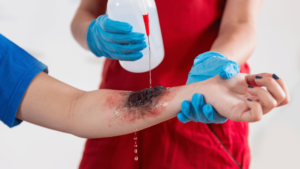
The single most important first aid skill in a mass casualty scenario is the ability to control severe bleeding. Shock can occur rapidly after severe trauma or heavy blood loss and is a life-threatening emergency. Apply firm, direct pressure to the wound using a clean cloth, sterile dressing, or your hands. There are several techniques depending on the location and severity of the wound.
Direct Pressure
For most wounds, applying firm, direct pressure is the first and most effective method of controlling bleeding. Use a clean cloth, clothing, or gauze and press it firmly against the wound. Do not lift the material to check if the bleeding has stopped, as this disrupts any clots that may be forming. If blood soaks through the first layer of material, add more on top without removing the original dressing. Maintain steady, firm pressure until emergency medical services arrive.
Wound Packing
For deep wounds, particularly those in areas where a tourniquet cannot be applied such as the neck, armpit, or groin, wound packing is essential. This involves stuffing clean material directly into the wound cavity and then applying firm pressure on top. While this may seem uncomfortable for the injured person, it is a proven life-saving technique that stops internal bleeding by creating pressure from within the wound itself.
Tourniquet Application
For severe bleeding from an arm or leg that cannot be controlled with direct pressure alone, a tourniquet may be necessary. A commercial tourniquet is ideal, but in an emergency, you can improvise one using a belt, tie, or strip of fabric at least 4 centimetres wide. Apply the tourniquet 5 to 7 centimetres above the wound, never directly on a joint, and tighten it until the bleeding stops. Note the time of application, as this information is critical for medical professionals. Contrary to outdated beliefs, modern medical guidance confirms that properly applied tourniquets save lives and rarely result in limb loss.
Treating Chest Wounds
Gunshot wounds to the chest are particularly dangerous because they can cause a condition called pneumothorax, commonly known as a collapsed lung. If you see a wound on the chest that is bubbling or making a sucking sound, this is a sucking chest wound and requires immediate attention. Cover the wound with an occlusive dressing. Any non-porous material such as plastic wrap, a plastic bag, or even a credit card can work in an emergency. Seal the dressing on three sides, leaving the fourth side open to allow air to escape but preventing air from being sucked into the chest cavity. This improvised chest seal can prevent a life-threatening tension pneumothorax.
Managing Shock
Victims of traumatic injuries frequently go into a life-threatening condition called shock, though it can also follow a sudden medical illness, where the body’s organs are not receiving enough blood flow. Signs of shock include pale or clammy skin, rapid shallow breathing, confusion, weakness, and a rapid pulse. To manage shock, keep the victim lying down with their legs elevated about 30 centimetres if possible and if their injuries allow. Cover them with a blanket or jacket to maintain body temperature. Reassure them calmly and continuously, as psychological support is an important component of shock management. Do not give them anything to eat or drink.
CPR and Cardiac Arrest During a Mass Casualty Event
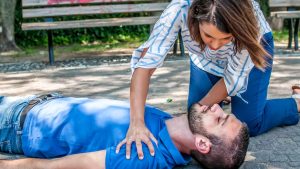
If an injured person has no pulse and is not breathing, begin CPR immediately. Cardiopulmonary resuscitation keeps oxygen flowing to the brain and organs when a person’s heart stops. Push hard and fast on the centre of the chest at a rate of 100 to 120 compressions per minute, allowing full chest recoil between compressions. If an AED is available, use it as soon as possible. CPR and AED certification courses typically include hands-on practice, real-life scenarios, and step-by-step instruction to ensure participants can respond effectively under pressure.
In a mass casualty event, prioritize victims with severe bleeding that can be controlled before those in cardiac arrest, as bleeding control affects a larger number of potentially survivable victims. If trained rescuers are available, delegate CPR to one person while others manage bleeding in additional victims.
Learn These Skills
Learn This Skill in a Real Classroom
Reading about bleeding control and CPR is a start. Hands-on practice is what builds the confidence to act when it matters. Canadian Red Cross Intermediate / Standard First Aid takes one day.
Triage: Prioritizing Multiple Victims
When multiple people are injured, you must quickly assess victims to determine who needs emergency treatment most urgently. This process is called triage. As a general rule, prioritize victims with severe bleeding that can be controlled, as these individuals have the best chance of survival with immediate intervention. Adults and older children who are alert and able to walk should be directed to move to a safe area. When providing emergency first aid help to multiple victims, focus efforts where they can have the greatest life-saving impact. Do not allow further harm to occur by moving victims unnecessarily unless the scene is still dangerous.
Emergency First Aid Kits: What to Carry
Having the right first aid equipment and supplies readily available can dramatically improve your ability to provide emergency first aid help. An emergency first aid certificate course will cover what to keep in a trauma kit. Consider carrying a compact kit that includes:
- A commercial tourniquet
- Hemostatic gauze
- Chest seals
- Compression bandages
- Sterile dressings
- Nitrile gloves
- A CPR face shield
- Emergency blanket
First aid kits and aid kits of this type are small enough to fit in a backpack, glove compartment, desk drawer, or car and can make the difference between effective first aid and feeling helpless in a crisis. Many first aid training providers sell or recommend specific trauma kits as part of their aid courses.
Basic First Aid Course vs Advanced Aid Training
An emergency first aid course is a structured training program designed to prepare participants with life-saving techniques such as CPR, AED use, bleeding control, and emergency scene management. Most emergency first aid courses in Canada are completed in one full day, approximately 6 to 8 hours, with some providers offering blended learning formats where theory is completed online and practical skills are practised in person. Instructors teach these skills through guided practice and scenario-based instruction.
An emergency first aid certificate is an official document confirming that you have successfully completed training in first aid, CPR, and AED use, often required by employers to meet workplace safety requirements. First aid certification typically remains valid for three years, after which recertification is required to maintain compliance with workplace and safety standards.
For those who want deeper practical skills, advanced first aid training such as the Emergency Medical Responder (EMR) program provides in-depth trauma management including advanced bleeding control, spinal immobilization, and patient assessment. EMR certification represents the gold standard of pre-hospital emergency care training.
Workplace First Aid Requirements and Aid Training
In Canada, the federal government announced the standardization of workplace first aid training in 2012, with new standards developed by the Canadian Standards Association (CSA) rolling out in 2024 to ensure consistency and quality in first aid training across the country. CSA Z1210:24 establishes standardized training requirements that affect recertification processes across all provinces and territories.
Employers in Canada are legally required to ensure that a certain number of trained first aiders are present in every workplace, with requirements varying by province, industry, and workplace size. Recertification courses often include updated training on new techniques and standards to ensure that participants are aware of the latest practices in first aid. Workplaces that handle chemicals, operate in remote locations, or expose workers to significant physical risk typically require Standard or Intermediate First Aid rather than the basic level. People who work with children may also need a course level or certification that matches their workplace requirements and responsibilities. For workplaces that want to train multiple employees at once, private group first aid training can be arranged on-site.
The Role of First Aid Training in Emergency Preparedness
While this article provides an overview of critical techniques, reading about emergency first aid help is no substitute for hands-on training that prepares people to handle unexpected emergencies. In a high-stress emergency, trained individuals perform significantly better than those without training because muscle memory and practised skills take over when the mind is overwhelmed. Comprehensive first aid courses cover these techniques in detail, providing realistic practice scenarios that build both competence and confidence.
Intermediate / Standard First Aid with CPR C covers emergency bleeding control, shock management, chest injuries, CPR, and AED use as part of the core curriculum. Private group training can be arranged for workplaces, schools, community organizations, and students who want practical emergency first aid skills when it matters most.
Key Takeaway
In a trauma emergency, follow Check, Call, Care. Control severe bleeding using direct pressure, wound packing, or a tourniquet. Begin CPR if the person has no pulse. Treat shock by keeping the person lying down, warm, and calm. A person can bleed to death in 3 to 5 minutes, making bystander emergency first aid help critical before emergency medical services arrive. First aid certification in Canada is valid for 3 years under CSA Z1210:24 standards.
Canada’s Top-Rated Training Partner
Join 150,000+ Canadians Who Are Certified
Coast2Coast is Canada’s top-rated Canadian Red Cross Training Partner.
4.9 stars across 20,491 Google reviews. Register online in 2 minutes.
Frequently Asked Questions: Emergency First Aid 2026
Q1: What is emergency first aid?
A: First aid is the immediate care given to someone who is ill or injured, involving simple, life-saving techniques that can be performed by anyone. Emergency first aid focuses specifically on stabilizing a person with a life-threatening condition until emergency medical services arrive. It covers severe bleeding control, CPR, shock management, choking response, and chest wound treatment. An emergency first aid course teaches these skills through hands-on practice and real-life scenarios.
Q2: What is the most important first aid skill in a mass casualty event?
A: Controlling severe bleeding is the most critical skill in a mass casualty event. Hemorrhage is the number one cause of preventable death in trauma situations, and a person can bleed to death in three to five minutes. Prompt action using direct pressure, wound packing, or tourniquet application prevents severe blood loss and potential shock. Everyone should know these techniques before an emergency occurs.
Q3: How do I control severe bleeding as emergency first aid?
A: Apply firm, direct pressure to the wound using a clean cloth, sterile dressing, or your hands. Do not remove the dressing if blood soaks through. Add more material on top. For deep wounds in areas where a tourniquet cannot be applied, pack the wound with clean material and apply pressure. For severe limb bleeding, apply a tourniquet 5 to 7 centimetres above the wound and tighten until bleeding stops. Note the time of application and inform paramedics on arrival.
Q4: When should I perform CPR during a mass casualty event?
A: Begin CPR if an injured person has no pulse and is not breathing. Cardiopulmonary resuscitation keeps oxygen flowing to the brain and organs when the heart stops. In a mass casualty event with multiple victims, prioritize severe bleeding control before CPR, as bleeding control helps more potentially survivable victims. If an AED is available, use it as soon as possible. CPR should be continued until emergency medical services arrive and take over.
Q5: What is the Check, Call, Care framework?
A: Check, Call, Care is the standard protocol for responding to a medical emergency. Check the scene to ensure it is safe for you to approach. Call 911 or instruct someone nearby to call while you begin providing care. Care for the injured person using the first aid techniques appropriate to their injuries. This framework is the foundation of every basic first aid course and ensures that rescuers act in a safe, organized, and effective way.
Q6: How do I treat shock in an emergency?
A: Keep the victim lying down with legs elevated approximately 30 centimetres if their injuries allow. Cover them with a blanket or jacket to maintain body temperature. Do not give them anything to eat or drink. Reassure them calmly and monitor their breathing continuously. Call 911 immediately. Shock can occur rapidly after severe trauma or heavy blood loss and is a life-threatening emergency requiring professional medical care as quickly as possible.
Q7: What should be in an emergency first aid kit for trauma?
A: A trauma-focused emergency first aid kit should include a commercial tourniquet, hemostatic gauze, chest seals, compression bandages, sterile dressings, nitrile gloves, a CPR face shield, and an emergency blanket. These aid kits are compact enough for a backpack or vehicle glove compartment. Having the right supplies available before an emergency allows you to act immediately without improvising. Many first aid training providers recommend specific trauma kits as part of their courses.
More FAQs: Training, Certification, and Workplace Requirements
Q8: What does an emergency first aid course cover?
A: An emergency first aid course is a structured training program that teaches life-saving techniques including CPR, AED use, severe bleeding control, shock management, choking response, and emergency scene management. Most emergency first aid courses in Canada are completed in one full day, approximately 6 to 8 hours, with blended learning formats available. Practical skills sessions ensure participants can perform these techniques under pressure.
Q9: How long is an emergency first aid certificate valid?
A: First aid certification is typically valid for three years, after which recertification is required to maintain compliance with workplace and safety standards. Recertification courses include updated training on new techniques and standards, ensuring certified first aiders are current with the latest practices. In Canada, CSA Z1210:24 establishes the standardized requirements for workplace first aid certification across provinces and territories.
Q10: What are Canadian workplace first aid requirements?
A: In Canada, employers are legally required to ensure trained first aiders are present in every workplace, with requirements varying by province, industry, and workplace size. CSA Z1210:24 standards established in 2024 standardize first aid training requirements across the country. Workplaces with higher physical risk or remote locations typically require Standard or Intermediate First Aid. Employers must ensure employees hold current first aid certification to comply with occupational health and safety regulations.
Q11: What is the difference between basic first aid and Intermediate / Standard First Aid?
A: Basic Emergency First Aid is a shorter course covering essential life-saving skills including CPR, AED, bleeding control, and choking response. Intermediate / Standard First Aid is a more comprehensive course that adds deeper coverage of medical emergencies, trauma management, head injuries, hypothermia, severe burns, stroke recognition, and workplace-specific scenarios. Intermediate / Standard First Aid meets the requirements for most Canadian workplaces and provides broader competence across common medical emergencies.
Q12: How do I treat a chest wound as emergency first aid?
A: If a chest wound is bubbling or making a sucking sound, it is a sucking chest wound indicating air is entering the chest cavity. Cover the wound with a non-porous material, sealing three sides and leaving one side open to allow air to escape. This improvised chest seal prevents a tension pneumothorax. Call 911 immediately and keep the injured person as still as possible while monitoring their breathing.
Q13: What is the Platinum Ten Minutes in emergency first aid?
A: The Platinum Ten Minutes refers to the first ten minutes after a traumatic injury, during which immediate first aid intervention has the greatest impact on survival. Hemorrhage control and airway management in this window can prevent the progression of a survivable injury to a fatal one. This concept underlines why waiting for emergency medical services is not sufficient when someone is experiencing severe blood loss. Bystander emergency first aid help fills this critical gap.
Q14: What is the EMR program and how does it differ from a basic first aid course?
A: The Emergency Medical Responder (EMR) program is an advanced pre-hospital care training course that goes significantly beyond basic first aid. EMR training covers advanced patient assessments, airway management, oxygen therapy, spinal motion restriction, trauma management, and multiple casualty incident response. It is recommended for firefighters, security professionals, industrial workers in remote locations, and anyone pursuing a career in emergency services. EMR certification is the highest level of bystander emergency care training available in Canada.
Q15: Where can I take an emergency first aid course in Canada?
A: Coast2Coast First Aid and Aquatics offers Canadian Red Cross certified Emergency First Aid, Intermediate / Standard First Aid, and Emergency Medical Responder courses across more than 30 locations in Ontario, Nova Scotia, Alberta, and California. All courses include hands-on practice with real-life scenarios and step-by-step instruction. Online blended learning is available for those who want to complete theory at home before attending an in-person skills session.
The information in this article is for educational and informational purposes only and does not constitute medical advice. In any emergency, always call 911 immediately. Emergency first aid techniques should be learned and practised under the supervision of a qualified instructor. Coast2Coast First Aid Inc. assumes no liability for any outcomes resulting from the application or misapplication of information in this article.
Content reviewed by the Coast2Coast First Aid and Aquatics certified instructor team. Emergency first aid information sourced from the Canadian Red Cross First Aid Guidelines, the CSA Z1210:24 First Aid Training Standard, and Health Canada emergency preparedness resources. Coast2Coast First Aid Inc. is Canada’s largest Canadian Red Cross Training Partner. Last reviewed: May 2026. For corrections or additional information, contact info@c2cfirstaidaquatics.com or 1-866-291-9121.