
CPR can save lives — bystander cardiopulmonary resuscitation (CPR) doubles or triples cardiac arrest survival rates by maintaining blood flow and brain oxygenation until emergency medical services arrive. Performing chest compressions within the first 2–4 minutes prevents permanent neurological damage. This 2026 guide covers WSIB-approved techniques, AED use, hands-only CPR, conventional CPR with rescue breaths, and the legal protections bystanders receive under Ontario’s Good Samaritan Act.
Find a Class Near You
Canadian Red Cross CPR & First Aid courses across Ontario and Alberta. Register online in 2 minutes.
View All 30+ Locations →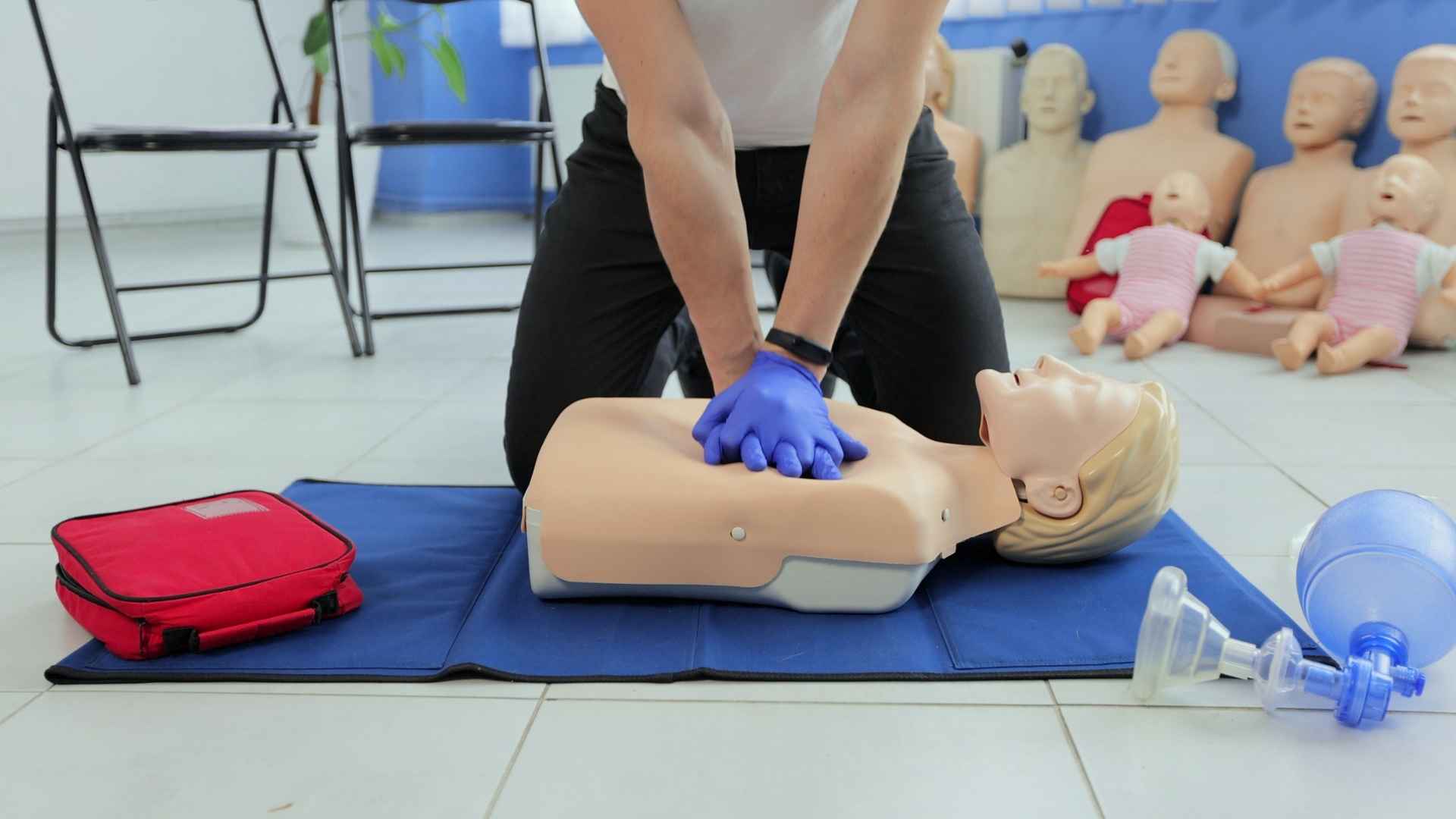
How CPR Can Save Lives: The Evidence Is Clear
Yes — CPR can save lives, and the data is unambiguous. About 90 percent of people who suffer out-of-hospital cardiac arrests die, but when cardiac arrest occurs — the moment the heart stops beating effectively — CPR can save lives by maintaining blood flow until paramedics arrive, especially when performed immediately. Immediate CPR doubles or triples a cardiac arrest victim’s chance of survival. Every minute without CPR reduces survival odds by 7 to 10 percent. With bystander CPR, that drop slows to just 3 to 4 percent per minute — a dramatic difference that comes down entirely to whether a trained person is standing nearby until emergency responders arrive on scene.
In Canada, someone suffers a sudden cardiac arrest outside a hospital setting every 12 minutes. In the Greater Toronto Area alone, paramedics respond to thousands of cardiac emergencies annually, yet the average emergency responder arrival time is 7 to 8 minutes — well beyond the 4-minute window before permanent brain damage begins. The survival gap between “bystander acts” and “bystander waits” is not a small statistical margin. It is the difference between life and death.
Knowing CPR and AED use transforms you from a helpless observer into a lifesaver. The skills are straightforward, CPR training takes less than a day, and the potential impact is immeasurable — every certified Canadian increases the odds that CPR can save lives in their community.
What Is Cardiopulmonary Resuscitation (CPR)?
Cardiopulmonary resuscitation (CPR) is an emergency lifesaving procedure performed when the heart stops beating effectively. The term “cardiopulmonary” refers to the heart (cardiac) and lungs (pulmonary) — the two systems CPR is designed to keep functioning artificially until professional help arrives.
CPR has two primary forms:
- Hands-Only CPR (Compression-Only CPR): Involves continuous chest compressions without rescue breaths. Increasingly popular for public CPR training because it is easier to teach, avoids mouth-to-mouth breathing, and is highly effective for witnessed adult cardiac arrest.
- Conventional CPR: Combines chest compressions with rescue breaths. Required for drowning victims, pediatric cardiac arrest, drug overdose emergencies, and all scenarios involving breathing failure rather than purely cardiac failure. This is the complete CPR skill set taught in Red Cross certified courses.
The American Heart Association uses the letters C-A-B to help people remember the sequence: Compressions first, then Airway, then Breathing.
Understanding Cardiac Arrest: An Electrical Malfunction
Cardiac arrest is frequently confused with a heart attack, but they are clinically distinct. A heart attack is a “plumbing” problem — a blockage in the blood vessels supplying the heart. Cardiac arrest is an “electrical” problem — the heart suddenly stops beating effectively, and the body stops functioning normally as circulation ceases. The heart begins to quiver chaotically (ventricular fibrillation) instead of pumping blood.
Sudden cardiac arrest (SCA) can strike anyone, at any age. While heart disease and high blood pressure rank as risk factors, SCA also affects seemingly healthy athletes and young adults due to undiagnosed heart defects or commotio cordis — cardiac arrest triggered by a blunt blow to the chest.
Without blood flow, the brain begins to suffer permanent damage within four minutes. Performing CPR keeps blood flow active in those first critical minutes, limiting brain injury. Death can occur four to six minutes after that without intervention. This is why widespread Basic Life Support (BLS) training for health care providers and CPR Level C training for the public is so critical across Canada.
The Physiology of CPR: How Chest Compressions Work
Many people ask: how can pushing on someone’s chest actually save them? The answer is the Manual Pump Theory. When you perform high-quality CPR, you physically squeeze the heart between the breastbone (sternum) and the spine. This action creates enough internal pressure to force oxygenated blood out of the heart and up to the brain, improving the chances of successful resuscitation.
Compression Depth and Rate
Compression depth and rate matter enormously. Pushing too slowly or too shallowly reduces the return of blood flow to vital organs by up to 30%. Even though CPR only provides about 25 to 30 percent of normal blood flow, that flow often keeps brain cells alive until an automated external defibrillator (AED) can restore the heart’s natural rhythm.
How to Perform Chest Compressions
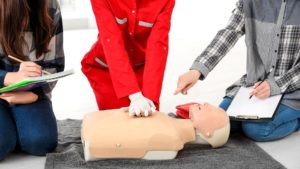
To perform chest compressions, place the lower palm of your hand over the middle of the person’s chest along the nipple line. Place your other hand on top, keeping your elbows straight and your shoulders directly above your hands. Push down at least 2 inches (5 centimeters) deep at a rate of 100 to 120 compressions per minute. Allow the chest to fully recoil between compressions without lifting your hands.
For adults, compressions require significant force — this is why practicing on mannequins during CPR training helps you gauge proper pressure before a real emergency.
Watch: How To Perform CPR — Coast2Coast Official
The Critical Minutes: Why Bystander Intervention Is Non-Negotiable
When someone collapses, a countdown begins. For every minute that passes without CPR, the chance of survival decreases by 7 to 10 percent. With bystander CPR, that decrease slows to 3 to 4 percent per minute. By the time ten minutes pass without any intervention, survival from cardiac arrest is statistically unlikely. In a city like Toronto, traffic conditions and high call volumes can push emergency services response times to 8 minutes or longer — well beyond the window where CPR can save lives.
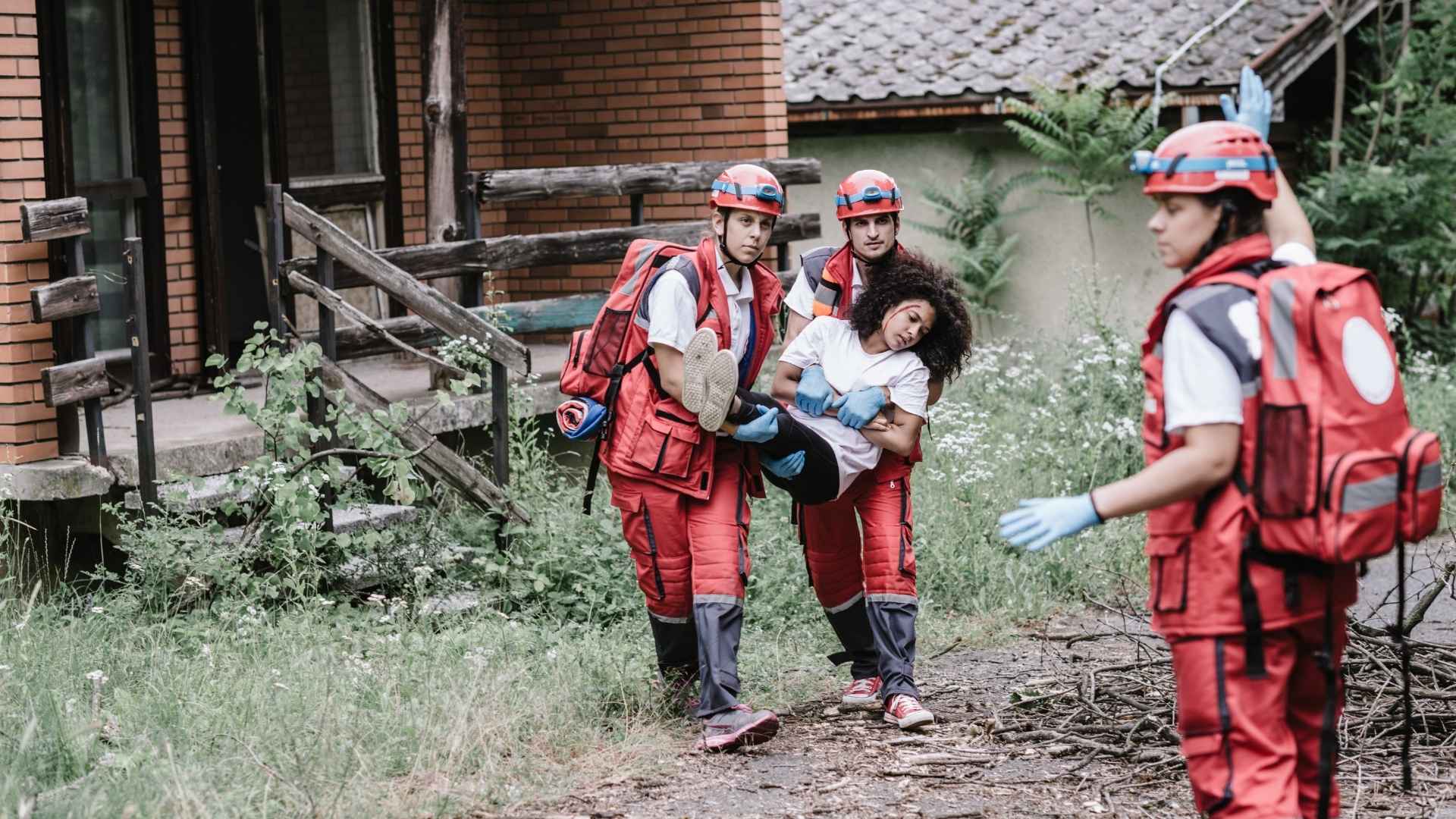
Bystander CPR is the “Bridge to Life.” When compressions begin within the first two minutes, survival rates can exceed 40 percent. These statistics confirm that the most important link in the Chain of Survival is not the doctor in the ER — it is the person standing next to the victim when they fall, who starts CPR while first responders, emergency medical services, and other emergency responders race to the scene.
Unfortunately, fewer than half of out-of-hospital cardiac arrest victims receive bystander CPR before EMS arrival. Closing that gap through community CPR training ranks among the highest-impact public health interventions available.
CPR Combined With AED Training: The Ultimate Life-Saving Duo
While CPR maintains blood flow, it rarely restarts the heart on its own. That is the job of the automated external defibrillator (AED). In cardiac arrest emergencies, the AED analyzes the heart’s rhythm and delivers a targeted electrical shock to reset the heart’s electrical system. When CPR and AED use are combined within the first few minutes, survival rates can climb as high as 75 percent. Every minute without CPR and an AED reduces the chance of survival by about 10 percent.
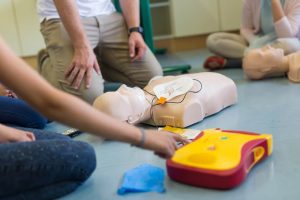
CPR training courses include instruction on the use of automated external defibrillators (AEDs), which significantly improves survival rates when the two skills are used together. AEDs now appear in public locations across Ontario — from Union Station to community centres. They are designed for use by anyone and provide step-by-step voice instructions. However, AED deployment should not be limited to trained people only — though AED training still minimizes the time to defibrillation for cardiac arrest victims.
This combination is exactly how CPR can save lives in real-world public emergencies. Taking a CPR and AED course removes the “fear factor.” In a high-stress cardiac emergency, you act on instinct — not a manual you have never read.
Overcoming the Fear of Action: The Good Samaritan Act
The biggest barrier to bystander intervention is fear — fear of doing it wrong, fear of breaking ribs, or fear of being sued. In Ontario, the Good Samaritan Act (2001) protects you from these concerns.
You cannot be held liable for damages while providing emergency assistance in good faith, provided you act within the scope of your training and without gross negligence. A person in cardiac arrest is clinically dead — you cannot make their situation worse by attempting to save them. Yes, ribs may crack during effective compressions, but as the saying goes: “Broken ribs heal; death does not.”
It is also worth noting that in Canada, the Good Samaritan Drug Overdose Act provides similar legal protection when seeking emergency help during a suspected drug overdose — an increasingly relevant scenario as opioid emergencies continue to be a public health concern across Ontario and the country.
When CPR Applies Beyond Cardiac Arrest: Drug Overdose Emergencies
CPR skills extend beyond cardiac arrest. In Canada’s ongoing opioid crisis, drug overdose emergencies represent a growing category of life-threatening situations where CPR and rescue breathing make the decisive difference between life and death.
Opioid drugs affect the part of the brain controlling breathing. When someone overdoses, breathing slows or stops entirely before the heart fails. This means rescue breaths — conventional CPR, not hands-only CPR — are especially critical in overdose situations. If you suspect a drug overdose: call 911 immediately, check for responsiveness and breathing, begin full CPR if the person is not breathing and has no pulse, starting with two rescue breaths, and mouth-to-mouth breathing may be used when no barrier device is available.
This is one reason CPR training courses that include rescue breathing remain the gold standard for healthcare providers, first responders, and anyone who works in settings where overdose risk is present, since these steps are best learned and practised through training and are especially important for trained professionals working in overdose-risk settings.
Professional vs. Public: Which CPR Course Do You Need?
Not all CPR training is the same. Choosing the right level matters both for effectiveness and for WSIB and workplace compliance.
- CPR Level C: The standard for the general public, parents, teachers, coaches, and most Ontario workplaces. It covers adult, child, and infant CPR — both hands-only CPR and conventional CPR with rescue breaths. Hands-only compression-only CPR has grown increasingly popular for the general public because it is easier to teach and does not require mouth-to-mouth contact.
- Basic Life Support (BLS): Healthcare providers previously knew this as Healthcare Provider (HCP) CPR. Nurses, doctors, paramedics, firefighters, and other health care providers need BLS, which targets trained professionals who work in team-based response. It focuses on high-performance resuscitation efforts, and a sports medicine physician may also need this level for athletic settings. BLS covers adult basic life support and pediatric basic life support protocols.
- Emergency First Aid with CPR: A shorter course for those who need a fundamental overview of life-saving skills alongside basic CPR skills.
The Canadian Red Cross certifies all Coast2Coast courses, which meet 2026 WSIB compliance standards.
Building CPR Skills Through Training Programs
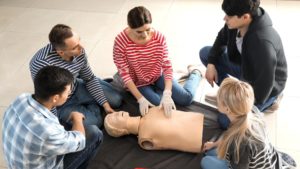
Many training programs are available, including blended learning options that combine online cognitive learning with in-person skills practice and testing. For people learning CPR for the first time, the practical hands-on session is irreplaceable — practicing compression depth and rate on mannequins builds the muscle memory needed to perform effective compressions under pressure.
When you get certified, you aren’t just gaining a certificate. You are gaining the power to change the outcome of a tragedy — at home, at work, on public transit, or anywhere a cardiac emergency strikes without warning.
Learn How CPR Can Save Lives — Get Certified Today
Cardiac arrest doesn’t wait for a convenient time. Be ready to save a life by getting certified in First Aid and CPR with Coast2Coast.
Register Now — Find a Course Near YouFrequently Asked Questions: 2026 CPR Guidelines
Q1: Does CPR actually save lives?
A: Yes. CPR can save lives — performed immediately after cardiac arrest, it doubles or triples survival rates. About 90 percent of out-of-hospital cardiac arrests are fatal without intervention, but immediate bystander CPR combined with early defibrillation pushes survival rates significantly higher.
Q2: What does CPR stand for?
A: CPR stands for cardiopulmonary resuscitation — an emergency procedure combining chest compressions and, in full CPR, rescue breaths, designed to manually maintain blood flow when the heart has stopped beating.
Q3: Do I need to give mouth-to-mouth during CPR?
A: For untrained bystanders, hands-only CPR (compression-only CPR) is highly effective and recommended for adult victims. Mouth-to-mouth breathing is part of conventional CPR when rescue breaths are required. Conventional CPR — including rescue breathing with a pocket mask — is essential for drowning victims, pediatric cardiac arrest, and drug overdose emergencies. For children and infants, breathing emergencies are the most common cause of cardiac arrest, making rescue breaths critical.
Q4: How hard should I push during chest compressions?
A: For an adult, you must compress the chest at least 2 inches (5 cm) deep at a rate of 100 to 120 compressions per minute. Pushing too slowly or too shallowly can reduce blood flow to vital organs by up to 30 percent. Significant force is required — practicing on mannequins helps calibrate correct pressure.
Q5: What is the “4-Minute Rule” in CPR?
A: The brain begins to suffer permanent damage within approximately four minutes without oxygen-rich blood flow. This is why immediate bystander CPR is non-negotiable — you must keep blood flow active until professional help and an AED arrive.
Q6: Can anyone use an AED?
A: Yes. AEDs are designed for use by any bystander and provide step-by-step voice instructions. Deployment of AEDs should not be limited to trained people only, although CPR and AED training is strongly recommended to minimize time to defibrillation.
Q7: Can I use an AED on a child or infant?
A: Yes. Most modern AEDs have pediatric pads or a child mode. If pediatric pads are unavailable, use adult pads ensuring they do not overlap — typically one on the chest and one on the back for infants.
Q8: Can I use an AED if the person has a pacemaker?
A: Yes. Simply avoid placing the AED pad directly over the visible pacemaker lump — keep it at least one inch away. The AED will still function correctly.
Q9: What is the difference between cardiac arrest and a heart attack?
A: A heart attack is a “plumbing” problem — a blockage cutting off blood supply to the heart muscle. Cardiac arrest is an “electrical” problem — the heart stops beating effectively entirely. A heart attack can trigger cardiac arrest, but they are distinct emergencies requiring different responses.
Q10: How often do I need to recertify in CPR in Canada?
A: In Canada, CPR certifications are valid for three years. However, many healthcare and workplace settings require annual recertification to ensure skills remain sharp and up-to-date with the latest medical guidelines.
Q11: Does the Good Samaritan Act protect me if I make a mistake during CPR?
A: Yes. Under Ontario’s Good Samaritan Act (2001), you cannot be held liable for damages when providing emergency assistance in good faith, as long as you act within the scope of your training and without gross negligence.
Q12: Is CPR effective for drug overdose emergencies?
A: CPR — particularly conventional CPR with rescue breaths — is critical in overdose situations because opioids suppress breathing before the heart stops. If someone is unresponsive and not breathing after a suspected overdose, begin CPR immediately and call 911.
Q13: What is the Chain of Survival in emergency cardiovascular care?
A: The Chain of Survival is the sequence of actions that maximize cardiac arrest outcomes: early recognition and calling 911, immediate bystander CPR, rapid defibrillation with an AED, effective emergency medical services response, and post-arrest care. Every link matters, but bystander CPR and early defibrillation are the most critical steps available to the public.
Q14: Can CPR cause injuries like broken ribs?
A: Yes, rib fractures can occur during effective chest compressions, particularly in older adults. This is expected and acceptable. A person in cardiac arrest is clinically dead — the risk of a rib fracture is negligible compared to the alternative. Broken ribs heal; cardiac arrest without intervention does not.
Q15: What is the difference between hands-only CPR and conventional CPR?
A: Hands-only CPR uses continuous chest compressions with no rescue breaths and is appropriate for witnessed adult cardiac arrest caused by a cardiac event. Conventional CPR adds rescue breaths to compressions and is required for children, infants, drowning victims, drug overdose victims, and any cardiac arrest where respiratory failure was the primary cause. When conventional CPR is indicated, trained responders may give two rescue breaths before returning to compressions. CPR training teaches both techniques.
Content reviewed by Coast2Coast First Aid & Aquatics’ certified instructor team, including Canadian Red Cross First Aid, CPR, and Basic Life Support Instructors, an Instructor Trainer with a nursing background, and a practising paramedic. Regulatory information sourced from the WSIB Ontario First Aid Requirements, the American Heart Association 2025 Guidelines for CPR and Emergency Cardiovascular Care, the Canadian Red Cross, and the Public Health Agency of Canada. Course content meets CSA Standard Z1210-17. Coast2Coast First Aid Inc. is an active Canadian Red Cross Training Partner. Last reviewed: March 2026. For corrections or additional information, contact info@c2cfirstaidaquatics.com or 1-866-291-9121.