
N95 vs. KN95: Which Mask Actually Passes an OSHA Fit Test?
Only a NIOSH-approved N95 respirator can complete an OSHA-compliant fit test. KN95 masks are certified under China’s GB2626 standard rather than NIOSH’s 42 CFR Part 84, so most workplace respiratory protection programs cannot use them to satisfy fit testing requirements. The two masks may look similar and filter to a comparable standard, but only one of them is built for a documented, repeatable fit test.
If you’re choosing respiratory protection for yourself, your staff, or a job site, this guide explains how N95 and KN95 masks differ, how respirator approval standards affect workplace use, and when OSHA fit testing requirements apply. It’s especially relevant for healthcare workers, employers, industrial hygienists, safety professionals, and anyone who needs reliable protection from airborne hazards while staying compliant with workplace rules.
Only a NIOSH-approved N95 respirator, tested under 42 CFR Part 84, can satisfy OSHA’s fit testing requirements under 29 CFR 1910.134. KN95 masks are certified under China’s GB2626-2019 standard instead, so most workplace respiratory protection programs cannot use them to meet fit testing rules. Fit testing itself uses one of two methods, qualitative or quantitative, to confirm that a specific respirator forms an airtight seal on an individual’s face.
Team Training
Building a Complete Workplace Safety Program?
Respirator compliance is only one piece of a safe workplace. Coast2Coast delivers onsite CPR, first aid, and safety training for teams across the US.
What Is the Difference Between N95 and KN95 Masks?
Both N95 and KN95 respirators are designed to filter at least 95 percent of airborne particles, including small aerosols. The difference is not filtration efficiency. It is certification. N95 respirators are tested and approved by the National Institute for Occupational Safety and Health (NIOSH), a US federal agency, under a strict batch-testing and quality-control process. KN95 masks follow China’s GB2626-2019 standard, which uses different testing protocols and is not NIOSH-certified. That distinction matters most in regulated workplaces, where OSHA requires respiratory protection equipment to be NIOSH-approved before it can be used in a formal respiratory protection program.
The two masks are built a little differently too. N95 respirators typically use head straps that wrap around the crown and base of the skull, pulling the mask snugly against the face from two points. KN95 masks generally use ear loops instead, and an ear-loop design tends to fit more loosely, since it relies on two small anchor points near the ears rather than a full head strap.
Both are generally intended to be single-use, disposable items. Neither one is designed to be washed and reused indefinitely, no matter which standard it was certified under.
It’s also worth knowing that counterfeit and substandard KN95 products have shown up in the US market more often than counterfeit N95s. That’s largely because KN95 production doesn’t go through the same kind of independent oversight NIOSH applies to N95 respirators, so a KN95 label alone isn’t a reliable guarantee of quality.
For that reason, N95 masks are generally the better fit for workplaces with genuinely poor air quality, where a verified seal and filtration rate actually matter.
Why Only NIOSH-Approved Respirators Pass an OSHA Fit Test
OSHA’s Respiratory Protection Standard, 29 CFR 1910.134, requires employers to fit test any tight-fitting respirator used to protect workers from airborne hazards. Because that standard is built around NIOSH-approved equipment, a KN95 mask generally falls outside the fit-testing process entirely.
Some KN95 models were granted temporary use authorizations during supply shortages, but those exceptions do not make a KN95 equivalent to an N95 in a workplace program. For healthcare workers, industrial hygienists, and anyone required to complete annual respirator fit testing, the practical answer is straightforward: the respirator has to be NIOSH-approved before a fit test can even begin.
It helps to remember what a respirator actually is in regulatory terms: one piece of personal protective equipment among several, and one that only works if the agency behind its certification standards, the Occupational Safety and Health Administration, can verify how it performs in practice.
How Employers Choose a Respirator Category
Not every job that calls for a respirator calls for an N95. OSHA and NIOSH sort respirators into several categories, and the right one depends on the hazard, not personal preference.
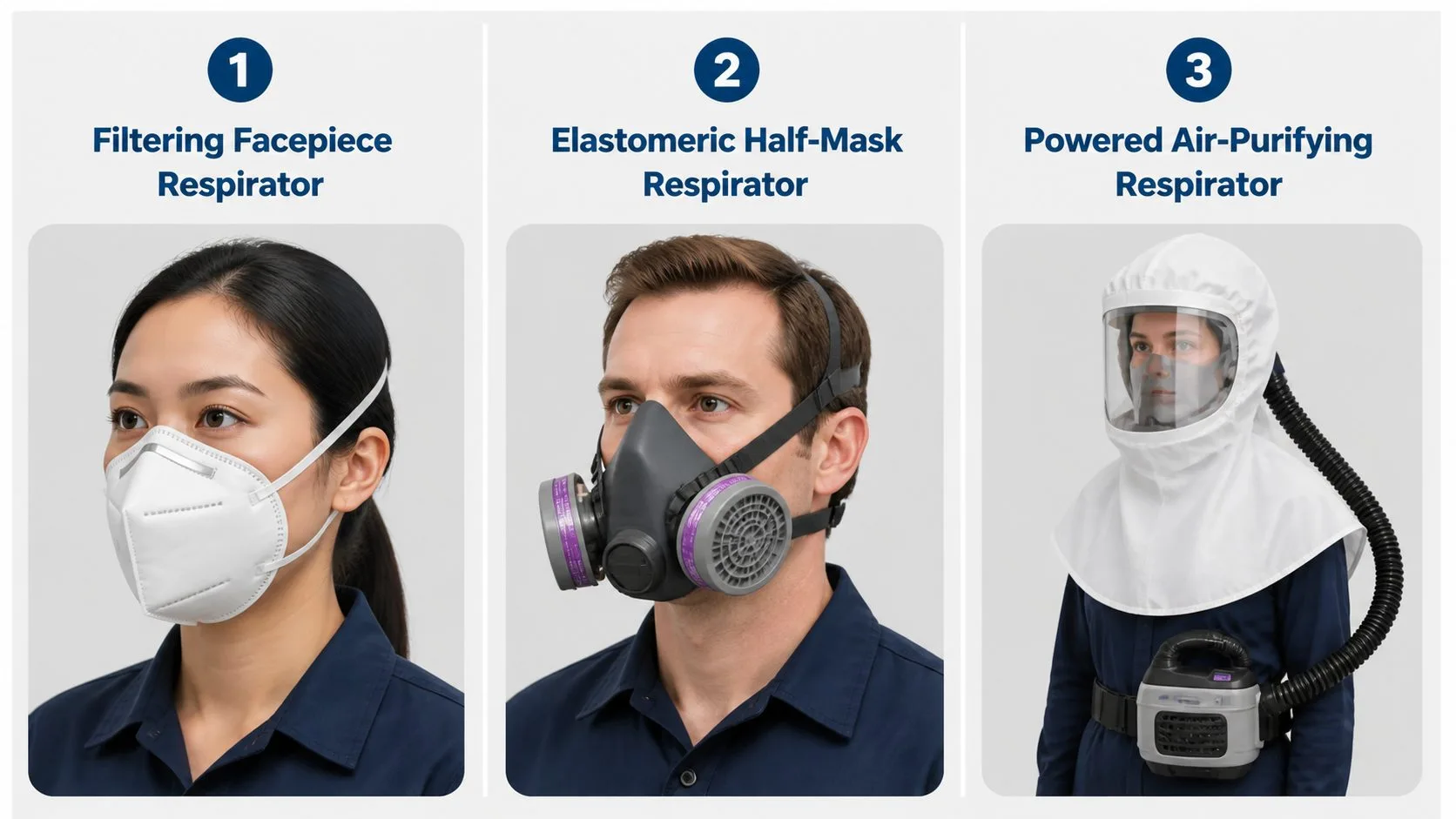
Filtering Facepiece Respirators
An N95 is technically a filtering facepiece respirator, a NIOSH classification for masks that filter particles through the mask material itself rather than through a separate cartridge. Other filtering facepiece respirators include the N99 and N100, which filter at higher efficiency levels for more hazardous environments. These are particulate respirators, meaning they’re built to capture solid and liquid particles rather than gases or vapors, and their particulate filter material is what earns them a NIOSH rating in the first place.
Half-Mask, Powered, and Cartridge Respirators
Elastomeric half-mask respirators are reusable rubber or silicone masks fitted with replaceable cartridges instead of built-in filtration, and they’re common in industrial settings where the same worker uses the same respirator for months at a time. Not all cartridges filter the same hazard, either. Organic vapor cartridges are built for vapors and gases, while particulate cartridges are built for dust and aerosols, so choosing the right one depends on what’s actually in the air.
Powered air-purifying respirators, or PAPRs, are a separate category of air-purifying respirators that use a battery-powered blower to push filtered air into a hood or loose-fitting mask. That design removes some of the fit sensitivity that comes with a tight seal, which is one reason PAPRs show up often in healthcare settings.
Employers generally choose a category based on the hazard’s permissible exposure limit, the maximum airborne concentration OSHA allows a worker to be exposed to over a set period. A NIOSH-approved N95 can provide adequate protection below certain exposure thresholds, but higher-hazard workplace environments call for a half-mask or powered air-purifying respirator instead.
What Is a Respirator Fit Test?
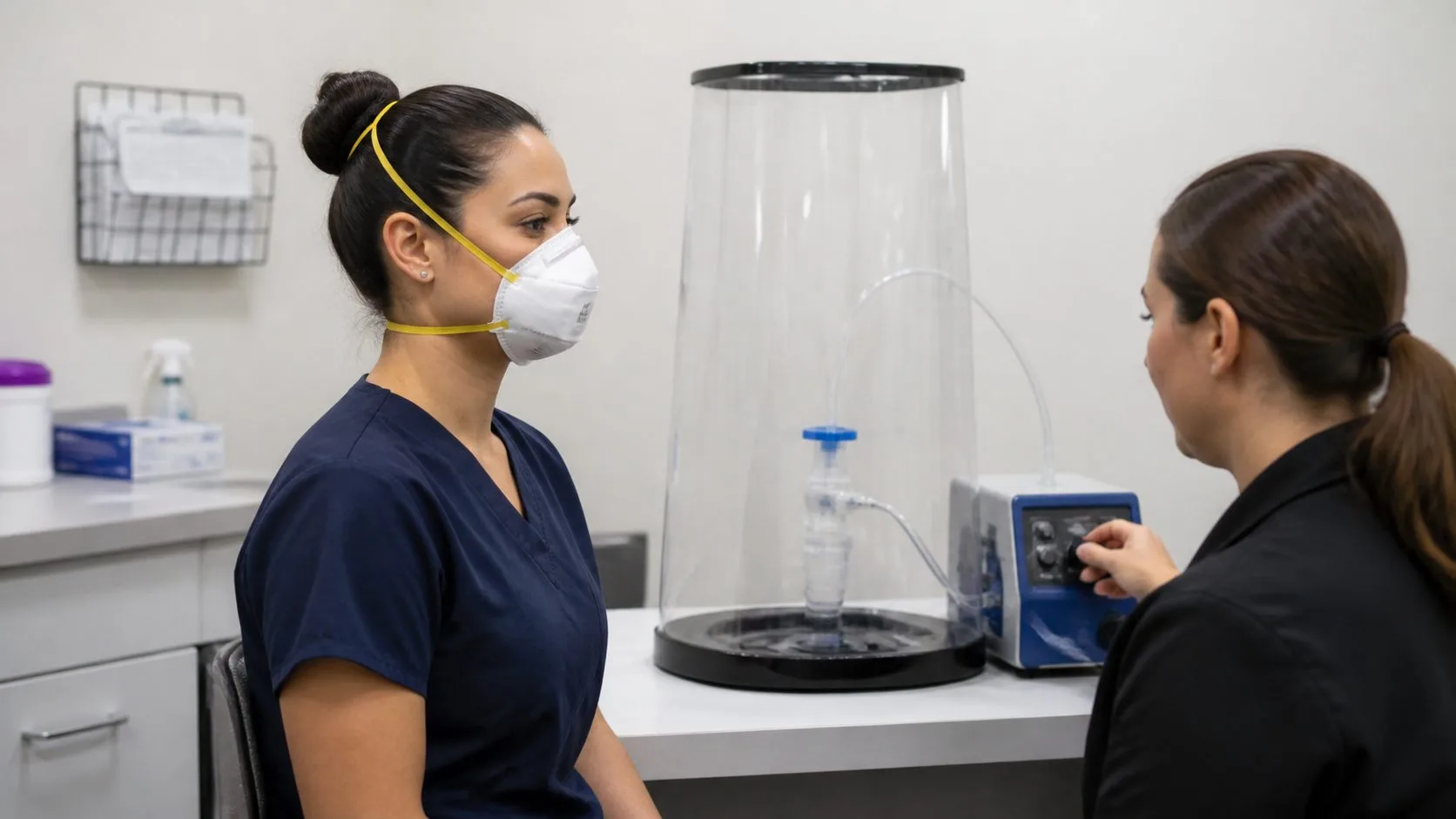
A respirator fit test checks whether a specific mask, in a specific size, creates an airtight seal against an individual’s face. Even a NIOSH-approved N95 will leak air around the edges if it is the wrong size or shape for the wearer, which defeats its filtration benefit.
Fit testing is separate from a user seal check, which a wearer performs alone each time they put a respirator on. A user seal check comes in two forms: a positive-pressure check, done by exhaling gently and confirming the mask puffs out slightly without air leaking around the edges, and a negative-pressure check, done by inhaling sharply with the respirator sealed off and confirming it collapses slightly against the face. A fit test is administered by a trained evaluator, uses one of two recognized fit testing methods, either qualitative fit testing or quantitative fit testing, and produces a documented pass or fail result before anyone is cleared to test respirators on the job.
Qualitative Fit Testing
Qualitative fit testing relies on the wearer’s senses. The test administrator introduces a harmless test agent, often a sweet or bitter-tasting aerosol, into a hood or enclosure around the wearer’s head. If the wearer cannot taste or smell the agent while performing a set of exercises, such as talking, bending over, and moving their head side to side, the respirator passes. Some administrators use irritant smoke instead of a taste-based aerosol, and the wearer passes by not coughing or reacting to it, which reaches the same pass or fail result through a different sense entirely.
Quantitative Respirator Fit Testing
Quantitative respirator fit testing uses a fit testing instrument, most often a particle-counting machine, to measure the actual number of particles inside versus outside the mask, rather than relying on the wearer’s perception. This method typically requires a small hole fitted into the respirator so the instrument can sample air from inside the mask while the wearer moves through the same exercises used in qualitative testing. Some quantitative methods generate a test aerosol, such as corn oil, and pair it with a condensation nuclei counter to take these measurements. Quantitative fit testing produces a numerical fit factor rather than a pass or fail based on perception, and it is generally required for respirators used in higher-hazard environments.
Get Your Team CPR and First Aid Certified
Respirator programs work best alongside a workforce that’s also prepared for medical emergencies. Coast2Coast offers CPR and AED courses for individuals and groups across the US.
When Do You Need to Be Retested?
A passed fit test doesn’t last forever. OSHA, formally the Occupational Safety and Health Administration, requires a new fit test at least once a year, and it requires one sooner if anything changes about how a respirator fits an individual’s face. The most common trigger is a significant weight change, gain or loss, since it reshapes the contours a respirator has to seal against. Noticeable weight loss around the cheeks or jaw is a common example. Facial surgery, scarring, or significant dental work can have the same effect. A new respirator model always requires its own fit test too, even for someone who has already passed with a different model, since no two respirator designs seal exactly the same way. This applies whether the original test used qualitative fit testing or quantitative fit testing, and each successful retest should be documented by date, just like the original.
Facial Hair and Respirator Fit Testing
OSHA prohibits facial hair that crosses the sealing surface of a tight-fitting respirator, and that rule applies no matter how neatly trimmed a beard or mustache is. Beards and mustaches interfere with the seal of any tight-fitting respirator, which is why the rule isn’t really about appearance at all.
Even a day or two of stubble along the jawline can be enough to break a respirator’s seal during testing. That’s why most fit test administrators require participants to be clean-shaven along the sealing surface on the day of the test, and why anyone who grows facial hair after passing needs to be retested before wearing that respirator again.
Who Needs Respirator Fit Testing?
Wearing tight-fitting respirators on the job is what triggers this requirement in the first place. Anyone required by their employer to wear a tight-fitting respirator as part of a job duty needs to complete respirator fit testing, and OSHA requires it before initial use and at least annually after that, using either qualitative fit testing or quantitative fit testing depending on the respirator and workplace. Jobs that require fit testing span healthcare workers handling airborne pathogens, construction and manufacturing employees exposed to dust or chemical hazards, and laboratory staff. Respirator fit testing requirements also include a medical evaluation to confirm the employee can safely wear a respirator, along with respirator fit testing training so workers understand how to inspect, don, and maintain their equipment between tests.
Complete First Aid Training for Your Industry
Whether you’re in healthcare, construction, or manufacturing, Coast2Coast builds first aid programs around the specific risks your team faces on the job.
What Happens During an N95 Mask Fit Test?
An n95 mask fit test typically starts with a brief medical questionnaire, followed by selecting a respirator model and size. The wearer puts on the respirator and performs a user seal check around the nose and mouth before the formal test begins. During the n95 respirator fit test itself, the wearer completes a series of standardized movements while the qualitative or quantitative method runs. The entire process usually takes fifteen to twenty minutes, and facial hair along the sealing surface will break the respirator’s seal and cause most people to fail, regardless of mask size.
What Do You Need for a Fit Test?
Most administrators use a standardized n95 fit test form to record the respirator model, size, test method, and pass or fail outcome, since OSHA requires these records to be retained. Testers rely on a n95 fit test kit that includes the hood, nebulizer, and test solutions for qualitative testing, or a particle-counting machine for quantitative fit testing. Employees generally do not need to bring anything beyond a clean-shaven face along the respirator’s sealing surface and any prescription eyewear they wear on the job.
Onsite vs. Individual Respirator Fit Testing
Many hospitals, clinics, and large employers schedule onsite respirator fit testing, bringing a certified tester and equipment directly to the workplace to test groups of employees in a single visit. This approach is common for annual renewals across entire departments. Smaller employers or individuals sometimes schedule fit testing through an occupational health clinic instead. Either approach must follow the same OSHA-compliant testing methods, whether it’s qualitative fit testing or quantitative fit testing, and produce the same documentation, regardless of where the test takes place.
Key Takeaway
KN95 respirators may be a reasonable choice for everyday public use, but they are not a substitute for a NIOSH-approved N95 in any workplace where OSHA respirator fit testing is required. A respirator remains effective only if it forms a genuine seal, and that’s exactly what a fit test is there to confirm.
Get Started
Have Questions About Workplace Safety Training?
Our team can help you figure out which courses fit your industry, headcount, and compliance needs.
Frequently Asked Questions: N95 vs. KN95 Respirator Fit Testing 2026
Q1: What is the main difference between N95 and KN95 masks?
A: The main difference is certification, not filtration efficiency. Both mask types filter at least 95 percent of airborne particles. N95 respirators are tested and approved by NIOSH under 42 CFR Part 84, a strict US federal batch-testing process. KN95 masks are certified under China’s GB2626-2019 standard, which uses different testing protocols and carries no NIOSH approval. That distinction is what determines whether a mask can be used in a formal workplace respiratory protection program.
Q2: Can a KN95 mask pass an OSHA fit test?
A: No. OSHA’s Respiratory Protection Standard, 29 CFR 1910.134, is built around NIOSH-approved equipment, so a KN95 mask generally falls outside the fit testing process entirely. Some KN95 models received temporary use authorizations during past supply shortages, but those exceptions never made a KN95 equivalent to an N95 in a workplace respiratory protection program. A respirator needs NIOSH approval before a fit test can even begin.
Q3: Are N95 and KN95 masks equally effective at filtering particles?
A: Both are designed to filter at least 95 percent of airborne particles, including small aerosols, so filtration efficiency on paper is comparable. The practical difference comes down to fit and oversight. N95 respirators go through independent NIOSH batch testing, while KN95 production does not receive the same level of oversight, which is part of why counterfeit and substandard KN95 products have shown up more often in the US market.
Q4: Why do N95 masks use head straps instead of ear loops?
A: N95 respirators typically use head straps that wrap around the crown and base of the skull, pulling the mask against the face from two points for a tighter, more consistent seal. KN95 masks generally use ear loops instead, which rely on two smaller anchor points near the ears and tend to produce a looser fit. That fit difference is a major reason N95 respirators are better suited to formal fit testing.
Q5: How often does OSHA require respirator fit testing?
A: OSHA requires a new fit test at least once a year for anyone who wears a tight-fitting respirator on the job. A new test is also required sooner if anything changes about how the respirator fits an individual’s face, such as significant weight change, facial surgery, scarring, or switching to a new respirator model. Each successful fit test needs to be documented by date.
Q6: What is the difference between qualitative and quantitative fit testing?
A: Qualitative fit testing relies on the wearer’s senses, using a taste, smell, or irritant agent to determine a pass or fail result. Quantitative fit testing uses a fit testing instrument, typically a particle-counting machine, to measure the actual number of particles inside versus outside the mask, producing a numerical fit factor rather than a result based on perception. Higher-hazard environments generally require quantitative fit testing.
Q7: What happens during a respirator fit test?
A: A trained evaluator selects a respirator model and size, and the wearer performs a user seal check before the formal test begins. The wearer then completes a series of standardized movements, such as talking, bending over, and moving their head side to side, while the qualitative or quantitative method runs. The entire process usually takes fifteen to twenty minutes and ends with a documented pass or fail result.
More FAQs: Respirator Compliance and Workplace Requirements
Q8: Who is required to complete a respirator fit test?
A: Anyone required by their employer to wear a tight-fitting respirator as part of a job duty needs to complete respirator fit testing, before initial use and at least annually after that. This commonly includes healthcare workers handling airborne pathogens, construction and manufacturing employees exposed to dust or chemical hazards, and laboratory staff. Requirements also include a medical evaluation and training on how to inspect, don, and maintain the equipment.
Q9: Can facial hair affect a respirator fit test?
A: Yes. OSHA prohibits facial hair that crosses the sealing surface of a tight-fitting respirator, no matter how neatly trimmed it is. Even a day or two of stubble along the jawline can be enough to break the seal during testing. Most fit test administrators require participants to be clean-shaven along the sealing surface on the day of the test.
Q10: What triggers the need for a new fit test besides the annual requirement?
A: A new fit test is required whenever something changes about how a respirator fits an individual’s face. Significant weight change, gain or loss, is the most common trigger, since it reshapes the contours a respirator has to seal against. Facial surgery, scarring, significant dental work, and switching to a new respirator model all require a fresh fit test as well.
Q11: What is a user seal check, and is it the same as a fit test?
A: No. A user seal check is a quick self-performed check a wearer does every time they put a respirator on, either by exhaling gently to confirm the mask puffs out slightly, or inhaling sharply to confirm it collapses against the face. A fit test is a separate, formal process administered by a trained evaluator and produces an official documented result.
Q12: What is the difference between a filtering facepiece respirator and an elastomeric half-mask respirator?
A: A filtering facepiece respirator, like an N95, filters particles through the mask material itself and is typically single-use. An elastomeric half-mask respirator is a reusable rubber or silicone mask fitted with replaceable cartridges instead of built-in filtration, and it is common in industrial settings where the same worker uses the same respirator for months at a time.
Q13: Are powered air-purifying respirators (PAPRs) fit tested the same way as N95 masks?
A: PAPRs use a battery-powered blower to push filtered air into a hood or loose-fitting mask, which removes some of the fit sensitivity that comes with a tight seal. Because of this looser design, PAPRs do not always require the same tight-seal fit testing as an N95, though employers still need to follow OSHA’s respiratory protection program requirements for the category being used.
Q14: Can an employer conduct fit testing onsite instead of sending employees to a clinic?
A: Yes. Many hospitals, clinics, and large employers schedule onsite respirator fit testing, bringing a certified tester and equipment directly to the workplace to test groups of employees in a single visit. Smaller employers or individuals sometimes use an occupational health clinic instead. Either approach must follow the same OSHA-compliant testing methods and produce the same documentation.
Q15: Are counterfeit KN95 masks a common problem in the US?
A: Yes. Counterfeit and substandard KN95 products have shown up in the US market more often than counterfeit N95s. This is largely because KN95 production does not go through the same kind of independent oversight that NIOSH applies to N95 respirators, so a KN95 label alone is not a reliable guarantee of quality.
This article is for general informational purposes only and does not constitute legal, medical, or regulatory compliance advice. Employers are responsible for confirming their respiratory protection program meets all applicable OSHA requirements. Consult OSHA directly or a qualified occupational health and safety professional for guidance specific to your workplace.
About This Article
Reviewed by the Coast2Coast First Aid & Aquatics Safety Training Team. Coast2Coast First Aid Inc. provides first aid, CPR/AED, and workplace safety training across the United States and Canada.
Source: Occupational Safety and Health Administration, 29 CFR 1910.134, Respiratory Protection Standard (cited above).