
Picture CPR and you probably imagine a 1990s TV scene: two fingers on the neck, a panicked “There’s no pulse,” then dramatic rescue breaths. That script is outdated, and in a real emergency it could cost a life. CPR Week 2026 is as much about unlearning as learning. Here are the five rules that have changed, and what each one means in practice.
Quick Reference: What Changed
Here are the five biggest updates. The rest of this article explains each one.
| What you may have learned | The 2026 reality |
|---|---|
| Check for a pulse before you start. | Skip the pulse. Look for breathing; if unresponsive, start compressions. |
| Mouth-to-mouth is required. | Hands-only CPR for untrained bystanders helping a collapsed adult. |
| CPR is different for women. | The technique is identical. Hands go in the center of the chest. |
| Stop if you hear a crack. | Keep pushing. Rib injuries happen but they heal. |
| An AED could shock the wrong person. | AEDs analyze the rhythm first. They will not shock a healthy heart. |
What Is National CPR Week, and When Is It in 2026?
CPR Week 2026, formally National CPR and AED Awareness Week, runs June 1–7 under a 2007 Congressional resolution. The American Heart Association leads the national effort with free classes and community campaigns, and many accredited training providers run certification and recertification classes throughout the week. Whether you call it CPR Week, CPR Awareness Week, or cpr aed awareness week, the goal is the same: replace the outdated version in your head with the current science. More than 1,600 people experience cardiac arrest each day in the U.S. Bystander CPR can double or even triple survival rates — which is exactly why this week exists.
Why Does Outdated CPR Knowledge Put Lives at Risk?
About 350,000 Americans have an out-of-hospital cardiac arrest each year, and roughly 90 percent do not survive. Every minute a cardiac arrest victim goes without intervention, survival odds plunge by 7% to 10%, but immediate bystander CPR slows that drop to 3% to 4% per minute. The barrier is mainly the outdated, complicated script most people carry in their heads, even though the importance of immediate action during a cardiac emergency is the ultimate factor in survival. The October 2025 AHA Guidelines keep stripping that complexity away. A classroom CPR and AED course is the fastest way to build real confidence. Roughly 70% of sudden cardiac arrests happen at home or in private residential settings. When a person’s heart stops beating, their chance of survival drops by roughly 10% for every minute without intervention. Certified courses teach the proper use of chest compressions and an AED together, which can significantly increase survival rates.
Hands-On Practice
Reading the Steps Is Not the Same as Doing Them
Practice the 2026 technique on a manikin with a certified instructor near you.
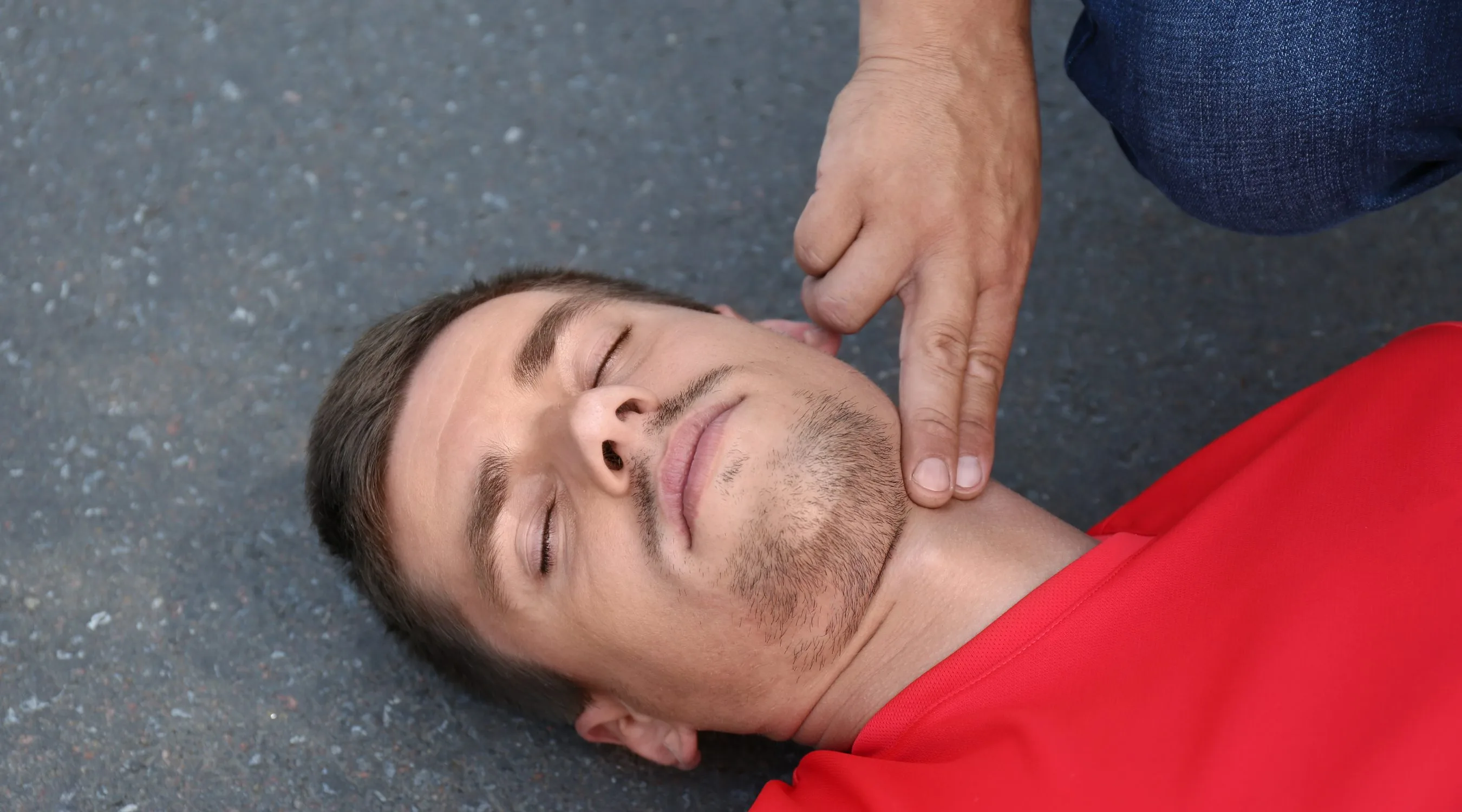
Why You Should Not Check for a Pulse First
For decades, training told you to find a pulse before compressions. The 2026 reality: skip it. Under adrenaline, your own pulse is easy to feel in your fingertips and easy to mistake for the victim’s, and checking burns seconds. Tap the shoulder and shout, look at the chest for 5 to 10 seconds for normal breathing (gasping does not count), and if the person is unresponsive and not breathing normally, call 911 and push hard and fast in the center of the chest. If you are alone, put 911 on speaker first.
Do You Still Need to Give Rescue Breaths?
For many bystanders, mouth-to-mouth is the biggest barrier to acting. Many bystanders also hesitate because they lack confidence or fear causing harm, which makes simple guidance especially important. The 2026 reality: for a collapsed teen or adult, hands-only CPR is recommended. At the moment of cardiac arrest the blood still holds an oxygen reserve, so the immediate problem is circulation, not oxygen. Every pause for breaths drops the pressure you built toward zero. Continuous compressions at 100 to 120 per minute, roughly the tempo of “Stayin’ Alive,” keep that blood moving to the brain, because brain damage can begin after just 4 minutes and death can occur within 4 to 6 minutes.
When Rescue Breaths Are Still Essential
Rescue breaths remain critical for infants, children, and victims of drowning or drug overdose, because those arrests typically start as a breathing problem, and sudden cardiac arrest can still arise in youth emergencies where rapid CPR and AED use matters. The 2025 AHA Guidelines reinforce this and note that children aged 12 and older can reasonably be taught CPR and AED use. It is also the number one cause of death in youth athletes. Safe Kids has partnered with Tina Charles on sports safety clinics that have reached over 1,000 child participants, underscoring why AED and CPR education matters in youth sports. If you care for children as a caregiver or parent or work near water, a full first aid and CPR course covering both compressions and rescue breaths is worth the time.
Should Women Receive CPR from a Bystander?
Research shows women who suffer cardiac arrest in public are significantly less likely to receive bystander CPR than men, due to fear of inappropriate touching and a false belief that female anatomy makes CPR harder. Both are myths. Cardiovascular disease is the leading cause of death in women, and the technique is identical for everyone. Place the heel of your hand in the center of the chest and push hard and fast. A woman’s breasts do not change hand placement. If using an AED, move clothing aside so pads sit on bare skin.
Put These Updated Rules Into Practice
Knowing CPR is step one, and practical instruction helps you feel prepared to act. A certified instructor puts those skills in your hands with real practice on a manikin, including AED training, so you can act without hesitation when it counts.
Learn This Skill in a Real Classroom
Hands-on manikin and AED practice with a certified instructor.
What If You Break a Rib or Do It Wrong?
Fear of causing harm is one of the most common reasons many people hesitate to get involved and freeze. The 2026 reality: any CPR is far better than none. Effective compressions push at least two inches deep, and that force can crack a rib. But a person in cardiac arrest is clinically dead, so once you are involved, you cannot make it worse. A broken rib heals. Brain death does not reverse. If you feel a pop or hear a crack, keep going.
Are You Protected by Good Samaritan Laws?
Yes. All 50 states have Good Samaritan laws protecting bystanders who give emergency help in good faith, as long as they act reasonably and do not expect payment. You do not need certification to be covered. These laws exist so that fear of a lawsuit never stops someone from stepping in.
Can You Accidentally Shock Someone With an AED?
CPR keeps blood moving; an AED shocks a chaotic rhythm back toward normal. Many people fear opening the cabinet, worried they might shock someone who merely fainted. Modern AEDs prevent that: once on, a calm voice guides each step and the device analyzes the heart’s rhythm before allowing a shock. It only fires when one is needed, so you cannot shock a healthy heart. The bigger problem is access: only half of US workers can locate the nearest AED. Tina Charles, a WNBA All-Star, has also pushed for better AED access as part of community health preparedness to help prevent sudden cardiac arrest in youth athletes. Our team can help through the contact page.
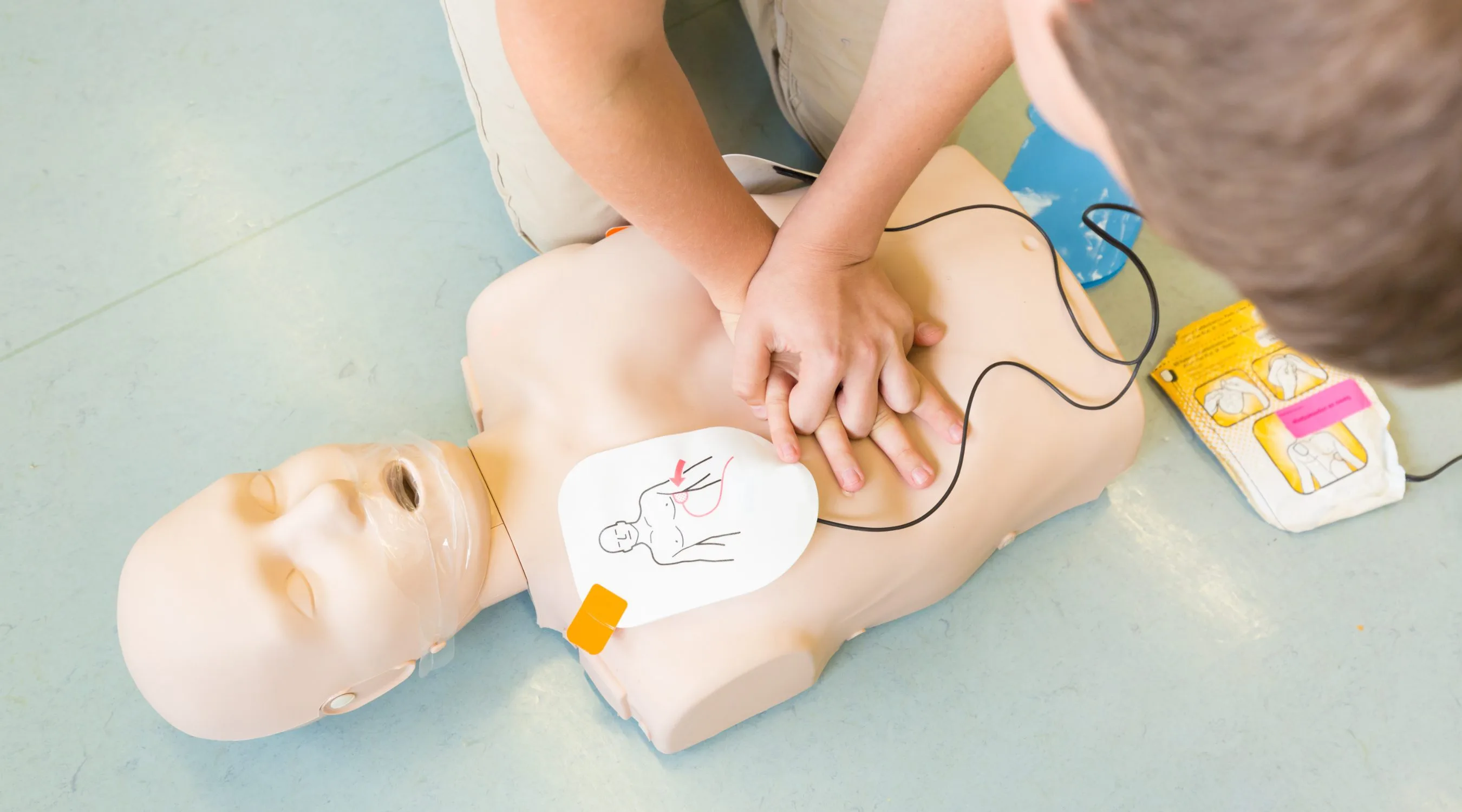
How Can You Take Part in CPR Week 2026 (June 1–7)?
Until the ambulance arrives, you are the first responder, and the best use of CPR Week 2026 is to turn what you just read into a skill you can actually perform. Reading about chest compressions is not the same as feeling the right depth and rhythm under your own hands. The fastest way to close that gap is a short, hands-on class with a certified instructor, where you practice compressions and AED use on a manikin until they feel automatic. About 7 in 10 cardiac arrests happen at home, so the person you are training to help is most likely someone you love. Spend a few hours with us this week and walk out ready to act without hesitation.
CPR Week 2026
Come Take a Class With Us This CPR Week
A few hours with a certified instructor is all it takes to be ready when it counts. Reserve your seat today.
Key Takeaway
For CPR Week 2026: skip the pulse check, skip rescue breaths on a collapsed adult, give the same care regardless of gender, and use an AED without fear. Call 911, push hard and fast at 100 to 120 per minute, and deploy the AED as soon as one is available. It will not shock a heart that does not need it. Good Samaritan laws protect you in all 50 states.
Only Half of US Workers Can Find Their AED
Group CPR and first aid training closes that gap. Bring a certified instructor to your workplace this CPR Week.
Frequently Asked Questions: CPR Week 2026
Q1: When is CPR Week 2026?
A: CPR Week 2026 runs June 1 to 7. Formally called National CPR and AED Awareness Week, and sometimes listed as cpr aed awareness week, it falls on the first seven days of June every year under a 2007 Congressional resolution and is led by the American Heart Association. Its purpose is to encourage more people to learn CPR and AED use, raise awareness through public campaigns, and help more people save a life while updating the public on guidelines that have changed since they last took a class.
Q2: Why shouldn’t you check for a pulse before starting CPR?
A: Checking for a pulse wastes time and is unreliable for untrained responders. Under stress, your own heartbeat is easy to feel in your fingertips, which can fool you into thinking a victim’s heart is beating when it has stopped. Skip the pulse check entirely. Tap the person and shout, then look for normal breathing for 5 to 10 seconds. If the person is unresponsive and not breathing normally, call 911 and begin chest compressions right away.
Q3: What is hands-only CPR?
A: Hands-only CPR is cardiopulmonary resuscitation without mouth-to-mouth breaths. For a teen or adult who suddenly collapses, an untrained bystander pushes hard and fast in the center of the chest at 100 to 120 compressions per minute without stopping for breaths. It works because the blood still carries an oxygen reserve at the moment of collapse, so the priority is circulation. Removing the breaths also makes bystanders far more willing to act, and that can save a life.
More FAQs: Women and the Law
Q4: Is CPR different for women?
A: No. The technique is identical for women and men. Place the heel of your hand in the center of the chest, on the breastbone, and push hard and fast regardless of anatomy. A woman’s breasts do not change hand placement or interfere with compressions. If you use an AED, move clothing and undergarments aside so the pads sit on bare skin. Research shows women receive bystander CPR less often than men due to fear of inappropriate contact, and that hesitation costs lives.
Q5: Can you be sued for performing CPR without certification?
A: No. You do not need certification or medical credentials to legally perform CPR in an emergency. All 50 states have Good Samaritan laws that protect people who voluntarily give emergency aid in good faith, provided they act reasonably and do not expect payment. These laws exist specifically so that fear of liability does not stop bystanders from helping. The far greater risk is doing nothing, since a cardiac arrest victim who receives no CPR has very little chance of survival.
About This Article and Our Sources
Written and reviewed by Ashkon Pourheidary, B.Sc. (Hons) Neuroscience and a certified first aid and CPR instructor since 2011. Reviewed against the 2025 American Heart Association Guidelines for CPR and Emergency Cardiovascular Care (Circulation, October 2025), the AHA 2025 Heart Disease and Stroke Statistics Update, and AHA CPR Facts and Statistics.