
If you work with children in California, or you're a parent hiring someone who does, understanding the state's CPR and first aid rules can feel like navigating a maze. The confusion usually starts with one question: does the law actually require my babysitter or nanny to be CPR certified? The answer depends almost entirely on whether the caregiver operates in a licensed childcare facility or a private home.
This guide breaks down the EMSA CPR requirements for babysitters and nannies in California, clarifies who is legally covered, explains what proper training looks like, and offers practical advice for both caregivers and the families who hire them.
Key Takeaways
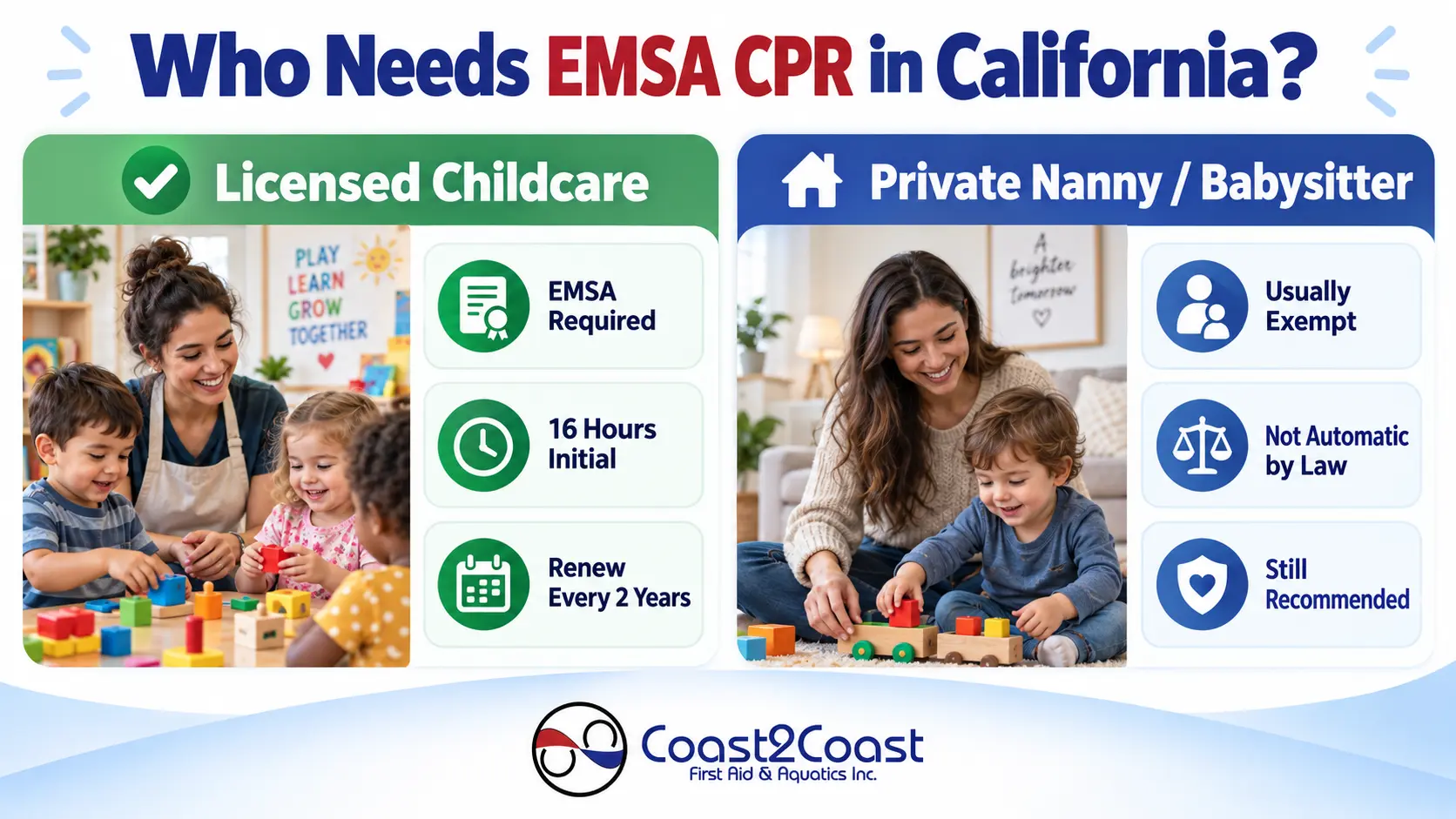
- The Emergency Medical Services Authority (EMSA) sets the standards for pediatric CPR, first aid, and preventive health training used by California childcare licensing under Title 22 and Health & Safety Code Section 1596.866. These rules apply to licensed childcare facilities and family child care homes, not automatically to every nanny or babysitter.
- Private, in-home nannies and babysitters hired directly by families are generally license-exempt and not legally required to hold EMSA-approved certifications, though pediatric CPR and first aid certification is strongly recommended and increasingly expected.
- EMSA-compliant courses must include infant CPR, child CPR techniques, AED use, choking relief, and hands-on practice with manikins. Initial training for licensed providers is 16 hours; renewal is every two years.
- Many nanny agencies, parents, and insurance policies require CPR and first aid training even when state law does not, driven by liability considerations and best practice.
- Coast2Coast First Aid & Aquatics is an authorized provider delivering EMSA-approved Pediatric CPR & First Aid and AHA Heartsaver Pediatric training directly across California.
Understanding EMSA and California Childcare CPR Rules
The Emergency Medical Services Authority (EMSA) is the California state agency responsible for approving pediatric CPR, pediatric first aid, and preventive health training programs for childcare professionals. EMSA reviews course curricula, approves or rejects training providers, issues approval stickers for completion cards, and maintains a database of recognized programs.
EMSA standards are embedded in California law through two primary sources: Title 22 of the California Code of Regulations, which details training standards, acceptable providers, and renewal cycles for childcare workers, and Health & Safety Code Section 1596.866, which mandates that directors, teachers, and licensees in licensed day care settings complete health and safety training, including pediatric first aid, pediatric CPR, and preventive health practices.
Key definitions to keep in mind: EMSA-approved means the training program has been reviewed, accepted, and authorized by EMSA for childcare licensing purposes. Pediatric CPR first aid refers to courses specifically designed for infant and child emergencies, distinct from generic adult workplace first aid. Licensed provider means a home or center operating under a license from the California Department of Social Services, Community Care Licensing Division (CCLD).
EMSA rules apply directly to licensed child care centers and family child care homes. They do not automatically apply to every babysitter or nanny working in a private household.
Who Is Legally Required to Have EMSA Pediatric CPR & First Aid in California?
Do you legally need CPR if you're a babysitter or nanny in California? The answer hinges on your work setting.
Roles explicitly covered by EMSA and Title 22:
- Staff at a licensed childcare center, including at least one director or teacher on-site at all times.
- Licensed family child care home operators and assistants.
- Preschool staff and preschool teachers working under Community Care Licensing.
- After-school program employees and camp counselors operating under CCLD licensing.
In these licensed settings, at least one person with current EMSA-approved pediatric CPR and pediatric first aid must be present whenever children are in care. If children leave the premises for a field trip, a certified person must accompany them. Facilities operating with the entire team currently certified, rather than the bare minimum, reduce the risk of a coverage gap on any given shift, since staff turnover, illness, and vacations can otherwise leave a facility short of its required minimum.
Who is generally exempt: private nannies and babysitters working solely in an individual family's home are typically license-exempt under California childcare licensing rules. They are not directly required by CCLD to hold EMSA-approved CPR certification or first aid certification. However, nanny agencies, subsidy programs, and individual families may impose CPR training and aid certification as a condition of employment, even when state law does not mandate it.
Book Pediatric CPR & First Aid for Caregivers
EMSA-approved and AHA Heartsaver Pediatric courses with hands-on infant and child skills testing.
Licensed Family Child Care Homes vs. Private, Exempt Nannies
Many parents confuse a licensed family child care home with a private nanny arrangement. The distinction has major implications for what California childcare licensing requires.
A licensed family child care home (FCCH) is operated in the caregiver's own home, typically caring for multiple unrelated children. It's regulated by CCLD and must meet all Title 22 requirements, including EMSA-approved pediatric first aid and pediatric CPR for the licensee and certain helpers. Inspectors will check for current certification cards during site visits.
A private nanny or babysitter works in the child's own home, usually caring for one family's children. This arrangement is license-exempt. EMSA pediatric CPR and first aid is recommended but not mandated by Title 22.
If you're a nanny or parent and aren't sure whether your arrangement qualifies as "licensed" or "exempt," check with CCLD directly. Families who employ private nannies should still treat pediatric CPR first aid as a contractual requirement. Specifying "pediatric" and "hands-on" training in the employment agreement is a straightforward way to manage child safety and liability considerations.
What EMSA-Approved Pediatric CPR & First Aid Training Includes
EMSA-approved courses for childcare providers follow a specific pediatric curriculum. These are not generic adult workplace CPR classes.
Core CPR components:
- Infant CPR (ages 0-12 months) and child CPR techniques (ages 1 to puberty).
- Rescue breathing and chest compressions with age-appropriate ratios.
- Choking relief for infants and children, including airway obstruction management.
- AED use on children and infants, with instruction on pediatric pads and settings for the automated external defibrillator.
- Recognition of breathing and cardiac emergencies.
Pediatric first aid topics:
- Allergic reactions and anaphylaxis, including epinephrine auto-injector use (required as of January 1, 2026, per Health & Safety Code Section 1596.866).
- Asthma attacks, seizures, and other pediatric emergencies.
- Head injuries, falls, bleeding, and burns.
- Poisoning and environmental emergencies.
Train Your Caregiving Team On-Site
Book one group session so every nanny, sitter, or staff member trains to the same pediatric standard.
CPR & First Aid Expectations for Babysitters and Nannies in Private Homes
Even without a legal mandate, pediatric CPR and first aid training is rapidly becoming a baseline expectation for professional nannies and even casual babysitters in California.
Parents commonly require proof of current CPR first aid certification before hiring, especially for care involving infants under one year. This is especially true in metropolitan areas where families expect specialized knowledge from caregivers. Private household employees who hold documented aid training demonstrate emergency response readiness, which can affect insurance coverage and trust.
Nannies should prioritize pediatric-focused first aid classes and CPR classes that cover infant CPR, child CPR, and common childcare emergencies, rather than adult-only workplace courses designed for offices. Families should confirm that their nanny's training aligns with EMSA pediatric standards, covering the same topics required of licensed childcare providers, even if the caregiver is technically exempt.
In-Person vs. Online and Blended Learning for Pediatric CPR
Training format matters, particularly for anyone working under childcare licensing rules or handling genuine emergency situations where hesitation costs time.
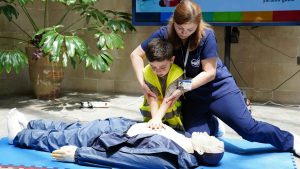
For EMSA-approved childcare CPR and first aid, California Community Care Licensing expects in-person instruction with live, hands-on practice on manikins. Courses that are 100% online (video only, no physical techniques or skills test) are not accepted for licensed childcare staff. Licensing inspectors will reject certification cards from these programs.
Some EMSA-approved organizations offer a blended learning format: theory completed online, followed by in-person skills testing with certified instructors. Caregivers should verify with EMSA and CCLD whether this blended learning format is currently accepted for their specific license type.
For private, license-exempt nannies, blended learning or in-person classes build far more reliable emergency skills than video-only courses, and they are what most parents and agencies expect. Bottom line: if your role falls under childcare licensing, stick with in-person or approved blended courses. If you're a private nanny, in-person training is still the gold standard for real-world readiness.
Course Length, Renewal Cycles, and Documentation
EMSA pediatric CPR and first aid requirements are not one-and-done. They come with minimum hours, renewal timelines, and documentation standards.
Initial training for licensed providers: 16 hours total, broken into 4 hours pediatric first aid, 4 hours pediatric CPR/AED, and 8 hours preventive health and safety training (covering infectious disease management, childhood injury prevention, lead exposure, and nutrition).
Renewal: every two years, licensed child care providers must complete 8 hours of renewal training (4 hours first aid + 4 hours CPR/AED), and renewal training must include a hands-on skills assessment. Preventive health training is generally one-time unless law updates (like the post-2020 lead prevention or 2026 anaphylaxis requirements) add new content.
For babysitters and nannies, even when exempt, aim to complete renewal 60 to 90 days before your card's printed expiration date. There is no grace period once a certificate expires for licensed roles, so early renewal keeps your skills sharp and your employability intact without any compliance risk.
Documentation: course completion cards for EMSA-approved training must include the provider name, course type (pediatric CPR, first aid, AED), issue and expiration dates, and an EMSA approval indication. Keep certification cards on file for every staff member counted toward ratio, not just the director's, since inspectors at licensed facilities verify all of these elements for anyone working directly with children.
Adult vs. Pediatric and Infant CPR: Why Nannies Need All Three
Children, infants, and adults require different CPR techniques. Childcare workers who only learn adult CPR are underprepared for the emergencies most likely to occur in their care.
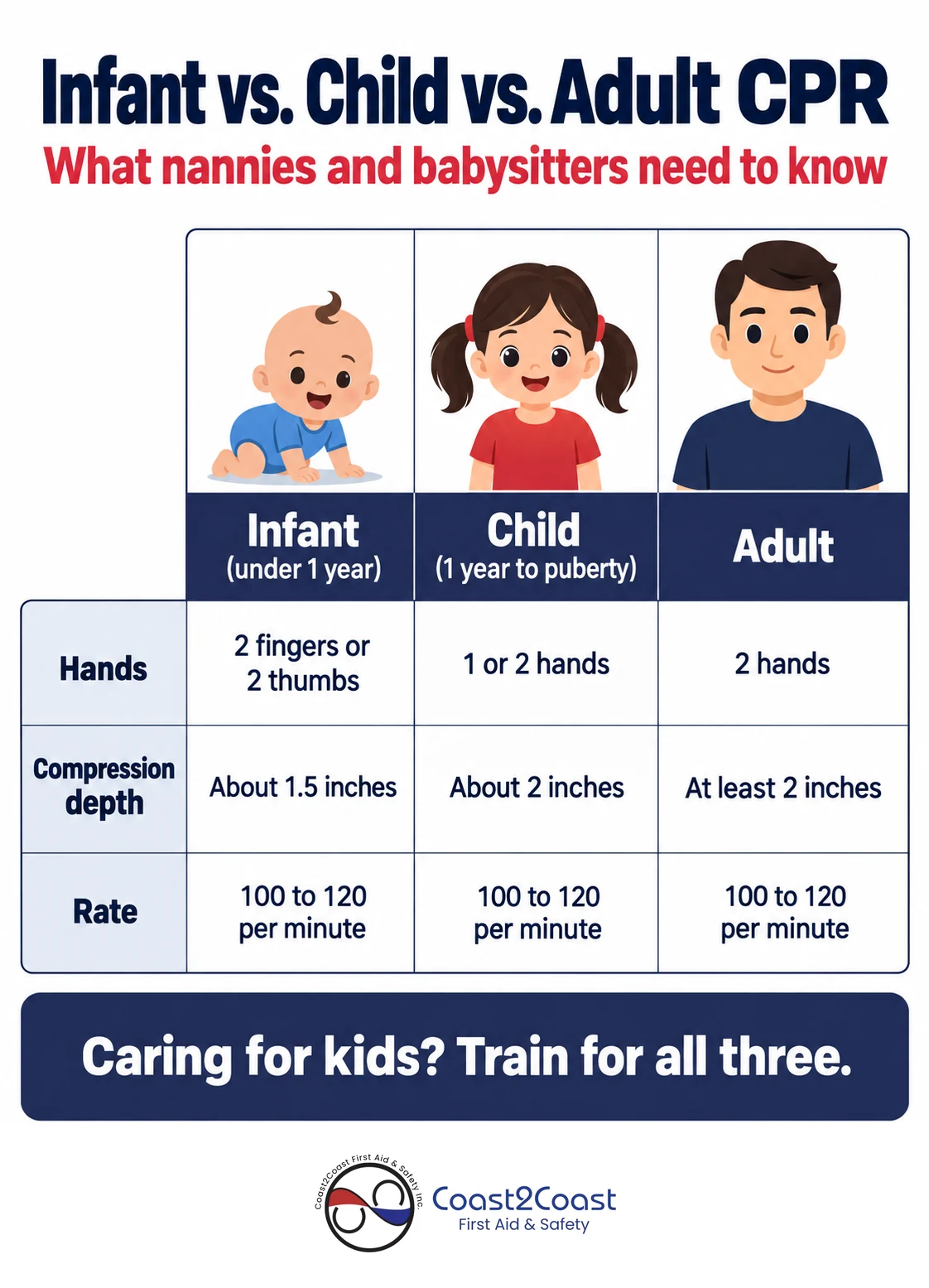
Infant CPR (0-12 months): uses two fingers for compressions on the lower sternum, with gentler pressure and specific compression-to-breath ratios. Covers sudden infant death syndrome awareness, choking, and rescue breathing for very small airways.
Child CPR (age 1 to puberty): typically uses one or two hands for compressions, with depth and force calibrated for a smaller chest. Child CPR techniques differ from adult methods in compression depth, ventilation volume, and rhythm.
Adult CPR: requires deeper compressions and is paired with AED use. Many pediatric courses also cover adult CPR and how to adapt AED pads and energy settings for children and infants.
Nannies and babysitters frequently supervise children of different ages and may also need to assist older siblings or adults in the home. Comprehensive CPR/AED training covering all age groups, infant, child, and adult, provides the most practical protection.
How CPR & First Aid Training Reduces Risk and Liability
Pediatric CPR and emergency first aid skills are not just boxes to check. They directly affect outcomes in emergency situations and shape how liability is managed for both families and caregivers.
Prompt pediatric CPR can double or triple survival chances in cardiac arrest, especially when performed before emergency medical services arrive on scene. Out-of-hospital cardiac arrest in children, while less common than in adults, occurs often enough nationally that early, trained intervention meaningfully changes outcomes.
Documented CPR training and first aid training demonstrates due diligence by both the family (as employer) and the caregiver. In the event of an incident review, insurance claim, or legal dispute, evidence of proper training supports both parties. Beyond the emotional stakes, these liability considerations matter practically: a documented, current certification card is often the first thing an insurer or attorney asks to see after an incident. Many households and nanny agencies list "current pediatric CPR and first aid certification" in contracts to set clear expectations and align liability between both parties.
Families should combine CPR training with safe home practices: childproofing, up-to-date emergency contact lists, written medical information, and clear plans for allergic reactions and other pediatric emergencies. This creates a comprehensive preventative health and safety practices framework, not just a single credential.
Choosing the Right Pediatric CPR & First Aid Course
With dozens of options available, from quick online card mills to rigorous in-person programs, babysitters and nannies should be selective about where they train.
For licensed or soon-to-be licensed childcare providers, search specifically for EMSA-approved "Pediatric CPR, AED, and First Aid" courses that list compliance with Title 22 and Health & Safety Code Section 1596.866.
For private, license-exempt nannies and babysitters, ask training providers whether the course includes hands-on practice, infant CPR, child CPR, choking, AED use, and common pediatric emergencies. A hands-on skills assessment is what separates meaningful training from a printable card.
Verify whether the training organization is recognized by major bodies such as the American Heart Association or American Red Cross, and, for licensed roles, clearly marked as EMSA-approved. Don't choose based on price alone. Same-day certification from a video-only website may seem convenient, but it won't prepare you for a real choking or cardiac emergency. The goal is building reliable, muscle-memory aid skills, not just collecting a card.
How Coast2Coast Supports California Babysitters, Nannies, and Their Employers
Coast2Coast First Aid & Aquatics is an authorized provider delivering EMSA-approved Pediatric CPR, AED, and First Aid training and AHA Heartsaver Pediatric certification directly across California.
Every course we deliver emphasizes pediatric-focused CPR and AED training, hands-on practice with manikins, and realistic childcare scenarios, exactly the content EMSA requires for California licensed childcare providers, and exactly what a discerning parent should look for when hiring a private nanny or babysitter.
Whether you're a licensed family child care operator working to satisfy Health & Safety Code requirements or a private nanny building credentials to stand out to families, Coast2Coast can help you find the right course level, with flexible scheduling built around busy schedules and multiple jobs, and blended learning that pairs online theory with in-person skills testing.
Practical Tips for Parents Hiring Babysitters and Nannies in California
Whether or not the law requires it, incorporating EMSA-level CPR expectations into your hiring process is a smart move.
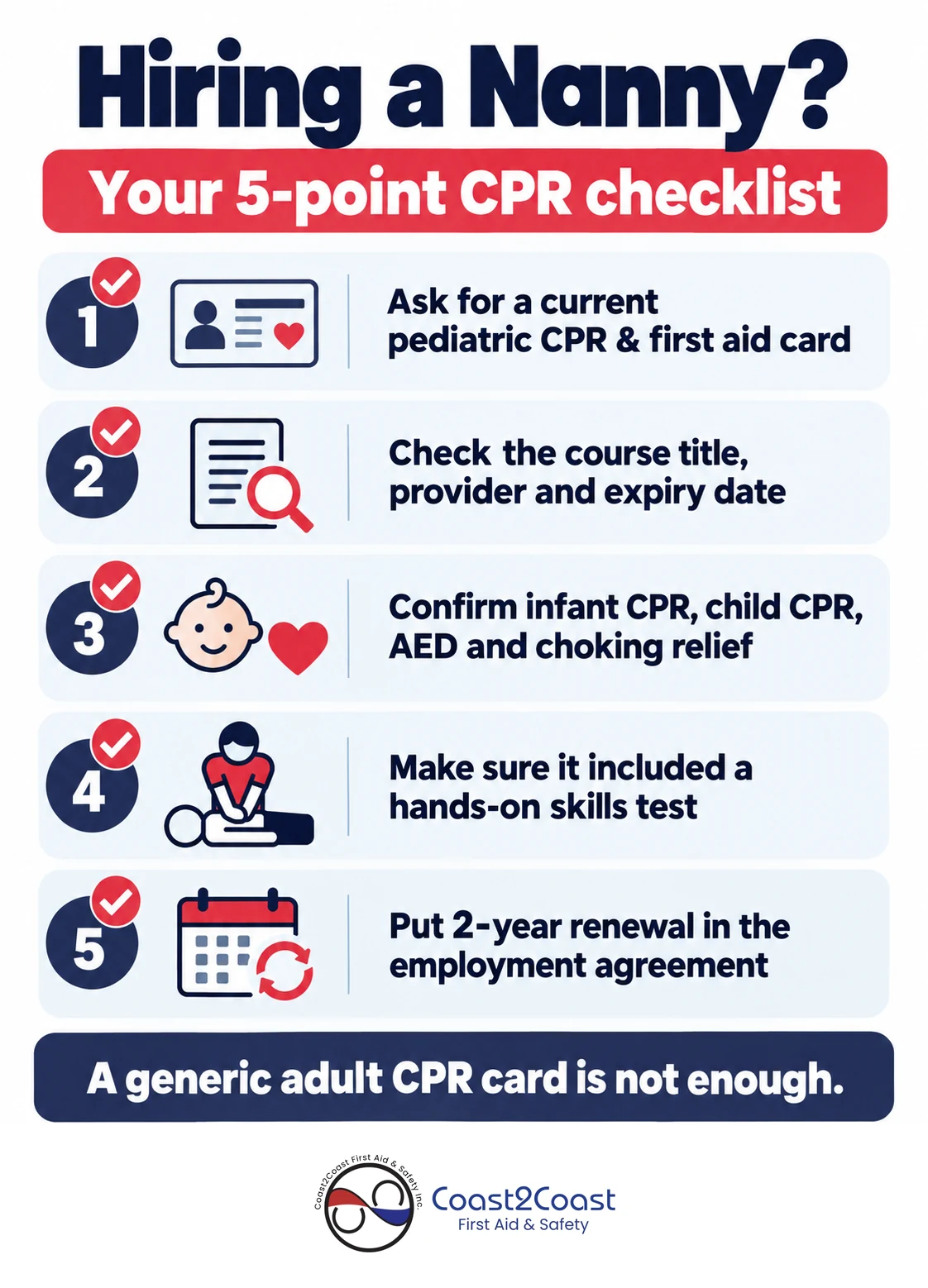
Ask for proof. Request current pediatric CPR and first aid certification cards from every candidate, and verify the course title, provider name, and expiration date on the card. If you're comparing multiple caregivers, ask each one to walk you through what their training covered. That conversation often reveals more than the card itself.
Specify pediatric standards. Even for license-exempt nannies, request courses that align with EMSA pediatric standards, covering infant CPR, child CPR, AED use, and emergency response to anaphylaxis and choking.
Include it in the contract. Add a clause requiring the nanny or babysitter to maintain current pediatric CPR and first aid certification, with renewal supported by the family if appropriate.
Share medical information. Provide your child's medical history, allergies, medication details, and emergency action plans to the caregiver.
Go beyond the card. Consider background checks and combine CPR credentialing with childproofing, emergency drills, and clear communication about safety expectations in your home.
See What Counts as Pediatric CPR
Not every CPR class meets the pediatric-specific standard.
Understand the Full 16-Hour Requirement
For licensed providers, CPR is only half of what's required.
Whether EMSA-approved pediatric CPR is legally required comes down to one question: are you working in a licensed facility, or a private home? Licensed roles have no flexibility: current, pediatric-specific, hands-on certification is mandatory. Private nannies are technically exempt, but families increasingly expect the same standard. Either way, a generic adult CPR card doesn't cut it. Insist on infant and child-specific training with a real skills check.
Get Started with California Certification
Find the right course level and book with a 99.9% pass rate.
Frequently Asked Questions
Q1: Do private nannies in California legally have to take an EMSA-approved CPR course?
A: Private nannies working only in a family's home are generally license-exempt under California Community Care Licensing rules. They are not directly required by law to hold EMSA-approved pediatric CPR or first aid certification. However, many families, nanny agencies, and some insurance policies require pediatric CPR and first aid as a condition of employment.
Q2: How can I tell if a CPR card will satisfy California childcare licensing inspectors?
A: For licensed childcare roles, the certificate or card should clearly state "Pediatric CPR and First Aid," identify an EMSA-approved training provider (such as the American Red Cross, American Heart Association, or an EMSA-listed program), and display the EMSA approval statement or sticker, or be a qualifying AHA Heartsaver Pediatric card. Before enrolling, check the EMSA website or contact Community Care Licensing to confirm.
Q3: Is blended learning accepted for EMSA child care CPR and first aid in California?
A: California licensing has historically required in-person skills practice and does not accept 100% online CPR courses for licensed childcare staff. Some EMSA-approved programs offer blended learning with online theory and in-person skills testing. Because policies can change, caregivers and employers should always confirm current rules with EMSA or CCLD for their specific license type before enrolling.
More FAQs: Renewal and AED Use
Q4: How often should babysitters and nannies renew their pediatric CPR certification?
A: Most pediatric CPR and first aid certifications used for childcare in California are valid for two years. After that, renewal is required to remain compliant, and there is no grace period once a certificate lapses. Even license-exempt caregivers should renew on the same two-year cycle to keep emergency skills sharp and maintain credibility with families and agencies.
Q5: Can a babysitter or nanny use an AED on a child or infant?
A: Modern AEDs are designed for use by lay rescuers on adults, children, and, in many cases, infants. Most devices include child or infant pads, or a pediatric setting that reduces shock energy. EMSA-compliant pediatric CPR and AED courses teach when and how to use an AED safely on children and infants. In an emergency, caregivers should follow their training and the device's voice prompts without hesitation.
Reviewed By: Ashkon Pourheidary, B.Sc. Hons Neuroscience, Co-Founder of Coast2Coast First Aid & Aquatics and Canadian Red Cross Instructor Trainer since 2011.
Source: California Health and Safety Code Section 1596.866