


Executive Summary: Recognizing cardiac arrest is critical for immediate response within the 120-second window. Signs include sudden collapse, loss of consciousness, no breathing or only gasping, and no pulse. With 356,000 out-of-hospital cardiac arrests annually in the US, bystander CPR and AED use significantly improve survival. Coast2Coast First Aid offers AHA and Red Cross-certified CPR/AED training across California.
Approximately 356,000 Americans experience out-of-hospital cardiac arrest annually, as estimated by the American Heart Association. All too often, some 90% are fatal due to a lack of timely enough help or because bystanders simply do not know how to save them. And on top of this, an estimated 800,000 Americans are treated in the emergency room every year for heart attack, making heart-related emergencies one of the leading killers throughout the country.
Despite these types of statistics, nonetheless, knowing how to tell if a person is suffering from sudden cardiac arrest (SCA) and acting quickly can make all the difference in life and death. Regardless of where you happen to be, at home, at work, or out and about, knowing what to do can quite simply save a life.
What is Sudden Cardiac Arrest?
Sudden cardiac arrest is a dangerous and life-threatening condition in which the heart suddenly stops beating because of an electrical breakdown. It is quite different from a heart attack, a blockage of the blood supply to the heart. In SCA, the heart’s rhythm becomes disordered (a situation such as ventricular fibrillation), and the heart is unable to pump blood.
In a matter of seconds, the individual loses consciousness, ceases to breathe, and has no detectable pulse. It requires immediate treatment.
Cardiac Arrest and Heart Attack: What is the Difference?
A heart attack is often mistaken for cardiac arrest, yet the distinction between them can translate to saving precious minutes:
- Heart Attack (Myocardial Infarction): It happens when an occluded artery prevents oxygenated blood from flowing to a portion of the heart. The patient remains awake, and the symptoms may be pain, discomfort, shortness of breath, or nausea.
- Cardiac Arrest: Occurs when the electrical system of the heart is not working and the heart will not beat. The victim will collapse, lose consciousness, have no pulse, and not be breathing.
While a heart attack can lead to cardiac arrest, they are not the same. Both have a different treatment, and for cardiac arrest, CPR and an Automated External Defibrillator (AED) can greatly enhance the survival rate if used promptly.

Signs and Symptoms of Cardiac Arrest
While it’s true that many people don’t feel anything leading up to a cardiac arrest, numerous survivors have reported experiencing some signs that can happen anywhere from a few hours to just minutes before the event.
- Dizziness/light-headed ness
- Acute shortness of breath
- Chest pressure/pain
- Unexplained weakness
- Heart race
- Palpitations Nausea/vomiting
- Arms jerk like a seizure.
The most visible symptoms of cardiac arrest are:
- Sudden collapse
- No pulse
- No respiration
- Unconsciousness

Risk Factors for Cardiac Arrest
Some lifestyle and medical conditions might increase the risk of sudden cardiac arrest.
- High Blood Pressure (Hypertension):
Hypertension is one of the leading causes of cardiac arrest and affects approximately 48% of American adults or 119 million people. Not controlling high blood pressure overworks the heart and can lead to heart failure or abnormal heart rhythms.
- High Cholesterol:
Almost 94 million American adults over 20 have higher total cholesterol than recommended. Hypercholesterolemia has been found to increase coronary heart disease which is a cousin of cardiac arrest.
- Smoking:
Smoking tightens the blood vessels and reduces oxygenation. 28 million US adults smoke and that increases their risk.
- Diabetes:
Around the 11.6% of Americans (representing 38 million people) have diabetes. High blood sugar stiffens the arteries and damages the nerves that control the heart and increases the risk of cardiac arrest.
- Obesity:
More than the 42% of American adults are obese. Obesity is most common with hypertension, diabetes and high cholesterol – two of the leading causes of heart disease and cardiac arrest.
- Sedentary Lifestyle:
CDC reports indicate that 25% of American adults are physically inactive. Inactivity is associated with obesity, diabetes and poor cardiovascular health.
- Previous Heart Conditions:
Patients with history of coronary artery disease, heart failure or cardiomyopathy (heart enlargement) are at higher risk. About 18 million American adults have coronary artery disease which is an estimate.
- Substance Abuse (Illicit Drugs):
Cocaine and amphetamine abuse are linked to fatal arrhythmias and sudden cardiac death. 4.8 million Americans used cocaine in 2021 and are at risk.
- Sleep Apnea:
Studies have found that nearly 25% of men and 10% of women in America have sleep apnea which increases their blood pressure and puts unnecessary strain on the heart.
- Chronic Kidney Disease (CKD):
37 million Americans have CKD and it is most common after heart disease and high blood pressure – two of the leading risk factors for cardiac arrest.
- Gender and Age:
Cardiac arrest is more common in men. And risk after 50 years old is much higher.
- Drug Overdose:
The current opioid epidemic in America has seen a huge increase in cardiac arrests due to overdose. In 2022 alone over 80,000 people died from opioid overdose and most of them ended up in cardiac arrest scenarios.

Register for CPR or First Aid Training
Register Now
The following video explains symptoms and the difference between cardiac arrest and a heart attack.
How to Assist a Cardiac Arrest Victim
Time is of the essence when a person falls into cardiac arrest. Survival decreases by 7-10% with each minute of time lost without CPR and defibrillation.
This is what you need to do:
Step 1: Dial 911
Call emergency services immediately. If you are with someone, have them call while you begin to assist the victim.
Step 2: Use an AED
If one is available, get an Automated External Defibrillator (AED). AEDs are present at most public places—airports, gyms, malls, schools. The machine will guide you through the use with basic instructions. If instructed to do so, administer a shock and then perform CPR.
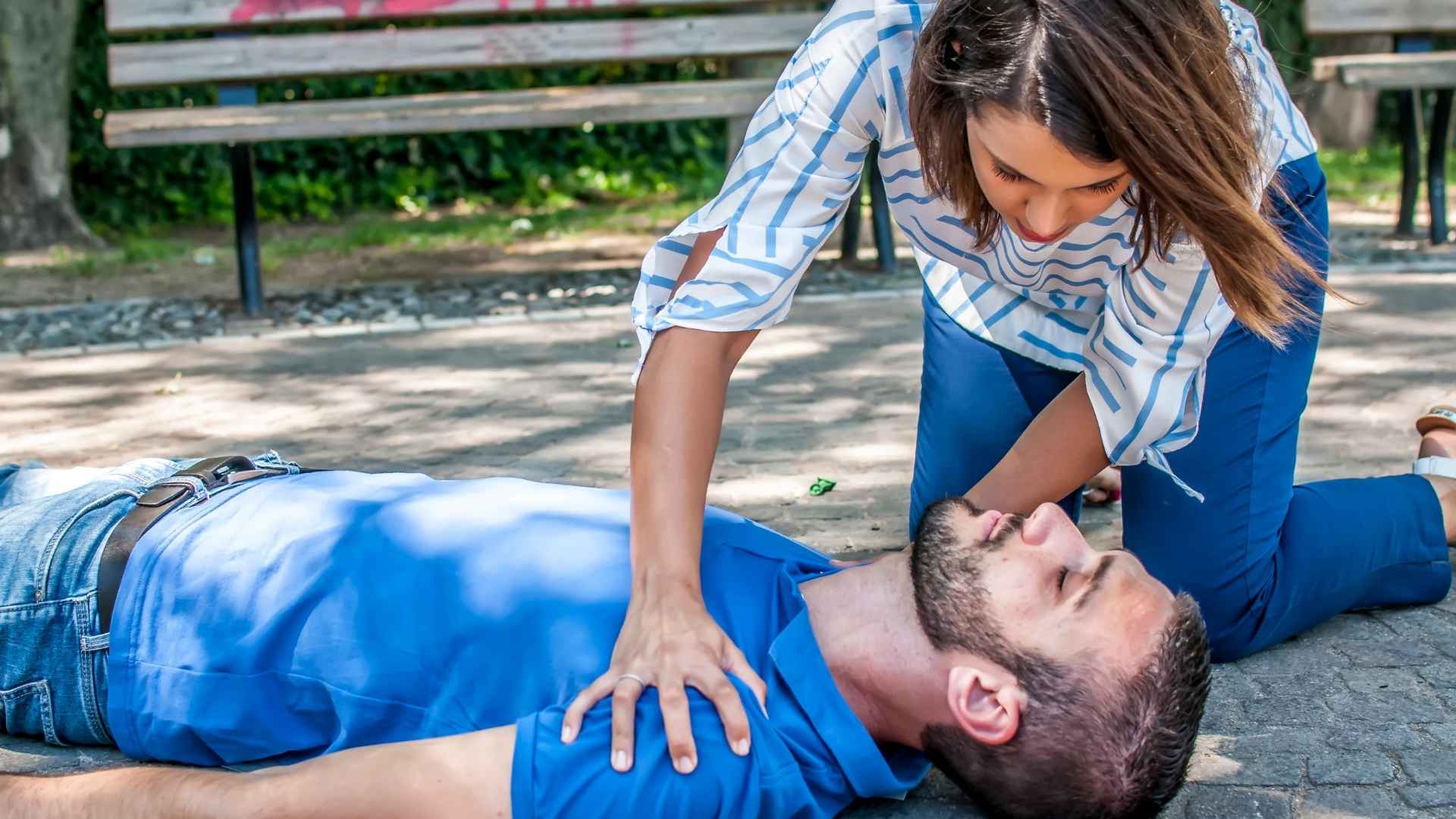
Step 3: Start CPR
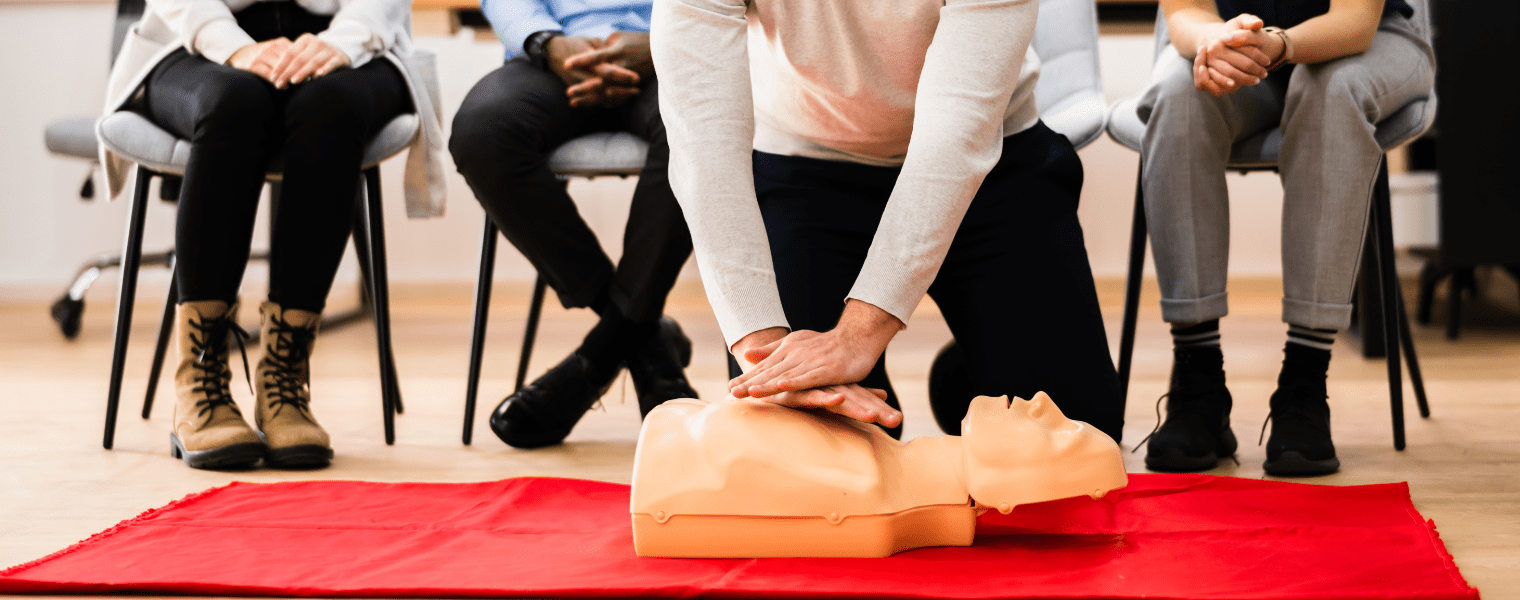
If no AED is available, begin CPR right away. Do hands-only CPR by compressing at a speed and force in the center of the chest at 100 to 120 compressions per minute (use the beat of the song “Stayin’ Alive” by the Bee Gees as a guide). Compress at least 2 inches deep with full recoil between each compression.
Maintain CPR until EMS have reached the location or until the patient is seen to improve.
Complications of Cardiac Arrest
If a cardiact arrest victim is untreated, may result in
- Brain damage: Brain becomes oxygen starved and sustains permanent damage within minutes.
- Death: Unless the heartbeat is corrected instantly, survival is extremely improbable.
Prompt defibrillation and CPR dramatically enhance the outcome, with the potential to restore abnormal heart rhythms and maintain brain and cardiac function.
Prevention: Decreasing Your Risk
Most risk factors related to lifestyle can decrease your risk, like:
- Americal Heart Association states that 30 minutes of activity 5 days a week is optimal to decrease your risk!
- A heart-healthy diet
- Coping with and managing stress
- Discontinuing smoking and limiting alcohol
- Regular healthcare follow-ups and regular screening for heart disease are essential.

Get Ready: CPR Training in Los Angeles
Coast2Coast First Aid & Safety Training offers comprehensive First Aid & CPR training in Los Angeles, empowering you with the lifesaving skills to address cardiac emergencies confidently. Hands-on training by certified instructors is given, including how to properly use an AED and how to provide CPR.
Don’t wait—empower yourself with the ability to save lives.
Watch: Recognizing Cardiac Arrest and Performing CPR
Get CPR and AED Certified Across California
Recognizing cardiac arrest and knowing how to respond with immediate CPR and AED use are skills that save thousands of lives each year. Coast2Coast First Aid provides American Heart Association-certified training with hands-on practice using CPR manikins and AED trainers. Our courses are available at locations throughout California, including Los Angeles, San Francisco, San Diego, Sacramento, and Anaheim.
We offer CPR and AED courses, Basic Life Support for healthcare professionals, workplace workshops, and private group training. Check our FAQ page for course details, or browse our blog for more life-saving tips and resources.
California law provides Good Samaritan protections for individuals who provide emergency assistance in good faith, so you can act confidently knowing you are legally protected. Sudden cardiac arrest affects more than 350,000 Americans each year, and the vast majority of cases occur outside of a hospital setting. By becoming CPR certified through Coast2Coast First Aid, you join a community of prepared individuals ready to make a difference in those critical first minutes. Explore locations near you including Glendale, Pasadena, and Orange, or visit our contact page to learn more.
Register for CPR or First Aid Training
Register today for a CPR or First Aid training course at one of our 30+ locations across Canada and the U.S. Check out our facilities and book your spot now.
Frequently Asked Questions: How to Identify Cardiac Arrest
Question 1: What are the main signs of cardiac arrest?
Answer: The main signs of cardiac arrest are sudden loss of consciousness, no normal breathing (or only gasping/agonal breathing), no pulse, and unresponsiveness to stimulation. These symptoms appear suddenly without warning in most cases.
Question 2: How is cardiac arrest different from a heart attack?
Answer: A heart attack is a circulation problem where a blocked artery prevents blood from reaching the heart muscle. Cardiac arrest is an electrical problem causing the heart to stop beating entirely. A heart attack can trigger cardiac arrest, but they are distinct conditions.
Question 3: Can someone be awake during cardiac arrest?
Answer: No. Cardiac arrest causes immediate loss of consciousness because the brain stops receiving oxygenated blood. If someone is awake and responsive, they are not in cardiac arrest, even if they are experiencing chest pain or other symptoms.
Question 4: What should I do if I suspect someone is in cardiac arrest?
Answer: (1) Check for responsiveness, (2) Call 911 immediately or have someone else call while you begin CPR, (3) Start chest compressions at 100-120 per minute, (4) Use an AED as soon as available, (5) Continue until emergency services arrive.
Question 5: Is gasping breathing normal during cardiac arrest?
Answer: Agonal breathing (gasping or irregular breathing) can occur in the first few minutes of cardiac arrest. Do NOT wait for it to stop before beginning CPR. Treat agonal breathing as no breathing and start CPR immediately.
Question 6: How long does someone survive without CPR after cardiac arrest?
Answer: Brain death begins within 4-6 minutes without CPR after cardiac arrest. Every minute without CPR reduces survival chances by 7-10%. Starting CPR within 2 minutes dramatically increases survival rates, especially with AED use.
Question 7: Can cardiac arrest happen without warning?
Answer: Yes, sudden cardiac arrest often occurs without prior symptoms. However, some people experience warning signs in the hour before including chest pain, shortness of breath, palpitations, or fainting. Many victims have no prior heart disease diagnosis.
Question 8: How do I check for a pulse during cardiac arrest?
Answer: Check for a carotid pulse by placing two fingers on the neck beside the windpipe. However, laypersons should not rely on pulse checks alone. If the person is unresponsive and not breathing normally, start CPR immediately without waiting to confirm pulse absence.
Question 9: Can children experience cardiac arrest?
Answer: Yes. Pediatric cardiac arrest is often caused by respiratory failure, drowning, trauma, or congenital heart defects. CPR technique differs slightly for children and infants. Pediatric first aid training covers these specific protocols.
Question 10: What is the survival rate for out-of-hospital cardiac arrest?
Answer: The average survival rate for out-of-hospital cardiac arrest in the US is 10-12%. However, with immediate bystander CPR and defibrillation within 3-5 minutes, survival rates can reach 50-70%, demonstrating the critical importance of bystander training.
Question 11: What role does an AED play in cardiac arrest survival?
Answer: An AED (Automated External Defibrillator) delivers an electric shock to restore normal heart rhythm in cases of ventricular fibrillation or ventricular tachycardia. Using an AED within 3-5 minutes of collapse can increase survival rates by over 50%.
Question 12: Does cardiac arrest always happen during physical exertion?
Answer: No. While exercise can trigger cardiac arrest in those with underlying heart conditions, the majority of cardiac arrests occur at rest or during minimal activity. Over 80% occur at home, making bystander training essential for family members.
Question 13: Is cardiac arrest the same as a flatline?
Answer: Not always. A “flatline” on an EKG (asystole) is one type of cardiac arrest, but ventricular fibrillation (chaotic electrical activity) is actually more common. VF causes the heart to quiver instead of pump, and is the most common initial rhythm in cardiac arrest.
Question 14: How can I get CPR certified in California?
Answer: Coast2Coast First Aid offers American Heart Association and Red Cross certified CPR courses across California including Los Angeles, Long Beach, San Diego, Irvine, Riverside, Glendale, Pasadena, and Orange. Courses cover adult, child, and infant CPR plus AED use.
Question 15: Should bystanders worry about legal liability when performing CPR?
Answer: California’s Good Samaritan Law protects individuals who provide emergency care in good faith. You are legally protected when performing CPR or using an AED on someone you believe is experiencing cardiac arrest. Fear of legal liability should never prevent bystander CPR.
About the Author
Greg — Content Contributor, Coast2Coast First Aid & Aquatics
Greg is a certified first aid and CPR instructor with Coast2Coast First Aid & Aquatics, bringing practical emergency response knowledge to help everyday people recognize and respond to life-threatening situations like cardiac arrest.