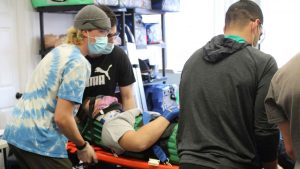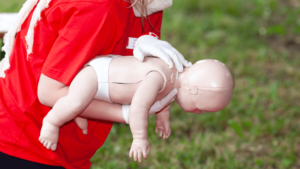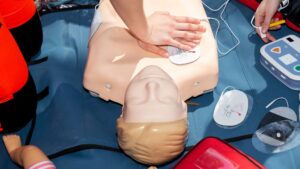

Roughly 75 percent of children’s head injuries are mild and not life-threatening. Call 911 immediately if a child loses consciousness, has post-traumatic seizures, vomits repeatedly, has unequal pupils, or shows an altered level of consciousness. Treatment for mild head injuries primarily involves physical and mental rest. In Ontario, Rowan’s Law requires immediate removal from play if concussion is suspected, with medical clearance required before return to activity.
✓ Canadian Red Cross Approved
Find a First Aid Course Near You
Child Care First Aid and Intermediate / Standard First Aid courses covering head injuries, concussion response, seizures, and pediatric emergencies. 30+ locations across Canada.
Types of Head Injury in Children: Mild to Severe
Head injuries are among the most common and frightening emergencies that parents, teachers, and caregivers face. Roughly 75 percent of pediatric head injuries are mild and not life-threatening, but knowing how to distinguish a minor bump from a serious brain injury is a skill every caregiver must have. The incidence of acute head trauma in pediatric patients varies, with estimates ranging from 47 to 280 cases per 100,000 population annually.
Children are at higher risk for head trauma because their heads are proportionally larger and heavier relative to their bodies, their neck muscles are less developed, and their skulls are thinner than those of adults. Boys are twice as likely to experience head injuries compared to girls, particularly in the context of sports and physical activities. The most common causes of head injury in children include sports injuries, falls, motor vehicle accidents, and child abuse. Falls are particularly common in younger children due to their underdeveloped ambulatory skills and larger head-to-body size ratio.
Pediatric head injuries can range from superficial surface wounds to internal brain trauma. Head injuries in children are classified into three main types: mild, moderate, and severe, with most children experiencing mild injuries resulting in minor symptoms such as bumps or bruises.
Mild Head Injuries and Minor Bumps
Scalp injuries are the most common type of head injury in children. The scalp has an extensive blood supply, which means even small cuts can bleed profusely and appear more serious than they actually are. A bump or goose egg on the forehead after a fall is typically a sign of a minor head injury, with bleeding under the skin but outside the skull. While it looks alarming due to its size, it is usually less concerning than internal symptoms. Minor blunt head trauma of this type typically requires observation rather than emergency imaging.
Infants and toddlers under 4 are mostly affected by falls from beds, sofas, and changing tables. School-aged children between 5 and 9 are primarily injured by playground falls and bicycle accidents. Adolescents aged 10 and older experience head injuries mainly from high-velocity collisions and contact sports. Shaken baby syndrome is a severe form of traumatic brain injury in infants caused by violent shaking, which damages blood vessels, nerve fibers, and brain tissue.
Brain Injury and Concussion
A concussion is a type of mild traumatic brain injury that alters brain function and can result in temporary symptoms such as headaches, dizziness, and confusion. A concussion occurs when an impact causes the brain to move within the skull, resulting in temporary disruption of normal brain function. Symptoms of a concussion may not be immediately apparent and can develop over 24 to 72 hours following the initial injury.
To provide effective first aid, caregivers must understand that a child’s brain does not just stay stationary during an impact. When a child’s head hits an object, the brain slides forward and strikes the front of the skull in what is called the Coupe injury, then bounces back to strike the rear of the skull in the Contrecoup injury. This double-impact is why symptoms may appear on the opposite side of the initial strike. Because a child’s skull is thinner and more flexible than an adult’s, the brain is less protected from these internal shearing forces and blood vessels may be damaged in the process.
Contusions are bruises on the brain that can cause bleeding and swelling, often resulting from a direct blow to the head or violent shaking. Axonal injury disrupts communication between brain regions and is a common cause of prolonged unconsciousness and cognitive impairment following pediatric traumatic brain injury. Diffuse axonal injury occurs when the brain’s nerve fibers are stretched or torn during rapid acceleration and deceleration.
Severe Head Injuries and Skull Fractures
Skull fractures and intracranial bleeding represent the most serious categories of pediatric head injury. Skull fractures can be categorized into four types: linear, depressed, diastatic skull fracture, and basilar skull fracture, each with varying implications for treatment and recovery. A basilar skull fracture involves the base of the skull and may present with bruising behind the ears or around the eyes, and clear fluid draining from the nose or ears.
Serious secondary injuries include epidural hematoma, a blood clot between the skull and the brain’s outer lining, and subdural hematoma, bleeding between the brain and its protective covering. Both cause rapidly rising intracranial pressure that is life-threatening if not treated with acute medical management. Internal bleeding or swelling from a head injury can develop hours after the initial injury, making evaluation essential even when a child initially appears fine. In cases of moderate to severe head injury, children may require hospitalization for close monitoring and treatment, including potential neurosurgical intervention if intracranial injury is suspected. The most severe cases require care in the operating room to relieve intracranial pressure.
Head Trauma: Immediate First Aid Steps
When a child suffers a head injury, your response in the first few minutes is critical. Stay calm, as your composure directly affects the child’s emotional state and your ability to assess the situation accurately.
First, check for responsiveness. If the child is conscious and alert, gently examine the head for visible wounds, swelling, or deformities while keeping the child still. Apply a cold compress wrapped in a cloth to any swollen areas for 15 to 20 minutes to reduce swelling and pain. Do not apply ice directly to the skin.
If the child is bleeding from a scalp wound, apply firm direct pressure with a clean cloth or gauze pad. Scalp wounds can bleed significantly due to the rich blood supply in the area, but most can be controlled with steady pressure. If blood soaks through the first layer of gauze, add more on top without removing the original layer.
If the child is unconscious but breathing, place them in the recovery position on their side to protect the airway. Do not move a child who may have a neck or spinal injury unless they are in immediate danger. Call 911 immediately if the child has an altered level of consciousness, vomiting combined with loss of consciousness, seizures, shows signs of confusion, or if the injury mechanism was severe such as a fall from a significant height.
Post-Traumatic Seizures: When to Call 911
Post-traumatic seizures are one of the most alarming signs following a head injury and require an immediate 911 call. Early post-traumatic seizures occur within the first seven days of injury and indicate significant brain involvement. If a child seizes, do not restrain them. Clear the area of hard or sharp objects, place something soft under their head, turn them on their side to protect the airway, and time the seizure. Call 911 immediately if the seizure lasts more than 5 minutes, if the child does not regain consciousness, or if a second seizure follows.
Additional red flag symptoms requiring immediate 911 response include repeated vomiting, loss of consciousness however brief, clear fluid from the ears or nose indicating a basilar skull fracture, unequal pupil sizes, severe and worsening headache, sudden weakness or confusion, slurred speech, and trouble walking. These symptoms may indicate raised intracranial pressure requiring emergency neurosurgical intervention.
Recognizing Concussion Symptoms in Children
Concussion symptoms can appear immediately or evolve over 24 to 72 hours. Children may not always be able to articulate their symptoms clearly, making careful observation by caregivers especially important.
Physical symptoms include headache, dizziness problems, balance and nausea problems, blurred or double vision, sensitivity to light and sound, fatigue, and sluggishness. Children with concussions may experience excessive fatigue because their brain has to work harder on tasks that were usually easily done, such as schoolwork or conversations.
Cognitive symptoms include difficulty concentrating, feeling mentally foggy, slowed thinking, difficulty remembering new information, and confusion about recent events. Behavioral changes are often the most noticeable signs in younger children. Watch for light irritability, unusual crying, changes in sleep patterns, loss of interest in favorite activities, and regression in developmental milestones. Older children and teenagers may report feeling not right or describe a pressure sensation in their head.
If you suspect a concussion, remove the child from any physical activity immediately and seek medical assessment. Over 90 percent of concussions do not involve a total loss of consciousness. Caregivers should look for cognitive and physical symptoms rather than waiting for a child to lose consciousness.
Mild Traumatic Brain Injury vs Severe Head Injury: How to Tell the Difference
A mild TBI, commonly called a concussion, involves temporary disruption of brain function without structural damage visible on imaging. Treatment for mild head injuries such as concussions primarily involves physical and mental rest to allow the brain to heal, with a gradual increase in activity levels once symptoms resolve. Most children with mild head injuries recover fully within days to weeks.
A severe TBI involves structural damage, rising intracranial pressure, or bleeding within or around the brain. Key distinguishing features include prolonged loss of consciousness, post-traumatic seizures, repeated vomiting, neurological changes such as sudden weakness or an altered level of consciousness, unequal pupils, and a Glasgow Coma Scale score below 13. Patients presenting with these features require immediate emergency department evaluation. In cases of moderate to severe head injury, children may require hospitalization for close monitoring and treatment, including potential neurosurgical intervention if intracranial injury is suspected. Intracranial pressure monitoring and cerebral perfusion pressure management may be required to protect the injured brain from secondary injury.
Pediatric Emergency Research Canada and the Head Injury Study Group have developed clinical decision rules to guide emergency department assessment. A prospective cohort study by these groups produced the widely used PECARN rule to identify which children presenting with head trauma are at very low risk of clinically important brain injuries.
For Parents and Caregivers
Learn This Skill in a Real Classroom
Child Care First Aid covers pediatric head injuries, concussion assessment, seizure response, choking, and more. Specifically designed for parents, teachers, and childcare workers.
CT Scan and Medical Assessment: When Is Imaging Needed?
A CT scan, or computed tomography, produces detailed images of the brain and skull and is the standard tool for identifying intracranial injuries in patients presenting with serious head trauma. However, CT imaging involves radiation exposure and is not recommended for all head injuries. Clinical decision rules help clinicians determine which children are at very low risk of clinically important brain injuries and may not require CT head imaging.
CT scans are generally indicated when the child has lost consciousness, has early post-traumatic seizures, has a severe mechanism of injury, shows signs of a basilar skull fracture, or has a severe worsening headache. For low-risk patients, observation and physical exam without CT imaging may be appropriate. Magnetic resonance imaging provides more detailed images of soft tissue injury and axonal injury and is used in specific cases where CT findings are inconclusive or where diffuse axonal injury is suspected.
A thorough physical exam including neurological assessment and Glasgow Coma Scale scoring is the foundation of initial evaluation. Always provide a detailed medical history to the treating clinician including the mechanism of injury, whether there was loss of consciousness or altered level of consciousness, and the following symptoms observed since the initial injury.
Rowan’s Law and Concussion Safety in Ontario
In Ontario, concussion safety is a legal requirement under Rowan’s Law. Named in memory of Rowan Stringer, a high school rugby player who tragically passed away after suffering multiple concussions, this law requires all sports organizations and schools to have a mandatory concussion code of conduct.
For parents and coaches, Rowan’s Law means when in doubt, sit them out. If a child is suspected of having a concussion during any physical activity, they must be removed from play immediately. They cannot return to practice or games until they have been medically cleared by a physician or nurse practitioner. Doing too much before the brain has fully healed can slow recovery and may lead to lasting problems. Children and adolescents should avoid returning to sports for at least 21 days and only after all symptoms have resolved.
The Recovery Roadmap: Return to Play and Learn
Recovery from a pediatric head injury is a gradual process. Most children with concussions improve over several days, though children and adolescents can take up to four weeks to recover fully. Treatment for mild head injuries primarily involves physical and mental rest for the first 24 to 48 hours, returning to daily activities with a gradual increase in activity levels once symptoms resolve, while minimizing intense exercise and screen time.
The six-step graduated return-to-activity protocol recommended by Parachute Canada requires each step to take at least 24 hours. If symptoms return at any stage, the child must drop back to the previous level.
- Symptom-Limited Activity: Basic daily activities such as walking and light reading that do not provoke symptoms.
- Return to School (Light): Shortened days or frequent breaks to manage cognitive load.
- Light Aerobic Exercise: Walking or stationary cycling with no resistance training.
- Sport-Specific Exercise: Running or skating drills with no head impact.
- Non-Contact Practice: Progressive drills and resistance training.
- Full Contact/Game Play: Only after final medical clearance from a physician or nurse practitioner.
For return to learn, children can usually begin a graduated protocol after 24 to 48 hours of total rest. They should be able to tolerate 15 to 30 minutes of mental activity without screens before attempting a partial school day with frequent breaks.
Possible Complications and Long-Term Effects
Most mild head injuries in children resolve without lasting effects. However, some children experience possible complications and long-term complications that require ongoing medical attention.
Second impact syndrome occurs when a child sustains a second concussion before fully recovering from the first, potentially causing rapid, life-threatening brain swelling. This is why Rowan’s Law and graduated return-to-play protocols are mandatory. Post-concussion syndrome involves symptoms persisting beyond the typical recovery period, sometimes for weeks or months, including persistent headache, cognitive difficulties, emotional changes, and changes in sleep patterns.
Growing skull fractures are a rare complication unique to younger children in which a skull fracture widens over time rather than healing, requiring surgical repair. Long-term complications following severe traumatic brain injury can include cognitive impairment, behavioral changes, epilepsy, and in rare cases, permanent neurological disability. Disease control and prevention research consistently shows that proper acute medical management and adherence to graduated recovery protocols significantly reduce the risk of long-term complications.
Prevention Strategies for Head Injuries in Children
While accidents cannot be entirely prevented, many childhood head injuries can be avoided through appropriate safety measures. Proper helmet use for activities like biking and skateboarding is crucial for preventing head injuries in children and adolescents. Helmets should sit level on the head, cover the forehead, and have straps that fit snugly under the chin.
Fall prevention strategies at home include removing tripping hazards and ensuring playgrounds have soft impact-absorbing surfaces beneath equipment. Install safety gates at the top and bottom of staircases for younger children. Anchor heavy furniture and televisions to walls to prevent tip-overs. Use window guards on upper-floor windows.
Car safety involves the correct installation and use of age-appropriate car seats and booster seats. Motor vehicle accidents remain a leading cause of traumatic brain injury in children and adolescents, and proper restraint use dramatically reduces injury risk. Awareness of child abuse as a cause of head injury, including shaken baby syndrome, is important for caregivers and healthcare providers. If non-accidental head trauma is suspected, contact emergency services immediately.
Why First Aid Training Matters for Caregivers
Every person who cares for children should have current first aid training. A Child Care First Aid course equips caregivers with the specific skills needed to manage pediatric emergencies including head injuries, choking, allergic reactions, febrile seizures, and childhood illnesses. Having formal training transforms your ability to respond in a crisis, providing practiced skills and a structured medical assessment framework that guides your actions.
Intermediate / Standard First Aid training emphasizes monitoring for delayed symptoms that may take hours to manifest as the brain swells or secondary injury develops after the initial injury. Both Intermediate / Standard First Aid and Child Care First Aid courses offered by Coast2Coast are WSIB-approved and meet Ontario Ministry of Health requirements for workplace and daycare safety compliance.
Key Takeaway
Roughly 75 percent of children’s head injuries are mild and not life-threatening. Call 911 immediately for post-traumatic seizures, loss of consciousness, repeated vomiting, unequal pupils, or altered level of consciousness. Treatment for mild head injuries primarily involves physical and mental rest. In Ontario, Rowan’s Law mandates immediate removal from play if concussion is suspected. Children and adolescents can take up to four weeks to recover, and must not return to sports for at least 21 days without medical clearance.
Canada’s Top-Rated Training Partner
Join 150,000+ Canadians Who Are Certified
Coast2Coast is Canada’s largest Canadian Red Cross Training Partner.
4.9 stars across 20,491 Google reviews. Register online in 2 minutes.
Frequently Asked Questions: Children’s Head Injuries 2026
Q1: What should I do immediately after a child hits their head?
A: Stay calm and check for responsiveness. If the child is conscious, gently examine the head for wounds, swelling, or deformities while keeping them still. Apply a cold compress wrapped in a cloth for 15 to 20 minutes. For scalp wounds, apply firm direct pressure. Call 911 immediately if the child has an altered level of consciousness, vomiting, loss of consciousness, post-traumatic seizures, unequal pupils, or if the fall was from a significant height.
Q2: What are the red flag symptoms of a serious head injury in children?
A: Red flag symptoms requiring an immediate 911 call include loss of consciousness, post-traumatic seizures, repeated vomiting, clear fluid from the ears or nose, unequal pupil sizes, severe and worsening headache, sudden weakness or confusion, slurred speech, and trouble walking. These symptoms may indicate raised intracranial pressure or intracranial bleeding requiring emergency department evaluation and potential acute medical management.
Q3: Can a child have a concussion without losing consciousness?
A: Yes. Over 90 percent of concussions do not involve a total loss of consciousness. Caregivers should look for symptoms such as confusion, dizziness problems, balance and nausea problems, headache, light irritability, and sensitivity to light rather than waiting for a child to lose consciousness. Behavioral changes including unusual crying and changes in sleep patterns are also common concussion signs in younger children.
Q4: Should I let my child sleep after a head injury?
A: Yes. It is generally safe to let a child sleep after a minor head injury, but wake them every 2 to 3 hours during the first night to ensure they are rousable and recognize you. If they are difficult to wake, show an altered level of consciousness, or display worsening symptoms, seek emergency care immediately. The first 24 to 48 hours following the initial injury are the most critical monitoring period.
Q5: What is Rowan’s Law and what does it mean for Ontario parents?
A: Rowan’s Law is an Ontario regulation requiring schools and sports organizations to have a mandatory concussion code of conduct. It mandates the immediate removal of any young athlete from play if a concussion is suspected and requires medical clearance from a physician or nurse practitioner before return to activity. Children and adolescents should avoid returning to sports for at least 21 days and only after all symptoms have resolved.
Q6: When does a child need a CT scan after a head injury?
A: CT head imaging is generally indicated when the child has lost consciousness, has early post-traumatic seizures, has a severe mechanism of injury, shows signs of a basilar skull fracture, or has a severe worsening headache. Clinical decision rules developed by Pediatric Emergency Research Canada help identify which patients presenting with minor head trauma are at very low risk of clinically important brain injuries and may not require CT imaging. Always seek medical assessment when in doubt.
Q7: What is the difference between a mild and severe head injury in children?
A: A mild TBI involves temporary disruption of brain function. Treatment primarily involves physical and mental rest, with a gradual increase in activity levels once symptoms resolve. A severe TBI involves structural brain damage, raised intracranial pressure, or intracranial bleeding. Signs include prolonged loss of consciousness, post-traumatic seizures, a Glasgow Coma Scale score below 13, and neurological changes. Severe cases may require hospitalization, intracranial pressure monitoring, or neurosurgical intervention.
More FAQs: Recovery, Prevention, and Training
Q8: How long does it take a child to recover from a concussion?
A: Most children with concussions improve over several days, but children and adolescents can take up to four weeks to recover fully. Recovery follows a six-step graduated return-to-activity protocol where each step requires at least 24 hours. Children should avoid returning to sports for at least 21 days. Doing too much before the brain has fully healed can slow recovery and may lead to possible long-term complications.
Q9: What is second impact syndrome?
A: Second impact syndrome occurs when a child sustains a second concussion before fully recovering from the first, potentially causing rapid, life-threatening brain swelling. It is one of the most dangerous possible complications of pediatric concussion and the primary reason Rowan’s Law mandates medical clearance before return to play. Even a minor second impact before full recovery from the initial injury can trigger catastrophic secondary injury.
Q10: What types of skull fractures can children sustain?
A: Skull fractures are categorized into four types: linear (a crack in the skull), depressed (a piece of the skull pushed inward), diastatic skull fracture (a fracture that widens a suture line), and basilar skull fracture (at the base of the skull). Growing skull fractures are a rare complication unique to younger children where a skull fracture widens over time rather than healing, requiring surgical repair.
Q11: At what age are children most at risk for head injuries?
A: Risk varies by age group. Infants and toddlers under 4 are mostly affected by falls. School-aged children between 5 and 9 are primarily injured by playground falls and bicycle accidents. Adolescents aged 10 and older experience head injuries mainly from high-velocity collisions and contact sports. Boys are twice as likely as girls to experience head injuries. The incidence of acute head trauma ranges from 47 to 280 cases per 100,000 population annually.
Q12: Does a helmet prevent concussions?
A: No. Helmets are designed to prevent skull fractures and major external trauma but cannot fully prevent concussions. A concussion is caused by the brain moving inside the skull in a Coupe-Contrecoup pattern. Even with a helmet, a sudden impact can cause axonal injury and brain damage by forcing the brain against the inner skull wall. Helmets remain essential and should always be worn during high-risk activities such as biking and skateboarding.
Q13: What are the possible long-term complications of a child’s head injury?
A: Most mild head injuries resolve without lasting effects. Possible long-term complications following severe traumatic brain injury include cognitive impairment, behavioral changes, epilepsy, post-concussion syndrome, and in rare cases, permanent neurological disability. Growing skull fractures can develop in younger children. Proper acute medical management and adherence to graduated recovery protocols following the initial injury significantly reduce the risk of long-term complications.
Q14: How do I prevent head injuries in children at home?
A: Fall prevention strategies include removing tripping hazards and ensuring playgrounds have soft impact-absorbing surfaces beneath equipment. Install safety gates at the top and bottom of staircases, anchor heavy furniture and televisions to walls, and use window guards on upper-floor windows. Always use age-appropriate car seats and booster seats. Ensure children wear properly fitted helmets during cycling, skateboarding, and other high-risk activities.
Q15: Where can I learn first aid for children’s head injuries in Canada?
A: Coast2Coast First Aid and Aquatics offers Canadian Red Cross certified Child Care First Aid and Intermediate / Standard First Aid courses across more than 30 locations in Ontario, Nova Scotia, Alberta, and California. Both courses cover pediatric emergencies including head injuries, concussion assessment, post-traumatic seizure response, and emergency scene management. Private group training is available for schools, daycares, and sports organizations.
The information in this article is for educational and informational purposes only and does not constitute medical advice. In any head injury emergency, always call 911 immediately. First aid techniques described should be learned and practised under the supervision of a qualified instructor. Always seek professional medical assessment following a head injury. Coast2Coast First Aid Inc. assumes no liability for any outcomes resulting from the application or misapplication of information in this article.
Content reviewed by the Coast2Coast First Aid and Aquatics certified instructor team. Pediatric head injury information sourced from Pediatric Emergency Research Canada, Parachute Canada concussion guidelines, Rowan’s Law (Ontario), the Head Injury Study Group clinical decision rules, and the Canadian Red Cross First Aid Guidelines. Coast2Coast First Aid Inc. is Canada’s largest Canadian Red Cross Training Partner. Last reviewed: May 2026. Contact info@c2cfirstaidaquatics.com or 1-866-291-9121.