
What CPR Covers (and who it’s for)
CPR (cardiopulmonary resuscitation) is the emergency lifesaving procedure performed on someone whose heart has stopped beating and is unresponsive. Keeping your CPR certificate up-to-date allows you to offer the best possible help to a person in an emergency, increasing their chances of survival.
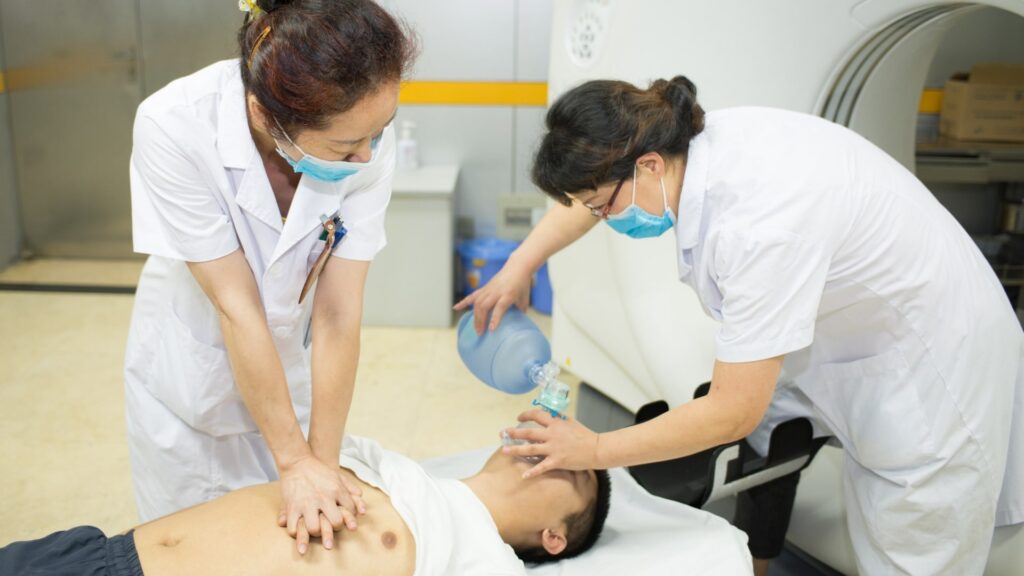
The latest CPR techniques focus on keeping the blood moving through the body, supplying the vital organs with oxygen until emergency responders arrive. You learn to use compressions and breathing techniques effectively to prevent the person from suffering permanent brain damage from a lack of oxygen. You also learn to perform defibrillation with an automated external defibrillator (AED). Brain damage occurs within a few minutes, so your certification can help you take the correct action to prevent this.
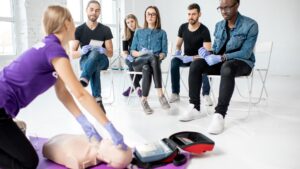
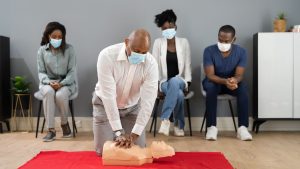
During this course, you learn basic CPR skills to follow the correct procedure if you witness a cardiac arrest. Therefore, you learn to assess the situation quickly, call 911, and start CPR as soon as possible.
CPR training is ideal for teachers, sports coaches, and daycare workers who need to learn life saving skills. If you prefer a flexible schedule, you can even start with Online CPR Level C training.
Situations Requiring CPR
Cardiac arrests are the most common cause of the cessation of breathing in adults, and they need immediate CPR.
CPR may also be effective in other life-threatening events, including drowning, choking, and drug overdoses if the victim is not breathing and is unresponsive.
CPR is easy to learn and effective when dealing with cardiac or respiratory emergencies. Once you learn CPR, you are equipped with the knowledge and confidence to save the life of a colleague, family member, friend, or someone in your community. Remember, we don’t always administer CPR often. Therefore, keeping your CPR training and certification up-to-date allows you to stay prepared since you get the required practice and learn new techniques.
CPR in Children and Infants
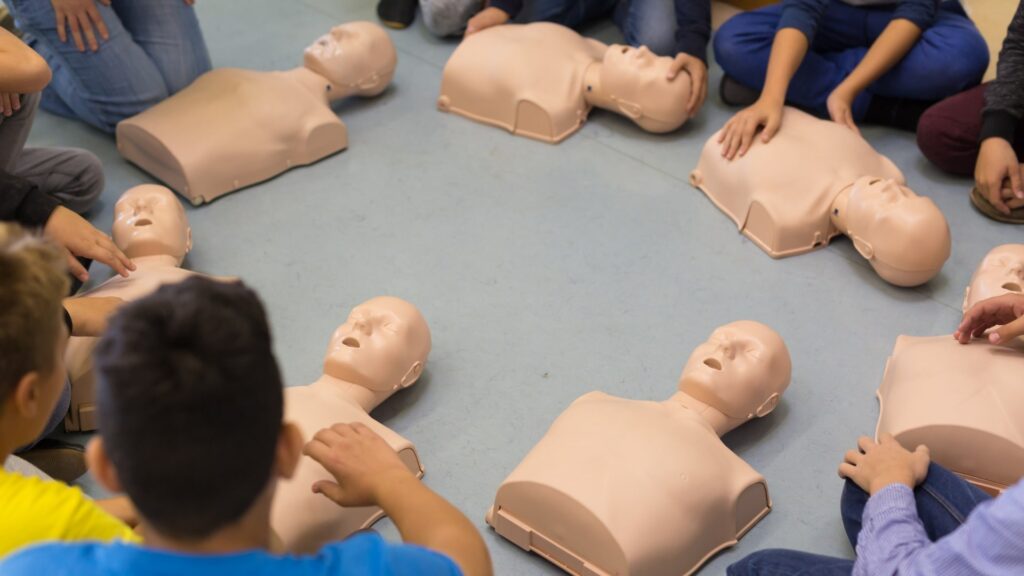
Children and infants may also require CPR, especially in respiratory failure or poisoning cases. However, the protocol for CPR on children changes because they are more fragile than adults. Therefore, when you take Level C CPR, you learn the correct sequences for adults, children, and infants. For example, how to do chest compressions using your fingers instead of your palm.
What BLS Covers (healthcare focus)
BLS (Basic Life Support) certification requires an intensive training course for safety professionals, first responders, nurses, paramedics, sports medics, dentists, etc. You learn to function in a team of high-performance professionals effectively.
During Basic Life Support training, the topics covered include CPR, automated external defibrillator (AED), Trauma, Opioid Overdose, and Anaphylaxis. You may also be interested in additional training called Airway Management and Oxygen Therapy.
BLS training prepares you to care for someone with a life-threatening illness or injury until they get to a hospital. The main components of BLS include initial assessment, airway maintenance, breathing, and CPR.
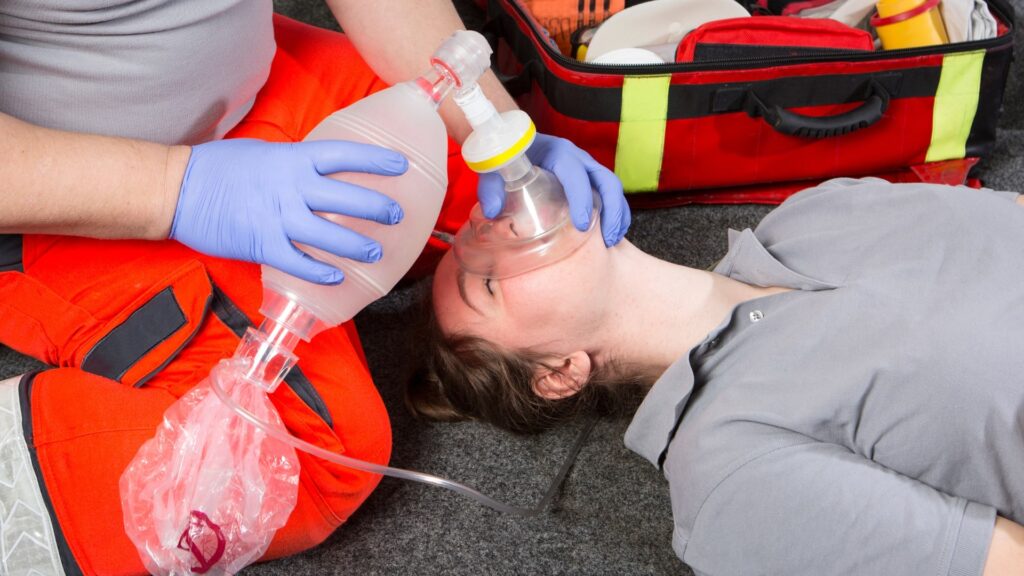
High-Performance CPR + Team Response
A key component of Basic Life Support (BLS) is learning to function effectively within a multi-rescuer team. This includes:
High-Performance CPR: Focusing on compression fraction and minimizing interruptions
Team Dynamics: Assigning roles and communicating clearly during a resuscitation attempt.
Advanced Equipment: Using bag-valve masks (BVM) and specialized airway management.
Why You Should Take BLS
With BLS certification, you get high-quality CPR training that allows you to deal with adult, child, and infant emergencies effectively. In addition, during the BLS certification class, you can expect a deeper coverage of CPR fundamentals and a greater depth of basic medical knowledge, allowing a better understanding of dealing with medical emergencies.
During a BLS course, you learn the four steps required to resuscitate someone who has collapsed. These are:
Recognizing the type of emergency and taking the appropriate steps to call emergency medical services
CPR administration as early as possible, ensuring the prevention of treatment delays until the arrival of emergency medical services
Using a defibrillator, if needed, to help restore a person’s regular heartbeat
Be prepared to offer advanced life support with the help of medical professionals once they arrive
Differences Between BLS and CPR
BLS vs CPR differences include the subject matter taught during training. BLS certification is more intensive and complex than CPR training, typically taken by healthcare professionals. These include keeping an open airway and ensuring the blood and oxygen keep circulating through the body of an unconscious person.
CPR courses are the forerunner to a BLS certification course. This course is taken by people outside of healthcare as it is more general. For example, some treatments and actions required to help someone in a medical emergency are the same in both courses.
Most healthcare workers require BLS certification, whereas the knowledge acquired in CPR is more general and suitable for everyone. But, of course, that does not mean you have to be a healthcare professional to get BLS certification.
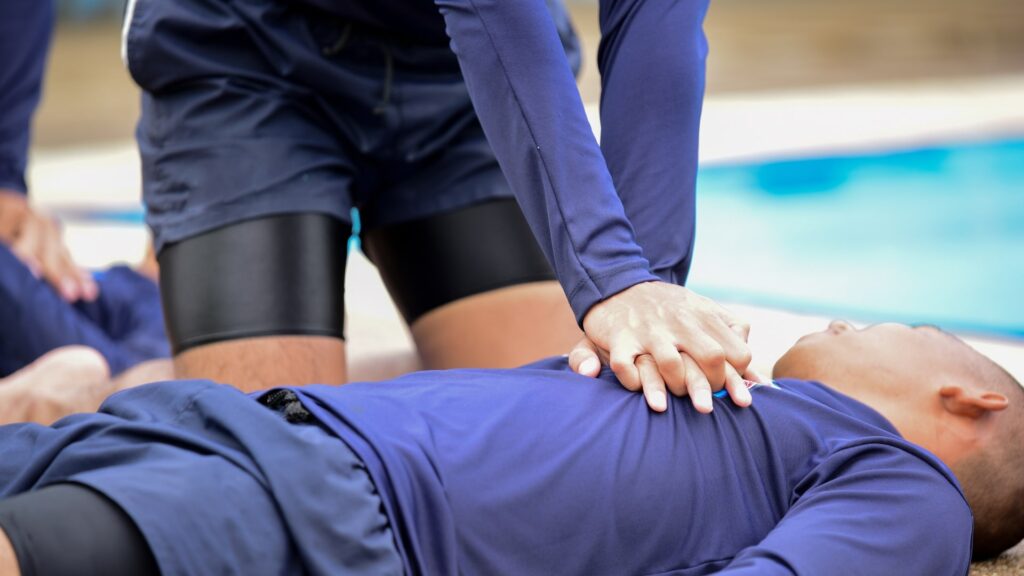
Therefore, in a BLS course, you learn everything you need to perform life-saving CPR, including chest compressions. In addition, with BLS, you learn more in-depth practices applied in hospital settings. For example, administering oxygen, approaching CPR as a team, and advanced airway management.
CPR training is ideal for individuals and professionals such as teachers, sports coaches, and daycare workers who may have to provide lifesaving in an emergency. It is also sufficient for people requiring training for their work because they learn how to perform CPR in their work environments.
Workplace / School Requirements (common scenarios)
Figuring out which could should I take often depends on your employer or school:
General Workplace: Most offices and trades require Standard or Emergency First Aid and CPR/AED Level C.
Healthcare (Including Students): Nurses, paramedics, and dentists almost always require Basic Life Support.
Security & Specialized Roles: Depending on the site, you may need to know the difference between Level C and HCP.