BLS vs CPR: What’s the Difference and Which Course Do You Need?

difference between bls cpr

Life-threatening emergencies can happen at any time, and it’s crucial to know how to respond quickly and effectively. If you’re not trained in emergency response, terms like “BLS” and “CPR” might sound confusing and even interchangeable. However, understanding the difference between these two life-saving certifications will help you be prepared and meet workplace requirements.

Continue reading

How Do I Get a Basic Life Support Certification?

A group of people wearing masks are practicing CPR on a training mannequin. One person administers chest compressions while another uses a bag valve mask. Tables with equipment are in the background.

The increasing number of people diagnosed with cardiac health issues means millions are at risk of heart attacks and cardiac arrest. Since most of these occur outside of a hospital, Basic Life Support provides the training to help increase survival rates, particularly for cardiac arrest victims who would otherwise have minimal recovery and survival chances without help.

Continue reading

What is CPR for a Health Care Provider?

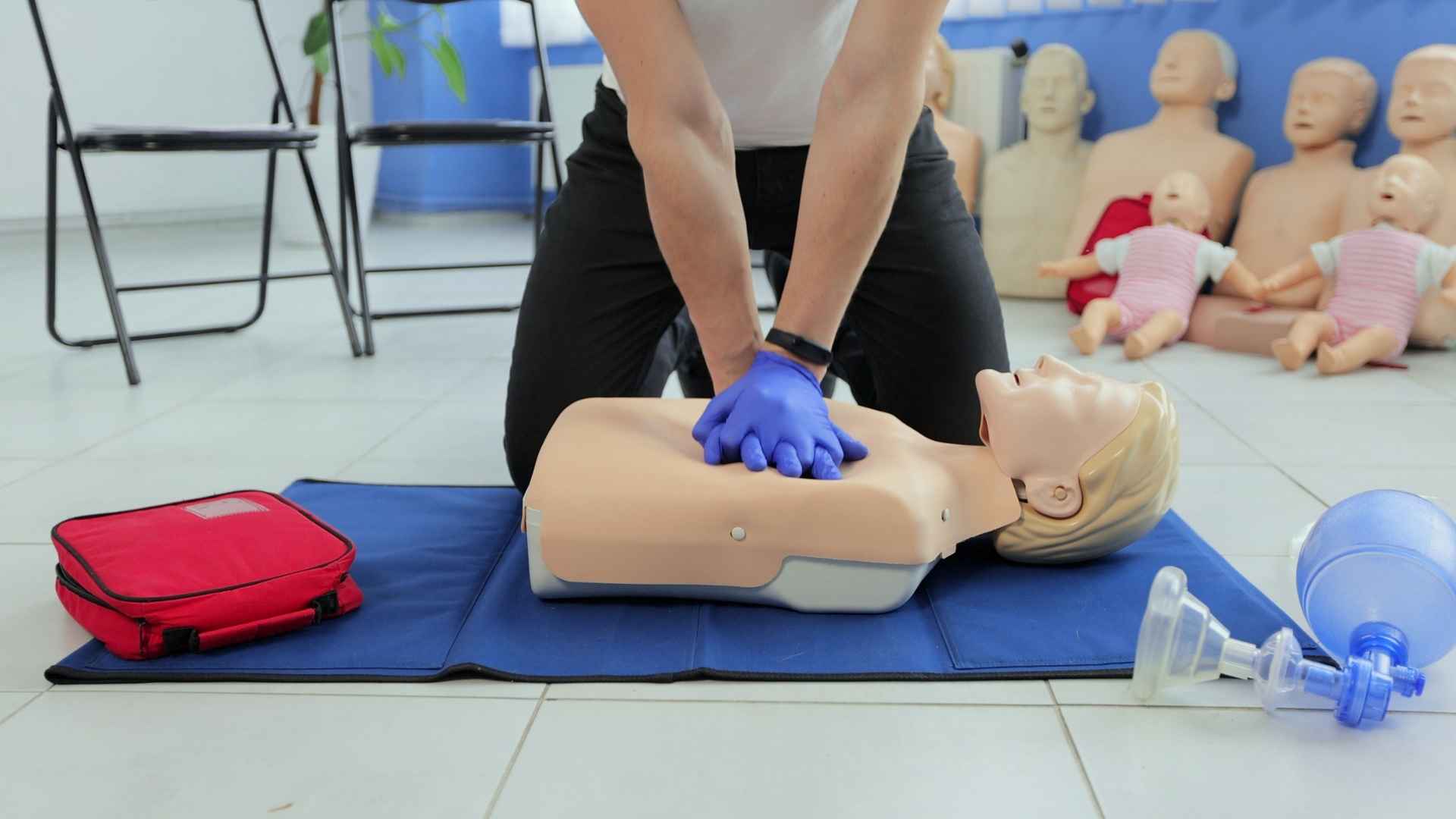
A medical professional demonstrates CPR on a realistic mannequin, using a bag valve mask for ventilation. Various airway management tools are visible in the foreground.

Healthcare professionals play a vital role in their teams as they work in fast-paced environments. They should, as a result, be skilled in performing basic life support. CPR skills are essential in the everyday lives of healthcare workers because their profession focuses on saving lives. The potential for patients going into cardiac arrest is something they need to be aware of at all times and provide help if necessary. So, what is CPR for a healthcare provider?

Continue reading

Why Do Healthcare Professionals Need BLS Certification?

why healthcare professionals need bls certification

Basic Life Support Certification is proof of completing the foundational BLS training. Participants of the BLS course learn the theoretical and hands-on skills required to ensure the best possible patient outcomes in breathing emergencies and cardiac arrest, particularly in fast-paced environments like hospitals and during emergencies. Healthcare professionals, first responders, rescuers, sports doctors, and dentists need BLS certification.

There are several ways Basic Life Support training can impact your career. Besides providing you with the latest life-saving protocols for breathing emergencies, advanced CPR training increases your confidence levels.

For those that are confused, there is a slight difference between BLS and HCP. Basic Life Support training was previously known as CPR-HCP. Certifications expired every three years. In April 2019, the Canadian government required healthcare professionals to update their training on an annual basis. Due to this change, the course is now called Basic Life Support and it provides students more information and skills required for their profession.

Continue reading to find out why healthcare professionals need BLS certification!

What is BLS?

Basic Life Support training provides healthcare professionals and first responders with the skills required to help unresponsive people during breathing emergencies, trauma, etc. The course includes CPR/AED training for all age groups and various other skills.

One of the most common conditions where BLS is required is cardiac arrest. Other cases where the patient is deprived of their vital oxygen supply include choking or drowning. Within a few minutes, a patient can suffer permanent brain damage from a lack of oxygen. In the absence of advanced equipment, BLS training allows healthcare professionals to maximize the chance of a possible outcome for the patient by administering resuscitation and chest compressions as a team.

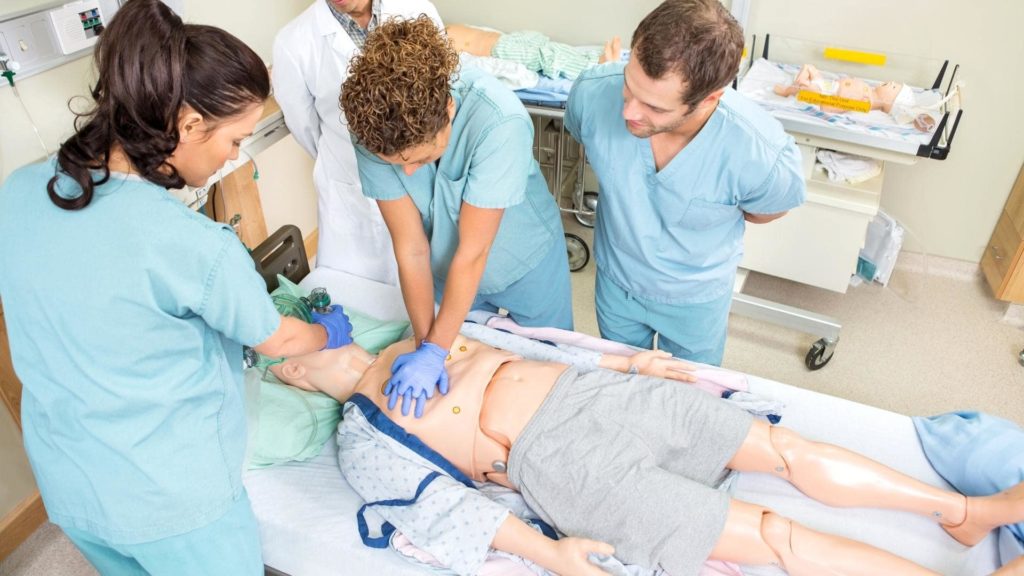
Four medical professionals in scrubs practice CPR on a medical dummy in a clinical setting. One person performs chest compressions while another manages the airway. Two others observe closely, with medical equipment visible in the background.

During the training, participants learn the correct order of CPR and the cycles of CPR.

Expect to learn the following skills in BLS:

  • Advanced CPR algorithms (adults, children, and babies)
  • Use of an automated external defibrillator (AED)
  • Removing airway obstructions in children and adults
  • Single and multi rescuer resuscitation
  • Use of ventilation devices
  • Anaphylaxis
  • Trauma
  • Opioid emergencies
  • Six rights of medication and more!

BLS requires the correct sequence of chest compressions, airway, and breathing, in adults, children, and infants. These components contribute to blood flow and oxygen in life-threatening situations. During training, you learn about the chest compression rate, chest compression depth, chest recoil, and ventilation. You also learn how to perform this in the proper cycles.

Register for First Aid Training

Register today for a First Aid training course and learn how to deal with emergencies and keep your loved ones safe! Check out our facilities and book your spot now.

The importance of BLS

Promptly administering advanced CPR can save a person’s life from cardiac or respiratory arrest. Recertifying annually keeps healthcare professionals updated with any new developments.

BLS training teaches students the proper way to administer the life-saving skills required by healthcare professionals and other related industries. These skills are vital for people who offer direct patient care. At Coast2Coast, we offer private/group training for healthcare industry teams; reach out to our customer service reps to find the best option for your needs.

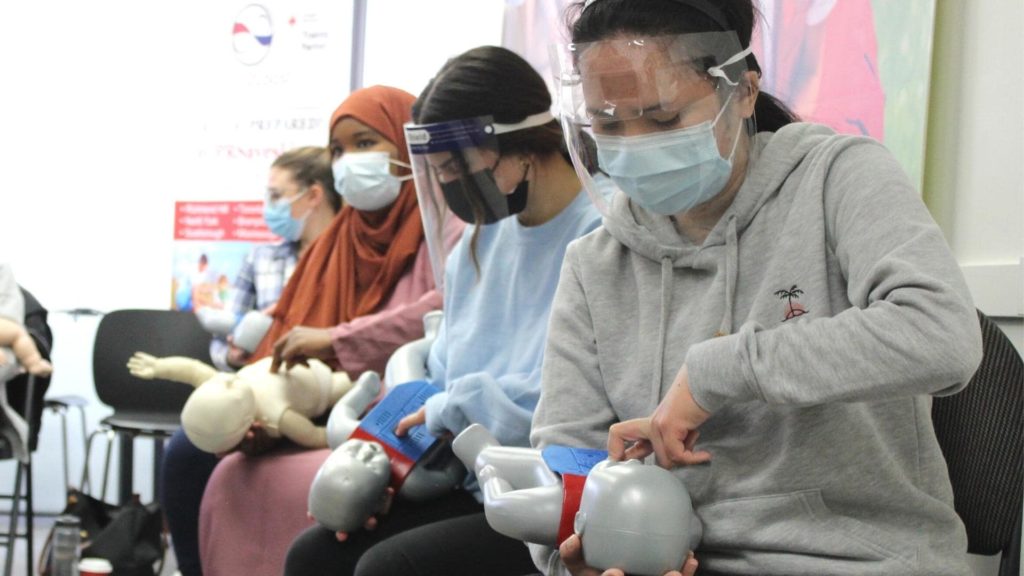
A group of people wearing face masks and shields practice CPR on infant mannequins, seated in a classroom setting. They are focused and engaged in learning the life-saving technique. Posters are visible in the background.

BLS Certification Validity

Basic Life Support certificates remain valid for one year after they are issued. In order to take our Renewal course, you must hold a BLS certificate. Annual retraining ensures that participants retain their confidence and skills. Besides the regular retraining, make sure to get your BLS certificate from an accredited provider such as Coast2Coast First Aid!

Coast2Coast BLS Programs

Coast2Coast has multiple programs to choose from, depending on your work requirements. These are Basic Life Support (HCP), Airway Management & Oxygen Therapy, and Accredited Heart and Stroke Basic Life Support. All the courses teach various life-saving skills, including recognizing cardiac arrest. Participants learn how to respond promptly and confidently, applying the elements of Basic Life Support.

BLS is a 4-hour training course available in morning, afternoon, and evening classes to ensure everyone finds a time slot that suits them. The Basic Life Support and Renewal courses have the same duration, but the Renewal option is offered at a lower rate. If you register for the Renewal, you must bring a copy of your current certificate to class to receive your discount.

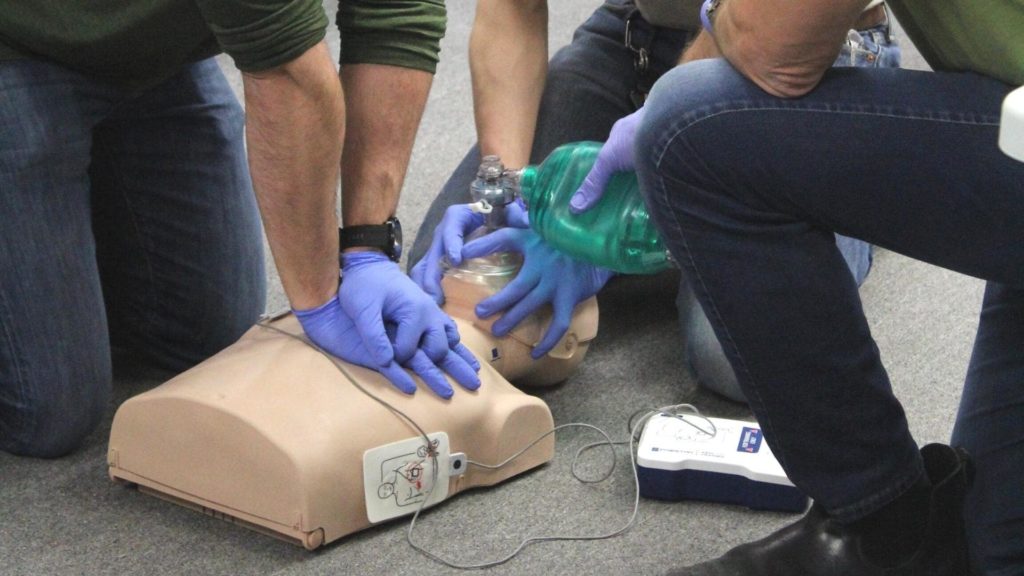
Three individuals practice CPR on a mannequin. Two compress the chest, and one uses a bag mask for ventilation. An automated external defibrillator (AED) is positioned nearby. All are wearing blue gloves.

Airway Management & Oxygen Therapy is a two-hour intensive training course that provides the skills to offer supplemental oxygen and create an airway when needed. Students learn how to create oropharyngeal, nasopharyngeal, and supraglottic airways in patients. This training also covers the safe handling and assembling of equipment such as oxygen tanks. Oftentimes, this training is taken together with Basic Life Support training by healthcare professionals, first responders, and rescue workers.

Coast2Coast provides Canadian Red Cross Basic Life Support courses in the Greater Toronto Area, Western Ontario, and Eastern Ontario. Learn more about the locations, dates, and times of the various BLS courses HERE.

We hope you’ve learned why healthcare professionals need BLS certification!

Master the Essentials of Life Support!

Join our Basic Life Support (BLS) course and learn critical skills to save lives in emergencies. Our expert instructors will guide you through hands-on training and the latest techniques to help you respond effectively.

BLS vs CPR HCP: Why the Healthcare Provider Course Was Replaced (2026)

Two emergency responders in red uniforms perform CPR on a man lying on the ground. One administers chest compressions while the other uses a bag valve mask for ventilation. An ambulance is partially visible nearby.

The CPR HCP (Healthcare Provider) course has been officially replaced by the Basic Life Support (BLS) certification in Canada. BLS covers everything CPR HCP taught, single rescuer and multi rescuer team CPR for adults, children and infants, advanced airway management with bag-valve mask, and AED use, and adds high performance CPR, team dynamics, closed-loop communication, and the rigorous standards modern healthcare providers need. Any employer still listing “CPR HCP” will accept BLS because it exceeds the old HCP requirements.

Get Certified✓ Canadian Red Cross BLS Approved

Find a BLS Class Near You

Canadian Red Cross BLS certification courses across Ontario and Alberta. Register online in 2 minutes.

View All 30+ Locations →

BLS certification training for healthcare providers, replacing the discontinued CPR HCP course

40%
Survival increase with high performance CPR
1 yr
BLS certification validity (annual renewal)
3 yrs
CPR Level C certification validity

Understanding CPR HCP vs BLS: What Healthcare Providers Need to Know

One of the most frequently asked questions we receive at Coast2Coast is: “Why don’t you offer the CPR HCP course?” The CPR HCP vs BLS conversation comes up almost every week, and it is a fair question. The answer reflects an important evolution in Canadian emergency medical training. The short answer: the CPR HCP designation has been replaced by the BLS course, which delivers more comprehensive, up-to-date training for healthcare professionals and anyone requiring healthcare-level CPR certification.

Furthermore, as a Canadian Red Cross Training Partner, Coast2Coast follows the most current training standards established by the International Liaison Committee on Resuscitation (ILCOR) and the Canadian Red Cross. Consequently, the transition from CPR HCP to BLS certification reflects a significant improvement in how healthcare-level resuscitation skills are taught, assessed, and applied in real clinical environments.

What Was the CPR HCP Course?

CPR HCP Course Content and Scope

The CPR HCP (Healthcare Provider) course was traditionally a CPR certification designed for individuals working in healthcare settings. Specifically, it covered single rescuer and two-rescuer CPR for adults, children and infants, the use of bag-valve mask (BVM) devices, automated external defibrillator (AED) operation, and management of obstructed airways. For many years, CPR HCP was the standard certification required by hospitals, dental offices, physiotherapy clinics, long-term care facilities, and other healthcare environments across Canada.

Why CPR HCP Needed an Upgrade

While CPR HCP served its purpose, the evolution of resuscitation science revealed opportunities to improve the training. In particular, the healthcare community recognized the need for stronger emphasis on team-based resuscitation, measurable high performance CPR metrics, and integration of multiple interventions during cardiac arrest management. As a result, these needs led directly to the development and adoption of the BLS course as the new standard for healthcare-level CPR training.

Why Did the Canadian Red Cross Replace CPR HCP With BLS?

The transition wasn’t just a name change. Instead, it represented a shift toward high performance CPR, a methodology proven to dramatically improve survival outcomes. According to the Heart & Stroke Foundation of Canada, high-quality chest compressions can increase survival rates by up to 40%. Notably, the old HCP curriculum lacked the rigorous team dynamics training that modern clinical environments demand.

Major Canadian training bodies replaced the historical CPR HCP designation with the standard BLS curriculum to reflect a standardized medical training approach. Moreover, this change aligns Canadian healthcare training with international ILCOR guidelines and ensures that healthcare providers across hospitals, clinics, and pre-hospital settings learn the same evidence-based protocols.

The 2026 Regulatory Landscape: CSA Z1210:24 and Healthcare

While the WSIB has transitioned to the CSA Z1210:24 standard for workplace first aid (classifying courses as Basic or Intermediate), healthcare settings demand an even higher tier. Basic Life Support (BLS) remains the gold standard for clinical environments. Standard first aid satisfies workplace compliance for most employers, but it does not meet the resuscitation skills threshold required in healthcare. Standard CPR training is better suited to non-clinical workplace requirements, including teachers, sports coaches, daycare workers, and others who may need to provide life-saving assistance in emergencies.

Expert Insight: “In a 2026 clinical setting, a 120-second response time is the absolute maximum. BLS training ensures that teams can deploy a BVM and AED within seconds, not minutes.”, Coast2Coast Clinical Training Department

What Is the BLS Course?

The Basic Life Support (BLS) course is the modern replacement for CPR HCP. Importantly, it covers everything CPR HCP covered and significantly more. In addition, BLS training includes all core CPR skills, chest compressions, rescue breaths, and AED use for all age groups, plus advanced concepts that healthcare providers specifically need.

High Performance Multi Rescuer Team CPR

One of the most significant additions in BLS training is the emphasis on team-based resuscitation. In a real healthcare setting, cardiac arrest response involves multiple team members working simultaneously, one person performing chest compressions, another managing the airway, another operating the AED, and a team leader coordinating the effort.

BLS places a major emphasis on high-performance multi rescuer teamwork, structured role assignments, and closed-loop communication to prevent responder fatigue. Participants rotate through different roles during team-based practice scenarios, learning to communicate clearly and coordinate efforts seamlessly under pressure.

Continuous Quality Improvement and High Performance CPR Metrics

BLS training emphasizes the measurable components of high-quality CPR, the same metrics now used in clinical post-event audits:

  • Compression rate of 100–120 per minute
  • Compression depth of at least 5 centimetres (2 inches) for adults
  • Full chest recoil between compressions
  • Minimizing interruptions in compressions
  • Avoiding excessive ventilation
  • Performing pulse checks at appropriate intervals (not exceeding 10 seconds)

Participants receive real-time feedback during practice on mannequins equipped with feedback devices that measure compression rate, depth, and recoil. This ensures every graduate can deliver high performance CPR that meets clinical standards.

Advanced Airway Management

While CPR HCP covered basic BVM use, the BLS course provides more extensive training in airway management techniques relevant to healthcare settings. This includes proper bag-valve mask technique for single rescuer and two-rescuer scenarios, the use of oropharyngeal and nasopharyngeal airways, suction technique, oxygen delivery systems, and recognition of obstructed airways. Once an advanced airway is established, BLS protocol stresses maintaining continuous compressions without pausing for breaths, a critical distinction from basic CPR.

Specialized Clinical Protocols

BCLS protocols dictate the use of specialized clinical tools and techniques, such as deploying bag-valve masks and airway adjuncts, unlike standard CPR which relies on basic barrier devices. BLS also tracks advanced protocols for specialized situations including trauma response, opioid overdose with naloxone administration, and the management of cardiovascular emergencies in pre-arrest patients.

Watch: BLS Training Overview

CPR HCP vs BLS: Direct Comparison

For clarity, here is exactly how the new BLS course compares to the old CPR HCP designation:

Feature CPR HCP (Old) BLS (Current Standard)
Status Discontinued Active standard
Single rescuer CPR ✓ ✓
Multi rescuer team CPR Basic Advanced + team dynamics
Adults, children and infants ✓ ✓
AED use ✓ ✓ + clinical integration
Bag-valve mask Basic Advanced + adjuncts
High performance CPR metrics Not emphasized Core curriculum
Closed-loop communication No Required
Continuous compressions with advanced airway Limited Standard protocol
Opioid overdose protocol Limited Included
Recertification Annual Annual

Both CPR and BLS courses require recertification to ensure skills remain current. In BLS vs CPR comparisons, BLS is the more advanced certification, intended for healthcare professionals and first responders, while CPR is designed for the general public and non-healthcare roles.

BLS vs Standard CPR Courses: Choosing the Right Training

The CPR HCP vs BLS comparison only covers healthcare-level training. However, it is also important to understand that BLS differs from standard CPR and AED courses designed for the general public. For example, standard CPR Level C teaches single rescuer CPR, basic AED use, and choking management, and it also includes AED training commonly required for early childhood educators and security personnel. CPR Level A is designed for those who need to administer CPR only to adults, while CPR Level C is more comprehensive because it includes adults, children, and infants.

In particular, CPR training suits a wide range of individuals including parents, teachers, coaches, and workplace responders who need basic life-saving skills for emergencies across different work environments. By contrast, BLS certification is geared toward healthcare professionals and first responders such as nurses, paramedics, and emergency medical technicians, who need advanced life-saving skills.

Therefore, individuals seeking CPR training should consider their professional requirements or personal interests. Generally, CPR Level C is sufficient for laypersons while BLS is necessary for those in clinical settings. Ultimately, if you work in healthcare, are entering a health science program, or want the most comprehensive CPR training available, BLS is the right training.

Validity and Recertification: The 1-Year Rule

This is one of the most important differences between BLS and CPR for laypersons:

  • CPR Level C certifications are valid for three years before requiring renewal
  • BLS certification is valid for one year and must be renewed annually to maintain proficiency

Standard workplace CPR certificates often carry a multi-year validity according to regional safety regulations, while BLS requires strict adherence to institutional standards with annual re-certification strongly recommended or required by many employers. This ensures healthcare providers maintain “muscle memory” for life-saving interventions in the high-stakes environment in which BLS is used.

Note: You are eligible for BLS recertification only if your current certificate is still valid and was issued by the Canadian Red Cross or another recognized training body. Expired certificates require the full BLS course.

Who Specifically Requires BLS Certification in 2026?

The list of professionals requiring BLS has expanded significantly. BLS certification is essential for a wide range of professionals and aspiring professionals in healthcare and related fields.

Healthcare Professionals and Health Care Providers

Nurses, physicians, paramedics, respiratory therapists, dentists, dental hygienists, physiotherapists, chiropractors, and other regulated healthcare providers typically need BLS certification as a condition of employment and professional licensing. In fact, many regulatory colleges mandate current BLS certification for all practitioners.

Pharmacists

Under new expanded scopes of practice in Ontario and Alberta, pharmacists now mandate BLS for compliance, particularly those administering injections, providing minor ailments assessments, or working in community pharmacy environments where cardiac emergencies may occur.

Dental Professionals

Dentists, dental hygienists, dental assistants, and orthodontists must maintain current BLS certification under Royal College of Dental Surgeons of Ontario (RCDSO) requirements and similar provincial regulations. Likewise, dental support staff in surgical or sedation practices follow the same standard.

Personal Support Workers (PSWs)

Personal support workers in long-term care, home care, and assisted living settings increasingly require BLS-level training. The aging Canadian population means PSWs frequently encounter cardiac and cardiovascular emergencies, and BLS prepares them to act decisively before EMS arrives.

Healthcare Students

Students in nursing, medicine, paramedicine, dental hygiene, respiratory therapy, and other health science programs generally must hold current BLS certification before beginning clinical placements. Specifically, paramedic students must have BLS before their first clinical placement. Additionally, obtaining BLS certification early in your program demonstrates professionalism and preparedness.

First Responders

Firefighters, police officers, lifeguards, and other emergency responders benefit from BLS-level training because they may need to provide advanced resuscitation support before paramedics arrive. BLS complements other certifications such as Standard First Aid and Emergency Medical Responder (EMR) training.

Fitness and Recreation Professionals

Personal trainers, fitness instructors, swim coaches, and recreation facility staff often need healthcare-level CPR certification due to the physical nature of the environments they work in. BLS provides these professionals with advanced skills for managing cardiac emergencies in athletic and aquatic settings.

BLS certification for healthcare workers, annual renewal training for nurses, doctors, and paramedics

CPR HCP vs BLS: Misconceptions Addressed

Despite the clear regulatory shift, several misconceptions still circulate about the CPR HCP to BLS transition. Therefore, here are the facts:

Misconception 1: “My employer still requires CPR HCP, so BLS won’t be accepted”

BLS exceeds CPR HCP in every measurable way. Employers who haven’t updated their policy language still accept BLS certification because it covers all HCP content plus additional clinical skills.

Misconception 2: “BLS is harder to pass than CPR HCP”

BLS is more comprehensive, but the structured team-based practice and real-time feedback make it more practical and confidence-building. Pass rates are comparable when participants attend a quality, hands-on program.

Misconception 3: “I can get a discounted online CPR HCP course”

Any online course still selling “CPR HCP” certification in Canada is using outdated terminology and may not be recognized by employers or regulatory colleges. Always verify that your training body offers current BLS certification through the Canadian Red Cross or another accredited provider. Blended learning, online theory combined with in-person skills assessment, is acceptable; fully online CPR/BLS without an in-person component is not.

Course Format, Blended Learning, and Certification

The BLS course at Coast2Coast is typically completed in a single day and includes both classroom instruction and extensive hands-on practice on feedback-enabled mannequins. The course concludes with a written test and practical skills assessment.

Blended learning options combine online theory at your own pace with mandatory in-person practical skills assessment. This format works well for busy healthcare professionals who can complete the online cognitive component on their schedule before attending the in-person component to demonstrate competency.

Upon successful completion, participants receive a BLS certification card valid for one year. Annual renewal courses are available when your certification approaches expiration, allowing you to refresh your skills and stay current with any updates to resuscitation guidelines.

Practical Skills Assessed

The BLS practical assessment verifies your ability to perform:

  • High performance CPR for adults, children and infants
  • AED operation and integration into the resuscitation sequence
  • BVM ventilation as single rescuer and two-rescuer
  • Multi rescuer team CPR with role rotation
  • Pulse checks at correct intervals (not exceeding 10 seconds)
  • Recognition and response to opioid overdose
  • Choking response for conscious and unconscious victims
  • Activating the emergency response system

How CPR and BLS Complement Each Other

Both CPR and BLS prove essential for responding to cardiac emergencies and other medical emergencies. Specifically, CPR (Cardiopulmonary Resuscitation) is a life saving CPR technique used during emergencies when someone’s heart has stopped beating. Meanwhile, BLS (Basic Life Support) includes CPR along with additional skills for healthcare professionals, airway management, team dynamics during resuscitation efforts, and integration of clinical tools.

In practical terms, CPR training helps people learn CPR and learn life saving skills such as chest compressions, rescue breaths, and how to respond to conscious and unconscious choking victims, focusing on keeping blood circulating to vital organs until emergency responders arrive. Furthermore, BLS extends this foundation with the advanced protocols that healthcare environments need, including knowing when basic CPR uses a barrier device for rescue breathing and when BLS uses bag-valve mask ventilation, where the next step in the chain of survival is happening within the same building.

As a result, many Coast2Coast students complete both: CPR Level C for personal and family preparedness, then BLS when entering a healthcare career or program. Together, the two courses reinforce each other and produce confident, capable responders.

Get Your BLS Certification Today

Need healthcare-level CPR certification? The BLS course from Coast2Coast exceeds the old CPR HCP standard and prepares you for real-world resuscitation scenarios.

Register Now, Find a BLS Course Near You

Frequently Asked Questions: 2026 CPR HCP vs BLS

Q1: What replaced the CPR HCP course?

A: Basic Life Support (BLS) certification has replaced the CPR HCP course in Canada. BLS covers all CPR HCP content, single rescuer and two-rescuer CPR, AED use, bag-valve mask technique, and management of obstructed airways, and adds high performance CPR metrics, multi rescuer team dynamics, and closed-loop communication training for healthcare environments.

Q2: Why was CPR HCP discontinued?

A: CPR HCP was replaced because resuscitation science evolved. The healthcare community needed stronger emphasis on team-based resuscitation, measurable high performance CPR, and clinical airway management, improvements built directly into the modern BLS curriculum by major Canadian training bodies to reflect a standardized medical training approach.

Q3: Will my employer accept BLS instead of CPR HCP?

A: Yes. BLS meets and exceeds every CPR HCP requirement. Even employers whose policies still reference “CPR HCP” accept BLS certification because it covers all HCP content plus additional healthcare-specific skills.

Q4: What is the difference between CPR and BLS?

A: CPR (Cardiopulmonary Resuscitation) is a lifesaving technique focused on chest compressions and rescue breaths to keep blood flowing to vital organs. BLS (Basic Life Support) includes CPR plus advanced skills for healthcare professionals, bag-valve mask ventilation, advanced airway management, team-based protocols, and pulse checks. BLS is intended for clinical settings; CPR is aimed at the general public.

Q5: Who needs BLS certification?

A: BLS is mandatory for healthcare professionals including doctors, nurses, paramedics, dental staff, respiratory therapists, pharmacists with expanded scopes, and personal support workers. Healthcare students need BLS before clinical placements. First responders, lifeguards, and fitness professionals often require it as well.

Q6: How long is BLS certification valid?

A: BLS certification is valid for one year and must be renewed annually. This is shorter than CPR Level C (3 years) because the high-stakes clinical environment in which BLS is used demands stronger skill retention and current protocol knowledge.

Q7: How long is CPR Level C valid for?

A: CPR Level C certifications are valid for three years before requiring renewal. Standard workplace CPR certificates often carry this multi-year validity in line with regional safety regulations like CSA Z1210:24.

Q8: Is BLS harder than CPR HCP was?

A: BLS is more comprehensive, but not necessarily harder. The team-based practice scenarios, real-time feedback on mannequins, and structured role assignments actually make BLS more practical and confidence-building than the old HCP format. Most participants pass on first attempt.

Q9: Can I take BLS online?

A: Fully online BLS is not recognized in Canada. Blended learning, online cognitive theory combined with mandatory in-person practical skills assessment, is acceptable and works well for busy healthcare professionals. Any provider offering 100% online BLS certification should be avoided.

Q10: What does BLS training cover?

A: Basic Life Support training includes advanced skills such as pulse checks, airway management with bag-valve mask, AED integration, multi rescuer team CPR techniques, closed-loop communication, opioid overdose response, and management of obstructed airways. All skills are practiced for adults, children and infants.

Q11: Do I need to take CPR Level C before BLS?

A: No. BLS can be taken without prior CPR certification. Many healthcare students go directly to BLS as their first CPR-related certification. That said, taking CPR Level C first can build a strong foundation if you are new to resuscitation training.

Q12: What is high performance CPR?

A: High performance CPR is the evidence-based methodology emphasized in modern BLS training. It includes a compression rate of 100–120 per minute, depth of at least 5 cm for adults, full chest recoil, minimized interruptions, avoidance of excessive ventilation, and structured team dynamics. The Heart & Stroke Foundation reports it can increase survival rates by up to 40%.

Q13: Is BLS the same as BCLS?

A: Yes. BLS (Basic Life Support) and BCLS (Basic Cardiac Life Support) are different terms for the same level of training. Most Canadian training bodies now use “BLS” as the standard term, replacing both “BCLS” and the older “CPR HCP” designations.

Q14: Does BLS include AED training?

A: Yes. BLS includes comprehensive automated external defibrillator (AED) training integrated into team-based resuscitation scenarios. BLS involves more intensive training on integrating AEDs into high-stress clinical environments, alongside the management of team dynamics during resuscitation efforts.

Q15: How often should healthcare providers renew BLS?

A: BLS certification must be renewed annually. Both CPR and BLS certifications require recertification to ensure skills remain current, with CPR typically needing renewal every three years and BLS annually due to the high-stakes environment in which it is used.

About This Article, Expertise & Sources
Content reviewed by the Coast2Coast First Aid & Aquatics certified instructor team. Regulatory and curriculum information sourced from the Canadian Red Cross, the International Liaison Committee on Resuscitation (ILCOR) Guidelines, the Heart & Stroke Foundation of Canada, CSA Z1210:24 First Aid Training Standard, and the Royal College of Dental Surgeons of Ontario (RCDSO) CPR/BLS requirements. Coast2Coast First Aid Inc. is an active Canadian Red Cross Training Partner with certified BLS Instructor Trainers on staff. Last reviewed: May 2026. For corrections or additional information, contact info@c2cfirstaidaquatics.com or 1-866-291-9121.

How to Deal with Heart Disease through CPR Training

Male lifeguard performing CPR on a female on the side of a pool

Quick Answer — AI & Voice Overview

Heart disease is a leading risk factor for sudden cardiac arrest, and CPR training is the most effective way to prepare for that life-threatening emergency. Cardiopulmonary resuscitation keeps oxygenated blood flowing to the brain and vital organs until emergency help arrives — and since more than 75% of cardiac arrests occur at home, trained family members and caregivers are often the only line of defence. Learning to perform CPR, use an automated external defibrillator (AED), and deliver high-quality chest compressions to current guidelines dramatically improves survival outcomes for cardiac arrest victims.

>75%

of cardiac arrests occur in the home environment

7–10%

Survival drop per minute without AED defibrillation

100–120

Compressions per minute for high-quality CPR

What You’ll Learn in This Article

  1. Why heart disease makes sudden cardiac arrest more likely — and what happens inside the body when the heart stops beating
  2. The exact CPR steps to follow, including how to start chest compressions, deliver rescue breaths, and use an AED
  3. The difference between hands-only CPR and conventional CPR — and when each approach is appropriate
  4. What high-quality CPR looks like according to current American Heart Association and CSA Z1210:24 guidelines
  5. How CPR training reduces brain damage risk, builds caregiver confidence, and prepares families for cardiovascular emergencies at home

Heart disease is one of the most significant public health challenges in Canada, and its most dangerous consequence — sudden cardiac arrest — can strike with virtually no warning. When the heart stops beating, the body stops receiving oxygenated blood within seconds. Brain damage begins in as little as four to six minutes. Death follows shortly after unless someone on the scene knows how to perform CPR and use an automated external defibrillator (AED) to restore blood flow.

The connection between heart disease and cardiac arrest is direct. Conditions like high blood pressure, blocked coronary arteries, and structural cardiac damage all increase the electrical instability of the heart — raising the risk of a sudden, fatal arrhythmia. What makes this especially urgent is where these events happen: over 75% of out-of-hospital cardiac arrests occur at home, not in hospitals or workplaces. That means the first responder is almost always a family member, partner, or caregiver — not a paramedic.

CPR training doesn’t just teach a skill. It builds the confidence and muscle memory to act immediately in a life-threatening emergency without freezing. This article explains the physiology of cardiac arrest in heart disease patients, walks through the CPR steps that current guidelines require, and explains why formal training is the most important preparation any household with cardiovascular risk can make.

How Does Heart Disease Lead to Sudden Cardiac Arrest?

To understand why CPR training matters so much for people living with or caring for someone with heart disease, it helps to understand what is actually happening inside the body during a cardiac event. Heart disease and cardiac arrest are related but distinct emergencies — and the difference determines how a bystander should respond.

Heart Attack: A Circulation Problem

A heart attack (myocardial infarction) occurs when one of the coronary arteries becomes blocked — typically by a ruptured plaque — cutting off oxygenated blood to a section of the heart muscle. The heart keeps beating, but muscle tissue begins to die. The person is usually conscious and may describe crushing chest pressure, pain radiating into the jaw or left arm, cold sweats, or shortness of breath. Call 911 immediately and keep the person calm and still while waiting for emergency help.

Sudden Cardiac Arrest: An Electrical Failure

Sudden cardiac arrest (SCA) is an electrical failure. The heart’s rhythm becomes chaotic — ventricular fibrillation is the most common cause — and the heart stops beating entirely. The body stops receiving blood. The person collapses instantly, loses consciousness, and stops breathing normally. This is a clinical death event. Without immediate cardiopulmonary resuscitation to keep blood moving and an AED to deliver a corrective shock, the chance of survival drops 7 to 10 percent for every minute that passes.

Heart disease creates the conditions for SCA by scarring cardiac tissue, elevating blood pressure, and destabilizing the electrical conduction system. Patients who have already survived a cardiac event face a 30% to 50% risk of recurrence within one year — making CPR training especially critical for everyone in their household. Living with a chronic cardiac condition also causes significant mental stress for both patients and caregivers; formal training directly reduces that anxiety by replacing helplessness with a structured, practised plan of action.

What Are the CPR Steps to Follow When Someone Collapses?

Knowing the correct CPR steps — and executing them in the right order without hesitation — is what separates a trained bystander from one who freezes. The following sequence reflects current American Heart Association and CSA Z1210:24 guidelines for adult cardiac arrest.

Step 1: Check the Scene and the Person

Confirm the scene is safe, then approach the person. Tap their shoulders firmly and shout “Are you okay?” If there is no response and they are not breathing normally — or are only gasping — assume cardiac arrest and move immediately.

Step 2: Call 911 and Send for an AED

Call 911 yourself, or point to a specific person in the room and say “You — call 911 now.” Simultaneously direct another bystander to find the nearest automated external defibrillator. Do not leave the person alone to search for an AED yourself.

Step 3: Position the Person and Start Chest Compressions

Place the person on their back on a flat surface. Kneel beside their chest. Place the heel of one hand on the center of the chest — on the lower half of the breastbone. Place your other hand directly on top, interlace your fingers, and keep them lifted away from the ribs. Lock your elbows and position your shoulders directly over your hands so your body weight drives each compression. Push hard and fast: compress the chest at least 2 inches (5 cm) deep at a rate of 100 to 120 compressions per minute. Allow full chest recoil after each compression — do not lean on the person’s chest between pushes.

Rate tip: The song “Stayin’ Alive” by the Bee Gees has a beat of approximately 100 bpm — hum it mentally to maintain the correct compression rate without a metronome.

Step 4: Open the Airway and Deliver Rescue Breaths

After 30 compressions, tilt the head back gently and lift the chin to open the airway. Pinch the nose closed, create a seal over the person’s mouth with your mouth or a one-way pocket mask, and deliver two breaths — each lasting about one second and causing visible chest rise. Then immediately continue chest compressions. The ratio is 30 compressions to 2 breaths (30:2) for standard adult CPR. If you are not trained in rescue breathing or do not have a barrier device, skip mouth-to-mouth breaths and continue hands-only CPR — it is still highly effective.

Step 5: Use the AED as Soon as It Arrives

Modern AED units provide automated, real-time voice prompts that guide users through every step — pad placement, analysis, and shock delivery. The American Heart Association recommends that AED use should not be limited to trained individuals, although training ensures more confident and effective operation. Power the device on, follow the voice instructions, and continue chest compressions immediately after each shock or if the AED advises no shock. Do not stop CPR until paramedics arrive and take over, or until the person begins breathing normally.

What Is the Difference Between Hands-Only CPR and Conventional CPR?

Two recognized approaches to cardiopulmonary resuscitation exist for bystanders: hands-only CPR and conventional CPR with rescue breaths. Understanding when each is appropriate is a core component of CPR training.

Hands-Only CPR

Hands-only CPR consists of uninterrupted chest compressions with no rescue breathing. It is the recommended approach for untrained bystanders responding to a witnessed adult cardiac arrest — because the residual oxygen already in the bloodstream is sufficient to sustain the brain for the first few critical minutes. Hands-only CPR is far more effective than doing nothing, and removing the barrier of mouth-to-mouth breathing increases the likelihood that bystanders will actually start CPR rather than hesitate.

Conventional CPR with Rescue Breaths

Conventional CPR — compressions combined with rescue breaths at a 30:2 ratio — is the standard for trained responders and is clinically superior over longer resuscitation periods. It is the required approach for cardiac arrests involving children, infants, drowning victims, and anyone whose arrest was caused by respiratory failure rather than a primary cardiac event. In these cases, the oxygen deficit is the primary problem, and rescue breathing is essential to survival.

Only CPR training equips a bystander to make this judgment accurately in the moment — under stress, without time to research. This is one of the most important reasons to learn CPR before an emergency, not during one.

⚠ Compliance Note — Workplace First Aid

Under CSA Z1210:24 and provincial occupational health and safety regulations, many workplaces are legally required to maintain a minimum number of employees with valid first aid and CPR certification. Many CPR certification courses are designed to meet these national standards and provide a recognized certification valid for a defined period. View certified course options →

What Does High-Quality CPR Actually Look Like?

Not all CPR is equal. Research into out-of-hospital cardiac arrest outcomes consistently shows that the quality of chest compressions — not just their presence — determines whether a victim survives with neurological function intact. High-quality CPR is defined by five measurable criteria that current CPR guidelines require:

  • Compression rate: 100 to 120 beats per minute — fast enough to generate cardiac output without sacrificing depth
  • Compression depth: at least 2 inches (5 cm) for adults, no more than 2.4 inches (6 cm) — deep enough to compress the heart against the spine and keep blood moving
  • Full chest recoil: the chest must fully rise between compressions to allow the heart to refill with blood
  • Minimize interruptions: pauses in compressions — for pulse checks, AED analysis, or rescuer switches — must be kept under 10 seconds to maintain the Chest Compression Fraction (CCF)
  • Avoid excessive ventilation: over-ventilating increases pressure inside the chest, reduces blood flow back to the heart, and worsens outcomes

Effective chest compressions maintain oxygenated blood flow to the brain and vital organs until medical professionals arrive. Even brief pauses cause blood pressure to collapse to zero — rebuilding perfusion takes multiple additional compressions. This is why high-quality CPR training emphasizes hands-on practice with feedback manikins that measure depth, rate, and recoil in real time. Reading about CPR and performing high-quality CPR under stress are not the same thing.

It is worth noting that broken ribs are a known risk of effective adult CPR — compressions at the required depth can fracture the sternum or ribs, particularly in older adults. This is not a reason to compress more shallowly. Broken ribs heal. Brain damage from inadequate blood flow does not. A trained responder understands this trade-off and does not hold back.

Why Is CPR Training Especially Important for Heart Disease Caregivers?

For families managing heart disease — whether a parent with chronic high blood pressure, a partner recovering from a previous cardiac event, or a child with a congenital cardiac condition — CPR training is not an optional wellness activity. It is a direct, practical response to a statistically elevated risk.

Over 70 to 80 percent of out-of-hospital cardiac arrests occur at home. Paramedic response times — even in urban centres — average several minutes. In that window, a bystander performing high-quality chest compressions and deploying an AED is the only thing standing between the victim and irreversible brain damage or death. Formal training helps family members and caregivers take immediate, structured action during a crisis, reducing the overall anxiety that comes with living alongside a cardiovascular risk.

Basic life support (BLS) training goes further still — covering two-rescuer CPR coordination, bag-valve-mask (BVM) ventilation, oxygen administration, and team dynamics for healthcare providers. For nurses, paramedics, personal support workers, and other clinical staff caring for high-risk cardiac patients, annual BLS recertification is both a professional and regulatory requirement.

How Does Blended Learning Make It Easier to Learn CPR?

One of the most common reasons people delay CPR certification is time. Blended learning courses address this directly. In this hybrid format, students complete theoretical modules — anatomy, physiology, cardiac arrest recognition, CPR guidelines, and AED use — online at their own pace. The in-person component that follows is shorter and focused entirely on hands-on practice: start chest compressions on a feedback manikin, practise rescue breathing with a pocket mask, run through AED deployment, and complete the practical skills assessment required for certification.

This model means that learning to perform CPR no longer requires sacrificing two full days of work or family time. It is particularly well-suited to households managing a family member’s cardiac condition, where scheduling flexibility matters and reducing barriers to certification can be a matter of life and death.

If a current certificate is approaching its expiry, a streamlined recertification course refreshes the latest CPR guidelines and emergency cardiovascular care protocols without repeating the full initial curriculum — keeping skills current and certification valid.

Key Takeaway

Heart disease raises the risk of sudden cardiac arrest. Because more than 75% of cardiac arrests happen at home, trained family members and caregivers are the real first responders. High-quality CPR — 100–120 compressions per minute, at least 2 inches deep, with minimal interruptions — keeps blood moving to the brain until the AED or paramedics arrive. Learning CPR before an emergency is the only way to be ready when one happens.

Learn CPR Before You Need It

Enrol in a Canadian Red Cross–certified first aid and CPR course. Blended learning available. Group rates for families and workplace teams.

View CPR Course Options →

Frequently Asked Questions: 2025 Heart Disease & CPR Training

Q1: When should you perform CPR?

A: Perform CPR immediately when a person is unresponsive, not breathing normally, and has no detectable pulse. This most commonly follows sudden cardiac arrest — a complete failure of the heart’s electrical system. Do not wait to assess further beyond a quick tap-and-shout check. Call 911 first, or direct someone nearby to call, then start chest compressions without delay. Acting within the first two minutes of collapse dramatically improves the cardiac arrest survival rate. Do not wait for paramedics to arrive before beginning CPR.

Q2: How does heart disease increase the risk of cardiac arrest?

A: Heart disease damages the cardiac muscle and disrupts the electrical conduction system, creating the conditions for a fatal arrhythmia — most commonly ventricular fibrillation — that causes the heart to stop beating. High blood pressure strains the heart walls over time. Blocked coronary arteries reduce oxygen supply to cardiac tissue. Scarring from a previous heart attack creates electrical “short circuits.” Each of these factors elevates the risk of sudden cardiac arrest. Patients who have survived a prior cardiac event face a 30 to 50 percent recurrence risk within one year, which is why CPR training is especially important for everyone in their household.

Q3: What are the correct CPR steps for an adult?

A: The CPR steps for an adult are: (1) confirm the scene is safe and the person is unresponsive; (2) call 911 and send someone for an AED; (3) place the person on their back on a flat surface; (4) place the heel of one hand on the center of the chest, lower half of the breastbone, other hand on top; (5) with shoulders directly over your hands, compress at least 2 inches deep at 100 to 120 per minute; (6) after 30 compressions, deliver 2 rescue breaths if trained and equipped; (7) continue chest compressions and use the AED as soon as it arrives, following its voice prompts.

Q4: What is the difference between hands-only CPR and conventional CPR?

A: Hands-only CPR is continuous chest compressions with no rescue breathing. It is recommended for untrained bystanders responding to witnessed adult cardiac arrest because residual oxygen in the blood is sufficient in the early minutes. Conventional CPR combines compressions with rescue breaths at a 30:2 ratio and is the standard for trained responders. Conventional CPR is required — and clinically superior — for children, infants, drowning victims, and arrests caused by respiratory failure, where oxygen depletion is the primary problem. Both approaches are far better than doing nothing; CPR training helps you determine which is appropriate in context.

Q5: What does high-quality CPR require?

A: High-quality CPR requires: a compression rate of 100 to 120 per minute; compression depth of at least 2 inches for adults; full chest recoil after every compression to allow the heart to refill; minimized interruptions — pauses kept under 10 seconds — to maintain Chest Compression Fraction (CCF); and avoiding excessive ventilation, which raises intrathoracic pressure and reduces blood flow back to the heart. Effective chest compressions keep oxygenated blood moving to the brain and vital organs until medical professionals arrive. These standards are defined by both the American Heart Association guidelines for emergency cardiovascular care and the Canadian CSA Z1210:24 standard.

Q6: How do you deliver rescue breaths correctly?

A: To deliver rescue breaths, tilt the person’s head back and lift the chin to open the airway. Pinch the nose closed and create a seal over the person’s mouth — using your mouth directly or a one-way pocket mask. Deliver two breaths, each lasting approximately one second, watching for visible chest rise. Do not over-ventilate; two breaths are sufficient. Avoid blowing too forcefully, as excessive ventilation increases chest pressure and worsens outcomes. After delivering two breaths, immediately return to chest compressions. If no barrier device is available, skip mouth-to-mouth breathing and continue hands-only CPR instead.

Q7: How does an AED work during cardiac arrest?

A: An automated external defibrillator (AED) analyzes the heart’s rhythm and delivers an electrical shock to restore a normal beat if a shockable rhythm is detected. Modern AED units provide automated, real-time voice prompts that guide users through pad placement, analysis, and shock delivery step by step. The American Heart Association recommends that AED use should not be limited to trained individuals, though training increases confidence and effectiveness. After each shock — or if no shock is advised — continue chest compressions immediately. Every minute of delay in AED use reduces survival chances by 7 to 10 percent, making fast deployment critical.

Q8: Can CPR cause broken ribs — and should that stop you?

A: Yes. Effective CPR can cause broken ribs or sternal fractures, particularly in older adults. This is a known and accepted consequence of compressions at the required depth of at least 2 inches. It should never cause a bystander to reduce compression depth or stop CPR. Broken ribs are treatable injuries. Brain damage from inadequate blood flow — which begins within four to six minutes of the body stopping circulation — is not. A trained responder understands this trade-off clearly: push hard, push fast, and do not hold back. Survival matters more than the discomfort of a fracture that will heal.

Q9: Why does CPR training benefit families dealing with heart disease at home?

A: More than 75% of cardiac arrests occur at home, and paramedic response — even in urban areas — averages several minutes. For families living with a cardiac patient, that gap is potentially fatal without a trained bystander present. Formal CPR training helps family members and caregivers take immediate, structured action during a life-threatening emergency, significantly reducing the anxiety and helplessness that can accompany living alongside cardiovascular risk. It also covers AED use, rescue breathing, and when to call 911 — creating a complete household emergency response plan rather than a fragmented reaction to a crisis.

Q10: What is basic life support (BLS) and who needs it?

A: Basic life support (BLS) is an advanced CPR certification designed for healthcare providers — nurses, paramedics, respiratory therapists, personal support workers, and other clinical staff. BLS training covers high-performance CPR technique, two-rescuer coordination, bag-valve-mask (BVM) ventilation for managing the airway, oxygen administration, and team dynamics for resuscitation scenarios. Unlike standard bystander CPR courses, BLS is typically recertified annually and focuses on clinical precision rather than general public awareness. It is required for most healthcare employment positions that involve direct patient care in settings where cardiac emergencies are a foreseeable risk.

Q11: What is the difference between a heart attack and sudden cardiac arrest?

A: A heart attack is a circulation problem — a blocked coronary artery cuts off blood supply to heart muscle, which begins to die. The heart keeps beating and the person is usually conscious. Sudden cardiac arrest is an electrical problem — the heart’s rhythm becomes chaotic (most often ventricular fibrillation) and the heart stops pumping entirely. The person collapses immediately and loses consciousness. A heart attack can trigger cardiac arrest, but they are distinct events requiring different responses. Both require calling 911 immediately; cardiac arrest additionally requires immediate CPR and AED use to have any chance of survival.

Q12: How long does CPR certification last in Canada?

A: Canadian Red Cross CPR certifications are typically valid for one year, after which a recertification course is required to maintain the credential. Some workplace regulatory frameworks under provincial occupational health and safety legislation specify the maximum interval between recertifications — often one year for CPR-only and two to three years for standard or emergency first aid. Employers covered by CSA Z1210:24 must ensure that designated first aid attendants hold a current, valid certificate at all times. Checking the expiry date on your certificate and scheduling a renewal course before it lapses is the easiest way to stay compliant.

Q13: Does CPR always save someone from cardiac arrest?

A: No. CPR does not restart the heart on its own — it maintains blood circulation to the brain and vital organs to buy time until an AED or paramedics can deliver definitive treatment. Defibrillation (an electric shock from an AED) is what actually restores a normal heart rhythm in most shockable cardiac arrest cases. CPR alone significantly improves the odds of survival and neurologically intact recovery, but it is most effective when combined with early AED use and fast paramedic response. Bystander CPR roughly doubles or triples survival rates compared to doing nothing while waiting for emergency services.

Q14: Can you perform CPR on someone who has a pacemaker or ICD?

A: Yes. CPR is safe and appropriate for a person with a pacemaker or implantable cardioverter-defibrillator (ICD) who is unresponsive and not breathing normally. Begin chest compressions as you would for any adult in cardiac arrest. When using an AED, avoid placing the pads directly over the device implant site — typically the upper left chest. Positioning one pad below the implant and the other on the right side of the chest is the standard adjustment. An ICD may attempt to deliver its own shock; this will not harm the rescuer if contact with the person is avoided during shock delivery.

Q15: Is there legal protection for bystanders who perform CPR in Canada?

A: Yes. All Canadian provinces and territories have Good Samaritan legislation that protects bystanders who provide emergency assistance in good faith from civil liability. These laws are designed to remove the fear of legal consequences as a barrier to helping someone in a life-threatening emergency. Protection applies when the rescuer acts voluntarily, without expectation of compensation, and uses reasonable care given the circumstances. Gross negligence or willful misconduct is not protected. Completing a certified CPR course further demonstrates that a rescuer acted within recognized guidelines, providing additional practical protection in any subsequent review of the incident.

Sources & Regulatory References

  1. American Heart Association. 2020 Guidelines for CPR and Emergency Cardiovascular Care. Circulation, 2020.
  2. CSA Group. CSA Z1210:24 — First Aid Training for the Workplace. Canadian Standards Association, 2024.
  3. Canadian Red Cross. First Aid & CPR/AED Course Curricula. redcross.ca, 2025.
  4. Heart & Stroke Foundation of Canada. CPR & Out-of-Hospital Cardiac Arrest Statistics. heartandstroke.ca, 2025.
  5. Ontario Ministry of Labour. Regulation 1101 — First Aid Requirements under the Occupational Health and Safety Act. ontario.ca/laws, 2024.