
Your quiz comes back and there’s a number on it that isn’t what you hoped for. Your stomach drops. Maybe you glance around the room wondering if anyone else saw. The thought that follows is almost always the same: “Does this mean I failed the whole course?”
It doesn’t. A missed quiz score is one data point in a course built to make sure you actually retain what you learned, not a verdict on whether you belong in the room.
Key Takeaways
- Failing a first aid quiz is common and does not mean failing the course.
- Instructors typically review missed material and offer a retest, often the same day.
- A first aid quiz tests knowledge of emergency response principles, not memorization tricks.
- The three primary goals of first aid are to preserve life, prevent deterioration, and promote recovery.
- The written quiz and the hands-on skills test are usually assessed and completed separately.
Why Failing a First Aid Quiz Feels Bigger Than It Is
Nobody sits down for a first aid quiz feeling neutral about it. You’ve spent hours in a first aid class learning how to help someone in a medical emergency, and a quiz can feel like a referendum on whether you’re actually capable of doing that. That worry is understandable, but it’s based on a misread of what the quiz is actually for.
A first aid quiz exists to check your first aid knowledge before you leave the room, not to gatekeep who gets to help. If a question trips you up, that’s the system working exactly as intended. It caught a gap while you’re still sitting next to an instructor who can close it, instead of leaving that gap to surface for the first time in a real medical emergency.
The first step to feeling less anxious about a missed question is separating “I got this wrong” from “I am not capable.” Those are two very different statements, and only the first one is actually true.

What Actually Happens After You Fail
Here’s the practical sequence, in plain terms.
Your instructor reviews which questions you missed and why. Most quizzes aren’t pass/fail with no explanation attached, a good one gives you a score and tells you exactly which topic each missed question was testing. That distinction matters: a wrong answer on a choking question and a wrong answer on a burns question point you toward two completely different sections of the material to revisit.
From there, your instructor typically walks through the correct answer and the reasoning behind it. This isn’t a formality, it’s the actual point of the exercise. Then you get another attempt, often the same day, sometimes after a short break to review the specific topic that tripped you up.
Completing the retest correctly is what unlocks your certification, alongside the hands-on skills portion, which is usually assessed separately from the written quiz. One low score on your first attempt doesn’t sit on your permanent record. What matters is that you understand the material by the time you finish the course.
Why Instructors Quiz You in the First Place
A quiz isn’t there to catch you out. It’s there to test your knowledge of emergency response principles in a low-stakes setting, so any gaps get fixed before they matter.
Think of it as a quiz summary of your entire first aid class rather than a separate hurdle. If you can correctly work through scene safety, choking, bleeding, and CPR questions on paper, you’re far more likely to work through them correctly under pressure. That’s really what “test your knowledge” means here, confirming the material is there before you need it for real.
Common First Aid Quiz Topics: What to Expect
Most first aid quizzes draw from the same core set of topics. Reviewing them here won’t replace your course material, but it will help you see the shape of what’s typically being tested.
Scene Safety and the Primary Survey
Always check that the scene is safe before helping an injured person. It’s important to secure the scene before rendering first aid, checking for hazards like traffic, fire, or unstable structures before you approach. From there, the primary survey follows the sequence taught in your Coast2Coast course: check for danger, check the person’s response, check their airway, check their breathing, check circulation. The recovery position is used for someone who is unconscious but breathing, it keeps the airway clear while you wait for help. Wearing gloves is important when administering first aid if they’re available.
Choking
The universal sign for choking is clutching the throat with one or both hands. If someone is coughing forcefully, encourage them to keep coughing, forceful coughing is often the body’s own way of clearing an airway. Only intervene with back blows or abdominal thrusts if the cough becomes weak or silent.
CPR and Using an AED
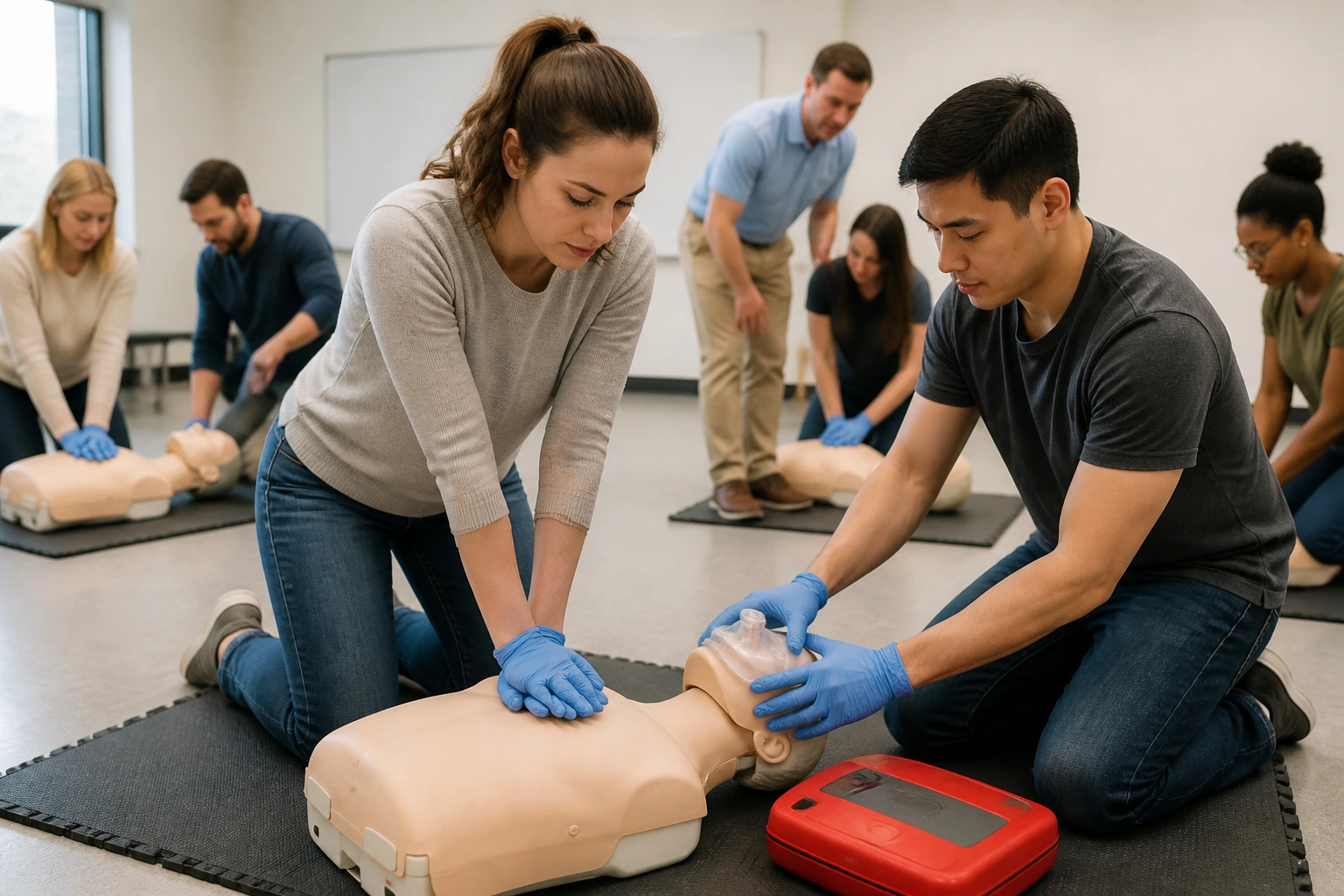
Immediate CPR is required for someone who is unconscious and not breathing normally. Chest compressions and rescue breaths follow the ratio taught in your course, pushing hard and fast on the chest, and an AED should be applied as soon as one is available. Most AED units guide you through pad placement with voice prompts once turned on. CPR certification is essential for emergency responders and anyone who wants to act confidently and correctly in the moments before paramedics arrive. Call 9-1-1 for any life threatening emergency before starting CPR, or have someone else call while you begin.
Heart Attack and Stroke Warning Signs
Heart attack symptoms often include chest pressure or pain, discomfort spreading to the arm, jaw, or back, shortness of breath, and sometimes nausea or fatigue rather than obvious chest pain. Signs of a stroke, sudden weakness on one side of the face, arm, or leg, along with slurred speech, are another common quiz topic. Both are life threatening, and both require an immediate call to 9-1-1, not a wait-and-see approach.
Severe Bleeding and Shock
Applying direct pressure is the first step to control heavy bleeding, use a clean cloth and maintain firm, steady pressure over the wound. If someone is bleeding heavily, direct pressure is more important than elevating the limb, elevation can help but should never come at the cost of maintaining pressure. Watch for signs of shock, pale or clammy skin, rapid breathing, weakness, and keep the person warm and lying down if it’s safe to do so.
Burns
Cool a burn under cool running water for at least 10 minutes, longer for more severe burns. Alcohol or butter should not be applied to burns for treatment, despite the old advice you may have heard. Cover the burn loosely once it’s been cooled, and never apply ice directly to a burn, ice is reserved for a different category of injury entirely.
Head Injuries
Any head injury involving loss of consciousness, confusion, or vomiting needs urgent medical attention. Even when someone insists they feel fine, monitor closely for worsening symptoms, encourage rest, and don’t let them dismiss it just because there’s no visible wound.
Severe Allergic Reactions
Always ask about allergies when assessing a casualty for first aid. Severe symptoms of an allergic reaction can include swelling of the face or throat and difficulty breathing, this is anaphylaxis, and it’s life threatening. If the person has an epinephrine auto-injector, help them use it and call 9-1-1 immediately.
Sprains and Strains: The R.I.C.E. Method
The acronym R.I.C.E. stands for Rest, Ice, Compression, and Elevation. Rest the injured area, apply ice to reduce swelling, use compression with a bandage, and elevate the limb above heart level where possible.
What Belongs in a First Aid Kit
A first aid kit should contain essential items for treating injuries: sterile dressings, adhesive bandages, gauze, gloves, a triangular bandage, scissors, and any personal medications a workplace or household regularly needs on hand.
Quick Knowledge Check
Try these before you look at the answers. This isn’t a substitute for your course quiz, just a way to see where your recall stands right now.
- What’s the universal sign for choking?
- How long should you cool a minor burn under running water?
- What should you check for before approaching an injured person?
- What does the acronym R.I.C.E. stand for?
- Should you elevate a heavily bleeding limb before or after applying direct pressure?
Answers: 1) Clutching the throat with one or both hands. 2) At least 10 minutes. 3) That the scene is safe. 4) Rest, Ice, Compression, Elevation. 5) After, direct pressure comes first.
If you got most of these right, your instincts are solid, the retest is just a formality. If a couple caught you off guard, that’s useful information, not a bad sign, now you know exactly what to review.
How to Prepare for a Retest Without Spiraling
Give yourself a few minutes before you attempt the retest, not to cram, but to breathe and re-center. Reread the specific section tied to whatever you got wrong rather than re-reading the entire manual, focused review beats panicked review every time.
If your instructor offers to walk through the material with you, take them up on it. This is exactly the kind of support instructors are trained to give, and asking for it is a sign of good judgment, not weakness.
Why This Matters Beyond the Classroom
First aid training is essential for workplace safety, and employers must comply with health and safety regulations that require certified first aiders on-site. That’s part of why the quiz exists: it’s not busywork, it’s confirmation that the knowledge is actually there when it’s needed. First aid training can save lives in emergencies, and a quiz you retake and pass properly is worth more than one you scraped through on a lucky guess.
If you’re taking this course through your CPR/AED training or an Intermediate First Aid course, the same principle applies whether you’re brand new or coming back for recertification: a retest isn’t a setback, it’s the process doing its job.
Learn These Skills Hands-On, Not Just on Paper
BLS training builds the same confidence a quiz can only test.
Bring Consistent First Aid Standards to Your Workplace
Group training keeps your whole team certified and compliant together.
Failing a first aid quiz is common and does not disqualify you from certification. A quick review and retest, often the same day, is the normal process, and understanding why an answer was wrong matters far more than the score itself.
Join 150,000+ Students Who Are Certified
Find a class near you and take the first step today.
Frequently Asked Questions: Failing a First Aid Quiz
Q1: Will failing a quiz affect my final certification or show up on my employer’s record?
A: No. Certification is based on successfully completing the course overall, including a passed quiz and skills assessment, not on your very first attempt at either. Employers generally only see whether you hold a valid, current certificate. Instructors don’t report individual quiz attempts unless a workplace specifically arranges that kind of internal reporting, which is uncommon for standard course enrollment.
Q2: How many times can I retake a first aid quiz if I don’t pass?
A: Policies vary slightly by course and instructor, but most allow at least one immediate retest after reviewing the missed material, and instructors will work with you further if a second attempt still doesn’t go well. The goal is genuine comprehension, not limiting your attempts. If you’re unsure of the specific policy for your class, ask your instructor directly at the start of the day.
Q3: What’s a passing score on a typical first aid quiz?
A: Most recognized providers, including the American Heart Association and the American Red Cross, require a minimum score of 80% on the written evaluation. Your instructor will confirm the exact threshold for your specific course. The number matters less than making sure you understand the reasoning behind any question you missed.
Q4: Do I need to retake the entire course if I fail the quiz?
A: No. A failed quiz typically leads to a focused review and a retest, not a full course repeat. Retaking the entire course from scratch is reserved for much rarer situations, like missing significant class time. For the vast majority of students, a quiz stumble is resolved within the same session.
Q5: What topics are most commonly covered on a first aid quiz?
A: Expect questions on scene safety, the primary survey, choking, CPR and AED use, severe bleeding, shock, burns, head injuries, and severe allergic reactions. Course-specific quizzes may also include sprains, strains, and first aid kit contents. These topics map directly to the skills you’ll practice hands-on during the course.
Q6: Is the quiz open-book or closed-book?
A: This depends on the course and instructor, some quizzes are closed-book to test recall under simulated pressure, while others allow reference materials since the goal is comprehension rather than memorization. Ask your instructor at the start of class so you know what to expect and can prepare accordingly.
Q7: What should I do if I’m feeling too anxious to focus during the quiz?
A: Pause, take a slow breath, and read the question again rather than pushing through in a rush. If your mind goes blank on a specific question, move on and come back to it once you’ve regained focus. Letting your instructor know you’re feeling anxious before the quiz starts can also help, they can offer a quieter space or a few extra minutes if needed.
More FAQs: Retesting and Moving Forward
Q8: Can I ask my instructor for extra help before retesting?
A: Yes, and it’s encouraged. Instructors expect students to ask questions about material they found confusing, that’s part of what the review period between attempts is for. Asking for help is a sign that you’re taking the material seriously, not a sign that you’re behind.
Q9: What if I fail the quiz a second time?
A: A second missed attempt usually leads to a more focused, one-on-one review with your instructor before a further retest. It’s uncommon, but it happens, and instructors are equipped to work through it with you rather than treat it as a dead end. The goal remains the same: making sure you genuinely understand the material before you finish the course.
Q10: Does a low quiz score mean I’m not cut out for first aid work?
A: No. A quiz score reflects how well you recalled specific material on a specific day, not your overall capability or character. Many capable, confident first responders struggled with a written quiz at some point in their training. What matters is that you close the gap before you leave the course, and the retest process exists specifically to help you do that.
Q11: Will recertification quizzes be harder than my first course?
A: Not necessarily harder, but they will assume you already have a working foundation, so pacing may feel quicker. If it’s been a while since your last course, a bit of review beforehand can help close any gaps that opened up over time. Recertification is designed to refresh and confirm your knowledge, not to introduce entirely new material.
Q12: How can I study effectively between the quiz and the retest?
A: Focus specifically on the topic tied to each question you missed rather than rereading the whole manual. Try explaining the concept out loud in your own words, if you can teach it back clearly, you likely understand it well enough for the retest. A short, focused review beats a long, unfocused one every time.
Q13: What if English isn’t my first language and the wording is confusing?
A: Let your instructor know. Many instructors can rephrase a confusing question, clarify unfamiliar terms, or give you a bit more time to work through the language itself. The quiz is meant to test your first aid knowledge, not your vocabulary, and instructors generally want to remove that barrier wherever they can.
Q14: Are practical skills assessed separately from the written quiz?
A: Yes. Most courses assess your hands-on skills, like CPR technique or bandaging, separately from the written quiz. Struggling with one doesn’t automatically affect the other, and instructors evaluate both to get a complete picture of your readiness, not just a single score.
Q15: How soon after failing can I retake the quiz?
A: Often the same day, right after a short review of the material you missed. Some courses build in a brief pause to let the correction sink in before you try again. The exact timing depends on your specific course structure, so check with your instructor if you’re unsure.
Reviewed By: Ashkon Pourheidary, B.Sc. Hons Neuroscience, Co-Founder of Coast2Coast First Aid & Aquatics and Red Cross Instructor Trainer since 2011.
Source: OSHA, First Aid Standard (29 CFR 1910.151)