We offer courses in Canada and the US. If you are experiencing issues with our website and need help to register, or if you have questions, please call us at 866-291-9121.
If you are facing any issues with your online course, registration, or training, please click here to submit a help request.
If you are facing any issues with your online course, registration, or training, please click here to submit a help request.
Staying certified in CPR is essential for workplace requirements and personal preparedness. This guide walks you through how to renew your CPR certification in Ontario, covering recertification requirements, step-by-step renewal instructions, certificate validity, and where to get CPR recertification in the GTA.
This year, Coast2Coast First Aid & Aquatics is thrilled to celebrate a major milestone—our 10th anniversary. Over the past decade, we’ve been dedicated to empowering individuals with the skills needed to respond confidently in emergencies, and we’re marking this special occasion with an exciting initiative that highlights our commitment to giving back to the community.
As winter makes its grand entrance, draping the mountains in a blanket of snow, it’s the perfect time to dive into the thrilling world of snowboarding and skiing. Picture this: the cool mountain breeze gently touching your hair, the crisp air invigorating your senses, and an electrifying excitement surging through your veins. It’s more than just an activity; it’s a chance to craft unforgettable memories that will stick with you for a lifetime.
Whether you’re an adventurous winter enthusiast or just dealing with the cold in your daily routine, here are some first aid skills you must know in the winter to ensure safety.
If you live in Mississauga, Ontario, then you don’t have to go to the neighbouring city, Toronto, to recertify your First Aid CPR Certificate. At Coast2Coast, we have a First Aid training facility in the city of Mississauga where various courses and recertification training programs are run.
Here is our complete guide on how to recertify your First Aid & CPR certificate in Mississauga.
Mississauga First Aid & CPR/AED Recertification
First Aid Training & CPR courses in Mississauga prepare you to help others. These courses are aimed to provide you the knowledge to help others in emergencies. These life-saving skills are invaluable because you are given the confidence to help anyone in a situation, whether they are involved in an accident or face a sudden illness.
Who is eligible for the recertification course?
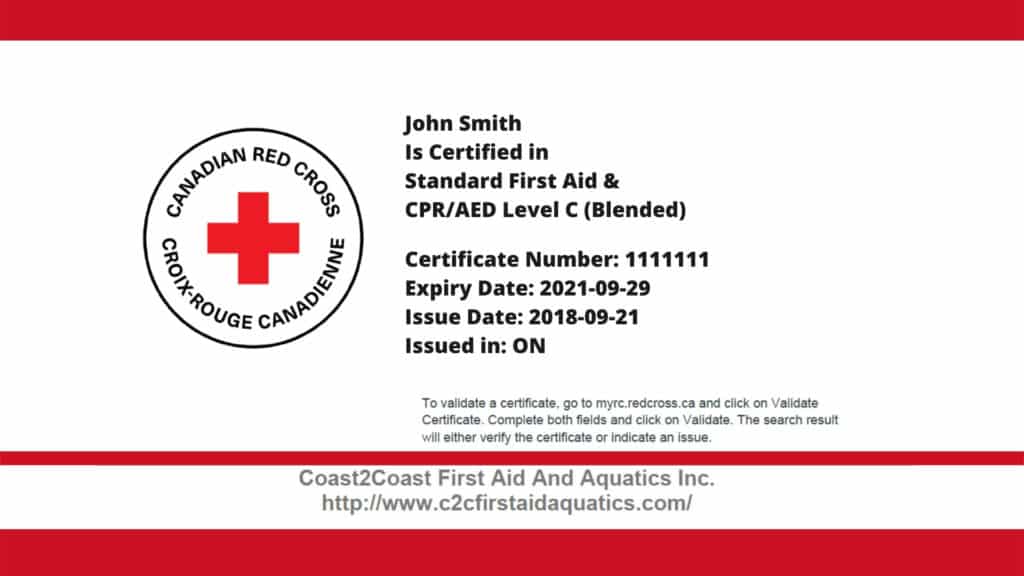
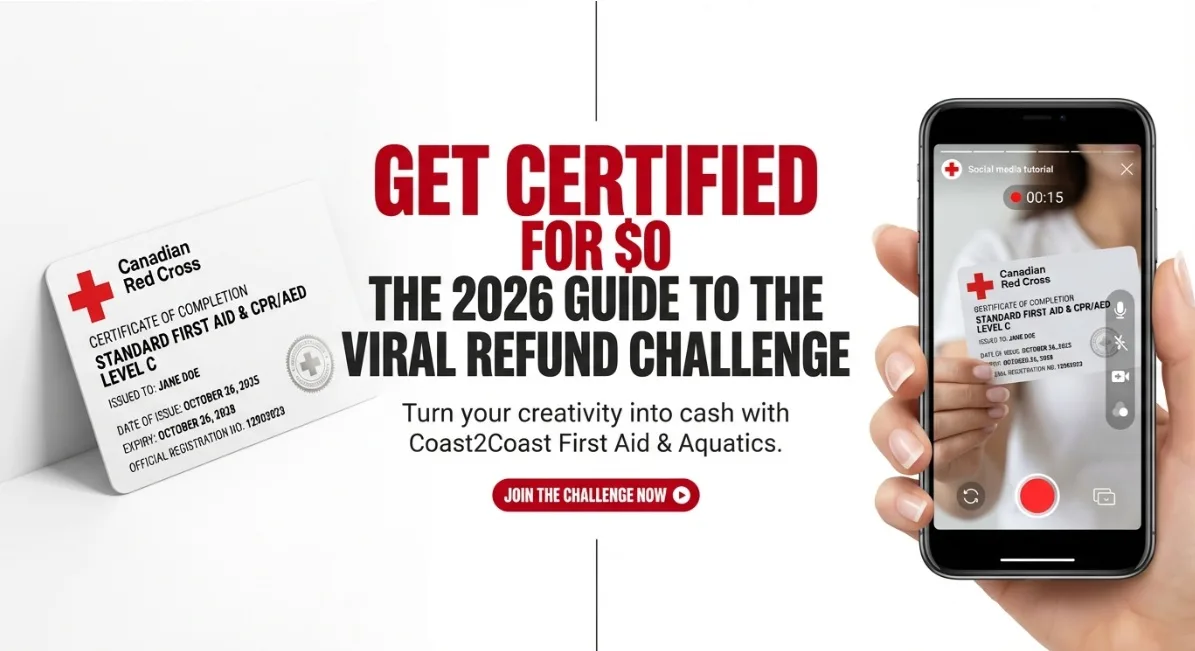
First Aid and CPR/AED certificates from the Canadian Red Cross expire after three years. You need to recertify your current certificate before it expires, otherwise, you need to do the full course again.
Recertification courses allow you to renew your training quickly and economically compared to the full training courses.
The criteria required to enroll depends on the level of training required. However, for all courses at Coast2Coast, including the one in Mississauga, you can only do the recertification certificate if you have a valid (not expired) Canadian Red Cross certificate.
If you have a CPR/AED Level C, there are no restrictions on how many times you can be recertified. This means that you can take a Recertification course again and again. On the other hand, the Standard First Aid & CPR/AED Level C can only be recertified once. After the first recertification, you need to take a full course again. Therefore, you are required to alternate between a full course and a recertification course. This is the best way to ensure you refresh and memorize your life-saving skills, while also learning about all the new techniques practiced since your last training.
Stay Certified, Stay Prepared in Mississauga!
Renew your skills with our recertification course and ensure you’re up-to-date with the latest techniques and protocols. Don’t let your certification lapse—our expert instructors are here to help you refresh your knowledge and confidence.
In the Coast2Coast recertification course, your knowledge is renewed and you are offered the chance to refresh your skills, ensuring you are always ready to help others.
During the Mississauga recertification program, your instructors highlight any changes in the curriculum. Usually, changes and new additions are made to the curriculum every three to five years. These changes alter how some things are done, and the recertification course remains critical to keeping you up-to-date with how to treat people and save lives.
What do you need for the Mississauga Recertification?
The only prerequisite for the Mississauga Recertification Course is a valid Canadian Red Cross Certificate. Below, you can read more about training courses that can or cannot be recertified:
For the Standard First Aid & CPR Recertification Course:
Your current valid certificate must be from the full training course from either the traditional two-day training or the Online Blended training. If your current certificate says “Recertification”, you DO NOT qualify for a Recertification course and you must register for the full course or the Online Blended course.
For the CPR/AED-C Recertification Course:
Unlike Standard First Aid, CPR/AED-C CAN be recertified as many times as you like.
For the CPR/AED-A Recertification Course:
CPR/AED-A certificates CANNOT be recertified.
For the Emergency First Aid & CPR Recertification Course:
The Emergency First Aid & CPR-C CANNOT be recertified.
Training Course Duration
Depending on whether you want a blended or traditional course, the time needed to complete the content is the same. At Coast2Coast, we are currently offering the Online Blended format of the course. In the blended course, you have an online component consisting of theory, knowledge, and interactive activities. At a later date, you will attend a shortened in-class session to practice hands-on skills. On completion, you receive your certificate.
Your online portion must be completed before your in-class date.
CPR-A – 3 hours online and 3 hours in-class
CPR-C – 3 hours online and 4 hours in-class
Emergency First Aid & CPR-C – 4 hours online and 5 hours in-class
Standard First Aid & CPR-C – 8 hours online and 8 hours in-class
Marine Basic First Aid & CPR-C – 8 hours online and 8 hours in-class
Get Registered for your Recertification Training in Mississauga
Ready to register for your Recertification course in Mississauga? Get started now! If you do not qualify for the Recertification training, check out our upcoming first aid training facility in the city of Mississauga. Regardless of your choice, you will learn amazing life-saving skills and earn a WSIB approved certificate, valid for 3 years. See you soon!
Register for First Aid Training
Register today for a First Aid Training course and learn how to deal with emergencies and keep your loved ones safe! Check out our facilities and book your spot now.
Summary: Being prepared for a medical emergency in Mississauga is both a community responsibility and a strict legal requirement under Ontario’s WSIB Regulation 1101. By securing Canadian Red Cross certification under the updated 2026 CSA Z1210:24 standards, residents and employees learn to administer High-Performance CPR, utilize AEDs, and manage severe trauma. From corporate offices near Square One to the massive logistics hubs near Pearson Airport, formal CPR and AED training bridges the critical “Platinum Minutes” before Peel Regional Paramedics arrive.
Comprehensive CPR Training: Essential Guide to Certification in Mississauga
Mississauga is the sixth-largest city in Canada, with a rapidly diversifying population of over 800,000 people and a thriving economy that spans heavy manufacturing, technology, healthcare, and professional services. In a busy urban center of this size and complexity, sudden medical emergencies are a daily occurrence. Whether at home, in the office, at a community event in Celebration Square, or on the street, the ability to perform high-quality first aid and CPR can literally be the deciding factor in whether someone survives a cardiac emergency.
If you live or work in Mississauga and have been considering getting certified, this 2026 guide covers everything you need to know. From understanding the rigorous practical skills assessment to meeting strict workplace safety requirements, choosing the right training location in Mississauga is the first step toward becoming a confident, highly capable first responder.
Why CPR Training Matters in Mississauga’s Fast-Paced Environment
Cardiac arrest can strike anyone at any time, regardless of age, fitness level, or medical history. When it happens, the heart suddenly stops beating effectively, and without immediate physical intervention, irreversible brain death can occur within minutes. In Mississauga, where Peel Regional Paramedic Services handles an exceptionally high volume of emergency calls across a massive geographic area, ambulance response times can be affected by heavy 401/403 traffic, severe weather, and call volume.
During the critical “Platinum Minutes” before paramedics arrive, bystander CPR is the absolute most effective way to keep a cardiac arrest victim alive. High-quality chest compressions act as a manual pump, maintaining vital blood flow to the brain and organs. Research from resuscitation councils shows that bystander CPR can double or triple survival rates from out-of-hospital cardiac arrests.
Mississauga’s diverse population also means that medical emergencies can present unique logistical challenges, including language barriers and varying levels of health literacy. Quality CPR training from a certified provider like Coast2Coast First Aid and Aquatics prepares you to take command of these chaotic scenes, designate bystanders to call 911, and deploy barrier devices to safely perform rescue breathing.
The Science of Survival: High-Performance CPR and CCF
Modern Canadian Red Cross training goes far beyond basic chest compressions. In 2026, the curriculum emphasizes High-Performance CPR, which heavily focuses on maximizing the Chest Compression Fraction (CCF). CCF is the percentage of total resuscitation time that is spent actively compressing the chest. By learning to minimize pauses—such as when applying AED pads or giving breaths—you drastically improve the patient’s hemodynamic pressure.
To ensure mastery of this clinical concept, our Mississauga classes utilize state-of-the-art, high-fidelity feedback manikins during the practical skills assessment. These devices provide real-time digital feedback on your compression depth and rate, ensuring you are physically prepared to meet the intense demands of a real-life rescue.
Watch: How To Perform CPR – Coast2Coast Official
Workplace CPR Requirements and WSIB Compliance in Mississauga
Ontario’s workplace safety legislation requires employers to provide adequate first aid coverage for their employees. In Mississauga, where the business community includes everything from massive logistics warehouses near Pearson Airport to corporate high-rises in the City Centre, understanding and meeting these requirements is essential for WSIB Regulation 1101 compliance.
The specific requirements depend entirely on the size of the workplace per shift. Generally, workplaces with 1 to 5 employees must have an Emergency (Basic) First Aid responder. Workplaces with 6 or more employees must have at least one certified Standard (Intermediate) First Aid responder available during all working hours, alongside a fully stocked Type 2 or Type 3 first aid kit that meets the new CSA Z1210:24 standards.
Coast2Coast makes it completely effortless for Mississauga businesses to meet their legal obligations by offering private group training. Our instructors bring all necessary equipment to your facility, customizing the emergency scenarios to address the specific hazards of your manufacturing plant, retail store, or office space.
Granular Niche Targeting: Career Advancement in Peel Region
Holding a valid CPR and First Aid certificate is a massive competitive advantage in Mississauga’s diverse job market. Many specific roles have strict certification prerequisites that must be met before an applicant can even be interviewed:
Security Guards & Loss Prevention: Personnel patrolling malls like Square One must hold Standard First Aid to maintain their provincial security licenses and handle public medical crises.
Construction Foremen & Logistics Staff: High-risk environments demand leaders trained in severe bleeding control, crush injuries, and scene safety.
Daycare Staff & Education: Early childhood educators must possess CPR Level C to safely address pediatric emergencies like severe anaphylaxis and choking.
Healthcare Professionals: Clinic staff, dental hygienists, and pharmacists require Basic Life Support (BLS) to master rapid pulse checks, team dynamics, and oxygen administration using Bag-Valve-Masks.
Hospitality & Non-Aquatic Staff: Hotel and restaurant managers must be prepared to protect patrons and staff alike from sudden cardiac events.
Reducing Corporate Liability and Insurance Premiums
For Mississauga business owners, investing in CPR training goes beyond basic compliance; it is a vital strategy for reducing corporate liability. If a severe workplace incident occurs, Ministry of Labour investigators and private liability insurers will heavily scrutinize your training records. Ensuring your staff has successfully passed their written examination and skills testing proves legal due diligence.
Furthermore, many commercial insurance providers offer lucrative premium reductions to companies that can demonstrate a proactive, highly trained safety culture, offsetting the initial cost of the group training courses.
Flexible Learning: Blended Online Training Options
Coast2Coast understands that Mississauga residents face demanding schedules and long commutes. To make certification as accessible as possible, we offer a highly popular blended online learning format. This allows you to complete the heavy theoretical modules online at your own pace from your home or office. Once completed, you attend a significantly shorter, fast-track in-person session focused entirely on your hands-on skills practice and final evaluation.
When your certification approaches its mandatory three-year expiration date, you can seamlessly take a recertification course to renew your legal credentials without repeating the full, multi-day certification program.
Get CPR Certified in Mississauga Today
Be prepared to make a lifesaving difference in a cardiac emergency. Register for a WSIB-approved CPR or first aid course with Coast2Coast and secure your 2026 Canadian Red Cross certification.
Question 1: Where can I take CPR training in Mississauga?
Answer: Coast2Coast operates multiple premier training facilities accessible throughout Mississauga and the GTA. Visit our course locations page to find the most convenient session for you.
Question 2: How long does a standard CPR course take?
Answer: A standalone CPR/AED Level C course takes about 4 to 6 hours. Emergency First Aid takes one full day, and Standard First Aid takes two days. Blended online options cut the in-person time in half.
Question 3: How much does CPR training cost in Mississauga?
Answer: Course pricing varies based on the specific level of certification (e.g., CPR-only vs. Standard First Aid). We offer highly competitive rates and group discounts for businesses training multiple employees.
Question 4: Is my CPR certification valid outside of Ontario?
Answer: Yes. Canadian Red Cross certifications are federally recognized across all provinces and territories in Canada, and are widely respected internationally.
Question 5: Does WSIB Regulation 1101 apply to my small retail store?
Answer: Yes. Any workplace with 1 to 5 employees per shift is legally required to have at least one staff member holding an Emergency First Aid certificate and an accessible Type 1 kit.
Question 6: What is the difference between Level A and Level C CPR?
Answer: Level A focuses exclusively on adult resuscitation. Level C is much more comprehensive, covering adult, child, and infant techniques, which is required for daycare and educational staff.
Question 7: Do healthcare workers take standard CPR?
Answer: No. Healthcare professionals, such as nurses and dental staff in Mississauga, must take Basic Life Support (BLS), which covers advanced clinical protocols like oxygen administration and BVM usage.
Question 8: Is AED training included in the course?
Answer: Absolutely. Comprehensive Automated External Defibrillator (AED) training is a mandatory component of all our CPR and First Aid certification courses.
Question 9: Can I fail the practical skills assessment?
Answer: While our instructors provide extensive coaching, you must demonstrate the physical ability to perform effective compressions. If you cannot meet the strict physical standards, certification cannot be issued.
Question 10: What happens if my CPR certification expires?
Answer: In Ontario, there is zero grace period. If your certificate expires, you are no longer WSIB compliant and must retake the full original course instead of a shorter recertification class.
Question 11: Are barrier devices provided during training?
Answer: Yes. To ensure strict hygiene, Coast2Coast provides single-use barrier devices and training pocket masks for all students to practice rescue breathing safely during the evaluation.
Question 12: Do security guards in Mississauga need CPR certification?
Answer: Yes. Security guards must maintain a valid Standard First Aid and CPR Level C certificate to legally keep their Ontario provincial security licenses active.
Question 13: Is there a written examination required?
Answer: Yes, a multiple-choice written examination is required to verify your theoretical understanding of the 2026 CSA Z1210:24 guidelines and protocols.
Question 14: How quickly do I receive my Red Cross certificate?
Answer: Upon successful completion of both the practical and written exams, you will receive your official digital Canadian Red Cross certificate via email, typically within 24 to 48 hours.
Question 15: Is workplace CPR training tax deductible?
Answer: For businesses, employee safety training is a deductible corporate expense. For individuals, it may be deductible if it is a strict requirement for your employment. We recommend consulting a tax professional.
A
About the Author
Ashkon Pourheidary, B.Sc. (Hons) — Co-Founder, Coast2Coast First Aid & Aquatics
Ashkon has been a certified First Aid and CPR instructor since 2011 and an Instructor Trainer since 2013. He is also a certified Emergency Medical Responder (EMR) instructor, Psychological First Aid instructor, and BLS (Basic Life Support) instructor. Ashkon graduated with honours with a Bachelor of Science in Neuroscience from the University of Toronto in 2016. As co-founder of Coast2Coast First Aid & Aquatics, he has helped grow the organization to over 30 locations across Canada and into the United States. Ashkon has served on the First Aid Council for the Canadian Red Cross. He spends his time coaching the team of over 100 instructors at Coast2Coast to ensure that students training at Coast2Coast locations receive the best training experience. Connect on LinkedIn
Summary: Protecting the safety of Mississauga’s 800,000+ residents requires proactive preparation and clinical confidence. Under WSIB Regulation 1101 and the updated CSA Z1210:24 standards, businesses and residents must bridge the gap during the critical “Platinum Minutes” of an emergency. By securing WSIB-approved first aid and CPR certification, you learn to master High-Performance CPR, utilize AEDs, and manage severe trauma in high-density environments. Whether for workplace compliance at a logistics hub or personal safety at home, formal training is the definitive must-have skill for 2026.
Comprehensive First Aid Training: Essential Lifesaving Skills for Mississauga Residents
Mississauga is one of Canada’s largest and most rapidly expanding cities, home to over 800,000 residents and a thriving business community that powers the national economy. With high-volume transit corridors like the 401, 403, and QEW, massive industrial zones, and dense residential neighborhoods, the statistical probability of encountering a medical emergency is significant. Understanding first aid training and possessing the physical muscle memory to use it effectively can be the only factor standing between a positive clinical outcome and a preventable tragedy.
Lifesaving skills are no longer reserved exclusively for paramedics and healthcare professionals. Modern first aid is a practical, everyday capability that empowers ordinary citizens to act decisively when a loved one or stranger is injured, choking, or experiencing a cardiac event. In a city like Mississauga, where emergency response times can be impacted by urban congestion and peak-hour traffic, knowing exactly what to do in the first five minutes of a crisis is absolutely critical. By enrolling in a training location in Mississauga, you join a network of responders dedicated to community resilience.
The Science of Survival: High-Performance CPR and CCF
In 2026, the Canadian Red Cross curriculum has evolved to prioritize the “Physiology of the Save.” A core component of our CPR and AED training is High-Performance CPR. This methodology focuses on maximizing the Chest Compression Fraction (CCF)—the percentage of time during a rescue attempt that active compressions are being performed. Clinical data proves that minimizing pauses for breaths or pad application significantly maintains the hemodynamic pressure needed to keep the brain alive.
During your practical skills assessment, you will utilize high-fidelity feedback manikins that monitor your compression depth (at least 2 inches for adults) and rate (100–120 beats per minute). You will also learn the critical use of barrier devices, such as one-way pocket masks, to deliver rescue breaths safely without the risk of infectious disease transmission.
WSIB Regulation 1101: Mandatory Workplace Compliance in Mississauga
Ontario’s Workplace Safety and Insurance Act mandates that every employer in Mississauga—from corporate offices near Square One to massive logistics warehouses near Pearson Airport—maintains adequate first aid coverage. To meet the certification prerequisites of the updated CSA Z1210:24 standards, workplaces are categorized by their headcount per shift:
Small Workplaces (1–5 Employees): Must have at least one person on duty with Emergency (Basic) First Aid and a Type 1 first aid kit.
Medium to Large Workplaces (6+ Employees): Require a minimum of one Standard (Intermediate) First Aider and a Type 2 or Type 3 kit, depending on the hazard level.
High-Risk Industries: Manufacturing, construction, and chemical processing sites often require multiple responders and advanced trauma equipment, including oxygen administration kits.
Safety Tip: Do not just aim for the minimum legal requirement. Safety experts recommend training at least 25% of your total workforce in Standard First Aid to account for vacation, illness, and remote work gaps. Coast2Coast offers private group training sessions delivered directly to your Mississauga facility.
Watch: How to Perform High-Quality CPR
Granular Niche Targeting: Industry-Specific Risks in Mississauga
Mississauga’s diverse economy means responders must be prepared for a variety of trauma scenarios. Our training is customized to address the specific needs of local industries:
Logistics and Warehousing (Pearson Hub): Focus on crush injuries, heavy equipment accidents, and managing shock in large-scale facilities.
Manufacturing and Industrial: Emphasis on severe bleeding control (including tourniquet application), chemical burns, and eye injuries.
Retail and Hospitality (Square One Area): Training for sudden cardiac arrests in crowded spaces, choking response, and recognizing strokes using the FAST method.
Security and Property Management: Mandatory Standard First Aid for those seeking to maintain their provincial security licenses and protect high-rise residential complexes.
Daycare and Education: Specialized Child Care First Aid focusing on pediatric anaphylaxis, infant choking, and childhood bone/joint injuries.
The Resume Advantage: Career Advancement in Mississauga
Holding a valid, unexpired Canadian Red Cross certificate is a massive asset for career advancement. In Mississauga’s competitive job market, hiring managers prioritize candidates who have already successfully passed their written examination and skills testing. It demonstrates proactive responsibility and saves the employer onboarding training costs. Whether you are a student looking for a summer role or a professional in healthcare requiring Basic Life Support (BLS), staying certified is a strategic career move.
Flexible Training: Blended Online Learning
Coast2Coast understands that Mississauga residents lead demanding lives. To accommodate your busy schedule, we offer the highly popular blended online learning format. This hybrid model allows you to complete the heavy theoretical modules online at your own pace. Once completed, you attend a significantly shorter in-person session at our Mississauga facility to complete your hands-on practical skills assessment.
If your current three-year certificate is nearing its strict expiry date, our streamlined recertification courses offer a rapid review of the latest 2026 protocols, ensuring you remain legally compliant and clinically ready without retaking the full multi-day program.
Register for First Aid Certification in Mississauga Today
Be prepared to make a lifesaving difference in your community. Register for a WSIB-approved course with Coast2Coast and secure your 2026 Canadian Red Cross certification.
Question 1: Where can I take a first aid course in Mississauga?
Answer: Coast2Coast operates premier training facilities throughout Mississauga and the GTA. Visit our course locations page to find the session most convenient for your home or workplace.
Question 2: Is first aid training mandatory for Mississauga workplaces?
Answer: Yes. Under Ontario’s WSIB Regulation 1101, all workplaces with one or more employees must have at least one staff member certified in First Aid on every shift. Failure to comply can result in severe Ministry of Labour fines.
Question 3: What is the difference between Emergency and Standard First Aid?
Answer: Emergency First Aid is a one-day “Basic” course covering core lifesaving skills. Standard First Aid is a two-day “Intermediate” course that adds head/spinal injuries, environmental emergencies, and more in-depth trauma care required by most employers.
Question 4: How long is my first aid certificate valid in Ontario?
Answer: Official Canadian Red Cross first aid and CPR certificates are valid for exactly three years. You must attend a recertification course before the expiry date to stay legally compliant.
Question 5: What is High-Performance CPR?
Answer: This is a clinical approach focused on high-quality compressions and maximizing the Chest Compression Fraction (CCF). It is a mandatory part of 2026 training to improve cardiac arrest survival rates.
Question 6: Can I complete my training entirely online?
Answer: No. While you can do the theory online via blended learning, a physical, hands-on practical skills assessment with a certified instructor is legally required for WSIB certification.
Question 7: Are Automated External Defibrillators (AEDs) covered in the course?
Answer: Absolutely. Comprehensive AED training is a mandatory component of every first aid and CPR course we offer.
Question 8: Do Mississauga security guards need specific first aid training?
Answer: Yes. Security guards in Ontario must hold a valid Standard First Aid and CPR Level C certificate to maintain their provincial security license.
Question 9: What should be in a Mississauga workplace first aid kit?
Answer: Under CSA Z1210:24, your kit must match your workplace size and hazard level. Standard offices usually require a Type 2 kit containing bandages, gauze, tourniquets, and barrier devices.
Question 10: Is there a written exam required to pass?
Answer: Yes. To receive your Red Cross certification, you must successfully pass a multiple-choice written examination and a physical practical skills assessment.
Question 11: Are barrier devices provided for rescue breathing practice?
Answer: Yes. Safety is our priority. We provide all students with single-use barrier devices and training pocket masks during the practical evaluation.
Question 12: Do daycare staff need specialized first aid?
Answer: Yes. Early childhood educators and daycare staff in Mississauga are required by provincial licensing to hold Standard First Aid with CPR Level C (Pediatric focus).
Question 13: How quickly do I receive my digital Red Cross certificate?
Answer: Once you successfully pass both exams, your digital certificate is typically emailed to you within 24 to 48 hours.
Question 14: Does workplace first aid training lower insurance premiums?
Answer: Yes. Many commercial insurers recognize a fully certified staff as a proactive risk-mitigation factor and may offer premium reductions to Mississauga businesses.
Question 15: Can a large company book private training on-site?
Answer: Yes. Coast2Coast specializes in private group training. We send our instructors and equipment directly to your Mississauga office or warehouse to train your entire team at once.
A
About the Author
Ashkon Pourheidary, B.Sc. (Hons) — Co-Founder, Coast2Coast First Aid & Aquatics
Ashkon has been a certified First Aid and CPR instructor since 2011 and an Instructor Trainer since 2013. He is also a certified Emergency Medical Responder (EMR) instructor, Psychological First Aid instructor, and BLS (Basic Life Support) instructor. Ashkon graduated with honours with a Bachelor of Science in Neuroscience from the University of Toronto in 2016. As co-founder of Coast2Coast First Aid & Aquatics, he has helped grow the organization to over 30 locations across Canada and into the United States. Ashkon has served on the First Aid Council for the Canadian Red Cross. He spends his time coaching the team of over 100 instructors at Coast2Coast to ensure that students training at Coast2Coast locations receive the best training experience. Connect on LinkedIn
Summary: In 2026, Mississauga’s rapid urban expansion and high population density make immediate bystander intervention a critical necessity. Statistics show that nearly 80% of cardiac arrests occur in private homes, meaning your training is most likely to save a family member. By securing WSIB-approved CPR and AED certification, you bridge the gap during the “Platinum Minutes” before Peel Regional Paramedics arrive. This guide explores why High-Performance CPR mastery is the essential standard for Mississauga residents, professionals, and business owners complying with WSIB Regulation 1101.
Essential Lifesaving Skills: 4 Reasons You Need CPR Training in Mississauga
Every year, thousands of Canadians experience sudden cardiac arrest (SCA) outside of a hospital setting, and the national survival rate remains alarmingly low at approximately 10%. In dynamic communities like Mississauga, where families, daily commuters, and corporate professionals navigate a fast-paced environment, a medical emergency can strike without a second’s notice. Knowing how to perform high-quality first aid training is no longer just a “nice-to-have” resume addition; it is a genuinely life-saving capability that determines the outcome for someone in your family, your workplace, or your neighborhood.
CPR, or cardiopulmonary resuscitation, is a clinical technique designed to maintain the “Physiology of the Save” by keeping oxygenated blood flowing to the brain and vital organs when the heart stops. Without immediate intervention, irreversible brain damage begins within four to six minutes. While emergency medical services in Mississauga and the greater Peel Region are world-class, traffic congestion on the 403 or QEW can delay response times. Those first minutes are the window where a bystander trained at a Mississauga training location becomes the primary lifesaver.
1. You Could Save the Life of a Family Member at Home
Data from the Heart and Stroke Foundation reveals a staggering reality: roughly 80% of all out-of-hospital cardiac arrests happen in private residences. This means the person most likely to depend on your skills is not a stranger in a park, but your spouse, parent, or child. In a crisis, the human brain often defaults to panic, but formal training converts that fear into practiced muscle memory. By passing a practical skills assessment, you ensure that you can act on instinct rather than hesitation.
In Mississauga’s residential areas—from Port Credit to Churchill Meadows—emergencies happen during ordinary moments: shoveling snow, eating dinner, or during high-stress work-from-home hours. Being prepared allows you to initiate High-Performance CPR and deploy an Automated External Defibrillator (AED) during the critical “Platinum Minutes” before professional help arrives.
2. Meeting WSIB Regulation 1101 and CSA Z1210:24 Standards
Mississauga is a massive economic engine for Ontario, housing thousands of businesses from retail hubs near Square One to industrial warehouses by Pearson Airport. Under the Workplace Safety and Insurance Board (WSIB) Regulation 1101, Ontario employers are legally mandated to have certified first aiders on every shift. Failure to maintain these certification prerequisites results in severe Ministry of Labour fines and significant corporate liability.
Modern 2026 standards now align with CSA Z1210:24, which requires responders to be trained in Basic or Intermediate levels based on workforce size. Holding a current certificate proves to employers that you are a “Safety Champion,” often leading to faster promotions and career advancement in sectors like security, daycare, and manufacturing. For those in clinical roles, our Basic Life Support (BLS) training is the gold standard for healthcare providers in the Peel Region.
3. Navigating the “Vertical Response Delay” in Mississauga High-Rises
As Mississauga evolves with towering condominium developments in the City Centre, “Vertical Response Delay” has become a serious logistical challenge for paramedics. Navigating security desks, waiting for elevators, and hauling heavy medical gear to the 40th floor can add several minutes to an EMS response. In these scenarios, the person standing next to the victim is the only real chance for survival.
By getting certified, you learn how to maximize the Chest Compression Fraction (CCF)—the percentage of total rescue time spent actively pumping the heart. Minimizing pauses during rescuer swaps or AED pad application keeps the victim’s hemodynamic pressure high, preventing brain death while the paramedics are still in the lobby. This is especially vital for security guards and property managers who are often the first on the scene in these high-density buildings.
4. Overcoming the “Bystander Effect” with Clinical Confidence
The single biggest hurdle to saving lives is not a lack of skill, but the fear of doing something wrong. CPR training eliminates the “Bystander Effect” by providing a clear, practiced protocol. You learn about the Good Samaritan Act, which legally protects you when providing assistance in good faith. You also master the use of barrier devices, such as one-way pocket masks, to deliver rescue breaths safely without the risk of disease transmission.
Confidence is forged through hands-on practice. At Coast2Coast, we use high-fidelity feedback manikins that provide real-time digital data on your compression depth (at least 2 inches for adults) and rate (100-120 bpm). This ensures you leave the classroom with the psychological readiness to lead a scene during a life-or-death crisis.
Watch: How to Perform High-Quality CPR
Professional Requirements for Mississauga Workforce Sectors
Specific industries in Mississauga have strict medical training mandates that must be renewed every three years to remain legally compliant:
Daycare Staff & Teachers: Must possess CPR Level C (Pediatric) to manage infant choking and anaphylaxis emergencies.
Security Guards & Loss Prevention: Personnel patrolling malls or transit hubs require Standard First Aid to keep their provincial licenses active.
Construction & Logistics: High-risk environments demand leaders trained in severe bleeding control, tourniquet application, and trauma management.
Hospitality & Fitness: Personal trainers and restaurant managers are the first line of defense for cardiac events in crowded public venues.
Healthcare Providers: Dental staff and nurses must take BLS annually to master team resuscitation and oxygen administration using BVMs.
The Benefits of Group and Corporate Training
For Mississauga business owners, investing in a private group training session provides both financial and moral returns. Many corporate insurance providers offer significant premium reductions for companies that can demonstrate a 100% certified staff. Coast2Coast brings the equipment directly to your office or warehouse, customizing the emergency scenarios to match your specific workplace hazards—whether that is managing a chemical burn in a factory or a stroke in a boardroom.
Safety Tip: If you witness a collapse, immediately designate a specific person to call 911 and another to find an AED. In Mississauga, most community centers and TTC hubs are equipped with AEDs. Using an AED within the first 3 minutes can increase survival rates by over 75%.
Flexible Learning: Blended Online Training Options
We understand that Mississauga residents lead demanding lives. To maximize accessibility, we offer a blended online learning format. This allowed employees to complete the medical theory at their own pace from home. Once the online modules are finished, you attend a shortened, fast-track in-person session focused entirely on your practical skills assessment and written examination.
If your current three-year certificate is nearing its strict expiry date, our streamlined recertification courses offer a rapid review of the latest 2026 protocols, ensuring you remain legally compliant and clinically ready without retaking the full program.
Get CPR Certified in Mississauga Today
Protect your family, boost your resume, and ensure your workplace is WSIB compliant. Register for a Canadian Red Cross course with Coast2Coast and gain the confidence to save a life.
Question 1: Where can I take CPR training in Mississauga?
Answer: Coast2Coast operates multiple premier training facilities throughout Mississauga and the GTA. Visit our course locations page to find the session most convenient for your home or workplace.
Question 2: How long is a CPR certificate valid in Ontario?
Answer: Official Canadian Red Cross CPR and first aid certificates are valid for exactly three years from the date of issue. You must recertify before the expiry date to stay WSIB compliant.
Question 3: Does WSIB Regulation 1101 apply to my Mississauga office?
Answer: Yes. Any workplace with 1 or more employees per shift is legally required to have at least one person certified in first aid on duty at all times.
Question 4: What is the difference between Level A and Level C CPR?
Answer: Level A focuses strictly on adult resuscitation. Level C is much more comprehensive, covering protocols for adults, children, and infants—making it the required standard for daycare workers and parents.
Question 5: What is Chest Compression Fraction (CCF)?
Answer: CCF is the percentage of total rescue time spent actively performing chest compressions. Minimizing pauses to keep the CCF as high as possible is a core focus of modern High-Performance CPR training.
Question 6: Can I complete my CPR training entirely online?
Answer: No. While you can do the theory online via blended learning, a physical, hands-on practical skills assessment with an instructor is legally required for a valid WSIB certificate.
Question 7: Are Automated External Defibrillators (AEDs) covered in the course?
Answer: Absolutely. Comprehensive AED training is a mandatory component of every first aid and CPR course we offer in Mississauga.
Question 8: Do Mississauga security guards need specific first aid training?
Answer: Yes. Security guards in Ontario must hold a valid Standard First Aid and CPR Level C certificate to maintain their provincial security license.
Question 9: What is the difference between Emergency and Standard First Aid?
Answer: Emergency First Aid is a one-day course covering core skills. Standard First Aid is a two-day comprehensive course that adds head/spinal injuries, environmental emergencies, and more in-depth trauma care.
Question 10: Is there a written exam required to pass?
Answer: Yes. To receive your official Red Cross certification, you must successfully pass a multiple-choice written examination and a physical skills demonstration.
Question 11: Are barrier devices provided for rescue breathing practice?
Answer: Yes. To ensure strict hygiene, Coast2Coast provides single-use barrier devices and training pocket masks for all students during the classroom session.
Question 12: What happens if my CPR certificate expires?
Answer: In Ontario, there is zero grace period. If your certificate expires by even a single day, you are no longer WSIB compliant and must retake the full original course instead of a recertification.
Question 13: How quickly do I receive my digital Red Cross certificate?
Answer: Once you successfully pass both the practical and written exams, your digital certificate is typically emailed to you within 24 to 48 hours.
Question 14: Does workplace first aid training lower insurance premiums?
Answer: Yes. Many commercial liability insurers recognize a fully certified staff as a proactive risk-mitigation factor and may offer premium reductions to local businesses.
Question 15: Can a whole family take CPR training together?
Answer: Absolutely. CPR training is appropriate for anyone aged 14 and up. Many Mississauga families choose our private group sessions to get certified together for home safety.
A
About the Author
Ashkon Pourheidary, B.Sc. (Hons) — Co-Founder, Coast2Coast First Aid & Aquatics
Ashkon has been a certified First Aid and CPR instructor since 2011 and an Instructor Trainer since 2013. He is also a certified Emergency Medical Responder (EMR) instructor, Psychological First Aid instructor, and BLS (Basic Life Support) instructor. Ashkon graduated with honours with a Bachelor of Science in Neuroscience from the University of Toronto in 2016. As co-founder of Coast2Coast First Aid & Aquatics, he has helped grow the organization to over 30 locations across Canada and into the United States. Ashkon has served on the First Aid Council for the Canadian Red Cross. He spends his time coaching the team of over 100 instructors at Coast2Coast to ensure that students training at Coast2Coast locations receive the best training experience. Connect on LinkedIn
Summary: In a high-stakes medical emergency, the psychological barrier of “fear” is the most common cause of bystander inaction. In 2026, Canadian safety standards emphasize that clinical confidence is forged through High-Performance CPR and the mastery of Chest Compression Fraction (CCF). By securing a WSIB-approved first aid course or CPR and AED certification, Canadian residents bridge the “Vertical Response Delay” in high-rises and workplaces. This guide explores how Canadian Red Cross training replaces panic with a clinical protocol that triples survival rates.
High-Confidence Resuscitation: How Knowing CPR Gives You the Power to Save Lives in Canada
There is a fundamental, clinical difference between *hoping* you could help someone in a cardiac emergency and *knowing* that you can. That difference is professional CPR training. When you have been properly trained in modern cardiopulmonary resuscitation and the rapid deployment of an Automated External Defibrillator (AED), you carry a level of readiness that most people never develop. You understand that if someone collapses—whether it is a family member in a private home, a coworker in a corporate office, or a stranger on a busy Canadian street—you have the physiological knowledge to act immediately. By enrolling in a training location near you, you move from a passive bystander to a definitive link in the chain of survival.
This confidence is not about bravado; it is about rigorous clinical preparation. High-quality training replaces the “freeze response” felt by untrained bystanders with a practiced, automatic sequence of actions. These skills become intuitive because you have performed them on feedback-equipped manikins, navigated complex practical skills assessments, and built the muscle memory required to maintain hemodynamic pressure under extreme stress. At Coast2Coast First Aid & Aquatics, we have empowered over 150,000 students across Canada to handle these “Platinum Minutes” with calm, clinical precision.
The Science of Survival: Why Bystander Confidence is the Primary Factor
Cardiac arrest is one of the most time-sensitive clinical events in existence. When the heart’s electrical system malfunctions and stops effective pumping, the brain begins to suffer irreversible damage within just four to six minutes. In Canada’s major urban centers like Toronto, Vancouver, and Ottawa, professional EMS response times can be impacted by heavy traffic or “Vertical Response Delay” in high-rise condominiums. This means the victim’s neurological outcome is determined entirely by the person standing next to them.
Bystander intervention is the only bridge that prevents biological death before paramedics arrive. By performing High-Performance CPR, you manually maintain the “Physiology of the Save,” keeping oxygenated blood flowing to the brain and vital organs. When combined with an AED within the first 3 minutes, survival rates can climb to as high as 75%. Despite this, fewer than 40% of out-of-hospital victims in Canada receive help from a bystander. The root cause is fear—fear of doing something wrong or causing injury. Our 2026 curriculum eliminates this fear by teaching the legal protections of the Good Samaritan Act and the physical techniques that prioritize life over minor injury.
High-Performance CPR and the CCF Metric
In 2026, we no longer just teach “compressions.” We focus on the Chest Compression Fraction (CCF). CCF is the percentage of total resuscitation time spent actively pumping the chest. To achieve clinical success, a rescuer must minimize pauses—such as when switching rescuers or applying AED pads. Every second the chest is not being compressed, the blood pressure drops to zero, and it takes several compressions to build that pressure back up. By mastering this technical math, our students ensure the victim receives the maximum possible hemodynamic support.
During your written examination and skills test, you will also learn the vital use of barrier devices. Utilizing one-way pocket masks allows you to deliver rescue breaths safely and hygienically, preventing the transmission of infectious diseases while ensuring the victim’s blood remains oxygenated. This is a mandatory component of meeting the latest CSA Z1210:24 standards for workplace safety.
Pro Tip: Confidence degrades without practice. Even after passing your practical skills assessment, we recommend reviewing the “Chain of Survival” every six months. If your certificate is nearing its three-year expiry, book a recertification course early to stay WSIB compliant.
Watch: How to Perform High-Quality CPR
Who Needs This High-Confidence Training in Canada?
In the Canadian workforce, being “CPR Ready” is a strict certification prerequisite for many high-stakes professional roles. Maintaining an unexpired certificate is essential for both public safety and legal WSIB Regulation 1101 compliance:
Security Guards & Property Managers: Often the first responders in high-density high-rises where EMS delays are common.
Daycare Staff & ECEs: Legally mandated to hold CPR Level C to manage pediatric emergencies like infant choking and anaphylaxis.
Construction & Industrial Foremen: High-risk environments demand leaders who can manage trauma and utilize AEDs in rugged conditions.
Healthcare Providers: Clinical staff require annual Basic Life Support (BLS) to master team dynamics and oxygen administration.
Hospitality & Fitness Professionals: Personal trainers and restaurant managers are the first line of defense during cardiac events in crowded public venues.
Industry-Specific Requirements for Professionals
Beyond the general public, certain Canadian industries require specific modules within their first aid training. For example, marine and aquatic staff must focus on drowning-specific CPR, which prioritizes rescue breaths. Those in industrial sectors often require training in oxygen administration and managing crush injuries. Coast2Coast offers private group training sessions where our instructors bring equipment directly to your facility, customizing the scenarios to match the specific hazards your team faces daily—from chemical spills to high-voltage electrical risks.
For organizations, this proactive approach significantly reduces corporate liability and can often lead to lower commercial insurance premiums. It ensures that every employee on every shift is a “Safety Champion” capable of leading a rescue until professional help arrives.
Flexible Training: Blended Learning for Busy Canadians
We understand that modern life in Canada is fast-paced. Whether you are in Toronto, Calgary, or Edmonton, our blended online learning format is the most popular choice for busy professionals. This hybrid model allows you to complete the comprehensive medical theory online at your own pace. Once finished, you attend a shortened, fast-track in-person session focused entirely on your hands-on practical skills assessment. This ensures you get the “physical muscle memory” required for certification without spending two full days in a classroom.
Register for Professional CPR Training Today
Don’t wait for a crisis to wish you had been trained. Register for a WSIB-approved course with Coast2Coast and gain the clinical confidence to save a life.
Question 1: How long does a standard CPR course take in Canada?
Answer: A standalone CPR and AED Level C course typically takes 4 to 6 hours. If you choose the blended learning format, the in-person component is significantly shorter.
Question 2: How long is my CPR certification valid for?
Answer: Official Canadian Red Cross certificates are valid for exactly three years from the date of issue. To stay WSIB compliant, you must recertify before the expiry date.
Question 3: Is there a grace period if my card expires?
Answer: No. In Canada, there is zero grace period. If your certificate expires by even one day, you must retake the full original course instead of a shorter recertification.
Question 4: What is the difference between CPR Level A and Level C?
Answer: Level A focuses strictly on adult resuscitation. Level C is comprehensive and covers adults, children, and infants—making it the mandatory standard for daycare staff and parents.
Question 5: Can I complete my training entirely online?
Answer: No. While you can do the theory online, a physical practical skills assessment with a certified instructor is legally required for a valid WSIB certificate.
Question 6: What is Chest Compression Fraction (CCF)?
Answer: CCF is the percentage of total rescue time spent performing compressions. Higher CCF leads to much higher survival rates by maintaining blood pressure.
Question 7: Are Automated External Defibrillators (AEDs) safe to use?
Answer: Absolutely. Modern AEDs provide clear voice prompts and will only deliver a shock if the device analyzes the victim’s heart and determines it is necessary.
Question 8: Do security guards in Ontario need specialized CPR?
Answer: Yes. Security guards must hold a valid Standard First Aid and CPR Level C certificate to maintain their provincial security license.
Question 9: What should be in a 2026 workplace first aid kit?
Answer: Under CSA Z1210:24 standards, your kit must match your workplace hazard level. It should include bandages, tourniquets, and barrier devices.
Question 10: Is there a written examination required to pass?
Answer: Yes, a multiple-choice written examination is required to verify your understanding of medical protocols and resuscitation science.
Question 11: Are barrier devices like pocket masks provided in the class?
Answer: Yes. Coast2Coast provides all students with single-use barrier devices for rescue breathing practice on our manikins.
Question 12: Do daycare staff need pediatric-specific CPR?
Answer: Yes. Early childhood educators are legally required to hold CPR Level C, which includes specialized protocols for infants and toddlers.
Question 13: How quickly do I receive my digital Red Cross certificate?
Answer: Once you successfully pass both the practical and written exams, your digital certificate is typically emailed to you within 24 to 48 hours.
Question 14: Does workplace training lower business insurance costs?
Answer: Yes. Many commercial liability insurers recognize a fully certified, WSIB-compliant staff as a proactive risk-mitigation factor and offer premium reductions.
Question 15: What is the “Shock Position” in current protocols?
Answer: Current trauma protocols suggest laying the victim on their back and elevating their legs approximately 12 inches (if no spinal injury is suspected) to assist blood flow to the brain.
A
About the Author
Ashkon Pourheidary, B.Sc. (Hons) — Co-Founder, Coast2Coast First Aid & Aquatics
Ashkon has been a certified First Aid and CPR instructor since 2011 and an Instructor Trainer since 2013. He is also a certified Emergency Medical Responder (EMR) instructor, Psychological First Aid instructor, and BLS (Basic Life Support) instructor. Ashkon graduated with honours with a Bachelor of Science in Neuroscience from the University of Toronto in 2016. As co-founder of Coast2Coast First Aid & Aquatics, he has helped grow the organization to over 30 locations across Canada and into the United States. Ashkon has served on the First Aid Council for the Canadian Red Cross. He spends his time coaching the team of over 100 instructors at Coast2Coast to ensure that students training at Coast2Coast locations receive the best training experience. Connect on LinkedIn
Summary: Mastering the basics of first aid is a vital civic and professional responsibility in Canada. Under the updated 2026 CSA Z1210:24 standards, emergency response has shifted toward a clinical focus on High-Performance CPR and maintaining high Chest Compression Fractions (CCF). Whether you are fulfilling WSIB Regulation 1101 for your workplace or protecting your family at home, securing Canadian Red Cross first aid certification ensures you can bridge the “Platinum Minutes” before paramedics arrive. This guide explores the essential techniques, legal requirements, and certification prerequisites needed to save a life across Canada.
Lifesaving Fundamentals: Everything You Need to Know About First Aid Training in Canada
First aid training teaches you the clinical ability to recognize a medical emergency, perform a rapid scene assessment, and provide high-stakes care until professional emergency medical services (EMS) arrive. Whether someone is experiencing a sudden cardiac arrest, massive arterial bleeding, or a severe anaphylactic reaction, the actions taken in the first three to five minutes are the most decisive factors in their survival. In a country as geographically diverse as Canada—where urban traffic can delay ambulances and remote job sites are miles from a hospital—knowing the “basics” is an essential survival skill. Enrolling in a first aid and CPR course is the definitive way to gain this confidence.
In Canada, first aid education is strictly standardized through nationally recognized programs governed by provincial occupational health and safety (OHS) boards. Coast2Coast First Aid & Aquatics delivers these accredited programs across more than 30 training locations in Canada. Our 2026 curriculum integrates the latest resuscitation science, ensuring that every graduate—from new parents to corporate safety officers—is prepared for the psychological and physical load of a real rescue.
The Core Framework: Check, Call, Care
Every accredited Canadian Red Cross course begins with the foundational “Check, Call, Care” framework. This systematic protocol is designed to prevent “bystander freeze” by providing a repetitive, logical sequence of actions. In 2026, this framework has been optimized to address the “Physiology of the Save,” focusing on speed and scene management.
Step 1: CHECK (The Scene and the Victim)
Before you touch a patient, you must check the scene for safety. This includes looking for environmental hazards like oncoming traffic, downed electrical wires, or aggressive individuals. If the scene is safe, you perform a primary assessment of the victim. Tap their shoulder and shout, “Are you okay?” If they are unresponsive and not breathing normally, they are in a life-threatening crisis.
Step 2: CALL (Activate the EMS System)
If the victim is unresponsive, you must call 911 immediately. If you are in a high-density urban area like Toronto or Vancouver, you must also designate someone to find an Automated External Defibrillator (AED). Direct specific bystanders by their clothing (e.g., “You in the red jacket, call 911!”) to overcome the “Bystander Effect.”
Step 3: CARE (Clinical Intervention)
This is where you provide lifesaving aid based on your observations. This may involve beginning High-Performance CPR, controlling severe bleeding with direct pressure, or administering naloxone for a suspected opioid overdose. Your role is to maintain the victim’s hemodynamic stability until paramedics step off the elevator or arrive on the scene.
Safety Note: For 2026, the use of barrier devices—such as one-way valve pocket masks—is a mandatory component of our “Care” protocols. These devices ensure that rescue breaths can be delivered safely and hygienically, protecting the responder from infectious disease transmission.
Emergency vs. Standard First Aid: Which Level Do You Need?
In Canada, training is categorized into levels that correspond to workplace size and industry risk. Understanding the CSA Z1210:24 standards will help you choose the correct course for your professional or personal needs.
Emergency First Aid (Basic Level)
This is a one-day program (approx. 8 hours) focusing on immediate life-threatening emergencies. It is the minimum requirement for many small Ontario workplaces under WSIB Regulation 1101. You will learn High-Performance CPR, AED usage, choking response, and how to manage massive bleeding and medical shock.
Standard First Aid (Intermediate Level)
This is the “gold standard” two-day course required for the majority of Canadian industries. It builds upon the basic level and adds a second day of training for complex trauma. Topics include head and spinal injuries, bone and joint immobilization, environmental emergencies (hypothermia/heat stroke), and multiple casualty management. If you work in construction, security, or education, this is the certificate you likely need.
Watch: Essential First Aid and CPR Skills
Who Needs This Certification in the Canadian Workforce?
In 2026, holding a valid, unexpired Canadian Red Cross certificate is a strict certification prerequisite for many specific professional niches. Maintaining your status is essential for both public safety and legal compliance:
Security Guards & Loss Prevention: Must hold Standard First Aid to legally maintain their provincial security guard license and manage public crises.
Daycare Staff & ECEs: Legally required to have CPR Level C to manage pediatric choking, anaphylaxis, and infant resuscitation.
Construction & Industrial Workers: High-risk job sites demand site safety officers who can manage trauma and use oxygen administration tools.
Healthcare Providers: Nurses and medical students require annual Basic Life Support (BLS) to master team-based clinical resuscitation.
Hospitality & Fitness: Restaurant managers and personal trainers are the first line of defense during cardiac events in crowded public venues.
The Science of Survival: High-Performance CPR and CCF
Modern first aid has moved beyond “basic compressions” into the science of High-Performance CPR. A core metric taught in our 2026 courses is the Chest Compression Fraction (CCF). CCF is the percentage of total rescue time spent actively performing compressions. To save a brain, we must keep blood pressure high by minimizing pauses during transitions. Resuscitation data proves that even a 10-second pause—to check a pulse or apply an AED—causes blood pressure to drop to zero, and it takes multiple compressions to build it back up.
During your practical skills assessment, you will use high-fidelity feedback manikins that provide real-time digital data on your depth (at least 2 inches for adults) and rate (100-120 bpm). You will also learn the “FAST” method for stroke recognition and how to manage the “Vertical Response Delay” often experienced in high-rise condominium developments.
Workplace Compliance: WSIB Regulation 1101
For Canadian business owners, first aid training is a strict legal mandate. In Ontario, WSIB Regulation 1101 dictates the number of certified staff and the type of first aid kits (Type 1, 2, or 3) required on-site. Failure to maintain these unexpired credentials can lead to severe Ministry of Labour fines and massive corporate liability in the event of an accident.
Coast2Coast helps organizations meet these standards by offering private group training. Our instructors bring high-tech equipment directly to your facility, ensuring your team is trained in their actual work environment—whether that is a corporate office, a logistics warehouse, or a school gymnasium.
Flexible Training Formats: Blended Online Learning
We understand that Canadians lead demanding lives. To make certification more accessible, we offer a highly popular blended online learning format. This hybrid model allows you to complete the heavy medical theory online at your own pace. Once finished, you attend a shortened, fast-track in-person session focused entirely on your hands-on evaluation and written examination. This ensures you meet WSIB compliance without spending two full days in a classroom.
Register for Professional First Aid Training Today
Be prepared to make a lifesaving difference in your community. Register for a WSIB-approved course with Coast2Coast and secure your Canadian Red Cross certification.
Question 1: How long is a first aid certificate valid in Canada?
Answer: Most Canadian Red Cross first aid and CPR certifications are valid for exactly three years from the date of issue. To remain WSIB compliant, you must take a recertification course before your card expires.
Question 2: What is the difference between Emergency and Standard First Aid?
Answer: Emergency First Aid is a one-day course covering core lifesaving skills. Standard First Aid is a two-day course that adds complex trauma care, such as head/spinal injuries and bone/joint immobilization.
Question 3: Can I complete my first aid training entirely online?
Answer: No. While you can do the theory online via blended learning, a physical, hands-on practical skills assessment with a certified instructor is legally required for a valid workplace certificate.
Question 4: Does the training include Automated External Defibrillator (AED) usage?
Answer: Absolutely. Comprehensive AED training is a mandatory, core component of every first aid and CPR course we offer at our training locations.
Question 5: What is Chest Compression Fraction (CCF)?
Answer: CCF is the percentage of total resuscitation time spent actively performing chest compressions. Higher CCF leads to much higher survival rates, a core focus of 2026 training.
Question 6: Is there a written examination required to pass?
Answer: Yes. To receive your official Red Cross certification, you must successfully pass a multiple-choice written examination and a physical skills demonstration.
Question 7: What level of CPR do I need?
Answer: Level A focuses strictly on adult resuscitation. Level C is the most popular, covering adults, children, and infants—it is the required standard for daycare workers and parents.
Question 8: Do security guards in Ontario need Standard First Aid?
Answer: Yes. To maintain an Ontario provincial security guard license, personnel must hold an unexpired Standard First Aid and CPR Level C certificate.
Question 9: Are barrier devices provided for rescue breathing practice?
Answer: Yes. Safety and hygiene are paramount. Coast2Coast provides all students with single-use barrier devices and training pocket masks during the classroom session.
Question 10: Does workplace first aid training lower business insurance premiums?
Answer: Yes. Many commercial liability insurers recognize a fully certified staff as a proactive risk-mitigation factor and may offer premium reductions to businesses.
Question 11: What is “Vertical Response Delay” in high-rises?
Answer: This is the extra time it takes paramedics to clear security and wait for elevators in tall buildings. This delay makes immediate bystander first aid even more critical for survival.
Question 12: How quickly do I receive my digital Red Cross certificate?
Answer: Once you successfully pass both the practical and written exams, your digital certificate is typically emailed to you within 24 to 48 hours.
Question 13: What should be in a 2026 workplace first aid kit?
Answer: Under CSA standards, your kit must match your workplace size and hazard level. It must include bandages, gauze, tourniquets, and barrier devices.
Question 14: Can a whole family take a private group training together?
Answer: Absolutely. Coast2Coast specializes in private group sessions. We can send an instructor to your home or office to train your entire group or family simultaneously.
Question 15: What is the “Good Samaritan Act”?
Answer: It is provincial legislation that protects individuals who voluntarily provide emergency help in good faith from legal liability, provided they act within their training level.
A
About the Author
Ashkon Pourheidary, B.Sc. (Hons) — Co-Founder, Coast2Coast First Aid & Aquatics
Ashkon has been a certified First Aid and CPR instructor since 2011 and an Instructor Trainer since 2013. He is also a certified Emergency Medical Responder (EMR) instructor, Psychological First Aid instructor, and BLS (Basic Life Support) instructor. Ashkon graduated with honours with a Bachelor of Science in Neuroscience from the University of Toronto in 2016. As co-founder of Coast2Coast First Aid & Aquatics, he has helped grow the organization to over 30 locations across Canada and into the United States. Ashkon has served on the First Aid Council for the Canadian Red Cross. He spends his time coaching the team of over 100 instructors at Coast2Coast to ensure that students training at Coast2Coast locations receive the best training experience. Connect on LinkedIn