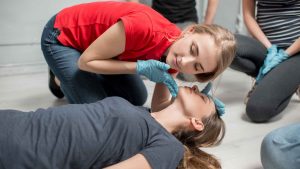

When a cardiac arrest occurs in North York, the bystander nearest to the victim is the most critical link in the Chain of Survival. Recognizing cardiac arrest immediately, calling 911, starting High-Performance CPR, and deploying a nearby AED within the first three to six minutes can double or triple survival odds. Canadian Red Cross CPR/AED certification equips residents with exactly these skills while satisfying WSIB Regulation 1101 and CSA Z1210:24 workplace compliance requirements.
North York is one of Toronto’s most heavily populated and geographically vast districts, home to hundreds of thousands of residents, sprawling commercial centres, massive parks, community facilities, and major TTC transit corridors. From the busy intersections around Yonge and Sheppard to the family-friendly neighbourhoods of Willowdale, Bayview Village, and Don Mills, medical emergencies can happen at any time and in any place. Knowing how to handle a CPR emergency in North York could mean the difference between life and death for a neighbour, colleague, family member, or stranger.
Sudden cardiac arrest is the leading cause of death in medical emergencies where bystander intervention is actually possible. When someone’s heart suddenly stops beating, survival depends entirely on receiving high-quality CPR within the first four to six minutes. Unfortunately, many people hesitate to act because they lack clinical confidence or have never received formal training. This psychological hesitation costs lives every single year. CPR training replaces that hesitation with a practiced, confident response.
Recognizing a Cardiac Emergency: The First Critical Step
The first and most crucial step in handling any CPR emergency is quickly recognizing that one is occurring. Cardiac arrest often happens suddenly and without warning. The victim may collapse without prior symptoms, or they may first experience a heart attack, presenting with severe chest pain, shortness of breath, dizziness, or an irregular heartbeat, before losing consciousness and entering cardiac arrest.
The definitive clinical signs of cardiac arrest include sudden collapse and total unresponsiveness, no normal breathing (or only agonal gasping), no detectable pulse, and skin that rapidly appears pale, blue, or ashen grey. If you observe these signs, you must act immediately. Do not wait to see if the person recovers; in cardiac arrest, every second without physical intervention reduces the chance of survival.
It is also vitally important to distinguish cardiac arrest from other conditions. A person having a heart attack is usually conscious and in pain, while a person in cardiac arrest is completely unconscious and not breathing. Both are critical emergencies, but the immediate response differs. Comprehensive first aid training teaches you how to accurately assess and differentiate between medical emergencies so you can provide the right care at the right time.
The Science of the Save: High-Performance CPR Protocol
If you encounter someone in cardiac arrest in North York, following the 2026 Canadian Red Cross protocols gives them the best possible chance of survival. Modern training emphasizes High-Performance CPR, which focuses on maximizing the Chest Compression Fraction (CCF), the percentage of time spent actively compressing the chest to maintain blood pressure to the brain.
Here is the step-by-step protocol taught in certification courses:
- Assess the Scene: Ensure the environment is safe, checking for hazards such as traffic or electrical risks before approaching.
- Check Responsiveness: Tap the victim’s collarbones firmly and shout loudly to check for a response.
- Activate EMS: If unresponsive, designate one specific bystander to call 911 and another to locate the nearest AED.
- Begin Compressions: Place the heel of one hand on the centre of the chest. Lock your elbows and push hard and fast, at least 2 inches (5 cm) deep, at a rate of 100 to 120 compressions per minute.
- Provide Rescue Breaths: If trained, use a barrier device such as a pocket mask to deliver 2 rescue breaths after every 30 compressions. If you do not have a barrier device, perform continuous hands-only CPR without stopping.
AED Integration in North York Public Spaces
An Automated External Defibrillator (AED) is a portable device designed to analyze the heart’s electrical rhythm and deliver a shock to restore a normal heartbeat during ventricular fibrillation. AEDs are built for use by non-medical personnel, providing clear voice prompts that guide you through every step.
Many high-traffic public locations in North York now have AEDs installed, including the North York Civic Centre, Fairview Mall, local fitness facilities, public libraries, and TTC subway stations. Learning to rapidly deploy an AED is a critical component of any CPR and AED training course. When high-quality CPR is combined with early defibrillation within the first three minutes, survival rates can reach as high as 75 percent.
CPR/AED certification from Canadian Red Cross courses is valid for three years, after which recertification is required to maintain current skills. Make it a habit to note the location of the nearest AED in the buildings you visit most often. Knowing exactly where to find it before an emergency saves critical seconds.
Learn CPR and AED in a Real Classroom
Hands-on practice with feedback manikins and AED trainers is the only way to build the muscle memory and confidence needed in a real emergency. Get certified with a Canadian Red Cross instructor.
Workplace Compliance and WSIB Regulation 1101 in North York
For businesses operating in North York’s commercial sectors, from the corporate towers along Yonge Street to the industrial parks near Highway 400, first aid CPR training is a strict legal requirement. The Workplace Safety and Insurance Board (WSIB) enforces Regulation 1101, which requires every Ontario workplace to maintain a specific number of certified responders on duty at all times.
To comply with the updated CSA Z1210:24 standard, employees must successfully pass both a practical skills assessment and a written examination. Most employers in North York require WSIB-approved CPR/AED certification for workplace safety. Failure to maintain unexpired certifications leaves employers vulnerable to significant fines and liability if an injury occurs on site.
Career Advancement in North York: Who Needs CPR Certification?
Holding a valid Canadian Red Cross certificate is a significant advantage in North York’s competitive job market. Certification is mandatory for many local careers:
- Security Guards: Personnel patrolling malls or condo buildings must hold Intermediate / Standard First Aid to keep their Ontario security licenses valid.
- Daycare Staff and Teachers: Early childhood educators must hold CPR Level C to safely manage pediatric emergencies including infant choking and anaphylaxis.
- Construction Workers: High-risk job sites require leaders trained in severe bleeding control and spinal immobilization.
- Healthcare Professionals: Nurses, paramedics, and clinical staff require Basic Life Support (BLS) to master team-based resuscitation, rapid pulse assessment, and oxygen administration using Bag-Valve-Masks. BLS is typically renewed annually in healthcare settings.
- Professional Responders: For those pursuing careers in firefighting, paramedicine, or emergency response, EMR training provides advanced cardiovascular emergency, airway management, and trauma response skills beyond standard CPR.
Flexible Training: Blended Online Learning for North York Residents
Coast2Coast First Aid and Aquatics offers a blended online learning format for North York residents with demanding schedules. This hybrid model allows participants to complete the medical theory modules online at their own pace, then attend a shorter in-person session focused entirely on hands-on skills assessment. The online portion must be completed prior to the in-person session for certification to be issued.
If your current certificate is nearing its three-year expiry, a streamlined recertification course offers a rapid review of updated material to renew your credentials without retaking the full program. Private group training is also available, with certified instructors coming directly to your North York business to train your entire team simultaneously.
Train Your North York Team in One Session
Private group training brings a certified instructor to your workplace. Satisfy WSIB Regulation 1101 and CSA Z1210:24 requirements, reduce liability, and certify your entire staff without disrupting operations.
Key Takeaway
In North York, the bystander nearest to a cardiac arrest victim is the most critical factor in survival. Recognizing cardiac arrest immediately, starting High-Performance CPR, and deploying a nearby AED within three to six minutes can double or triple survival odds. Canadian Red Cross CPR and AED certification builds the clinical confidence to act, satisfies WSIB Regulation 1101, and is the single most important emergency skill a North York resident or employer can invest in.
Join 150,000+ Canadians Who Are Certified
Protect your community, satisfy your employer’s compliance obligations, and gain the confidence to act in a cardiac emergency. Certification is valid for three years across all Canadian provinces.
Frequently Asked Questions: CPR Emergency North York 2026
More FAQs: Certification, Compliance, and Career Requirements
Sources and Editorial Standards
- Heart and Stroke Foundation of Canada: Out-of-hospital cardiac arrest statistics and bystander CPR rates
- Canadian Red Cross: 2026 CPR/AED and First Aid curriculum and High-Performance CPR standards
- WSIB Regulation 1101 (Ontario): Workplace first aid requirements and first aider ratios
- CSA Z1210:24: Canadian standard for first aid training in workplaces (effective 2024)
- Ontario Good Samaritan Act: Legal protection for voluntary emergency assistance
- ILCOR (International Liaison Committee on Resuscitation): Chain of Survival guidelines, AED defibrillation survival data, and bystander CPR effectiveness research