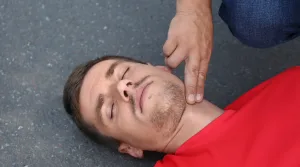

A first aider’s role when helping with medication is to assist a conscious person in taking their own prescribed medication when they are unable to do so independently due to the severity of their condition. You should never administer medication prescribed to someone else, and you must always obtain consent when the person is able to give it. In Canada, Good Samaritan legislation provides legal protection for reasonable emergency assistance, including helping someone with their own prescribed medication.
Helping an Ill or Injured Person with Medication: A First Aid Guide
In an emergency situation, you may encounter a person who needs help taking their prescribed medication. Whether it is someone experiencing a severe asthma attack who cannot operate their inhaler, a person in anaphylactic shock who needs their epinephrine auto-injector, or a diabetic individual who requires glucose, knowing how to safely assist with medication administration can be a critical component of effective first aid response. Our Canadian Red Cross certified courses cover the principles and techniques for assisting with medication in emergency situations. This guide provides a comprehensive overview of when and how you can help an ill or injured person with their medication, the legal considerations involved, and the important safety precautions you should follow.
Understanding the Role of a First Aider with Medications
As a first aider, your role is not to diagnose conditions or prescribe medications. Rather, your role is to assist a person with taking their own prescribed medication when they are unable to do so independently due to the severity of their condition. This distinction is important both legally and practically, and it forms the foundation for safe medication assistance in emergency situations.
Legal Considerations in Canada
In Canada, Good Samaritan legislation provides legal protection to individuals who provide reasonable assistance to someone in an emergency. This protection generally extends to helping a person take their own prescribed medication when the situation demands it. However, it is important to understand that as a first aider, you should only assist with medications that have been prescribed to the person you are helping, and you should always obtain the person’s consent before providing assistance if they are conscious and able to communicate.
If the person is unconscious or unable to communicate, implied consent allows you to provide life-saving assistance. The key principle in all cases is that your actions must be reasonable, in good faith, and limited to assisting with that person’s own prescribed medications. Acting outside this boundary, such as administering your own medication to someone else, is not protected under Good Samaritan legislation and could have serious legal consequences.
The Five Rights of Medication Assistance
When assisting someone with medication, healthcare professionals follow the “five rights” framework to ensure safety. The five rights are the right person, right medication, right dose, right route (oral, injection, or inhalation), and the right time.
Applying these five rights as a first aider means confirming that the medication you are helping administer is prescribed to this specific person, that the label matches the condition being treated, that the dose shown on the label is what is being given, that you are using the correct delivery method, and that the medication is due and has not recently been taken. This framework takes only seconds to apply and significantly reduces the risk of a medication error during a high-stress emergency.
Common Emergency Medications You May Encounter
There are several medications that first aiders commonly encounter in emergency situations. Understanding these medications, their purposes, and the basic steps for assisting with their administration can help you respond more effectively.
Epinephrine Auto-Injectors
Epinephrine auto-injectors (commonly known as EpiPens) are prescribed to individuals with known severe allergies at risk of anaphylaxis. Anaphylaxis is a life-threatening allergic reaction that can cause the airway to swell shut and blood pressure to drop dangerously low. To assist: remove the safety cap, firmly press the tip against the outer thigh, hold for several seconds, then remove. The injection can be given through clothing if necessary. Always call 911 after use.
It is critical to understand that the effects of epinephrine are temporary and can wear off within 15 to 20 minutes. Even if the person appears to feel significantly better after the injection, they must be transported to hospital without delay for medical evaluation and potential additional treatment. A secondary anaphylactic reaction can occur after the epinephrine wears off, making professional medical care essential. After administering the auto-injector, keep the person lying down with their legs elevated to manage the drop in blood pressure, unless they are having difficulty breathing, in which case help them sit upright.
Asthma Inhalers
Metered-dose inhalers are prescribed to people with asthma to quickly open constricted airways during an attack. They typically contain bronchodilator medication such as salbutamol. To assist: help them sit upright, shake the inhaler well, help them place the mouthpiece between their lips, breathe out gently, press the canister while breathing in slowly and deeply, hold breath for about ten seconds before exhaling.
If the person cannot hold the inhaler themselves, you can hold it in place while they breathe in and trigger the canister. A spacer device, if available, makes the medication easier to inhale and more effective. If the person does not improve within a few minutes, or if their condition continues to deteriorate despite inhaler use, call 911. A severe asthma attack that does not respond to an inhaler is a life-threatening emergency.
Nitroglycerin
Nitroglycerin is prescribed to individuals with angina or other heart conditions to relieve chest pain by dilating blood vessels. It is available as a tablet placed under the tongue or as a spray. If chest pain persists after five minutes, a second dose may be taken. If pain continues after three doses, treat as potential heart attack and ensure emergency services are en route.
Nitroglycerin can cause a sudden drop in blood pressure, so have the person sit or lie down before assisting with it. If they feel lightheaded or faint after taking it, do not give further doses and inform emergency services. Never give nitroglycerin to a person who has taken medication for erectile dysfunction in the past 24 to 48 hours, as the combination can cause a dangerous and potentially fatal drop in blood pressure.
Oral Glucose
People with diabetes may experience hypoglycemia (low blood sugar) causing confusion, shakiness, sweating, and weakness. If the person is conscious and able to swallow safely, assist them with oral glucose tablets, gel, or sugary drinks. Do not give anything by mouth to a person who is unconscious or unable to swallow safely.
If the person does not improve within 10 to 15 minutes after taking oral glucose, or if their condition worsens at any point, call 911. Severe hypoglycemia can progress rapidly to unconsciousness, seizures, or cardiac arrest if not treated promptly. Continue monitoring the person’s level of consciousness and vital signs while waiting for emergency services.
Aspirin for Suspected Heart Attack
In cases of suspected heart attack, having the person chew one regular-strength aspirin (325 mg) or two low-dose aspirin (81 mg each) can help improve blood flow by preventing further clot formation. Only offer aspirin if the person is not allergic, is conscious and can swallow, and emergency services have been contacted.
Aspirin should be chewed rather than swallowed whole during a cardiac event, as chewing allows faster absorption into the bloodstream. Do not substitute ibuprofen, acetaminophen, or other pain medications for aspirin in this situation, as only aspirin has the antiplatelet effect that helps slow clot formation during a heart attack. If the person is on blood thinners or is uncertain about their allergy status, wait for paramedic guidance before offering aspirin.
Step-by-Step Guide to Assisting with Medication
Regardless of the type of medication involved, there is a general process you should follow when assisting someone with their medication in an emergency.
Assess the Situation
Before assisting with any medication, assess the overall scene for safety and determine the nature of the person’s condition. Ask the person what is wrong and whether they have any prescribed medication for their condition.
A scene assessment also includes noting any potential hazards around you, confirming there is no ongoing threat to the person or to yourself, and identifying whether the situation requires a call to 911 immediately or whether you have time to assist with medication first. In most life-threatening situations, calling 911 and beginning medication assistance happen simultaneously.
Obtain Consent
If the person is conscious and responsive, obtain their verbal consent before providing any assistance. If the person is unresponsive, implied consent allows you to provide assistance in a life-threatening emergency.
Consent is not just a legal formality. Asking the person’s permission and involving them in the process also gives you critical information: they may tell you they already took their medication, that they are allergic to something, or that their condition requires a different response than you initially assumed. A brief, calm exchange of a few seconds can prevent a serious error.
Verify the Medication
Before helping administer any medication, verify that it is prescribed to the person you are helping by checking the label. Confirm the dosage and check the expiration date if visible.
Also check that the medication is appropriate for the current situation. For example, confirm that the inhaler you are holding is a reliever inhaler (typically blue) rather than a preventer inhaler (typically brown or purple), since preventer inhalers do not provide the immediate bronchodilation needed during an acute asthma attack. Taking a moment to read the label carefully is always worthwhile.
Assist with Administration
Help the person take their medication according to the directions for that specific type of medication. Follow the person’s guidance if they are able to communicate.
Where possible, let the person lead and provide physical support rather than taking over. For example, if someone with anaphylaxis can hold the auto-injector but lacks the strength to press it firmly, stabilize their hand and help with the pressing motion rather than removing the device from their control entirely. This approach respects their autonomy, reduces the chance of error, and keeps them engaged and calm.
Monitor and Document
After the medication has been administered, continue to monitor the person’s condition. Note the time the medication was given and the dose administered, as this information will be valuable for the emergency medical team.
Monitoring means actively watching for changes, not just waiting passively. Ask the person how they feel every minute or two. Watch their skin colour, breathing, and alertness. If they were pale and are now showing some colour, that is a positive sign. If they are becoming more confused or are losing consciousness, escalate your response immediately.
Practise Medication Assistance with Real Training Devices
Intermediate / Standard First Aid courses include hands-on practice with epinephrine auto-injector trainers, inhaler simulators, and step-by-step guidance on all common emergency medications.
Monitoring Vital Signs and Adverse Reactions
Monitoring vital signs after medication assistance means tracking the person’s level of consciousness, breathing rate and effort, skin colour and temperature, and pulse if you are trained to assess it. These indicators tell you whether the medication is having the intended effect or whether the person’s condition is deteriorating despite treatment. In serious injury scenarios where a medication event follows trauma, also watch for signs that the circulatory system fails to maintain adequate blood pressure: this is a life-threatening condition that requires immediate 911 escalation.
Watch specifically for these warning signs of deterioration: clammy skin, sweating, rapid and weak pulse, shallow breathing, weakness, and increasing confusion. If the person develops obvious injuries or begins to show signs of shock following a medication event, position them appropriately and seek medical attention without delay. Seek medical attention even if symptoms appear to improve temporarily, as delayed shock and secondary reactions can be severe. A life-threatening condition can develop rapidly from anaphylaxis, severe blood loss, or cardiac failure if the underlying emergency is not treated in hospital. Any anaphylactic, cardiac, or respiratory event must be treated as potentially life-threatening from the first moment and 911 must be called without delay.
An adverse reaction can occur even with a person’s own prescribed medication. Signs to watch for include a sudden worsening of symptoms, new symptoms such as hives, swelling, or difficulty breathing that were not present before, a rapid drop in alertness, or any unexpected change in condition. If you observe signs of an adverse reaction, call 911 immediately if you have not done so, stop any further medication assistance, position the person appropriately (recovery position if unconscious and breathing, or lying flat with legs elevated for shock), and report the details of the medication given to emergency services when they arrive. To help reposition an unconscious person onto their side, support their upper body weight by bracing one hand against their person’s shoulder blades as you roll them, controlling the movement to prevent injury.
It is also important to wear protective gloves and wear protective clothing when assisting with injected medications where there is any risk of contact with blood. If a healthcare professional advises a specific monitoring protocol for the person in your care, follow those instructions precisely. Protective equipment reduces cross-contamination risk and is a standard part of safe first aid practice whenever bodily fluids may be present.
When NOT to Give Medication
Never give a person medication that was not prescribed to them specifically. Do not give oral medications or fluids to someone who is unconscious, semi-conscious, or unable to swallow safely. Avoid giving medication if the person expresses uncertainty about whether they should take it. If the medication appears expired, damaged, or tampered with, do not use it.
Additional situations where you should withhold medication assistance include when the person is actively seizing, when the medication requires clinical judgment to dose correctly, when you are not certain of the route of administration, or when the person has already taken the maximum recommended dose. Never give oral medication to someone with a serious injury involving the jaw, face, or airway, or if obvious injuries lie in a position that makes swallowing impossible or dangerous. Do not attempt to give oral glucose or any other oral medication if the person has suffered severe burns to the mouth or throat, or if severe vomiting is present, as the person cannot swallow safely and the risk of aspiration is high.
Do not give nitroglycerin or any blood-pressure-altering medication to someone showing signs of severe blood loss, such as pale clammy skin and rapid shallow breathing, without first calling 911. In cases where a medication event is complicated by severe blood loss from a serious injury, controlling the bleeding takes priority over medication assistance. When in doubt, call 911, keep the person calm and monitored, and wait for professional emergency services rather than proceeding with medication assistance you are not confident in.
When the Person Becomes Unresponsive
If the person you are assisting loses consciousness at any point before, during, or after medication assistance, stop all medication administration immediately and assess their breathing. If they are breathing normally, place them in the recovery position to keep their airway open and prevent aspiration, and call 911 if you have not already done so.
To move an unconscious person into the recovery position safely, use controlled body weight transfer rather than pulling or dragging. Kneel beside them, use your body weight braced against the ground for stability, and roll the person gently using their bent knee as a lever. Guide the person forward with one hand supporting their far shoulder as you use your body weight to ease them onto their side. Avoid movements that cause further pain or that jolt the head and neck. Once in position, use your body weight to stabilize the top knee against the floor and prevent rolling. Check that the body weight is evenly distributed across the hip and shoulder so the position is stable and comfortable.
If the person is not breathing normally or has no pulse, begin CPR immediately: give 30 chest compressions followed by 2 rescue breaths, and continue until emergency services arrive or an AED becomes available. Cardiac arrest can follow anaphylaxis, severe hypoglycemia, or a cardiac event, all of which are scenarios where medication assistance may have been underway. Readiness to transition immediately from medication support to basic life support, including CPR and AED use, is an essential part of being a capable first aider. CPR and AED training is available as a standalone course for those who want to build these skills specifically.
The Value of Comprehensive First Aid Training
Assisting with medication in an emergency requires knowledge, confidence, and the ability to remain calm under pressure. Intermediate / Standard First Aid and Emergency First Aid courses provide detailed instruction on medication assistance, including practice with training devices such as epinephrine auto-injector trainers and inhaler simulators.
Beyond medication assistance, comprehensive first aid training prepares you to respond to the full range of emergencies that may surround a medication event: performing CPR if the person goes into cardiac arrest, applying direct pressure to control bleeding from an injury, using abdominal thrusts if the person chokes, and placing an unconscious person in the recovery position. These interconnected skills mean that no matter how a medical emergency evolves, you have a response. Each skill builds on the others, and training them together in a structured course is what produces a first aider who can act with genuine confidence.
Train Your Whole Team in Emergency First Aid
Workplace emergencies involving medication, cardiac arrest, or anaphylaxis require confident, practised responses. Private group training gets your entire team certified together.
Key Takeaway
A first aider’s role is to assist a person with their own prescribed medication when they cannot manage it themselves. Always apply the five rights, obtain consent, verify the prescription label, and monitor for adverse reactions after administration. Epinephrine buys time but wears off in 15 to 20 minutes: hospital care is always required. If the person loses consciousness and stops breathing, stop medication assistance and begin CPR immediately. These decisions come naturally with training, and training is available to everyone.
Join 150,000+ Canadians Who Are Certified
Find a first aid course near you and get the hands-on training that makes the difference in a real emergency.
Frequently Asked Questions: Helping with Medication in an Emergency 2025
Q1: Can a first aider legally help someone take their medication in Canada?
A: Yes. In Canada, Good Samaritan legislation provides legal protection to individuals who provide reasonable assistance in an emergency, and this generally extends to helping a person take their own prescribed medication when they are unable to do so themselves. The key conditions are that the medication must be prescribed to the person you are helping, you must obtain the person’s consent if they are conscious and able to communicate, and your assistance must be reasonable and in good faith. You should never administer medication that was not prescribed to that specific person.
Q2: What are the five rights of medication assistance?
A: The five rights of medication assistance are: the right person (confirm the medication is prescribed to this individual), the right medication (check the label matches the condition being treated), the right dose (confirm the correct amount as stated on the prescription label), the right route (oral, injection, or inhalation as directed), and the right time (confirm the medication is due and not recently taken). Healthcare professionals use this framework to prevent medication errors, and first aiders can apply the same principles to ensure safe assistance during an emergency.
Q3: How do you help someone use an epinephrine auto-injector?
A: To assist with an epinephrine auto-injector: remove the safety cap, firmly press the tip against the outer thigh (the injection can be given through clothing if necessary), hold it in place for several seconds until you hear or feel a click, then remove it. Call 911 immediately after use. Epinephrine effects are temporary and can wear off within 15 to 20 minutes, meaning the person must receive hospital care even if they feel better. Keep the person lying down with their legs elevated unless breathing is difficult, in which case allow them to sit up.
Q4: How do you assist someone with an asthma inhaler?
A: To assist with a metered-dose inhaler: help the person sit upright, shake the inhaler well, help them place the mouthpiece between their lips forming a seal, instruct them to breathe out gently first, then press the canister down while they breathe in slowly and deeply, and hold their breath for about ten seconds before exhaling. Salbutamol is the most common bronchodilator medication in these inhalers. If the person does not improve after one puff or cannot operate the inhaler themselves, call 911. Inhalers should only be used if the medication is prescribed to the person.
Q5: What should you do if nitroglycerin does not relieve chest pain?
A: Nitroglycerin is prescribed to individuals with angina or heart conditions to relieve chest pain by dilating blood vessels. If chest pain does not improve after five minutes, a second dose may be taken. If pain continues after three doses taken five minutes apart, treat the situation as a potential heart attack: call 911 immediately if you have not already done so, have the person stop all activity, help them rest in a comfortable position, and assist with aspirin if prescribed and appropriate. Do not leave the person alone. Monitor their vital signs and be prepared to begin CPR if they become unresponsive and stop breathing.
Q6: When should you give oral glucose to someone with diabetes?
A: Assist with oral glucose when a conscious diabetic person shows signs of hypoglycemia: confusion, shakiness, sweating, weakness, pale skin, or rapid heartbeat. The person must be conscious and able to swallow safely. Oral glucose tablets, gel, or a sugary drink can be given to raise blood sugar. Never give anything by mouth to a person who is unconscious, semi-conscious, or showing signs they may choke. If the person does not improve within 10 to 15 minutes, or their condition worsens, call 911. Continue monitoring their level of consciousness and vital signs while waiting for emergency services.
Q7: Should you give aspirin during a suspected heart attack?
A: In cases of suspected heart attack, having the conscious person chew one regular-strength aspirin (325 mg) or two low-dose aspirin (81 mg each) can help improve blood flow by slowing further clot formation. Only offer aspirin if the person is not allergic to it, is conscious and able to swallow, has no bleeding conditions, and emergency services have already been contacted. Do not substitute other pain medications for aspirin in this situation, as only aspirin has the antiplatelet effect that helps slow clot formation during a heart attack. If the person is uncertain whether they should take it, or if they are taking blood thinners, wait for paramedic guidance.
More FAQs: Adverse Reactions, Vital Signs, and Training
Q8: What should you never do when assisting with medication?
A: Never give a person medication that was not prescribed specifically to them. Do not give oral medications or fluids to someone who is unconscious, semi-conscious, or unable to swallow safely. Do not assist if the person expresses uncertainty about whether they should take the medication. Do not use medication that appears expired, damaged, or tampered with. Never administer a higher dose than prescribed, and do not delay calling 911 while attempting medication assistance. Your role as a first aider is to assist, not to diagnose or prescribe. When in doubt, wait for professional emergency services and keep the person calm and monitored.
Q9: What is anaphylaxis and what are the signs?
A: Anaphylaxis is a severe, life-threatening allergic reaction that can occur within seconds to minutes of exposure to a trigger such as a food, insect sting, or medication. Signs include hives, swelling of the face, lips, tongue, or throat, difficulty breathing or wheezing, a sudden drop in blood pressure, rapid weak pulse, dizziness, nausea, and loss of consciousness. Anaphylaxis is a medical emergency requiring immediate epinephrine injection and a 911 call. Even if the person appears to improve after an epinephrine auto-injector, they must be transported to hospital because effects are temporary and a second reaction can occur.
Q10: What vital signs should you monitor after helping with medication?
A: After assisting with medication, monitor the person’s level of consciousness (are they alert, confused, or unresponsive), their breathing (rate, depth, and effort), their skin colour and temperature (pallor, cyanosis, clamminess), and their pulse if you are trained to check it. Note whether the medication appears to be working or whether the person’s condition is deteriorating. Record the time the medication was given, the dose, and any changes in condition. Report all of this information to emergency services when they arrive. If the person becomes unresponsive and stops breathing normally, begin CPR immediately and continue until help arrives.
Q11: What should you do if the person has an adverse reaction to their medication?
A: An adverse reaction can occur even with prescribed medications. Signs of an adverse reaction include worsening symptoms, new symptoms such as hives, swelling, or difficulty breathing, a sudden drop in consciousness, or any unexpected deterioration in condition. If you suspect an adverse reaction, call 911 immediately if you have not already done so, stop any further medication assistance, position the person appropriately (on their back with legs elevated for shock, or in the recovery position if unconscious and breathing), and monitor their vital signs continuously until emergency services arrive. Report what medication was given, when, and what dose to the paramedic team.
Q12: What is the recovery position and when is it used during medication emergencies?
A: The recovery position is a stable side-lying position used for unconscious people who are breathing normally. It keeps the airway open and prevents aspiration of vomit, which is particularly relevant during medication emergencies where nausea is a side effect or where the person has lost consciousness. To place someone in the recovery position: position their nearest arm at a right angle, bring the far arm across the chest with the back of their hand against their near cheek, pull the far knee up and roll them toward you onto their side, then adjust the top leg so the hip and knee are at right angles. Monitor breathing continuously.
Q13: What happens if the person becomes unresponsive after medication?
A: If a person becomes unresponsive after medication assistance, check for breathing immediately. If they are breathing normally, place them in the recovery position and call 911 if you have not done so. If they are not breathing normally, begin CPR: give 30 chest compressions followed by 2 rescue breaths, and continue until emergency services arrive or an AED is available. Use an AED as soon as one is accessible. Note the time of unresponsiveness and the medication details to report to paramedics. Do not leave the person alone. Cardiac arrest can follow anaphylaxis, severe hypoglycemia, or cardiac events, so readiness to begin CPR is essential.
Q14: Do first aid courses teach you how to assist with emergency medications?
A: Yes. Intermediate / Standard First Aid courses include detailed instruction on medication assistance, covering epinephrine auto-injectors, asthma inhalers, nitroglycerin, oral glucose, and aspirin. Participants practise with training devices such as epinephrine auto-injector trainers and inhaler simulators so the steps feel familiar in a real emergency. Courses also cover the five rights of medication, consent and legal considerations, monitoring vital signs, and recognizing adverse reactions. Emergency First Aid courses cover essential medication decision-making for acute scenarios. Both courses are offered by Canadian Red Cross Training Partners.
Q15: How should you document medication assistance during an emergency?
A: After helping with medication, note the name of the medication, the dose given, the route of administration, and the exact time it was given. If possible, keep the medication packaging to hand to emergency services. Record any changes in the person’s condition after administration, including improvements, no change, or deterioration. If the person received multiple doses such as nitroglycerin, record the time of each dose. This documentation helps paramedics and hospital staff provide appropriate follow-up care and avoid accidental double-dosing. In a workplace setting, document the incident in your first aid record as required by occupational health and safety legislation.
Sources and Professional Review
This article was written and reviewed by Ashkon Pourheidary, co-founder of Coast2Coast First Aid and Aquatics, B.Sc. Hons Neuroscience, and Canadian Red Cross certified instructor since 2011.
Medication assistance guidelines are based on Canadian Red Cross First Aid training standards. Good Samaritan legislation references are general in nature; specific protections vary by province and territory. The five rights of medication framework is standard practice across Canadian healthcare and first aid curricula.
Coast2Coast First Aid and Aquatics is a Canadian Red Cross Training Partner. Find a course location near you.