




Free first aid training workshops give North York residents hands-on access to life saving skills at no cost. Skills include hands-only CPR, choking response, basic wound care, and emergency scene management. These awareness sessions do not provide formal certification, which requires WSIB-compliant CSA Z1210:24 courses. However, they equip community members with essential skills for cardiac arrest, choking, bleeding, and other common emergencies. Free first aid training breaks the cost barrier that keeps many Canadians from learning to save lives.
Find a Course Near You
Canadian Red Cross First Aid & CPR certification courses across Ontario and Alberta. Register online in 2 minutes.
Coast2Coast Free First Aid Workshop: Bringing Life-Saving Skills to North York
At Coast2Coast First Aid and Aquatics, we believe everyone deserves access to life-saving knowledge, regardless of financial situation. That is why we are proud to offer free first aid training workshops to communities across the Greater Toronto Area, including North York. These workshops provide participants with essential emergency response skills at no cost, breaking down the financial barriers that prevent many Canadians from accessing quality first aid training. Our mission is simple: the more people who know basic first aid, the safer our communities become.
Furthermore, our free first aid and CPR training workshops give community members a taste of what comprehensive first aid courses involve. They also teach practical skills participants can use immediately. While these workshops do not replace full first aid certification, they provide a valuable introduction to emergency response. As a result, attendees feel confident acting in common emergencies. For many, free first aid training sparks the motivation to pursue full certification.
What You Will Learn at Our Free First Aid Workshop
Our free first aid workshops pack essential knowledge and hands-on practice into an accessible format that works for busy community members. Specifically, here is what participants can expect to learn during a typical free first aid training session.
Hands-Only CPR for Cardiac Arrest
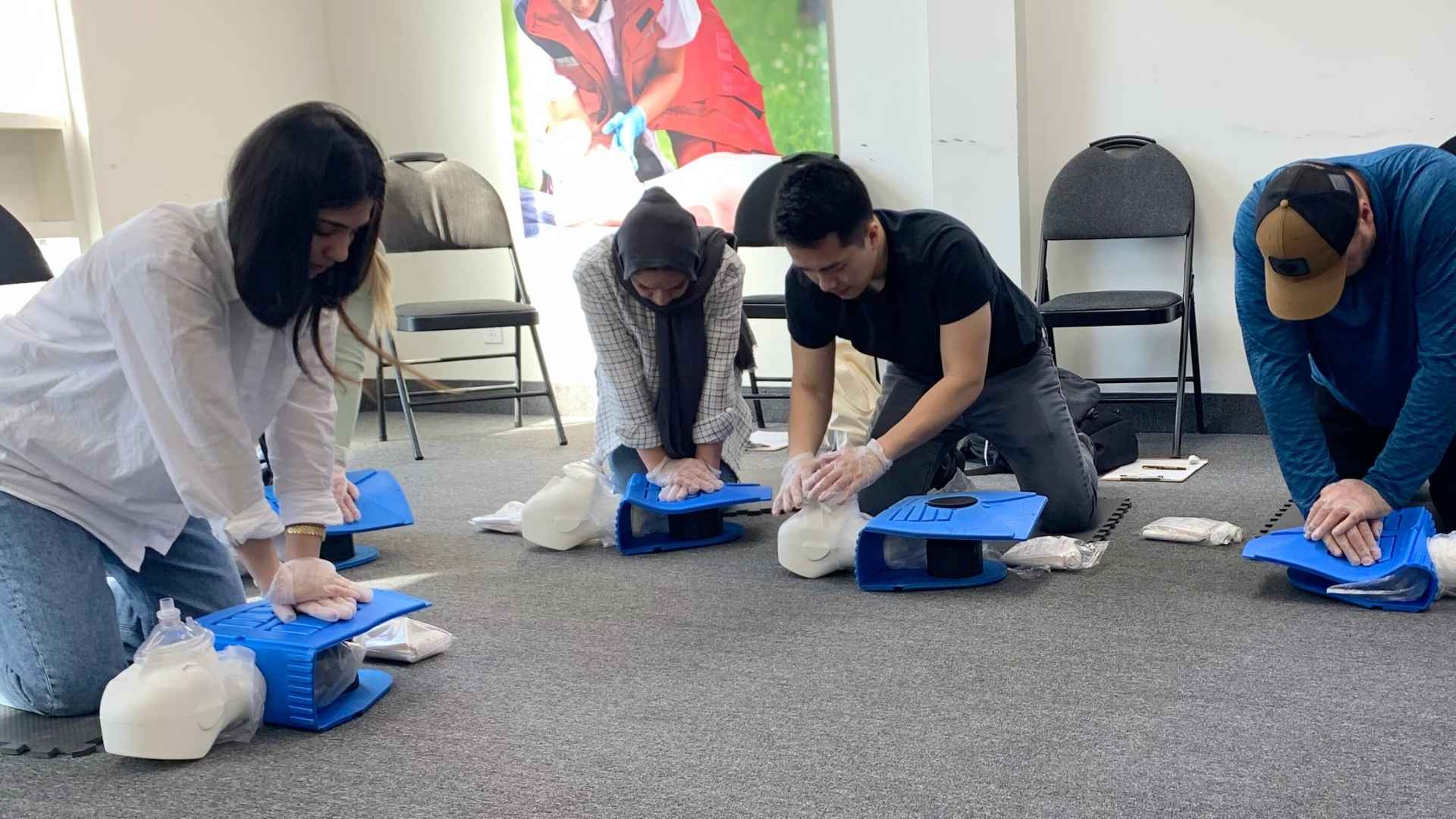
Hands-only CPR, continuous chest compressions without rescue breathing, is the recommended bystander response for adult cardiac arrest. Workshop participants learn to recognize cardiac arrest, contact emergency medical services through 911, and perform CPR at the correct rate and depth. Using practice mannequins, every participant gets the chance to feel what effective compressions should feel like. This single skill can double or triple a cardiac arrest victim’s chance of survival when applied in the critical minutes before paramedics arrive. Workshop instructors also help participants distinguish cardiac arrest from a heart attack. Cardiac arrest means the heart stops beating. A heart attack means blood flow to the heart is blocked. The response and urgency differ for each.
Choking Response Techniques
Choking is one of the most common emergencies Canadians encounter in their daily lives. Therefore, knowing how to respond can prevent a terrifying situation from becoming a fatal one. Workshop participants learn to recognize the signs of choking, perform abdominal thrusts (the Heimlich manoeuvre) on adults and children, and provide back blows for infants. These techniques are straightforward to learn but require practice to perform effectively under pressure.
Basic Wound Care and Bleeding Control
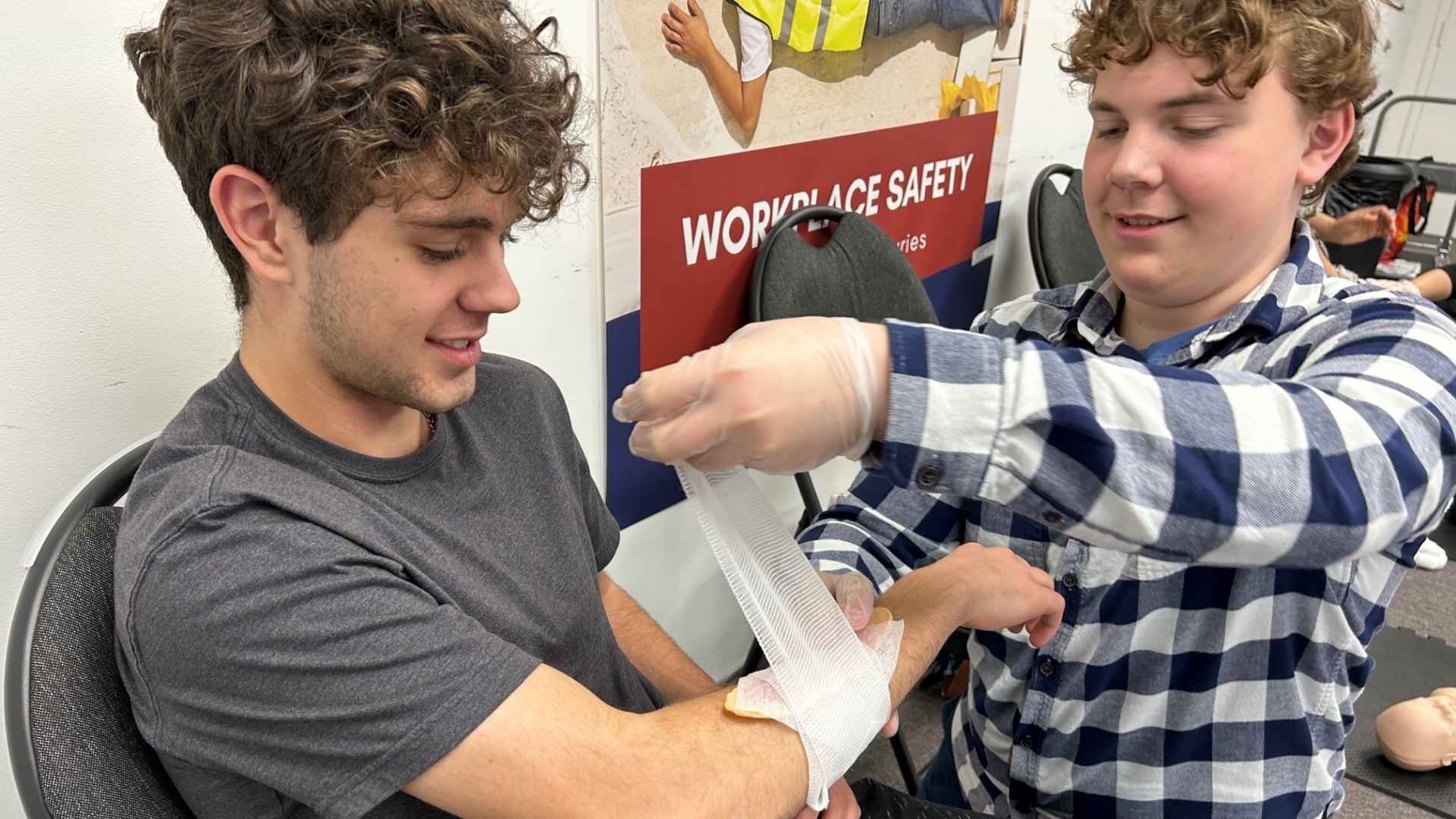
From minor cuts to more serious lacerations, knowing how to properly clean, dress, and manage wounds is a fundamental first aid skill. Specifically, participants learn the basics of direct pressure for bleeding control, proper wound cleaning and dressing techniques, and when a wound requires professional medical attention. These skills apply to countless everyday situations, from playground injuries to kitchen accidents.
Emergency Scene Management
Before providing any first aid, you need to ensure the scene is safe and understand how to manage an emergency effectively. Workshop participants learn to assess scene safety, prioritize actions in an emergency, communicate effectively with 911 dispatchers, and coordinate with bystanders to ensure the most effective response possible.
Awareness of AED Use
While most free first aid workshops focus on hands-only CPR, instructors also introduce participants to the role of the automated external defibrillator (AED) in cardiac emergencies. Full AED use training requires a certified course. However, the awareness component helps community members recognize AEDs in public spaces. It also shows how dramatically AEDs improve survival outcomes when used alongside CPR.
Why North York Needs Free First Aid Training
North York is one of the most diverse and densely populated communities in the Greater Toronto Area. It is home to hundreds of thousands of residents, numerous schools, bustling commercial districts, and extensive recreational facilities. With this concentration of people comes an inevitable occurrence of medical emergencies. These include cardiac arrests in shopping centres, choking incidents in restaurants, injuries on playgrounds, and accidents on busy streets. Consequently, the more residents who possess basic first aid knowledge, the better equipped the entire community is to respond.
Research consistently shows that communities with higher rates of first aid and CPR training have significantly better survival outcomes for cardiac arrest and other medical emergencies. By bringing free first aid training directly to North York neighbourhoods, Coast2Coast invests in the community’s collective ability to protect and care for its members. As a result, every workshop participant who learns CPR becomes a potential life-saver for their neighbours, coworkers, friends, and family.
Why North York Residents Choose Coast2Coast
Whether you are a student at York University or a professional working near the North York City Centre, emergencies can happen anywhere. Our workshops have trained residents near Bayview Village, Downsview Park, and Willowdale. As a result, North York remains one of the safest hubs in the GTA. Our instructors also live and work in the community. This means free first aid workshops feel less like a classroom and more like a conversation with a knowledgeable neighbour.
Who Should Attend Our Free First Aid Workshop?
Our free first aid workshops are open to everyone. They prove particularly valuable for the following groups:
- Parents and grandparents who want to protect their families
- Teachers, school staff, and early childhood educators
- Community volunteers and youth group leaders
- Newcomers to Canada who may not have had access to first aid training
- Older adults who want to refresh their emergency response knowledge
- Teenagers interested in babysitting, lifeguarding, or healthcare careers
- Anyone who has never taken a first aid or other courses and wants a simple starting point
Notably, no prior knowledge or experience is required. Our instructors are skilled at teaching participants of all ages and backgrounds, and the workshop format is welcoming, inclusive, and accessible. Whether you are sixteen or seventy-six, you will leave the workshop with practical skills you did not have when you arrived.
Certification vs. Awareness: Understanding the Difference
This is one of the most important things to understand about free first aid training. Free workshops provide awareness; certified courses provide compliance and credentials.
A free first aid workshop teaches you to act in an emergency, but it does not produce a certificate recognized by employers, regulatory colleges, or workplace safety bodies. By contrast, a certified course concludes with a written test, practical skills assessment, and a certification card valid for three years.
If you require first aid certification for workplace compliance under WSIB or OHS regulations, you must complete a Basic (Emergency First Aid) or Intermediate (Intermediate / Standard First Aid) course. Both must align with the CSA Z1210:24 standard. Free workshops do not meet these legal requirements. However, they are an excellent way to build confidence and decide whether to pursue full certification.
Compliance Note for Employers
Many Ontario employers are legally required to have a set number of certified first aid attendants on site. Specifically, the CSA Z1210:24 standard sets the floor for workplace first aid requirements in Canada, classifying courses as Basic or Intermediate. These aid requirements vary by workplace size and risk level, but every covered employer must maintain compliant training records. A free first aid workshop satisfies community awareness goals but does not satisfy workplace compliance.
From Free Workshop to Full Certification
Free workshops provide an excellent introduction to first aid. However, many participants choose to continue their training with full CPR courses so they feel more prepared for real emergencies. In particular, certified first aid courses go deeper into every topic. They cover a comprehensive range of medical emergencies, injuries, and environmental hazards.
Full certification includes:
- Extended hands-on practice with mannequins and training equipment
- Certification valid for three years
- Comprehensive training in AED use and recognition
- Coverage of additional emergencies including fractures, burns, poisoning, diabetic events, and circulatory emergencies
- A certification card recognized by employers and regulatory bodies across Canada
Coast2Coast offers a range of Canadian Red Cross certified courses including CPR and AED certification, Intermediate / Standard First Aid with CPR C (CPR Level C), Basic Life Support (BLS), and Emergency Medical Responder (EMR) courses. Additionally, online blended learning options are available for those who prefer flexible scheduling.
CPR/AED Refresh Recommendation
Even when your overall first aid certification remains valid for three years, the Lifesaving Society and major training bodies recommend refreshing CPR and AED skills annually. Specifically, brief annual refreshers ensure your hand position, compression rate, and AED workflow stay sharp. Free first aid training workshops are an excellent way to maintain these skills between full recertification cycles.
Other Ways to Access Free First Aid Training
Beyond Coast2Coast community workshops, several other pathways exist for accessing free first aid and CPR training in Canada:
- Community-hosted free workshops: local non-profits, libraries, and faith communities frequently host introductory sessions
- Workplace-funded training: many employers cover the cost of first aid certification for staff
- Fully funded certifications through non-profits: some community organizations offer fully funded first aid certificates for newcomers, low-income residents, and youth
- Free online digital training: free online first aid learning materials covering first aid, CPR, and AED are often available for self-paced study. Examples include First Aid for Free and the Alison Free CPR, AED and First Aid Course, though these online options may not replace in-person testing requirements for formal certification.
Importantly, organizations offering fully free, certified in-person first aid and CPR training are rare. Official certification bodies usually charge fees to cover instructors, materials, and assessment costs. Therefore, free workshops are best understood as awareness sessions, not certification shortcuts.
Bringing a Free First Aid Workshop to Your Community
Coast2Coast is committed to making first aid education accessible to communities across Canada. We work with community organizations, schools, workplaces, religious institutions, and neighbourhood groups in North York and the Greater Toronto Area. If your group would like to host a free first aid workshop, we would love to hear from you. Visit our website or contact our team to discuss how we can bring life-saving training to your community at no cost.
Additionally, we offer private group training for organizations that want comprehensive certification for their teams. Whether you need workplace compliance training, school staff certification, or team-building through first aid education, we can customize a program to meet your needs.
Take the Next Step, Get Certified
Loved the free workshop? Continue building your emergency response skills with a full Canadian Red Cross First Aid certification course from Coast2Coast.
Frequently Asked Questions: 2026 Free First Aid Training
Q1: Is the Coast2Coast first aid workshop really free?
A: Yes. Coast2Coast offers community first aid workshops at no cost as part of our commitment to making essential life-saving skills accessible to everyone in the Greater Toronto Area. There are no hidden fees and no obligation to enroll in a paid course afterward.
Q2: What is the difference between a free workshop and a certified first aid course?
A: A free workshop is an awareness session that teaches practical skills like hands-only CPR, choking response, and basic wound care. A certified course includes formal assessment, a written test, and a certification card valid for three years. Only certified courses satisfy WSIB and OHS workplace compliance requirements.
Q3: Does the free workshop include CPR training?
A: Yes. All Coast2Coast free first aid workshops include hands-only CPR training on practice mannequins. Participants learn to recognize cardiac arrest, call 911, and perform chest compressions at the correct rate and depth. Full conventional CPR with rescue breathing is taught in our certified CPR Level C course.
Q4: Can I get a certificate from the free workshop?
A: Free workshops are awareness sessions and do not produce a recognized certification card. If you need a certificate for work, school, or volunteering, you must complete a paid Intermediate / Standard First Aid, Emergency First Aid, or CPR Level C course. The free workshop is excellent preparation for those certifications.
Q5: Will the free workshop meet WSIB or OHS workplace requirements?
A: No. Workplace compliance under WSIB and OHS regulations requires a CSA Z1210:24 Basic (Emergency First Aid) or Intermediate (Intermediate / Standard First Aid) course. Free workshops are awareness sessions, not compliance training. Employers should register staff in a certified course to meet legal requirements.
Q6: How long does the free workshop last?
A: Most Coast2Coast free first aid workshops run between 60 and 120 minutes, depending on the host community’s needs and the topics covered. Workshops include both demonstration and hands-on practice.
Q7: Who can attend the free workshop?
A: Anyone can attend. Free workshops are particularly valuable for parents, teachers, community volunteers, newcomers to Canada, older adults, teens interested in babysitting or lifeguarding, and anyone who has never had access to first aid training. No prior experience is required.
Booking, Logistics & Practical Details
Q8: How can my community group request a free workshop?
A: Community organizations, schools, workplaces, religious institutions, and neighbourhood groups in the GTA can request a free first aid workshop by contacting the Coast2Coast team. We work with hosts to schedule a date, prepare materials, and tailor the workshop to the community’s needs.
Q9: What should I bring to the workshop?
A: Just yourself and comfortable clothing. Workshops include hands-on practice on mannequins, so you may want to wear something that allows you to kneel and move freely. Coast2Coast provides all training equipment and materials at no cost.
Q10: Do free workshops include AED training?
A: Free workshops include awareness of AED use, what an AED is, where to find one, and why it matters. Full AED operation training requires a certified course. AEDs greatly increase cardiac arrest survival rates when used alongside CPR. This is why the certified CPR Level C course covers them in depth.
Q11: How often should I refresh my first aid skills?
A: First aid and CPR certifications are typically valid for three years. Recertification is required to maintain status after that. Even when your certification remains valid, CPR and AED skills should be refreshed annually. Hand position, compression rate, and AED workflow are easy to forget without regular practice.
Q12: Can I find free first aid training online?
A: Yes. Educational materials related to first aid and CPR training are often accessible online for free, including videos, guides, and quizzes. However, hands-on testing is required for formal certification. Free online resources are an excellent supplement to in-person learning but cannot replace it.
Q13: Why don’t most certification bodies offer fully free courses?
A: Organizations offering fully free, certified in-person first aid and CPR training are rare. Official certification bodies must cover instructor costs, training materials, mannequins, AED trainers, and assessment overhead. Free community workshops like ours are funded as community outreach. They are not a replacement for paid certified courses.
Q14: Will I be able to perform CPR after just one free workshop?
A: Yes, in most cases. Hands-only CPR is intentionally simple to teach so that bystanders can act in an emergency. A short workshop with hands-on practice on a mannequin gives most participants the confidence to perform CPR if needed. However, regular practice and a certified course produce stronger, more sustained skills.
Q15: What happens if a free workshop is full?
A: If a workshop reaches capacity, Coast2Coast typically schedules additional sessions in the same community or refers participants to upcoming free events nearby. You can also contact us to suggest your own community as a host for a future free first aid workshop.
Content reviewed by the Coast2Coast First Aid & Aquatics certified instructor team. Regulatory and curriculum information sourced from the Canadian Red Cross, the Lifesaving Society of Canada, WSIB Ontario First Aid Requirements, and the CSA Z1210:24 First Aid Training Standard. Coast2Coast First Aid Inc. is an active Canadian Red Cross Training Partner. Last reviewed: May 2026. For corrections or additional information, contact info@c2cfirstaidaquatics.com or 1-866-291-9121.