How Did COVID-19 Change First Aid Training?
The COVID-19 pandemic created a set of challenges that the first aid training industry had not previously faced at scale. Public health restrictions on in-person gatherings forced training providers across Canada to pause courses, re-examine how they delivered instruction, and rebuild their programs with infection control as a top priority. The result was a period of rapid innovation that permanently reshaped how first aid training is structured, delivered, and experienced by students.
Three areas saw the most significant change: infection control protocols within training environments, the adoption of blended learning as a mainstream format, and updates to CPR guidelines that addressed disease transmission risk during cardiopulmonary resuscitation. Each of these changes had lasting effects that extend well beyond the pandemic itself. Understanding what changed, why it changed, and what has been retained helps students and workplaces make informed decisions about first aid and CPR courses today.
It is also worth noting that the pandemic did not reduce the need for trained first aiders. If anything, it increased awareness of emergency preparedness across Canadian communities. Cardiac emergencies, traumatic injuries, and respiratory crises continued to occur throughout the pandemic alongside the additional public health crisis, making the availability of qualified responders more important, not less.
How Should Infection Control Be Applied in First Aid?
Infection control has always been part of first aid training, but COVID-19 elevated it from a supporting topic to a central one. Preventing the spread of pathogens during an emergency response protects the rescuer, the patient, and the broader community. The measures applied during the pandemic brought existing best practices into sharper focus and added new ones that have since become standard.
Hand Hygiene and PPE Standards
Proper hand hygiene is the most consistently effective infection control measure in any emergency response setting. First aid training emphasizes washing hands with soap and water for at least 20 seconds, or using an alcohol-based hand sanitizer when water is not available, both before and after providing care. This practice prevents the transfer of pathogens between the rescuer and the patient and reduces contamination of shared equipment.
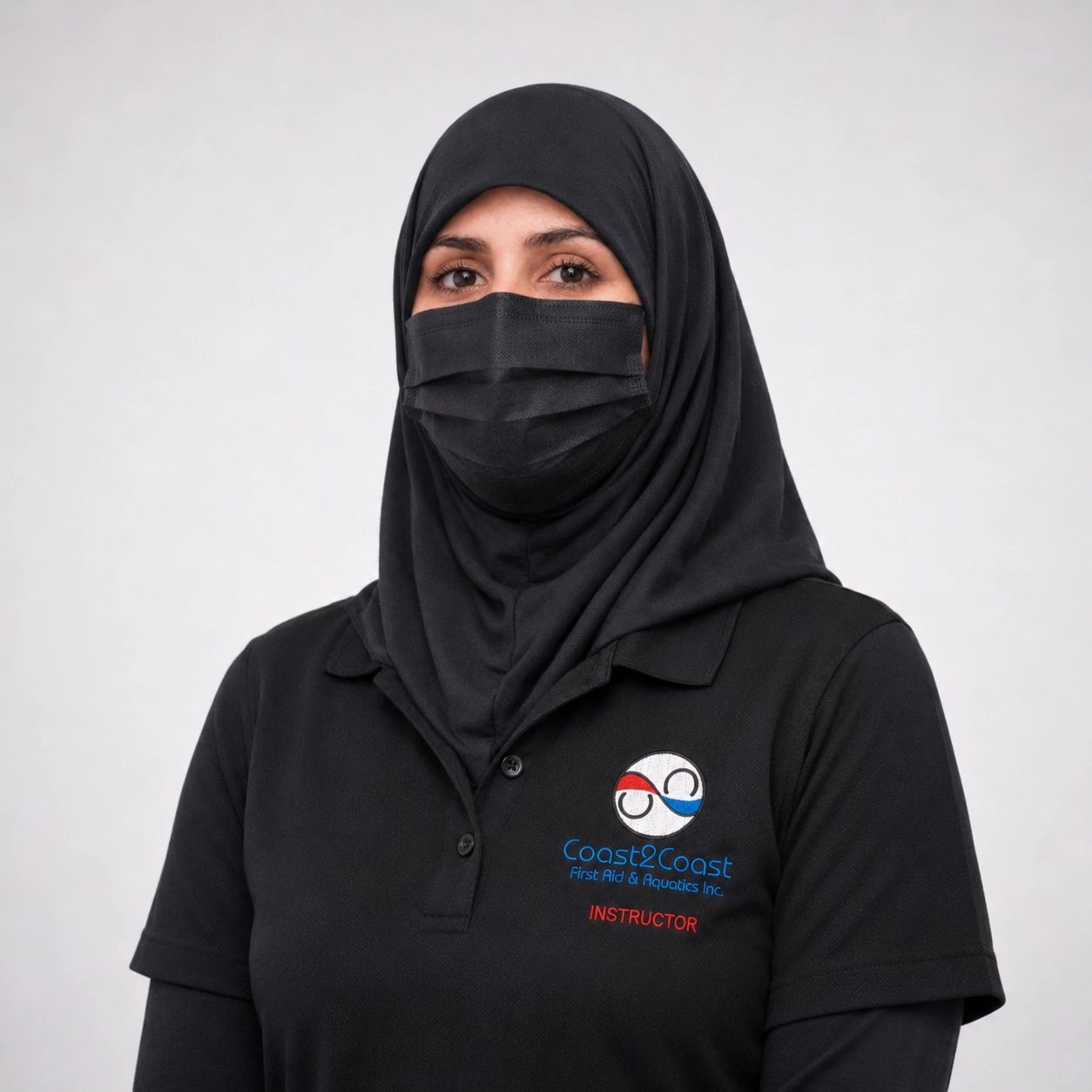
Personal protective equipment used in first aid includes disposable gloves as the baseline for any patient contact, along with face masks and face shields when there is a risk of contact with respiratory droplets or splashes. During hands-on practice in Intermediate / Standard First Aid courses, students practice putting on and removing gloves correctly to avoid self-contamination, a skill that is directly applicable to real emergency situations. The COVID-19 pandemic made mask use during emergency response more visible and more practiced, and it is now a reinforced component of training across the board.
Sanitizing Training Equipment and Mannequins
CPR mannequins and other training equipment are shared between many students, making thorough sanitization essential. Enhanced sanitization of mannequins between each student became a firm standard during the COVID-19 pandemic. This involves wiping all contact surfaces with alcohol-based disinfectant and replacing individual lung bags or face barriers between each use. Students no longer make direct mouth contact with mannequin faces during rescue breathing practice; individual barrier devices are used throughout.
Training facilities also reinforced cleaning schedules for chairs, desks, and practice stations, and increased ventilation within training spaces. AED trainers, bandaging supplies, and other equipment are either sanitized between uses or provided as individual kits. These measures ensure that the training environment itself reflects the same infection control standards that students are being taught to apply in the field.
Health Screening Before In-Person Sessions
Health screening before in-person training sessions was introduced during the pandemic and has been retained as a sensible precaution. Students and instructors are asked not to attend if they are experiencing symptoms of illness such as fever, cough, or respiratory discomfort. This simple layer of prevention significantly reduces the risk of an ill participant unknowingly exposing others in a close-contact learning environment.
Smaller class sizes, another pandemic-era adaptation, have also proven their value beyond the original distancing rationale. Reduced participant numbers allow instructors to give more individual feedback during hands-on skills practice, which directly improves skill retention and evaluation outcomes. Many training providers have maintained smaller class sizes as a standard offering because of the measurable improvement in training quality.
Learn Infection Control and CPR Skills in a Real Classroom
Certified first aid and CPR courses teach hands-on infection control, proper PPE use, and emergency response skills that apply in any situation.
What Is Blended Learning in First Aid and CPR Training?
Blended learning is a training format that combines an online theory component with a required in-person practical skills session. In first aid and CPR training, the online component covers foundational theory: recognizing medical emergencies, understanding the legal considerations around providing care, learning basic anatomy relevant to CPR and wound care, and reviewing treatment principles for common first aid situations. Students complete this component at their own pace before attending the in-person day.
The in-person practical session focuses exclusively on hands-on practice and evaluation. Students demonstrate CPR technique, AED operation, choking response, patient assessment, and wound management under direct instructor supervision. Because theory is covered online in advance, the in-person session can focus entirely on skills development and evaluation, making it a more efficient and effective use of in-class time.
The COVID-19 pandemic did not invent blended learning, but it accelerated its adoption significantly across Canada. What had been an alternative option became the primary format for many training providers during periods of restricted in-person gathering, and it remained popular after restrictions lifted because of its convenience for students. Blended learning first aid courses that include a mandatory in-person practical evaluation are recognized for workplace compliance under most Canadian provincial regulations, including Ontario’s WSIB requirements.
How Was CPR Modified During the COVID-19 Pandemic?
Cardiopulmonary resuscitation requires close physical proximity to the patient and, in conventional form, involves rescue breaths that introduce an aerosolization risk during a respiratory pandemic. When COVID-19 spread rapidly through communities in 2020, resuscitation authorities updated their guidance to address this risk while maintaining the fundamental goal of keeping the patient alive until advanced medical help arrived.
The core modification for lay rescuers was a stronger emphasis on hands-only CPR and the recommendation to place a cloth or mask over the patient’s mouth and nose before beginning compressions. This reduced the risk of aerosolized droplets while maintaining the most critical intervention: uninterrupted chest compressions that circulate oxygenated blood to the brain and heart.
Hands-Only CPR: When and Why to Use It
Hands-only CPR consists of continuous chest compressions at a rate of 100 to 120 per minute without rescue breaths. For adults who experience a sudden cardiac arrest, the lungs already contain enough residual oxygen to sustain circulation for the first several minutes of resuscitation if compressions are performed correctly and without interruption. Eliminating rescue breaths removes a barrier to action for bystanders who may be untrained or unwilling to perform mouth-to-mouth, and reduces the aerosolization risk that was particularly relevant during the COVID-19 pandemic.
Current guidance strongly recommends hands-only CPR as the appropriate response for untrained bystanders and for any rescuer who is unwilling or unable to perform rescue breathing. CPR and AED courses teach both hands-only and conventional techniques so that trained rescuers can apply the correct approach based on the situation, the victim’s age, and the likely cause of cardiac arrest.
CPR for Healthcare Providers During a Pandemic
Healthcare providers and first responders follow more detailed resuscitation protocols than lay rescuers, and these protocols were updated significantly during the COVID-19 pandemic. When responding to a patient with suspected or confirmed COVID-19, teams were directed to limit the number of providers present during resuscitation, prioritize early defibrillation since it does not produce aerosols, and use full PPE including N95 respirators, gloves, gowns, and eye protection before initiating CPR.
Basic life support training for healthcare providers was updated to incorporate these modified protocols alongside standard resuscitation technique. The emphasis on early defibrillation and minimizing aerosol-generating procedures reflected a broader principle: the safest resuscitation is one that protects both the patient and the responding team. This principle extends to any emergency involving potential infectious disease exposure, not only COVID-19.
Train Your Whole Team with Group First Aid and BLS Courses
Private group training is available for healthcare teams, workplaces, and organizations that need CPR, BLS, or Intermediate / Standard First Aid certification for multiple staff members.
What Infection Control Skills Does First Aid Training Cover?
Infection control is embedded throughout first aid training, not confined to a single module. Every practical skill in a first aid course involves some element of protecting the rescuer and patient from cross-contamination. Students learn scene safety assessment as the first step in any emergency response, which explicitly includes evaluating the risk of infectious disease exposure before making physical contact with a patient.
The main infection control skills covered in first aid courses include proper glove donning and doffing, use of barrier devices for rescue breathing, wound care with contamination avoidance, and safe handling and disposal of contaminated materials. Students practice these skills repeatedly during the in-person practical component so they become automatic in an emergency situation, where cognitive load is high and deliberate decision-making is more difficult.
COVID-19 brought heightened awareness to respiratory transmission specifically, expanding the standard discussion of blood-borne pathogens to include airborne and droplet-spread diseases. Modern first aid and CPR curricula now address both pathogen categories, preparing students to respond safely to a broader range of infectious scenarios. This expanded scope makes first aid training more relevant to everyday emergency situations, not just occupational settings.
How Have These Changes Made First Aid Training Better?
The changes that COVID-19 forced on first aid training were disruptive in the short term, but many have resulted in genuinely improved training quality over the longer term. Blended learning has made courses more accessible to a wider population, including people who work irregular hours, live in areas with limited local training options, or learn more effectively when they can review theory material at their own pace before attending the practical session.
Smaller class sizes have consistently produced better skill outcomes. When instructors can observe and correct each student individually during CPR and patient assessment practice, learners leave with more confidence and more accurate technique. The infection control enhancements, particularly individual barrier devices and thorough equipment sanitization, have eliminated a source of discomfort that previously deterred some participants from fully engaging with hands-on practice.
The pandemic also reinforced the fundamental value of first aid certification for communities. When emergency services faced extraordinary demand, the presence of trained bystanders in homes, workplaces, and public spaces became more visibly important. Canadians who had previously viewed first aid certification as a workplace checkbox reconsidered its personal relevance. This shift in awareness has contributed to sustained demand for first aid and CPR courses and a broader recognition that these skills belong in every household, not just every workplace.
For workplaces specifically, the pandemic underlined the importance of maintaining current certifications and keeping first aid programs up to date with evolving guidelines. Ontario’s WSIB requirements and similar provincial regulations require that designated first aiders hold valid certifications, and that training reflects current practice. Organizations that maintained active training programs through the pandemic were better positioned to respond to emergencies and to demonstrate compliance without disruption.
Key Takeaway
COVID-19 did not weaken first aid training. It strengthened it. Rigorous sanitization, smaller class sizes, updated CPR guidance, and the mainstreaming of blended learning have all made certification more accessible, more relevant, and more effective. The infection control skills, hands-only CPR technique, and emergency preparedness knowledge covered in first aid courses apply to every emergency, not just pandemic situations. Keeping your certification current means you are trained to the latest standards and ready to respond when it matters most.
Get Recertified
Join 150,000+ Canadians Who Are Certified
Whether you need initial certification or a recertification course to renew an expired certificate, certified courses are available across Canada.
Frequently Asked Questions: COVID-19 and First Aid Training 2026
Q1: How did COVID-19 change first aid training in Canada?
A: COVID-19 fundamentally changed first aid training in Canada by accelerating the adoption of blended learning formats, strengthening infection control protocols, and updating CPR guidelines. Training organizations introduced rigorous sanitization of mannequins and equipment, reduced class sizes to allow physical distancing, required masks and face shields during hands-on sessions, and added health screening before each class. The pandemic also prompted updates to CPR guidelines for lay rescuers, recommending hands-only CPR and placing a cloth over the patient’s face to reduce aerosolization risk.
Q2: Is blended learning as effective as in-person first aid training?
A: Yes. Blended learning combines online theory modules with mandatory in-person skills practice and evaluation, so the hands-on component remains intact. Research and training provider experience consistently show that students who complete online theory before the in-person day arrive better prepared and use the practical time more effectively. Canadian Red Cross blended learning certifications carry the same validity as fully in-person certificates. The key distinction is that fully online courses without any hands-on evaluation are not equivalent and are not recognized for most workplace compliance requirements.
Q3: What is hands-only CPR and when should it be used?
A: Hands-only CPR, also called compression-only CPR, involves continuous chest compressions without rescue breaths. It is recommended for untrained bystanders or in situations where a rescuer is unwilling or unable to perform rescue breathing, such as during a respiratory pandemic. For adults who collapse suddenly, hands-only CPR delivers oxygenated blood to the brain and heart effectively in the first few minutes. Trained rescuers and healthcare providers should still perform conventional CPR with rescue breaths when safe and appropriate, as it provides better outcomes over longer resuscitation attempts.
Q4: How are CPR mannequins sanitized between students?
A: CPR mannequins are sanitized between each student using alcohol-based disinfectant wipes or spray on all contact surfaces, including the face, chest, and body. Face shields or individual lung bags are used during practice so no student makes direct mouth contact with the mannequin’s face. Many training programs also use barrier devices such as pocket masks during skills practice. These infection control measures have been standard practice in quality training environments for many years and were reinforced as a top priority during and after the COVID-19 pandemic.
Q5: Do first aid courses teach infection control skills?
A: Yes. Intermediate / Standard First Aid courses include a module on scene safety and infection control that covers hand hygiene, the use of personal protective equipment such as gloves, masks, and face shields, and safe disposal of contaminated materials. Students learn to apply barrier devices before performing rescue breathing and to minimize direct contact with bodily fluids. These skills protect the rescuer and the patient during any emergency, not just pandemic situations. Healthcare providers and first responders receive more detailed infection control training as part of BLS and EMR courses.
Q6: Can I take a first aid course online?
A: Blended learning courses are available, combining an online theory component with a required in-person practical skills day. This format is recognized for workplace compliance under most Canadian provincial regulations, including Ontario’s WSIB requirements. Fully online-only courses without hands-on evaluation are not equivalent to certified first aid training and are not accepted for most employment or regulatory purposes. If your workplace or employer requires first aid certification, confirm that the course you choose includes an in-person practical evaluation component.
Q7: What PPE is required during a first aid course?
A: Personal protective equipment used during first aid training typically includes disposable gloves, which are worn during wound care and patient assessment exercises, and barrier devices such as pocket masks or face shields used during rescue breathing practice. During the COVID-19 pandemic, training providers also required participants to wear procedural masks throughout in-person sessions and provided face shields for close-contact activities like CPR practice. Hand sanitizer was made available throughout classes, and health screening was completed before entry. Many of these enhanced protocols have been retained as ongoing best practice.
More FAQs: Infection Control and CPR During a Pandemic
Q8: Why was class size reduced during COVID-19 first aid training?
A: Class sizes were reduced during the COVID-19 pandemic to allow physical distancing of at least two metres between participants during in-person training sessions. Smaller classes made it possible to space seating and practice stations appropriately in training facilities. An additional benefit was improved instructor-to-student ratios, which allowed more individualized feedback during hands-on skills practice. This improvement in training quality led many providers to maintain smaller class options even after pandemic restrictions were lifted, as students consistently reported better learning experiences.
Q9: How did COVID-19 affect basic life support (BLS) training for healthcare providers?
A: Basic life support training for healthcare providers was updated during the COVID-19 pandemic to address the elevated risk of aerosolization during resuscitation. Guidelines recommended that healthcare teams use full PPE including N95 respirators, gloves, gowns, and eye protection when performing CPR on a suspected or confirmed COVID-19 patient. Teams were advised to limit the number of providers in the room during resuscitation. BLS courses updated their content to reflect these protocols, and students learned both standard resuscitation techniques and the modifications appropriate for infectious-disease emergencies.
Q10: Is a first aid certificate from before COVID-19 still valid?
A: Intermediate / Standard First Aid and CPR certificates are typically valid for three years from the date of issue in Canada. If your certificate was issued before the pandemic and has since expired, you will need to complete a recertification course to renew it. Recertification courses are shorter than initial certification courses and cover updates to guidelines, including any CPR protocol changes introduced during or after the pandemic. Contact your training provider to confirm the expiry date on your certificate and whether a full course or recertification is required for your situation.
Q11: What does scene safety mean in first aid training?
A: Scene safety is the first step in any emergency response. It involves assessing the environment before approaching an injured or ill person to identify hazards that could endanger the rescuer or bystanders. In first aid training, students learn to check for risks such as traffic, fire, unstable structures, electrical hazards, and potential infectious disease exposure. During a respiratory pandemic, scene safety includes putting on gloves and a mask before approaching the patient. Skipping scene safety can result in the rescuer becoming a second victim, which worsens the emergency situation rather than resolving it.
Q12: What infection control measures are used in first aid training facilities?
A: First aid training facilities implement several infection control measures to protect students and instructors. These include sanitizing mannequins and all training equipment between each use, providing individual sets of practice supplies where possible, placing hand sanitizer stations throughout the room, and cleaning training surfaces before and after each session. Many facilities continue health screening practices introduced during the COVID-19 pandemic, asking participants not to attend if they are experiencing symptoms of illness. Adequate ventilation and reduced class sizes also contribute to a safer learning environment.
Q13: How does blended learning work for CPR and first aid courses?
A: Blended learning for CPR and first aid courses divides the curriculum into two parts. The first part is an online theory module that covers topics such as recognizing emergencies, legal considerations, anatomy basics, and treatment principles. Students complete this at their own pace before attending the in-person session. The second part is an in-person practical skills day where students practice and are evaluated on CPR technique, AED use, choking response, wound care, and other hands-on skills. The in-person day is shorter than a fully in-person course because theory is already covered, making the format more convenient without compromising skills quality.
Q14: What is the difference between hands-only CPR and conventional CPR?
A: Hands-only CPR uses continuous chest compressions at a rate of 100 to 120 per minute without rescue breaths. Conventional CPR combines chest compressions with rescue breaths in a 30:2 ratio for adults (30 compressions followed by 2 rescue breaths). For untrained bystanders responding to a sudden cardiac arrest in an adult, hands-only CPR is just as effective in the first several minutes and is easier to perform. Conventional CPR with rescue breaths is recommended for trained rescuers, for children, for drowning victims, and for any victim when cardiac arrest is caused by respiratory failure rather than a cardiac event.
Q15: Are the COVID-19 CPR modifications still in effect today?
A: The specific emergency COVID-19 CPR modifications, such as placing a cloth over the patient’s face during compressions, were introduced as temporary guidance during peak pandemic conditions. Current CPR guidelines from Canadian resuscitation authorities have returned to recommending conventional CPR for trained rescuers while continuing to support hands-only CPR for untrained bystanders. The broader infection control awareness that the pandemic reinforced, including wearing gloves, using barrier devices for rescue breathing, and considering scene safety, remains a permanent and emphasized part of first aid and CPR training curricula.
Sources & Expert Review
Reviewed by Ashkon Pourheidary, B.Sc. Hons Neuroscience, Canadian Red Cross certified instructor since 2011, Coast2Coast First Aid & Aquatics.
CPR guideline references: Public Health Agency of Canada, COVID-19. Resuscitation guidance aligned with the Heart and Stroke Foundation of Canada and Canadian Red Cross training standards.
Last reviewed: May 2026. Content reflects current first aid and CPR training standards in Canada.