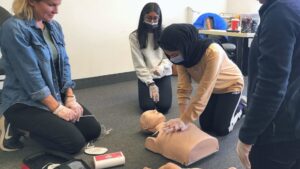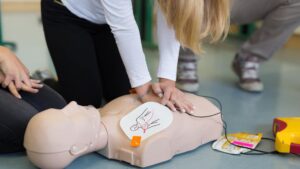

Canadian workplace first aid training is a legal requirement under provincial OHS legislation and the CSA Z1210:24 national standard, applying to office environments as much as to construction sites or factories. In a high-rise office, paramedic response times can exceed 10 minutes, making trained bystanders the only meaningful intervention during sudden cardiac arrest. Mandatory training for all office staff, not just the minimum required number of designated first aiders, dramatically reduces response times, lowers corporate liability, and can be the difference between a colleague surviving or not.
Find a First Aid Course Near Your Office
Canadian Red Cross certified courses for individuals, teams, and entire organizations across Canada.
7–10%
drop in survival odds for every minute without CPR during cardiac arrest
10+ min
typical paramedic response time to upper floors in a high-rise building
3 Years
validity of a Canadian Red Cross first aid and CPR certificate
Why Is Workplace First Aid Training a Strategic Priority for Office Employers?
Workplace safety is a topic that affects every employee in every industry, but it is often dangerously overlooked in professional office environments where the risks seem minimal compared to high-hazard construction sites or manufacturing plants. The reality is that medical emergencies are non-discriminatory. Cardiac arrests, choking incidents, severe allergic reactions, slips, falls, and mental health crises occur regularly in office buildings across Canada. Investing in first aid and CPR training is a critical pillar of operational resilience.
Trained staff can treat minor injuries immediately, preventing them from escalating into major medical issues. They also reduce recovery time for colleagues by providing effective first response before paramedics arrive. Beyond meeting certification prerequisites for designated safety roles, office-wide training ensures that no matter who is on break or working remotely, a capable responder is always nearby. Quick action by a trained bystander remains the single most important factor in survival from sudden cardiac arrest, and that bystander will almost always be a colleague rather than a paramedic.
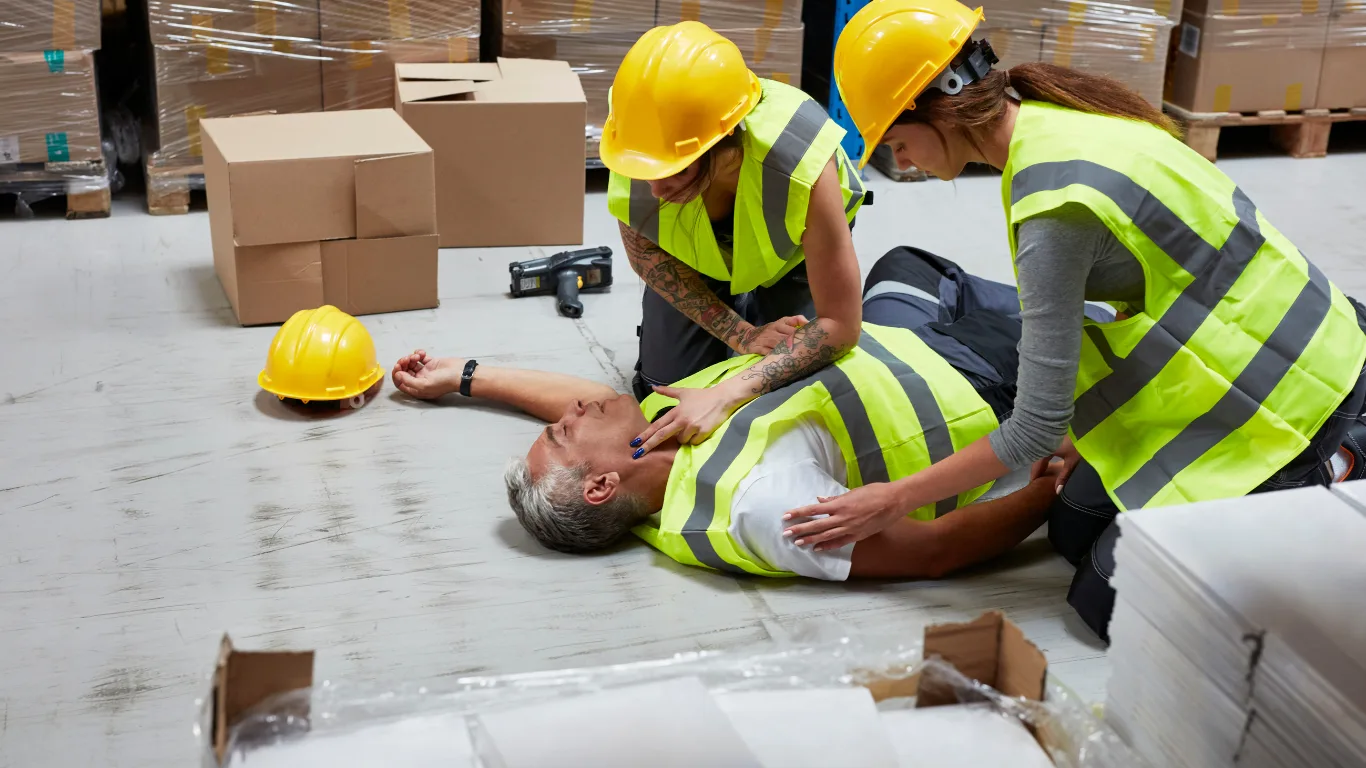
Why Office Environments Are Not as Safe as You Think
Many people assume that offices are inherently safe environments. After all, there are no heavy machines, no hazardous chemicals, and no extreme temperatures. But this perception can create a dangerous complacency. Every workplace contains hazards, including slippery floors, electrical cords, and ergonomic risks from prolonged sitting. The most common cause of death from medical emergencies in offices is sudden cardiac arrest (SCA), which can strike anyone regardless of age, fitness level, or apparent health. An employee may suddenly collapse from a cardiac event or experience a severe allergic reaction during a meeting, demanding immediate action from whoever is present.
In a dense urban centre like Toronto or Vancouver, a victim on the 30th floor of a high-rise faces what responders call a “Vertical Response Delay,” where it may take paramedics 10 or more minutes to reach the desk. Consider the lifestyle reality of a typical Canadian office: employees spend long hours sitting, often under significant psychological stress, with limited physical activity. These sedentary work habits, combined with poor diet and high-pressure deadlines, increase the risk of cardiovascular events. When a cardiac emergency occurs, the outcome depends entirely on whether a colleague can immediately perform High-Performance CPR and deploy an Automated External Defibrillator (AED).
Beyond cardiac events, offices present risks for choking during lunch breaks, anaphylaxis from shared kitchen spaces, and falls on stairs or wet floors. A comprehensive Intermediate / Standard First Aid course prepares your team to handle all of these situations, including the use of barrier devices to safely deliver rescue breaths.
What Are the National Workplace First Aid Requirements Under CSA Z1210:24?
In Canada, workplace health and safety regulations are governed at the provincial level, with WSIB in Ontario and WorkSafeBC among the primary bodies. However, there is a nationwide shift toward the CSA Z1210:24 standards, which categorize first aid training into “Basic,” “Intermediate,” and “Advanced” levels. This alignment ensures that a certificate earned at a Coast2Coast location meets compliance requirements recognized by employers from coast to coast.
For most office environments, the requirements are determined by headcount per shift:
- Small Offices (1–5 Workers): Usually require at least one person with Emergency (Basic) First Aid.
- Medium to Large Offices (6+ Workers): Typically mandate at least one Standard (Intermediate) First Aider.
- High-Rise or Multi-Floor Offices: Best practice dictates having a certified responder on every floor to ensure response times stay under three minutes.
What Are the Benefits of Making Office CPR Training Mandatory?
Making first aid and CPR training mandatory for all office employees, rather than just a select few safety wardens, delivers benefits that extend far beyond regulatory compliance. Safety training also fosters a culture of care, vigilance, and resilience, strengthening the overall workplace environment and giving employees a sense of shared responsibility.
1. Drastic Reduction in Response Times
In a cardiac emergency, every minute without CPR reduces the chance of survival by 7 to 10 percent. When every employee in an office knows how to deploy an AED and perform compressions, the likelihood of a responder being within reach of the victim increases dramatically. This “distributed safety” model is the only way to effectively bridge the gap before professional help arrives, and it reduces recovery time for the affected employee, allowing a faster return to normal function.
2. Career Advancement and Professional Development
Employees value training as a form of professional development. Holding a valid, unexpired Canadian Red Cross certificate is a significant asset for corporate security staff, daycare workers in on-site childcare facilities, and hospitality workers within office buildings. It demonstrates responsibility and a commitment to team well-being, often serving as a differentiator for leadership roles. Certification also provides personal confidence that extends well beyond the workplace.
3. Lower Liability and Insurance Premiums
Employers who can demonstrate 100 percent training saturation have a robust Due Diligence defense. If a workplace incident occurs, legal investigators and insurers will ask whether the response was appropriate. Having a fully certified staff significantly reduces exposure to negligence claims. Furthermore, many commercial insurers offer premium reductions to businesses with a documented, comprehensive safety culture.
How Can Offices Implement Training Without Disrupting Operations?
Implementing office-wide training does not have to disrupt your workflow. The blended learning format allows staff to complete the medical theory component online at their own pace, then attend a shortened in-person session focused entirely on hands-on practical skills assessment. This is the most time-efficient way to achieve office-wide compliance without pulling employees off their desks for a full day.
For larger teams, private group training brings the classroom to you. Instructors customize scenarios to your office layout, practicing how to navigate cubicles, stairs, and elevators while managing a victim. This site-specific approach is far more effective than generic off-site courses because employees rehearse in the actual environment where an emergency could occur.
Watch: How to Perform CPR, Coast2Coast Official
Which Office Roles Need Specialized First Aid and CPR Certification?
Standard office training should also address the specific needs of different job titles within the building and account for the unique hazards present in each area:
- Corporate Security and Reception: Often the first to arrive at an incident, these staff need advanced AED training and scene management skills.
- Executive Assistants and Managers: Frequently responsible for coordinating during crises, they benefit from Psychological First Aid concepts to help manage team trauma in the immediate aftermath of an emergency.
- Maintenance and Janitorial Staff: These workers are often in secluded areas such as mechanical rooms and basements and need to know how to perform a self-rescue or alert others during a solo emergency.
- On-site Childcare and Daycare Staff: Must hold CPR Level C to safely handle pediatric emergencies including choking and anaphylaxis, ensuring both childcare and school staff are prepared for incidents involving children.
- Healthcare Professionals in Occupational Health Roles: Require specialized Basic Life Support (BLS) training, including advanced CPR and AED use, to address emergencies in clinical and pre-hospital settings.
The “Physiology of the Save”: Why Sedentary Workers Need to Understand Their Own Risk
Coast2Coast instructors educate office workers on what we call the “Physiology of the Save.” We explain how sedentary behavior contributes to blood clots and deep vein thrombosis (DVT), which can lead to pulmonary embolisms, and why prolonged sitting elevates cardiovascular risk even in otherwise healthy adults. During cardiac emergencies, quick CPR is critical to prevent brain damage, as there is only a short window before irreversible neurological injury begins.
Training covers CPR techniques including high-quality chest compressions and rescue breaths for adults, children, and infants. Understanding the physiological reasoning behind each technique motivates employees to take their written examination and skills practice more seriously, transforming them from reluctant compliance participants into proactive safety advocates who recognize early warning signs of stroke and heart attack in their colleagues.

Get Your Team CPR and AED Certified
Hands-on CPR and AED training with Canadian Red Cross certified instructors for individuals and groups.
Why Hazard Assessments Are the Foundation of Office First Aid Preparedness
Offices are not risk-free, and conducting regular hazard assessments is a critical step toward identifying potential dangers and ensuring appropriate first aid preparedness. A hazard assessment reviews the physical environment, work processes, and population demographics of the office to determine the type and quantity of first aid equipment required and the level of training appropriate for each area.
For example, an office that houses an on-site kitchen presents a higher choking risk than a standard desk environment. A high-density open-plan floor with 150 employees has different response-time requirements than a small five-person satellite office. Under CSA Z1210:24, the outcome of a formal hazard assessment directly informs the correct first aid classification (Basic, Intermediate, or Advanced) for a given workplace, making it a compliance requirement rather than an optional best practice.
Bring Training Directly to Your Office
Site-specific private group sessions tailored to your floor plan, team size, and workplace hazards.
Key Takeaway
Office environments carry real medical risks, and the legal obligation to maintain certified first aiders applies to every Canadian workplace regardless of industry. With paramedic response times potentially exceeding 10 minutes in high-rise buildings and survival dropping by up to 10 percent for every minute without CPR, the case for office-wide mandatory training is both a compliance requirement and a moral one. A trained workforce is a resilient workforce, one that protects colleagues, reduces liability, and creates a safety culture that extends far beyond the walls of the office.
Register Your Team for Intermediate / Standard First Aid Today
Two-day Canadian Red Cross Intermediate / Standard First Aid course satisfying CSA Z1210:24 and WSIB requirements for most Canadian workplaces.
Frequently Asked Questions: Workplace First Aid Training in Canada 2026
More FAQs: Liability, Kit Requirements, Certificates, and Remote Staff
Sources and Further Reading
- WSIB Ontario: Regulation 1101, First Aid Requirements (O. Reg. 1101)
- CSA Group: CAN/CSA-Z1210:24 First Aid in the Workplace (National Standard of Canada)
- Canadian Red Cross: First Aid and CPR Course Guidelines, 2025 Curriculum Edition
- Heart and Stroke Foundation of Canada: Out-of-Hospital Cardiac Arrest Statistics (2024)
- WorkSafeBC: First Aid Regulation (Part 3 of the OHS Regulation)