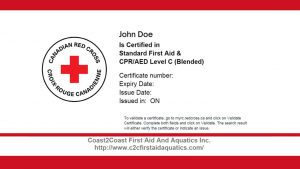

Canadian businesses and schools are legally required under WSIB Regulation 1101 and CSA Z1210:24 to maintain certified first aid responders on site at all times. Beyond compliance, organizations that invest in High-Performance CPR training, AED programs, site-specific risk assessments, and Psychological First Aid build a resilient safety culture that protects employees and students, reduces corporate liability, and significantly improves outcomes during the critical minutes before paramedics arrive.
Find a First Aid Course for Your Team
Canadian Red Cross certified courses for businesses, schools, and organizations at 30+ locations across Canada.
75%+
survival rate increase when AED is deployed within the first 3 minutes of cardiac arrest
3 min
target response time for a certified first aider to reach a victim in a high-rise building
3 Years
validity of a Canadian Red Cross first aid and CPR certificate before recertification is required
Why Is Emergency Preparedness a Strategic Priority for Canadian Organizations?
Medical emergencies do not follow corporate schedules or respect school hours. A sudden cardiac arrest can strike a high-performing employee during a morning meeting. A severe anaphylactic reaction can affect a student in a crowded cafeteria. A traumatic slip-and-fall can happen in a warehouse, an office hallway, or a school gymnasium at any given second. The fundamental question every Canadian business owner, school administrator, and community leader must ask is not whether an emergency will occur, but whether their team is clinically prepared to respond when it does.
Across Canada, the Canadian Red Cross has long championed the necessity of emergency preparedness training for workplaces and educational institutions, including through its Be Ready program, which promotes strategies such as knowing local risks, creating a plan, and building organizational resilience. At Coast2Coast First Aid & Aquatics, we share that commitment by delivering accredited first aid and CPR and AED certification programs specifically designed for the unique needs of modern workplaces and school boards. Our programs build a sustainable culture of safety that protects employees, students, and the public while significantly mitigating organizational risk and liability.

What Are the Legal First Aid Requirements for Canadian Businesses Under WSIB and CSA Standards?
In Canada, maintaining first aid capabilities is not a choice; it is a strict legal mandate. Provincial legislation such as the Ontario Workplace Safety and Insurance Act requires employers to maintain first aid coverage proportional to the size of their workforce and the specific hazard profile of their environment. In 2026, these regulations have aligned with the CSA Z1210:24 national standards, which categorize first aid training into Basic, Intermediate, and Advanced tiers. Developing comprehensive emergency management plans and documented procedures is essential to ensure compliance and enable effective response during emergencies, including recovery strategies to help organizations resume operations after a major incident.
Failure to meet certification prerequisites can result in devastating Ministry of Labour fines, increased workers’ compensation premiums, and serious corporate liability in the event of a preventable incident. Organizations that invest in private group training ensure their teams are always within the three-year renewal window, maintaining seamless legal protection. Provincial and territorial governments work collaboratively with Public Safety Canada to strengthen community resilience and coordinate emergency management across sectors, and organizational compliance is a key part of that broader framework.
How Should Schools Approach Emergency Preparedness for Students and Staff?
Educational institutions bear a unique, high-stakes responsibility for emergency preparedness because they are entrusted with the physical safety of children. Teachers, support staff, and coaches serve as the primary first responders when a student suffers a traumatic injury or a sudden medical crisis. In these settings, the quality of training can determine the difference between a successful recovery and a fatal outcome.
Modern school emergency plans must address far more than basic cuts and scrapes. In 2026, schools are increasingly focused on High-Performance CPR and the rapid deployment of Automated External Defibrillators (AEDs). Schools must also prepare for a range of scenarios including natural disasters, severe weather events, and public health emergencies. The curriculum now includes Psychological First Aid concepts to help staff manage the mental trauma of lockdowns or sudden emergencies, providing emotional support and building mental health resilience in the immediate aftermath. It is also essential for schools to teach students and staff about emergency procedures through age-appropriate drills and documented response plans.
Schools frequently collaborate with community organizations and provincial authorities to develop comprehensive emergency management plans covering prevention, protection, response, and recovery. By ensuring staff pass both a written examination and a practical skills assessment, school boards across Canada can guarantee a uniform standard of care across all campuses. Families can further strengthen this framework by creating household communication plans and practicing emergency drills at home.
Which Roles in the Canadian Workforce Require Mandatory First Aid Certification?
In Canada’s diverse economy, specific roles have strict medical training mandates that must be met to ensure public and workplace safety:
- Security Guards and Loss Prevention: Must hold Intermediate / Standard First Aid to maintain provincial licensing and manage crowd-related trauma in commercial buildings, malls, and arenas.
- Daycare Staff and Early Childhood Educators: Legally required to hold CPR Level C to manage pediatric choking, anaphylaxis, and infant resuscitation.
- Construction and Industrial Foremen: Required to manage industrial trauma including severe bleeding control, crush injuries, and tourniquet application on high-risk job sites.
- Healthcare Professionals in Clinical and Occupational Roles: Staff in school clinics or corporate health offices require Basic Life Support (BLS) to master oxygen administration and team-based resuscitation dynamics.
- Hospitality and Event Staff: Event planners and hotel managers must be prepared to protect patrons during sudden cardiac arrests in high-traffic venues where dense crowds and limited EMS access create elevated risk.
Watch: How to Perform High-Quality CPR
What Is the Science Behind High-Performance CPR and CCF in Organizational Settings?
In 2026, the clinical standard for workplace and school emergency response is High-Performance CPR. This methodology focuses on maximizing the Chest Compression Fraction (CCF), the percentage of time during a rescue that active compressions are being performed. In a high-rise office building where “Vertical Response Delay” can slow paramedics by 10 minutes or more, a high CCF is the only way to maintain the hemodynamic pressure required to keep a victim’s brain oxygenated until advanced help arrives.
Our training utilizes high-fidelity feedback manikins that provide real-time digital data on compression depth and rate, ensuring that employees and teachers are delivering life-saving intervention that meets international resuscitation guidelines. An evidence-based approach underpins all Canadian Red Cross emergency preparedness training, ensuring that every protocol and physical technique is grounded in scientific data and proven outcomes. We also emphasize the use of barrier devices such as one-way pocket masks to protect staff from infectious diseases while delivering rescue breaths.
How Should Organizations Conduct a Site-Specific Risk Assessment for Emergency Preparedness?
An effective preparedness program begins with a rigorous, site-specific risk assessment. A manufacturing facility faces different trauma risks, such as crush injuries and chemical burns, than a university campus facing sports injuries and mental health crises. When planning preparedness programs, it is essential to consider the full range of potential hazards, including major disasters, severe weather events, and infrastructure failures, to ensure comprehensive emergency management coverage.
Coast2Coast instructors help organizations identify their specific “Red Zones” and tailor blended online learning or in-person sessions to address them directly. For example, industrial sites may prioritize severe bleeding control and oxygen administration, while a corporate office environment might focus on recognizing strokes using the FAST method and managing sudden cardiac arrest among a sedentary workforce. This granular approach ensures training is relevant, engaging, and directly applicable to the dangers your team actually faces.
Get Your Organization CPR and AED Certified
Hands-on CPR and AED training for businesses, school boards, and healthcare organizations across Canada.
What Flexible Training Solutions Are Available for Busy Businesses and Schools?
Taking an entire department or teaching staff offline for training is a logistical challenge. To accommodate demanding organizational schedules, Coast2Coast offers a highly effective blended online learning format. This hybrid model allows staff to complete the theoretical modules at their own pace from any device. Once the online component is finished, they attend a condensed in-person session at their facility or one of our training locations to complete their hands-on practical skills assessment.
This format maximizes operational efficiency and ensures employees spend less time away from their core duties while still receiving full Canadian Red Cross certification recognized by all provincial OHS boards and the WSIB. For organizations that need to certify large numbers of staff simultaneously, on-site private group training brings certified instructors and all required equipment directly to your location, making team-wide compliance practical and cost-effective.
Bring Training Directly to Your Workplace or School
Private on-site group training sessions for teams of any size, tailored to your environment and hazard profile.
Key Takeaway
Emergency preparedness for Canadian businesses and schools is both a legal requirement and a moral responsibility. Meeting the minimum standards of WSIB Regulation 1101 and CSA Z1210:24 protects against fines and liability, but organizations that go further, investing in High-Performance CPR training, AED programs, site-specific risk planning, and Psychological First Aid, build something more durable: a safety culture where every person knows what to do, acts without hesitation, and gives every victim the best possible chance of survival.
Get Intermediate / Standard First Aid Certified for Your Team Today
Two-day Canadian Red Cross Intermediate / Standard First Aid satisfying CSA Z1210:24 and WSIB requirements across Canada.
Frequently Asked Questions: Emergency Preparedness for Businesses and Schools in Canada 2026
More FAQs: Security Guards, On-Site Training, Barrier Devices, Insurance, and School Trauma Kits
Sources and Further Reading
- WSIB Ontario: Regulation 1101, First Aid Requirements (O. Reg. 1101)
- CSA Group: CAN/CSA-Z1210:24 First Aid in the Workplace (National Standard of Canada)
- Canadian Red Cross: Intermediate / Standard First Aid and CPR Course Guidelines, 2025 Curriculum Edition
- Public Safety Canada: Emergency Management Framework for Canada (2024)