First Aid Training, CPR & BLS Certification in Long Beach
Get certified with Long Beach's trusted American Red Cross Authorized Training Provider and American Heart Association Aligned Training Site. We deliver California-compliant First Aid, CPR, AED, and BLS courses designed to save lives
First Aid Course & CPR Classes in Long Beach
We provide Adult and Pediatric First Aid, CPR & AED and Basic Life Support (BLS courses) classes. All classes and courses are California-compliant and accepted by Long Beach employers, LBUSD schools and healthcare organizations. Our blended learning course options are taught by CPR training instructors certified through the American Heart Association and the American Red Cross — serving healthcare workers and the general public across Long Beach.
Adult & Pediatric First Aid/CPR/AED — American Red Cross
- Hands-on child, infant and adult CPR
- Get trained by an AED professional and learn skills for basic CPR
- Basic emergency wound care, how to respond to choking, environmental illness
Our CPR training and first aid classes were designed for workplaces, child care centers, LBUSD teachers, fitness staff and security. This blended learning course covers basic first aid, CPR & AED in a flexible format — complete the online course at home, then attend the in class portion for hands-on skills practice.
- California-compliant training for OSHA and workplace safety requirements
- Flexible blended and fully in-person formats available
- Certificate issued within 48 hours of completion
- Free skills practice retake within 90 days
- Group classes for teams of 8+ available at your workplace
First Aid & CPR — Long Beach FAQs
Yes! Our first aid training and CPR classes are in compliance with California workplace safety standards. Employers in construction, child care, fitness, security and healthcare in Long Beach accept American Heart Association courses and American Red Cross classes, giving every student the knowledge and confidence to react in an emergency situation. This is the American Heart Association and American Red Cross class that most employers in Long Beach require for OSHA compliance.
Yes. This online course gives you access to first aid theory modules as soon as you register. Then you attend the in class portion — a short hands-on skills session for the practical test. The in class portion is mandatory for certification. Your CPR training theory covers AED use and emergency response to prepare you for the in-person session.
Basic Life Support (BLS Classes) — American Heart Association
- American Heart Association — CPR/AED and bag-valve-mask course
- Adult, child and infant resuscitation with team-based resuscitation and emergency response
- Trauma care and opioid overdose response components
- BLS Initial Certification and Renewal Classes Available
This CPR training course is for Long Beach healthcare providers, CSULB nursing students, first responders at Long Beach Memorial Medical Center and nearby facilities, and clinical settings where basic life support skills are required for certification. It is the clinical-standard BLS course recognized by the American Heart Association.
If you need a California-compliant workplace certification for a non-clinical job, please register for the CPR and first aid course above — that class covers a wider range of emergencies. This BLS program is the clinical standard required at Long Beach Memorial Medical Center, Miller Children's & Women's Hospital, St. Mary Medical Center, Veterans Affairs Long Beach, and Kaiser Permanente.
- American Heart Association — the gold standard for clinical BLS certification
- Covers bag-valve-mask ventilation and team-based resuscitation protocols
- BLS Provider (initial) and BLS Renewal available
- Certificate issued within 48 hours of completion
- Accepted at Long Beach Memorial, Miller Children's & Women's Hospital, St. Mary Medical Center, Kaiser Permanente
Who is this for? Long Beach healthcare professionals — including nurses, nursing students, paramedics, physicians, dental professionals and healthcare workers at CSULB and nearby programs — who need a current American Heart Association BLS certification to start or maintain clinical placements.
BLS — Long Beach FAQs
BLS certification is valid for two years from date of issue. Renewal classes should be scheduled at least a month before expiry to avoid a lapse. Expired certifications may impact employment and clinical placements at CSULB, Long Beach Memorial Medical Center and healthcare sites throughout Long Beach.
BLS classes are for healthcare professionals — covering two-rescuer CPR, AED use, bag-mask ventilation, and clinical team-based emergency response. Basic first aid and CPR classes include a wider range of daily emergency skills — wound care, fractures, and choking — designed for workplace responders rather than clinical settings.
Yes, our training covers basic life support skills including instruction from an AED professional and high-performance CPR techniques. Students learn proper AED pad placement, rhythm analysis, and team-based resuscitation protocols.
HeartCode BLS & BLS Renewal — Long Beach
Looking for a flexible schedule? Coast2Coast's HeartCode BLS online course helps healthcare professionals learn skills for AED/resuscitation CPR at their own pace, followed by a hands-on skills test with an American Heart Association certified instructor. Perfect for nurses, paramedics and medical students with a busy schedule.
We offer BLS Provider (initial) and BLS Renewal classes. Complete the online component on your own schedule, then attend a short hands-on skills check. All clinical settings use American Heart Association courses as the standard.
HeartCode BLS
Flexible format — online theory at your own pace, then in-person skills test with an AHA certified instructor.
- Initial courseBLS Provider
- FormatOnline + Skills Test
- RenewalBLS Renewal
- Valid for2 Years
Why Choose Coast2Coast for First Aid & CPR Certification in Long Beach
We check every box that other Long Beach CPR training providers miss. Our courses are California-compliant, backed by the American Red Cross and American Heart Association, and come with a 48-hour certificate turnaround and a free 90-day skills retake.
North America’s first AI-powered First Aid & CPR tutor, part of the Coast2Coast First Aid Student Companion app. Coasty explains First Aid, CPR/AED, BLS, and course concepts in simple language so you can review topics, take quizzes, and build confidence before, during, and after class. It works alongside your instructor and official American Red Cross and American Heart Association materials to support your learning.
Our Long Beach First Aid & CPR Training Center
Minutes from Cal State Long Beach (CSULB), Long Beach Memorial Medical Center, and Long Beach Airport. Our Long Beach facility runs Monday through Sunday at 2115 N Bellflower Blvd, equipped with AED trainers, CPR mannequins, and everything needed for hands-on certification.
Find Your Way to Us
Coast2Coast First Aid/CPR - Long Beach
Inside Our Long Beach Training Facility
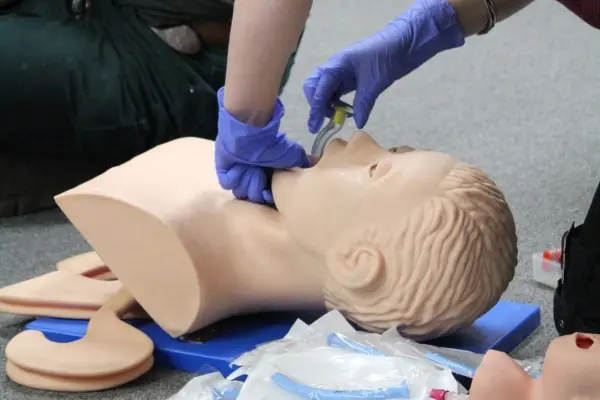
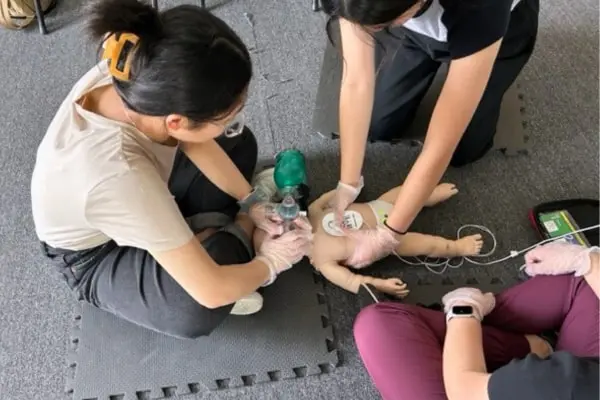
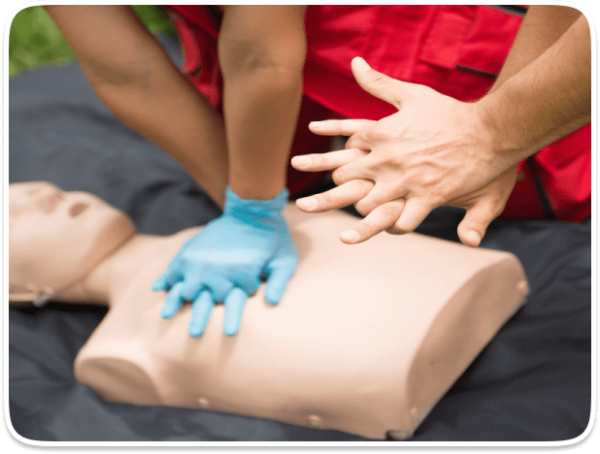
A dedicated first aid and CPR facility in Long Beach — set up for hands-on skills certification with resuscitation mannequins.
Frequently Asked Questions — First Aid & CPR Certification
We get the same questions from students before they book training. The most common ones are about which course to take, whether online-only certificates are valid in California, how an online course fits into blended learning, and the difference between BLS and standard first aid. We've answered all of them here — based on actual California workplace safety requirements, not guesswork.
BLS classes are for healthcare professionals responding to cardiac emergencies, including two-rescuer CPR, AED use, bag-mask ventilation, and clinical team-based emergency response. They emphasize high quality CPR and high quality chest compressions in a clinical setting. First aid training and CPR courses include a wider range of daily emergency skills — wound care, fractures, and choking — designed for workplace responders and the general public. If your employer is a hospital, medical clinic, or healthcare facility, you likely need BLS. For Cal/OSHA workplace compliance in any other industry, the CPR/AED course is the right choice, while healthcare providers should choose BLS when clinical certification is required.
No. An in-person skills assessment is required for California-compliant CPR and first aid training. Coast2Coast offers a blended option where you complete the online course theory portion at home and then attend an in-person skills class at our Bellflower Blvd facility. The course helps you prepare, but the online course alone is not enough for workplace-valid first aid training. Online-only CPR classes are not Cal/OSHA approved and are not accepted by employers, schools, healthcare organizations, or entertainment industry companies. If you need an AED certification class, the hands-on portion matters because instructors verify AED pad placement, high quality chest compressions, and response steps for cardiac emergencies. This format also helps childcare professionals meet practical workplace requirements, and the online course makes first aid training easier to schedule before the classroom session.
CPR and first aid training is required for a wide range of employers and workers, including LBUSD schools, Kaiser Permanente, Miller Children's & Women's Hospital, entertainment production companies, security firms, fitness facilities, sports coaches, healthcare providers, and any employer covered by OSHA workplace requirements. Childcare professionals who supervise infants and children often need current CPR/AED training for licensing, employment, and parent confidence. Teachers may also need first aid certification for a California teaching credential, school placement, or district cpr requirement. Whether you're a healthcare professional or first responder, our first aid classes and BLS courses build high quality CPR skills and knowledge for cardiac emergencies so students can act with confidence and save lives. Begin your training today to be prepared for any emergency.
Yes. Pediatric CPR, infant CPR, and first aid certification are common requirements for teachers, daycare staff, preschool teams, camp staff, and childcare professionals throughout Los Angeles County. Our American Red Cross Adult and pediatric course helps students learn CPR for adults, children, and infant victims, including conscious and unconscious choking, unconscious choking basic response steps, and when hands only CPR may be appropriate for a cardiac arrest. These first aid classes include hands on practice so students can build confidence before using the skills in facility environments.
An AED class teaches how to recognize cardiac arrest, call for help, start compressions, and use an AED safely while following the device prompts. Students learn CPR with instructor led coaching, practice rescue breathing when required, and review choking response for conscious and unconscious choking emergencies. Our expert instructors focus on practical hands on practice so students understand how CPR, AED use, and first aid certification connect during real emergencies.
For blended courses, the online portion must be completed prior to the classroom skills session. Some programs use AHA eLearning, which combines eLearning with an in-person instructor led skills check. The online course gives you the background knowledge first, then the in-person class confirms hands on practice, AED use, and CPR performance with an instructor. This format is helpful for students who want to learn CPR at home before attending their scheduled first aid classes.
BLS students are encouraged to review the BLS Provider Manual before class, especially healthcare providers who use CPR and AED skills in clinical or in facility environments. The course covers both single rescuer and team-based resuscitation, adult and pediatric response, AED use, bag-mask ventilation, and how to respond quickly during cardiac arrest. Expert instructors guide the skills session so the material from AHA eLearning or the BLS Provider Manual becomes practical, not just theoretical.
First aid training and CPR certification through American Red Cross courses is valid for two years from date of issue. BLS certification through American Heart Association courses is also valid for two years. To stay compliant with your employer and Cal/OSHA requirements, schedule your recertification at least a month before your certificate expires to avoid a lapse in coverage. This is especially important for childcare professionals, healthcare providers, and clinical staff who may need to respond to cardiac emergencies at work. Students often mention a great instructor because the skills practice is clear, supportive, and practical.
Yes. We offer on-site group first aid training, CPR/AED, and BLS training at your workplace, school, or facility. We bring all equipment. Private and group sessions are available across the region with centralized billing and AHA-accepted certificates. These sessions work well for offices, production teams, daycares, preschools, and childcare providers who need consistent practice for cardiac emergencies. Childcare providers can also request scenario-based first aid training for infants and children so staff know how to respond during cardiac emergencies. Groups can also pair the online course with on-site first aid training so staff complete theory first, then practice together in person. Groups of 8 or more can request on-site training through our group training page, and every class is led by a great instructor focused on hands-on confidence.
First Aid Resources & Guides
First Aid resources and guides help you choose the right certification, understand California workplace safety requirements, and prepare for your course. Browse by topic below.
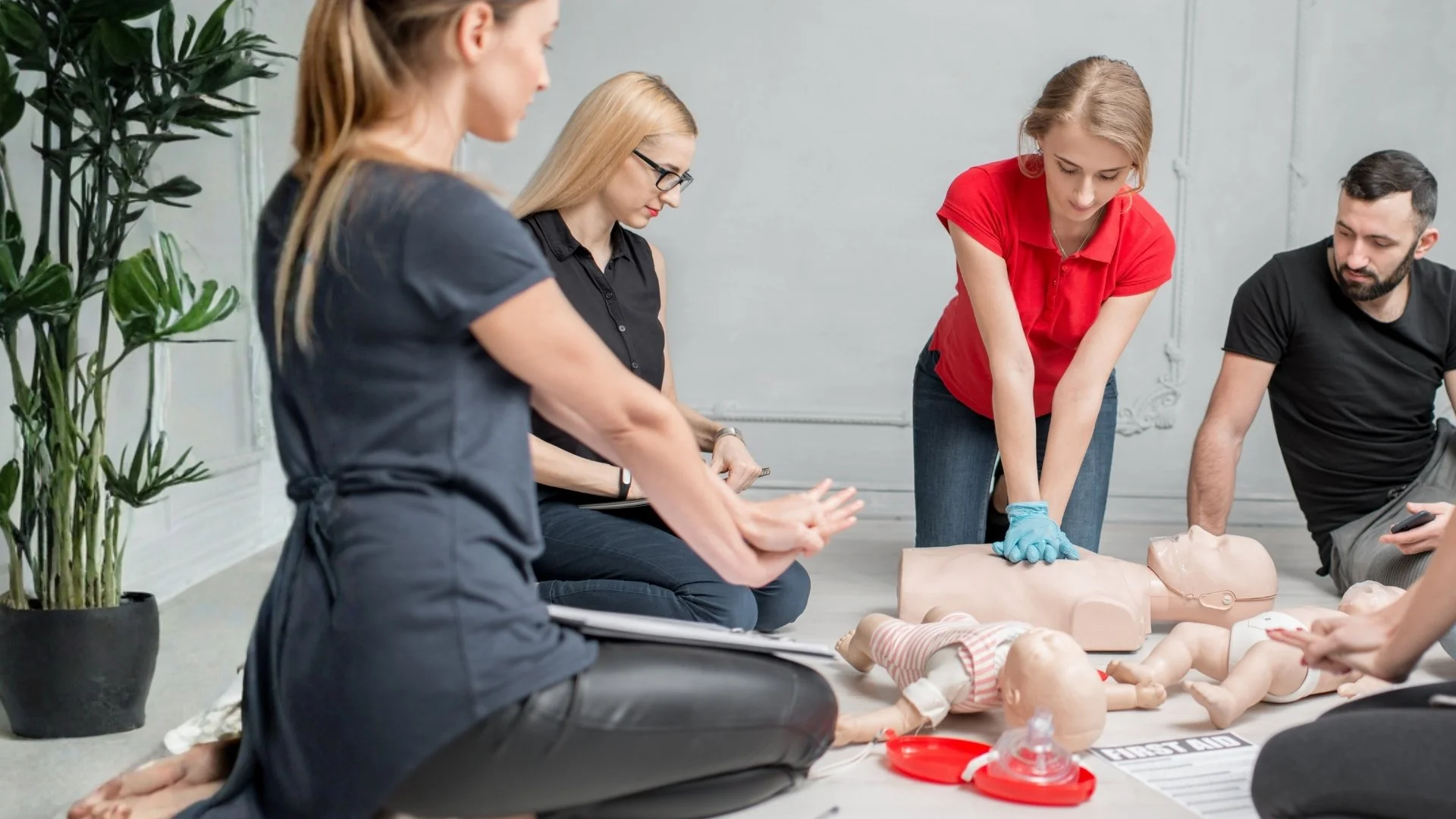
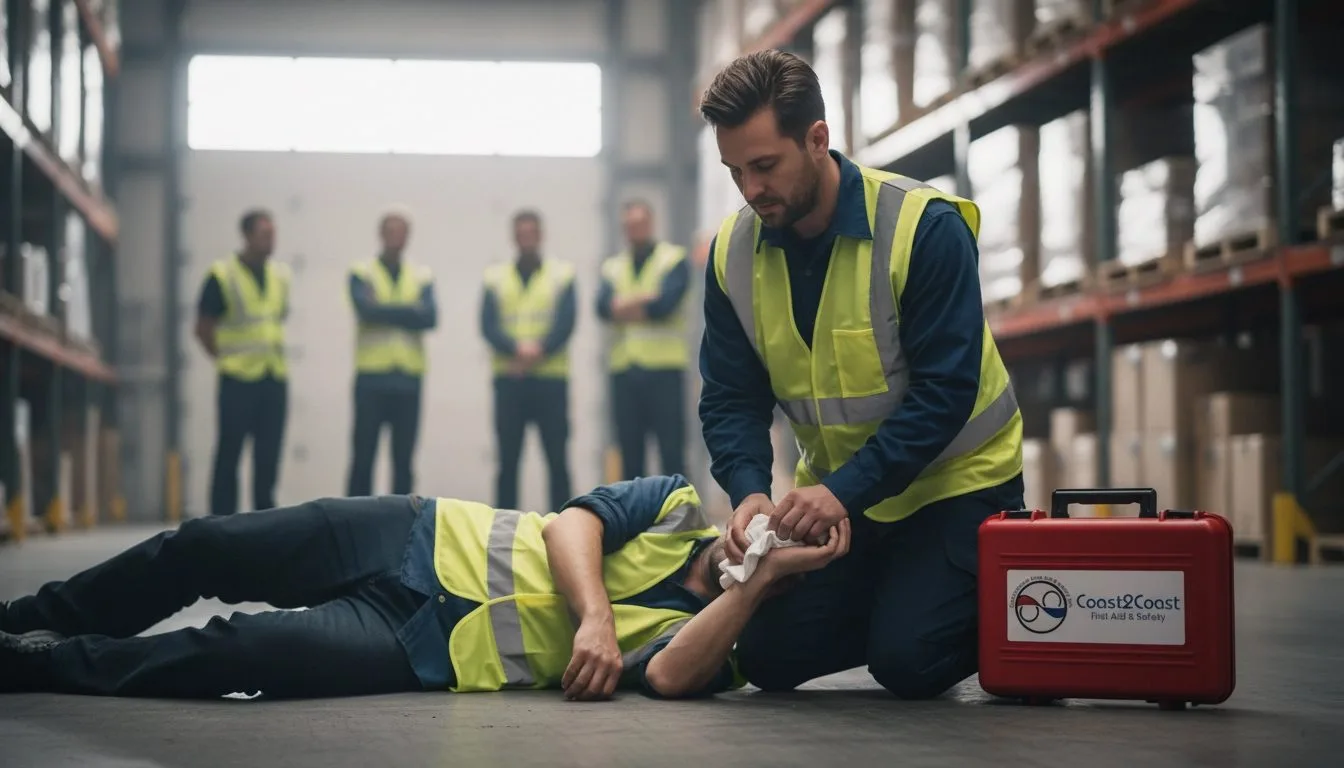
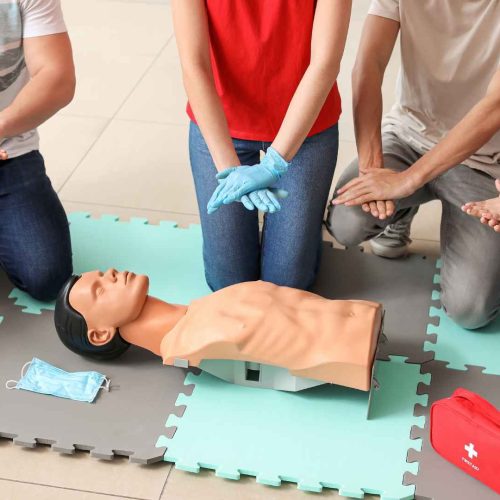
Our training programs include American Heart Association courses designed to provide comprehensive and up-to-date life-saving skills. Whether you are seeking certification for personal knowledge or workplace compliance, our service ensures you receive expert instruction and support every step of the way.