
Mississauga’s combination of high-volume highway corridors, large industrial zones, and dense residential communities makes first aid training an essential community skill. Canadian Red Cross certification teaches High-Performance CPR, AED deployment, and trauma management, while satisfying WSIB Regulation 1101 and CSA Z1210:24 workplace compliance requirements for every type of employer, from logistics warehouses near Pearson Airport to retail environments around Square One.
Mississauga is one of Canada’s largest and most rapidly expanding cities, home to over 800,000 residents and a business community that powers the national economy. With high-volume highway corridors like the 401, 403, and QEW, massive industrial zones, and dense residential neighborhoods, the probability of encountering a medical emergency is significant. Understanding first aid training and having the physical muscle memory to apply it effectively can be the single factor standing between a positive clinical outcome and a preventable tragedy.
Lifesaving skills are no longer reserved exclusively for paramedics and healthcare professionals. Modern first aid is a practical, everyday capability that empowers ordinary citizens to act decisively when a loved one or colleague is injured, choking, or experiencing a cardiac event. In a city like Mississauga, where emergency response times can be affected by urban congestion and peak-hour traffic on the 401, knowing exactly what to do in the first five minutes of a crisis is absolutely critical.
The Science of Survival: High-Performance CPR and CCF
In 2026, the Canadian Red Cross curriculum has evolved to prioritize the physiology of the save. A core component of CPR and AED training is High-Performance CPR, which focuses on maximizing the Chest Compression Fraction (CCF), the percentage of time during a rescue attempt that active compressions are being performed. Cardiopulmonary resuscitation delivers high-quality chest compressions to support sudden cardiac arrest victims. Clinical data confirms that minimizing pauses for breaths or AED pad application significantly maintains the hemodynamic pressure needed to keep the brain alive.
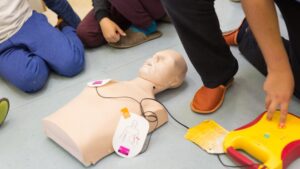
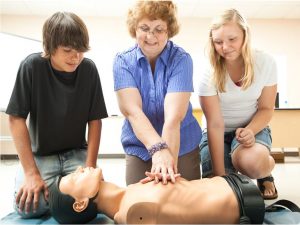
During the practical skills assessment, students use high-fidelity feedback manikins that monitor compression depth (at least 2 inches for adults) and rate (100 to 120 beats per minute) in real time. Students also learn the use of barrier devices, including one-way pocket masks, to deliver rescue breaths safely without the risk of infectious disease transmission. These first aid training courses are designed to meet provincial and territorial worker safety and insurance board requirements, helping businesses comply with Ontario law requiring certified first aid responders on site.
WSIB Regulation 1101: Mandatory Workplace Compliance in Mississauga
Ontario’s Workplace Safety and Insurance Act mandates that every employer in Mississauga maintains adequate first aid coverage. To meet the requirements of the updated CSA Z1210:24 standard, workplaces are categorized by headcount per shift:
- Small Workplaces (1–5 Employees): Must have at least one person on duty with Emergency (Basic) First Aid and a Type 1 first aid kit.
- Medium to Large Workplaces (6+ Employees): Require a minimum of one Standard (Intermediate) First Aider and a Type 2 or Type 3 kit, depending on the hazard level.
- High-Risk Industries: Manufacturing, construction, and chemical processing sites often require multiple responders and advanced trauma equipment, including oxygen administration kits.
Get Your Team WSIB Compliant in One Session
Private group training brings a certified instructor directly to your Mississauga workplace. Certify your entire staff simultaneously and satisfy CSA Z1210:24 requirements without disrupting operations.
Industry-Specific First Aid Risks in Mississauga
Mississauga’s diverse economy means responders must be prepared for a wide range of trauma scenarios. First aid training is customized to address the specific needs of local industries:
- Logistics and Warehousing (Pearson Hub): Focus on crush injuries, heavy equipment accidents, and managing shock in large-scale facilities.
- Manufacturing and Industrial: Emphasis on severe bleeding control including tourniquet application, chemical burns, and eye injuries.
- Retail and Hospitality (Square One Area): Training for sudden cardiac arrests in crowded spaces, choking response, and recognizing strokes using the FAST method.
- Security and Property Management: Mandatory Intermediate / Standard First Aid for those maintaining provincial security licenses and protecting high-rise residential complexes.
- Daycare and Education: Specialized Child Care First Aid focusing on pediatric anaphylaxis, infant choking, and childhood bone and joint injuries. Youth programs for ages 9 to 13 also build community safety awareness and basic emergency response skills for infants and children.
Mental Health First Aid is another specialized option that teaches how to provide initial support to someone experiencing a mental health crisis, building on core first aid skills with a focus on psychological emergency response.
The Resume Advantage: Career Advancement in Mississauga
Holding a valid, unexpired Canadian Red Cross certificate is a significant asset for career advancement in Mississauga’s competitive job market. Hiring managers across logistics, healthcare, security, and education prioritize candidates who have already passed their written examination and skills test. For healthcare professionals, Basic Life Support (BLS) is specifically designed for nurses, paramedics, first responders, and personal support workers who need to provide immediate care in clinical settings. BLS certification is typically renewed annually and is required for many healthcare roles in Mississauga. Whether you are a student looking for a first summer role or a healthcare professional maintaining clinical credentials, staying certified is a strategic career decision.
Flexible Training: Blended Online Learning for Mississauga Residents
Coast2Coast understands that Mississauga residents lead demanding lives. The blended online learning format allows you to complete the heavy theoretical modules online at your own pace. Once completed, you attend a shorter in-person session focused entirely on the hands-on practical skills assessment. Because the in-person session is shorter, it maximizes hands-on practice time and helps improve skill retention.
If your current three-year certificate is nearing its expiry, a streamlined recertification course provides a rapid review of the latest 2026 protocols, keeping you legally compliant and clinically ready without retaking the full multi-day program. If your certificate has already expired, a full course is required to restore valid credentials.
Get First Aid Certified with a Canadian Red Cross Instructor
Hands-on practice with feedback manikins, AED trainers, and certified instructors is the only way to build genuine first aid competence. Certification is valid for three years across all Canadian provinces.
Key Takeaway
Mississauga’s industrial diversity, highway congestion, and population density make first aid training one of the most valuable investments a resident or business can make. Canadian Red Cross certification covers High-Performance CPR, AED deployment, trauma management, and industry-specific emergency response, while satisfying every level of WSIB Regulation 1101 and CSA Z1210:24 compliance. Every trained person is a potential lifesaver in the Platinum Minutes before paramedics arrive.
WSIB Approved Training
Join 150,000+ Canadians Who Are Certified
Be prepared to make a lifesaving difference in your community. Canadian Red Cross 2026 certification is valid for three years and recognized across all provinces.
Frequently Asked Questions: First Aid Training Mississauga 2026
More FAQs: Compliance, Careers, and Certification in Mississauga
Sources and Editorial Standards
- Heart and Stroke Foundation of Canada: Out-of-hospital cardiac arrest statistics and survival data
- Canadian Red Cross: 2026 First Aid and CPR/AED curriculum and High-Performance CPR standards
- WSIB Regulation 1101 (Ontario): Workplace first aid requirements, first aider ratios, and kit classifications
- CSA Z1210:24: Canadian standard for first aid training in workplaces, Basic, Intermediate, and Advanced levels (effective 2024)
- Ontario Ministry of Labour: Occupational Health and Safety Act first aid compliance obligations