




Drowning is a silent and rapid killer, representing one of the leading causes of accidental death across Canada. According to the Lifesaving Society of Canada, hundreds of Canadians perish in water-related incidents annually, while thousands more suffer non-fatal submersions that lead to hypoxic brain injuries and long-term disability. Despite these sobering statistics, a significant portion of the population lacks basic water competency. Understanding aquatic safety training is not a luxury or a seasonal activity. It is a fundamental life skill required to navigate a country defined by its vast lakes, rivers, and coastal regions.
This article answers the question many Canadians ask: is it too late to learn to swim, and how does water safety training reduce drowning risk? It describes what swimming lessons involve, who they are for, and how combining swimming ability with certified first aid training creates the most complete defense against aquatic emergencies.
The Silent Reality of Drowning in Canada
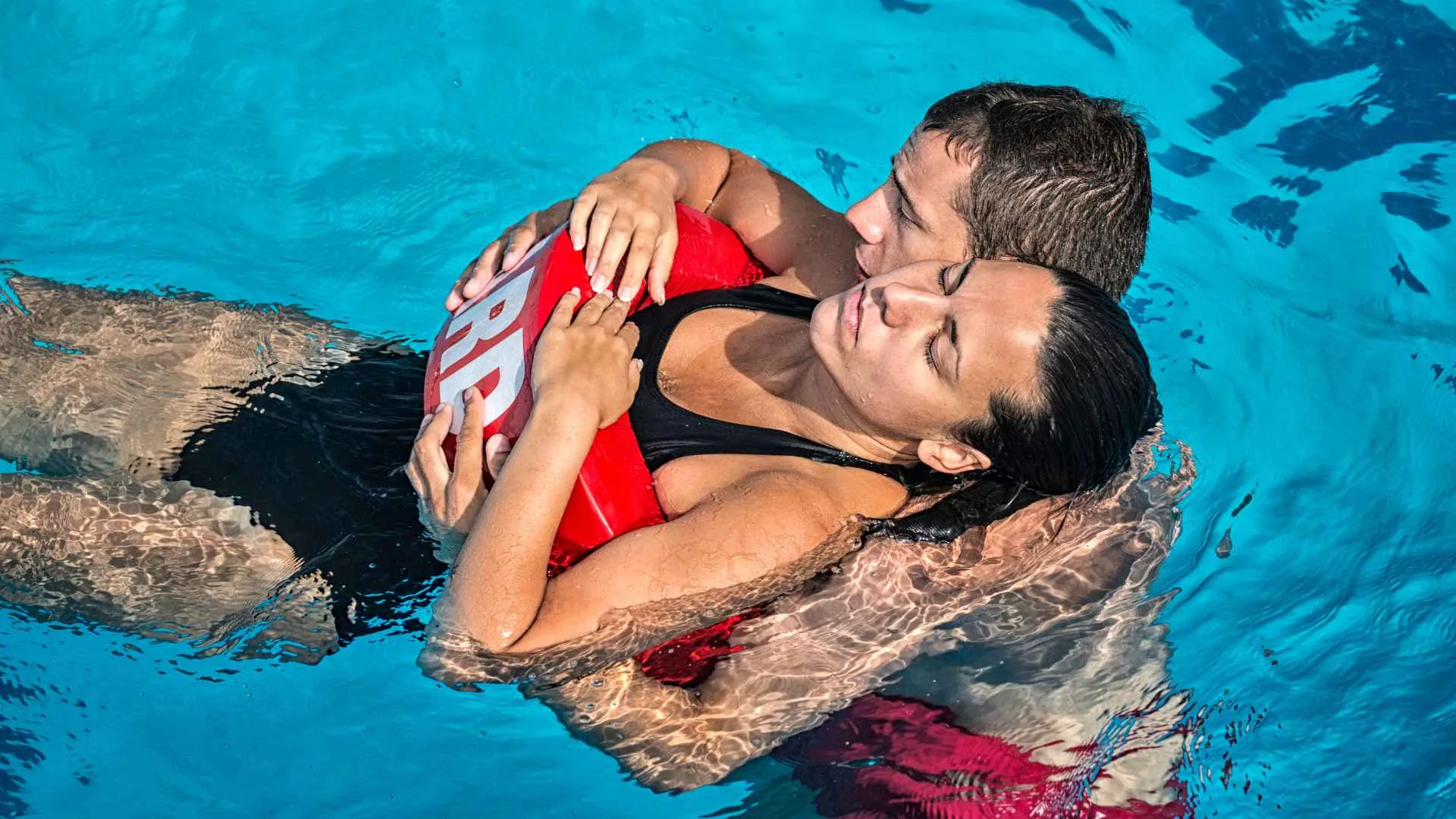
The biggest misconception about drowning is how it looks. Contrary to Hollywood portrayals of splashing and shouting, real drowning is typically quiet and exceptionally fast. It is also a major public-safety issue: drowning is the third-leading cause of injury-related death for Canadian children under 14, and approximately 160 people drown in Ontario each year. A child can lose consciousness in as little as 20 seconds, and permanent brain damage begins within four minutes. For older adults, the risk is compounded by decreased physical stamina and medical conditions that can impair balance near backyard pools or docks.
To combat this, the 2026 Canadian Red Cross curriculum emphasizes the “Three Layers of Protection”: constant active supervision, physical barriers such as CSA-approved pool fencing, and personal swimming ability. Children can drown in as little as 2.5 cm (1 inch) of water. If these layers fail, the final line of defense is the bystander’s ability to perform High-Performance CPR and manage oxygen administration during the critical minutes before paramedics arrive. The Lifesaving Society’s Water Smart Campaign promotes safe, responsible behaviour in and around water to reduce water-related injuries across Canada.
It Is Never Too Late: Adult Learn-to-Swim Programs
Many Canadian adults feel a sense of stigma if they never learned to swim as children. However, adult learn-to-swim programs are a core pillar of community safety. These lessons are tailored to individual needs and can include stroke improvement, technique work, and training tips across different skill levels. These courses focus on overcoming aquatic anxiety through comfortable, progressive steps, starting with submerging, blowing bubbles, and body position before advancing to more complex swimming strokes.
Foundational skills include floating, treading water, building water confidence, and mastering rhythmic breathing. Efficient swimming depends on body position, propulsion, and breathing. Engaging the core helps keep the hips high and prevents the legs from sinking. Consistent exhalation while submerged prepares swimmers for a quicker inhalation when turning to breathe. These basics support safer movement in deep water and stronger control across all strokes.
The most effective approach for beginner swimmers is to first get comfortable submerging, practice blowing bubbles underwater, and learn proper body positioning before advancing to strokes. The breaststroke is ideal for beginners because it allows keeping the head out of the water for easier breathing. A snorkel can also help swimmers focus entirely on stroke form by eliminating breathing mechanics during in-water practice, accelerating skill development. For adults, swimming competency is also a certification prerequisite for many high-stakes careers including lifeguarding, camp counselling, and emergency medical response.
Basic Swimming Skills: Front Crawl, Breaststroke, and Stroke Improvement for Beginner Swimmers
Front crawl, also called freestyle, is the most efficient stroke and the foundation of competitive swimming. Breaststroke is the most beginner-friendly stroke because it keeps the head above water and allows a natural breathing rhythm. For any stroke to work efficiently, body position must be horizontal and streamlined. Propulsion comes from coordinated arm pulls and leg kicks, while breathing mechanics connect each stroke cycle to the next. Goggles reduce anxiety by protecting the eyes and improving underwater visibility, improving orientation in both pools and open water. Swimmers who struggle with breathing often benefit from using a snorkel during drills, which isolates the stroke pattern and builds muscle memory without the pressure of timing a breath.
The Physiology of a Save: Resuscitation After Submersion
Drowning is primarily a respiratory emergency. Unlike a sudden cardiac arrest caused by an electrical heart malfunction, a drowning victim has stopped breathing due to a lack of oxygen. For this reason, 2026 protocols prioritize rescue breaths immediately after removal from the water. If you are a certified responder, your practical skills assessment will include the use of barrier devices like pocket masks to deliver life-sustaining air safely to the victim.
Rescuers must also maintain a high Chest Compression Fraction (CCF). CCF is the percentage of total rescue time spent actively performing compressions. Minimizing pauses during the transition from water to land is essential to maintaining the victim’s hemodynamic pressure. This clinical focus is why Intermediate / Standard First Aid with CPR Level C is the gold standard for aquatic facilities complying with WSIB Regulation 1101 in Ontario and equivalent regulations across other Canadian provinces.
Learn High-Performance CPR in a Real Classroom
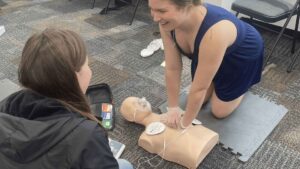
Master rescue breathing, compressions, and AED use with hands-on instruction from a Canadian Red Cross certified trainer.
National Lifeguard Certification: Bronze Medallion, Bronze Cross, and Career Pathways
Specific industries in Canada have strict mandates regarding water safety and medical response. Maintaining an unexpired certificate is a legal condition for employment in these sectors:
- Lifeguards and Swim Instructors: Must hold National Lifeguard certification and Intermediate / Standard First Aid with CPR Level C to maintain facility compliance. Becoming a swim instructor may also involve progressing through Bronze Medallion and Bronze Cross before advanced instructor pathways.
- Camp Counselors and Outdoor Educators: Required to manage open-water risks and provide oxygen administration in remote environments away from immediate emergency services.
- Security Guards and Property Managers: Often the first responders at residential condo pools or waterfront developments where a lifeguard is not present.
- Daycare Staff and Early Childhood Educators: Legally required to hold Pediatric CPR to manage water-related emergencies in wading pools or bathtubs.
- Healthcare Providers: Require annual Basic Life Support (BLS) certification to master team dynamics during resuscitation surges in clinical settings.
Career Advancement and Lifeguard Certification
Holding a National Lifeguard certification is more than a summer job pathway. It is a gateway to high-responsibility leadership roles in aquatics, emergency services, and healthcare. Some candidates begin with structured training programs that progress from Bronze Medallion to Bronze Cross and then toward National Lifeguard certification. Candidates must pass a rigorous written examination and a physical practical skills assessment covering surveillance, victim recognition, water rescue, and resuscitation. Employers value the discipline, fitness, and medical knowledge required to earn this credential. Upgrading to an instructor or lifeguard rating can significantly strengthen a resume in emergency services or healthcare fields, and these pathways often lead into youth leadership roles in community aquatics programs.
Prevent Drowning in Open and Deep Water: Personal Flotation Devices and Hazard Awareness
Swimming in a controlled pool environment is vastly different from swimming in a Canadian lake or river. Open water presents unique physiological challenges, including cold water shock, which can cause immediate gasping and water inhalation within the first 30 seconds of immersion. Swimmers also need skills for unexpected entry and survival in deep water, not just controlled pool conditions. Rip currents, uneven bottoms, and limited visibility make natural bodies of water significantly more dangerous for the untrained.
Using goggles protects the eyes and significantly reduces anxiety and disorientation in both pools and open water. Other essential water safety practices include never swimming alone, always wearing a properly fitted personal flotation device (PFD) when on boats, and respecting posted depth markers to avoid shallow water injuries. The use of Automated External Defibrillators is also important even in outdoor settings, as cold-water immersion can trigger lethal heart rhythms that require electrical intervention.
Flexible Training for Families: Private Lessons, Blended Learning, and Recertification
Modern Canadian families are busy, so Coast2Coast offers flexible formats that help teach parents essential water safety knowledge while fitting family schedules. Through blended online learning, you can complete medical theory modules at home and then attend a shortened in-person session for hands-on skills testing. This approach meets all CSA Z1210:24 standards without requiring a full weekend commitment.
If your first aid or CPR certificate is nearing its three-year expiry, streamlined recertification courses provide a rapid review of the latest 2026 guidelines, ensuring you remain WSIB compliant and rescue-ready. Families can also explore the Coast2Coast Mobile Swim School for children’s swimming lessons delivered directly to a backyard pool or community facility near you.
Train Your Whole Aquatic Team
Private group training for lifeguards, daycare staff, camp counselors, and facility managers. We come to your location across Canada.
Key Takeaway
Drowning does not look the way most people expect: it is quiet, fast, and frequently fatal within minutes. Learning to swim at any age, combined with Canadian Red Cross first aid and CPR certification, creates the most complete defense against water-related emergencies. Whether you are building foundational water confidence, working toward National Lifeguard certification, or ensuring your team meets WSIB Regulation 1101, the combination of swimming competency and certified emergency response training is the standard that saves lives in Canada.
Join 150,000+ Canadians Who Are Certified
Register for a Canadian Red Cross first aid and CPR course at a location near you and be ready to act when every second counts.
Frequently Asked Questions: Water Safety and Swimming in Canada 2026
Q1: At what age should a child start swimming lessons?
A: Most experts recommend starting water familiarization as early as 6 months. Infant and preschool swimming lessons should focus on water confidence and basic swimming skills rather than independence. In progressive levels, children practice age-appropriate skills such as submerging, kicking, rolling, and learning to jump safely in the water. Formal swimming lessons that reduce drowning risk are most effective starting between ages 1 and 4, but children usually do not swim independently before age 4 and often become competent swimmers around ages 6 or 7.
Q2: Can I learn to swim as an adult if I am afraid of water?
A: Yes. Specialized adult programs can be personalized for different skill levels, focusing first on anxiety reduction and comfort before moving into stroke improvement and specific swimming stroke work. Instructors use gradual submersion, breath control, and positive reinforcement to build confidence progressively. Breaststroke is often the first stroke taught because the head stays above water, making breathing feel less intimidating. It is never too late to gain this life-saving skill, and many adults who begin as complete beginners reach basic water competency within a few weeks of consistent lessons.
Q3: Do I need CPR training if I am a strong swimmer?
A: Yes. Swimming ability helps you reach a victim in the water, but CPR is what saves them once they are out. Drowning is primarily a respiratory emergency, and permanent brain damage begins within four minutes of oxygen loss. Without trained bystander CPR, survival rates drop significantly for every minute that passes before paramedics arrive. Canadian Red Cross CPR Level C certification teaches chest compressions, rescue breaths, and AED use for adults, children, and infants, covering the full range of scenarios a bystander may encounter at pools, lakes, or beaches.
Q4: What is the Water Watcher rule?
A: The Water Watcher rule is the practice of designating one adult whose sole responsibility is to watch children in and around the water. That person must not use a phone, read, or socialize while on duty. When the designated watcher needs a break, they must formally hand off the responsibility to another adult before stepping away. The Lifesaving Society’s Water Smart Campaign promotes this practice because drowning happens quickly and silently, and even a brief distraction near backyard pools, beaches, or open water can have fatal consequences.
Q5: How long is a lifeguard certification valid in Canada?
A: National Lifeguard certifications are typically valid for two years from the date of issue. Intermediate / Standard First Aid and CPR Level C certifications are valid for three years. Both must be renewed before their expiry dates to remain valid for employment at aquatic facilities. Recertification courses provide a condensed review of current rescue protocols, CPR guidelines, and skills assessments. Employers in Ontario and other provinces are required under WSIB Regulation 1101 and similar provincial legislation to ensure that certified staff maintain unexpired credentials at all times.
Q6: What are the most important self-rescue and water safety skills for competent swimmers?
A: The most critical self-rescue skill is rolling from front to back and floating. This allows a tired or panicked swimmer to breathe and rest while waiting for help, rather than exhausting themselves trying to stay vertical. Treading water efficiently using an egg-beater kick is also essential for survival in deep water. Additional water safety skills include knowing how to escape a rip current by swimming parallel to shore, understanding cold water shock responses, and always entering unfamiliar water feet-first to check depth before diving.
Q7: Are Automated External Defibrillators used in drowning saves?
A: Yes. While drowning is primarily a respiratory emergency, cold-water immersion can trigger lethal heart rhythms such as ventricular fibrillation. An AED should be applied to any unconscious victim as soon as it is available, even after a water rescue. Current 2026 Canadian Red Cross protocols instruct rescuers to dry the chest before placing AED pads and to apply the device without delaying compressions. AEDs are now required at most commercial aquatic facilities in Canada under provincial workplace safety legislation.
More FAQs: Lifeguard Certification, Compliance, and Family Water Safety
Q8: Does WSIB Regulation 1101 apply to community pools?
A: Yes. WSIB Regulation 1101 applies to all Ontario workplaces, including aquatic facilities such as community pools, hotel pools, recreational centres, and camp waterfront operations. The regulation requires employers to maintain a minimum number of first-aid-certified staff on duty based on the number of workers present. Aquatic facilities must also maintain first aid kits, an AED, and documented emergency action plans. Failure to comply can result in WSIB fines and increased liability exposure following any workplace incident involving a water-related injury.
Q9: What is Chest Compression Fraction?
A: Chest Compression Fraction is the percentage of total rescue time during which compressions are actively being performed. Research consistently shows that higher CCF is directly linked to better survival outcomes in cardiac arrest, including post-drowning resuscitation. Pauses in compressions allow blood pressure to drop, reducing oxygen delivery to the brain and heart. The 2026 Canadian Red Cross guidelines target a CCF of at least 60 percent during resuscitation, which means rescuers should minimize interruptions for pulse checks, airway management, and transitions between providers whenever possible.
Q10: Can I take my First Aid course entirely online?
A: No. While theory components can be completed online through blended learning, a physical practical skills assessment with a certified instructor is legally required for full certification. The hands-on component evaluates chest compressions, rescue breathing, AED use, and first aid skill execution. Online-only certificates are not recognized by WSIB, most employers, or provincial regulatory bodies for compliance purposes. Coast2Coast offers blended formats that reduce in-person time while meeting all Canadian Red Cross certification requirements, including the mandatory practical evaluation.
Q11: What level of CPR do lifeguards need?
A: Most aquatic facilities in Canada require lifeguards to hold CPR Level C, which covers resuscitation techniques for adults, children, and infants, as well as AED operation and two-rescuer CPR. CPR Level C is the standard embedded in National Lifeguard certification and Intermediate / Standard First Aid. Facilities with a clinical healthcare focus, such as hospital pools or rehabilitation centres, may additionally require Basic Life Support certification, which covers advanced airway management, bag-valve mask use, and high-performance team CPR scenarios.
Q12: Is a life jacket required for strong swimmers on boats?
A: Yes. Under the Canada Shipping Act and Transport Canada regulations, a properly fitted life jacket or personal flotation device must be on board for every person on a vessel. Strong swimmers can still be incapacitated by cold water shock, trauma from impact, or unconsciousness following a fall. In cold Canadian waters, cold water shock can cause involuntary gasping and sudden muscle incapacitation within the first 30 seconds of immersion, making self-rescue nearly impossible regardless of swimming ability. A properly worn PFD is the single most effective layer of protection on open water.
Q13: How quickly do I receive my digital Red Cross certificate after completing a course?
A: Once you successfully pass both the practical skills assessment and written examination, your digital Canadian Red Cross certificate is typically issued via email within 24 to 48 hours. The digital certificate is recognized by WSIB, most employers, and provincial regulatory bodies. It includes your name, course type, certification date, and expiry date. If you do not receive your certificate within 48 hours, contact your training provider directly. Coast2Coast also offers assistance replacing lost or expired certificates through the lost certificate process on its website.
Q14: Are barrier devices provided for rescue breathing practice at Coast2Coast?
A: Yes. For hygiene and safety, Coast2Coast provides single-use barrier devices and training pocket masks for all students during rescue breathing practice. Barrier devices create a physical seal between the rescuer and the mannequin, protecting participants during shared CPR training. In real emergencies, a barrier device is always recommended when delivering rescue breaths to an unknown victim. Coast2Coast instructors demonstrate proper mask placement, seal technique, and ventilation rate as part of every CPR Level C and Intermediate / Standard First Aid practical assessment.
Q15: Does workplace first aid training lower insurance premiums for aquatic facilities?
A: Yes. Many commercial insurance providers offer reduced premiums to aquatic facilities that maintain 100 percent certified staff, documented safety audit logs, and regular emergency action plan drills. Demonstrating consistent compliance with WSIB Regulation 1101 and CSA Z1210:24 signals to insurers that the facility actively manages risk. Some insurers require copies of staff certification records as part of annual policy renewal. Beyond cost savings, maintaining full certification also reduces liability exposure and strengthens the facility’s legal defence in the event of an incident.
Sources & Further Reading
- Lifesaving Society of Canada: Drowning Prevention Research and Statistics
- Canadian Red Cross: CPR Level C and Intermediate / Standard First Aid 2026 Curriculum
- WSIB Ontario: Regulation 1101, First Aid Requirements in the Workplace
- Transport Canada: Safe Boating Guide, Personal Flotation Devices and Life Jackets
- CSA Group: Standard Z1210:24, First Aid Training for the Workplace