



California does not license personal trainers, but nearly every NCCA-accredited certifying body, including NASM, ACE, ACSM, and ISSA, requires current Adult CPR/AED certification before candidates can test or work with clients. Some employers also require Pediatric CPR/AED for trainers who work with families or youth. In practice, CPR/AED certification functions as the industry’s real entry requirement, even though no government license exists.
CPR / AED Training
Get Adult & Pediatric CPR/AED Certified
Meet your certifying body’s requirement with a hands-on course built for fitness professionals across California.
Personal trainers in California don’t need a state license, but nearly every major certifying body and gym still requires current CPR and AED certification before you can train clients. Whether you’re studying for NASM, ACE, ACSM, or ISSA, CPR/AED is one prerequisite you can’t skip. This guide covers licensing rules, CPR/AED requirements by certifying body, regional considerations across California, and answers to the questions trainers ask most before booking a course.
Do Personal Trainers Need a License in California?
No. California does not require a state-issued license to work as a personal trainer, unlike professions such as physical therapy or nursing. That doesn’t mean the field is unregulated in practice, though. Most gyms, studios, and liability insurers won’t hire or cover a trainer without an accredited personal trainer certification and a current CPR/AED credential. In effect, certification plus CPR/AED functions as the industry’s real barrier to entry, even without a government license behind it.
What CPR Certification Do Personal Trainers Need?
Personal trainer certification requirements almost universally include CPR training and AED certification at the Adult level. Every NCCA-accredited body, including NASM, ACE, ACSM, ISSA, and NSCA, requires a valid Adult CPR/AED certification before candidates can sit for their exam, and every certified personal trainer must keep it current throughout their career. It’s one of the most commonly overlooked requirements, since candidates tend to focus on studying for the certification exam itself.
CPR/AED Requirements by Certifying Body
Each major certifying body sets its own timeline for CPR/AED, though the baseline requirement is consistent across the industry.
- NASM: The National Academy of Sports Medicine requires a valid CPR/AED certification before candidates are eligible to sit for the NASM Certified Personal Trainer exam.
- ACE: The American Council on Exercise has the same baseline expectation, requiring current CPR/AED at both initial certification and every two-year renewal.
- ACSM: The American College of Sports Medicine tightened its policy in 2022, removing the grace period that once allowed candidates to test before completing CPR/AED training. Candidates must now finish CPR/AED before scheduling an ACSM exam.
- ISSA: ISSA’s requirements follow the same pattern: a high school diploma or GED, current CPR/AED certification, and a passing exam score.
Personal Trainer Certification California: What the Requirements Look Like
Outside of the CPR/AED requirement, certification rules in California mirror the rest of the country. Candidates generally need to be at least 18 years old, hold a high school diploma or GED, and complete an NCCA-accredited certification program. These programs are widely available online and in person, and many trainers study online before scheduling the required in-person CPR/AED skills session. This is true for every personal trainer in California, regardless of which certifying body they choose.
Do You Need Pediatric CPR Too?
Adult CPR/AED covers the baseline requirement almost everywhere, but some employers ask for more. Trainers working at family-oriented gyms, youth sports programs, or facilities that also serve children may be asked to complete Pediatric CPR training in addition to Adult certification. Check with your employer or certifying body before assuming Adult-only coverage is enough, since requirements can vary by facility.
Where to Get CPR/AED Certified in California
Coast2Coast offers Adult and Pediatric CPR certification courses designed for personal trainers and fitness professionals across California, with both in-person and blended learning formats available.
Key takeaway: California doesn’t license personal trainers, but Adult CPR/AED certification is required by nearly every major certifying body and most employers, making it the closest thing the industry has to a mandatory credential.
Find a CPR/AED Course Near You in California
In-person skills sessions are available at Coast2Coast training locations throughout the state.
CPR/AED Rules Across Major California Cities
California is one of the largest fitness markets in the country, and CPR/AED expectations often depend on facility type rather than city. Still, a few regional patterns are worth knowing before you start job hunting or building a client base as a personal trainer in California.
Los Angeles
Los Angeles has one of the largest concentrations of gyms, boutique studios, and personal training businesses in the state. Large chains typically require Adult CPR/AED as a condition of employment, and some family-oriented clubs also ask for Pediatric coverage. Independent trainers building client bases through in-home or outdoor sessions often need a current CPR/AED card for liability insurance.
San Diego and the Bay Area
Outdoor training is especially popular in San Diego and the Bay Area, from beach bootcamps to park-based sessions. Some cities require permits for group fitness instruction on public land, and these permits often require proof of current CPR/AED. Gyms in these regions follow the statewide standard, expecting Adult CPR/AED at hire and renewal.
Orange County and the Inland Empire
Orange County and the Inland Empire have seen steady growth in gyms, community centers, and youth-focused fitness programs. Trainers working with recreational leagues are more likely to encounter Pediatric CPR/AED requirements alongside standard Adult certification, since no city in the region issues its own trainer license.
How to Choose the Right CPR Course
Not all CPR/AED courses are treated equally by certifying bodies, so it helps to check a few details before signing up.
- Check for accreditation: Look for courses issued by recognized providers such as the American Heart Association or American Red Cross. Most NCCA-accredited certifications only accept cards from these providers, so confirm acceptance before paying.
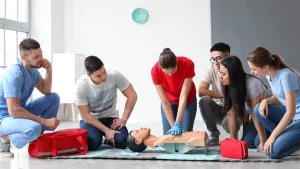
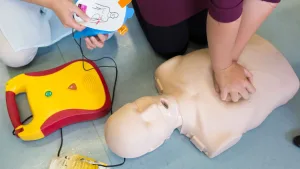
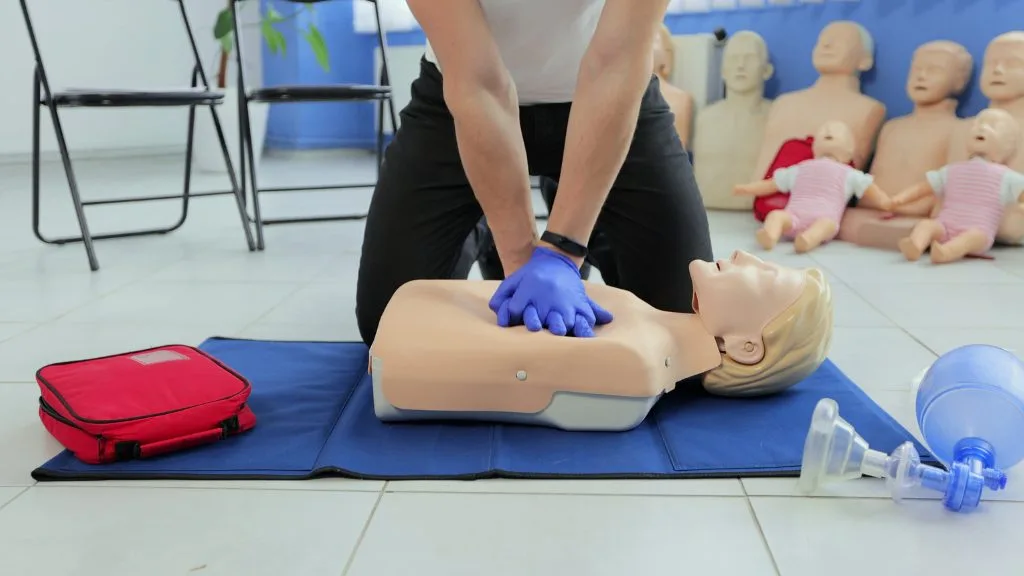
- Confirm hands-on practice is included: A course that only covers theory won’t prepare you to respond in an emergency, and many certifying bodies won’t accept it. Choose a course with hands-on CPR training using a mannequin and an AED trainer device, even if part of the coursework happens online.
- Match the certification level to your clients: If you’ll work with families or youth programs, ask whether Pediatric CPR/AED is expected alongside Adult. It’s often cheaper to complete both levels at once.
- Time it around your exam: Most certifying bodies want proof of CPR/AED before you schedule your exam, so complete it a few weeks ahead as a buffer in case a skills session needs rescheduling.
Certify Your Entire Training Team
Running a studio or gym? Book on-site Adult and Pediatric CPR/AED training for your whole staff at once.
Choosing a Certification Body: What Makes Each One Different
Beyond CPR/AED, each major certifying body has its own reputation and focus area worth considering, and the right choice matters just as much for a personal trainer in California as the CPR/AED requirement itself.
- NASM (the industry gold standard): NASM, the National Academy of Sports Medicine, is widely considered the gold standard for personal trainer certification, largely due to its emphasis on corrective exercise and evidence-based programming.
- ACE (behavior change and client coaching): Focuses on behavior change strategies and coaching diverse clients, a strong choice for building long-term client relationships.
- NSCA (best for working with athletes): Highly respected for working with athletes, given its focus on strength and conditioning science.
- ISSA (flexible, self-paced learning): Known for flexible, self-paced online study, appealing to trainers balancing certification with a job.
Most people complete a personal trainer certification program in about two to six months, regardless of which body they choose. Trainers who are still deciding which path fits their goals can review course options before committing to a specific certifying body.
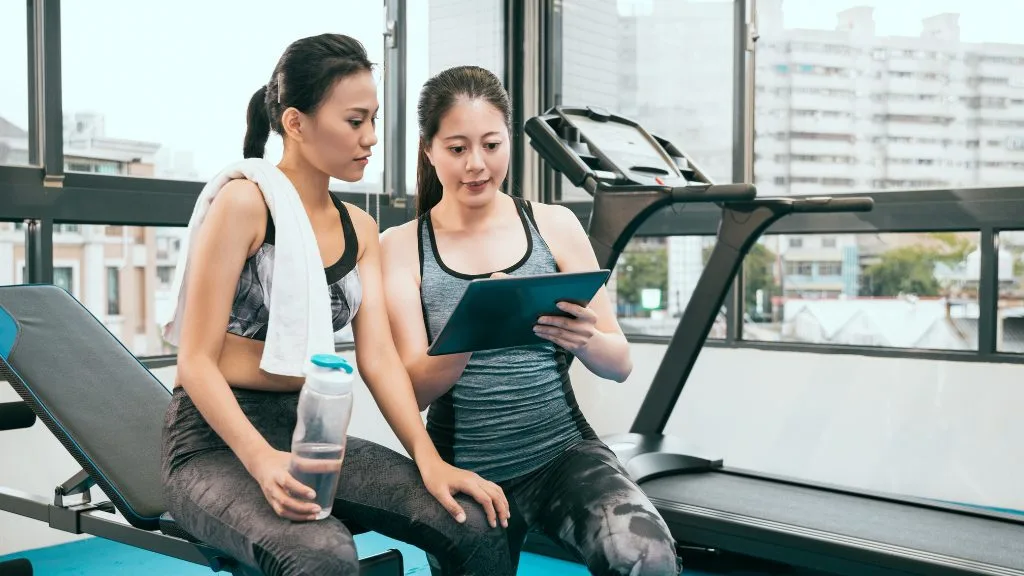
The California Fitness Job Market and Trainer Salaries
California’s fitness market was valued at approximately $5 billion in 2023, and the state is home to more than 15,000 fitness-related businesses. With a population surpassing 39 million people, demand for a personal trainer in California remains strong, and Los Angeles is recognized as one of the country’s leading hubs for fitness culture. Many trainers work at fitness centers or as an independent fitness instructor, and California’s personal training scene keeps growing alongside this demand. The average personal trainer salary in California is around $73,421 per year, with a typical range between $52,965 and $90,196 depending on experience, location, and client base. In San Francisco specifically, median total pay for personal trainers reaches about $91,000 annually. Nationwide, employment of fitness trainers is projected to grow 14 percent from 2023 to 2033, much faster than most occupations, reflecting a competitive fitness industry for certified fitness trainers.
Get Certified
Add Pediatric CPR/AED to Your Certifications
Working with families or youth clients? Round out your Adult CPR/AED with Pediatric certification.
Frequently Asked Questions: Personal Trainer CPR Certification 2026
Q1: Is CPR required to be a personal trainer?
A: Yes. While no U.S. state legally requires it to call yourself a personal trainer, every major NCCA-accredited certifying body requires current CPR/AED before you can test or work with clients. This applies to independent trainers too, since most liability insurers ask for proof of current CPR/AED before issuing or renewing a policy. This holds true whether you’re a personal trainer in California or working in any other state.
Q2: What level of CPR certification do personal trainers need?
A: Most certifying bodies require Adult CPR/AED at minimum. Some employers, particularly those serving families or youth, also require Pediatric CPR/AED alongside it. This applies to gym-based trainers and independent fitness instructors alike.
Q3: How much does CPR certification cost for personal trainers?
A: A standalone CPR/AED certification typically costs between $50 and $150, separate from the cost of the personal trainer certification itself.
Q4: Can personal trainers get CPR certified fully online?
A: Not usually. Most certifying bodies, including ACSM, require an in-person skills evaluation, since an online-only course can’t verify you can perform compressions or use an AED correctly.
Q5: How long is CPR certification valid, and when should I renew?
A: Most CPR/AED certifications are valid for two years, matching the renewal cycle for NASM, ACE, ACSM, and ISSA. Renew a few weeks early, since class schedules can fill up.
Q6: Can I transfer CPR certification between certifying bodies, and does it vary by state?
A: Yes, in most cases. A CPR/AED card from a recognized provider like the American Heart Association or American Red Cross is generally accepted by NASM, ACE, ACSM, ISSA, and NSCA nationwide. It’s still worth double-checking with your specific certifying body, as acceptance policies can change.
Q7: What happens if my CPR certification expires?
A: If your CPR/AED certification lapses, most certifying bodies will flag your personal trainer certification as non-compliant until you renew, and some gyms will suspend you from working with clients until you show a current card.
More FAQs: CPR Certification for California Trainers
Q8: Does CPR certification cost count as a business expense for trainers?
A: Yes. CPR/AED certification, along with personal trainer exam fees and study materials, generally qualifies as a deductible business expense for self-employed trainers. Keep receipts and consult a tax professional to confirm specifics.
Q9: Does first aid training help alongside CPR certification?
A: Yes. While CPR covers cardiac emergencies specifically, a broader first aid course prepares a trainer to handle sprains, cuts, and other common injuries during sessions. Some programs bundle first aid training with CPR certification for convenience.
Q10: Do personal trainers need CPR certification for online-only coaching businesses?
A: Usually yes, if the certifying body requires it to maintain active status. Even trainers who coach clients remotely and never touch a client in person are typically still required to hold current Adult CPR/AED to keep their personal trainer certification active, since the requirement is tied to the credential itself rather than the delivery format. Some insurers also ask remote coaches to maintain it in case a client needs emergency guidance during a live session.
Q11: Are CPR requirements different for group fitness instructors than personal trainers?
A: No. Group fitness instructors face the same baseline expectation as personal trainers. Most certifying organizations and gyms require current Adult CPR/AED for anyone leading exercise sessions, whether one-on-one or in a class setting, since the emergency risk during physical exertion doesn’t change based on class size.
Q12: Can I use an out-of-state CPR certification if I move to California?
A: Yes, in most cases. CPR/AED certifications from recognized national providers such as the American Heart Association or American Red Cross are valid nationwide and don’t need to be reissued when you relocate. What matters more is whether the card is still within its two-year validity window, since an expired certification won’t satisfy a California employer or certifying body regardless of which state issued it.
Q13: Do personal trainers working with older adults need any additional certification?
A: Not typically beyond Adult CPR/AED, though some facilities serving older adults ask trainers to complete additional coursework in chronic disease considerations or fall prevention. Adult CPR/AED remains the core safety requirement, since cardiac events are the primary emergency risk trainers are expected to be prepared for regardless of client age.
Q14: What’s the difference between a CPR certification and a personal trainer certification?
A: A personal trainer certification, such as NASM or ACE, qualifies you to design and lead exercise programs and typically takes two to six months to complete. CPR/AED certification is a separate, much shorter credential focused specifically on responding to cardiac emergencies. The two are not interchangeable, and nearly every personal trainer certification requires a current CPR/AED card as a prerequisite rather than including it as part of the coursework.
Q15: Does liability insurance for personal trainers require proof of CPR certification?
A: Yes, in most cases. Most professional liability insurance providers for personal trainers ask for a current CPR/AED card before issuing or renewing a policy, since it demonstrates a baseline ability to respond to a cardiac emergency. Letting your certification lapse can put your coverage at risk even if your personal trainer certification itself is still active.
Final Thoughts: Fitness Association Requirements for California Trainers
Whether you work as a gym-based personal trainer or a fitness instructor running your own sessions, current CPR/AED certification is one of the few requirements every path shares. Many trainers build experience at fitness centers before branching out on their own, and every personal trainer in California should treat CPR/AED as a non-negotiable line item on their certification checklist. A personal training certification is only half the equation without that credential on file, and every certified personal trainer benefits from staying eligible for personal trainer jobs as their fitness career grows, whether that means exercise physiology coursework, a strength training specialization, or broader recognition as a fitness professional. Across the broader fitness industry, employers increasingly expect fitness professionals to bring more than programming skills, and organizations like American Fitness Professionals and Associates offer continuing education built for this audience. Personal training certification bodies also review CPR compliance during renewal audits, whether trainers choose in-person classes or online CPR courses with a hands-on skills check.
If you’re researching personal trainer certification california for the first time, the short version is this: choose an NCCA-accredited program, complete Adult CPR/AED training early, and confirm any Pediatric requirements with your employer before you start working with clients.
This article is for general informational purposes only and does not constitute legal, insurance, or certification advice. Requirements from certifying bodies, employers, and insurers can change; always confirm current CPR/AED and certification requirements directly with NASM, ACE, ACSM, ISSA, NSCA, or your employer before relying on the information above.
Reviewed by: Coast2Coast First Aid & Aquatics Compliance Team, July 27, 2026
Sources: U.S. Bureau of Labor Statistics, Occupational Outlook Handbook, Fitness Trainers and Instructors; NASM, ACE, ACSM, and ISSA certifying body requirements as published by each organization.