We offer courses in Canada and the US. If you are experiencing issues with our website and need help to register, or if you have questions, please call us at 866-291-9121.
If you are facing any issues with your online course, registration, or training, please click here to submit a help request.
If you are facing any issues with your online course, registration, or training, please click here to submit a help request.
Staying certified in CPR is essential for workplace requirements and personal preparedness. This guide walks you through how to renew your CPR certification in Ontario, covering recertification requirements, step-by-step renewal instructions, certificate validity, and where to get CPR recertification in the GTA.
This year, Coast2Coast First Aid & Aquatics is thrilled to celebrate a major milestone—our 10th anniversary. Over the past decade, we’ve been dedicated to empowering individuals with the skills needed to respond confidently in emergencies, and we’re marking this special occasion with an exciting initiative that highlights our commitment to giving back to the community.
At Coast2Coast First Aid & Aquatics, we’re passionate about empowering communities with the life-saving skills they need to make a difference. Our annual “Train the Next Hero!” workshop is a testament to this commitment. On August 11, 2024, Mel Lastman Square transformed into a bustling hub of heroism as we hosted the fourth installment of this beloved event.
As winter makes its grand entrance, draping the mountains in a blanket of snow, it’s the perfect time to dive into the thrilling world of snowboarding and skiing. Picture this: the cool mountain breeze gently touching your hair, the crisp air invigorating your senses, and an electrifying excitement surging through your veins. It’s more than just an activity; it’s a chance to craft unforgettable memories that will stick with you for a lifetime.
Whether you’re an adventurous winter enthusiast or just dealing with the cold in your daily routine, here are some first aid skills you must know in the winter to ensure safety.
Coast2Coast Free First Aid Workshop: Bringing Life-Saving Skills to North York
At Coast2Coast First Aid and Aquatics, we believe that everyone deserves access to life-saving knowledge, regardless of their financial situation. That is why we are proud to offer free first aid workshops to communities across the Greater Toronto Area, including North York. These workshops provide participants with essential emergency response skills at no cost, breaking down the financial barriers that prevent many Canadians from accessing quality first aid training. Our mission is simple: the more people who know first aid, the safer our communities become.
Our free workshops are designed to give community members a taste of what comprehensive first aid training involves while equipping them with practical skills they can use immediately. While these workshops are not a substitute for full first aid certification, they provide a valuable introduction to emergency response that empowers participants to act confidently in common emergency situations. For many attendees, these workshops serve as the spark that motivates them to pursue full certification.
What You Will Learn at Our Free Workshop
Our free first aid workshops pack essential knowledge and hands-on practice into an accessible format that works for busy community members. Here is what participants can expect to learn:
Hands-Only CPR
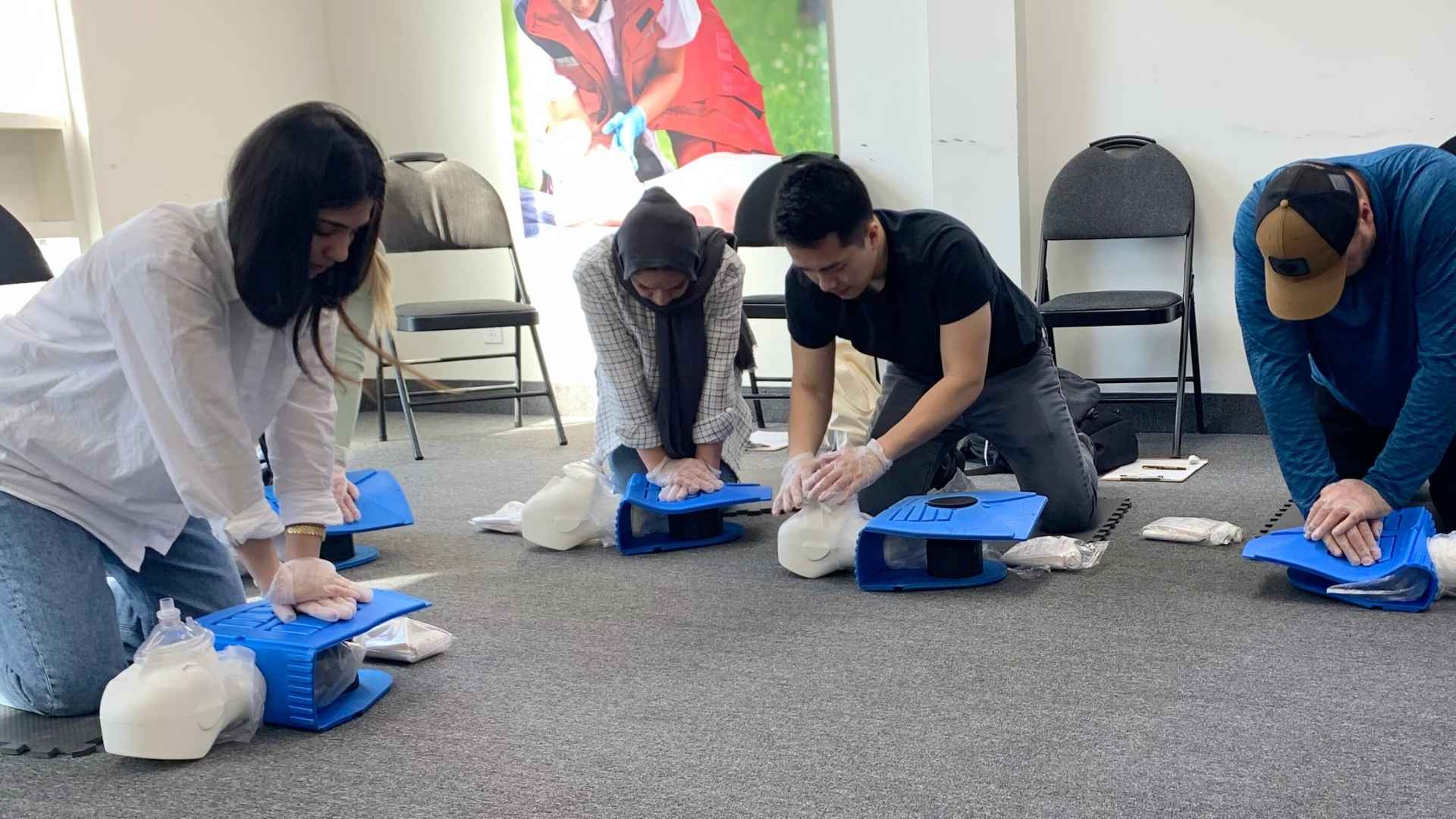
Hands-only CPR — continuous chest compressions without rescue breathing — is the recommended bystander response for adult cardiac arrest. Workshop participants learn how to recognize cardiac arrest, call 911 effectively, and perform chest compressions at the correct rate and depth. Using practice mannequins, every participant gets the opportunity to feel what effective compressions should feel like. This single skill can double or triple a cardiac arrest victim’s chance of survival when applied in the critical minutes before paramedics arrive.
Choking Response
Choking is one of the most common emergencies that Canadians encounter in their daily lives, and knowing how to respond can prevent a terrifying situation from becoming a fatal one. Workshop participants learn to recognize the signs of choking, perform abdominal thrusts (the Heimlich manoeuvre) on adults and children, and provide back blows for infants. These techniques are straightforward to learn but require practice to perform effectively under pressure.
Basic Wound Care and Bleeding Control
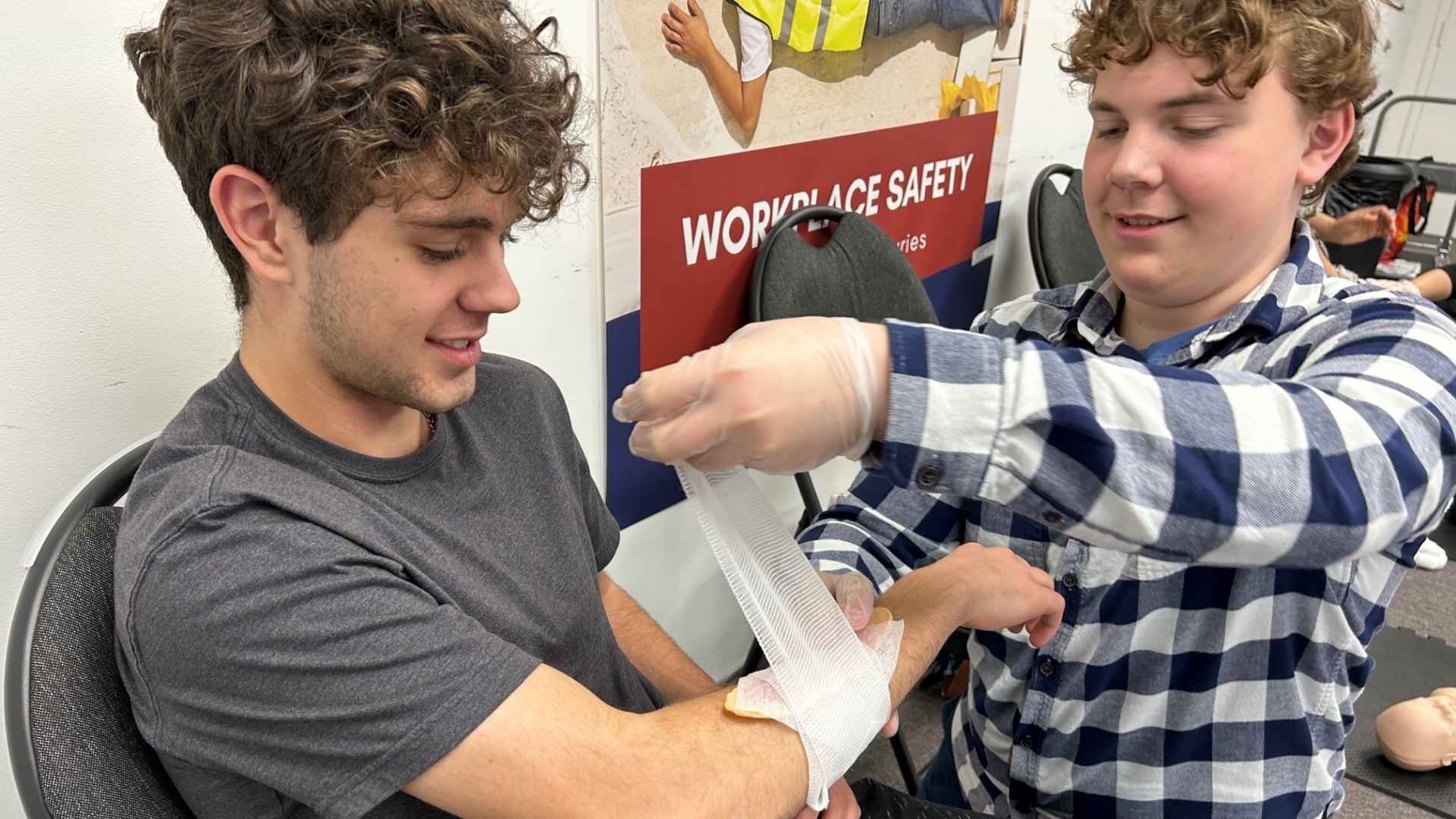
From minor cuts to more serious lacerations, knowing how to properly clean, dress, and manage wounds is a fundamental first aid skill. Participants learn the basics of direct pressure for bleeding control, proper wound cleaning and dressing techniques, and when a wound requires professional medical attention. These skills are applicable to countless everyday situations, from playground injuries to kitchen accidents.
Emergency Scene Management
Before providing any first aid, you need to ensure the scene is safe and understand how to manage an emergency effectively. Workshop participants learn to assess scene safety, prioritize actions in an emergency, communicate effectively with 911 dispatchers, and coordinate with bystanders to ensure the most effective response possible.
Safety Tip: Keep the Poison Control Centre number and other emergency numbers saved in your phone. In an emergency, stress can make it difficult to recall even basic information, so having critical numbers readily accessible can save valuable time.
Why North York Needs First Aid Training
North York is one of the most diverse and densely populated communities in the Greater Toronto Area, home to hundreds of thousands of residents, numerous schools, bustling commercial districts, and extensive recreational facilities. With this concentration of people comes an inevitable occurrence of medical emergencies — cardiac arrests in shopping centres, choking incidents in restaurants, injuries on playgrounds, and accidents on busy streets. The more residents who possess basic first aid knowledge, the better equipped the entire community is to respond to these emergencies.
Research consistently shows that communities with higher rates of first aid and CPR training have significantly better survival outcomes for cardiac arrest and other medical emergencies. By bringing free workshops directly to North York neighbourhoods, Coast2Coast is investing in the community’s collective ability to protect and care for its members. Every workshop participant who learns CPR becomes a potential life-saver for their neighbours, coworkers, friends, and family.
Why North York Residents Choose Coast2Coast
Whether you are a student at York University or a professional working near the North York City Centre, emergencies can happen anywhere. Our workshops have trained residents near Bayview Village, Downsview Park, and Willowdale, ensuring that North York remains one of the safest hubs in the GTA.
Watch: Why Everyone Should Know First Aid
Who Should Attend Our Free Workshop?
Our free first aid workshops are open to everyone, but they are particularly valuable for parents and grandparents who want to protect their families, teachers and school staff, community volunteers and youth group leaders, newcomers to Canada who may not have had access to first aid training, seniors who want to refresh their emergency response knowledge, teenagers interested in babysitting, lifeguarding, or healthcare careers, and anyone who has never taken a first aid course and wants to learn the basics.
No prior knowledge or experience is required. Our instructors are skilled at teaching participants of all ages and backgrounds, and the workshop format is designed to be welcoming, inclusive, and accessible. Whether you are sixteen or seventy-six, you will leave the workshop with practical skills you did not have when you arrived.
⚠️ Important: Certification vs. Awareness
While our North York Free First Aid Workshop provides life-saving skills, it is an awareness session only. If you require WSIB/OHS compliance for your workplace, you must register for a full Basic (Emergency) or Intermediate (Standard) course to meet the CSA Z1210:24 legal standards.
From Free Workshop to Full Certification
While our free workshops provide an excellent introduction to first aid, many participants choose to continue their training with a full certification course. Certified first aid courses go deeper into every topic, covering a comprehensive range of medical emergencies, injuries, and environmental hazards. Full certification includes extended hands-on practice with mannequins and training equipment, certification that is valid for three years, training in AED (Automated External Defibrillator) use, coverage of additional emergencies including fractures, burns, poisoning, and diabetic events, and a certification card recognized by employers and regulatory bodies across Canada.
Coast2Coast is committed to making first aid education accessible to communities across Canada. If you represent a community organization, school, workplace, religious institution, or neighbourhood group in North York or the Greater Toronto Area and would like to host a free first aid workshop, we would love to hear from you. Contact our team to discuss how we can bring life-saving training to your community at no cost.
We also offer private group training for organizations that want comprehensive certification for their teams. Whether you need workplace compliance training, school staff certification, or team-building through first aid education, we can customize a program to meet your needs.
Take the Next Step — Get Certified
Loved the free workshop? Continue building your emergency response skills with a full Canadian Red Cross First Aid certification course from Coast2Coast First Aid and Aquatics.
Ashkon Pourheidary, B.Sc. (Hons) — Co-Founder, Coast2Coast First Aid & Aquatics
Ashkon has been a certified First Aid and CPR instructor since 2011 and an Instructor Trainer since 2013. He is also a certified Emergency Medical Responder (EMR) instructor, Psychological First Aid instructor, and BLS (Basic Life Support) instructor. Ashkon graduated with honours with a Bachelor of Science in Neuroscience from the University of Toronto in 2016. As co-founder of Coast2Coast First Aid & Aquatics, he has helped grow the organization to over 30 locations across Canada and into the United States. Connect on LinkedIn
Summary: Handling a sudden medical crisis in North York requires clinical confidence and rapid action. By securing a Canadian Red Cross CPR and AED certification, residents and professionals learn to administer High-Performance CPR and maximize Chest Compression Fraction (CCF) before Toronto Paramedics arrive. This training not only saves lives but also ensures strict workplace compliance with WSIB Regulation 1101 and the 2026 CSA Z1210:24 standards across North York’s bustling commercial centers.
Emergency CPR Protocol: How to Handle a Cardiac Crisis in North York
North York is one of Toronto’s most heavily populated and geographically vast districts, home to hundreds of thousands of residents, sprawling commercial centres, massive parks, community facilities, and major TTC transit corridors. From the incredibly busy intersections around Yonge and Sheppard to the dense, family-friendly neighbourhoods of Willowdale, Bayview Village, and Don Mills, medical emergencies can happen at any time and in any place. Knowing exactly how to handle a CPR emergency in North York could mean the difference between life and death for a neighbour, a colleague, a family member, or a complete stranger.
Sudden cardiac arrest is the leading cause of death during medical emergencies where bystander intervention is actually possible. When someone’s heart suddenly stops beating, their survival depends entirely on receiving high-quality CPR within the first four to six minutes. Unfortunately, many people in North York and across the Greater Toronto Area hesitate to act because they lack clinical confidence or have never received formal training. This psychological hesitation costs lives every single year.
Recognizing a Cardiac Emergency: The First Critical Step
The first and most crucial step in handling any CPR emergency is quickly recognizing that one is actually occurring. Cardiac arrest often happens suddenly and without any warning. The victim may collapse without any prior symptoms, or they may first experience a sudden heart attack—presenting with severe chest pain, shortness of breath, dizziness, or an irregular heartbeat—before losing consciousness and slipping into cardiac arrest.
The definitive clinical signs that someone is in cardiac arrest include sudden collapse and total unresponsiveness, no normal breathing (or only agonal gasping), no detectable pulse, and skin that rapidly appears pale, blue, or ashen grey. If you see someone exhibiting these signs, you must act immediately. Do not wait to see if they recover on their own; in cardiac arrest, every single second without physical intervention exponentially reduces the chance of survival.
It is also vitally important to distinguish cardiac arrest from other medical conditions. A person having a heart attack is usually conscious and in pain, while a person in cardiac arrest is completely unconscious and not breathing. Both are massive emergencies, but the immediate response differs. Comprehensive first aid training teaches you how to accurately assess and differentiate between various medical emergencies so you can provide the right care at the right time.
The Science of the Save: High-Performance CPR Protocol
If you encounter someone in cardiac arrest in North York, following the 2026 Canadian Red Cross protocols can save their life. Modern training emphasizes High-Performance CPR, which focuses heavily on maximizing the Chest Compression Fraction (CCF)—the percentage of time spent actively compressing the chest to maintain blood pressure to the brain.
Here is the step-by-step protocol taught in our courses:
Assess the Scene: Ensure the environment is safe (e.g., check for traffic on Yonge Street or electrical hazards).
Check Responsiveness: Tap the victim’s collarbones firmly and shout.
Activate EMS: If unresponsive, designate a specific bystander to call 911 and another to locate the nearest AED.
Begin Compressions: Place the heel of one hand on the centre of the chest. Lock your elbows and push hard and fast—at least 2 inches (5 cm) deep at a rate of 100 to 120 compressions per minute.
Provide Breaths: If trained, use a barrier device (like a pocket mask) to deliver 2 rescue breaths after every 30 compressions. If you do not have a barrier mask, perform continuous Hands-Only CPR.
Safety Tip: If you are untrained, panicked, or uncomfortable giving rescue breaths without a mask, hands-only CPR (continuous chest compressions without stopping) is still infinitely better than doing nothing. Push hard, push fast, and do not stop until Toronto Paramedics arrive and physically take over.
AED Integration in North York Public Spaces
An Automated External Defibrillator (AED) is a highly advanced, portable device designed to analyze the heart’s electrical rhythm and deliver a shock to restore a normal heartbeat during ventricular fibrillation. AEDs are specifically designed for use by non-medical personnel, providing clear voice prompts that guide you through every single step.
Many high-traffic public locations in North York now have AEDs legally mandated and installed, including the North York Civic Centre, Fairview Mall, local fitness facilities, public libraries, and TTC subway stations. Learning to rapidly deploy an AED is a critical component of any CPR and AED training course. When high-quality CPR is combined with early defibrillation within the first 3 minutes, survival rates can increase to as high as 75 percent.
Watch: How to Perform High-Quality CPR
Workplace Compliance and WSIB Regulation 1101
For businesses operating in North York’s massive commercial sectors—from the corporate towers along Yonge Street to the industrial parks near the 400—first aid training is a strict legal requirement. The Workplace Safety and Insurance Board (WSIB) enforces Regulation 1101, which dictates that every workplace must have a specific number of certified responders on duty.
To comply with the new CSA Z1210:24 standards, employees must successfully pass a practical skills assessment and a written examination. Failure to maintain these unexpired certifications leaves North York employers vulnerable to severe fines and devastating corporate liability if an injury occurs. Coast2Coast simplifies this by offering private group training, bringing instructors directly to your corporate office or retail store.
Granular Niche Targeting: Career Advancement
Holding a valid Canadian Red Cross certificate is a significant advantage in North York’s competitive job market. Meeting these certification prerequisites is mandatory for many local careers:
Security Guards: Personnel patrolling malls or condo buildings must hold Standard First Aid to keep their provincial security licenses valid.
Daycare Staff & Teachers: Early childhood educators must hold CPR Level C to safely manage pediatric emergencies like infant choking and anaphylaxis.
Construction Foremen: High-risk job sites demand leaders trained in severe bleeding control and spinal immobilization.
Healthcare Professionals: Staff at North York General Hospital, local clinics, and dental offices require Basic Life Support (BLS) to master rapid pulse checks and oxygen administration using Bag-Valve-Masks.
Flexible Training: Blended Online Learning
Coast2Coast First Aid and Aquatics offers the highly popular blended online learning format for North York residents with busy schedules. You can complete the heavy medical theory online at your own pace, then attend a significantly shorter, fast-track in-person session focused entirely on your hands-on evaluation.
If your current certificate is nearing its strict three-year expiry, our streamlined recertification courses offer a rapid review of the material to seamlessly renew your legal credentials without having to retake the full program.
Get CPR Trained in North York Today
Be ready to save a life in your community. Register for a WSIB-approved first aid or CPR course with Coast2Coast and get certified by the Canadian Red Cross.
Question 1: Can I legally perform CPR in North York without certification?
Answer: Yes. Under Ontario’s Good Samaritan Act, you are legally protected when voluntarily providing reasonable emergency assistance in good faith. However, formal training dramatically increases your clinical effectiveness and confidence.
Question 2: How long does a CPR training course take?
Answer: A standalone CPR/AED course takes about 4 to 6 hours. The comprehensive Standard First Aid course takes two full days. Our blended online option cuts the in-person classroom time in half.
Question 3: Does WSIB Regulation 1101 apply to small North York offices?
Answer: Yes. Any workplace, including small dental clinics or retail shops with 1 to 5 employees per shift, is legally required to have at least one designated staff member with an Emergency First Aid certificate.
Question 4: Are there AEDs available in public places in North York?
Answer: Yes, many public buildings, recreation centres, TTC stations, and malls in North York have AEDs installed. Our courses teach you to rapidly locate and operate these devices under stress.
Question 5: What is Chest Compression Fraction (CCF)?
Answer: CCF is the percentage of total rescue time spent actively compressing the chest. Minimizing pauses to keep the CCF high is a core focus of High-Performance CPR, drastically improving survival rates.
Question 6: How often should I renew my Canadian Red Cross certification?
Answer: Certification is valid for exactly three years from the date of issue. To maintain WSIB compliance, you must take a recertification course before your current credentials expire.
Question 7: What is the difference between Level A and Level C CPR?
Answer: Level A strictly focuses on adult resuscitation. Level C is much more comprehensive, covering protocols for adults, children, and infants, making it the required standard for daycare workers and parents.
Question 8: Do healthcare professionals take the standard CPR class?
Answer: No. Clinical professionals, such as nurses at North York General, must take the Basic Life Support (BLS) course, which covers advanced techniques like team-based resuscitation and oxygen administration.
Question 9: Can my whole family take CPR training together?
Answer: Absolutely. CPR training is appropriate for teens and adults of all ages. Many families choose our private group sessions to get certified together so everyone is prepared for a home emergency.
Question 10: Can I fail the practical skills assessment?
Answer: While our instructors provide extensive coaching, you must physically demonstrate the ability to perform effective compressions (correct depth and rate). If you cannot meet the standards, certification cannot be issued.
Question 11: Are barrier devices provided during the training class?
Answer: Yes. Safety and hygiene are paramount. Coast2Coast provides all students with single-use barrier devices and training pocket masks to ensure you can practice rescue breathing safely.
Question 12: Do I need to pass a written exam to get certified?
Answer: Yes. To earn your official certification, you must successfully pass a multiple-choice written examination to demonstrate your grasp of the medical theory and the new 2026 CSA standards.
Question 13: What happens if my CPR certificate expires?
Answer: In Ontario, there is zero grace period. If your certificate expires by even a single day, you are no longer WSIB compliant for work and must retake the full original course instead of a fast-track recertification.
Question 14: Does first aid training cover severe allergic reactions?
Answer: Yes. Both Emergency and Standard First Aid courses extensively cover the identification of severe anaphylaxis and the proper, safe administration of an epinephrine auto-injector (EpiPen).
Question 15: Is workplace CPR training tax deductible?
Answer: For corporate businesses, employee safety training is almost always a deductible corporate expense. For individuals, it may be deductible if it is a strict condition of your employment. Consult a tax professional for details.
A
About the Author
Ashkon Pourheidary, B.Sc. (Hons) — Co-Founder, Coast2Coast First Aid & Aquatics
Ashkon has been a certified First Aid and CPR instructor since 2011 and an Instructor Trainer since 2013. He is also a certified Emergency Medical Responder (EMR) instructor, Psychological First Aid instructor, and BLS (Basic Life Support) instructor. Ashkon graduated with honours with a Bachelor of Science in Neuroscience from the University of Toronto in 2016. As co-founder of Coast2Coast First Aid & Aquatics, he has helped grow the organization to over 30 locations across Canada and into the United States. Ashkon has served on the First Aid Council for the Canadian Red Cross. He spends his time coaching the team of over 100 instructors at Coast2Coast to ensure that students training at Coast2Coast locations receive the best training experience. Connect on LinkedIn
Summary: Becoming a Canadian Red Cross First Aid and CPR Instructor is a prestigious career move that transforms you into a community leader. The 2026 instructor pathway is a rigorous four-step process involving a skills evaluation, the Fundamentals of Instruction (FOI), discipline-specific training, and a supervised teaching experience. Whether you are a healthcare professional, a teacher, or a workplace safety officer, securing your instructor rating allows you to certify others under WSIB Regulation 1101 and the latest CSA Z1210:24 standards, opening doors to lucrative training opportunities across Canada.
Professional Educator: How to Become a Red Cross Certified First Aid and CPR Instructor in Canada
There is no professional milestone quite as fulfilling as transitioning from a trained responder to a certified educator. Becoming a Canadian Red Cross First Aid and CPR Instructor allows you to lead a new generation of life-savers, ensuring that Canadian workplaces, schools, and homes remain protected during medical crises. This role is not just about demonstrating chest compressions; it is about mastering adult learning principles, managing dynamic classroom environments, and providing the high-quality feedback necessary for students to pass their practical skills assessment.
In 2026, the demand for certified instructors is at an all-time high as more industries adopt the updated CSA Z1210:24 national standards. Whether you aim to work as a freelance trainer, enhance your standing within a corporate safety department, or join the team at one of our 30+ training locations in Canada, the instructor pathway is your definitive roadmap to professional success. This guide outlines the mandatory certification prerequisites and the intensive training modules required to earn your teaching credentials.
The 2026 Canadian Red Cross Instructor Pathway
The journey to becoming a certified educator is designed to be comprehensive and academically rigorous. The Canadian Red Cross utilizes a multi-phase approach to ensure that every instructor possesses both the clinical competency and the instructional “Fundamentals of Instruction” (FOI) required to maintain high certification standards.
Before you can teach, you must prove you are a master of the material. All candidates must hold a valid, unexpired Canadian Red Cross Standard First Aid with CPR Level C certificate. During the initial skills evaluation, an Instructor Trainer will assess your ability to perform High-Performance CPR, utilize barrier devices, and manage trauma scenarios without any coaching. You must also be at least 18 years of age to enter the program.
Phase 2: Fundamentals of Instruction (FOI)
This phase focuses on the “how” of teaching. Candidates complete an 8-hour online module followed by a 14.5-hour in-class session. You will explore adult learning styles, classroom management, and the use of instructional media. This foundation ensures you can adapt your teaching to diverse learners, from daycare staff to construction foremen.
Phase 3: Discipline-Specific Classroom Component
Once you have mastered the FOI, you move into the 14.5-hour discipline-specific training. This is where you learn to deliver the specific content for Emergency First Aid, Standard First Aid, and CPR courses. You will practice “micro-teaching” sessions, where you deliver portions of the curriculum to your peers and receive critical feedback on your delivery and written examination preparation strategies.
Safety Tip for Candidates: The teaching experience phase is where most candidates truly find their voice. Don’t be afraid of constructive criticism during your supervised sessions; the goal is to ensure you can confidently lead a classroom during high-stress scenarios like mock cardiac arrests.
Technical LSI: Mastering CCF and Clinical Metrics
As an instructor, your students will look to you for the highest level of clinical precision. You must be an expert in Chest Compression Fraction (CCF)—the percentage of time spent actively compressing the heart during a rescue. You will learn to use high-fidelity feedback manikins that provide real-time data on depth and rate, teaching your students to minimize pauses during AED deployment or rescue breathing.
Furthermore, you will become an authority on WSIB Regulation 1101 and the CSA Z1210:24 standards. You will guide employers on which first aid kits (Type 1, 2, or 3) are required for their specific workforce size, transforming you from a simple teacher into a vital workplace safety consultant.
Watch: How to Perform High-Quality CPR (Instructor Standard)
Granular Niche Targeting: Who Should Become an Instructor?
The instructor rating is a powerful asset for professionals in a wide variety of high-stakes industries. Becoming a trainer allows these organizations to keep their safety certification in-house:
Teachers & Educators: Schools often certify their own staff to manage daycare staff training and student babystitting courses.
Healthcare Trainers: Nurses and paramedics often upgrade to Basic Life Support (BLS) Instructor to certify clinical teams in oxygen administration and team resuscitation.
Security & Property Managers: Large firms certify their managers to ensure security guards maintain unexpired credentials for provincial licensing.
Firefighters & First Responders: Many professional responders become instructors to lead community outreach programs and high-level industrial safety sessions.
Career Advancement and Resume Building
Adding “Canadian Red Cross Instructor” to your resume is a massive differentiator. It proves you possess advanced leadership skills, public speaking confidence, and a mastery of medical emergency protocols. Many instructors find lucrative opportunities delivering private group training for corporate clients or working part-time at established training partner facilities like Coast2Coast.
Beyond the financial benefits, the psychological reward of knowing your students have the skills to save a life is unparalleled. Whether you are teaching a parent how to manage a choking infant or a factory worker how to use a tourniquet, your impact as an instructor ripples through the entire community.
Flexible Learning Options for Instructor Candidates
We understand that potential instructors are often busy professionals. That is why the FOI and teaching experience modules are designed with flexibility in mind. Many components can be started online, allowing you to balance your current career with your transition into first aid education. If you are already an instructor with another agency (like the Heart & Stroke Foundation or St. John Ambulance), you may be eligible for a fast-track **transfer pathway** to earn your Red Cross credentials in less time.
Start Your Instructor Journey Today
Take the next step in your professional development. Join a respected network of educators and start certifying your community in lifesaving skills with Coast2Coast.
Question 1: What is the very first step to becoming a First Aid Instructor?
Answer: The first step is holding a valid Canadian Red Cross Standard First Aid with CPR Level C certificate and passing a formal skills evaluation conducted by an Instructor Trainer.
Question 2: How long does the instructor certification last in Canada?
Answer: Your Canadian Red Cross Instructor certificate is valid for exactly three years. You must complete an instructor recertification course before that date to maintain your teaching status.
Question 3: Can I teach Basic Life Support (BLS) as a First Aid Instructor?
Answer: No. To teach BLS, you must complete the Professional Responder Instructor pathway, which requires a higher level of clinical certification as a prerequisite.
Question 4: What are the “Fundamentals of Instruction” (FOI)?
Answer: FOI is a mandatory module that teaches you the theory of adult education, including how to structure lessons, use visual aids, and manage different learning personalities in a classroom.
Question 5: Is there a supervised teaching component?
Answer: Yes. After finishing your classroom training, you must complete a supervised teaching experience where you lead a real first aid course under the guidance of a Teaching Experience Supervisor.
Question 6: How many students can I teach at once?
Answer: The Canadian Red Cross mandates a maximum ratio of 18 students to 1 instructor, provided there are enough manikins and space to maintain quality training.
Question 7: Do I need to be a nurse or paramedic to be an instructor?
Answer: No. While medical backgrounds are helpful, any individual who meets the prerequisites and passes the rigorous instructor training pathway can become a certified trainer.
Question 8: Can I teach for any Red Cross Training Partner once certified?
Answer: Yes. Your certification is national. However, most instructors choose to affiliate with a specific partner, like Coast2Coast, to access equipment and administrative support.
Question 9: What happens if my Standard First Aid certificate expires while I am an instructor?
Answer: As an instructor, you must maintain a valid “provider level” certificate in the discipline you teach. If your base certificate expires, your teaching rating is suspended until you renew it.
Question 10: Is there a written exam for instructor candidates?
Answer: Yes. Candidates must pass a comprehensive multiple-choice written examination with a minimum score (usually 80%) to prove their theoretical mastery.
Question 11: Does becoming an instructor help with insurance liability?
Answer: Yes. For companies, having a certified instructor on staff ensures training is always current, which is a major factor in reducing corporate negligence risk and lowering premiums.
Question 12: Can I transfer my certification from St. John Ambulance to Red Cross?
Answer: Yes. The Canadian Red Cross offers an “Instructor Transfer Pathway” for current instructors from recognized agencies, which significantly reduces the training time required.
Question 13: What equipment do I need to start teaching?
Answer: You will need adult/child/infant manikins, AED trainers, first aid kits, barrier devices, and Red Cross student manuals. Training partners often provide this equipment for their affiliated instructors.
Question 14: Are instructors required to use high-fidelity feedback manikins?
Answer: Yes. Under the 2026 standards, instructors must use manikins that provide real-time feedback on compression depth and rate to ensure students meet clinical requirements.
Question 15: How quickly can I get my instructor certificate after finishing?
Answer: Once your Teaching Experience Supervisor signs off on your final session and your paperwork is processed, your digital certificate is typically available on the Red Cross Instructor Network within 5 to 10 business days.
A
About the Author
Ashkon Pourheidary, B.Sc. (Hons) — Co-Founder, Coast2Coast First Aid & Aquatics
Ashkon has been a certified First Aid and CPR instructor since 2011 and an Instructor Trainer since 2013. He is also a certified Emergency Medical Responder (EMR) instructor, Psychological First Aid instructor, and BLS (Basic Life Support) instructor. Ashkon graduated with honours with a Bachelor of Science in Neuroscience from the University of Toronto in 2016. As co-founder of Coast2Coast First Aid & Aquatics, he has helped grow the organization to over 30 locations across Canada and into the United States. Ashkon has served on the First Aid Council for the Canadian Red Cross. He spends his time coaching the team of over 100 instructors at Coast2Coast to ensure that students training at Coast2Coast locations receive the best training experience. Connect on LinkedIn