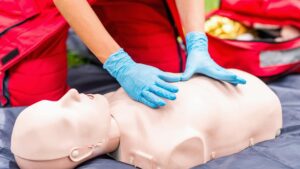

Quick Answer
How does knowing CPR give you the confidence to save lives?
CPR training replaces the bystander freeze response with practiced, automatic skills. When you know CPR, you can begin chest compressions within the first four to six minutes of cardiac arrest before paramedics arrive, doubling or tripling a victim’s chance of survival. Knowing the Good Samaritan Act protects you legally removes the final barrier to acting.
75%
survival rate possible with CPR + AED within 3 minutes
2-3x
higher survival with bystander CPR versus no intervention
10%
drop in survival odds for every minute without CPR
High-Confidence Resuscitation: How Knowing CPR Gives You the Power to Save Lives in Canada
There is a fundamental, clinical difference between hoping you could help someone in a cardiac emergency and knowing that you can. That difference is professional CPR training. When you have been properly trained in modern cardiopulmonary resuscitation and the rapid deployment of an Automated External Defibrillator (AED), you carry a level of readiness that most people never develop. You understand that if someone collapses, whether it is a family member in a private home, a coworker in a corporate office, or a stranger on a busy Canadian street, you have the physiological knowledge to act immediately. Enrolling in a training location near you moves you from passive bystander to a definitive link in the chain of survival.
This confidence is not about bravado. It is about rigorous clinical preparation. High-quality training replaces the freeze response felt by untrained bystanders with a practiced, automatic sequence of actions. These skills become intuitive because you have performed them on feedback-equipped manikins, navigated complex practical skills assessments, and built the muscle memory required to maintain hemodynamic pressure under extreme stress. At Coast2Coast First Aid and Aquatics, we have empowered over 150,000 students across Canada to handle these critical first minutes with calm, clinical precision.
The Science of Survival: Why Bystander Confidence Is the Primary Factor
Cardiac arrest is one of the most time-sensitive clinical events in existence. When the heart’s electrical system malfunctions and stops effective pumping, the brain begins to suffer irreversible damage within just four to six minutes. Permanent brain damage can begin after about four minutes if CPR is not performed immediately. In Canada’s major urban centres, professional EMS response times can be impacted by heavy traffic or what researchers call Vertical Response Delay in high-rise condominiums. This means the victim’s neurological outcome is often determined entirely by the person standing next to them.
Bystander CPR is a life-saving emergency procedure performed by a non-medical person on someone experiencing sudden cardiac arrest before emergency responders arrive. By performing High-Performance CPR, you create a bridge to life through chest compressions that maintain blood flow to the brain and other vital organs. When combined with an AED within the first 3 minutes, survival rates can climb to as high as 75%. CPR can double or even triple survival outcomes, and for every minute without CPR, the chance of survival drops by 7% to 10%. Early CPR in the first few minutes can raise the odds of favorable neurological survival by up to 95%. Despite this, fewer than 40% of out-of-hospital cardiac arrest victims in Canada receive help from a bystander. The root cause is fear: fear of doing something wrong or causing injury, at a moment when every second counts. Our 2026 curriculum eliminates this fear by teaching the legal protections of Canada’s Good Samaritan Act and the physical techniques that prioritize life over minor injury.
High-Performance CPR and the Chest Compression Fraction (CCF) Metric
In 2026, we no longer just teach chest compressions. We focus on the Chest Compression Fraction (CCF). CCF is the percentage of total resuscitation time spent actively pumping the chest. Fast, hard compressions are the core of hands-only CPR, so performing CPR well means minimizing pauses such as when switching rescuers or applying AED pads. Every second the chest is not being compressed, blood pressure drops to zero, and it takes several compressions to rebuild it. By mastering this technical principle, our students ensure the victim receives the maximum possible hemodynamic support throughout the rescue.
During your written examination and skills test, you will also learn the vital use of barrier devices. One-way pocket masks allow you to deliver rescue breaths safely and hygienically. In conventional CPR, rescuers alternate compressions with breaths to add oxygen, and this approach is recommended for infants, children, and victims of drowning, drug overdose, or breathing emergencies. This is a mandatory component of meeting the latest CSA Z1210:24 standards for workplace first aid compliance.
Watch: How to Perform High-Quality CPR
Who Needs High-Confidence CPR Training in Canada?
In the Canadian workforce, being CPR-ready is a strict certification prerequisite for many high-stakes professional roles. Maintaining an unexpired certificate is essential for both public safety and legal WSIB Regulation 1101 compliance:
- Security Guards and Property Managers: Often the first responders in high-density high-rises where EMS delays are common due to Vertical Response Delay.
- Daycare Staff and ECEs: Legally mandated to hold CPR Level C to manage pediatric emergencies including infant choking and anaphylaxis.
- Construction and Industrial Workers: High-risk environments demand team leads who can manage trauma and deploy AEDs in rugged conditions.
- Healthcare Providers: Clinical staff require Basic Life Support (BLS) training to master team resuscitation dynamics, oxygen administration, and post-cardiac-arrest care.
- Hospitality and Fitness Professionals: Personal trainers and restaurant staff may need to respond to sudden cardiac arrest and other cardiac emergencies in crowded public venues.
Get Certified in CPR and AED
Build the hands-on skills and muscle memory that only in-person training can provide. Classes available across Canada.
Industry-Specific CPR Requirements for Canadian Professionals
Beyond the general public, certain Canadian industries require specific modules within their first aid training. Marine and aquatic staff must focus on drowning-specific CPR, which prioritizes rescue breaths because submersion victims typically have a breathing problem before cardiac arrest occurs. Those in industrial sectors often require training in oxygen administration and managing crush injuries. Coast2Coast offers private group training sessions where our instructors bring equipment directly to your facility, customizing scenarios to match the specific hazards your team faces daily, from chemical exposures to high-voltage electrical risks.
For organizations, this proactive approach significantly reduces corporate liability, supports employee health, and can often lead to lower commercial insurance premiums. It ensures that every employee on every shift is capable of leading a rescue until professional help arrives.
Train Your Whole Team On-Site
Private group CPR and first aid training delivered at your facility. Scenarios customized to your workplace hazards.
Flexible CPR Training: Blended Learning for Busy Canadians
Modern life in Canada is fast-paced. CPR training is available in in-person, blended, and online theory options so you can choose what suits your schedule best. The blended learning format is the most popular choice for busy professionals. This hybrid model allows you to complete the comprehensive medical theory online at your own pace, learning CPR in a way that fits your life. Once finished, you attend a shortened, fast-track in-person session focused entirely on hands-on training, including AED use, to reinforce the skills learned. This ensures you develop the physical muscle memory required for certification without spending two full days in a classroom, building confident life-saving skills efficiently. Even those with little or no medical knowledge can complete training in just a few hours and leave feeling ready to act quickly in an emergency.
Key Takeaway
The only thing standing between a cardiac arrest victim and survival is a trained bystander willing to act.
Knowing CPR gives you the clinical confidence and legal protection to intervene immediately. Bystander CPR doubles or triples survival rates. Every minute without compressions reduces survival odds by up to 10%. Canadian Red Cross training and WSIB-approved certification are the fastest path from bystander to lifesaver.
WSIB-Approved Certification
Join 150,000+ Canadians Who Are Certified
Don’t wait for a crisis to wish you had trained. Register for a Canadian Red Cross certified course today.
Frequently Asked Questions: CPR Confidence and Certification 2026
More FAQs: AED Use, Workplace Compliance, and Certification
Sources and Regulatory References
- Heart and Stroke Foundation of Canada: CPR and Resuscitation Statistics
- Canadian Standards Association: CSA Z1210:24, First Aid Training for the Workplace
- Ontario Workplace Safety and Insurance Board: WSIB Regulation 1101: First Aid Requirements
- Canadian Red Cross: CPR and AED Certification Standards (2026)
- Private Security and Investigative Services Act, S.O. 2005, c. 34
Content reviewed by Ashkon Pourheidary, B.Sc. (Hons) Neuroscience, certified CPR and EMR Instructor Trainer since 2011 and former Canadian Red Cross First Aid Council Member. Last reviewed May 28, 2026.